Why Research Matters for Caribbean IMGs in Internal Medicine
For a Caribbean IMG aiming for an internal medicine residency in the United States, a strong research profile is no longer optional—it is a strategic advantage.
Program directors know that Caribbean medical school residency applicants often face additional hurdles: perceptions about clinical training, limited home-institution research, and high competition for an IM match. Research is one of the most visible ways to:
- Demonstrate academic maturity and curiosity
- Show familiarity with U.S. clinical and scientific standards
- Signal that you can contribute to quality improvement and scholarship in their program
- Compensate, to some degree, for weaker exam scores or institutional bias
In surveys of program directors (e.g., NRMP Program Director Survey), scholarly activity consistently appears as a factor in ranking decisions. While USMLE Step scores and clinical performance remain primary filters, research can be a powerful differentiator—especially in internal medicine residency, where evidence-based practice and continuous improvement are central.
For Caribbean IMGs, your goal is not to “beat” every U.S. grad on research. Your goal is to build a cohesive, credible research profile that:
- Aligns with internal medicine (or closely related fields)
- Demonstrates progression over time
- Shows productivity (presentations, posters, publications)
- Is honest, verifiable, and well-understood by you (so you can discuss every line on your CV confidently)
The rest of this guide will walk you through a step-by-step strategy to do exactly that—whether you are at SGU, AUC, Ross, Saba, or another Caribbean medical school.
Understanding What “Counts” as Research for IM Residency Programs
Before you chase opportunities, you need clarity on what program directors actually see as “research.” Fortunately, there are multiple forms of scholarship that matter.
1. Traditional Clinical Research
This is the gold standard many applicants think of:
- Prospective or retrospective clinical studies
- Chart reviews (retrospective cohort, case-control)
- Outcomes research (e.g., readmissions, mortality, quality metrics)
- Clinical trials (even as a sub-investigator or data assistant)
In internal medicine, examples include:
- Evaluating predictors of 30-day readmission in heart failure
- Assessing adherence to sepsis bundles in a community hospital
- Comparing outcomes before and after implementation of a new diabetes protocol
These often lead to:
- Abstracts/posters at medical conferences
- Manuscripts submitted to peer-reviewed journals
- Quality improvement projects that overlap with research methods
2. Case Reports and Case Series
These are particularly accessible for Caribbean IMGs, especially during U.S. clinical rotations.
Common internal medicine examples:
- An unusual presentation of sarcoidosis
- A rare drug-induced complication in a common medication
- A unique combination of comorbid conditions with a diagnostic challenge
While case reports are usually considered lower on the evidence hierarchy, they still show you can:
- Recognize something interesting
- Review and synthesize the literature
- Write in scientific format
- Work with faculty to bring a project to completion
Case reports in PubMed-indexed journals still look good on your CV.
3. Quality Improvement (QI) and Patient Safety Projects
Many residency programs are heavily involved in QI, and they value applicants with exposure to:
- Plan-Do-Study-Act (PDSA) cycles
- Root Cause Analysis (RCA)
- Process mapping and workflow changes
- Interventions to improve guideline adherence or reduce errors
Examples:
- Increasing pneumococcal vaccination rates in diabetic patients
- Reducing unnecessary daily labs on stable patients
- Improving outpatient follow-up after discharge for COPD exacerbations
QI projects can produce:
- Posters/presentations at local or national meetings
- Internal reports and institutional recognition
- Manuscripts in QI-focused journals
These are directly relevant to internal medicine practice and can be very attractive in your Caribbean medical school residency applications.
4. Systematic Reviews, Narrative Reviews, and Meta-Analyses
These typically require:
- Good literature-search skills
- Critical appraisal
- Data extraction and synthesis (for systematic reviews/meta-analyses)
For a Caribbean IMG who may not have easy access to patients or a long-term lab, review articles are often one of the most realistic ways to earn publications for match.
Examples:
- Systematic review of SGLT2 inhibitors in heart failure with preserved EF
- Narrative review of strategies to reduce polypharmacy in older adults
- Meta-analysis of anticoagulation strategies in patients with atrial fibrillation and CKD
These can be done remotely if you have a good mentor and clear division of work.
5. Educational Research and Scholarly Work
Not every project must be disease-focused. Internal medicine also values:
- Curriculum development (e.g., resident teaching modules on EKG interpretation)
- Simulation-based education research
- Studies on improving handoff quality or interprofessional teamwork
These may especially appeal to academic internal medicine programs.

Setting Realistic Research Goals as a Caribbean IMG
You cannot change where you went to medical school, but you can control how strategically you build your research profile.
Clarifying “How Many Publications Needed” for IM
There is no official number, but we can look at trends:
- Competitive academic IM programs: Many matched applicants have several abstracts and a few PubMed-indexed publications, often including first-author work.
- Community or mid-tier programs: They value research, but do not expect a PhD-level CV; 1–3 solid projects with tangible outputs (posters, publications) can be enough to stand out.
For a Caribbean IMG, a realistic and strong target might be:
- 1–2 PubMed-indexed publications (case reports, original data, or reviews)
- 2–4 conference abstracts or posters
- Evidence of progression (e.g., co-author → first author; research assistant → independent project)
Programs understand that Caribbean schools often have limited built-in research infrastructure. They mainly want to see:
- That you sought out research despite obstacles
- You can complete projects
- You understand methods enough to interpret and apply evidence in practice
Balancing Research with USMLE and Rotations
For SGU residency match or other Caribbean IMG pathways, USMLE scores and clinical performance will still matter more than research volume.
General priority order:
- USMLE Step 2 CK (and, if applicable, Step 3)
- Strong U.S. clinical evaluations and letters of recommendation
- Research profile and scholarly activity
- Extracurriculars, leadership, volunteering
Do not overcommit to research if it will harm your Step 2 CK preparation or your clinical performance. Instead, aim for:
- A sustainable research schedule (e.g., 3–6 hours/week consistently, more during lighter rotations)
- Short, achievable milestones (e.g., submit abstract by X date, draft introduction in 2 weeks)
Creating a Personal Research Roadmap
Break your remaining timeline into phases:
If you are Pre-clinical (Basic Sciences in the Caribbean):
- Learn research methods and statistics basics (online courses, lectures)
- Join or start a research interest group at your school
- Seek remote mentoring from U.S.-based physicians or alumni
- Start review articles or data-entry roles that can be done remotely
If you are in Core Rotations (IM, Surgery, etc. in the U.S.):
- Identify academically active attendings residents
- Offer to help with ongoing projects (data collection, literature searches)
- Be proactive about identifying publishable cases
- Aim for at least 1–2 concrete scholarly outputs during core IM rotations
If you are in Electives/Specialty Rotations and Nearing Application Season:
- Focus on completing and submitting manuscripts and abstracts
- Limit starting brand-new long-term projects unless they will clearly yield a product before Match
- Gather letters from research mentors who can vouch for your initiative and reliability
Finding and Securing Research Opportunities as a Caribbean IMG
Limited institutional connections do not have to stop you. You just need a strategy.
1. Start with Your Own School’s Network (Especially SGU and Similar)
Many large Caribbean schools, such as SGU, Ross, and AUC, have:
- Faculty engaged in research collaborations with U.S. institutions
- Student research societies or clubs
- Internal grant programs or mentorship lists
Action steps:
- Search your school website for “research,” “scholarly activity,” and “internal medicine”
- Attend any online research seminars, workshops, or student conferences
- Email faculty whose interests align with internal medicine or general adult care
Be concrete and respectful in your email:
- Brief self-introduction (year in medical school, interest in IM)
- Reference any previous work or relevant skills
- Express specific interest in their field/topic
- Offer to help with a clearly defined set of tasks (data collection, chart review, literature summary)
2. Leverage U.S. Clinical Rotations and Attendings
This is often the single most powerful route for Caribbean medical school residency applicants.
During your IM rotations:
- Ask attendings and residents, “Are there any ongoing research or quality improvement projects I could help with?”
- When you encounter a rare or interesting case, ask, “Would this be suitable for a case report? If so, I’d be happy to help draft it.”
- Show reliability in clinical work first—faculty are more likely to involve students they trust clinically.
Practical example:
- On your internal medicine core rotation, a patient with unusual hypercalcemia is admitted.
- You discuss the case with your attending and offer to:
- Review prior similar cases in the hospital
- Conduct a focused literature review
- Draft the case report’s introduction and discussion
- If they agree, ask whether they have a preferred journal and timeline, and clarify authorship expectations early.
3. Remote and Online Research Positions
You can contribute to research without physical presence, especially for:
- Systematic/narrative reviews
- Database research using publicly available data
- Survey-based studies
- Educational research projects
Sources to explore:
- Alumni from your Caribbean school now in U.S. internal medicine residencies or fellowships
- Social media (X/Twitter, LinkedIn) where physician-scientists occasionally post calls for help (e.g., “looking for a med student to assist with literature review”)
- Online research platforms and collaborative networks
When reaching out cold:
- Attach a brief, 1-page CV highlighting any prior research experience, even from undergrad
- Emphasize your time availability and willingness to learn
- Say explicitly that you understand the importance of deadlines and data integrity
4. Research Fellowships or Postgraduate Research Years
Some Caribbean IMGs take a dedicated research year in the U.S., especially after graduation or between Step exams.
Pros:
- Time to build a robust portfolio
- Immersion in an academic environment
- Opportunities for strong LORs from U.S. faculty
- Improved odds for SGU residency match and similar pathways for other schools
Cons:
- Financial cost (visa, living expenses, often unpaid)
- Delay in graduation or residency start
- Need for careful visa planning if you are not a U.S. citizen/green-card holder
If considering this, focus on institutions with:
- Established internal medicine departments and residency programs
- A track record of taking IMGs as research fellows
- Multiple potential mentors so your success is not tied to a single individual
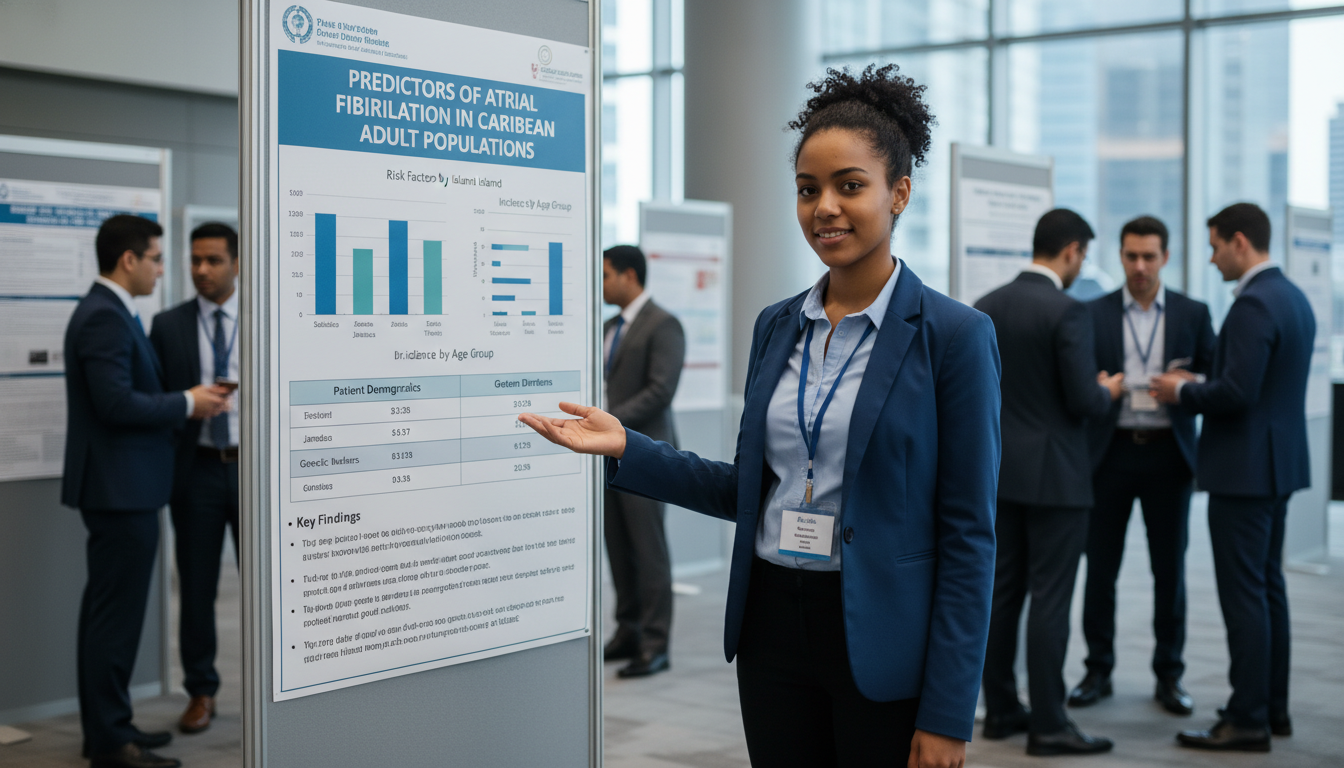
Producing Tangible Outputs: From Data to Posters and Publications
Program directors care less about how many “projects” you joined and more about what you actually completed. Aim to turn each project into at least one of the following:
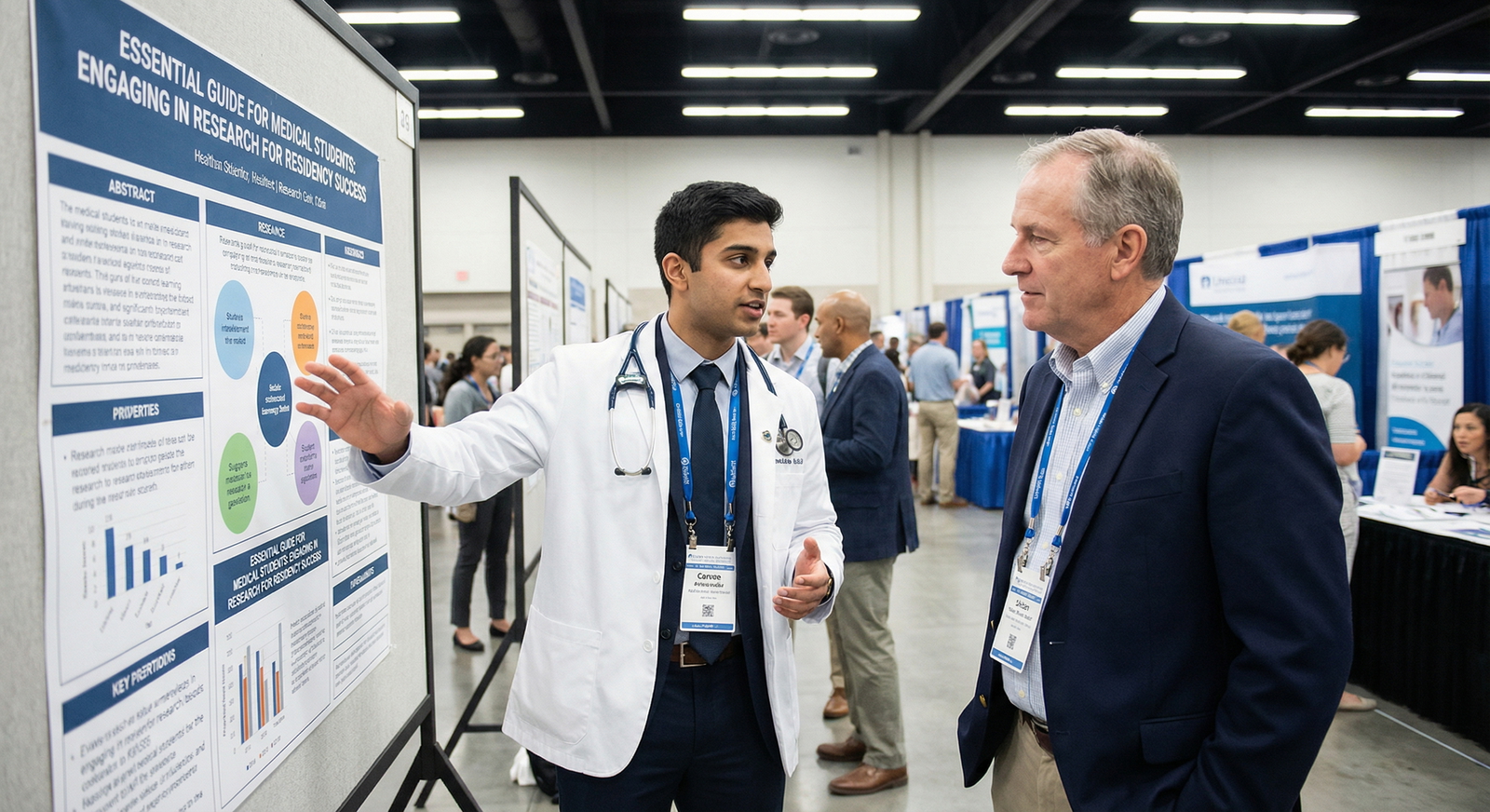
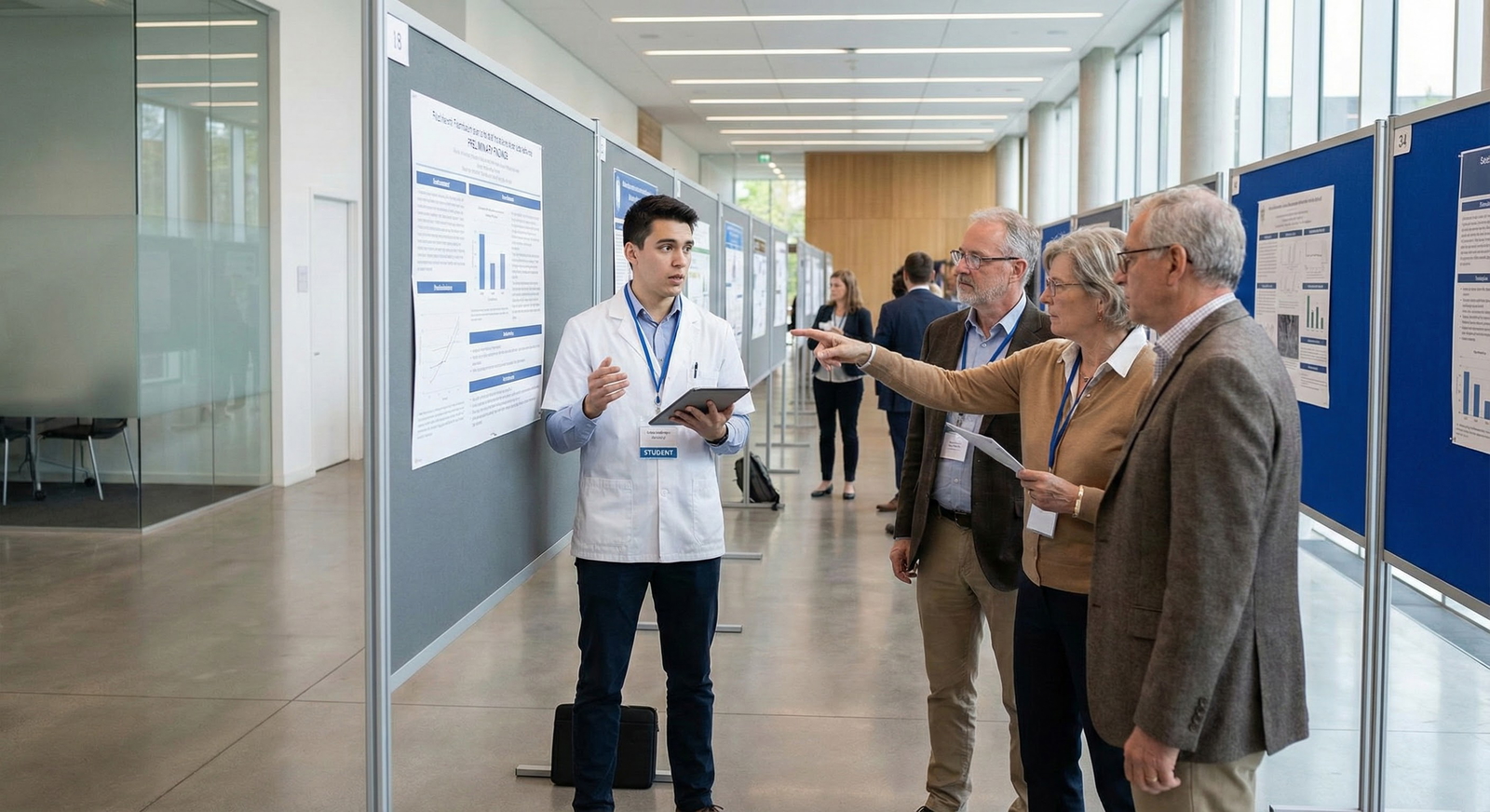
1. Conference Abstracts and Posters
These are achievable even on shorter timelines and count as scholarly activity.
Levels of conferences:
- Local hospital or health system research days
- State or regional ACP (American College of Physicians) meetings
- National meetings (ACP, AHA, ATS, etc.)
Internal medicine-friendly meeting examples:
- ACP Internal Medicine Meeting
- Society of Hospital Medicine Annual Conference
- Local or regional academic IM research symposia
Action steps:
- Ask your mentor which conference deadlines are coming up.
- Offer to draft the abstract; get feedback and revise.
- If a poster is accepted, be prepared to:
- Design the poster (PowerPoint or similar)
- Present in person or virtually (excellent practice for interviews)
- List it clearly on your CV with date, conference, and authors
2. Manuscripts and PubMed-Indexed Publications
For Caribbean IMGs, even one or two peer-reviewed publications are very valuable. Common pitfalls include:
- Starting overly ambitious projects that never get submitted
- Lack of clarity on who is responsible for final submission
- Not adhering to journal formatting requirements, causing delays
Practical tips:
- Start with realistic scopes (e.g., a case report plus mini-review; a retrospective single-center chart review) rather than multi-center RCTs.
- Choose journals carefully:
- Consider case-report-specific journals or specialty journals aligned with your topic
- Check acceptance rates and turnaround times
- Divide the writing into sections: introduction, methods, results, discussion; volunteer to draft one or more sections and then integrate feedback.
When the paper is accepted:
- Learn how to generate a proper citation (PubMed, DOI, etc.)
- Add it to your ERAS experiences with accurate dates and author order
- Be ready to discuss the methods and limitations in interviews
3. Quality Improvement Deliverables
If your project is primarily QI, ensure you still produce something tangible:
- A poster for your hospital’s QI day or local ACP meeting
- An internal report or protocol that can be referenced
- A manuscript in a QI or patient safety journal
Highlight aspects that internal medicine programs care about:
- Measured improvement in key metrics (e.g., vaccination rates from 60% to 85%)
- Sustainability and follow-up
- Interdisciplinary collaboration (nurses, pharmacists, social workers)
Presenting Your Research Profile Effectively in IM Applications
You have done the work; now you must frame it correctly for the IM match.
1. Organizing Your CV and ERAS Application
In ERAS, use the “Research Experience” and “Publications/Presentations” sections wisely.
For each research experience:
- Provide:
- Project title and brief description
- Your role (e.g., data collection, literature review, statistics, first author, etc.)
- Dates and approximate time commitment
- Outcome (abstract, poster, manuscript submitted/accepted/published)
For each publication or presentation:
- Use consistent citation style
- Indicate the status accurately:
- Published
- Accepted
- Provisionally accepted
- Submitted (under review)
- In preparation (use sparingly; only for near-complete work with clear mentor support)
Avoid inflating roles or listing dozens of minor unfinished projects. A smaller number of completed, meaningful works is more impressive.
2. Telling Your Research Story in the Personal Statement
Your personal statement is not a research paper, but for an internal medicine applicant with a significant research background, 1–2 short paragraphs can highlight:
- How research has deepened your understanding of internal medicine
- What you learned about critical thinking, statistics, or patient care
- How you hope to continue QI or clinical research as a resident
Example idea:
“During my internal medicine core rotation, I worked with my attending on a project evaluating factors associated with frequent COPD readmissions. Reviewing each patient’s chart not only taught me data analysis, but also illuminated the social determinants driving many of our admissions. This experience shaped my interest in quality improvement and outpatient transitions of care, areas I hope to pursue during residency.”
3. Preparing for Research-Related Interview Questions
Common interview questions for applicants with research:
- “Tell me about your most meaningful research project.”
- “What did you personally contribute to this work?”
- “What challenges did you face, and how did you overcome them?”
- “How do you see research fitting into your future as a physician?”
To prepare:
- Choose 1–2 “anchor projects” you know very well.
- Be able to explain:
- The clinical question
- Study design
- Key findings
- Limitations and next steps
- Emphasize teamwork, perseverance, and impact on patient care, not just statistics.
Program directors are often less interested in your p-values and more interested in whether you can think critically and work reliably in academic settings.
Common Pitfalls and How to Avoid Them
Caribbean IMGs eager to build a strong research profile sometimes fall into traps that can backfire.
Pitfall 1: Overcommitting to Too Many Projects
It is tempting to say “yes” to every opportunity. The result is often:
- Missed deadlines
- Unfinished manuscripts
- Disappointed mentors
Solution:
- Limit active projects to what you can truly move forward.
- Focus on completion and quality, not volume.
- Periodically review your project list; ask mentors which should be prioritized.
Pitfall 2: Misrepresenting Your Role or Output
Programs can—and sometimes do—check publications and even contact mentors. Any suspicion of dishonesty can be devastating.
Solution:
- Be precise about your contributions (e.g., “conducted chart review and drafted methods section”).
- Do not list “submitted” papers unless they truly have been sent to a journal.
- Never claim data analysis or first-author work you did not do.
Pitfall 3: Ignoring Alignment with Internal Medicine
Working in unconnected fields (e.g., basic animal research unrelated to adult medicine) is not wrong, but it may not carry as much weight.
Solution:
- Whenever possible, choose topics closer to internal medicine:
- Cardiology, pulmonology, nephrology, endocrinology, geriatrics, hospital medicine, etc.
- If you have prior research in another field (e.g., neurosurgery, dermatology), be ready to explain the skills you gained that still apply to internal medicine (data analysis, evidence appraisal, etc.).
Pitfall 4: Letting Research Harm Your Core Application
If research negatively affects your Step preparation, clinical performance, or mental health, it is no longer an asset.
Solution:
- Be honest with yourself about bandwidth.
- Use lighter academic periods or gaps between exams to focus on research.
- Remember: a solid Step 2 CK score and strong IM letters are more critical than an extra case report.
FAQs: Research Profile Building for Caribbean IMGs in Internal Medicine
1. As a Caribbean IMG, how many publications do I realistically need for an internal medicine residency?
There is no fixed number, but for most Caribbean IMGs:
- Having 1–2 PubMed-indexed publications plus a few posters or abstracts is strong and competitive for many internal medicine programs, especially when combined with solid Step 2 CK scores and U.S. clinical experience.
- More publications help if you’re targeting highly academic programs or physician-scientist tracks, but quality, relevance, and your ability to discuss the work matter more than raw count.
2. Does research in basic science or non-IM specialties still help my IM match?
Yes, but with caveats:
- It still demonstrates discipline, analytical skills, and scholarly interest.
- During interviews and in your application, link the skills you gained—critical thinking, understanding of scientific literature—to your future practice in internal medicine.
- If possible, try to add at least one project that is clearly internal-medicine-related to signal alignment with your chosen specialty.
3. I started medical school with no research experience. Is it too late to build a meaningful profile?
No. Many successful Caribbean medical school residency applicants begin with no prior research. Focus on:
- Starting small but concrete (e.g., a case report, a QI project, or a review article).
- Seeking mentors during your IM rotations or via alumni networks.
- Completing what you start and turning it into tangible outputs: abstracts, posters, manuscripts.
Even one or two well-executed projects completed during clinical years can make a real difference.
4. How is research viewed specifically for SGU residency match and other large Caribbean schools?
Programs are very familiar with SGU and similar Caribbean institutions. For SGU residency match and comparable pathways:
- Research is seen as a positive differentiator, especially if done in U.S. settings or in collaboration with U.S.-based faculty.
- Internal medicine program directors appreciate when SGU (or other Caribbean) graduates show initiative in research and QI, as it signals readiness for an academically engaged residency environment.
- Combining solid exam performance, strong U.S. clinical evaluations, and a coherent research profile is often what separates successful Caribbean IMGs from the rest of the applicant pool.
By approaching research strategically—focusing on achievable projects, internal medicine relevance, and honest, complete outputs—you can transform a potential weakness (limited built-in research infrastructure as a Caribbean IMG) into a clear strength. A thoughtfully built research profile will not only support your IM match chances, but also prepare you to practice evidence-based, academically engaged internal medicine throughout your career.