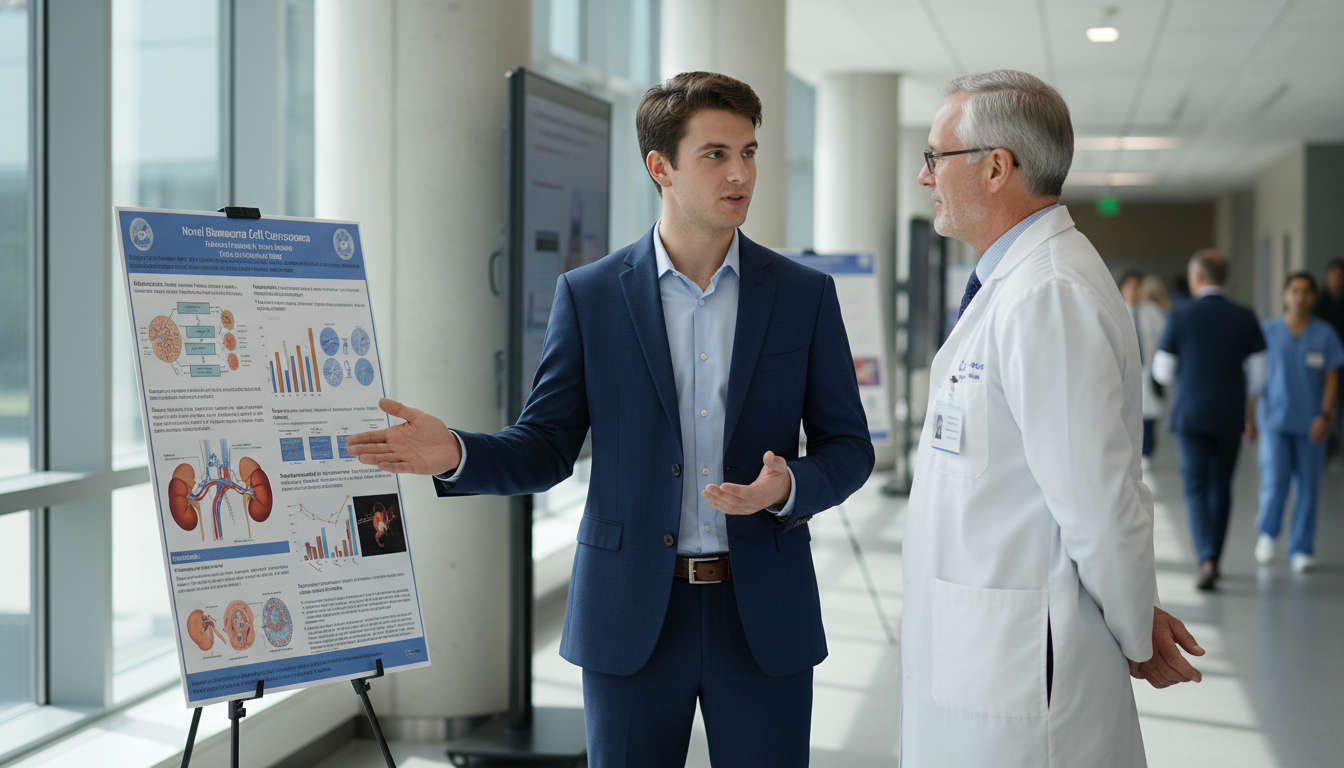
Caribbean international medical graduates (IMGs) aiming for a nuclear medicine residency face a competitive landscape—especially in the U.S. and Canada. A strong research profile can turn a borderline application into a compelling one, particularly if you are coming from a Caribbean medical school where program directors may be less familiar with your institution.
This guide focuses on research profile building for Caribbean IMG in nuclear medicine, with practical, step-by-step strategies to help you develop credible scholarly output, demonstrate commitment to the field, and strengthen your overall nuclear medicine match prospects.
Understanding the Role of Research in Nuclear Medicine Residency
Research is not just a “bonus” in nuclear medicine—it is part of the culture of the specialty.
Why research matters more in nuclear medicine than in some other fields
Nuclear medicine is inherently academic and technology-driven:
- It is rooted in radiopharmaceuticals, molecular imaging, and quantitative imaging.
- There is rapid innovation in PET/CT, PET/MRI, theranostics (e.g., Lu-177, I-131, Ga-68), and AI applications.
- Many departments emphasize clinical trials, translational research, or imaging physics.
Program directors want residents who can:
- Understand and interpret scientific literature
- Participate in ongoing projects or clinical trials
- Contribute to publications, presentations, and academic productivity of the department
For a Caribbean IMG, a solid research story signals:
- Academic maturity – you can handle scientific work beyond routine coursework.
- Specialty commitment – especially if the work is clearly connected to nuclear medicine or imaging.
- Ability to integrate into an academic environment – which is where many nuclear medicine programs sit.
How much research is “enough” for a Caribbean IMG?
There is no official rule, but we can consider patterns:
- Many successful IMGs in imaging-related fields (radiology, nuclear medicine) often have:
- 2–5 publications (not necessarily first-author)
- Several posters or oral presentations
- A mix of case reports, retrospective studies, and review articles
Programs rarely state “you need X publications,” but the common question—how many publications needed—can be answered directionally:
- For a Caribbean IMG in nuclear medicine, a realistic target:
- 1–2 nuclear medicine–relevant outputs (case reports, imaging-based case series, theranostics review, etc.)
- 2–3 additional scholarly items (quality improvement [QI] project, general radiology/imaging paper, research-in-progress, abstracts, or posters)
If you’re later in training (e.g., after an internal medicine or radiology prelim year), expectations may be slightly higher, especially for nuclear medicine residency at large academic centers.
Assessing Your Starting Point as a Caribbean IMG
Before you build, you need to know your baseline. Caribbean medical schools (including well-known ones like SGU, AUC, Ross, etc.) differ in research infrastructure, but the same principle applies: use everything you have, then extend outward.
Common starting scenarios
Preclinical student (Years 1–2) in Caribbean medical school
- Limited direct patient contact
- Possibly minimal access to imaging facilities
- Advantage: time to build long-term research relationships and skills
Clinical student (Years 3–4) on rotations in the U.S. or UK
- Access to teaching hospitals and clinical faculty
- Can collect data or assist in clinical projects
- Less flexible schedule but more real-world cases
Graduate or recent graduate planning a nuclear medicine match
- Perhaps already applied to a previous specialty (e.g., internal medicine)
- Can take research year, observerships, or T32 research tracks
- May need to “backfill” research gaps quickly
Identify where you stand:
- Do you already have any publications for match (even non-medical)?
- Do you have access to mentors (radiology, nuclear medicine, oncology, cardiology)?
- Does your school offer a formal research elective or SGU residency match–oriented research track or similar support?
Use this self-assessment to prioritize what type of research is realistic in your time frame.
Strategic Research Planning Specifically for Nuclear Medicine
This section helps you map a practical path from zero (or near-zero) to a convincing research portfolio for the nuclear medicine match.
Step 1: Choose research areas that align with nuclear medicine
You do not have to limit yourself strictly to nuclear medicine journals. The key is conceptual proximity:
High-yield areas:
- Clinical nuclear medicine
- PET/CT in oncology (lymphoma, lung cancer, melanoma)
- Bone scans, myocardial perfusion imaging, renal scans
- FDG and non-FDG tracers
- Theranostics
- Lu-177 DOTATATE, Lu-177 PSMA
- I-131 therapy in thyroid disease
- Hybrid imaging and cross-sectional imaging
- PET/CT, SPECT/CT, PET/MRI
- Correlation of nuclear imaging with CT or MRI findings
- Radiology-adjacent topics
- Oncologic imaging
- Cardiovascular imaging using nuclear techniques (SPECT, PET)
- Radiation safety and physics
- Patient dose optimization
- Shielding and exposure
- AI and quantitative imaging
- Segmentation, SUV analysis, image reconstruction techniques
If you cannot find a nuclear medicine mentor immediately, starting with general radiology or oncology research is perfectly acceptable, then gradually steer toward nuclear medicine.
Step 2: Define realistic project types
For a Caribbean IMG, ease-of-entry and time-to-output matter. Here are common project types ranked by accessibility and impact:
Case report / case series (high accessibility, moderate impact)
- Ideal if you are on clinical rotations in imaging-heavy settings.
- Look for:
- Rare nuclear medicine findings (e.g., incidental metastases on bone scan)
- Unusual PET/CT patterns
- Interesting theranostic treatment response
- These can be completed in months and submitted fairly quickly.
Retrospective chart or imaging review (moderate accessibility, higher impact)
- Requires IRB (ethics) approval and strong mentor support.
- Example: Evaluate PET/CT staging accuracy in a certain cancer type at one center.
- Timeframe: 6–12 months to publication, but great for CV depth.
Review article or narrative review (moderate accessibility, variable impact)
- Literature-based; can be done remotely.
- Ideal if you have limited clinical access.
- Example: “Current applications of PSMA PET in prostate cancer staging and therapy.”
- Best done under the guidance of a nuclear medicine or radiology faculty member.
Quality improvement (QI) projects (high accessibility, lower formal impact but excellent for interviews)
- Often easier to conduct during U.S. rotations or prelim years.
- Example: Reducing repeat PET/CT scans due to motion artifacts; standardizing pre-scan NPO instructions.
- Even if not published, they can yield posters or internal presentations.
Basic science / translational research (low accessibility, high impact)
- More common in large academic centers with radiochemistry or molecular imaging labs.
- Example: Developing or testing a new radiotracer in animal models.
- Time-intensive but impressive if you can manage a year-long research commitment.

Finding and Securing Research Opportunities as a Caribbean IMG
Leveraging your Caribbean medical school network
Many Caribbean schools—especially large ones that are known for Caribbean medical school residency placements—have:
- Research offices or coordinators who maintain lists of ongoing projects
- Faculty in the U.S. affiliated hospitals who routinely supervise students’ research
- Alumni who have successfully navigated SGU residency match or similar pathways and now hold academic posts
Action steps:
- Contact your school’s research office or dean’s office
- Ask specifically for:
- Imaging, radiology, oncology, or nuclear medicine–related projects
- Research electives at U.S.-affiliated teaching hospitals
- Ask specifically for:
- Search alumni directories
- Look for alumni in nuclear medicine, radiology, oncology, cardiology, or radiation oncology.
- Send concise, professional emails expressing your interest in the field and attaching a CV.
Even if your school is not SGU, emulate how SGU and similar schools structure support for research and match preparation.
Cold-emailing faculty at U.S. or Canadian institutions
If your home institution has limited options, you may need to reach out widely.
Key targets:
- Nuclear medicine faculty in radiology departments
- Directors of molecular imaging labs
- Oncologists or cardiologists with heavy imaging use
Your email should contain:
- A short introduction (who you are, Caribbean IMG, year of training)
- Clear interest in nuclear medicine or related imaging
- Evidence of reliability (USMLE scores, GPA, previous research if any)
- A specific ask: “Would you be open to supervising me on a retrospective project, case report, or review article related to nuclear medicine or molecular imaging?”
Offer flexibility:
- “I am willing to work remotely on literature reviews, data cleaning, or statistical analysis.”
- “I can commit X hours per week for Y months.”
Expect many non-responses, but even a 5–10% response rate can yield a valuable mentor.
Using observerships and electives as research entry points
Combine clinical exposure with research:
- During a radiology or nuclear medicine elective:
- Attend case conferences and tumor boards
- Ask residents or fellows, “Are there ongoing projects I can assist with?”
- During an observership:
- Show up prepared and engaged
- Ask the department coordinator or research coordinator if students are usually involved in projects
- Offer to help with:
- Data collection
- Literature searches
- Drafting certain manuscript sections (introduction, discussion)
Mention your objective clearly: “I aim to apply for nuclear medicine residency and want to build a meaningful research contribution.”
Executing Projects Well and Turning Them into Match-Ready Outputs
Getting involved is only step one. Executing well is what creates a strong research for residency portfolio.
Becoming a reliable research collaborator
Program directors and faculty remember reliability more than raw intelligence. To build a strong reputation:
- Respond promptly to emails (within 24–48 hours)
- Clarify expectations:
- “Do you prefer weekly updates?”
- “Is there a target abstract deadline?”
- Document everything:
- Maintain a shared Google Doc or spreadsheet with progress.
- Meet deadlines or communicate early if you need extensions.
Reliability often leads to multiple projects, more authorships, and better letters of recommendation.
Building core skills: literature review, basic statistics, and writing
Even without formal research experience, you can learn quickly:
Literature review
- Use PubMed, Google Scholar, and specialty journals (e.g., Journal of Nuclear Medicine, European Journal of Nuclear Medicine and Molecular Imaging).
- Learn to identify:
- Study type (RCT, retrospective, prospective, review)
- Level of evidence
- Main findings and limitations
Basic statistics
- Familiarize yourself with:
- t-tests, chi-square, logistic regression basics
- Sensitivity, specificity, PPV, NPV
- Watch short online courses or tutorials tailored to medical students.
- Familiarize yourself with:
Scientific writing
- Read good examples of nuclear medicine articles.
- Pay attention to:
- How methods are structured
- The flow from results to discussion
- Use templates for case reports, abstracts, and original research.
The more independent you are in these skills, the more value you provide to mentors and the more likely you are to earn first- or second-author positions.
Converting research work into concrete outputs
Your goal is to transform work into CV entries that residency programs recognize:
Manuscripts
- Aim to submit to reputable, indexed journals (not predatory).
- Even if under review at the time of application, list as “submitted” or “under review,” clearly labeled.
Abstracts and conference presentations
- Regional or national meetings in radiology and nuclear medicine, such as:
- SNMMI (Society of Nuclear Medicine and Molecular Imaging)
- RSNA (Radiological Society of North America)
- EANM (for those with European links)
- Posters and oral presentations indicate broader scholarly engagement.
- Regional or national meetings in radiology and nuclear medicine, such as:
Institutional presentations
- Case conferences, department grand rounds, QI days
- Even if not peer-reviewed, they show communication skills and initiative.
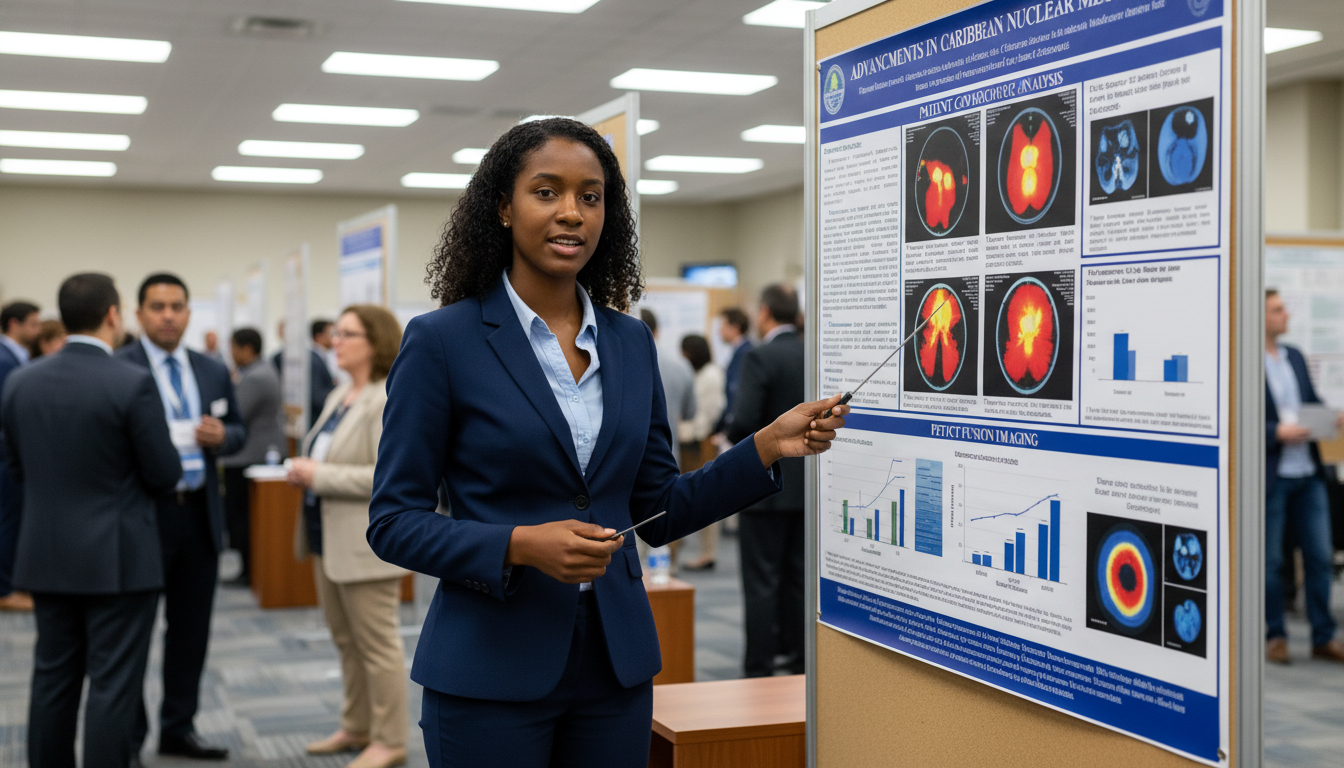
Update your ERAS CV carefully to reflect:
- Type of output (publication, abstract, poster, oral presentation)
- Your position in author list
- Journal or conference name
- Status (published, in press, accepted, submitted)
Integrating Research into Your Nuclear Medicine Application Strategy
Your research portfolio is not standalone—it must fit into a coherent narrative about why you are choosing nuclear medicine and how you will contribute to the specialty.
Crafting a convincing personal statement
Use your research as evidence of sustained interest:
- Describe your earliest exposure:
- First PET/CT or bone scan you saw.
- A case report project that made you appreciate the power of molecular imaging.
- Highlight specific research contributions:
- “I evaluated serial PET/CT scans in patients treated with Lu-177 therapy.”
- “I co-authored a review on PSMA PET applications in prostate cancer staging.”
Emphasize how research shaped your:
- Understanding of diagnostic accuracy and clinical decision-making
- Appreciation for interdisciplinary work (oncology, surgery, radiation oncology)
- Long-term goal to contribute to academic nuclear medicine or clinical innovation
Using research talking points in interviews
Almost every nuclear medicine program will ask about your research.
Prepare:
1–2 main projects to discuss fluently:
- Be ready to explain:
- Study objective
- Methods (briefly)
- Key results
- Limitations and next steps
- Be ready to explain:
What you learned:
- Working in teams
- Handling setbacks (rejections, revisions, IRB delays)
- Balancing clinical duties with scholarly work
How you want to continue research in residency:
- Interest in specific areas (e.g., theranostics, AI in image interpretation, radiation dosimetry)
- Willingness to join existing labs or develop QI initiatives
For a Caribbean IMG, your ability to clearly articulate research experiences and reflection often offsets initial concerns about your school’s reputation or unfamiliarity.
Aligning program selection with your research profile
When targeting programs for nuclear medicine residency:
- Prioritize programs known for:
- Active nuclear medicine research labs
- Regular publications and conference presence
- Faculty with strong research interests aligned with yours
- Review:
- Recent department publications
- Resident bios (do they publish?)
- Program website sections on research opportunities
Sending a strong application to fewer but well-matched research-oriented programs can sometimes be more productive than a very broad but unfocused approach.
Frequently Asked Questions (FAQ)
1. How many publications are needed for a Caribbean IMG to match into nuclear medicine?
There is no strict cutoff, but for a Caribbean IMG aiming at nuclear medicine residency, aim for:
- At least 1–2 nuclear medicine–relevant outputs (e.g., imaging case reports, small retrospective study, review article).
- 2–3 additional scholarly contributions (posters, QI projects, imaging-related abstracts, or general radiology/oncology papers).
Quality, relevance to imaging, and your ability to discuss them intelligently often matter more than raw count. A focused, well-integrated research story can stand out more than scattered unrelated publications.
2. Do my publications have to be specifically in nuclear medicine?
Not necessarily. Proximity matters more than strict labels.
High-value related areas include:
- Radiology (CT, MRI, PET/CT, PET/MRI)
- Oncology imaging (staging, response assessment)
- Cardiac imaging (SPECT, PET myocardial perfusion)
- Theranostics, radiopharmaceuticals, radiation safety
A mix of nuclear medicine–specific and radiology/oncology projects is perfectly acceptable. Aim to have at least a couple that clearly touch nuclear medicine concepts to demonstrate targeted specialty interest.
3. I’m at a Caribbean medical school with minimal research infrastructure. What can I realistically do?
You can still build a strong profile by:
- Seeking remote collaborations via cold emails to nuclear medicine or radiology faculty.
- Starting with case reports or narrative reviews that require less institutional infrastructure.
- Using observerships or U.S. electives to join ongoing projects.
- Taking free online courses in statistics and scientific writing to be a more attractive collaborator.
Consistency and persistence matter. Even a handful of well-executed, relatively small projects can meaningfully strengthen your application.
4. How important is research compared to scores and clinical performance for nuclear medicine match?
All three components are important:
- Scores and clinical performance (Step exams, clerkship grades) typically determine whether your application is seriously considered.
- Research:
- Differentiates you from other IMGs and even U.S. grads.
- Signals commitment to an academically oriented field like nuclear medicine.
- Often influences which programs rank you highly, especially at university-affiliated or research-heavy sites.
For a Caribbean IMG, well-aligned research can be a deciding factor, particularly if scores are average or if you are competing for spots at more competitive academic centers.
By understanding the expectations of the nuclear medicine match, strategically choosing projects, and executing them reliably, a Caribbean IMG can transform limited initial resources into a strong research portfolio. Done well, your research becomes far more than a CV checkbox—it becomes the backbone of a compelling story about who you are as a future nuclear medicine physician and how you will contribute to this rapidly evolving specialty.