Understanding the Research Landscape for Caribbean IMGs in Clinical Informatics
Clinical informatics is one of the most research-driven and data-focused specialties in medicine. For a Caribbean IMG, building a strong research profile is not just “nice to have”—it is often the differentiating factor that can bridge perceived gaps in training, especially when applying from a Caribbean medical school to U.S. residency programs and ultimately a clinical informatics fellowship.
Program directors and fellowship selection committees in informatics expect applicants to understand:
- How data informs clinical decision-making
- How to evaluate and implement digital health tools
- How to interpret and generate evidence using EHR data, registries, or quality-improvement (QI) projects
If you come from a Caribbean medical school, residency programs may have limited familiarity with your institution compared to U.S. schools. A strong research record—especially in informatics, health IT, or quality improvement—can reassure them you can handle academic rigor, advanced analytics, and scholarly work.
In this article, you’ll learn:
- How to strategically build a research profile as a Caribbean IMG targeting clinical informatics
- How many publications are realistic and “enough” to support your residency and later fellowship applications
- Practical ways to find and join research remotely, even if you’re off-cycle or already in a Caribbean medical school
- How to present your work effectively for residency applications and clinical informatics fellowship consideration
Throughout, we’ll pay special attention to how this aligns with the SGU residency match and other Caribbean medical school residency paths, since these schools often feed into internal medicine, family medicine, pediatrics, and other primary fields that can lead to a clinical informatics fellowship.
What Counts as “Research” for Clinical Informatics–Bound Caribbean IMGs?
When many students think “research,” they imagine bench science in a lab. Clinical informatics programs, however, look broadly at scholarly and data-related work. For a Caribbean IMG, that breadth is a huge advantage.
Types of Research That Matter in Clinical Informatics
The following types of scholarly work carry real weight for an informatics-oriented research profile:
Clinical Research Using EHR or Registry Data
- Retrospective chart reviews (e.g., effect of a new sepsis alert on outcomes)
- Outcomes research using hospital or clinic databases
- Observational studies about workflows, documentation, or clinical decision support usage
Quality Improvement (QI) and Patient Safety Projects
- Projects that reduce medication errors, improve documentation accuracy, or optimize clinical workflows
- Implementation of new order sets, alerts, or pathways and evaluation of their impact
- Anything involving Plan-Do-Study-Act (PDSA) cycles and measurable outcomes
Health IT and Digital Health Projects
- Projects involving telemedicine platforms, patient portals, mobile health apps, or remote patient monitoring
- User-experience studies on clinician EHR use or patient portal engagement
- Algorithm evaluation or clinical decision support rule performance assessments
Clinical Informatics–Adjacent Research
- Health services research (access, cost, utilization patterns)
- Implementation science (how a new system or tool is rolled out and adopted)
- Data quality, documentation practices, coding accuracy, and interoperability
Educational and Curricular Research
- Design and evaluation of digital learning tools or EHR training modules
- Studies on how informatics education affects student or resident performance
Beyond Classic Research: Other Scholarly Activities That Help
Program directors in informatics also value:
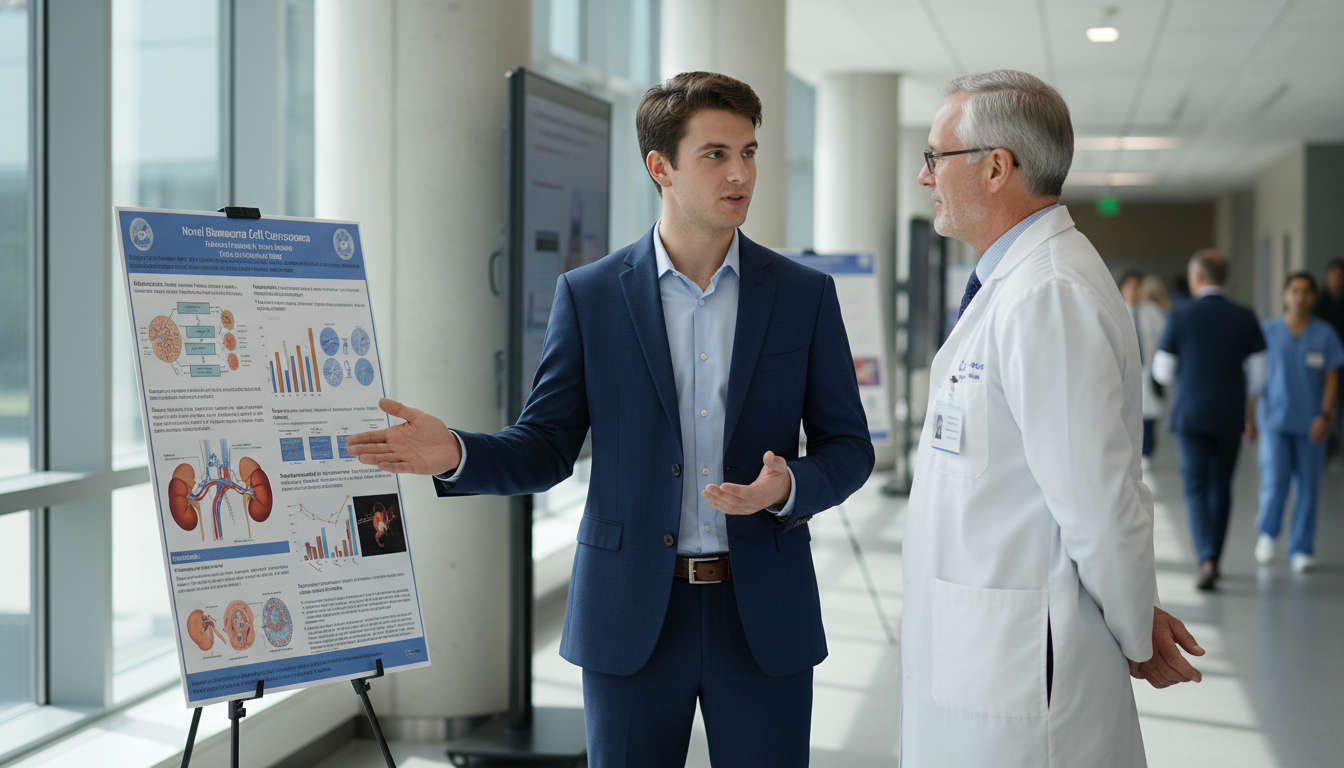
- Abstracts and posters at conferences (AMIA, HIMSS, ACP, SGIM, local hospital symposia)
- Book chapters, review articles, and narrative reviews in informatics or digital health
- Case reports that highlight clinical decision support, diagnostic error, or system failures
- Software tools, dashboards, or data visualizations tied to clinical workflows
All of these can contribute meaningfully to your research profile, especially if you document them clearly in your ERAS application and discuss them knowledgeably in interviews.

How Many Publications Do You Really Need? Setting Realistic Targets
One of the most common questions is: “How many publications are needed?” The honest answer is: it depends on your goals and context, but we can outline useful benchmarks.
For Residency Applications (Step One Toward Clinical Informatics)
For a Caribbean IMG aiming for a U.S. residency (often in internal medicine, family medicine, pediatrics, pathology, or another primary specialty), research can help offset:
- Limited name recognition of your Caribbean medical school
- USMLE/COMLEX scores that are good but not exceptional
- Limited U.S. clinical experience compared with U.S. graduates
In the context of a Caribbean medical school residency pathway (including the SGU residency match and similar), consider these practical benchmarks:
- Minimum to be competitive
- 1–2 research experiences (even if not published yet)
- At least one poster or abstract at a credible meeting
- Solid for many IM/FM/peds programs
- 1–3 publications or accepted abstracts (case reports, QI studies, or original research)
- Mix of informatics/digital health and general clinical topics
- Stronger profile for more academic/competitive programs
- 3–6+ scholarly outputs in total (publications + conference abstracts/posters)
- At least one substantial project where you played a major role
Committee members don’t usually have a strict “how many publications needed” cutoff. Instead, they look at:
- Consistency and trajectory – Are you engaged in research over time?
- Relevance – Does your research align with clinical medicine, quality, or informatics?
- Role – Did you contribute meaningfully, or are you always last author with minimal involvement?
For Clinical Informatics Fellowship Applications
Most clinical informatics fellowships accept applicants after they complete a primary specialty residency. At that stage, expectations for scholarly work are higher.
Typical expectations for a strong fellowship applicant:
- 3–10+ scholarly products total, including:
- Peer-reviewed publications (original research, reviews, or implementation studies)
- Multiple abstracts/posters (AMIA is particularly valued)
- Documented participation in informatics projects (EHR optimization, dashboards, CDS development)
- At least one informatics-specific project where you can discuss:
- Data sources and extraction
- Study design and analytic approach
- Implementation challenges and real-world impact
If you start as a Caribbean IMG with a clear informatics goal, the best strategy is to begin building this portfolio before residency so that you can accelerate your growth during training.
Finding and Creating Research Opportunities as a Caribbean IMG
Many Caribbean IMGs face a common barrier: no on-campus research lab, limited mentors on the island, and difficulty finding U.S. research roles. The good news is that informatics and health IT research are particularly well-suited to remote, collaborative, and data-driven work.
Step 1: Clarify Your Niche and Story
Before you chase any project that appears, define a coherent narrative for your future clinical informatics path:
Examples of narrative themes:
- “I’m an aspiring internist interested in using EHR data and decision support to reduce medication errors in older adults.”
- “I want to improve early identification of sepsis using real-time EHR data and clinical decision support tools.”
- “I’m passionate about telemedicine and digital access for underserved Caribbean and immigrant populations.”
This narrative will help you:
- Choose projects that align with clinical informatics
- Communicate your focus in emails to potential mentors
- Frame your personal statement and interviews effectively
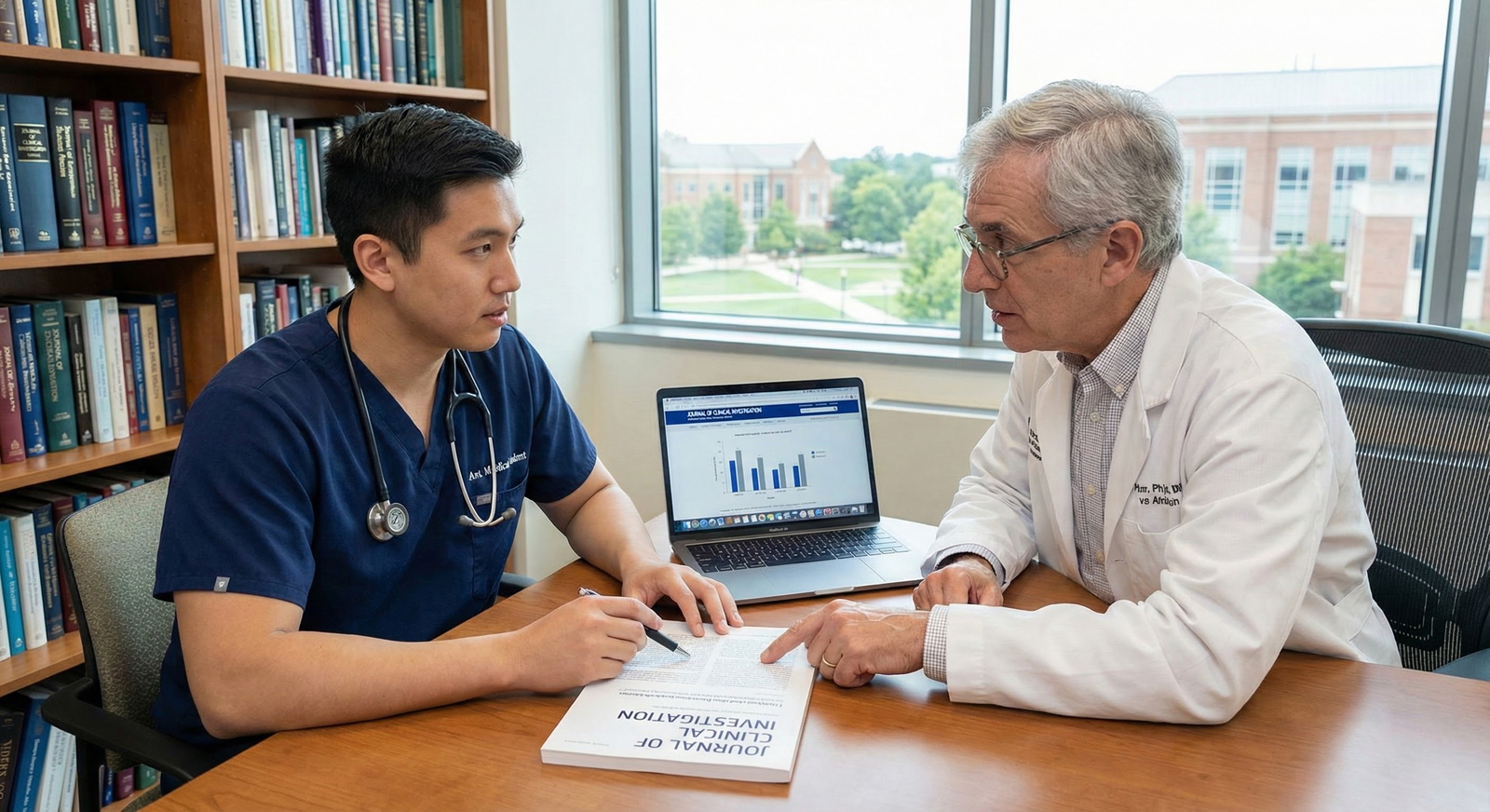
Step 2: Use Your Network Strategically
For Caribbean IMGs, networking must be intentional and persistent:
Caribbean medical school alumni network
- SGU, AUC, Ross, Saba, and other Caribbean schools have alumni in U.S. academic centers.
- Look for alumni involved in informatics, quality, or hospital administration (CMIOs, directors of quality, or digital health leads).
- Reach out via email or LinkedIn with a concise, professional message and a specific ask (e.g., “I’m interested in helping with ongoing EHR-related QI projects or data analysis.”).
Faculty connections during U.S. clinical rotations
- During your core and elective rotations, ask:
- “Are there any ongoing projects involving the EHR, quality improvement, or data analysis that students can join?”
- Attend department meetings, M&M conferences, and QI committees; introduce yourself afterwards.
- During your core and elective rotations, ask:
Professional organizations
- Join AMIA (American Medical Informatics Association) as a student member if possible.
- Attend webinars, virtual meetups, and poster sessions; politely follow up with presenters whose work interests you.
Step 3: Target Project Types That Are Feasible Remotely
While in the Caribbean or between rotations, aim for projects that you can realistically do without constant in-person presence:
Retrospective Chart Review or EHR-Based Studies
- You may not have direct EMR access as a student, but you can contribute:
- Data cleaning and organization (under supervision)
- Literature reviews and background section
- Data analysis, if properly trained and given de-identified data
- You may not have direct EMR access as a student, but you can contribute:
Systematic Review or Scoping Review in Informatics
- Examples:
- “Impact of clinical decision support on antibiotic stewardship in inpatient medicine”
- “Telemedicine outcomes for chronic disease management in low- and middle-income settings”
- You can do this entirely remotely with a motivated mentor.
- Examples:
Survey-Based Research
- Surveys of physicians or residents about burnout, EHR usability, or telehealth use.
- You can help with study design, literature review, survey creation, and data analysis.
Quality Improvement Project with a Clear Informatics Angle
- Example: Implementing a structured note template for diabetes follow-up, then measuring documentation quality and clinical outcomes.
- Even if you are briefly on-site, you can continue analysis and manuscript prep remotely.
Step 4: Use Remote Collaboration and Tools
Cultivate skills that make you an asset in informatics research:
- Data and analysis tools:
- Basic R or Python for data analysis
- Excel and basic statistics (chi-square, t-tests, logistic regression)
- Project management:
- Use shared platforms (Google Drive, OneDrive, Notion, Trello)
- Track timelines and deliverables for manuscripts and abstracts
- Writing and documentation:
- Learn to write clear introductions, methods, and result sections
- Use reference managers like Zotero or Mendeley
Being technically competent, reliable, and responsive will make mentors far more likely to retain and recommend you—especially when they can’t see you in person.
Turning Projects into Publications, Posters, and a Coherent Application Story
Doing research is only half the battle. You need to convert projects into tangible outputs and then present them effectively in your residency application and, later, clinical informatics fellowship applications.
Prioritizing Projects With the Highest Yield
As a Caribbean IMG, your time is limited by exams, rotations, and sometimes visa or travel constraints. Prioritize projects that offer a realistic path to:
- A submitted or accepted manuscript within 12–18 months
- An abstract or poster within 6–9 months
High-yield project examples:
QI project with pre/post intervention
- Easier to design and implement
- Often publishable in QI-focused or informatics journals
- Very relevant for clinical informatics
Systematic review with a narrow, well-defined question
- High chance of completion and submission
- Demonstrates understanding of evidence and methodology
Single-site retrospective study with a focused outcome
- E.g., “Impact of a new heart failure order set on time to diuretic administration”
Avoid overly ambitious multi-site or complex modeling projects as your first effort unless you have strong mentorship and clear structure.
Strengthening Your Role and Authorship Position
Committees look at not just the number of publications, but also your level of involvement:
- Aim for at least one first-author project if possible.
- In other projects, be a significant contributor (not just “data entry”).
Be proactive:
- Offer to write first drafts of sections (introduction, methods, results).
- Volunteer to create tables, figures, and data visualizations.
- Ask your mentor directly: “What would I need to do to be first or second author on this work?”
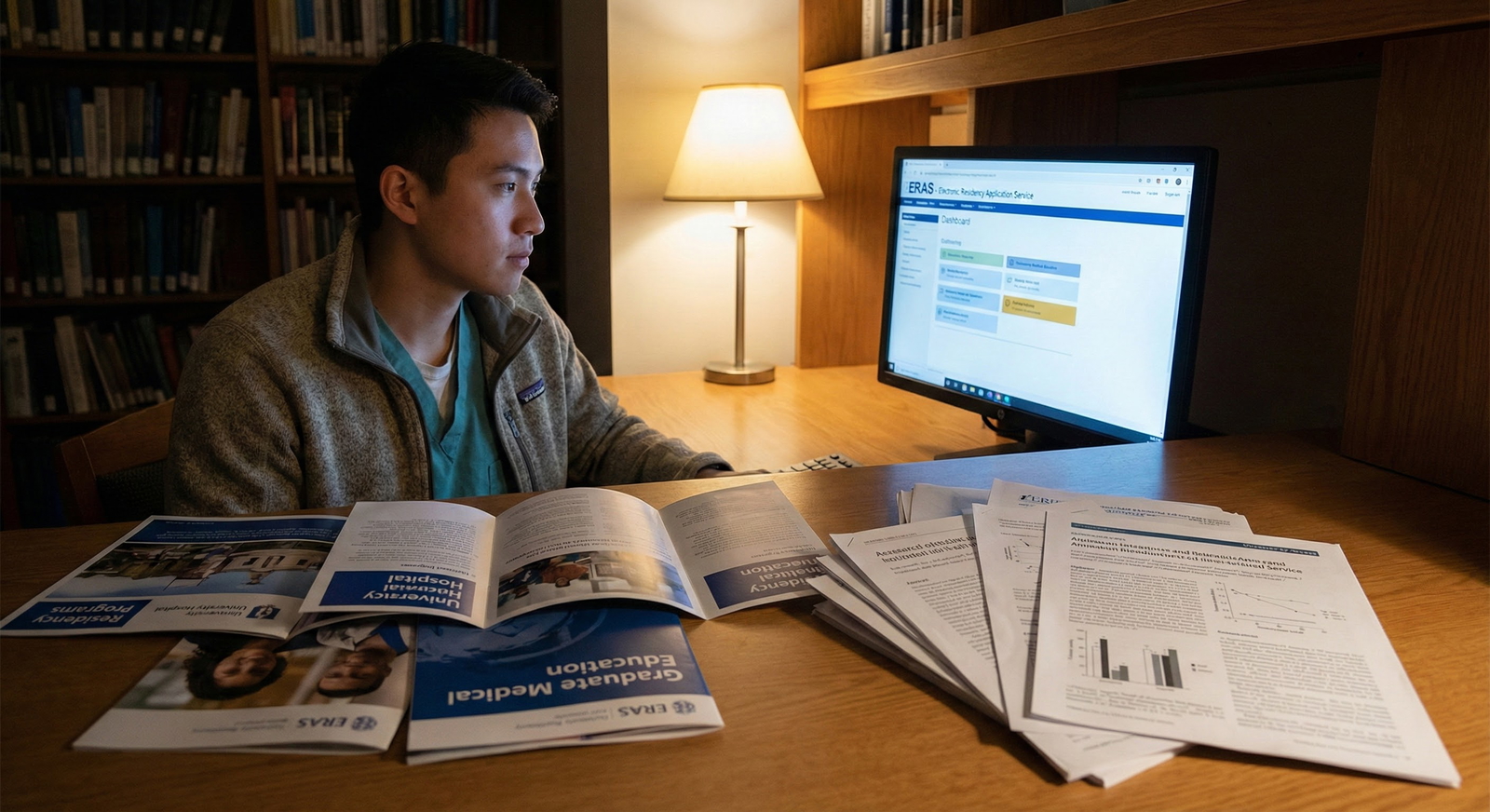
Documenting and Describing Your Research in ERAS
On your ERAS application (and later, on fellowship ERAS or similar systems):
- List each project separately
- Status: Published, Accepted, Submitted, or In Progress
- Journal or conference name
- Your author position
- In the description, highlight:
- Study goal and clinical question
- Your specific role (“Designed data collection instrument, conducted literature review, performed preliminary analysis”)
- Any informatics angle (EHR, CDS, telehealth, workflow optimization)
In your personal statement and interviews, connect your research to:
- Why you chose your primary specialty
- Why you’re passionate about clinical informatics
- How your research prepared you for a data-driven, systems-focused career
Example: Crafting a Coherent Story
Imagine an SGU student applying to internal medicine with future plans for a clinical informatics fellowship:
- Research:
- QI project on reducing readmissions using EHR alerts and discharge templates
- Systematic review on telemedicine in heart failure
- Poster on physician satisfaction with a new EHR interface
In their application, they might frame it as:
“Across my projects, I’ve focused on how data and digital tools can improve transitions of care and chronic disease management. My QI project implementing EHR-based alerts for high-risk discharges reduced 30-day readmissions, and sparked my interest in how informatics can change real-world outcomes. I hope to bring this informatics lens to my internal medicine training and eventually to a clinical informatics fellowship.”
This is powerful and believable, even if they have only 2–3 publications, because the story is aligned and coherent.
Building Skills and Credentials That Complement Your Research
Your research profile is strongest when paired with demonstrable skills in data, technology, and implementation. This is especially important when programs evaluate Caribbean IMGs who may not have had a robust informatics curriculum in medical school.
Health IT Training and Short Courses
Look for health IT training opportunities and certificates that you can complete alongside or before residency:
- Online courses (Coursera, edX, AMIA) in:
- Clinical informatics fundamentals
- Health data analytics
- EHR implementation and optimization
- Data science for healthcare
- Hospital or university-based certificate programs in informatics or digital health
- Vendor-specific training (Epic, Cerner) if you have access through rotations or employment
These do not replace strong clinical training, but they:
- Show commitment to informatics
- Help you understand terminology and frameworks
- Make you more effective and credible in informatics research projects
Technical and Analytical Skills
You do not need to be a software engineer, but certain capabilities are very valuable:
- Basic coding for data analysis
- R, Python, or even advanced Excel
- Statistics
- Understanding of common study designs
- Confidence intervals, p-values, regression basics
- Data visualization tools
- Tableau, Power BI, or R/Python plotting libraries
- Understanding of standards and concepts
- ICD, CPT, LOINC, SNOMED, FHIR (even at a conceptual level)
Many of these skills can be showcased through your research outputs: sophisticated figures, well-conducted analyses, and thoughtful discussions of data limitations.
Long-Term View: From Caribbean Medical School to Clinical Informatics Fellowship
A realistic multi-stage plan might look like:
During Caribbean medical school
- Join 1–2 research projects (remote or during U.S. rotations)
- Complete at least one publication or accepted abstract
- Take at least one health IT training or informatics course
During residency (e.g., internal medicine)
- Seek out a mentor in informatics or quality improvement
- Lead at least one major informatics-related QI or research project
- Present at AMIA or similar conferences
- Aim for multiple scholarly outputs (3–8 by end of residency)
Applying to clinical informatics fellowship
- Highlight your cumulative research, tech skills, and leadership
- Show a clear understanding of informatics beyond “computers in medicine”
- Demonstrate that your Caribbean medical school background is not a limitation but part of your perspective on global and underserved care
FAQs: Research Profile Building for Caribbean IMGs in Clinical Informatics
1. As a Caribbean IMG, is it realistic to build a strong enough research profile for clinical informatics?
Yes, it is realistic, but it requires intentional planning, early action, and persistence. Informatics lends itself to remote collaboration, data-driven projects, and systematic reviews—all feasible from a Caribbean medical school. Use alumni connections, U.S. rotations, and virtual mentors to access projects, and aim for at least a few concrete outputs (publications or abstracts) before you apply for residency.
2. How many publications needed to be taken seriously for residency if I want to pursue clinical informatics later?
There is no fixed number, but for most Caribbean medical school residency applicants aiming at internal medicine, family medicine, or similar:
- Aim for 1–3 publications or accepted abstracts before residency applications.
- Make sure at least some of them are clearly relevant to clinical practice, quality, or informatics.
Once in residency, you can expand this to 3–10+ scholarly outputs by the time you apply for a clinical informatics fellowship.
3. I don’t have access to a big academic hospital. How can I still do informatics-related research?
Focus on:
- Systematic or scoping reviews in topics like telemedicine, decision support, or EHR usability.
- Survey-based research among clinicians or trainees (if you have access).
- Remote collaboration on existing projects, where you help with literature reviews, data cleaning, or analysis under a mentor’s supervision.
- QI projects during your U.S. rotations—these can often be designed, implemented, and later written up as manuscripts.
4. Does having research in non-informatics fields (e.g., basic science or unrelated clinical topics) still help my clinical informatics path?
Yes. Any rigorous research experience shows you can think critically, follow protocols, analyze data, and write scientifically. However, to maximize your competitiveness for both residency and a future clinical informatics fellowship, you should add at least some projects that clearly connect to informatics, digital health, or quality improvement. This combination—general research competence plus targeted informatics work—creates the strongest profile for a Caribbean IMG aiming at a clinical informatics career.