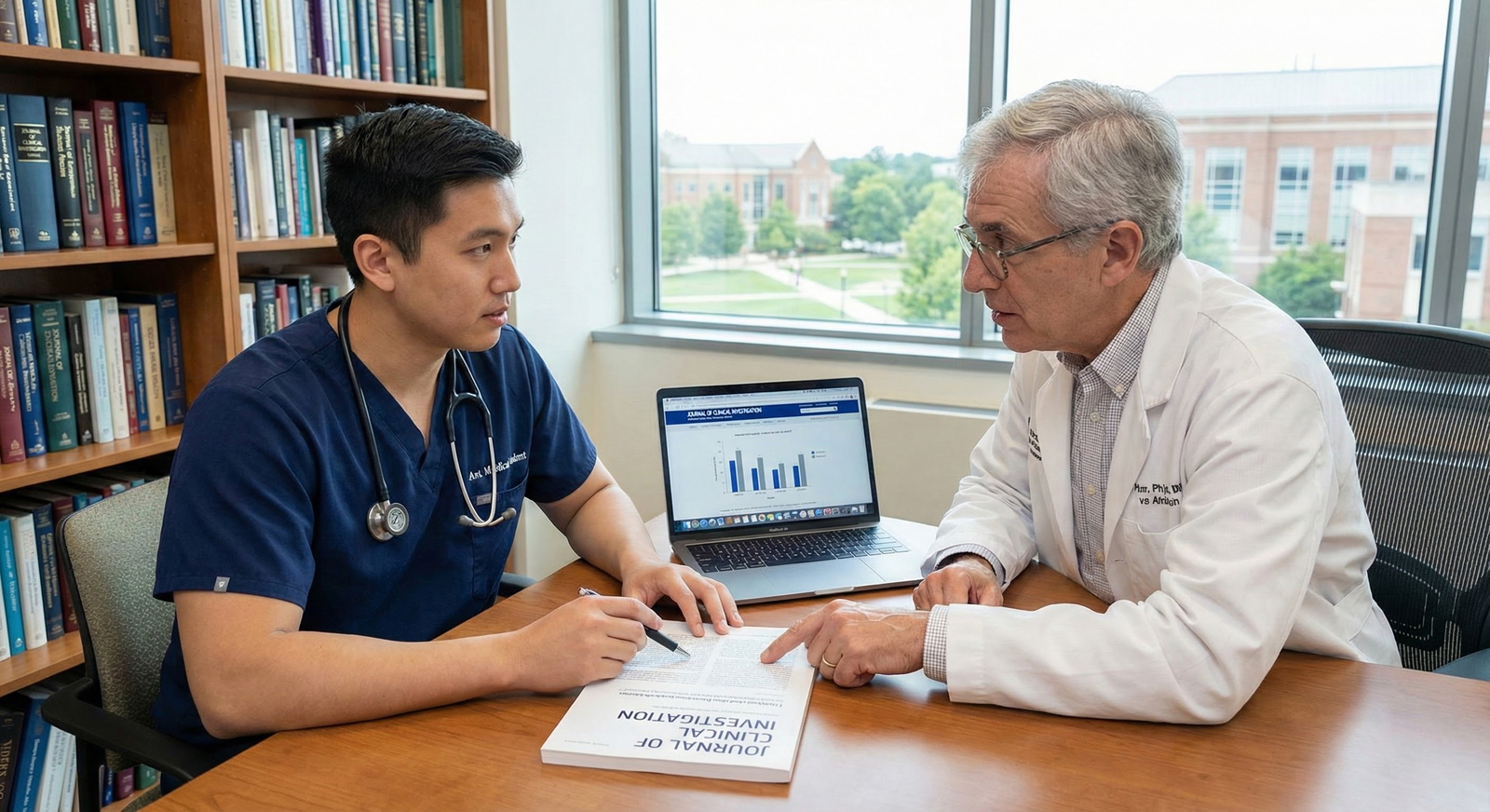
Why Research Matters for Caribbean IMGs in Family Medicine
For many Caribbean medical students and graduates, family medicine is a natural, appealing specialty: broad clinical exposure, continuity of care, and a strong focus on community health. Because family medicine is considered “less competitive” than some specialties, many Caribbean IMGs underestimate the importance of research.
That’s a mistake.
While you can absolutely succeed in the family medicine residency match (FM match) without a PhD-level research background, a strong research profile can:
- Differentiate you from other Caribbean medical school residency applicants
- Compensate (partially) for weaker exam scores or institutional bias
- Demonstrate academic curiosity, professionalism, and follow-through
- Show program directors that you can interpret evidence and improve practice
- Open doors to academic family medicine, leadership, and fellowship later on
This is especially true for Caribbean IMGs, including students from schools like SGU, AUC, Ross, Saba, etc. Having a clear, intentional strategy for research profile building will strengthen your overall application and make you more competitive for both community and university-affiliated programs.
In this guide, you’ll learn:
- What “counts” as meaningful research for family medicine
- How many publications are realistic and “enough” for the FM match
- How to build a research portfolio from scratch as a Caribbean IMG
- Practical pathways to projects, even if your school has limited infrastructure
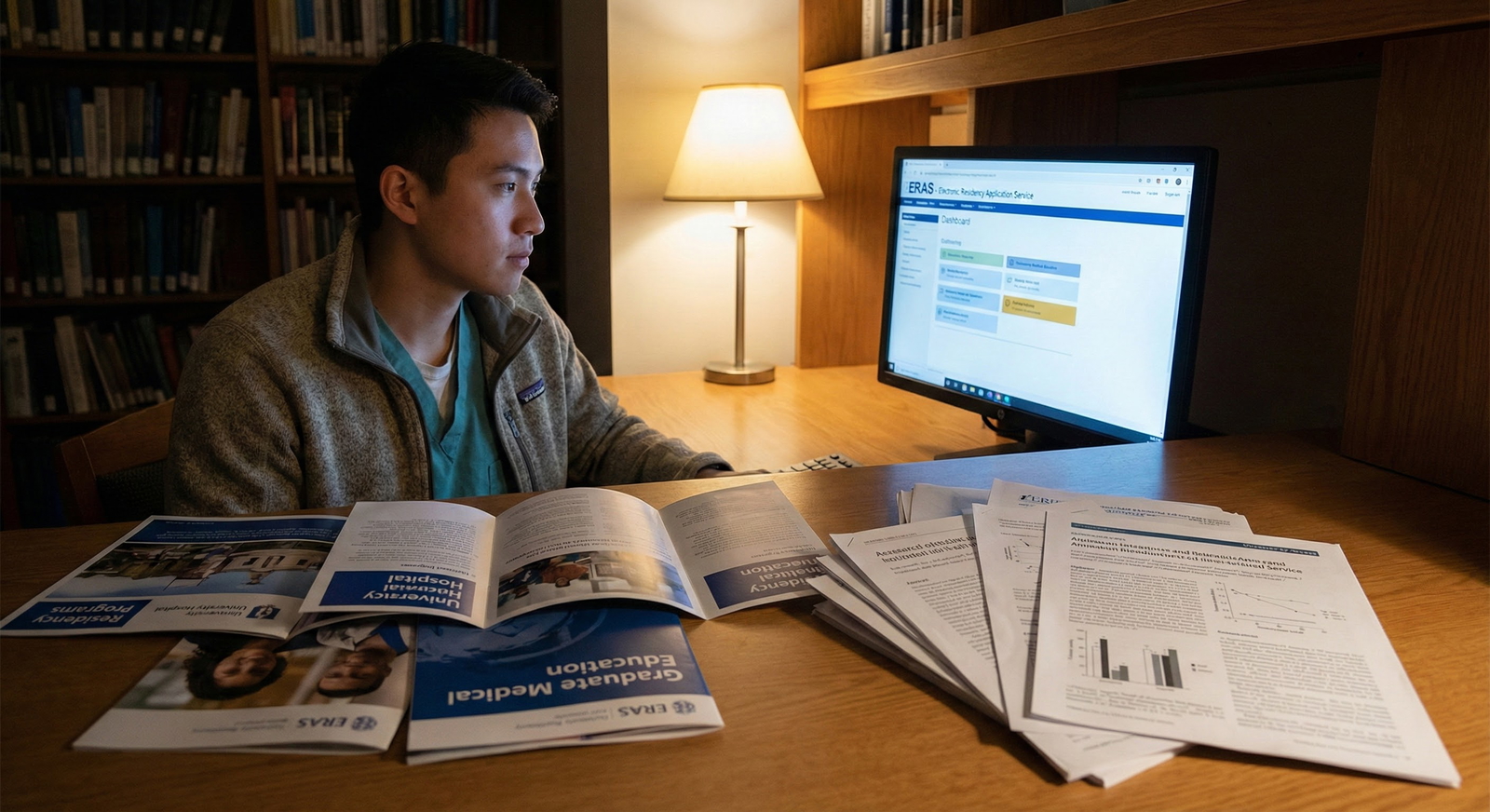
- How to present your research on ERAS and during interviews
Understanding the Role of Research in Family Medicine Residency
How Much Does Research Really Matter in FM?
In family medicine, clinical performance, letters of recommendation, USMLE scores, and interpersonal skills typically weigh more than research. However, data from NRMP Program Director Surveys consistently show that:
- A majority of FM program directors consider research experience and publications when deciding whom to interview.
- Academic and university-affiliated programs tend to value research more.
- Research experience signals professionalism, discipline, and academic potential.
For a Caribbean IMG, research can be a crucial “plus factor” because:
- It helps counteract concerns about training quality or institutional reputation.
- It shows you can meet (and exceed) expectations similar to US grads.
- It makes your application appear more “complete” and polished.
If you’re coming from a well-known Caribbean medical school residency pipeline (e.g., SGU residency match outcomes are widely reviewed by programs), strong research and scholarly work can push you into the top tier of IMG applicants for family medicine.
What Types of Research Are Most Valuable for FM?
You do not need to be doing basic science bench work to impress family medicine programs. In fact, most FM faculty are clinician–educators, not lab researchers. They often prefer applicants whose scholarly work aligns with:
- Primary care
- Community and population health
- Quality improvement (QI)
- Health disparities and underserved populations
- Preventive care, chronic disease management
- Medical education or curriculum improvement
- Behavioral health, addiction, and integrated care
Research for residency in family medicine often includes:
- Retrospective chart reviews (e.g., diabetes management in a clinic)
- QI projects (e.g., vaccine rates, hypertension control, screening rates)
- Clinical outcomes or implementation studies
- Survey-based projects (patient satisfaction, burnout, access to care)
- Educational research (evaluating teaching methods, OSCEs, curricula)
These projects are generally more accessible to Caribbean IMGs, especially during clinical rotations or US observerships.
What “Counts” as Research on ERAS?
You can list a wide variety of scholarly activities on ERAS, including:
- Peer-reviewed original research articles
- Case reports and case series
- Review articles and book chapters
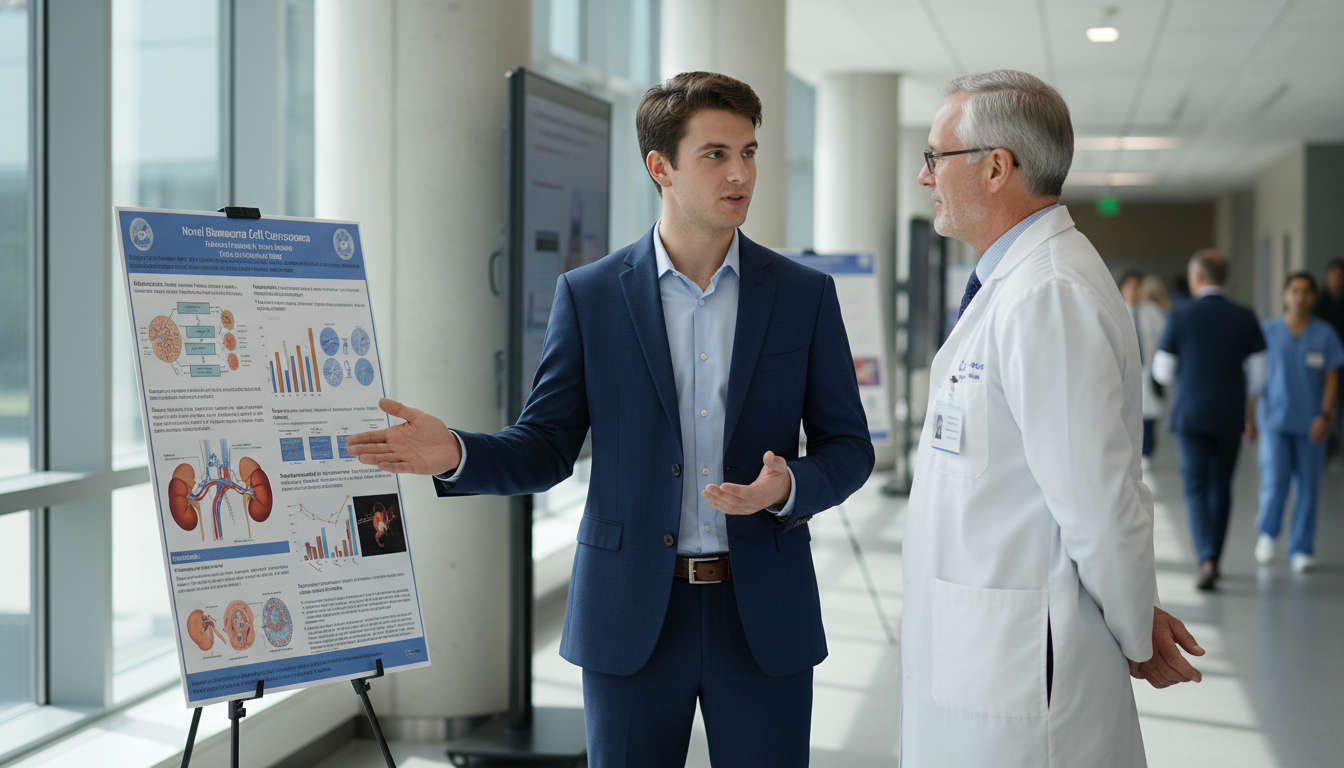
- Conference abstracts and posters
- Oral presentations at meetings (local, regional, national)
- QI and process improvement projects
- Educational modules or curricula you created or helped evaluate
The key is honesty and clarity. Program directors are not expecting every Caribbean IMG in family medicine to have multiple first-author original research papers—but they do expect integrity and some evidence of scholarly effort if you claim it.
How Many Publications Are Enough for the FM Match?
You will often hear people ask: “How many publications are needed?” The truthful answer is: there is no magic number. However, we can anchor expectations.
Benchmarking: US MD vs Caribbean IMG
Typical ranges:
- Many US MD seniors matching into family medicine have 0–3 publications.
- Successful Caribbean IMGs may have 1–5 scholarly items (not necessarily all peer-reviewed).
As a Caribbean IMG, you’re competing not just with other IMGs but also with US grads. Having some research and academic output helps you look more comparable to the domestic pool.
A Practical Target for Caribbean IMGs in Family Medicine
For a Caribbean IMG aiming at a solid FM match—especially if you are targeting a mix of community and academic programs—a good target portfolio is:
- 1–2 peer-reviewed outputs (can be case reports, review articles, or original research)
- 2–5 other scholarly activities, such as:
- Posters or oral presentations
- QI projects with documented outcomes and/or presentations
- Educational modules, workshops, or teaching innovations
So when thinking, “How many publications needed?” for a competitive family medicine application as a Caribbean IMG:
- 1 strong, first-author publication + several presentations/QI projects is very respectable.
- 2–3 publications (not necessarily original research) + conference work places you toward the upper tier for FM, especially among IMGs.
- More than that is great, but only if it doesn’t compromise your clinical performance or exam prep.
Remember: in FM, a well-done QI project or a clinically meaningful case series related to primary care can be just as impressive as a basic science paper, if not more.

Pathways to Research for Caribbean IMGs (Even with Limited Resources)
Many Caribbean IMGs worry that their schools don’t have strong research infrastructure. While that can be a challenge, it is not a dead end. You simply have to be strategic and proactive.
1. Leverage Your Caribbean School’s Existing Opportunities
Start by thoroughly exploring what your own school offers:
- Research offices or deans: Ask if there’s a research director or faculty point person.
- Student interest groups: Often have ongoing projects or connections to faculty.
- Required research courses or capstones: Turn these into publishable or presentable projects.
- Alumni networks: Many SGU, Ross, AUC, and Saba alumni are in US family medicine; some are actively involved in research or QI and willing to mentor.
Action steps:
- Check your school’s website or student portal for “research,” “scholarship,” or “capstone.”
- Email faculty with a brief, professional message: who you are, your interests, and your willingness to help with ongoing projects.
- Join or help lead a Family Medicine Interest Group or Primary Care interest group, and propose a small research or QI project.
2. Use Clinical Rotations Strategically for QI and Research
Your core and elective rotations—both in the Caribbean and in the US—are prime opportunities for QI and small research projects, especially in primary care and internal medicine settings.
Examples:
During an internal medicine or family medicine rotation at a US clinical site, you notice low colorectal cancer screening rates. You work with a resident and attending to:
- Define a baseline screening rate
- Implement a simple intervention (reminder cards, EMR alerts, patient education)
- Re-measure rates after a defined period
In an outpatient clinic, you help create a survey about patient satisfaction with telemedicine visits and analyze the results.
These projects can often yield:
- A QI poster at a local hospital or regional conference
- A short publication in a primary care journal (sometimes as a QI report)
- Strong letters of recommendation citing your initiative and scholarship
3. Remote and Collaborative Research While in the Caribbean
Even while on the island, or while waiting between exams and rotations, you can build research experience remotely.
Options include:
Systematic or narrative reviews:
- Partner with peers and a faculty mentor.
- Focus on a family medicine-relevant topic (e.g., hypertension in Black populations, smoking cessation in primary care).
- Many journals accept well-structured reviews, and these are more feasible remotely.
Data analysis on existing datasets:
- Some faculty or alumni may have de-identified datasets available.
- You can help with data cleaning, basic statistics, and manuscript writing.
Educational research:
- Survey your classmates about study strategies, stress, burnout, or exam performance.
- Collaborate with your school’s academic support office to design and analyze the study ethically.
Actionable tips:
- Join online research collaboratives or interest groups on LinkedIn or professional forums.
- Reach out to alumni in family medicine asking if they can involve you in ongoing projects.
- Use time between Step 1 and clinical rotations to complete reviews or writing projects.
4. Getting Involved with US-Based Mentors
US-based mentorship is particularly powerful for Caribbean IMGs because it connects you directly with the environment in which you hope to practice.
How to find mentors:
During US clinical rotations:
- Identify attendings or residents who publish or present regularly.
- Ask if they have ongoing projects and express interest in helping with literature reviews, data entry, or manuscript drafting.
Through professional organizations:
- American Academy of Family Physicians (AAFP)
- State family medicine societies
- Many have student/IMG sections or mentorship programs.
Through cold, but thoughtful outreach:
- Search for family medicine faculty with interests matching yours (e.g., obesity medicine, addiction, rural health).
- Email briefly: your background, school, interest in FM, and willingness to assist on existing projects, including data or literature tasks.
What you can realistically offer as a student:
- Literature searches and summaries
- Drafting parts of manuscripts (introductions, methods, discussion)
- Organizing references, tables, and figures
- Data entry and simple data management
Be honest about your skills and availability. Reliability is more important than experience at the start.

Building a Strong, Coherent Research Narrative
A powerful research profile is not just a list of items; it tells a story that supports your identity as a future family medicine physician.
Align Your Research with Family Medicine Themes
Try to keep a majority of your projects connected—directly or indirectly—to:
- Primary care and continuity of care
- Preventive medicine, screening, and chronic disease management
- Social determinants of health and health disparities
- Behavioral health and addiction in primary care
- Women’s health, pediatrics, geriatrics in outpatient settings
- Global health or underserved populations (especially relevant for Caribbean IMGs)
Even if you participate in projects outside FM (e.g., surgery, neurology), you can frame them in terms of:
- Population impact
- Continuity and coordination of care
- How primary care providers interface with that specialty
From Random Projects to a Coherent Profile
Suppose you have:
- A case report on diabetic foot infection during internal medicine rotation
- A QI project on vaccination rates in a pediatrics clinic
- A systematic review on hypertension control in low-resource settings
- A poster on patient satisfaction with telehealth visits
You can tie this together as:
“Across my projects, I’ve focused on understanding how primary care can improve chronic disease outcomes and patient experience, especially in resource-limited or underserved settings. This aligns closely with my goal of becoming a family physician who uses evidence-based methods and QI to improve care at both patient and systems levels.”
This kind of integrated narrative is powerful in:
- Personal statements
- ERAS experiences descriptions
- Interview answers (e.g., “Tell me about your research”)
Depth vs Breadth: Which Matters More?
For most Caribbean IMGs in family medicine:
- Depth in a few well-executed projects is better than scattering across 10 superficial ones.
- Being first or second author on 1–2 meaningful projects can be more impressive than being the 8th author on 6 papers where your contribution was minimal.
Aim to:
- Take ownership of at least one project from idea to presentation or publication.
- Understand the methodology, results, and limitations deeply enough to explain them clearly in interviews.
Presenting Your Research Effectively on ERAS and Interviews
How to List Research and Publications for the FM Match
On ERAS, you’ll have categories for:
- Work/Research experiences
- Publications and presentations
- Leadership and volunteer experiences (some QI projects also fit here)
Tips:
- Be accurate about authorship order, journal names, and dates.
- Use PMID or DOI if available; if “submitted” or “in progress,” label clearly.
- For each experience, describe your specific role (e.g., “Designed data collection tool, abstracted 150 charts, performed descriptive analysis, and drafted results section”).
Avoid:
- Exaggerating your contributions.
- Listing “ideas” or projects that never actually started.
- Misrepresenting a school assignment as a “peer-reviewed publication” if it was not.
Handling “In Progress” Projects
Many Caribbean IMGs worry that their manuscripts won’t be accepted before ERAS submission. That’s okay—as long as you’re transparent.
Reasonable categories:
- “Data collection completed; manuscript in preparation.”
- “Manuscript under review at [journal name].”
- “Abstract accepted for presentation at [conference name, date].”
Programs understand the publication process takes time. They value effort and trajectory, not just final products.
Discussing Research in Family Medicine Residency Interviews
Common questions:
- “Tell me about your research.”
- “What was your role in that project?”
- “What did you learn from your research experience?”
- “How do you see research fitting into your future career in family medicine?”
Prepare concise, clear responses:
Briefly summarize the project (1–2 sentences):
- Clinical question, methods, major findings.
Highlight your role:
- What you actually did, skills you used or developed.
Connect to family medicine:
- How it informs your approach to patients, QI, or practice in primary care.
Example answer:
“I worked on a quality improvement project in a community clinic that aimed to increase influenza vaccination rates among adults with chronic conditions. We reviewed baseline rates, implemented reminder calls and EMR alerts, and then measured vaccination rates the following season. I helped design the data collection process, did the chart review, and presented our results as a poster at a regional meeting. This experience showed me how small systems changes in primary care can have a big impact on population health—something I’d like to continue pursuing as a family medicine resident.”
This kind of answer demonstrates:
- Clinical relevance
- Understanding of QI principles
- Reflection and maturity
- Alignment with FM values
Putting It All Together: A Stepwise Plan for Caribbean IMGs
To make this concrete, here’s a structured plan you can adapt, whether you’re early in basic sciences or already graduating.
If You’re in Basic Sciences (Pre-Clinical Phase)
- Learn the fundamentals of research methods and biostatistics (through coursework or self-study).
- Join or form a research interest group—preferably family medicine or primary care focused.
- Seek out faculty who supervise:
- Literature reviews
- Educational research
- Simple survey-based projects
- Aim to complete at least one review article or survey-based project by the end of this phase.
During Clinical Rotations
- Identify at least one family medicine or internal medicine site where a mentor is open to QI or research.
- Propose a simple, measurable QI project (screening rates, chronic disease metrics, patient education).
- Document everything carefully so it’s easy to turn into a poster or manuscript.
- Present your work locally; then submit to a regional or national conference (STFM, AAFP, state academies).
Step Prep / Gap Times
- Use “lighter” periods (e.g., after Step 1, before graduation) to focus on writing:
- Turn data from earlier projects into manuscripts.
- Start or complete a systematic or narrative review in an FM-relevant area.
- Reach out to mentors and alumni for co-authorship opportunities or small contributions to ongoing papers.
In the Application Year
- Organize all your research and publications for ERAS entry.
- Revise your CV so that research entries are accurate and consistent.
- Practice 2–3 concise explanations of your main projects.
- In your personal statement, integrate your research story into your motivation for family medicine and commitment to continuous improvement in care.
If you are from a high-output Caribbean medical school residency pipeline like SGU, being one of the applicants with a clear, coherent, primary care–focused scholarly profile can give you a noticeable edge in the SGU residency match and comparable Caribbean IMG cohorts.
FAQs: Research Profile Building for Caribbean IMGs in Family Medicine
1. Do I need research to match into family medicine as a Caribbean IMG?
You can match family medicine without research, especially into more community-based programs, if your USMLE scores, clinical performance, and letters are strong. However, as a Caribbean IMG, having at least some research or QI experience:
- Improves your chances of interviews.
- Helps with academic or university-affiliated FM programs.
- Strengthens your overall application and your narrative.
So research is not strictly required, but it is strongly recommended.
2. How many publications needed to be competitive in FM as a Caribbean IMG?
There is no fixed number, but a realistic and competitive goal is:
- 1–2 peer-reviewed outputs (case reports, reviews, or original research), plus
- Several scholarly activities such as posters, QI projects, and presentations.
Quality and relevance to primary care matter more than sheer quantity.
3. Will non–family medicine research still help my FM match?
Yes. Any well-executed research or scholarly project demonstrates skills in:
- Critical thinking
- Data interpretation
- Communication
- Professionalism and follow-through
Even if your work is in surgery or neurology, you can explain how:
- It taught you research skills you’ll apply to primary care.
- It influenced your understanding of continuity of care and the role of the family physician.
That said, having at least a portion of your work explicitly connected to family medicine, primary care, or QI will be especially helpful.
4. I’m late in my training with minimal research. What can I still do?
Focus on high-yield, feasible projects:
- Collaborate on case reports from interesting patients you’ve seen (with permission and proper supervision).
- Join an ongoing QI project at your current rotation site.
- Work with a mentor on a short narrative review or clinical update article.
- Make sure to present at least one poster (local or virtual), which can be done relatively quickly once you have data.
Even 1–2 well-done, late-stage projects—if honestly presented and thoughtfully discussed—can significantly enhance your family medicine residency application.
By approaching research profile building strategically and honestly, Caribbean IMGs can transform a perceived disadvantage into a genuine strength. Whether you are at a large institution with an established SGU residency match pipeline or a smaller Caribbean medical school, aligning your research with family medicine values—continuity, community, prevention, and systems improvement—will help you stand out in the FM match and begin your residency as a thoughtful, evidence-driven clinician.