Understanding the Role of Research for Caribbean IMGs in Med-Peds
For a Caribbean international medical graduate (IMG) targeting a Medicine-Pediatrics (Med-Peds) residency in the United States, a strong research profile can significantly strengthen your overall application. It’s rarely the single deciding factor, but it often becomes the “tie‑breaker” between you and another candidate with similar board scores and clinical performance.
Med-Peds is a smaller, competitive combined specialty. Program directors in Med-Peds value:
- Evidence of intellectual curiosity
- Commitment to lifelong learning
- Ability to interpret evidence and apply it to both adult and pediatric patients
- Clear, long-term interest in internal medicine and pediatrics
Research is one of the best objective signals that you possess these qualities.
At the same time, Caribbean IMGs—whether from SGU, AUC, Ross, Saba, or other schools—face known challenges:
- Limited home institution research infrastructure
- Less access to large academic centers
- Visa considerations and geographic constraints
- Stereotypes about Caribbean medical school residency applicants
This is why a targeted, well-planned research strategy is essential. You don’t need to be a future physician-scientist, but you do need a credible, coherent research story that supports your Medicine-Pediatrics match goals.
In this article, we’ll walk through how to:
- Understand expectations around research for Med-Peds
- Decide what types of research are realistic and valuable
- Build a stepwise research plan from M1 through application year
- Leverage opportunities at schools like SGU and beyond
- Present your research effectively during the Medicine-Pediatrics match process
How Much Research Do You Really Need for Med-Peds?
One of the most common questions is some variation of: “How many publications needed for a Medicine-Pediatrics match as a Caribbean IMG?”
What Program Directors Actually Look For
Program directors rarely have a specific numerical cutoff like “3 publications or you’re out.” Instead, they consider:
Evidence of scholarly activity
- Abstracts, posters, quality improvement (QI) projects, case reports, book chapters, clinical research, educational projects.
Consistency with your narrative
- Does your research align with Medicine, Pediatrics, or Med-Peds themes (e.g., transition of care, chronic disease from childhood to adulthood, complex care)?
Level of engagement
- Did you just join as a name on a paper, or can you clearly explain your role, what you learned, and why it mattered?
Progress over time
- Did you advance from simple case write-ups to more structured projects, or from helper roles to more ownership?
Quality and impact
- Peer-reviewed publications and national conference presentations carry more weight than internal posters, but all scholarship counts if framed well.
Realistic Targets for Caribbean IMGs
There is no magic number, but as a rough framework for a Caribbean IMG aiming for a Med-Peds residency:
Minimum / Baseline (Competitive but modest)
- 1–2 case reports or case series in adult or pediatric medicine
- 1 QI or clinical audit project (preferably Med-Peds related)
- 1 poster presentation at a regional or national meeting
Stronger Profile (Good chance at a broad range of Med-Peds programs)
- 2–4 total publications (case reports, case series, retrospective studies, QI write-ups)
- 2–3 poster/oral presentations (local, regional, or national)
- Ongoing involvement in at least one Med-Peds-relevant project at the time of application
Highly Academic (Aiming for research-heavy or university Med-Peds programs)
- 4+ publications for match (not all must be first-author, but at least one where you have a central role)
- Clear, sustained work with one or more mentors (e.g., from an SGU residency match pipeline, US hospital, or academic institution)
- Possible gap year or dedicated research year with full-time output
This doesn’t mean that you cannot match Med-Peds with less; many applicants match with fewer research items, especially if they have excellent USMLE scores, strong letters, and US clinical experience. However, aiming within these ranges can make your profile more competitive, particularly as a Caribbean IMG.
Types of Research That Matter for Med-Peds (and How to Choose)
Not all research is created equal, but almost all legitimate research can be valuable if you tie it to a clear Med-Peds story.
1. Clinical Research (Retrospective or Prospective)
Examples:
- Study of asthma management in adolescents transitioning to adult care
- Outcomes in young adults with childhood-onset diabetes
- Hospital readmission patterns among patients with congenital heart disease
Why it’s valuable for Med-Peds:
Med-Peds physicians are experts in chronic diseases spanning childhood through adulthood. Clinical research on chronic illnesses, transitions of care, health disparities, or complex comorbidities fits perfectly.
Caribbean IMG angle:
You may not have a fully equipped research department, but you can often contribute to chart reviews or data analyses via:
- US clinical electives or sub-internships
- Remote collaborations with academic mentors
- Residency-affiliated programs that welcome medical students into ongoing projects
2. Quality Improvement (QI) and Patient Safety Projects
Examples:
- Improving vaccination rates in adolescents at a clinic
- Reducing medication errors in a pediatric or internal medicine ward
- Streamlining discharge planning for patients with sickle cell disease
Value for Med-Peds:
Med-Peds is deeply rooted in primary care, chronic disease management, and systems-based practice—QI projects speak directly to these competencies.
Why this is IMG-friendly:
QI projects often:
- Require fewer resources than traditional bench or large-scale clinical research
- Can be conducted during rotations (in Caribbean hospitals, affiliated US hospitals, or electives)
- Are easier to translate into posters and presentations
3. Case Reports and Case Series
Examples:
- Unusual presentation of Kawasaki disease in a teenager
- Adult with a pediatric-onset metabolic disorder
- Pediatric patient with an adult-type autoimmune disease
Pros:
- Feasible even with limited infrastructure
- Good entry point for learning how to write scientifically
- Relatively quick timeline from observation to submission
Cons:
- Lower prestige than full-length original research
- Require careful execution to be accepted in reputable journals
For Caribbean IMGs:
Case reports can form the backbone of your early research record. Multiple well-written, peer-reviewed case reports are far better than no research at all, especially for Medicine-Pediatrics.
4. Educational Research and Curriculum Projects
Examples:
- Designing and evaluating a Med-Peds curriculum for medical students
- Developing simulation cases on adolescent transitions of care
- Studying the impact of teaching interventions on pediatric sepsis recognition
Why it helps:
Med-Peds physicians frequently serve as educators and leaders in residency programs. Educational research shows your interest in teaching, academic medicine, and structured problem-solving.
5. Basic Science and Translational Research
If you have genuine interest and time, basic science can be beneficial, especially for academically oriented programs. However, for many Caribbean IMGs with time and visa constraints, basic science is less accessible than clinical or QI research.
When it’s worth it:
- You already have a basic science background
- You’re considering a research year at a US institution
- You can connect it to diseases and conditions relevant to Med-Peds (e.g., genetics of congenital disorders, immunology, cystic fibrosis research)

Step-by-Step Timeline: Building a Med-Peds-Oriented Research Profile
Every Caribbean school has a slightly different structure, but this general timeline can guide you. Adapt it to your SGU, Ross, AUC, Saba, or other Caribbean program’s curriculum.
Preclinical Years (Basic Sciences)
Goals:
- Build foundational research skills
- Learn how academic medicine works
- Begin small, realistic projects
Action Steps:
Identify your Med-Peds interest early.
- Reflect on what attracts you: broad age range, chronic disease management, transitions of care, underserved populations.
- This clarity will help you choose research topics that support your future narrative.
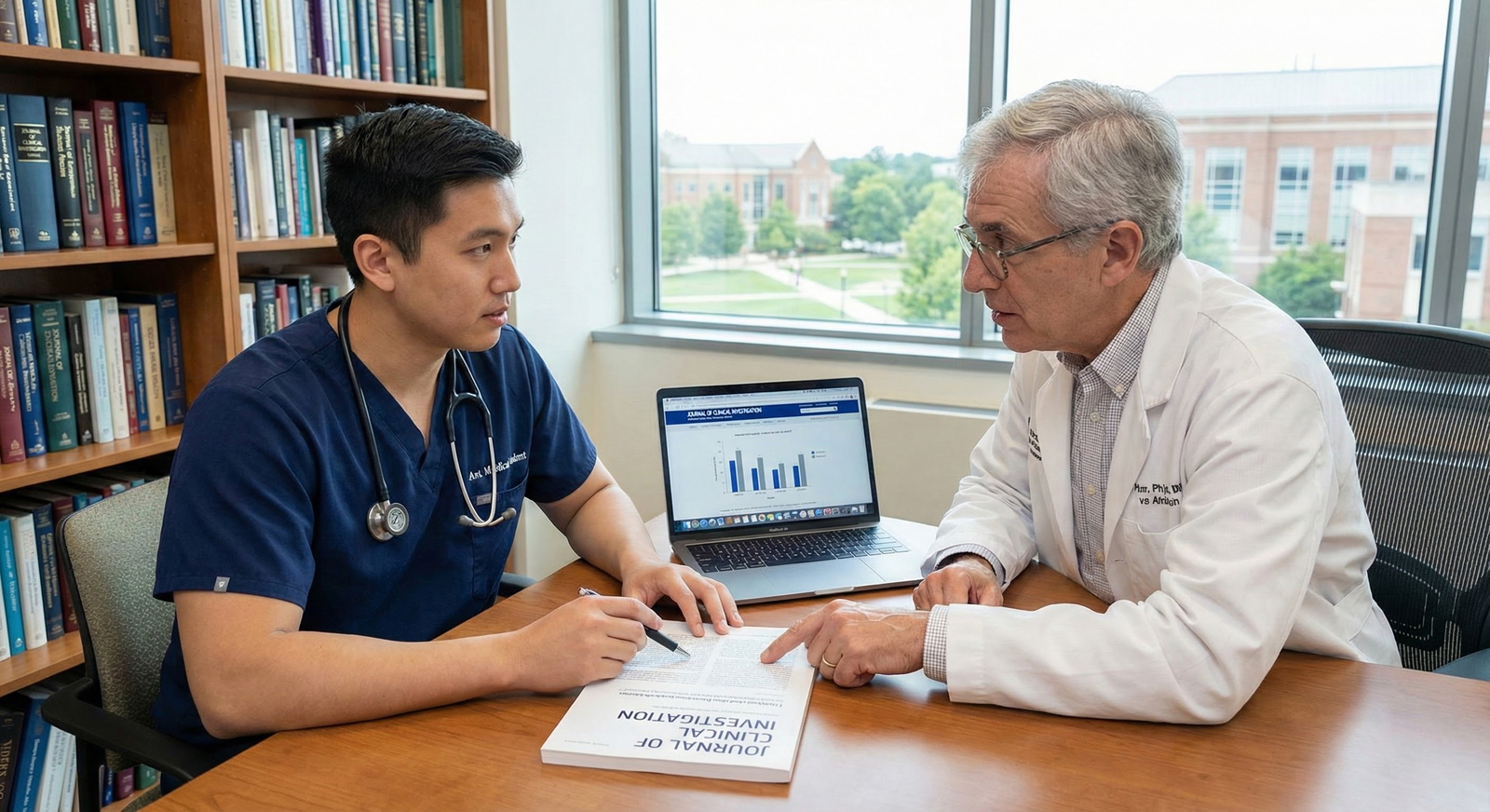
Find accessible mentors.
- Start with faculty who publish, even if they’re not Med-Peds.
- Ask course directors, department chairs, or student affairs for a list of research-active faculty.
- Approach them with a specific ask: “I’m interested in Med-Peds and would love to help with literature reviews, data entry, or writing on any projects you have.”
Learn research basics.
- Complete online modules or certifications: CITI training in human subjects research.
- Read tutorials on study design, statistics, and scientific writing.
- Join your school’s research or evidence-based medicine interest group, if available.
Start with small, achievable tasks.
- Literature reviews for an attending’s ongoing project
- Case report drafts when unique patients are encountered
- Dataset cleaning or basic analysis (with proper supervision and IRB oversight)
Deliverables by end of preclinical years (ideal):
- 1–2 poster presentations (even if local or internal)
- At least 1 case report submitted or accepted for publication
- Strong relationship with at least one research mentor
Core Clinical Rotations
Goals:
- Align research with Medicine, Pediatrics, or Med-Peds
- Generate scholarly output from your clinical exposures
Action Steps:
Be proactive on rotations.
- Ask attendings: “Are there any patients suitable for a case report or mini research project?”
- Volunteer to help with data collection on ongoing QI or clinical studies.
Target Med-Peds-relevant themes.
- Chronic illnesses (asthma, diabetes, congenital heart disease, cystic fibrosis)
- Transitional care (pediatric-to-adult handoffs)
- Preventive care and health disparities
- Complex care needs, multi-comorbidity, or rare diseases that span age groups
Convert clinical experiences into scholarship.
- Case reports: Identify unusual presentations or management challenges.
- QI: Work with residents and attendings on existing initiatives, like improving vaccination documentation or follow-up compliance.
- Clinical research: Offer to help analyze or summarize data.
Document everything thoroughly.
- Keep a spreadsheet with: project title, mentor, role, start date, expected output, status.
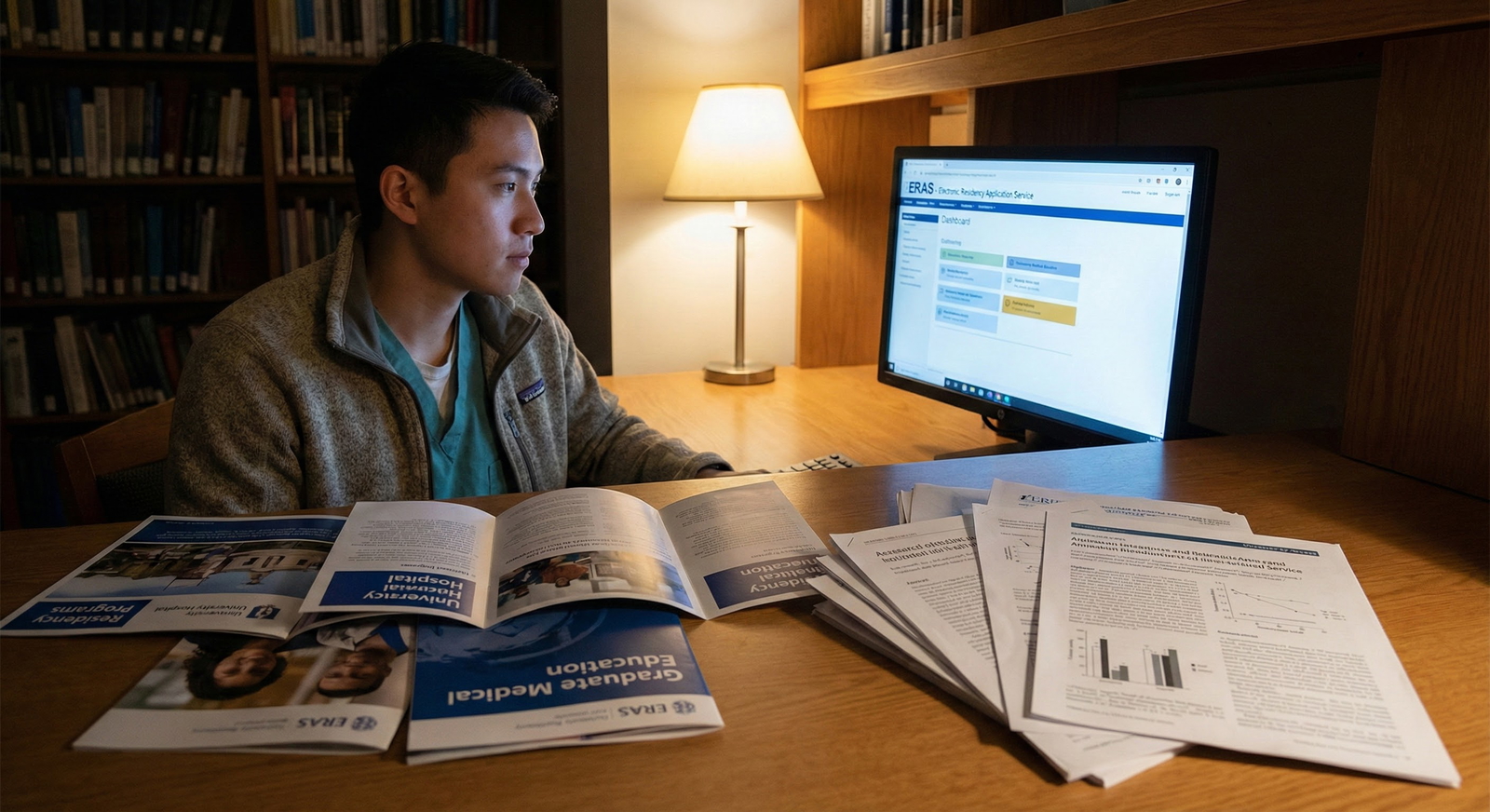
- This will be critical when entering experiences in ERAS.
Deliverables by end of core rotations (ideal):
- 2–3 projects in progress, with at least one Med-Peds-related theme
- 1–2 more posters, abstracts, or manuscripts under review
- Clear understanding of which mentors can write you strong letters of recommendation
Electives, Sub-Internships, and Application Year
Goals:
- Solidify your Med-Peds narrative
- Obtain final research outputs for your ERAS application
- Demonstrate continued scholarly engagement up to the time of interviews
Action Steps:
Strategically select electives.
- Choose inpatient medicine, inpatient pediatrics, and Med-Peds electives at institutions with established Med-Peds programs if possible.
- During a Med-Peds rotation, explicitly ask about joining ongoing projects.
Focus your time.
- Prioritize projects that can realistically yield a poster or publication before or shortly after ERAS submission.
- Avoid spreading yourself too thin among too many projects.
Finalize manuscripts and abstracts.
- Aim to submit any near-ready case reports, QI papers, or small clinical studies before application deadlines.
- Even “submitted” or “provisionally accepted” work can be listed in ERAS, clearly labeled by status.
Prepare to discuss your research at interviews.
- For each project, draft:
- 2–3 sentence summary of the question and methods
- 1–2 key findings
- What you specifically did and learned
- How it connects to your future as a Med-Peds physician
- For each project, draft:
Deliverables by ERAS submission:
- A concise list of research items with clear descriptions
- Confidence in explaining each project conversationally
- At least one letter writer who can reference your research capabilities

Practical Strategies to Find and Maximize Research Opportunities as a Caribbean IMG
Leverage Your School’s Network (e.g., SGU, AUC, Ross)
Many Caribbean schools—especially larger ones like SGU—have:
- Formal research offices or scholarly activity coordinators
- Established affiliations with US teaching hospitals
- Alumni in Med-Peds or related fields who can offer guidance
For SGU students, for example:
- Ask about SGU residency match connections in internal medicine, pediatrics, and Med-Peds. Alumni can often introduce you to research-active faculty at their current institutions.
- Join student research groups and attend any virtual research sessions or workshops.
These strategies apply similarly to other Caribbean schools; the names and structures differ, but most have some version of a research or mentoring pipeline.
Use US Clinical Rotations Wisely
Your US rotations are not just about letters and clinical skills; they’re also a key gateway to research for residency.
On each rotation:
- On day 1–2, ask the resident or attending:
- “Is there any ongoing research or QI project that I could help with during this rotation?”
- If they say yes, be realistic about what you can accomplish in that time frame (e.g., literature search, data extraction, drafting parts of a manuscript).
If you impress them clinically:
- Ask: “I’m interested in Medicine-Pediatrics and research. Would you be open to me continuing to help remotely after this rotation ends?”
- Many residents and fellows appreciate motivated students, especially for help with writing or literature reviews.
Remote and Online Research Collaborations
If you’re limited by geography or visa factors:
- Use professional platforms (LinkedIn, Doximity if available to you, or your school alumni networks) to identify Med-Peds or internal medicine/pediatrics faculty.
- Send brief, targeted emails:
- Introduce yourself (Caribbean IMG, Med-Peds interest)
- Acknowledge their work (mention a paper or area they work in)
- Offer specific help (data collection, literature reviews, manuscript drafting)
Be prepared for many non-responses. You may need to send a large number of thoughtful messages to find one mentor who is both willing and able to work with a remote student.
Make QI and Clinical Work Count
For Caribbean IMGs, QI projects in affiliated hospitals or community settings may be the most accessible form of research.
To maximize impact:
- Ensure the project has formal structure: aim for IRB or QI committee approval if required.
- Define clear metrics (e.g., vaccination rate before and after intervention).
- Plan from the start to present the results:
- Hospital QI day
- Regional or national professional society meetings
- Submission to a QI-focused journal
Even a single, well-executed QI project can be a talking point that resonates strongly with Med-Peds program directors.
Presenting Your Research Effectively in the Medicine-Pediatrics Match
Research is only as valuable as how clearly you connect it to your Med-Peds path.
In Your ERAS Application
Categorize experiences accurately.
- Use the “Research Experience” category for sustained work on projects.
- List individual publications, posters, and abstracts in the “Publications/Presentations” section.
Write concise, impact-focused descriptions.
- Focus on:
- The aim of the project
- Your specific responsibilities
- Skills gained (data analysis, critical appraisal, patient communication, collaboration)
- Mention if the project is Med-Peds relevant: “Focused on adolescents transitioning from pediatric to adult endocrine care.”
- Focus on:
Highlight leadership or initiative.
- If you initiated a project, say so.
- If you coordinated between teams or drove a QI cycle, emphasize that.
In Your Personal Statement
You don’t need to describe every project; instead:
- Select 1–2 key experiences that best exemplify how research shaped your understanding of Med-Peds.
- Explain briefly:
- What question you worked on
- How it impacted your view of caring for patients across the lifespan
- How it informed your career goals (e.g., interest in chronic disease management, health disparities, transitions of care)
During Interviews
Expect questions like:
- “Tell me about one of your research projects.”
- “How do you see research fitting into your future career as a Med-Peds physician?”
- “What did you personally contribute to this publication/poster?”
To prepare:
- Practice 2–3 minute, conversational summaries of each major project.
- Be honest about your role; directors value integrity more than inflated claims.
- Emphasize what you learned—about the scientific process, collaboration, the health system, and caring for both adult and pediatric patients.
Common Pitfalls and How to Avoid Them
Chasing quantity over quality
- Many minor, low-quality “publications” in predatory journals can look worse than a smaller number of solid, peer-reviewed items.
- Always check journal legitimacy (indexing, editorial board, fees).
Inflating your role
- Misrepresenting your contribution is an immediate red flag. Program directors can often sense exaggeration during interviews.
Starting too late without a focused strategy
- Waiting until the last months before ERAS to begin research often leads to rushed, unfinished projects. Start early and build steadily.
Neglecting the Med-Peds connection
- If all your research is in unrelated fields (e.g., orthopedic surgery or dermatology) without a narrative that connects back to Med-Peds, you create confusion.
- It’s fine to have some unrelated research, but make sure at least part of your portfolio clearly aligns with internal medicine, pediatrics, or both.
Underutilizing your network (especially alumni)
- Caribbean graduates who successfully navigated the SGU residency match or equivalent at other schools often want to help. Not reaching out is a missed opportunity.
FAQs: Research Profile Building for Caribbean IMGs in Medicine-Pediatrics
1. How many publications are needed for a competitive Medicine-Pediatrics match as a Caribbean IMG?
There is no fixed number, but as a general guideline:
- Competitive baseline: 1–2 publications plus a QI or similar project
- Stronger profile: 2–4 publications plus several presentations
More important than raw count is that your work is legitimate, Med-Peds relevant where possible, and that you can clearly articulate your role and what you learned.
2. I go to a Caribbean school with limited research options. Is it still possible to build a strong research profile?
Yes. Focus on:
- Case reports and case series during clinical rotations
- QI projects in affiliated hospitals
- Remote collaborations with US-based faculty (using alumni and school networks)
- Using US clinical electives to connect with research-active attendings
You may not have the same volume as a top US MD student, but a consistent, well-explained research trajectory can still be very compelling.
3. Do Med-Peds programs expect basic science research, or is clinical/QI enough?
For most Med-Peds residency programs, especially community or hybrid programs, clinical and QI research is more directly relevant and absolutely sufficient. Basic science is mainly helpful if:
- You enjoy it and may pursue a research-heavy or academic career
- You’re targeting highly research-intensive university Med-Peds programs
In either case, any type of rigorous, thoughtful scholarship helps demonstrate your capabilities.
4. How can I stand out in Med-Peds if my research experience is limited but I’m already near the application cycle?
Focus on:
- Completing at least one small but well-defined project (e.g., case report, brief QI initiative) before application time
- Highlighting other strengths—US clinical experience, strong letters, leadership, or community work with children and adults
- Framing your limited research honestly, while emphasizing how it improved your critical thinking and evidence-based practice
- Showing genuine interest in future scholarly activity during residency
Building a research profile as a Caribbean IMG interested in Medicine-Pediatrics is absolutely achievable with clarity, planning, and persistence. Start early where you can, choose projects aligned with Med-Peds values, and aim for authentic, meaningful contributions over sheer volume. When you integrate these efforts with strong clinical performance and compelling Med-Peds experiences, you give yourself a powerful platform for a successful medicine pediatrics match.