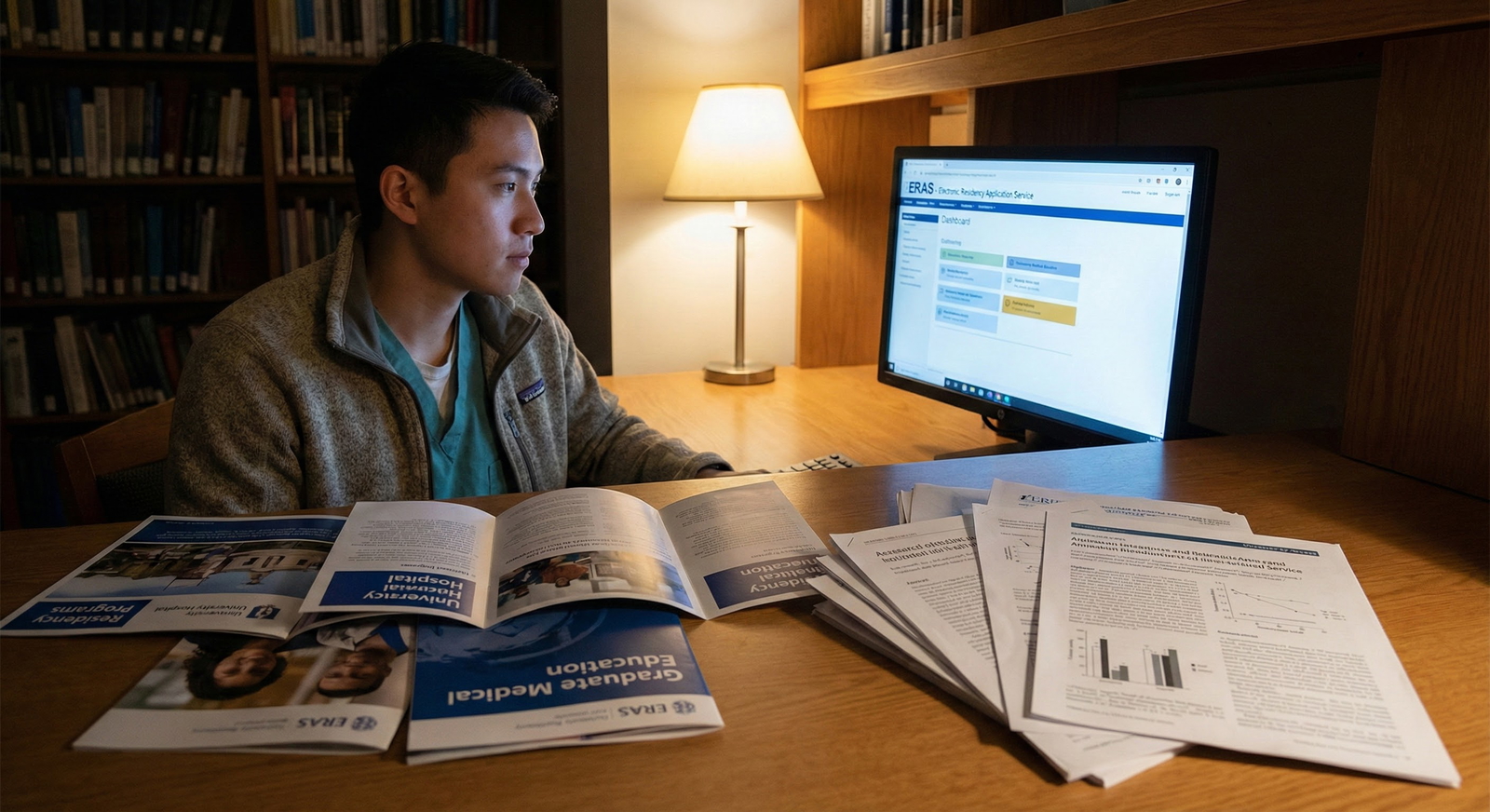
Building a strong research profile as a Caribbean IMG interested in Medicine-Psychiatry (Med-Psych) can significantly improve your residency prospects in the United States. While your Caribbean medical school residency outcomes may feel uncertain compared to U.S. graduates, a focused, realistic research strategy can help you stand out specifically for medicine psychiatry combined programs.
Below is a detailed, practical roadmap tailored to Caribbean IMGs who want to build a competitive research portfolio for Med-Psych, even if you are starting late, have limited access to academic centers, or are unsure how many publications you actually need.
Understanding the Role of Research in Medicine-Psychiatry for Caribbean IMGs
Why research matters more for Caribbean IMGs
For Caribbean graduates, program directors often pay closer attention to:
- USMLE performance
- Clinical performance in U.S. rotations
- Professionalism and communication
- Evidence of commitment to the specialty
- Research and scholarly work
In combined medicine psychiatry programs, the bar can be even higher. These programs are relatively small, highly academic, and often housed at institutions that value scholarly activity. A strategic research profile helps:
- Demonstrate commitment to Med-Psych (not just “I like both fields”)
- Signal academic potential, critical thinking, and curiosity
- Offset concerns about Caribbean medical school residency bias
- Strengthen applications to categorical Internal Medicine and Psychiatry programs as backup options
How Med-Psych programs view research
Medicine psychiatry combined programs are particularly drawn to applicants with:
- Interest in interface topics:
- Psychosomatic medicine
- Integrated care models
- Substance use and medical comorbidities
- Chronic disease plus severe mental illness
- Exposure to:
- Quality improvement (QI) in collaborative care
- Outcomes research involving both physical and mental health
- Health services research, especially in underserved populations
You do not need a PhD or dozens of publications, but you do need to show thoughtful, sustained engagement with scholarly work relevant to Med-Psych.
How Many Publications Do You Really Need?
Interpreting “how many publications needed” realistically
There is no magic number. For a Caribbean IMG targeting Med-Psych, a realistic and competitive goal might be:
- 1–2 first-author projects (case reports, QI, or small retrospective studies)
- 2–4 total publications or formal presentations (including posters/oral presentations at conferences)
- Ongoing involvement in 1 active project at the time of application
Programs care about trajectory and depth, not just a raw count. A strong application could look like:
- One first-author case report on delirium with underlying psychosis in a medically complex patient
- One poster about integrated care outcomes in a primary care clinic with behavioral health integration
- A QI project: improving depression screening in a diabetes clinic
- An ongoing retrospective chart review examining readmissions among patients with dual medical and psychiatric diagnoses
That profile tells a coherent story about your Med-Psych interests.
Quality vs. quantity
Program directors can quickly distinguish:
- Superficial “name on many projects” vs. meaningful involvement
- Generic projects vs. Med-Psych-relevant themes
- “One-off” research vs. longitudinal engagement
For a Caribbean IMG, 1–3 well-executed, clearly relevant projects usually carry more weight than 8–10 low-quality, unrelated abstracts.
SGU residency match and other Caribbean school outcomes
If you look at SGU residency match or other large Caribbean medical school residency outcome reports, you’ll notice:
- Students with some research and strong USMLE scores often match into solid Internal Medicine or Psychiatry programs.
- For complex or niche pathways like Medicine-Psychiatry combined, matched candidates frequently show:
- Strong exam scores
- U.S. clinical experience
- At least some scholarly activity (often in psych, medicine, or both)
You don’t need to copy a top SGU residency match profile exactly, but using those patterns as a benchmark can help set realistic expectations.
Choosing the Right Types of Research for Med-Psych
Not all research is equally strategic. For medicine psychiatry combined goals, focus on projects that sit at the interface of medical and psychiatric care.

High-yield research categories for Med-Psych
Case Reports and Case Series
- Easiest entry point for most Caribbean IMGs
- Great for students on sub-internships, acting internships, or electives
- Med-Psych-relevant examples:
- Refractory heart failure in a patient with severe depression and medication non-adherence
- Catatonia in the setting of systemic lupus erythematosus
- Diabetic ketoacidosis triggered by atypical antipsychotic use
- Action: During rotations, actively look for interface cases and discuss them early with attendings as potential case reports.
Quality Improvement (QI) Projects
- Very appealing to Med-Psych programs, especially in integrated settings
- Examples:
- Improving screening for depression and anxiety in a primary care clinic
- Reducing 30-day readmissions for patients with comorbid severe mental illness and COPD
- Increasing rates of metabolic monitoring for patients on antipsychotics in an inpatient medicine service
- These often lead to posters, presentations, or brief publications in QI journals.
Retrospective Chart Reviews
- More demanding, but feasible if you have an institutional sponsor
- Examples:
- Rates of delirium and associated outcomes in older inpatients receiving psychotropic medications
- Associations between substance use disorders and hospital readmissions for heart failure
- Comparison of medical outcomes in patients with vs. without serious mental illness
- Requires IRB and data access; often done with an academic mentor.
Health Services and Outcomes Research
- Very aligned with Med-Psych philosophy
- Examples:
- Evaluating integrated care models in primary care
- Studying consultation-liaison psychiatry outcomes on medical floors
- Telepsychiatry in medically complex rural populations
Systematic Reviews or Narrative Reviews
- Good if you lack institutional access but have a strong mentor
- Med-Psych-friendly topics:
- Management of depression in patients with cardiovascular disease
- Substance use and liver disease outcomes
- Psychotropic medication use in chronic kidney disease
- Be realistic: systematic reviews require methodology knowledge and are time intensive.
What if you have no access to academic hospitals?
If your Caribbean school has limited research infrastructure:
- Use your U.S. clinical rotations as entry points:
- Ask attendings on IM or psych rotations about ongoing projects
- Volunteer for data collection, literature review, or drafting
- Look for online or remote collaborations:
- Former grads from your school in academic programs
- Residents or fellows from Med-Psych or categorical programs active on academic Twitter/X, LinkedIn, or professional forums
- Consider QI projects within community sites:
- Simple, measurable intervention (e.g., improving PHQ-9 completion rates)
- Pre-post data collection and analysis
- Convert into a poster or abstract for a regional meeting
Step-by-Step Plan to Build a Med-Psych-Focused Research Profile
Step 1: Clarify your Med-Psych narrative
Before chasing any opportunity, define:
- Your core interests at the interface:
- E.g., chronic medical illness and depression, substance use and liver disease, severe mental illness and cardiovascular risk
- Your timeframe:
- Pre-clinical years, clinical years, dedicated research time, or post-graduation gap year
- Your resources:
- Access to U.S. rotations?
- Mentors at your Caribbean school?
- Time per week realistically available?
This will guide which projects you say yes to and help you avoid scattered, unrelated work.
Step 2: Identify mentors strategically
For Caribbean IMGs, mentorship is the hardest but most critical step.
Potential mentors include:
- Attendings during U.S. rotations in:
- Internal Medicine
- Psychiatry
- Consultation-Liaison (Psychosomatic) Psychiatry
- Addiction Medicine
- Caribbean school faculty:
- Even if not Med-Psych, they may connect you to collaborators
- Alumni:
- Graduates from your school now in academic IM, Psych, or Med-Psych programs
- Online academic communities:
- Psychosomatic medicine societies
- Academy of Consultation-Liaison Psychiatry (ACLP)
- Society of General Internal Medicine (SGIM)
When reaching out:
- Send a specific, concise email, e.g.:
- Who you are (Caribbean IMG, current year, location)
- Your specialty interest (Med-Psych, integrated care, etc.)
- What you’re looking for (help joining existing projects or starting a small, feasible one)
- How much time you can commit
Offer concrete tasks you can handle: literature reviews, data entry, drafting sections, creating posters.
Step 3: Start with one manageable project
Avoid taking on 4–5 projects and finishing none. Start with one project that is realistically publishable within 6–12 months:
- A case report from an interesting patient seen during rotations
- A small QI project with simple metrics
- A retrospective study with an existing dataset
Define:
- Clear roles and responsibilities
- Timeline for each step (literature search, drafting, revisions, submission)
- Target journal or conference
Step 4: Layer on additional, shorter-term outputs
Once your main project is underway:
- Add smaller outputs:
- Another brief case report
- A poster submission to a local/regional conference
- A narrative review co-authored with your mentor
This builds momentum and volume without overwhelming you.
Step 5: Convert work into multiple products
Each project can potentially yield more than one outcome:
- A QI project → Internal presentation + conference poster + short paper
- A chart review → Poster + manuscript
- A case report → Journal article + teaching presentation for students
For the residency application, count everything:
- Peer-reviewed publications
- Conference posters and oral presentations
- Institutional talks or grand rounds
- Research awards or recognitions
Presenting Your Research Effectively in the Residency Application

ERAS: how to list research and publications
In ERAS, you’ll typically have sections for:
- Publications (peer-reviewed, non–peer-reviewed, online, etc.)
- Presentations/Posters
- Research Experiences
For each:
Publications for match
- List all accepted or published manuscripts and case reports
- Use proper citation format
- If accepted but not yet in print, note as “Epub ahead of print” or “In press”
Presentations and posters
- Include title, conference name, location (if applicable), and date
- State if it was a poster or an oral presentation
- Conference appearances show you are active and engaged, even without a full paper
Research experiences
- Describe:
- Project aim
- Your specific role (data collection, analysis, first author on manuscript, etc.)
- Key outcomes (submitted abstract, accepted poster, published paper)
- Emphasize Med-Psych-relevant themes and clinical integration
- Describe:
How to talk about your research in interviews
Med-Psych programs will likely ask about:
- Your most meaningful project
- What you learned about patient care from your research
- How your projects relate to your interest in medicine psychiatry combined training
Prepare a 2–3 minute narrative for your main project that covers:
- The clinical problem (e.g., high readmissions among patients with comorbid severe mental illness and COPD)
- Your hypothesis or QI goal
- Your role and the methods
- Main findings
- Clinical implications for integrated care, Med-Psych practice, or patient outcomes
Practice connecting your projects to core Med-Psych values:
- Biopsychosocial model
- Whole-person care
- Bridging gaps between physical and mental health systems
Common Pitfalls Caribbean IMGs Should Avoid
1. Chasing prestige over feasibility
Joining a high-profile basic science lab at a distance, with no prior research experience, is often a recipe for:
- Long delays
- Limited authorship
- Minimal understanding of the project
Instead, aim for clinical or QI research with tangible outcomes in a shorter timeline.
2. Overcommitting to too many projects
Program directors prefer:
- A few well-completed, meaningful projects
- Clear first-author roles
- Ability to discuss projects intelligently
Rather than:
- Long lists of incomplete or superficial contributions
Be honest with mentors about your bandwidth and deadlines (e.g., ERAS opening dates).
3. Neglecting the Med-Psych link
Avoid a portfolio that looks like:
- One oncology case report
- One cardiology study unrelated to mental health
- One psychiatry case unrelated to medical complexity
Even if this is your starting point, try to steer future projects toward:
- Patients with both medical and psychiatric issues
- Integrated care models or settings
- Psychotropic effects on medical illness (or vice versa)
4. Poor documentation and organization
Keep a running document with:
- Project titles
- Your roles
- Dates and timelines
- Abstracts and citations
- Conference details
This makes it much easier to complete ERAS accurately and prepare for interviews.
Putting It All Together: Example Profiles
Example A: Competitive Med-Psych Applicant (Caribbean IMG)
- USMLE: Strong, but not perfect
- Research:
- First-author case report: “Neuroleptic Malignant Syndrome in a Patient with COVID-19 Pneumonia”
- QI project: “Improving Depression Screening in a Diabetes Clinic” → Poster at SGIM regional meeting + short paper under review
- Co-author on chart review: “Readmission Rates in Patients with Severe Mental Illness Admitted to the Medical Ward”
- Clear narrative:
- Passion for integrated care
- Experience working across medicine and psychiatry teams
- Projects that consistently highlight medical-psychiatric interfaces
Example B: Solid Backup for Categorical IM/Psych with Med-Psych Interest
- Research:
- One internal medicine case report (non-Med-Psych)
- One psychiatry case report on substance use
- Volunteer data collector for a study on delirium in ICU patients on psychotropics
- Narrative:
- Strong interest in liaison roles and consultation
- Future plan: possibly applying to psychosomatic or addiction fellowships after categorical training
- While less focused, still demonstrates curiosity and some Med-Psych relevance.
Frequently Asked Questions (FAQ)
1. As a Caribbean IMG, is research absolutely required for Med-Psych residency?
It’s not an official requirement, but in reality, yes, it is strongly expected for most Med-Psych programs, which tend to be academically oriented. Having at least some Med-Psych-aligned scholarly work significantly strengthens your application and helps offset any bias associated with being a Caribbean graduate.
2. How many publications needed to be competitive for medicine psychiatry combined programs?
There is no fixed number, but a realistic competitive target for a Caribbean IMG is:
- 1–2 first-author works (case reports, QI, or small studies)
- 2–4 total scholarly outputs (posters, presentations, or publications)
More is helpful if it’s high quality and relevant, but you do not need double-digit publications for most programs.
3. I have research, but none of it is Med-Psych. Is that a problem?
It’s not fatal, especially if you have good USMLE scores and strong clinical evaluations, but you should:
- Emphasize any elements that can be tied to integrated care or complex patients.
- If time allows, try to add at least one Med-Psych-focused project (even a case report or QI initiative) before applying.
- Use your personal statement and interviews to clearly explain your transition into Med-Psych interests.
4. I’m late (close to application season). What is the fastest way to add meaningful research?
For a late start:
- Focus on case reports from recent IM or psych rotations—these can sometimes go from idea to submission in a few months.
- Look for small QI projects where data is already being collected and the team needs help with analysis or writing.
- Apply to present posters at regional or national meetings—abstracts are often shorter and faster to produce than full papers.
- Even if not fully published before ERAS submission, you can list projects as “submitted” and update programs later.
With deliberate planning, focused topic choices, and realistic project selection, Caribbean IMGs can build convincing research profiles that speak directly to their interest in medicine psychiatry combined training. You do not need a perfect academic pedigree; you need a coherent story, a few solid Med-Psych-aligned projects, and the ability to articulate how your scholarly work connects to the kind of integrated, whole-person care you hope to provide as a Med-Psych resident and future attending.