Why Research Matters So Much for Caribbean IMGs in Medical Genetics
If you are a Caribbean medical student or graduate aiming for a medical genetics residency in the United States or Canada, building a strong research profile is not optional—it is one of the most powerful ways to distinguish yourself.
Medical genetics is a small, highly academic specialty. Program directors often expect:
- Evidence of genuine interest in genetics
- Ability to interpret and conduct research
- Comfort with data, statistics, and genomics literature
- Potential to contribute to academic medicine and precision medicine initiatives
As a Caribbean IMG, you may already worry about bias related to school reputation, USMLE timing, or limited home-institution research infrastructure. A focused, well-executed research strategy can offset these concerns and strengthen your Caribbean medical school residency prospects—especially for genetics.
What program directors want to see in your research profile:
- Consistent involvement in genetics-related or genomics-adjacent projects
- Evidence of productivity: abstracts, posters, oral presentations, and ideally publications
- Understanding of study design, statistics, and critical appraisal
- Clear connection between your research, your career narrative, and your future as a medical geneticist
This article breaks down how to build that research profile step by step, tailored specifically for Caribbean IMGs targeting a medical genetics residency.
Understanding the Genetics Match Landscape for Caribbean IMGs
How competitive is the medical genetics match?
Medical genetics is a relatively small specialty with fewer positions than large fields like internal medicine. Many programs are:
- Combined (e.g., Pediatrics–Medical Genetics, Internal Medicine–Medical Genetics)
- Located in academic centers with strong research agendas
- Looking for applicants with academic potential and long-term interest in genomics or rare disease
Because of this, the genetics match favors candidates who can demonstrate:
- Academic curiosity and scholarship
- Some level of research productivity
- Clear alignment with the mission of genetics programs (e.g., rare disease care, precision medicine, inherited cancer, biochemical genetics)
How Caribbean IMGs can stand out
Caribbean IMGs may not have the same built-in research ecosystem as US MD students. Program directors know this but still want to see that you:
- Sought out research opportunities deliberately, even with limited local infrastructure
- Used clinical rotations (including US clinicals or electives) to get involved in scholarly work
- Developed tangible outputs: posters, abstracts, QI projects, chart reviews, or manuscripts
While no research profile can guarantee a SGU residency match or a genetics match from any Caribbean school, well-structured research can be a key differentiator—especially if your scores or school name don’t immediately “sell” you.
Where research fits among other application components
For medical genetics residency programs, the rough weighting often looks like:
- USMLE/COMLEX scores, transcripts
- Clinical performance and letters of recommendation
- Research, scholarly work, and academic trajectory
- Personal statement and fit with the specialty
In a specialty like genetics, research is not a bonus—it’s often considered part of your core suitability.

Core Elements of a Strong Research Profile in Medical Genetics
Before you start chasing every project you see, it helps to understand how program directors evaluate your research for residency.
1. Depth vs. breadth of experience
It’s tempting to stack a long list of low-impact activities, but programs prefer:
- A few well-developed projects with real outcomes
- Clear longitudinal involvement over a year or more
- Coherent story tying your work to genetics or genomics
Example:
- Weak: 6 unrelated short-term projects in orthopedics, anesthesia, dermatology, cardiology, with no outputs
- Strong: 2–3 multi-step projects in genetics (or related fields) that led to posters, abstracts, and at least one manuscript in progress
2. Types of research that carry weight
For medical genetics residency, you don’t need to be a bench scientist, but your research should show:
- Understanding of genetic disease (e.g., rare inherited disorders, cancer genetics, pharmacogenomics)
- Comfort with data, literature, and evidence-based practice
Useful project types:
- Case reports of rare genetic syndromes
- Case series from genetics clinics
- Retrospective chart reviews involving genetic testing or outcomes
- Quality improvement (QI) projects related to genetic screening or counseling workflows
- Systematic or scoping reviews on genetic conditions
- Translational or basic science genetics projects (if you have lab access)
All of these can produce publications for match, conference abstracts, and presentations.
3. Outputs that program directors actually care about
When thinking about how many publications needed or which outputs matter most, consider this hierarchy (roughly):
- First-author peer-reviewed publications, especially in genetics/genomics
- Co-author peer-reviewed publications (ideally related to genetics)
- Abstracts and posters at regional/national conferences (American College of Medical Genetics, ASHG, pediatric or internal medicine meetings)
- Oral presentations, local symposia, or grand rounds
- Research involvement with no final product yet, as long as it’s ongoing with clear next steps
Programs know not every student will have multiple first-author genetics papers. What they want is evidence of initiative, completion, and academic thinking.
Strategies to Find and Secure Genetics Research as a Caribbean IMG
1. Start where you are: Caribbean and affiliated institutions
Even if your Caribbean medical school has limited genetics departments, you usually have:
- Core science faculty with interest in molecular biology, biochemistry, or pathology
- Faculty with professional networks at US or Canadian institutions
- Access to data or cases through teaching hospitals and affiliated clinics
Steps:
- Review faculty profiles on your school’s website for keywords: “genetics,” “genomics,” “molecular,” “inherited,” “cancer genetics,” “rare diseases,” or “bioinformatics.”
- Prepare a one-page CV emphasizing:
- Coursework (molecular genetics, biochemistry, epidemiology)
- Any prior research or lab experience
- Programming or data skills (R, Python, SPSS, Excel) if applicable
- Send targeted, concise emails to 3–5 faculty members:
- Express specific interest in medical genetics
- Attach CV and a short paragraph on why genetics interests you
- Ask if they are involved in any projects or know colleagues in genetics who might be
- Offer concrete ways to help:
- Data extraction
- Literature searches
- Drafting introductions or case descriptions
- Figure creation and reference management
Even if the initial project is not purely “genetics,” you can steer toward:
- Conditions with genetic components (cardiomyopathy, epilepsy, hereditary cancers)
- Diagnostic imaging or pathology with known inherited patterns
2. Leverage US and Canadian clinical rotations
Your clinical electives—especially in pediatrics, internal medicine, oncology, or neurology—are prime opportunities to align yourself with genetics faculty.
During US/Canadian rotations:
- Identify attendings who:
- Order genetic tests frequently
- Refer to genetics clinics
- Are part of an academic medical center
- Ask politely:
“I’m very interested in a medical genetics residency and building a research portfolio. Are there any ongoing projects or case reports where I could help?”
Ways to turn clinical exposure into a project:
- Case reports:
- Rare metabolic disorders, neurocutaneous syndromes, inherited arrhythmias, or familial cancer cases
- Draft under your attending’s supervision and target appropriate journals
- Chart reviews:
- Patterns of referrals to genetics
- Yield of specific genetic panels
- Time from symptom onset to genetic diagnosis
- Quality improvement:
- Improving genetic counseling documentation
- Standardizing indications for genetic testing in certain clinics
If you attend SGU or a similar school with long-standing US affiliations, faculty are often familiar with SGU residency match realities and understand how critical research is for IMGs. Use that to your advantage—state your goals clearly.
3. Cold outreach to genetics researchers
Not everyone will be lucky enough to have direct genetics mentors on site. In that case, cold email outreach can work, if you do it well.
Steps:
Use PubMed, Google Scholar, or institutional websites to find:
- Clinical geneticists
- Medical genetics fellows
- Genomics or rare disease research groups
Target:
- Institutions with a history of accepting IMGs
- Departments of Medical Genetics, Pediatrics, Internal Medicine, Oncology, Neurology
Send a highly tailored email (no generic mass mail):
- 2–3 sentences introducing yourself (Caribbean IMG, year, exams taken/pending)
- 2–3 sentences connecting your interest to their specific work
- 1 sentence proposing remote contribution (literature review, data extraction, manuscript drafting)
- Attach a 1-page CV
Key points:
- Emphasize reliability and ability to work remotely and asynchronously
- Show you read at least 1–2 of their papers; mention them briefly
- Accept that you may send 20–30 emails to get a few serious leads
4. Remote and data-driven research options
Many projects in genetics can be done remotely, which is ideal for Caribbean IMGs:
- Systematic reviews or meta-analyses on:
- Specific genetic syndromes
- Diagnostic yield of exome sequencing
- Variants in a particular gene family
- Database analyses:
- Public datasets (ClinVar, gnomAD, TCGA, rare disease registries)
- Institutional retrospective datasets, if you have IRB-approved access through a mentor
- Survey-based studies:
- Provider knowledge about genetic testing
- Patient perspectives on genetic counseling
- Attitudes toward carrier screening or pharmacogenomics
Here your value is your time and persistence. Many busy geneticists have ideas and IRB approvals but lack manpower. Show them you can help push projects to completion.

From Participation to Productivity: Turning Work Into Publications and Match-Relevant Outputs
How many publications are actually needed?
There is no single number, but for a medical genetics residency–focused Caribbean IMG, a realistic target is:
- Ideal: 1–2 first- or co-first-author publications + 2–4 co-author papers, preferably with genetics relevance
- Very solid: 1 first-author paper + several abstracts/posters in genetics or related fields
- Minimum competitive foundation (if other parts of the application are strong):
- Consistent research involvement for at least 12–18 months
- 1–3 posters/abstracts
- At least 1 manuscript submitted or in late-stage preparation
Program directors know not everyone will hit the “ideal,” but they do notice when:
- You have no research at all
- Your research is completely unrelated to genetics with no plausible narrative
- Your CV lists “pending manuscripts” with no evidence of any tangible progress
Moving projects from idea to output
A frequent IMG pitfall is starting multiple projects that never get finished. Avoid this by:
- Clarifying roles and authorship early
- Ask: “If I do X, Y, and Z, would I be first author or co-author?”
- Get agreement in writing (even informal email)
- Breaking the project into phases
- Literature review
- Data collection/extraction
- Data cleaning and analysis
- Drafting manuscript sections
- Submission and revision
- Setting internal deadlines
- Weekly or biweekly check-ins with your mentor
- Personal goals for completing each section
Case reports: fast, focused wins for Caribbean IMGs
Case reports are often the most accessible for you:
- Look for:
- Unusual presentations of known genetic syndromes
- Newly recognized gene variants
- Dramatic responses to targeted therapies (e.g., PARP inhibitors, enzyme replacement)
- Process:
- Discuss with attending and confirm novelty
- Check journal guidelines early (word limits, structure, images)
- Draft within 2–3 weeks
- Aim for journals that regularly publish case reports in genetics or specialty fields
Even 1–2 well-written case reports in genetics-related conditions strengthens your genetics match story.
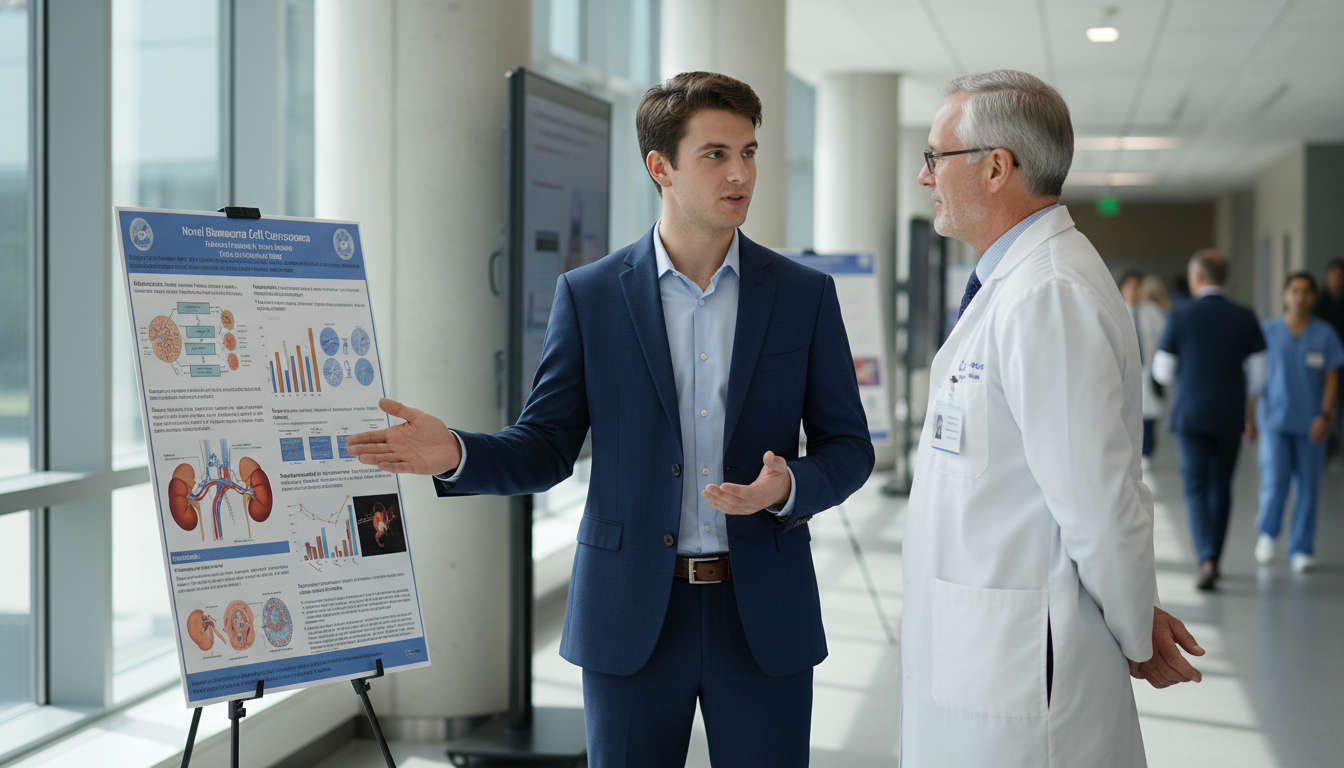
Abstracts, posters, and conferences
Posters and abstracts are highly valuable, especially for IMGs:
- Target:
- ACMG (American College of Medical Genetics and Genomics)
- ASHG (American Society of Human Genetics)
- Specialty conferences (pediatrics, neurology, oncology) with genetics tracks
- Benefits:
- Tangible output you can list on ERAS
- Networking with faculty and potential letter writers
- Opportunity to update projects before full manuscript submission
If travel is difficult, look for virtual poster or online conference options; many major meetings now offer them.
Documenting your role clearly
When you eventually list your work on ERAS, be prepared to describe:
- Your exact contributions:
- Data collection, statistics, literature search, drafting introduction/discussion, etc.
- What you learned:
- Study design principles, importance of variant interpretation, ethical issues in genetic testing
- How this connects to your future in medical genetics
This narrative matters—strong research with poor explanation can appear superficial.
Integrating Research Into Your Broader Genetics Application Strategy
Aligning your narrative
Your application must tell a coherent story:
- Personal statement:
- Reflect on specific encounters with genetic disease, diagnostic odysseys, or counseling experiences
- Mention your research as a natural extension of your curiosity, not as a checkbox
- CV and experiences:
- Group genetics-related activities: research, electives, advocacy, rare disease support groups, or genomics education
- Interviews:
- Be able to explain each project concisely
- Highlight one or two cornerstone projects and what they taught you
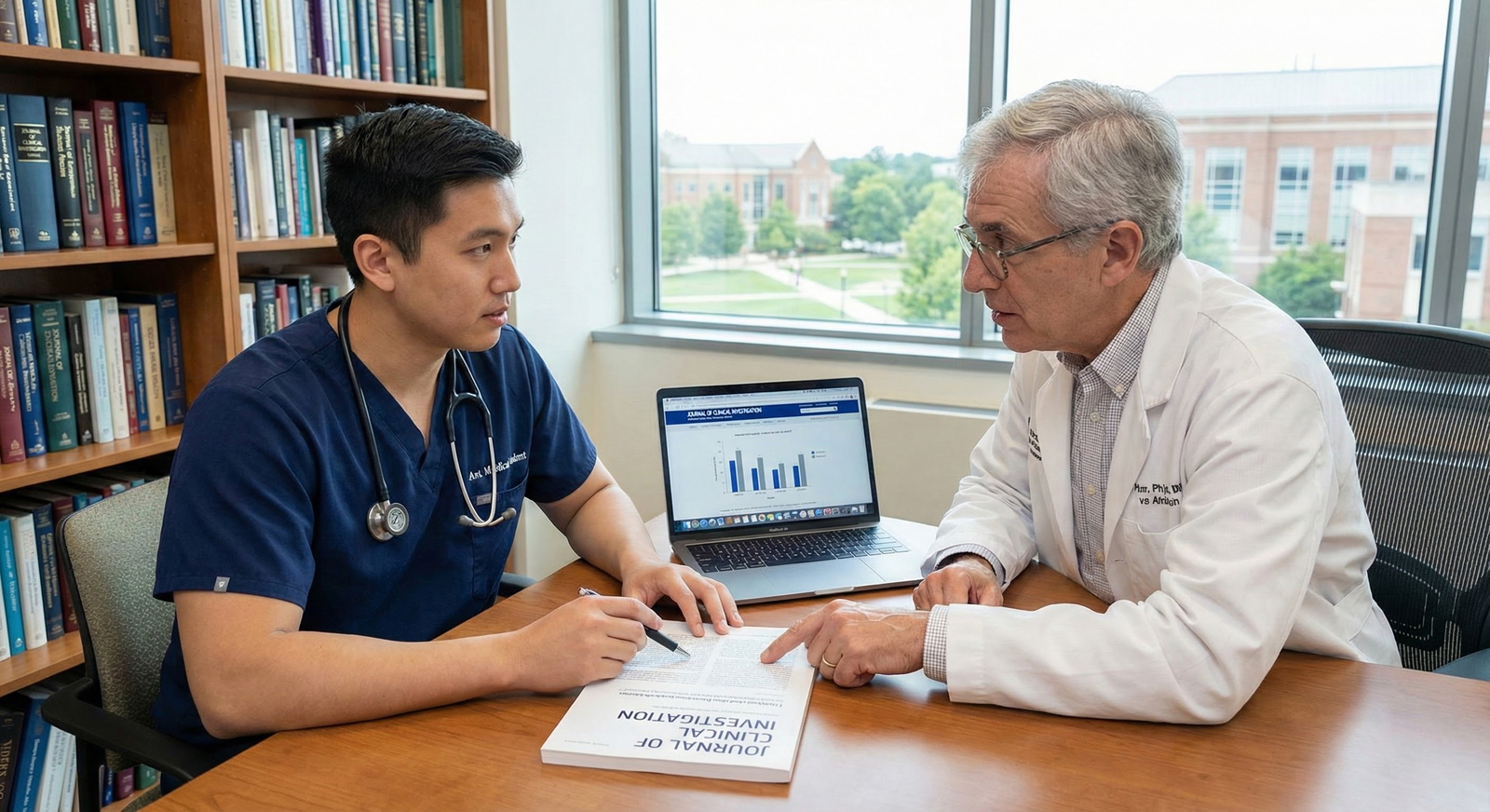
Using research to build mentorship and letters of recommendation
Strong letters from research mentors—especially in genetics—are powerful for a Caribbean medical school residency applicant:
- Aim for at least:
- One letter from a genetics or genetics-adjacent research mentor
- One from a clinical supervisor familiar with your research mindset
- Help your letter writer:
- Provide your updated CV and personal statement draft
- Share a short bullet list of projects and your specific role
- Remind them of your reliability, initiative, and future plans in genetics
Timing your research with the application cycle
Ideal timeline (adjust to your own situation):
- 18–24 months before applying
- Begin at least one substantial project (chart review, systematic review, or translational project)
- Start seeking genetics or genomics mentors
- 12–18 months before applying
- Push to submit abstracts to conferences
- Aim to finalize 1–2 case reports or smaller manuscripts
- 6–12 months before ERAS opens
- Try to get at least one paper accepted or in revision
- Finalize several posters/abstracts
- Make sure mentors understand your upcoming match plans
Even if not all projects are published by application time, being “submitted” or “under review” still demonstrates productivity and follow-through.
FAQs: Research Profile Building for Caribbean IMGs in Medical Genetics
1. As a Caribbean IMG, how many publications do I really need for a medical genetics residency?
There is no fixed cutoff, but for a Caribbean IMG targeting a medical genetics residency, a strong goal is:
- At least one first-author genetics-related (or clearly genetics-adjacent) publication
- A few co-author publications or abstracts/posters
- Consistent involvement in research for 12–18 months
If you cannot reach that, focus on completing:
- 1–2 case reports
- Several posters or abstracts
- At least one manuscript in submission or final drafting phase
Quality, relevance to genetics, and completion are more important than hitting an arbitrary number.
2. Does my research have to be in genetics to help my genetics match?
Not entirely, but genetics-related work is much stronger. Projects in pediatrics, neurology, oncology, or internal medicine can still help if:
- They involve inherited conditions, pharmacogenomics, or precision medicine
- You can clearly connect them to your interest in genetics in your personal statement and interviews
Try to build at least a core cluster of clearly genetics-focused or genomics-themed work to demonstrate a sincere commitment.
3. Can remote or non-lab research be enough to impress programs?
Yes. Many Caribbean IMGs succeed in the genetics match with primarily:
- Systematic reviews or meta-analyses
- Retrospective chart reviews
- Case series and case reports
- Quality improvement projects related to genetic testing or counseling
- Database or bioinformatics studies done remotely
What matters is that the work is rigorous, completed, and clearly explained—not that you spent years at a wet lab bench.
4. I’m late in my training and haven’t done much research. Is it too late?
It’s more challenging but not impossible. If you are within 12 months of applying:
- Focus on fast-turnaround projects:
- Case reports in genetics-related cases
- Small chart reviews with manageable datasets
- Short systematic or scoping reviews
- Push to get at least:
- 1–2 posters or abstracts submitted
- 1 manuscript in submission or near-finished form
Pair this with strong clinical genetics exposure (electives, observerships, conferences) and a clear narrative in your personal statement. Even a late but focused surge in research can significantly boost your application.
By building a thoughtful, genetics-centered research profile—no matter where you started—you can show programs that you are not just another Caribbean IMG, but a motivated future medical geneticist prepared to contribute meaningfully to an evolving, data-driven specialty.