Why Research Matters for Caribbean IMGs Targeting a Preliminary Surgery Year
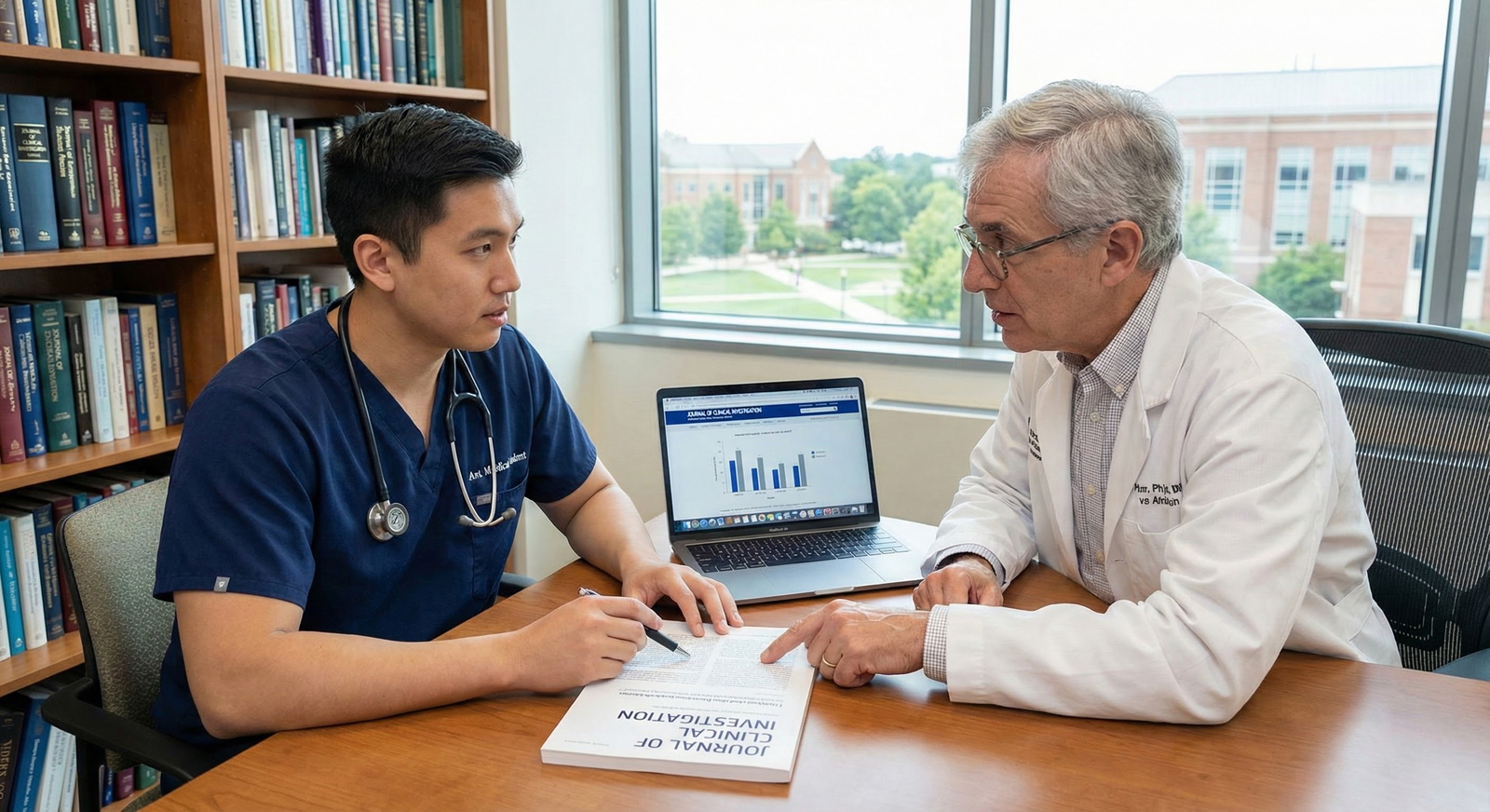
For a Caribbean IMG aiming for a preliminary surgery residency in the United States, research can be the difference between a thin application that program directors overlook and a competitive, well-rounded profile that gets interviews. While a prelim surgery year is technically a one-year, non-categorical position, it is increasingly viewed as an audition for future categorical surgery, transition to another specialty, or at minimum, a strong credential for your CV.
Many Caribbean IMGs, whether from SGU, AUC, Ross, Saba, or smaller schools, ask the same questions:
- Does research actually matter for a preliminary surgery year?
- How can I build a research profile if my school has limited infrastructure?
- How many publications are needed to help my application?
- What kind of research is realistic if I’m off-cycle or balancing Step exams and rotations?
This article will walk through a practical, step-by-step plan to build a meaningful research profile tailored to a Caribbean medical school residency pathway, with a specific focus on prelim surgery. We’ll use examples relevant to SGU and similar schools and address the unique constraints IMGs face.
Understanding the Role of Research in Preliminary Surgery
How programs view research for prelim spots
For many applicants, a preliminary surgery position is a backup. For Caribbean IMGs, it’s often a strategic entry point into US training. While some prelim positions (especially in community hospitals) prioritize clinical performance and test scores over research, academic and university-affiliated programs absolutely look at research, even for prelim slots.
Program directors may see research as:
- Evidence of academic curiosity and discipline
- A marker that you can handle scholarly work during residency (QI projects, case reports, etc.)
- A signal that you might be suited for a categorical surgery track in the future
Even in programs that do not “require” research, it can help distinguish you from a large pool of similar applicants (same exam ranges, similar schools, similar grades).
Research expectations: categorical vs preliminary surgery
Categorical general surgery applicants at major academic centers often have:
- Multiple publications in surgery or related fields
- Abstracts and posters at surgical or medical conferences
- Sometimes a dedicated research year
For a prelim surgery residency, the bar is lower. You rarely need a high-volume, high-impact research record, but you do need enough to show that you’ve engaged in scholarly work and can discuss it intelligently.
Realistically, a strong Caribbean IMG prelim surgery applicant might have:
- 1–3 publications (case reports, retrospective studies, or even non-surgical topics)
- Several abstracts/posters or oral presentations
- Documented involvement in data collection or QI projects
How many publications needed?
There is no universal “cutoff,” but for context:
- At many academic programs, 1–2 peer-reviewed publications plus several abstracts/posters is considered decent for a prelim surgery applicant, especially for a Caribbean IMG.
- At community or hybrid programs, any publication plus evidence of ongoing research activity can be a strong plus.
- More important than the raw count is the narrative: Can you clearly explain your role, what you learned, and how it connects to surgery?
For SEO and for your planning: Applicants often ask “how many publications needed” for a solid SGU residency match or other Caribbean medical school residency outcomes. The better question is: “How can I build a coherent, believable research story that shows growth and commitment?” That’s what we’ll focus on.
Step-by-Step Strategy to Build a Research Profile as a Caribbean IMG
Step 1: Clarify your goals and constraints
Before chasing any project, define:
- Timeline: Are you 1–2 years away from applying, or 4–6 months?
- Location: Are you still in the Caribbean, on core rotations in the US, or in a gap period?
- Bandwidth: Are you taking or preparing for USMLE Steps? Working part-time? Doing observerships?
If you are:
- >18 months from application: You can aim for more substantial projects (retrospective studies, maybe a multicenter study if you find the right mentor), plus multiple case reports and QI projects.
- 6–18 months from application: Focus on short-cycle projects (case reports, literature reviews, chart reviews that can be completed in months).
- <6 months from application: Emphasize finishing ongoing work and at least one manuscript under review, plus posters and abstracts that can be accepted quickly.
Step 2: Leverage your Caribbean school’s research ecosystem
Different Caribbean schools have very different research infrastructures:
Larger schools (e.g., SGU, AUC, Ross):
- Often have formal research offices
- Maintain lists of ongoing projects and faculty PIs
- May have student research groups and elective research rotations
Smaller Caribbean schools:
- Limited formal research structure
- More reliance on external mentors and self-directed projects
Action steps:
Contact your school’s research office or dean’s office
Ask specifically:- “Which faculty are actively publishing and open to student involvement?”
- “Is there a listserv or portal with ongoing projects?”
- “Are there research electives I can do during clinical years?”
Use alumni networks
If you’re at SGU or a similar large school, look for:- Alumni in general surgery, trauma, critical care, or subspecialties
- Alumni in internal medicine at hospitals with strong surgical departments (they may help connect you to surgeons) Send concise emails expressing interest in research, including:
- Brief intro (Caribbean IMG, year, exam status)
- Specific interest in surgical or perioperative research
- Willingness to help with data entry, charts, literature review
Join or start a research and publications group
Many Caribbean schools have student organizations focused on research for residency:- Attend workshops on how to write a case report or systematic review
- Use peer accountability to keep moving projects forward

High-Yield Research Options for Prelim Surgery Applicants
Not all research is equal in impact or time cost. As a Caribbean IMG aiming for prelim surgery, you need options that are achievable and strategically relevant.
1. Surgical case reports and case series
Why they’re ideal:
- Short timeline (weeks to a few months)
- Directly related to surgery or perioperative care
- Great for early authorship experience
Examples for prelim surgery:
- A rare abdominal wall hernia presentation
- Unusual complication after laparoscopic cholecystectomy
- Complex trauma case managed with damage-control surgery
- Postoperative complications in a patient with multiple comorbidities
Practical approach:
- During your surgery or surgery-adjacent rotations (e.g., SICU, trauma, anesthesia), identify interesting cases.
- Ask the attending:
“This seems like a unique or educational case—do you think it has potential for a case report? I’d be very interested in helping write it.”
Your role can include:
- Reviewing the chart for relevant details
- Summarizing hospital course and key images
- Conducting a literature review
- Drafting the manuscript
Outcome: 1–3 case reports in surgical or general medical journals is a meaningful boost for a prelim surgery application.
2. Retrospective chart reviews (single-center)
Why they matter:
- Show ability to handle data, statistics, and IRB processes
- Often more respected than isolated case reports
Good topics for Caribbean IMGs in prelim surgery:
- Outcomes of emergency appendectomies in obese vs non-obese patients
- Readmission rates after common general surgery procedures
- Comparison of postoperative pain control regimens
- Wound infection rates before and after an institutional protocol change
Feasibility strategy:
- Partner with a resident or attending already interested in the topic.
- Offer to:
- Help with IRB application drafting (under supervision)
- Extract data from EMR
- Organize data into spreadsheets
- Create figures and tables
If you lack advanced statistical skills, you can still be first or second author if you carry a large part of the data and writing load, with a statistician or senior author helping with analysis.
3. Quality improvement (QI) projects in surgical wards
Why QI is high-yield:
- Many surgery programs value QI as much as pure research
- Faster cycles and more flexible IRB/ethics requirements
- Often presentable at hospital or regional meetings
Example QI ideas:
- Improve compliance with DVT prophylaxis protocols on surgical floors
- Reduce postoperative nausea and vomiting through standardized order sets
- Implement a checklist for early identification of sepsis in post-op patients
You can turn a QI project into:
- An internal hospital presentation
- A poster at a regional or national conference
- A short article in a QI-focused journal
This is particularly powerful if you’re in a preliminary surgery year and can say you led or co-led a QI initiative—a big plus if you later apply for categorical positions.
4. Systematic reviews and narrative reviews
Pros:
- Can be done remotely, even from the Caribbean or during exam prep
- No need for patient data or IRB in most cases
- Good way to show you understand a focused surgical topic
Cons:
- Competitive to get accepted in good journals
- Time intensive and methodologically demanding (especially systematic reviews)
Feasible formats:
- Narrative review on perioperative management of patients with specific comorbidities (e.g., cirrhosis, CKD) in surgery
- Mini-review on surgical outcomes in a rare disease
If you’re early in training, start with a narrative review co-authored with a mentor. Use it to learn about referencing, structuring a paper, and peer review.
5. Non-surgical research (and how to frame it)
Many Caribbean IMGs worry that their research is in internal medicine, neurology, or basic science, not surgery. This is still valuable.
Examples:
- A cardiology case report (e.g., myocarditis)
- A retrospective study in hospital medicine
- A basic science paper on inflammation or wound healing
How to present it:
- Emphasize skills: data analysis, literature review, manuscript drafting
- Connect to surgery by highlighting translational aspects (e.g., perioperative care, hemodynamics, sepsis)
- In your personal statement and interviews, tie your research to surgical decision-making and evidence-based practice
Building Toward a Coherent “Research Story” for Your Application
The narrative, not just the numbers
For residency programs evaluating a Caribbean IMG, the research section is more than a list—it’s evidence of trajectory. They want to see:
- Increasing responsibility (from helper to primary author)
- Increasing sophistication (from simple case report to more complex projects)
- Consistency of interests (e.g., perioperative outcomes, trauma, GI surgery, critical care)
Even if your projects are varied, you can build a unified narrative:
- Early:
- “I started by assisting with case reports and literature reviews to learn basic research skills.”
- Middle:
- “I then joined a retrospective study focused on surgical outcomes, contributing to data collection and manuscript drafting.”
- Later:
- “Currently, I’m leading a small QI project on postoperative pain control compliance.”
Sample research trajectory for a Caribbean IMG targeting prelim surgery
Year 3–4 of med school (Caribbean pre-clinicals or early clinicals)
- Helped write a case report in internal medicine (2nd or 3rd author)
- Assisted a faculty member with a narrative review (contributor/acknowledged)
Core rotations (medicine, surgery, OB/GYN, peds)
- Identified an interesting surgical case → led a case report (1st or 2nd author)
- Joined a retrospective study with a surgery resident on appendectomy outcomes (co-author)
Final year / research elective / post-grad gap year
- Led data collection and partial writing for a QI project on surgical ward infection protocols
- Submitted abstracts to at least one conference; presented a poster
- At time of application, has:
- 1–2 publications (accepted or in press)
- 1–3 abstracts/posters
- 1 QI project documented
This kind of profile is realistic and competitive for many preliminary surgery residency programs, especially if combined with solid Step scores, good US clinical experience, and strong LORs.

Maximizing Impact: Authorship, Networking, and Presentation Strategy
Authorship strategy: prioritize meaningful roles
For your ERAS application, it’s better to have a smaller number of substantive contributions than a large number of barely-involved authorships.
Aim to be:
- First author on at least one project (case report, review, or small study)
- Second author on a couple more, especially if surgery-related
When you join projects:
- Clarify your role early (e.g., “I can take primary responsibility for writing the case report and performing the literature review.”)
- Follow through reliably—mentors are more likely to offer you additional projects if you prove dependable.
Networking through research: leverage every project
Every research project is an opportunity to:
- Build relationships with US-based surgeons and residents
- Secure strong letters of recommendation highlighting your academic abilities
- Learn about unadvertised prelim or categorical positions
Practical tips:
- Ask your mentor:
“Would it be possible for me to join grand rounds or M&M conferences to better understand the clinical context of this research?” - Offer to present your work internally:
- Departmental research day
- M&M conference (if appropriate)
- Student research symposium (if your school has one)
These events give you visibility with faculty who may later support your prelim surgery or even categorical applications.
Presentations and conferences: high ROI for IMGs
Even if you have limited publications, conferences and presentations significantly strengthen your CV:
- Local and regional surgical meetings often accept case reports and QI abstracts.
- General medical conferences are more open to diverse topics and trainee work.
Make sure to:
- List all accepted abstracts, posters, and oral presentations in ERAS.
- Bring up these experiences in interviews to demonstrate:
- Communication skills
- Comfort with academic environments
- Interest in contributing to the residency’s scholarly output
Practical Tips, Common Pitfalls, and Example Timelines
Common pitfalls for Caribbean IMGs
Waiting too long to start
- Starting research only a few months before applying limits impact.
- Begin as early as possible, even during pre-clinical semesters.
Overcommitting to too many projects
- Spreading yourself too thin leads to unfinished work and frustrated mentors.
- Better: 2–4 well-executed projects than 10 half-completed ones.
Neglecting non-surgical research opportunities
- Many valuable opportunities arise in internal medicine, ER, or ICU.
- You can still frame these experiences to support a career in surgery.
Failing to track contributions
- Keep a spreadsheet of:
- Project title
- Authors
- Your role
- Deadlines and submission status
- This helps you enter accurate information into ERAS and talk confidently during interviews.
- Keep a spreadsheet of:
Example 12–18 month research plan before prelim surgery applications
Months 1–3: Foundation
- Identify 1–2 mentors (ideally at US clinical sites or through alumni).
- Join:
- 1 ongoing case report (aiming for 2nd author)
- 1 retrospective study as a data collector
Months 4–6: Take on more responsibility
- Lead your own case report (1st author).
- Assist with manuscript drafting for the retrospective study.
- Start drafting a short narrative review under mentor supervision.
Months 7–12: Publish and present
- Submit:
- Your case report to an appropriate journal.
- Abstract(s) from the retrospective study and case report to 1–2 conferences.
- Identify or initiate a simple QI project if you’re at a hospital with supportive faculty.
Months 13–18: Consolidate for ERAS
- Aim to have:
- At least 1 accepted or in-press publication.
- 1–3 posters/abstracts accepted.
- 1 ongoing project you can discuss as “in progress.”
- Ask your research mentors for letters of recommendation:
- Emphasize your reliability, growth, and fit for a surgery-oriented path.
This timeline is adaptable, but it gives a realistic roadmap for a Caribbean IMG who wants to strengthen their preliminary surgery application through research.
FAQs: Research Profile Building for Caribbean IMGs in Preliminary Surgery
1. Do I really need research for a preliminary surgery residency?
You can match into some prelim surgery residency positions without research, especially in community programs. However, as a Caribbean IMG:
- Research:
- Differentiates you from other IMGs
- Signals academic potential to program directors
- Strengthens your candidacy for categorical surgery later
Even a small number of case reports and one larger project significantly improves your overall profile.
2. How many publications are needed to improve my chances?
There is no official minimum, but for a Caribbean IMG targeting prelim surgery:
- Good/realistic target:
- 1–2 peer-reviewed publications (case reports, retrospective studies, or reviews)
- 1–3 conference abstracts/posters
- If you have more, that’s excellent—but quality, authorship position, and your ability to speak about the work matter more than raw numbers.
Programs evaluating Caribbean medical school residency applicants (including those from SGU) pay attention to whether your research is coherent and credible, not just a list of titles.
3. I’m late in the cycle with <6 months before ERAS—what can I still do?
Focus on short-cycle, high-impact tasks:
- Co-author 1–2 case reports that can be submitted quickly.
- Join ongoing projects to help with:
- Data cleaning
- Final analysis
- Manuscript editing
Even if the paper is “under review” by the time you submit ERAS, you can:
- List it as “submitted” or “in preparation” (clearly indicating the status)
- Discuss your concrete contributions during interviews
Also, work on posters or internal presentations, which often have faster turnaround than full publications.
4. Will research guarantee a categorical spot after a preliminary surgery year?
No, but it significantly strengthens your chances:
- Program directors deciding whether to convert a prelim resident to categorical consider:
- Clinical performance
- Professionalism and work ethic
- Teamwork and communication
- Academic engagement (research/QI)
If you have already built a research foundation as a Caribbean IMG, you will:
- Find it easier to participate in departmental projects during your prelim year.
- Be more competitive when you apply for open categorical positions or other specialties.
Research is not a guarantee, but it is a lever you control—one that can meaningfully influence your trajectory from preliminary surgery year to long-term placement in surgery or another field.
By strategically building your research profile—starting where you are, using accessible project types, and developing a coherent story—you can transform a potential weakness into a substantial strength in your preliminary surgery application as a Caribbean IMG.