
Why Research Matters So Much for Caribbean IMGs in ENT
Otolaryngology–Head and Neck Surgery (ENT) is one of the most competitive specialties in the United States. For a Caribbean medical school graduate, a strong research profile is no longer optional—it is a key differentiator that can help offset other perceived disadvantages (such as lower name recognition of your school, USMLE attempts, or lack of home ENT program).
Program directors in ENT consistently rank research, publications, and scholarly activity as a major factor when evaluating applicants. For a Caribbean IMG, your research record:
- Signals academic rigor and commitment to otolaryngology
- Demonstrates that you can function in US academic environments
- Provides evidence of productivity and ability to complete projects
- Often leads to stronger letters of recommendation from US-based ENT faculty
- Helps you stand out in the otolaryngology match, especially when compared to other Caribbean medical school residency applicants
If you’re aiming for an ENT residency from a Caribbean medical school—SGU, AUC, Ross, Saba, or others—your research profile can help move you from “unlikely” to “genuinely competitive” in program directors’ eyes.
Understanding What Counts as “Research” for ENT Residency
Not all research experiences are viewed equally—and not all must be in otolaryngology to be valuable. For a Caribbean IMG, understanding the different research categories will help you build a targeted and realistic strategy.
1. Types of Research Valued in ENT
a. Clinical research (high yield)
- Retrospective chart reviews (e.g., outcomes after tonsillectomy, cochlear implant complications)
- Prospective cohort studies
- Clinical trials participation (even as data collector or coordinator)
- Multicenter registry studies (e.g., head and neck cancer databases)
b. Basic science / translational research
- Lab work on head and neck cancer biology
- Hearing and balance research
- Tissue engineering for airway reconstruction
These are valued, but can be harder to access as an IMG and require longer timelines.
c. Outcomes / quality improvement (QI)
- Surgical outcomes in sinus surgery
- ER utilization for otitis media
- Implementation of new post-op protocols
Often more feasible and publishable within 6–12 months.
d. Educational or curriculum research
- ENT simulation training outcomes
- Assessing teaching tools for laryngoscopy, otoscopy, or tracheostomy
Increasingly recognized and can be a solid niche for Caribbean IMGs.
2. Scholarly Output That Programs Care About
When program directors ask about “publications for match” or research productivity, they generally mean:
- PubMed-indexed original articles (highest value)
- Review articles in reputable journals
- Case reports and case series (good starting point, lower impact but worthwhile)
- Conference abstract presentations (regional, national, or international)
- Posters and oral presentations (especially at ENT meetings like AAO-HNS, COSM, Triological Society)
- Book chapters (good, but often less visible to selection committees)
Non-indexed journals, predatory journals, or low-quality publications do not carry the same weight and can even raise concerns if overused.
3. “How Many Publications Needed?” for ENT as a Caribbean IMG
There is no absolute number, but for a Caribbean IMG targeting the otolaryngology match, a realistic target profile might be:
- 3–5 total PubMed-indexed items (mix of case reports, retrospectives, reviews)
- At least 1–2 clearly ENT-focused projects
- 3–8 total conference presentations/posters (regional or national), not necessarily all ENT-specific
- Evidence of ongoing commitment (e.g., continuing projects during MS3–MS4, gap year, or research fellowship)
More important than raw numbers:
- First-author roles signal ownership and leadership
- ENT-specific topics show focused interest in the specialty
- Continuity with the same research mentor or group tells a story of reliability and growth
If your metrics are weaker (Step scores below average, attempts, late switch into ENT), aiming for research-intensive productivity—sometimes via a dedicated research year—can significantly strengthen your profile.

Step-by-Step Strategy to Build a Strong ENT Research Profile as a Caribbean IMG
Step 1: Assess Your Current Position and Constraints
Before you start, be honest about:
- Your school resources (home ENT program or none, research office, alumni network)
- Your USMLE timeline (cannot let research derail your Step 1/2 CK performance)
- Your graduation date and when you plan to apply
- Visa needs (J-1 vs H-1B) which make US-based experiences even more important
Make a simple table:
- What ENT or research exposure do I already have?
- What realistic time blocks can I dedicate weekly (5–10 hrs vs full-time)?
- Am I willing to do a full-time research year in the US?
This will shape how aggressively you pursue research for residency.
Step 2: Find ENT and Research Mentors (Even Without a Home Program)
As a Caribbean IMG, you may not have a built-in ENT department. You’ll need to be proactive and often create your own network.
Sources of mentors:
Clinical rotation sites in the US
- During core or elective rotations, ask about any ENT faculty affiliated with the hospital or medical school.
- If you have an ENT elective, that attending becomes your highest-value contact.
Alumni from your Caribbean medical school residency match lists
- Check your school’s match lists for ENT residency or other surgical subspecialties.
- Reach out via email or LinkedIn: introduce yourself, state your ENT interest, and politely inquire about potential research opportunities or introductions.
National ENT conferences and organizations
- Student/resident sections of AAO-HNS, specialty societies.
- Virtual conferences are especially accessible; chat or email faculty after talks that interest you.
Cold-emailing ENT faculty (done correctly)
- Identify ENT departments that have previously matched IMGs.
- Look up faculty with active clinical research (PubMed, departmental websites).
- Write a short, specific, professional email (no generic copy-paste).
Example cold email structure:
- One-line introduction (Caribbean IMG, school, year, USMLE status)
- One sentence on your interest in ENT and their specific research area
- One brief sentence on your existing skills (statistics, data management, strong writing)
- A clear ask: “Would you have any ongoing or upcoming projects where a remote or in-person student volunteer could assist with data collection, literature review, or manuscript preparation?”
- Attach a 1-page CV curated with any academic/research-related experiences.
Aim to send 10–20 highly targeted, personalized emails, not 100 generic ones.
Step 3: Start with Feasible, Fast-Moving Projects
You do not need to start with a high-impact clinical trial. For Caribbean medical school residency applicants in ENT, early wins build credibility.
High-yield starting points:
Case reports and case series from your clinical rotations:
- Rare tumors, unusual complications, unique surgical approaches, complex airway cases.
- Ask attendings: “Would you consider a case report on this? I’m willing to draft the entire manuscript.”
- Learn journal formats (e.g., Otolaryngology–Head and Neck Surgery, Laryngoscope, case-report journals).
Retrospective chart review projects:
- Example topics: postoperative bleed rates after tonsillectomy; sinus surgery outcomes; voice disorder clinic patterns.
- Usually supervised by a faculty member with IRB approval already in place or easy to obtain.
Systematic or narrative reviews:
- Highly feasible if you are strong at literature searches and writing.
- Topics: management of epistaxis in anticoagulated patients, pediatric airway foreign bodies, hearing loss screening.
Even if your first few projects are not in ENT, that’s acceptable—especially if they build your skills and publication record. But aim to transition toward ENT-focused work as soon as possible.
Step 4: Make Yourself Indispensable on a Research Team
Once you’ve secured a mentor or a project:
- Clarify expectations and timelines up front
- Volunteer for the “grunt work” others avoid:
- Data entry and cleaning
- Reference management (EndNote, Zotero, Mendeley)
- IRB document preparation drafts (under faculty supervision)
- Formatting manuscripts to journal guidelines
- Communicate regular progress updates (weekly email summaries, shared Google Docs or Sheets).
Demonstrate that you:
- Meet (or beat) deadlines
- Accept feedback professionally
- Learn quickly and independently
This often leads to more projects and higher authorship positions—vital factors in building a strong research profile for residency.
Considering a Dedicated ENT Research Year as a Caribbean IMG
For many IMGs in competitive fields like ENT, a full-time research fellowship or gap year in the US can be a turning point.
Who Should Strongly Consider a Research Year?
- Caribbean IMGs with limited or no research during preclinical years
- Applicants with average Step scores for ENT (or any attempts)
- Those without strong US clinical ENT exposure or letters
- Late switchers to ENT from another specialty
If your CV currently has “zero to one” scholarly activities, and you’re 1–2 years away from application, a research year can be a high-yield investment.
What a Good ENT Research Year Looks Like
An effective research year should ideally offer:
- Placement in a US academic ENT department
- 1–3 active clinical projects at any given time
- Opportunities for:
- Manuscript writing
- Abstract and poster submissions
- Conference attendance
- Direct interaction with faculty and residents
- Clear authorship expectations and mentorship
Quality varies widely between programs, so before committing:
- Ask to speak with current or former research fellows (preferably IMGs)
- Request honest numbers:
- Average publications per fellow
- Typical number of posters/abstracts
- How many fellows matched into ENT or other residencies
How to Find and Secure a Research Year
Search ENT department websites
- Look for “Research Fellowships,” “Visiting Scholars,” or “Research Assistant” positions.
- Some large programs (major academic centers) quietly host IMGs in unofficial trainee roles.
Email ENT research directors and PI-level faculty
- Express interest in a full-time 1-year research position, mention visa status clearly.
- Attach a focused CV highlighting research-related skills, not just clinical rotations.
Use IMG networks and alumni
- Many Caribbean IMGs in the SGU residency match or other Caribbean medical school residency pathways have taken a research-year route.
- Ask specifically: “Which ENT departments/mentors are IMG-friendly for research?”
A productive research year can easily produce 5–10 publications/abstracts if approached strategically and if the environment is supportive.
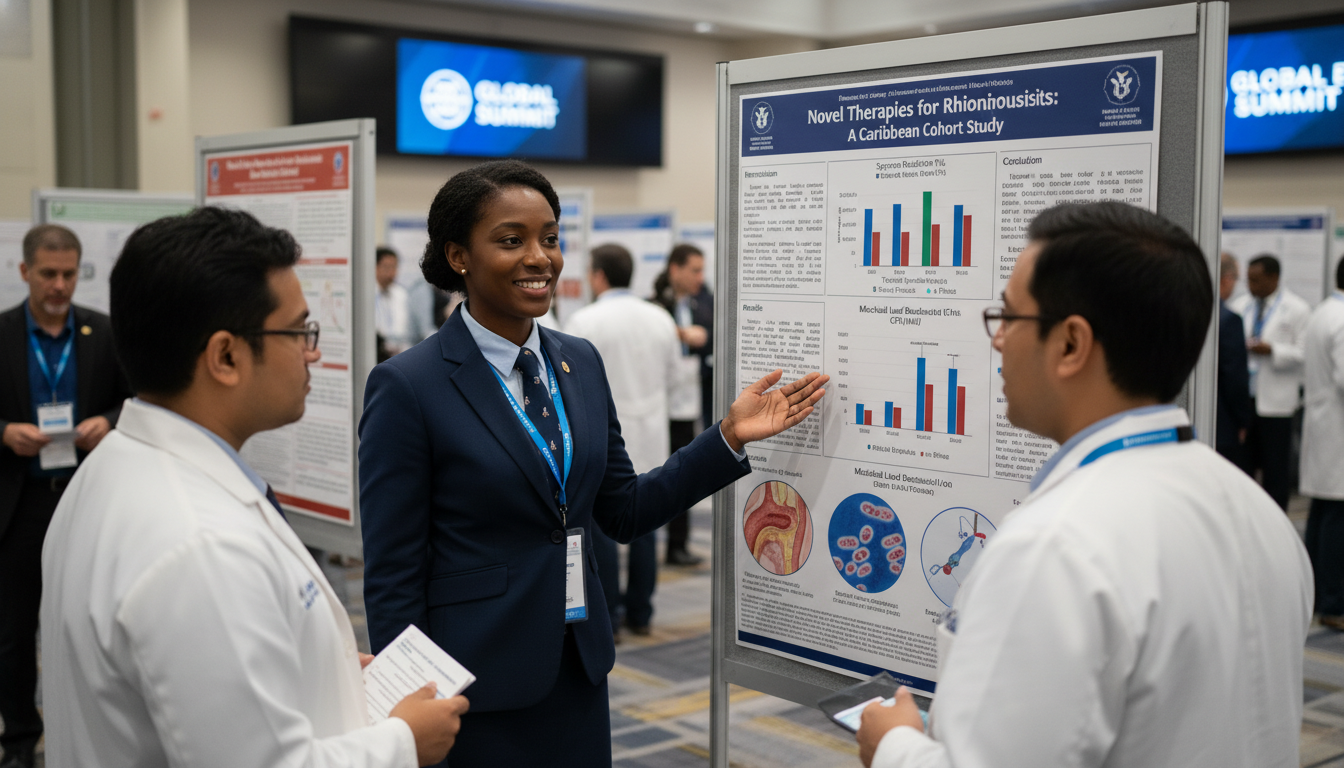
Turning Research into a Compelling ENT Residency Application Narrative
Research alone doesn’t guarantee an otolaryngology match. You must frame and communicate your experiences effectively.
1. Highlight ENT-Focused Commitment
In your CV, ERAS application, and personal statement:
- Group your ENT projects together:
- “Otolaryngology – Head and Neck Surgery Research Experience” section
- Emphasize continuity with the same mentor or institution
- Show progression: from case reports → retrospective study → review → larger-scale project
Make it clear that your research is not random; it’s a sustained exploration of ENT.
2. Quantify and Clarify Your Research Work
When listing projects:
- Specify your role: data collection, analysis, first author writing, protocol design
- Include status: submitted, accepted, in press, or published
- For in-progress work, be honest but concrete:
- “Data collection completed; manuscript in draft; target submission: Otolaryngology–Head and Neck Surgery.”
Evaluators know not every project will be published before applications, but they value evidence of pipeline and productivity.
3. Use Research to Secure Strong Letters of Recommendation
For Caribbean IMGs, strong US ENT letters can be harder to obtain. Research mentors are often your most powerful letter writers.
To earn a strong letter:
- Meet regularly with your mentor
- Ask for feedback and show visible growth
- Demonstrate reliability over at least several months
- Let them see you in clinical or conference settings if possible
When you ask for a letter, be specific:
- “Would you be able to write a strong, supportive letter that speaks to my research skills, work ethic, and suitability for otolaryngology residency?”
Provide them with your updated CV, personal statement draft, and a bullet list of your shared projects to help them write in detail.
4. Talk About Your Research During Interviews
Program directors will ask about your research in ENT residency interviews. Prepare:
- 2–3 key projects you can discuss comfortably and in depth
- For each project, be ready to briefly describe:
- Study question and why it mattered
- Your specific role and responsibilities
- Key findings and implications for ENT practice
- Any limitations and how you might improve the study
This shows you’re not just a name on a paper—you truly understand the work.
Common Pitfalls for Caribbean IMGs and How to Avoid Them
1. Chasing Quantity Over Quality
Ten low-quality, non-indexed case reports in obscure journals are not better than 3–4 solid PubMed-indexed publications. Program directors care about impact and credibility.
Strategy:
- Aim for reputable journals and conferences
- Be selective and realistic; collaborate on projects with clear publication plans
2. Neglecting USMLE and Clinical Performance
Even a brilliant research profile cannot fully compensate for major exam weaknesses or poor clinical evaluations.
Strategy:
- Protect your dedicated study time, especially for Step 1 and Step 2 CK
- Avoid overcommitting to research during these windows
- Use lighter research tasks (e.g., literature review, references) that fit into shorter time blocks
3. Disorganized Project Management
Carrying multiple projects without clear tracking leads to missed deadlines and abandoned manuscripts.
Strategy:
- Use simple tools (Excel, Notion, Trello) to track:
- Project title, mentor, role
- Status (idea, data collection, analysis, writing, submission)
- Target journal and deadlines
- Review this sheet weekly and update your mentor regularly
4. Misrepresenting or Overstating Contributions
For Caribbean IMGs under pressure, it can be tempting to “inflate” roles or list under-review papers as “accepted.” This is a serious red flag.
Strategy:
- Be honest and precise about your role and publication status
- Understand that program directors and faculty can (and sometimes do) verify publications and ask probing questions
FAQs: Research Profile Building for Caribbean IMG in ENT
1. Do I absolutely need ENT-specific research to match into otolaryngology as a Caribbean IMG?
You don’t absolutely need ENT-specific research, but having at least some ENT-focused projects significantly strengthens your application and reinforces your commitment to the field. If your early research is in other specialties (e.g., internal medicine, neurology), that’s fine—just try to transition toward ENT topics when possible, especially in the 1–2 years before you apply.
2. How many publications are typically needed for a competitive ENT application as a Caribbean IMG?
There is no universal cutoff, but a realistic and competitive target is:
- 3–5 PubMed-indexed publications (at least 1–2 ENT-related)
- Several abstracts/posters (3–8), preferably including ENT conferences
Quality, first-authorship, and ENT relevance matter more than raw numbers. A dedicated research year can help you reach or exceed these figures.
3. Is a research year in the US mandatory to match into ENT from a Caribbean school?
Not mandatory, but often highly beneficial for Caribbean IMGs in ENT. If you have strong Step scores, some ENT research, and solid US clinical exposure, you may not need a full research year. However, if you lack research experience, have average scores, or are late to decide on ENT, a well-structured research year in an academic ENT department can dramatically enhance your chances.
4. Will non-ENT research (e.g., cardiology, internal medicine) still help my otolaryngology application?
Yes—non-ENT research still demonstrates your ability to be productive, work on a team, and see projects through to publication. It’s especially useful early in your training or while you are still finding ENT opportunities. However, for the otolaryngology match, aim to supplement general research with targeted ENT projects as your application date approaches, to clearly signal specialty-specific commitment.
Building a robust research profile as a Caribbean IMG in otolaryngology takes planning, persistence, and strategic networking—but it is achievable. By focusing on high-yield ENT projects, reliable mentorship, and honest productivity, you can transform your CV from ordinary to truly competitive for an ENT residency in the United States.