Understanding the Research Landscape for DO Applicants in Vascular Surgery
Vascular surgery is an increasingly competitive field, and research productivity has become a major differentiator—especially for a DO graduate residency applicant. While your osteopathic training and clinical skills are valuable, program directors in vascular surgery consistently emphasize evidence of scholarly activity when ranking applicants.
For DO graduates, research can play several key roles:
- Leveling the playing field with MD applicants, particularly for university-based or academic integrated vascular programs.
- Showing commitment to vascular surgery early—programs want to see that you’ve invested time in their specialty.
- Demonstrating academic potential—critical thinking, persistence, and ability to work in a team are reflected in research output.
- Building relationships with faculty who can later advocate for you through letters of recommendation, phone calls, and networking.
Several integrated vascular surgery residency program directors report that nearly all matched applicants now have some form of research—ideally vascular-specific. For a DO graduate residency pathway, this is even more important to counter residual bias and demonstrate that you can thrive in an evidence-based, academic environment.
Before you start building your portfolio, anchor yourself around three strategic questions:
What story do I want my research to tell?
(Example: “I am deeply invested in endovascular innovation and limb salvage.”)What’s realistically feasible based on my timeline and access?
(Medical student vs. gap year vs. research fellowship vs. during residency.)How will each research activity move me closer to a vascular surgery match?
(Publications, presentations, mentorship, visibility with programs.)
The rest of this article will walk through a realistic, step-by-step approach tailored specifically for a DO graduate aiming for an integrated vascular surgery residency or a vascular surgery fellowship after general surgery.
What Kind of Research Matters Most for Vascular Surgery?
Not all research is valued equally in the vascular surgery residency match. The closer your academic work is to vascular topics and peer-reviewed output, the stronger your profile becomes.
1. Vascular-Focused Research (Highest Yield)
Program directors consistently prefer vascular surgery–relevant research, including:
- Peripheral arterial disease (PAD)
- Critical limb-threatening ischemia (CLTI)
- Carotid disease and stroke prevention
- Abdominal and thoracic aortic aneurysms
- Endovascular interventions (EVAR, TEVAR, peripheral stenting/angioplasty)
- Dialysis access
- Venous thromboembolism and chronic venous disease
- Limb salvage, wound care, diabetic foot
- Outcomes research in vascular interventions
High-impact types of projects in this category:
- Retrospective chart reviews using vascular surgery databases
- Outcomes research using NSQIP, Vascular Quality Initiative (VQI), or institutional registries
- Case series or case reports of unusual vascular pathologies
- Quality improvement (QI) initiatives improving perioperative care or follow-up
- Systematic reviews or meta-analyses on vascular topics
- Basic/translational vascular biology (if your institution offers it)
2. General Surgery and Surgical Outcomes Research (Moderately High Yield)
If you cannot secure purely vascular work right away, general surgery outcomes and perioperative research are still valuable, especially when:
- You work with surgeons or departments that have vascular connections
- The methodology (statistics, clinical database use) can later be applied to vascular topics
- You can transition to vascular projects with the same team
Examples:
- Surgical site infection prevention projects
- ERAS (Enhanced Recovery After Surgery) pathway implementation
- Perioperative anticoagulation management
- Outcomes after major abdominal or thoracic surgery
This demonstrates your ability to do surgical outcomes research, which is very relevant in vascular surgery.
3. Any Scholarly Activity (Lower Yield but Still Useful)
If you face major barriers to accessing surgical research, other scholarship still helps:
- Case reports in non-vascular specialties
- Chart reviews in internal medicine or cardiology
- Clinical reviews or educational chapters
- Osteopathic-focused research in OMM related to peripheral circulation or pain control
- Public health or epidemiology research (e.g., smoking cessation, diabetes control, hypertension)
These may not carry as much weight as vascular-specific work, but they still show effort, initiative, and academic engagement—important for a DO osteopathic residency match in any competitive specialty.

How Many Publications Are Needed—and What Is Realistic for a DO?
You’ll often hear extreme ranges about publications for match—anywhere from 1–2 to more than 20. Context matters.
Understanding the Numbers
NRMP and specialty-specific surveys show that integrated vascular surgery is one of the most competitive specialties, with matched applicants frequently reporting double-digit “abstracts, presentations, and publications” combined. But that number often includes:
- Posters and oral presentations
- Abstracts submitted to meetings
- Book chapters and online publications
- Quality improvement and non–peer-reviewed work
For a DO graduate residency applicant in vascular surgery, the following guidelines are more realistic and still competitive:
Minimum goal:
- 1–2 vascular or surgical publications (case reports, retrospective studies, or reviews), and
- 2–4 additional conference presentations, posters, QI projects, or abstracts
Solidly competitive range:
- 3–6 peer-reviewed works (mix of vascular-specific and surgical), and
- 5–10 total scholarly products (including posters, abstracts, chapters, QI)
Highly competitive (especially at large academic centers):
- 6–10+ peer-reviewed items, with a strong vascular focus
- Multiple first-author works
- National podium or poster presentations at meetings like SVS VAM, VEITHsymposium, or regional vascular societies
It is less about “how many publications needed” in a strict sense and more about the coherence and trajectory of your CV:
- Do your projects build on each other?
- Is there a clear vascular interest?
- Are you progressing from helper to first author?
- Do you show persistence over multiple years?
DO-Specific Considerations
As a DO graduate, you may:
- Have had fewer research opportunities in your preclinical years
- Attend a school without a large vascular surgery department
- Face unconscious bias regarding academic preparation
Research helps counter this by showing:
- You can handle data and scientific writing
- You are comfortable in academic environments
- You have mentors who can vouch for you
If you are starting late (e.g., M3 or early M4), you can still assemble a compelling profile:
- Prioritize smaller, faster projects (case reports, chart reviews, structured reviews)
- Aim for 1–3 vascular-specific outputs before ERAS submission
- Consider a dedicated research year or post-graduate research fellowship if you want to be highly competitive for top integrated vascular programs
Step-by-Step Plan to Build a Research Profile as a DO
This section offers a practical roadmap tailored to where you are in training.
Step 1: Clarify Your Timeline and Goals
Ask yourself:
- Are you a current DO student (OMS-II–IV), a recent DO graduate, or already in general surgery residency aiming for vascular fellowship?
- Are you targeting an integrated vascular program directly from medical school or traditional fellowship after general surgery?
- What is your realistic time horizon before ERAS submission—6 months, 1 year, 2 years?
Map this onto goals:
Short term (next 3–6 months):
- Join at least one ongoing vascular/surgical project
- Complete 1–2 abstracts or a case report
Medium term (6–18 months):
- Complete 1–3 full manuscripts for submission
- Present at least one poster or oral talk regionally or nationally
Long term (18+ months / research year):
- Build a portfolio of 5–10 scholarly works
- Develop strong mentorship relationships and letters of recommendation
Step 2: Find Mentors and Research Environments
1. Start locally—even if there is no vascular division.
Look for:
- General surgeons with vascular interests
- Cardiologists or interventional radiologists doing peripheral interventions
- Faculty with any outcomes research experience
Ask directly:
“I am a DO student very interested in vascular surgery. Are there any ongoing or potential projects involving peripheral arterial disease, endovascular work, or surgical outcomes that I could help with?”
2. Seek out vascular surgeons at affiliated hospitals or regional centers.
- Use your school’s affiliation list or rotation sites
- Introduce yourself during your surgery or vascular rotation
- Clearly express interest in both vascular surgery and research
Be prepared with:
- A brief CV
- A concise email: who you are, your interest in vascular surgery, and how much time you can commit
3. Use national and online networking.
If local options are limited:
- Attend virtual vascular surgery meetings or webinars (SVS, regional societies)
- Reach out to vascular faculty via email or LinkedIn/X after hearing them speak
- Ask explicitly about remote-friendly chart review or literature-based projects
Step 3: Choose Project Types Strategically
For a DO graduate with limited time, favor:
Fast(er)-Turnaround Projects
Case reports/series
- Identify interesting vascular cases on rotation (e.g., unusual aneurysm, rare arterial anatomy, complex limb salvage).
- Discuss with the attending: “Would you be open to a case report or case series on this?”
- Turnaround: weeks to a few months.
Narrative or focused literature reviews
- Example topics: “Endovascular management of below-the-knee disease in CLTI,” “Contemporary management of visceral aneurysms.”
- Turnaround: 2–4 months with dedicated effort.
Retrospective chart reviews with limited scope
- A single-center review of outcomes after carotid endarterectomy vs. stenting.
- Limb-salvage outcomes before/after a pathway implementation.
- Turnaround: 3–9 months depending on IRB and data access.
Medium- to Long-Term Projects
- Outcomes research using databases (institutional registry, VQI)
- Stronger academic impact but longer prep and analysis time.
- Quality improvement initiatives in vascular clinics or operating rooms.
- Prospective studies (feasible if you have a research year and mentor support).
Ensure each project has:
- Clear hypothesis or goal
- Feasible dataset or structure
- A senior mentor who is engaged
- A realistic timeline that fits your application cycle
Optimizing Your Output: Authorship, Presentations, and Storytelling
Once you’re on projects, the focus shifts to maximizing impact and presenting your work effectively on your application.
Authorship: Aim for Progression
Program directors look for growth in responsibility:
- Early: co-author on student-initiated or faculty-driven projects
- Later: first-author on case reports, reviews, and retrospective studies
Aim for:
- At least 1–2 first-author vascular or surgical papers by the time you apply
- Evidence that you can lead a project from start to finish (design, writing, responding to reviewers)
If you’re joining an ongoing project, clarify expectations early:
- “What would my role be?”
- “Is there an opportunity for me to be first or second author if I take responsibility for data collection and writing?”
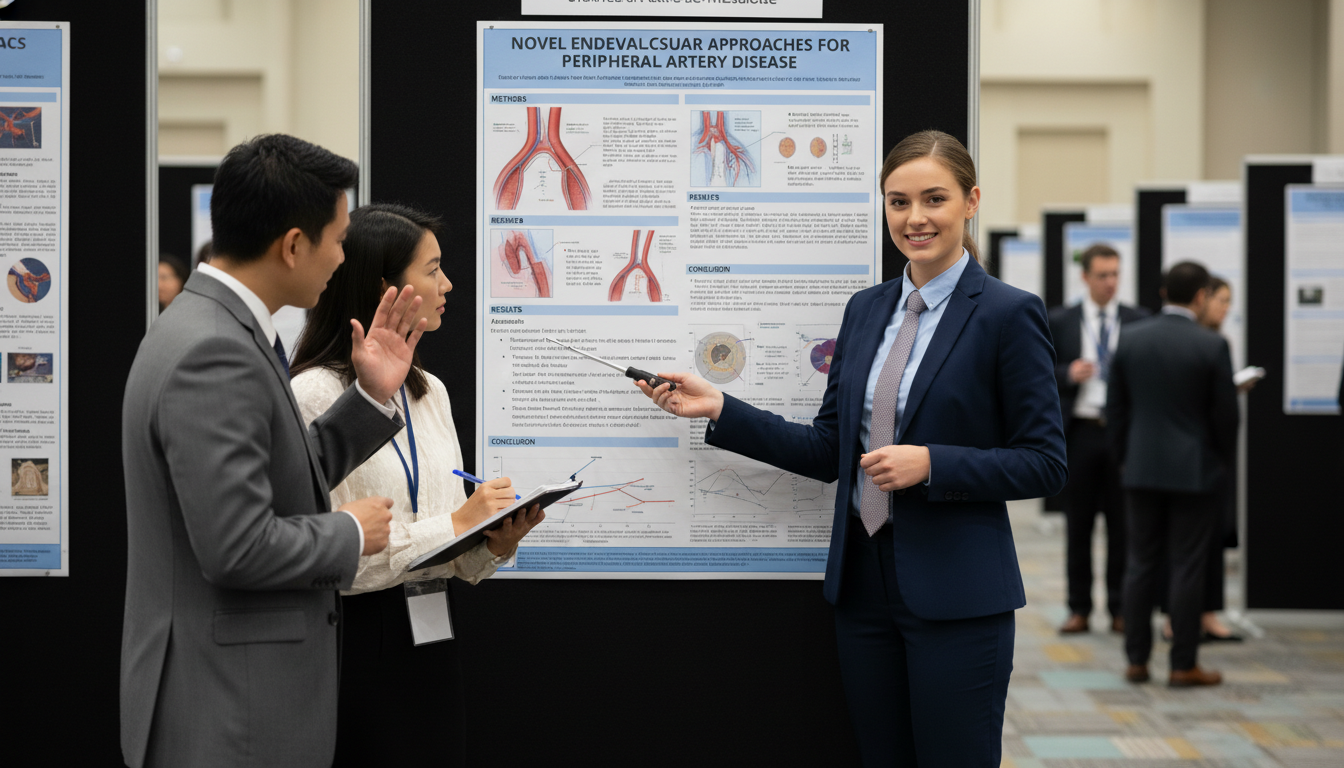
Presentations and Meetings
Presentations are highly valuable for the vascular surgery residency match because they:
- Get you seen by faculty and residents from integrated vascular programs
- Train you to discuss your work clearly and professionally
- Signal seriousness about an academic vascular career
Target venues such as:
- Society for Vascular Surgery (SVS) – Vascular Annual Meeting (VAM)
- Regional vascular societies (e.g., Midwestern, Eastern, Southern Vascular Societies)
- General surgery meetings (ACS, state surgical societies)
- Institutional research day/poster sessions
On ERAS, these count toward your “presentations” tally and strengthen your research narrative.
Tell a Coherent Story in Your Application
Your research profile should support a clear arc:
- Early interest: Perhaps a first case report on PAD or a poster on wound care.
- Deepening involvement: Retrospective projects, systematic reviews, outcomes studies on vascular topics.
- Future direction: In your personal statement, describe how these experiences shaped your interests (e.g., limb salvage, complex endovascular work, aortic pathology).
On your ERAS application and in interviews, be ready to:
- Explain each project briefly: question, role, results, and what you learned
- Connect your work to patient care and innovation in vascular surgery
- Reflect on challenges (IRB delays, negative results) and how you persisted
Special Strategies for DO Graduates: Research Years, Integrated vs. Fellowship Pathways
If you’re a DO graduate facing limited research experience, you may need to consider additional steps.
Dedicated Research Year or Postgraduate Research Position
A gap year for research can transform your profile, especially if:
- You are committed to academic vascular surgery
- You want to be competitive at university-based integrated vascular programs
- You currently have minimal vascular-specific work
During a research year, aim to:
- Work directly under one or more vascular surgeons with active projects
- Produce several first-author manuscripts and multiple abstracts/presentations
- Attend national vascular meetings to network and demonstrate your interest
If you’ve already graduated, look for:
- Paid research fellow positions with vascular or surgical departments
- Postdoctoral or research associate roles in vascular labs or outcomes groups
Be upfront about your goal: matching into vascular surgery (integrated or fellowship).
Integrated Vascular Program vs. Traditional Path
As a DO graduate, you might be considering:
- Applying directly to integrated vascular surgery programs (0+5)
- Matching into a general surgery residency first, then applying for 5+2 vascular fellowship
Research Implications
For integrated vascular:
- Strongly favors applicants with robust vascular-specific research.
- High-yield to have multiple vascular publications and presentations, ideally with vascular surgeons as mentors.
For general surgery with future vascular fellowship:
- Vascular research still helps, but high-quality general surgery research can also be valuable.
- Once in general surgery, you can shift heavily into vascular projects during PGY2–4 years.
If you’re concerned about competitiveness for integrated programs as a DO, a realistic strategy is:
- Build an initial vascular research portfolio now.
- Apply to a mixture of integrated vascular programs and strong general surgery programs with active vascular divisions.
- Continue or expand vascular research during general surgery residency, setting yourself up for fellowship.
Overcoming Structural Challenges as a DO
You may:
- Have less easy access to robust research infrastructure
- Face more steps to obtain IRB support or data access
- Have fewer built-in pipeline programs to integrated vascular
Actionable tactics:
- Collaborate with non-vascular faculty while keeping the topic vascular-adjacent (e.g., cardiology PAD research).
- Use your elective rotations strategically—schedule early vascular or surgery rotations and ask to join research.
- Be very organized and reliable—programs love students who follow through on data collection and manuscript drafting.
Persistence, professionalism, and a clear vascular focus will help you stand out despite systemic barriers.
FAQs: Research Profile Building for DO Graduates in Vascular Surgery
1. I’m a DO student with almost no research. Is it too late to aim for vascular surgery?
No. It’s harder, but not impossible. Focus on:
- Quickly starting 1–2 smaller projects (case report, literature review, small chart review) in vascular or closely related areas.
- Securing a committed mentor who can include you in an ongoing larger project.
- Honestly assessing whether you may need a dedicated research year if aiming for the most competitive integrated vascular programs.
You can also apply broadly to general surgery programs with strong vascular divisions and continue building your profile there.
2. Does my research have to be strictly vascular to help my osteopathic residency match chances?
Not strictly—but vascular-specific research is ideal. Nearby fields are still valuable:
- Cardiovascular medicine (PAD, carotid disease, antiplatelet therapy)
- Interventional radiology (endovascular work)
- Surgical outcomes and quality improvement
If you can, always try to angle projects toward topics relevant to vascular surgery (e.g., peripheral ischemia, limb salvage, atherosclerosis, venous disease).
3. How many publications do I need as a DO to be competitive for an integrated vascular program?
There is no fixed number, but for a DO graduate:
- Aim for at least 2–3 vascular or surgical publications, ideally including 1–2 first-author works.
- Complement these with several abstracts/presentations at local, regional, or national meetings.
- If you can reach 5–8 total scholarly products, including multiple vascular-focused projects, you will present a much stronger application.
For top academic integrated programs, consider a research year if you cannot reach this level during medical school alone.
4. What if my school does not have a vascular surgery department?
You still have options:
- Work with general surgeons, cardiologists, or interventional radiologists on PAD or vascular-related topics.
- Use rotations at outside hospitals to meet vascular surgeons and ask to participate in projects.
- Network via national meetings, online platforms, and virtual symposia to find remote-friendly projects.
- Start with literature-based projects (reviews, educational materials) that you can do anywhere with a good mentor.
Your goal is to show a consistent, serious interest in vascular surgery and a track record of scholarly work—even if the path to get there is unconventional.
By approaching research strategically—focusing on vascular relevance, realistic project selection, and visible scholarly output—you can build a compelling research profile as a DO graduate and significantly strengthen your chances in both the osteopathic residency match and integrated vascular surgery programs.