Why Your Research Profile Matters as a DO Applying to Emergency Medicine
As a DO graduate aiming for an emergency medicine residency, you already know the EM match is competitive—especially if you’re interested in university-based or academic programs. Even in a specialty historically more holistic and clinically focused, your research profile now plays a meaningful role in how programs evaluate you.
You do not need to be a PhD-level scientist to be competitive in the osteopathic residency match or the ACGME EM match. But you do need to show:
- Curiosity and critical thinking
- Ability to complete scholarly work
- Basic familiarity with research design and literature
- Commitment to improving emergency care
This article breaks down how to strategically build a research profile as a DO graduate in Emergency Medicine, even if you have limited prior experience, are coming from a smaller DO school, or are already in a gap year.
We will cover:
- What EM program directors actually look for in research
- How many publications you realistically need
- Which projects are realistic for a DO graduate
- How to find mentors and opportunities (even without home EM programs)
- Step-by-step strategies to build and present your research profile effectively
What EM Programs Look For in a Research Profile (Especially for DO Graduates)
Emergency medicine residencies vary in how heavily they weigh research. Community programs may focus more on clinical performance; academic centers often value scholarly work more. But across the board, PDs are looking for the same core signals.
1. Evidence You Can Complete What You Start
Programs value follow-through more than prestige. A small QI project taken from idea → IRB → data → poster matters more than five “ideas” that went nowhere.
They look for:
- Completed projects (even if not published yet)
- First-author or major contributor roles
- Evidence of longitudinal involvement (over months or years)
2. Comfort With the Medical Literature
In emergency medicine, your ability to:
- Critically appraise evidence
- Apply new research to patient care
- Participate in journal clubs and scholarly discussions
…is part of being an excellent resident.
Your research profile is one way to demonstrate:
- You know how to formulate a clinical question
- You can read and interpret statistics at a practical level
- You can communicate findings clearly
3. Alignment With Emergency Medicine
For DO graduates, especially those concerned about bias in the EM match, alignment with the specialty matters. Programs want to see:
- At least some EM-related or acute care–relevant projects
- Topics that touch on ED operations, critical care, ultrasound, toxicology, EMS, etc.
- Involvement with EM faculty, EM organizations, or EM-specific presentations
You can absolutely include research from other fields (e.g., internal medicine, pediatrics, osteopathic manipulative medicine), but try to tie the relevance to EM in your descriptions and interviews.
4. Understanding of What Research Actually Is
Programs are not expecting you to reinvent airway management. They do expect you to understand that research and scholarship include:
- Retrospective chart reviews
- Quality improvement (QI) projects
- Case reports and case series
- Educational research (simulation, curricula)
- Survey-based projects
- Systematic or scoping reviews
This is encouraging because it means you have multiple pathways to build a strong research profile beyond traditional randomized trials.
How Many Publications Do You Really Need for EM?
Many DO graduates worry about a magic number: How many publications needed to match EM? The reality is more nuanced.
Typical Ranges in EM Applicants
These are approximate patterns, not hard cutoffs:
- Community EM programs
- Many successful applicants: 0–2 publications
- Stronger profiles may have: several abstracts, posters, or QI projects
- Academic EM programs at university centers
- Many successful applicants: 2–5+ scholarly products (not all full papers)
- Includes: peer-reviewed publications, abstracts, posters, case reports, QI presentations
For a DO graduate aiming at a competitive EM residency, a good target is:
- 1–3 meaningful scholarly products by application time, such as:
- 1 peer-reviewed publication or accepted manuscript (any specialty)
- 1–2 EM-related posters/abstracts or case reports
- 1 QI project with clear outcomes, particularly if EM-focused
More is not always better. Program directors can tell the difference between:
- 10 extremely minor, low-impact, “name-in-the-middle” products, and
- 2–3 projects where you clearly had a major role and can talk about them intelligently
Where DO Graduates Sometimes Overestimate or Underestimate
Overestimating the need for high-impact journals
You do not need papers in NEJM or Annals of Emergency Medicine to match EM. Regional journals, specialty-specific journals, or osteopathic journals are perfectly acceptable.Underestimating the value of “small” projects
A single well-executed QI or chart review project directly relevant to ED practice can be tremendously valuable for your application and interview talking points.
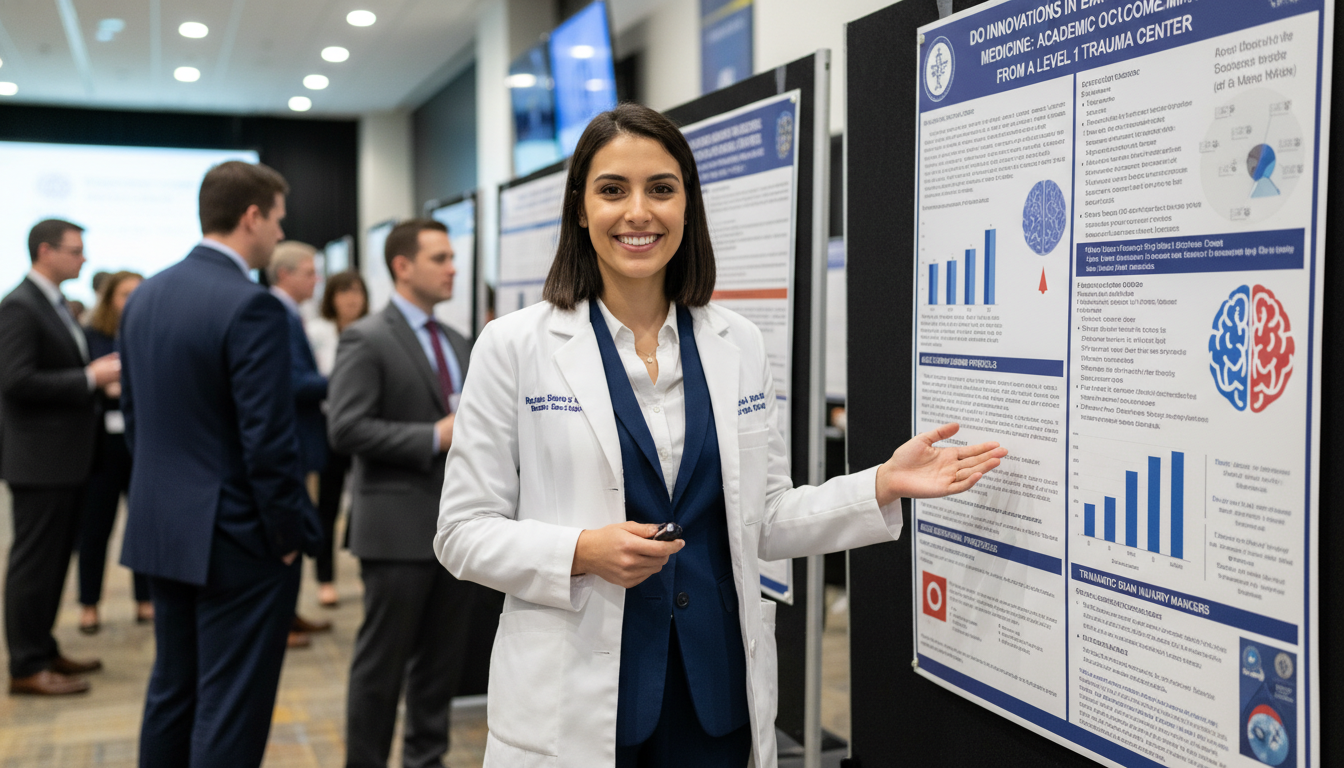
Types of Research and Scholarly Work That Are Realistic for DO EM Applicants
You don’t have to design a multi-center prospective trial. Instead, focus on feasible, high-yield project types that can realistically be completed around your existing obligations.
1. Case Reports and Case Series
Best for: Early-stage, limited-time applicants; students on EM rotations; DO graduates with interesting patient encounters.
Why they’re valuable
- Easier to initiate and complete
- Great first introduction to the writing and submission process
- Directly EM-relevant (unusual presentations in the ED, rare complications, toxicology cases)
Actionable steps
- During EM rotations, keep a running list of interesting cases (de-identified).
- Ask your attending: “Would this be a good case report? Are you open to working on it with me?”
- Review the target journal’s case report guidelines (word counts, structure).
- Draft sections: introduction, case description, discussion, conclusion.
- Aim for EM-friendly or case-focused journals.
Example topics
- Atypical presentation of aortic dissection in a young patient
- Unusual toxidrome from a new recreational drug
- Use of POCUS leading to a critical diagnosis in the ED
2. Retrospective Chart Reviews
Best for: DO graduates with access to a hospital or EM department willing to support research.
Why they’re valuable
- Highly relevant to EM practice (e.g., sepsis metrics, imaging utilization, ED operations)
- Feasible within 6–12 months
- Teach you data abstraction, basic statistics, and IRB navigation
Actionable steps
- Identify a simple, focused research question that matters clinically:
- “How often are CT scans ordered for minor head trauma in low-risk patients?”
- “What are the return rates to the ED within 72 hours after discharge for chest pain?”
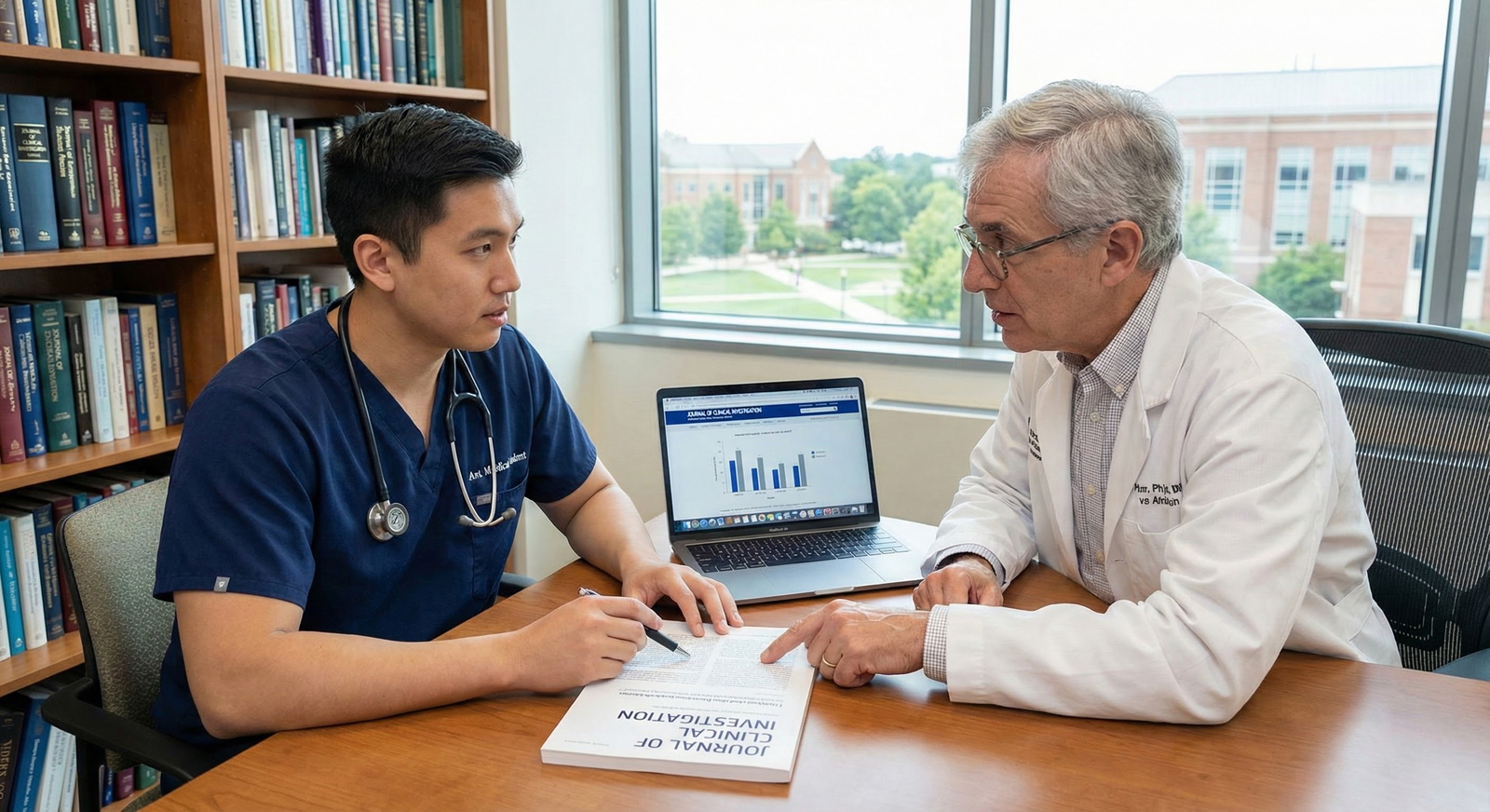
- Find a faculty mentor (EM physician, hospitalist, or quality officer).
- Draft a brief proposal and submit for IRB review (your mentor can guide this).
- Create a data collection sheet, abstract data, and collaborate with someone with basic stats training.
- Present results locally, then prepare an abstract or manuscript.
- Identify a simple, focused research question that matters clinically:
3. Quality Improvement (QI) Projects
Best for: DO graduates or students with ongoing access to any clinical environment, including community hospitals and urgent care settings.
Why they’re valuable
- Very attractive to residency programs (demonstrates systems thinking)
- Often doesn’t require full IRB approval if considered “QI” rather than “research”
- Directly linked to patient outcomes and ED workflow
Example QI questions
- Can we reduce door-to-antibiotic time for septic patients?
- Can we improve documentation of allergy histories in the ED?
- Can we standardize handoff communication between ED and inpatient teams?
Actionable steps (Plan-Do-Study-Act framework)
- Plan: Identify a measurable problem; define a metric you can track.
- Do: Implement a small change (education, checklist, order set).
- Study: Measure outcomes pre- and post-intervention.
- Act: Refine the process or institutionalize the improvement.
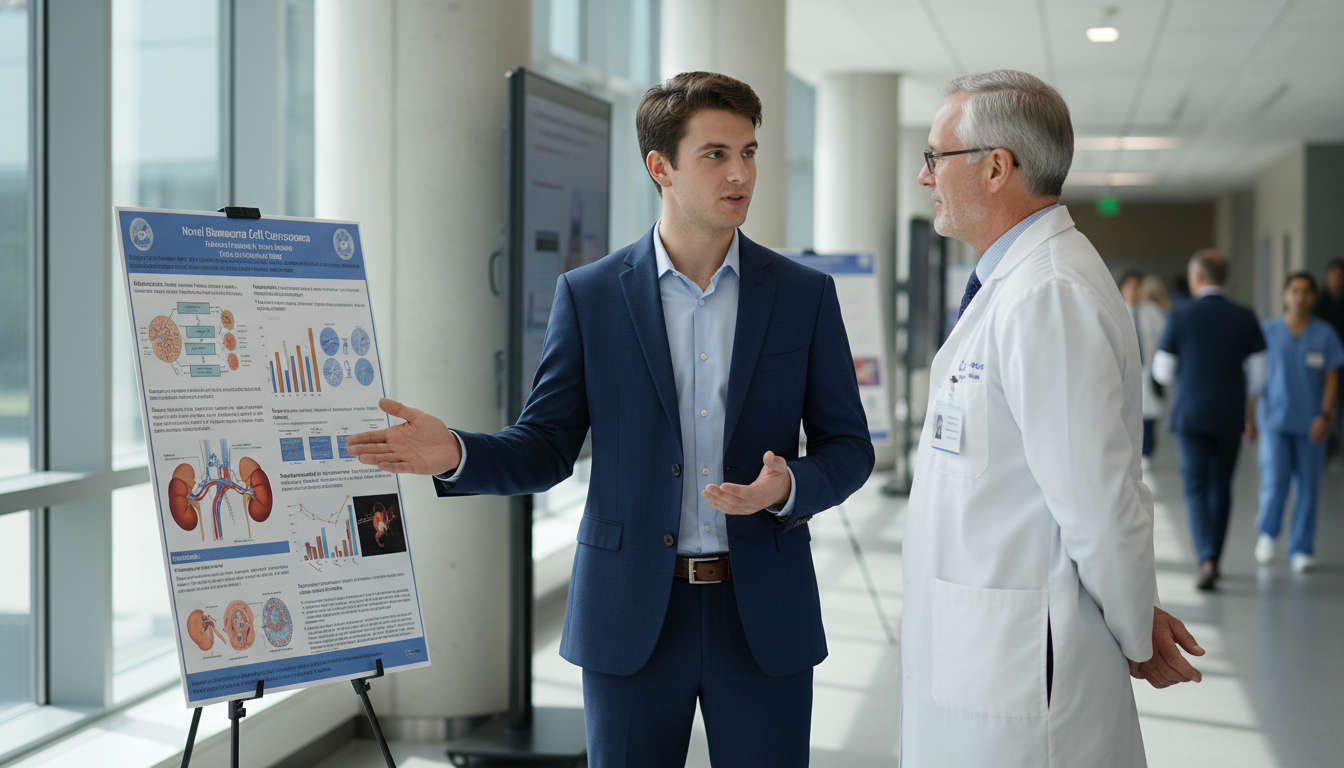
Even if the project doesn’t lead to a publication, you can present it as a poster at a local, regional, or national conference and include it as scholarly work.
4. Educational Research and Curriculum Projects
Best for: DO graduates interested in academic EM, teaching, or simulation.
Examples
- Designing a simulation curriculum for EM-bound students and assessing outcomes
- Evaluating the impact of an ultrasound boot camp on knowledge scores
- Studying learner satisfaction and performance with a new airway workshop
Outputs
- Posters/presentations at EM or medical education conferences
- Manuscripts in medical education or EM education journals
- Teaching portfolios (useful later when applying for chief or academic positions)
5. Systematic Reviews, Scoping Reviews, and Narrative Reviews
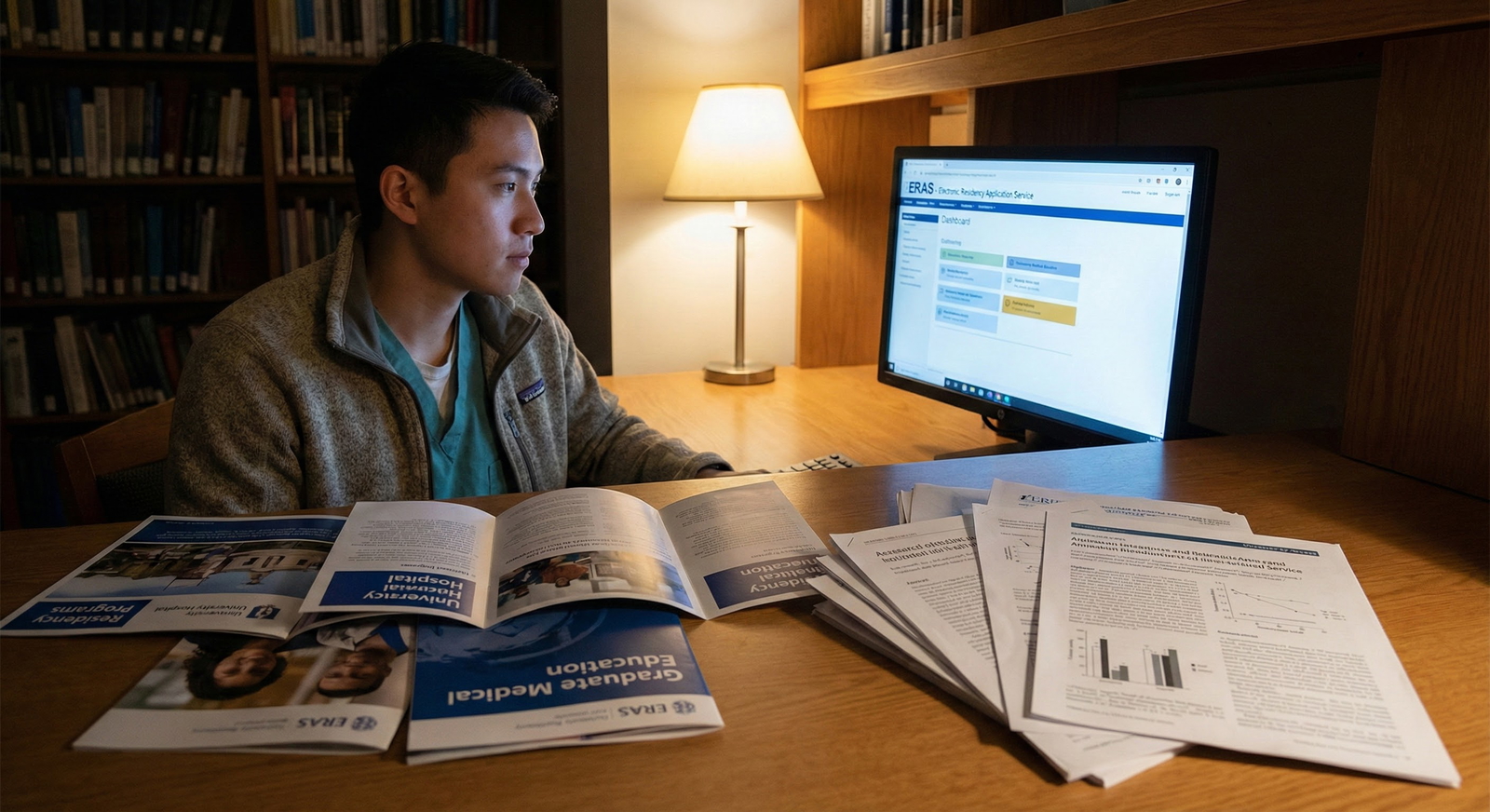
Best for: Applicants with limited clinical access but strong reading/writing discipline; those in a gap year.
Why they’re good for DO applicants
- Can be done remotely with online databases
- Enhance your literature appraisal and writing skills
- Show initiative and independence
Actionable steps
- Choose a focused EM or acute care topic (e.g., “Use of POCUS in hemodynamically unstable trauma patients”).
- Collaborate with a mentor experienced in reviews.
- Learn basic systematic review methodology (search strategy, inclusion criteria, PRISMA).
- Divide tasks: search, screening, data extraction, writing.
6. Non-EM Research That Still Helps Your EM Application
If you already have projects in:
- Internal medicine
- Critical care
- Cardiology
- Toxicology
- Pediatrics
- Osteopathic manipulative medicine (OMM/OMT)
…these still count toward your research for residency and your overall scholarly credibility. On your ERAS and in interviews, clearly explain:
“This project improved my ability to evaluate evidence and apply it to acutely ill patients, which directly informs how I practice in the ED.”
How to Find Research and Mentorship as a DO Graduate
One of the biggest challenges for DO graduates is access: smaller schools or community hospitals may not have robust EM departments or big research infrastructures. You’ll need to be proactive and strategic.
1. Start With Your Own Institution (Even If It’s Not EM-Focused)
- Look at:
- Internal medicine
- Family medicine
- Critical care
- Surgery/trauma
- Hospitalist groups
- Osteopathic research centers
Ask potential mentors:
- “Do you have any ongoing projects I could assist with, even at a small level?”
- “Are there projects that need help with data collection, chart review, or manuscript editing?”
You can later tie the content to emergency medicine in your personal statement and interviews.
2. Leverage Away Rotations and Sub-Internships in EM
Visiting EM rotations are some of the best opportunities to access EM-specific research.
Strategies:
- Email the EM clerkship director 6–8 weeks before your rotation:
- Introduce yourself as a DO student or graduate
- Express interest in emergency medicine research
- Ask if there are ongoing projects needing help
- During the rotation:
- Ask attendings and senior residents about their projects
- Offer to help with:
- Data collection
- Literature searches
- Drafting intros or discussions
- Be careful not to overcommit—only promise what you can realistically accomplish.
Even small contributions can lead to abstract co-authorships, which still strengthen your EM match profile.
3. Use Regional and National EM Organizations
Organizations like:
- American College of Emergency Physicians (ACEP)
- Society for Academic Emergency Medicine (SAEM)
- Emergency Medicine Residents’ Association (EMRA)
- American College of Osteopathic Emergency Physicians (ACOEP)
Often offer:
- Research interest groups
- Mentorship programs
- Opportunities to join multi-center studies or education projects
Look specifically for student or DO-friendly programs and sign up early in the year.
4. Networking and Cold Outreach—Done Professionally
DO-friendly networking tips:
- Identify faculty authors on EM topics you’re interested in (via PubMed).
- If they are at institutions where you’re rotating or applying:
- Send a concise, respectful email:
- Who you are (DO graduate, EM-hopeful applicant)
- Why their work interests you (1–2 specific sentences)
- What you’re asking for (“Do you have any projects with small, defined tasks where I might be helpful?”)
- Send a concise, respectful email:
- Attach a brief CV with your clinical and academic background.
Not every attempt will succeed—but a few good connections can make a huge difference.

Step-by-Step Blueprint to Build a Strong EM Research Profile as a DO
This section puts everything together into a practical, time-based strategy, whether you’re still in school, in a gap year, or applying soon.
Phase 1: Foundation (Months 0–3)
Goals:
- Learn the basics of research
- Clarify your interests
- Secure at least one mentor
Key actions:
Educate yourself quickly
- Complete a brief online course or module on:
- Study design
- Bias and confounding
- Basic stats
- IRB and ethics
- Many hospitals and universities offer these free to trainees.
- Complete a brief online course or module on:
Inventory your existing work
- List:
- Any prior projects (even unfinished)
- Presentations, posters, QI initiatives
- Research experiences from undergrad or other fields
- Decide which ones you can realistically push toward completion or publication.
- List:
Meet at least one potential mentor
- At your institution or via email/networking.
- Discuss:
- Your career goal: EM residency
- Timeline: when you’re applying
- Options for small but impactful projects
Phase 2: Execution (Months 3–9)
Goals:
- Commit to 1–3 realistic projects
- Move at least one project toward abstract or manuscript stage
Key actions:
Choose project types strategically
- Short timeline? Focus on:
- Case reports/case series
- QI projects
- Retrospective chart reviews with limited variables
- More time (gap year)? Consider:
- Systematic reviews
- Larger data projects
- Multi-center collaborations
- Short timeline? Focus on:
Work in consistent, small blocks
- 3–5 hours/week is often enough if sustained:
- 1–2 hours for reading/writing
- 1–2 hours for data collection/analysis
- Use checklists and weekly goals (e.g., “Finish intro draft,” “Abstract first 50 charts”).
- 3–5 hours/week is often enough if sustained:
Document everything
- Keep a running log:
- Project title and scope
- Your role (data collection, analysis, writing)
- Dates of involvement
- Outputs (poster, abstract, manuscript status)
- This will make ERAS entries, interviews, and CV updates far easier.
- Keep a running log:
Phase 3: Output and Visibility (Months 9–18, Leading Into Application)
Goals:
- Convert work into visible products
- Link your research story to EM in your personal narrative
Key actions:
Submit abstracts and posters
- Target:
- EM-specific conferences (ACEP, SAEM, ACOEP)
- State/regional meetings
- Institutional research days
- Remember: Posters and abstract publications do count as scholarly output.
- Target:
Push one project toward publication
- Don’t wait for “perfect.”
- Draft the manuscript, get feedback, revise, and submit.
- Even “under review” or “in submission” status is valuable when honestly reported.
Integrate research into your application
- ERAS entries:
- Be specific about your role (e.g., “Led data collection; co-wrote manuscript introduction and discussion”).
- Personal statement:
- One short paragraph connecting your research to:
- Why you love EM
- How you think about acute care, systems, or evidence-based practice
- One short paragraph connecting your research to:
- Interviews:
- Be ready to explain:
- The research question
- What you actually did
- What you learned
- How it will affect you as an EM resident
- Be ready to explain:
- ERAS entries:
Common Pitfalls for DO Applicants and How to Avoid Them
Pitfall 1: Waiting Too Long to Start
If you begin building your research profile right before ERAS opens, your options will be limited.
Fix: Start with what you can finish quickly (case report, QI project, small retrospective study), even if you’re late in the cycle. Visibility of active effort still helps.
Pitfall 2: Overcommitting to Too Many Projects
Saying “yes” to five projects often means finishing none.
Fix: Aim for 1–3 projects where you have a clearly defined, time-limited role and a realistic path to completion.
Pitfall 3: Ignoring Non-EM Research Completely
Some DO applicants think only EM research “counts.”
Fix: Include all meaningful scholarly work that demonstrates:
- Critical thinking
- Evidence appraisal
- Persistence over time
Then, explicitly relate what you learned to EM in your application.
Pitfall 4: Minimizing QI or “Small” Projects
You may be tempted to think, “This is just a QI project, it’s not real research.”
Fix: Treat QI with the same level of rigor:
- Clear problem statement
- Defined metrics
- Pre-/post-measurement
- Reflection on outcomes and limitations
PDs appreciate residents who understand systems improvement.
Pitfall 5: Fearing That Being a DO Is a Research Disadvantage
As a DO, you may feel behind applicants from large MD institutions with built-in EM research labs. While access differences are real, programs know this.
Fix:
- Focus on effort, consistency, and ownership, not prestige.
- Present a narrative that says:
“Given my institution’s resources, I sought out opportunities, completed projects, and learned how to contribute meaningfully to improving care.”
That initiative is often more impressive than passively joining an already-running mega-study.
FAQs: Research Profile Building for DO Graduates in Emergency Medicine
1. I’m a DO graduating soon with no publications. Is it too late to build a competitive research profile for EM?
It’s not too late, but you’ll need to be strategic. Focus on projects with short timelines:
- Case reports/case series from rotations
- QI projects already underway at your institution
- Joining an existing retrospective study primarily needing data collection
Even if work is still in progress by the time you apply, you can list it as “ongoing” and discuss it intelligently in interviews. Programs recognize that DO graduates may have had fewer opportunities and will value visible, recent effort.
2. How many publications do I need for a competitive emergency medicine residency as a DO?
There is no exact number, but for many DO applicants to EM:
- 0–2 total publications/scholarly products can be sufficient for many community programs.
- 1–3 meaningful items (publication, posters, QI projects) are a strong target if you’re interested in more academic or competitive sites.
Focus less on how many publications needed and more on:
- Quality of your involvement
- Your understanding of the project
- Your ability to connect it to emergency medicine practice
3. Does research outside of emergency medicine still help my EM match chances?
Yes. Research in internal medicine, surgery, pediatrics, ICU, cardiology, or even osteopathic fields absolutely strengthens your overall application, especially if:
- You played a clear, active role
- You can explain the project’s clinical relevance
- You articulate what you learned about evidence-based medicine
When discussing it, draw clear lines to EM, for example:
“My research in heart failure readmissions taught me to think deeply about transitions of care, which is critical in the ED where we often determine admission and discharge safety.”
4. I don’t have a home EM program or EM research faculty. How can I still get EM-related research?
Use a multi-pronged strategy:
- Leverage away EM rotations: ask early about research during scheduling or before the rotation starts.
- Join EM organizations (ACEP, SAEM, EMRA, ACOEP) and look for:
- Student-focused committees
- Research interest groups
- Mentorship programs
- Consider EM-adjacent projects in:
- Hospital medicine
- Critical care
- Toxicology
- EMS or prehospital systems
- If all else fails, do a literature-based project (systematic review, scoping review, or narrative review) on an EM-relevant topic with any supportive faculty mentor.
Even without a flagship emergency department, you can still assemble a research profile that signals curiosity, persistence, and readiness for EM training.
By approaching your research profile building systematically—choosing feasible projects, seeking mentorship, and clearly aligning your work with emergency medicine—you can significantly strengthen your position in the osteopathic residency match and the broader emergency medicine residency landscape. Your goal isn’t to become a full-time researcher; it’s to show that as a future EM physician, you can understand, generate, and apply evidence to the care of critically ill and injured patients.