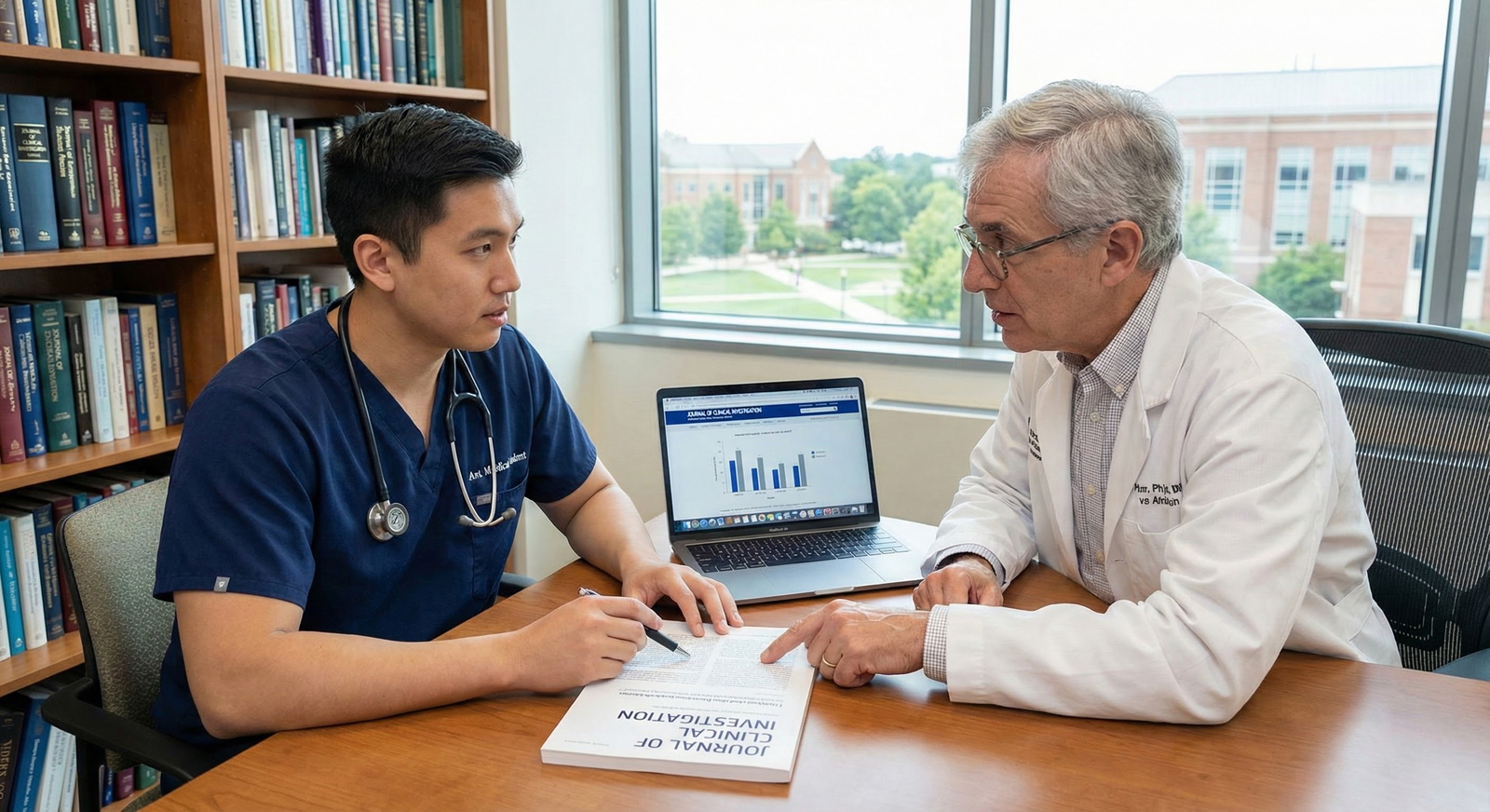
Understanding Research in the PM&R Residency Landscape
For a DO graduate targeting Physical Medicine & Rehabilitation (PM&R), research can be a powerful differentiator—especially as programs become more competitive and the osteopathic residency match continues to integrate with the broader NRMP match.
You do not need to be a PhD-level scientist or have dozens of publications to succeed in the physiatry match. However, you do need a strategic, coherent research profile that:
- Shows sustained interest in PM&R and musculoskeletal medicine
- Demonstrates you can think critically about evidence
- Signals that you’ll contribute academically during residency
- Offsets potential weaknesses (e.g., a lower COMLEX/USMLE score or limited home PM&R exposure)
This article focuses on research profile building for DO graduates applying to PM&R residency, with step‑by‑step guidance, examples, and realistic goals around research for residency and publications for match.
What PM&R Programs Look for in a Research Profile
Different PM&R programs value research differently. A few patterns:
- Academic programs (university-based)
- Tend to value research more
- Often have faculty actively publishing
- Look favorably on applicants with PM&R-related projects, QI, or case reports
- Community programs
- May prioritize clinical performance and fit
- Research still helps, but volume and prestige are less critical than showing curiosity and initiative
Research Signals That Matter Most
When a program director or faculty reviewer scans your ERAS application, they’re asking:
Is this applicant genuinely interested in PM&R?
- Evidence: PM&R‑related projects, musculoskeletal or neurology research, rehab-focused quality improvement, spine, pain, sports, neurorehab.
Can they complete scholarly work reliably?
- Evidence: Finished projects (even if small), case reports submitted, posters presented, not just “in progress” items.
Do they understand basic research methods and evidence?
- Evidence: Chart reviews, prospective studies, systematic reviews, or QI projects; familiarity with stats (even simple ones).
Will this person contribute to our program’s academic reputation?
- Evidence: Publications, abstracts, national or regional presentations.
How Many Publications Are “Enough” for PM&R?
There is no absolute number. But realistic targets for a DO graduate:
- Competitive for many academic and mid-tier programs
- 1–3 PM&R-relevant outputs (any mix of: publication, abstract, poster, QI project, book chapter)
- Stronger profile for top academic programs
- 3–6 total scholarly items, with at least 1–2 peer-reviewed publications or major abstracts/presentations
If you’re wondering how many publications are needed, focus less on the count and more on:
- Relevance to PM&R or adjacent fields
- Clear description of your role
- Evidence of project completion (not just “in progress”)
A DO graduate who has two well-executed PM&R-related posters and one published case report can be just as compelling as someone with a handful of unrelated basic-science abstracts.

Strategic Planning: Aligning Your Research With PM&R Goals
Before diving into projects, take 1–2 hours to create a simple research roadmap focused on PM&R and your strengths as a DO graduate.
Step 1: Clarify Your PM&R Interests
You don’t need a narrow subspecialty yet, but having themes helps you choose coherent projects:
Common PM&R domains:
- Musculoskeletal medicine & sports
- Spine, pain, and interventional procedures
- Stroke and brain injury rehabilitation
- Spinal cord injury
- Neuromuscular disorders
- Cancer rehabilitation
- Pediatric rehabilitation
- General inpatient rehabilitation and transitions of care
Pick 2–3 themes that overlap with your strengths and interests. For example:
- DO graduate with a strong OMM background → musculoskeletal pain, spine, sports, manual medicine, biomechanics
- Interest in neurology and cognition → stroke rehab, TBI, neuroplasticity, functional outcomes
- Passion for longitudinal care → outpatient PM&R, chronic pain, cancer rehab, disability medicine
Step 2: Take Inventory of Your Current Research Assets
Write down everything even slightly scholarly:
- Past projects (even if not PM&R):
- QI initiatives
- Case reports
- Chart reviews
- Bench or translational science
- Educational work:
- Curriculum development
- Teaching materials or workshops
- Data or clinical experiences you could turn into scholarly products:
- Interesting patient cases
- Unique clinic populations
- OMM/OMT outcome experiences
Label each as:
- Completed and published
- Completed but unpublished
- In progress
- Idea only
Your immediate goal: move items into the “completed and disseminated” category (publication, poster, presentation).
Step 3: Match Projects to Your Application Timeline
Consider when you will enter the osteopathic residency match for PM&R (or allopathic/NRMP route as applicable).
- If you’re 12–18 months from applying
- You can realistically complete: 1–2 case reports, 1 QI project, and possibly a retrospective study or review article.
- If you’re 6–12 months from applying
- Focus on shorter‑cycle projects: case reports, narrative reviews, QI, educational posters.
- If you’re <6 months from ERAS opening
- Prioritize finishing and disseminating existing work over starting new long-term studies.
Batch projects into:
- Short-term (1–3 months): case reports, letters, small reviews, conference abstracts
- Medium-term (3–9 months): chart reviews, QI with pre/post data, small prospective studies
- Long-term (>9 months): manuscripts from complex datasets, multi-site studies
Types of Research Experiences That Work Well for PM&R DO Applicants
Different types of research contribute differently to your narrative. You do not need them all. Aim for a balanced mix you can realistically complete.
1. Case Reports and Case Series (High Yield, Fast Turnaround)
For a DO graduate, case reports are a practical entry point into research for residency:
Why they’re valuable:
- Directly tied to clinical PM&R scenarios
- Show your ability to observe, synthesize, and write
- Faster than large-scale studies
- Great for posters and small journals
Examples tailored to PM&R:
- Novel use of OMT in a patient with post-concussion headache within a sports medicine PM&R clinic
- Unusual presentation of foot drop in a cancer rehab patient
- Complex spasticity management using botulinum toxin and orthoses in a stroke survivor
Action steps:
- During rotations (PM&R, neurology, family med, sports, OMM/OMT), identify interesting cases:
- Unusual diagnosis
- Unexpected response to treatment
- Unique use of OMT integrated with rehab
- Ask the treating attending if they’d be open to a case report and willing to be a co-author.
- Perform a focused literature review.
- Draft the report and target a journal or conference abstract.
2. Quality Improvement (QI) and Clinical Innovation
PM&R heavily values function, safety, and systems of care. QI projects play well here.
Examples:
- Improving adherence to DVT prophylaxis protocols on an inpatient rehab unit
- Streamlining fall-risk assessment in an outpatient spine and pain clinic
- Implementing functional outcome measures (e.g., FIM, AMPAC, PROMIS) in a rehab setting
- Evaluating documentation of OMT indications and outcomes in a musculoskeletal clinic
Why QI matters:
- Demonstrates systems thinking
- Directly impacts patient care and safety
- Often easier to implement than formal IRB-approved research
- Feeds strong talking points for interviews and letters
3. Retrospective Chart Reviews and Outcomes Research
These are classic “workhorse” projects in PM&R.
Examples:
- Outcomes of patients with low back pain treated with combined OMT and exercise therapy in a DO-heavy clinic
- Functional outcomes after TBI in patients receiving early PM&R consults vs. delayed consults
- Pain and mobility outcomes after botulinum toxin injections for spasticity
Pros:
- Use existing data; no need to recruit patients prospectively
- Teachable way to learn basic statistics
- Often publishable or presentable at regional/national PM&R meetings
Cons:
- Require more time and coordination
- Often need IRB approval and support from faculty
4. Review Articles and Educational Scholarship
If you enjoy reading and teaching, this can be a good fit.
Examples:
- Narrative review: Integrating OMT into the management of mechanical low back pain in PM&R settings
- Scoping review on functional electrical stimulation in stroke rehab
- Educational project: Developing a musculoskeletal exam curriculum for pre-clinical DO students
Even if such work doesn’t become a formal publication, it can:
- Lead to local presentations or workshops
- Strengthen your ability to discuss evidence during interviews
- Anchor your personal statement around your academic interests
5. Basic Science or Non-PM&R Research
Many DO applicants have prior research that’s not directly tied to PM&R—bench work in immunology, cardiology studies, etc.
This work is still valuable, especially if:
- It shows long-term commitment to scholarly work
- You had significant responsibility (data collection, analysis, drafting)
- You can articulate clearly what you learned and how it shapes your thinking
In your application, frame such work as:
- The foundation of your research skills
- An experience that taught you scientific rigor
- A stepping stone to your now more clinically oriented rehab interests
Finding Mentors and Opportunities as a DO in PM&R
As a DO graduate, especially if your school has limited PM&R presence, proactive networking is crucial.
Step 1: Start With Your Immediate Environment
- Check your institution for PM&R or rehab-affiliated services:
- Inpatient rehab unit
- Pain or spine center
- Sports medicine clinic
- Wound care or amputee clinic
- OMM/OMT faculty with rehab interests
- Ask:
- “Do you or your colleagues have any ongoing or planned research or QI projects?”
- “Would you be open to mentoring me on a case report or small project related to rehabilitation or musculoskeletal medicine?”
Step 2: Use National PM&R Networks
Key organizations:
- AAPM&R (American Academy of Physical Medicine & Rehabilitation)
- AAP (Association of Academic Physiatrists)
- AOCPMR (American Osteopathic College of Physical Medicine and Rehabilitation)
Actionable ideas:
- Attend virtual or in-person meetings and visit the poster sessions
- Join student or resident sections
- Email speakers whose work aligns with your interests:
- Introduce yourself as a DO graduate pursuing PM&R
- Reference their specific presentation or paper
- Ask if they mentor outside-institution students or have multicenter projects that accept remote data abstractors
Step 3: Leverage Osteopathic and Alumni Networks
- Contact DO PM&R residents or attendings from:
- Your medical school’s alumni office
- AOCPMR membership directory
- Social platforms like LinkedIn and specialty forums
Template email (condensed):
Dear Dr. [Name],
I am a DO graduate interested in PM&R and currently building my research profile. I saw that you [share DO background / work at X PM&R program / published on Y topic]. I’m especially interested in [brief interests].I’m looking for opportunities to assist with ongoing projects (even in small roles such as data collection or chart review) and would greatly value any advice or possible collaboration.
Thank you for your time and consideration.
Sincerely,
[Your Name], DO
Be clear that you’re willing to do the legwork on data collection, literature review, and drafting.
Turning Work Into Tangible Outputs for the Match
Your goal is to convert efforts into visible products on ERAS that strengthen your PM&R story.
Prioritize “Completable” Over “Impressive but Unrealistic”
Before saying yes to a project, ask:
- Can this realistically yield a poster or manuscript before my application cycle?
- What is my defined role?
- Do I have a clear mentor who will help finalize and submit?
A smaller completed project is better than a large, unfinished one.
Types of Outputs to Aim For
In order of ease and feasibility:
- Local or regional poster presentations
- Medical school research days
- State or regional PM&R or osteopathic conferences
- National conference abstracts
- AAPM&R, AAP, AOCPMR, specialty society meetings (e.g., sports, pain)
- Case report publications
- PM&R journals, osteopathic journals, rehabilitation or musculoskeletal-focused journals
- Original research article or QI paper
- More time-consuming but highly beneficial if feasible
How to List Work on ERAS
Under Research Experiences and Presentations/Publications:
- Be honest and precise about status:
- Published, accepted, submitted, in preparation
- Clarify your role:
- “Primary author,” “Data abstractor and co-author,” “Contributed to data collection and analysis”
- Highlight PM&R relevance:
- Mention rehab setting, musculoskeletal focus, functional outcomes, or integration of OMT into rehab.
Using Your DO Background as a Unique Research Asset
As a DO graduate, lean into your osteopathic training:
- Integrate OMT into musculoskeletal or pain-related projects
- Explore biomechanics, posture, and functional outcomes
- QI projects evaluating OMT utilization in rehab-adjacent clinics
- Position yourself as someone who brings a holistic, hands-on perspective into research questions about function and quality of life
In interviews and your personal statement, connect the dots:
- Osteopathic principles → focus on function and the whole person
- PM&R → specialty of restoring function and optimizing quality of life
- Your research → where those philosophies meet in practice
Common Pitfalls and How to Avoid Them
Pitfall 1: Overcommitting to Too Many Projects
Signs:
- Multiple “in progress” projects, none completed
- Mentors not responding or timelines slipping
- Burnout from trying to juggle clinical work and research
Solution:
- Limit yourself to 2–3 active projects at a time
- Meet with mentors to set clear deadlines and division of labor
- Regularly reassess and politely step back from projects unlikely to finish before the match
Pitfall 2: Ignoring PM&R Relevance
Some applicants list impressive but unrelated publications without tying them to PM&R.
Fix:
- In your descriptions and interviews, explicitly connect non-PM&R work to:
- Skills you developed (statistics, study design, teamwork)
- Concepts relevant to rehab (neuroplasticity, chronic disease management, functional outcomes)
Pitfall 3: Underestimating the Value of Small Projects
Many DO graduates dismiss case reports or local posters as “not real research.”
In reality, for PM&R:
- Case reports and QI can be high-yield and program-relevant
- They demonstrate your engagement and curiosity
- They are realistic to complete within a busy pre-residency year
Pitfall 4: Poor Documentation and Organization
Disorganized applicants struggle to:
- Recall contributions clearly
- Provide accurate dates and status updates
- Write coherent ERAS entries
Practical tips:
- Maintain a simple spreadsheet:
- Title, mentor, role, start date, current status, target venue
- Save all drafts, IRB approvals, and presentation slides in organized folders
- Before ERAS, cross-check everything with your mentors for accuracy
Putting It All Together: A Sample Research Path for a DO Applicant
Imagine a DO graduate aiming for PM&R who is 14–16 months away from applying:
Months 1–3
- Identify a PM&R or OMM mentor
- Start a case report on a complex low back pain patient treated in a DO-heavy clinic with OMT plus rehab exercises
- Join an ongoing retrospective chart review on outcomes after inpatient rehab for stroke
Months 4–6
- Submit the case report as a poster to a regional PM&R or osteopathic conference
- Help analyze preliminary data for the stroke rehab chart review
- Begin a QI project to improve documentation of functional goals in an outpatient spine clinic
Months 7–10
- Present the poster (local or regional)
- Draft a manuscript from the stroke rehab chart review with your mentor
- Collect pre/post data for your QI project and write an abstract
Months 11–14
- Submit:
- Case report manuscript to a journal
- Stroke outcomes paper to a PM&R or neurorehab journal
- QI project as a poster to AAPM&R or AOCPMR
- Finalize description of all three projects in ERAS
By application time, this DO graduate has:
- 1–2 posters (one PM&R- or OMT-relevant)
- 1 submitted or accepted case report
- 1 retrospective outcomes project (manuscript in submission or under review)
- 1 QI project with clear impact on rehab care
That research profile is credible, cohesive, and clearly PM&R-focused, and it positions the applicant well across community and academic programs.
FAQs: Research Profile Building for DO Graduates in PM&R
1. Do I need PM&R-specific research to match into PM&R as a DO graduate?
Not strictly, but it helps significantly. Programs like to see at least some work clearly related to PM&R or its adjacent areas (musculoskeletal medicine, neurology, pain, sports, rehab outcomes). If most of your earlier work is outside PM&R, try to complete at least one or two rehab-related projects (e.g., case report, QI, small chart review) before applying.
2. Realistically, how many publications are needed to be competitive for PM&R?
There is no fixed number. Many successful PM&R applicants, including DO graduates, match with 1–3 total scholarly items. Stronger academic programs may favor applicants with 3–6 outputs (not all have to be full publications—posters and abstracts count). Focus less on hitting a magic number and more on producing a small set of thoughtful, completed, PM&R-relevant projects.
3. I’m a DO graduate with no research yet and 9–12 months until I apply. What should I prioritize?
Prioritize shorter-cycle projects with clear endpoints:
- 1–2 PM&R-relevant case reports (fastest path)
- A QI project in a rehab, pain, or musculoskeletal clinic
- A small retrospective chart review if you can join an existing project
Aim to have something submitted or presented before ERAS, even if not yet fully published.
4. Will lack of research automatically hurt my chances in the osteopathic residency match or NRMP for PM&R?
Lack of research is not an automatic rejection, especially at community or smaller programs, but it may put you at a relative disadvantage at academic and research-heavy programs. If your application cycle is close and your research profile is thin, compensate by:
- Excelling on PM&R rotations
- Securing strong letters from physiatrists
- Demonstrating clear, informed interest in PM&R in your personal statement and interviews
At the same time, even one or two small scholarly projects added now can meaningfully improve your profile.
By approaching research for residency in a strategic, PM&R-focused, and realistic way, you can build a strong, coherent research profile as a DO graduate—one that not only helps you in the physiatry match, but also prepares you to be a thoughtful, evidence-informed physiatrist throughout your career.