Understanding the Role of Research for a DO Applying to Psychiatry
For a DO graduate targeting psychiatry residency, especially a competitive psych match or academic programs, your research profile can significantly influence which interviews you receive and how program directors perceive your potential. While psychiatry is not as research-heavy as specialties like dermatology or neurosurgery, the field is becoming increasingly evidence-driven, and residency programs—particularly university-based and research-oriented ones—now pay closer attention to applicants’ scholarly activity.
As a DO, you may also be navigating additional perceptions: some allopathic programs may still (often unfairly) assume osteopathic training includes less research exposure compared to MD peers. A strategically developed research profile helps counter that bias, demonstrates your academic rigor, and signals that you can contribute meaningfully to the scholarly life of a residency program.
In this article, we’ll cover:
- Why research matters for DO graduates in psychiatry
- How many publications you realistically need for a strong psych match
- The types of research and scholarly work that count
- Step-by-step strategies for building a research profile (even if you’re starting late)
- How to present and discuss your scholarly work in applications and interviews
Throughout, we’ll emphasize practical, achievable approaches specifically tailored to DO graduates pursuing psychiatry residency.
How Much Research Do You Really Need for Psychiatry?
One of the most common questions is: “How many publications are needed?” or “Do I need research to match psych as a DO?”
The honest answer: there is no single number, and it depends on your target programs and overall application strength.
General Benchmarks for Psychiatry
NRMP and program director surveys consistently show that psychiatry is moderately research-sensitive:
Community and more clinically focused programs
- Many successful applicants have 0–2 scholarly items (abstracts/posters/pubs).
- Research is helpful but not always essential if other metrics (COMLEX/USMLE, letters, clinical performance, personal statement) are strong.
University-based and academic psychiatry programs
- More likely to value a clear track record of scholarly activity.
- Successful applicants often have 2–5+ scholarly products, and for top research-heavy programs, more substantial research experience can be a key differentiator.
For DO Graduates Specifically
Because some academic programs may have limited experience with DO graduates, a solid research portfolio can help you:
- Demonstrate that you function well in academic and research environments
- Show comfort with reading, understanding, and potentially producing psychiatric literature
- Stand out when your school may not be as “known” to certain programs
A realistic target answer to “how many publications needed” for a DO graduate applying psychiatry might look like this:
Minimum for broad psych match (including many community programs)
- At least 1–2 meaningful scholarly products is advisable: a poster, case report, QI project, or review article.
Competitive for mid-tier university and some academic psychiatry programs
- Aim for 2–4 scholarly products, at least one of which is first-author or reflects substantial contribution.
Highly competitive for research-oriented or top-tier academic psych programs
- 4+ scholarly items, including original research or high-quality reviews, especially if you can discuss them deeply and show clear academic interest.
Remember: Quality, relevance, and your level of involvement matter more than raw count. A single first-author psychiatry paper or robust QI project can be more impressive than five minor middle-author abstracts unrelated to psychiatry.
What “Counts” as Research and Scholarly Activity in Psychiatry?
Psychiatry residency programs typically consider a wide range of activity as “research” or scholarly output. This is especially important for DO graduates whose schools may emphasize clinical or osteopathic research differently than MD programs.
Here are the main categories that can strengthen an osteopathic residency match profile in psychiatry:
1. Original Clinical or Translational Research
This is the classic form of research:
- Prospective or retrospective chart reviews
- Clinical trials or treatment outcome studies
- Studies using psychiatric rating scales or neurocognitive assessments
- Neuroimaging or biomarker studies (often at larger academic centers)
For DO graduates, even a small, well-designed retrospective study (e.g., comparing SSRI response in different patient populations) can be highly valuable.
Example:
You work with a psychiatrist at your rotation site to review charts of patients admitted for first-episode psychosis and examine factors associated with length of stay. You design a basic protocol, extract data, and contribute heavily to the analysis and write-up. Even if the project yields a conference poster rather than a journal article, it demonstrates real research engagement.
2. Case Reports and Case Series
Case reports are one of the most realistic entry points for DO graduates with limited prior research exposure:
- Identify an interesting patient case (rare presentation, unusual side effect, unique treatment response).
- Conduct a focused literature review.
- Work with an attending to write and submit to a psychiatry or medical journal or present as a poster.
Psychiatry lends itself well to compelling case reports: unusual psychopharmacologic reactions, complex presentations crossing neurology and psychiatry, or rare comorbid conditions.
3. Quality Improvement (QI) and Systems-Based Projects
Residency programs often count QI projects as valid scholarly activity, especially if:
- There is a clearly defined problem (e.g., high rates of missed follow-up appointments in a psych clinic).
- You systematically gather and analyze data.
- You implement and reassess an intervention.
For DO graduates in psychiatry, QI can be a powerful way to show:
- Comfort with measurement-based care
- An understanding of the realities of psychiatric practice (access, adherence, safety)
- Leadership and systems thinking
Example QI project:
You develop a note template or script to improve suicide risk documentation in an outpatient training clinic, track compliance before and after implementation, and present your results at a local or regional conference.
4. Review Articles, Book Chapters, and Educational Scholarship
If access to patient-based research is limited, consider:
- Narrative reviews on a psychiatric topic
- Systematic or scoping reviews (more rigorous, but feasible with mentorship)
- Educational projects (e.g., developing a curriculum on opioid use disorder for third-year students and collecting feedback/outcomes)
These can be highly impactful for a DO graduate psych applicant, especially if they are published or presented regionally/nationally.
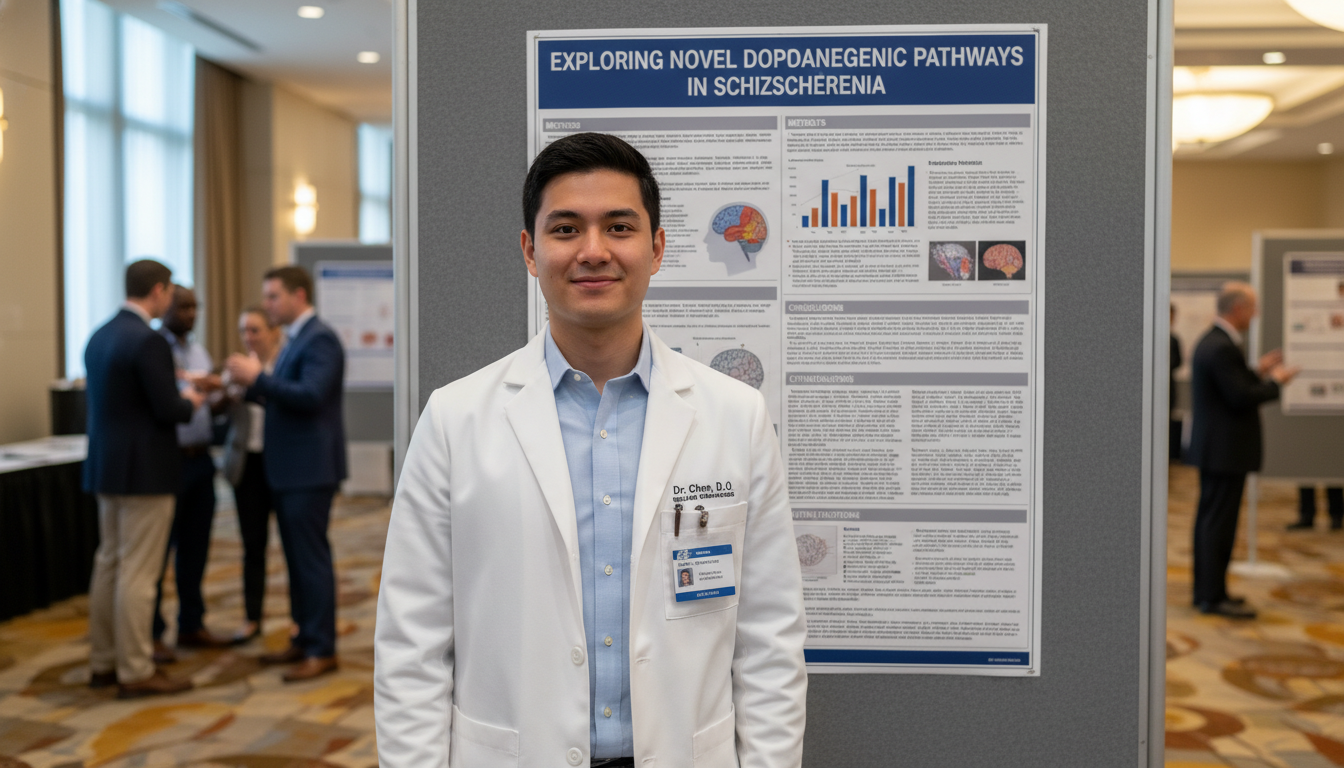
5. Posters, Abstracts, and Oral Presentations
Programs generally count:
- Posters or oral presentations at:
- APA (American Psychiatric Association)
- AADPRT, AACAP, or other subspecialty meetings
- State psychiatric society meetings
- Your medical school’s research day
Even if not published in a journal, conference presentations are visible scholarly milestones. For a DO graduate, presenting at an APA meeting in particular signals early integration into mainstream psychiatry.
6. Non-Psychiatry Research: How Much Does It Help?
If your research is in another field (e.g., internal medicine, neurology, basic science):
- It still counts positively, especially if you played a substantial role.
- Programs care that you can think scientifically, analyze data, and complete long-term projects.
If possible, in your personal statement and interviews, connect skills from non-psych research to psychiatric interests: e.g., an internal medicine project taught you about medication adherence, which inspired your interest in treatment adherence in severe mental illness.
Building a Research Profile as a DO: Step-by-Step Strategy
Whether you are still a student, in a gap year, or already a DO graduate, you can create a structured plan to build a competitive research profile for the osteopathic residency match in psychiatry.
Step 1: Clarify Your Goals and Target Programs
Before diving into projects, define your priorities:
- Are you targeting community psych programs or academic, research-heavy ones?
- Do you envision a career in clinical private practice, academics, or both?
- Are you open to fellowship (e.g., child/adolescent, addiction, consult-liaison, forensic), where research background can be a plus?
If aiming for heavily academic programs, you’ll want a more robust profile with:
- At least 2–4 meaningful scholarly activities
- At least one psychiatry-focused project
- Ideally, at least one publication or accepted conference abstract by application time
Step 2: Find Mentors Strategically (Especially as a DO)
Mentorship is the most important factor in turning “I want to do research” into actual research output.
Where DO Graduates Can Find Research Mentors
Psychiatry rotations at your home institution or core site
- Ask attendings: “Do you have any ongoing projects? Are you open to helping a DO graduate get started with a small piece of a study or a case report?”
Away rotations (“auditions”) in psychiatry
- Especially at academic centers: express early, politely, that you are interested in research for residency and ask if the department has resident or student projects you can join.
Virtual or remote mentorship
- Reach out to faculty at other institutions via email, especially if they publish in areas you’re genuinely interested in (e.g., psychosis, mood disorders, addiction).
- Offer specific help: literature reviews, data extraction, chart review, manuscript editing.
Osteopathic and psychiatry organizations
- Look for DO psychiatrists in AOA, APA, or state psychiatric societies with academic roles—many are especially enthusiastic about mentoring DO graduates.
How to Approach Potential Mentors
Be concise and specific:
- Mention you are a DO graduate aiming for psychiatry residency.
- Note relevant skills (e.g., statistics coursework, prior publications, familiarity with citation managers).
- Ask if you can assist on existing projects, which are more likely to yield outputs before your application deadline.
Show reliability early: respond promptly, meet deadlines, and over-communicate progress.
Step 3: Choose Projects that Match Timeline and Feasibility
Your match cycle timeline dictates what kind of projects make sense.
If You Have 12–18 Months Before Applying
You can pursue:
- A retrospective chart review in psychiatry
- A systematic review or meta-analysis with a well-structured team
- Multiple smaller outputs: 1–2 posters, a case report, and possibly 1–2 manuscripts under review or in press
If You Have 6–12 Months
Focus on shorter-cycle projects:
- Case reports or case series
- Narrative reviews
- QI projects with clearly defined endpoints and data you can collect quickly
- Joining an existing project that is close to the abstract or submission stage
If You Have Less than 6 Months
Prioritize:
- Rapid case reports
- Abstracts or posters for upcoming meetings with close deadlines
- Very localized QI projects with quickly measurable outcomes
- Ensuring any nearly completed project is submitted so you can list it as “submitted” or “in preparation” (honestly) on ERAS
Step 4: Clarify Your Role and Aim for First-Author Work When Possible
For the psych match, the depth of your involvement is critical:
- First-author roles signal leadership and intellectual contribution.
- Middle-author roles are still positive but less individually distinguishing unless the project is very high profile.
Where possible, structure projects so that you:
- Develop or co-develop the research question or case narrative
- Conduct the literature review
- Participate in data collection and basic analysis
- Draft substantial portions of the abstract or manuscript
Then, on your CV and in ERAS, you can confidently describe your specific contributions, which impresses interviewers more than a long list of minor roles.
Step 5: Document and Organize as You Go
Avoid a last-minute scramble by building your research tracking system:
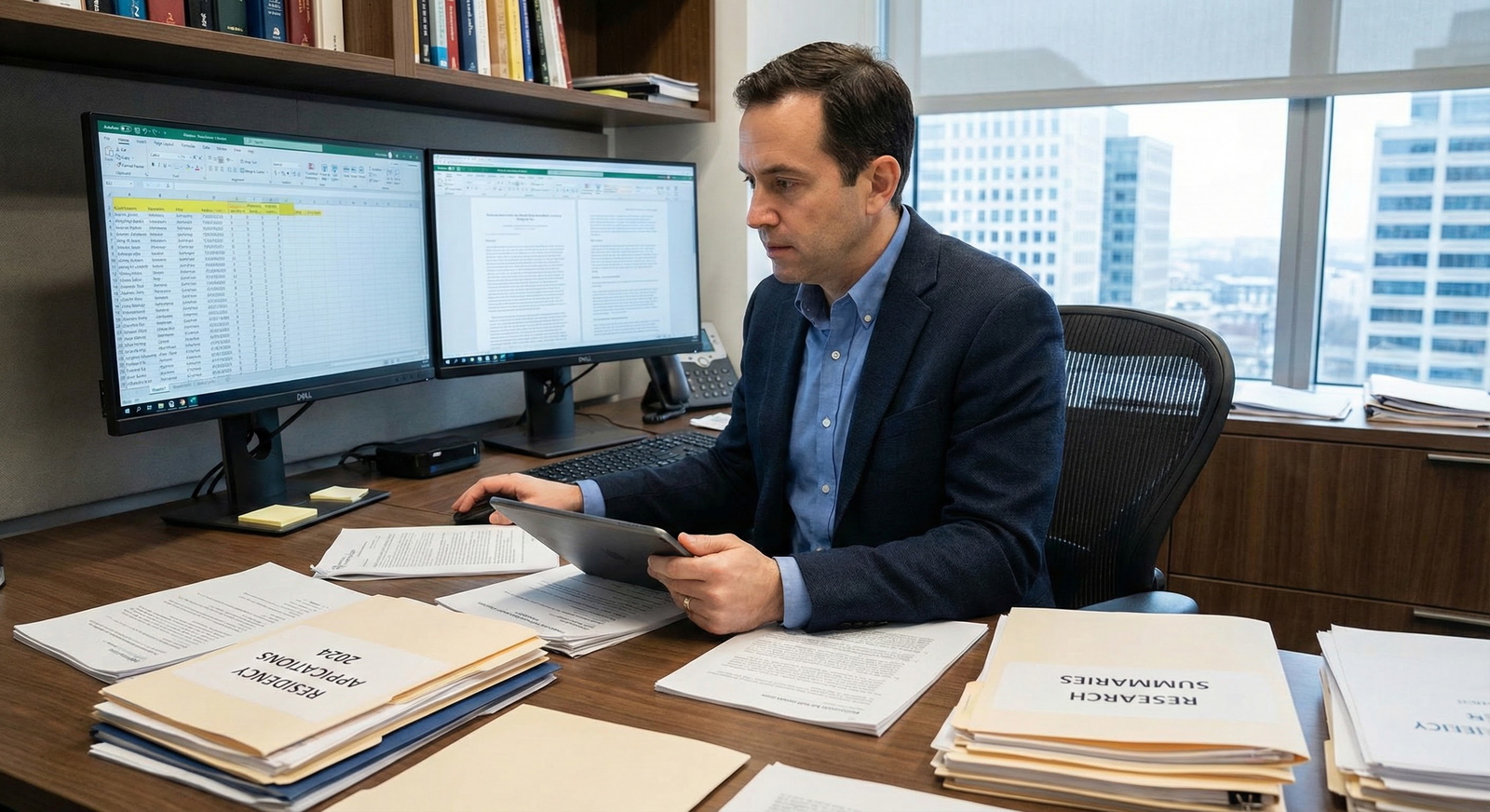
- Maintain a simple spreadsheet or document listing:
- Project title
- Type (case report, QI, retrospective study, etc.)
- Role (first-author, co-author, etc.)
- Mentors and collaborators
- Key dates (start date, abstract submission, acceptance, presentation date, journal submission, acceptance/publication)
- Status (in progress, submitted, accepted, published)
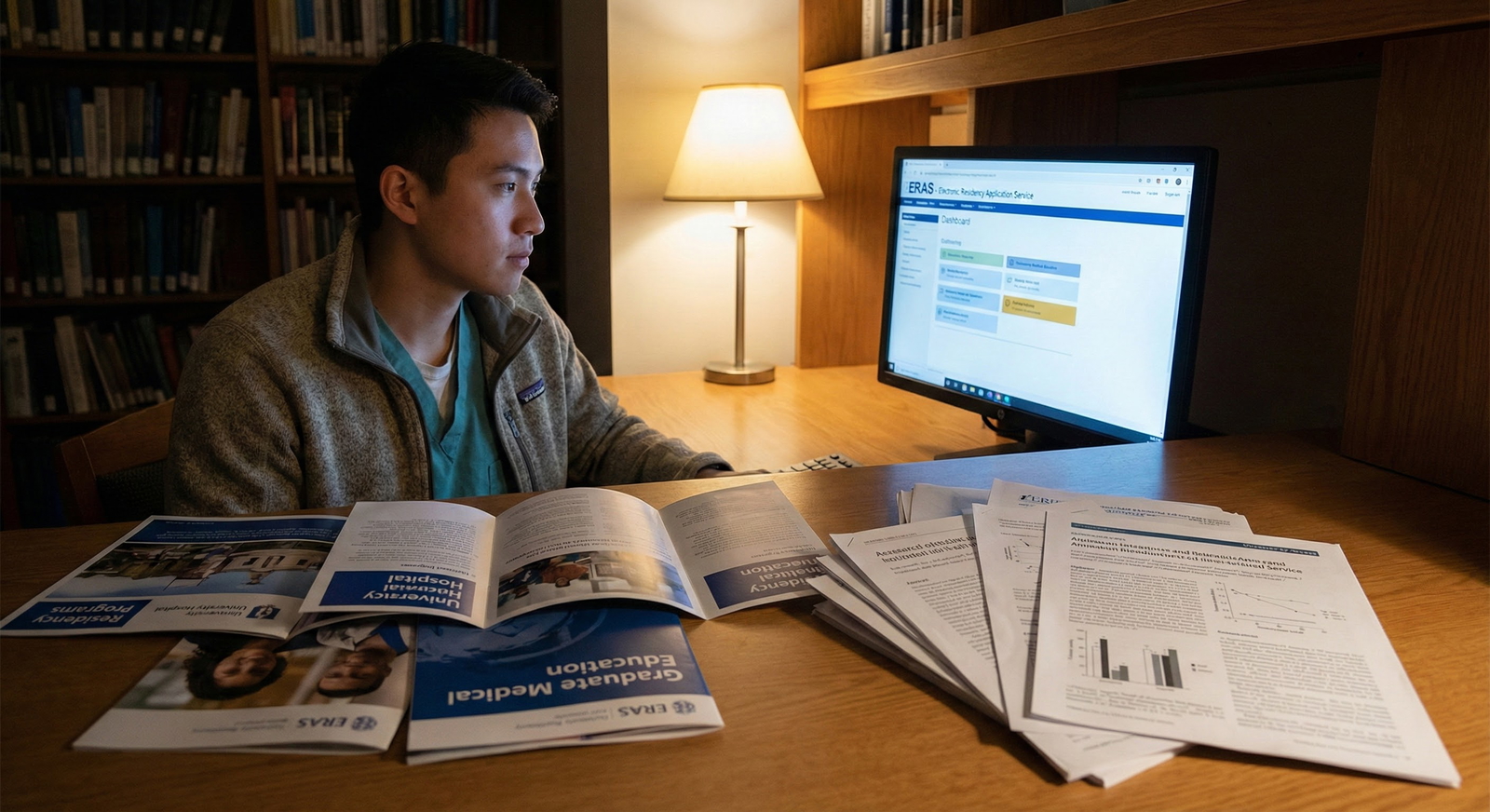
This makes it easier to complete your ERAS application accurately and tailor your personal statement and interview responses.

Highlighting Your Research in the Psych Match Application
Building the research is only half the task; you must also present it effectively on paper and in person.
How to List Your Work on ERAS
Be accurate and transparent about status:
- Published: include full citation.
- Accepted: mark as “accepted” and list target journal.
- Submitted: can be listed, but clearly labeled as “submitted.”
- In preparation: list only if there is a real, active manuscript with a defined target journal and division of work—avoid padding.
Emphasize your role in the project:
- In the description field, note if you led the data collection, analysis, or drafting.
Highlight any psychiatric focus:
- If your research is in psychiatry, mention key topics: depression, psychosis, substance use, PTSD, etc.
- If not in psychiatry, briefly connect it to themes relevant to psych—e.g., communication skills, chronic disease management, neurobiology.
Integrating Research into Your Personal Statement
For a DO graduate applying to psychiatry, research can:
- Support your narrative of curiosity about mind-brain connections, treatment response, social determinants of mental health, etc.
- Demonstrate your commitment to evidence-based practice and life-long learning.
- Show that you can contribute to departmental research and QI as a resident.
Example integration:
“During my third-year psychiatry rotation, a case of treatment-resistant depression prompted me to investigate augmentation strategies beyond standard algorithms. Collaborating with a faculty mentor, I conducted a literature review that led to a case report and conference poster. This experience showed me how research can directly inform better patient care—an approach I hope to continue in residency, particularly in the areas of mood disorders and suicide prevention.”
Discussing Research in Interviews
Programs commonly ask:
- “Tell me about your research.”
- “What was your role in this project?”
- “What did you learn from your research experience that will make you a better psychiatrist?”
To prepare:
- Choose 1–2 key projects to highlight.
- Be ready to explain:
- The question or problem
- The methodology (in simple terms)
- Your specific contributions
- Main findings or outcomes
- Limitations of the work (shows maturity and critical thinking)
- How it shaped your interest in psychiatry
As a DO graduate, also be prepared to connect how your osteopathic training (holistic perspective, attention to function and environment) informed the way you approached the research question or interpreted patient outcomes.
Strategic Tips to Maximize Impact as a DO Applicant
Prioritize Psychiatry-Relevant Work When Possible
While all research has value, projects that:
- Occur in psychiatry or closely allied fields (neurology, addiction medicine, psychosomatic medicine)
- Address behavioral health, substance use, suicide prevention, or chronic psychiatric conditions
will resonate more with psych program directors.
Use Research to Counter Potential Bias
If you’re concerned about how your DO degree will be perceived:
- A focused, consistent record of psychiatric research or QI helps demonstrate that you are fully prepared for the academic rigor of a university-based residency.
- Reference your work in your statement and interviews to show integration into mainstream psychiatric literature and practice.
Leverage Presentations and Networking
When you present at a conference:
- Introduce yourself as a DO graduate pursuing psychiatry residency.
- Connect with residents and faculty at programs you may apply to.
- Politely mention your interest in research collaboration and ask for advice on strengthening your profile.
These real-world connections can be particularly valuable for DO applicants whose schools may not have an established pipeline into certain psychiatry programs.
Balance Research with the Rest of Your Application
While building your research profile, do not neglect:
- Strong clinical evaluations and letters (especially from psychiatrists)
- Preparing carefully for COMLEX and, if applicable, USMLE
- Demonstrating sustained interest in psychiatry (electives, volunteering, mental health advocacy)
Research is a significant component of your application, but it complements rather than replaces strong clinical performance and a genuine, well-articulated commitment to psychiatry.
FAQs: Research Profile Building for DO Graduates in Psychiatry
1. Do I absolutely need research to match into psychiatry as a DO?
Not absolutely, especially for many community or less academically focused programs. However, having at least 1–2 meaningful scholarly activities (case reports, posters, QI projects) significantly strengthens your application, helps offset potential bias against DO graduates at some institutions, and can open doors to more academic programs.
2. How many publications do I need for a competitive academic psychiatry residency?
There is no fixed number, but for a DO graduate targeting academic or research-heavy programs, aiming for 2–4 scholarly products is reasonable, with at least one being psychiatry-focused and ideally first-author. Top-tier research programs may favor applicants with more extensive research (4+ items, including original research), but depth of involvement and your ability to discuss the work often matter more than the raw count.
3. Does QI or educational work really count as “research” for residency applications?
Yes. Program directors broadly recognize quality improvement, educational scholarship, and systematic reviews as legitimate scholarly activity, especially if the work is structured, data-driven, and leads to a poster, presentation, or publication. For many DO graduates, QI and educational projects are among the most accessible ways to build a research profile that still looks very strong to psychiatry programs.
4. What if my research is not in psychiatry—will it still help my psych match?
Yes. Non-psychiatry research still demonstrates critical thinking, persistence, and familiarity with the scientific process. In your application and interviews, explicitly connect what you learned (e.g., about patient adherence, chronic disease management, or communication) to your interest in psychiatry. Having at least one psychiatry-related project is ideal, but non-psych research can still significantly strengthen your profile as a DO graduate.
By approaching research for residency thoughtfully and strategically, you can build a research profile that not only enhances your chances in the osteopathic residency match for psychiatry, but also lays a durable foundation for a career that integrates clinical practice with critical evaluation of the evidence and, if you choose, ongoing scholarly work.