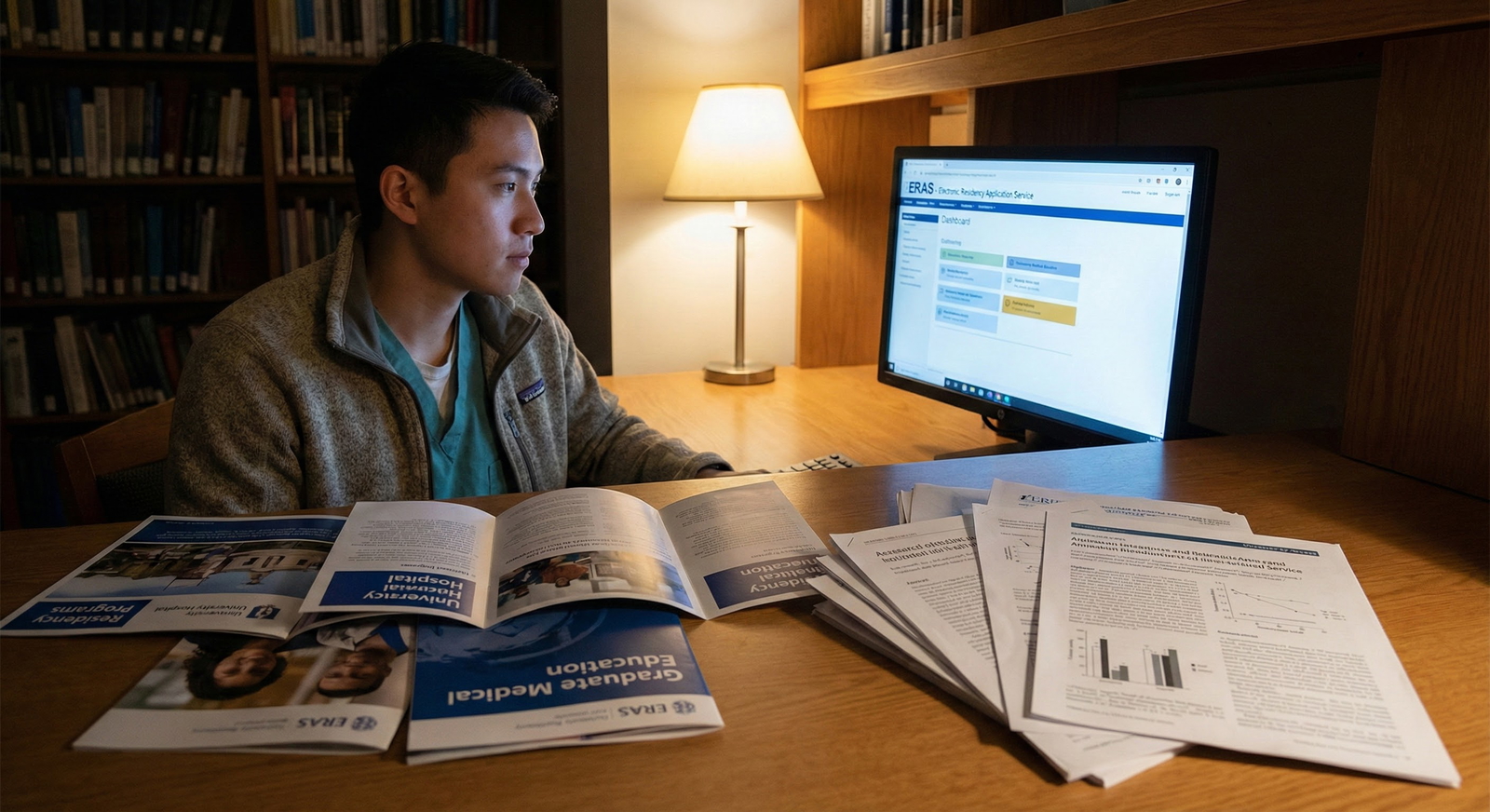
Why Your Research Profile Matters as a DO Graduate in Pediatrics
As a DO graduate aiming for pediatrics residency, especially at academically oriented programs, your research profile can be the difference between a courtesy glance and a serious interview invite. While pediatrics is sometimes perceived as “less research-heavy” than fields like dermatology or radiology, competitive pediatrics residency and peds match outcomes clearly show that research, scholarly activity, and publications still matter—especially for DO applicants.
Program directors look at research for several reasons:
- It signals curiosity, work ethic, and follow-through.
- It shows you understand evidence-based medicine and quality improvement.
- It can compensate somewhat for weaker metrics (COMLEX/USMLE) or rotations.
- It reassures programs that you will contribute to scholarly activity during residency.
For DO graduates, there is an added layer: lingering misconceptions about osteopathic training. A strong scholarly and research profile is one of the most effective ways to show you can compete on the same academic playing field as MD peers.
In this article, we’ll dive into how to build a targeted, realistic, and compelling research profile as a DO applicant interested in pediatrics residency, including:
- What kinds of research “count” and how much you really need
- Step-by-step strategies to get research started (even if you’re late)
- How to maximize your impact with limited time and resources
- How to present your work effectively in ERAS and interviews
Understanding Research Expectations in the Pediatrics Match
How Important Is Research in the Peds Match?
Compared to ultra-competitive specialties, pediatrics residency is more holistic, but not “research-optional”—especially for university-based or research-oriented community programs.
Typical patterns:
- Community-focused programs: Emphasize clinical performance and fit; research is helpful but not mandatory.
- University-affiliated / academic programs: Expect some scholarly activity; research is a plus, especially pediatrics-related.
- Top-tier academic programs: Strong preference for applicants with meaningful research, presentations, or publications.
As a DO graduate, you should assume that research can only help you and may protect you if other parts of your application (scores, school reputation, lack of away rotations) raise questions.
What “Counts” as Research or Scholarly Activity?
Pediatrics program directors broadly define research and scholarship. This works in your favor. Activities that count include:
- Clinical research (chart reviews, cohort studies, clinical trials)
- Quality improvement (QI) projects
- Medical education research
- Case reports and case series
- Review articles or book chapters
- Conference abstracts and posters
- Oral presentations at local, regional, or national meetings
- Community or public health projects with measurable outcomes
- Database analyses, epidemiology projects, or health services research
You do not need to be running randomized controlled trials to be taken seriously. Thoughtful, well-executed smaller projects can be just as impressive—especially if they’re pediatrics-focused and you can speak about them intelligently.
How Many Publications Are Needed for Pediatrics Residency as a DO?
One of the most common questions is: “How many publications are needed?” There is no magic number, but we can set realistic targets for the osteopathic residency match in pediatrics.
Thinking Beyond Just “Publications”
In ERAS, research output includes:
- Peer-reviewed journal articles (published or accepted)
- Non–peer-reviewed articles, blogs, or educational materials
- Abstracts, posters, and presentations
- Book chapters
- QI and scholarly projects
Programs often look at the overall scholarly footprint, not just PubMed-indexed papers.
Benchmark Ranges for DO Applicants in Pediatrics
These are reasonable target ranges, not rigid requirements, and assume an average applicant—not a physician-scientist:
Minimal but acceptable (especially for community programs)
- 0–1 project, maybe a poster or small QI project
- You can still match, but you’ll have less academic leverage.
Solid for many pediatrics programs (what most DO applicants should aim for)
- 2–4 meaningful scholarly experiences, which might include:
- 1 clinical or QI project (even if unpublished yet)
- 1–2 posters or oral presentations
- 1 case report or educational article
- 2–4 meaningful scholarly experiences, which might include:
Competitive for research-oriented or academic programs
- 3–6 total scholarly products, such as:
- At least 1 pediatrics-focused publication (case report, review, or study)
- Multiple posters or presentations at regional/national meetings
- Ongoing involvement in a larger project, possibly multi-center or database-based
- 3–6 total scholarly products, such as:
You do not need 10+ PubMed papers to match pediatrics residency, but as a DO graduate, you want to demonstrate that you’ve gone above the minimum and are clearly comfortable in the scholarly space.
A powerful rule of thumb:
Aim to leave your pre-residency years with at least one “anchor” project (substantial, pediatrics-relevant and deeply understood) and two or more additional scholarly contributions (posters, presentations, smaller projects).

Step-by-Step Strategy to Build a Strong Pediatrics-Focused Research Profile
This section walks you through a practical, staged plan for research profile building—whether you’re early in med school, a recent DO graduate, or in a gap year.
Step 1: Define Your Research Identity in Pediatrics
You do not need a lifelong niche, but you should have a coherent theme to your scholarly interests. Programs like to see that your work is connected to pediatrics in a meaningful way.
Common pediatric research themes you might pursue:
- General pediatrics (inpatient or outpatient outcomes)
- Neonatology (NICU outcomes, breastfeeding, prematurity)
- Pediatric infectious diseases (vaccine uptake, antibiotic stewardship)
- Developmental-behavioral pediatrics (autism, ADHD, early intervention)
- Pediatric emergency medicine (ED utilization, asthma exacerbations)
- Child advocacy and social determinants of health
- Obesity, nutrition, or adolescent medicine
- Pediatric osteopathic manipulative treatment (OMT) where appropriate & evidence-based
Choose areas that:
- Genuinely interest you.
- Are locally feasible (exist where you train or work).
- Offer chances to join ongoing projects rather than build everything from scratch.
Step 2: Actively Seek Research Mentors and Opportunities
For DO graduates, institutional research infrastructure can be uneven. You may need to be more proactive than your MD counterparts.
Where to find mentors:
- Pediatrics faculty at your DO school or affiliated hospitals
- Community pediatricians involved in QI or local research collaboratives
- Preceptors from core pediatrics rotations
- Pediatric subspecialists (NICU, PICU, peds ID, peds cardio) who are often research-active
- Faculty at children’s hospitals where you rotated or plan to do away rotations
- Alumni from your DO program now in pediatrics residencies or fellowships
How to approach potential mentors (sample email structure):
- Brief intro: who you are (DO graduate, goal: pediatrics residency)
- Clear interest: specific aspect of pediatrics you’re curious about
- Concrete ask:
- “Do you have any ongoing projects where I could assist?”
- “Could I help with data collection, chart review, or abstract preparation?”
- Emphasize reliability: mention your availability and willingness to do routine tasks
Be explicit that you’re willing to do grunt work initially (data entry, chart abstraction, literature reviews). Mentors are more likely to involve you if you lower the barrier to including you.
Step 3: Choose High-Yield, feasible Project Types
Given limited time before residency, favor projects that are:
- Time-bounded (can be completed or meaningfully advanced within months, not years)
- Peds-related where possible
- Likely to yield a tangible product (poster, manuscript, publication)
High-yield project types for DO grads targeting pediatrics:
Case Reports and Case Series
- Fast, focused on a single interesting pediatric patient or small group.
- Good for developing scientific writing skills.
- Can be submitted to journals, online case platforms, or presented as posters.
Retrospective Chart Reviews
- Often initiated by faculty; you can join midstream.
- Common topics: asthma readmissions, ED utilization, sepsis screening, antibiotic stewardship.
- Can produce abstracts, posters, and potentially a manuscript.
Quality Improvement (QI) Projects
- Highly relevant to pediatrics residency (many programs require QI).
- Topics: immunization rates, screening for food insecurity, reduced antibiotic overuse, improved asthma action plans.
- Even a completed PDSA (Plan-Do-Study-Act) cycle with data can become a poster or presentation.
Review Articles or Educational Projects
- Narrative reviews or clinical updates on pediatric topics.
- Development of clinical pathways or patient/family education materials with evaluation.
- Easier to control timeline since you’re not dependent on patient recruitment.
Multi-center or Registry Projects (if accessible)
- Slightly more complex, but often well-structured.
- Your role might be limited (data collection, local IRB), but authorship can still be substantial.
Aim to have at least one project in each of two categories, e.g., one QI + one case report, or one chart review + one educational project.
Step 4: Execute Efficiently and Build Toward Products
Execution matters more than ambition. Programs are far more impressed by a completed, presented, or published modest project than a grand study that never got off the ground.
Practical execution tips:
- Start with clarity: Have a one-page project summary (question, methods, timeline, your role).
- Set micro-deadlines: e.g., literature review completed in 2 weeks, data collection in 6 weeks.
- Track your work: Keep a simple spreadsheet with project title, mentor, your role, status, and outputs (poster, abstract, manuscript).
- Write as you go: Draft Introduction and Methods early. Don’t wait until all data are analyzed.
- Push for dissemination:
- Local hospital research days
- State AAP chapter meetings
- Regional pediatrics or DO conferences
- National meetings if possible (PAS, AAP, specialty societies)
The peds match rewards visible impact. Even a local poster presentation signals productivity and the ability to see projects through to completion.
Step 5: Leverage a Gap Year or Transition Time (If Available)
If you are a DO graduate taking a research/gap year before applying or reapplying:
- Clarify your primary goal: “strengthen research profile for pediatrics residency.”
- Find a structured position:
- Research assistant/coordinator in a children’s hospital
- One-year research fellowship in pediatrics or a related area
- Public health or outcomes research in maternal-child health
During a dedicated research year, aim for:
- One or more first-author products (case report, review, or small study)
- Several co-authored abstracts or posters
- Involvement in at least one substantial pediatric project you can discuss as a centerpiece of your application
Be prepared to clearly explain in your personal statement and interviews why you took a gap year and how it has made you more prepared to be a pediatrics resident.

Presenting Your Research in ERAS and Interviews as a DO Applicant
Doing the work is only half the battle. You must also present it effectively in your application and when speaking to program directors.
Documenting Research and Publications for the Match
In ERAS, your research experiences and outputs should be:
- Accurate
- Never exaggerate your role or status (e.g., don’t mark “published” if only submitted).
- Categorized correctly
- Distinguish between peer-reviewed articles, abstracts, and non–peer-reviewed works.
- Clearly described
- Use concise descriptions focusing on your contribution, the project’s goal, and outcomes.
For each project:
- Include title, mentor, and institution.
- Clearly state your role: “Designed data collection tool and performed chart review for 75 pediatric asthma patients; participated in statistical analysis; co-wrote Results and Discussion.”
- Note products: poster, oral presentation, manuscript in preparation/submitted/accepted.
If your work is accepted but not yet published, list it as “in press” or “accepted,” and be ready to provide proof if asked.
Highlighting Research in Your Personal Statement
You don’t need to recount every project, but consider highlighting:
- One anchor project that motivated or deepened your interest in pediatrics.
- What you learned about caring for children and families through that work.
- How research shaped your understanding of evidence-based pediatric practice.
Good example:
“During a QI project to improve influenza vaccination rates in our outpatient pediatric clinic, I saw firsthand how targeted education and system-level changes—like EMR prompts—could significantly increase immunization uptake. This experience reinforced my desire to train in pediatrics at a program that values quality improvement and child advocacy.”
This ties research, pediatrics, and your future goals together.
Discussing Research in Interviews
Program directors want to see that:
- You genuinely understand your projects (not just your name on an abstract).
- You can explain why the question mattered in pediatrics.
- You can discuss limitations and next steps.
To prepare:
- For each project, write a short, 3–4 sentence answer to:
- “What was your research about?”
- “What was your specific role?”
- “What were the main findings or what did you hope to show?”
- “What did you learn from the process?”
Avoid jargon-heavy explanations; instead, use clear clinical reasoning, emphasizing how your work could improve pediatric care, systems, or family experience.
Special Considerations for DO Graduates: Leveraging Your Osteopathic Background
As a DO graduate, you bring a unique training perspective that you can integrate into your research profile.
When (and How) to Incorporate OMT or Osteopathic Principles
If you’re interested in osteopathic-focused research:
- Projects on safe, evidence-based use of OMT for pediatric conditions (e.g., musculoskeletal complaints, functional pain) can be powerful if grounded in solid methodology and ethics.
- Always prioritize:
- Age-appropriate indications
- Safety and informed consent
- Collaboration with pediatricians and subspecialists
That said, OMT-related research is optional, not required. Many DO pediatricians never publish on OMT but instead focus on core pediatric outcomes, QI, and public health.
Addressing DO Bias with a Strong Scholarly Profile
A well-developed research portfolio can:
- Counteract outdated biases about DO graduates’ academic abilities.
- Demonstrate your capacity to contribute to a residency program’s scholarly environment.
- Provide objective evidence of initiative and follow-through.
When program directors see a DO applicant with:
- Multiple pediatrics-focused projects
- Posters and/or publications
- Strong letters referencing your scholarly work
they are far more likely to view you on equal footing with MD candidates.
Putting It All Together: A Practical 12–18 Month Research Action Plan
Here’s a realistic outline if you’re 12–18 months before applying to pediatrics residency:
Months 1–3
- Identify 1–2 pediatrics mentors.
- Join at least one ongoing project (QI, chart review, or case series).
- Begin drafting a case report if you encounter an interesting case.
- Do a focused literature review in your chosen pediatrics theme.
Months 4–6
- Push to complete data collection for at least one project.
- Draft an abstract and submit to a local or regional pediatric or DO conference.
- Start writing manuscript sections if the project has enough data.
- Keep a running list of all scholarly activities.
Months 7–9
- Present at a local or regional meeting (poster or oral).
- Finalize a case report or review article and submit for publication.
- Take on an additional smaller project if bandwidth allows (e.g., a second case report or educational project).
Months 10–12
- Follow up on submissions; revise abstracts/manuscripts as needed.
- Ensure all experiences are accurately recorded for ERAS (with status: submitted, accepted, in press).
- Prepare talking points about each project for interviews.
If you have 18–24 months, you can add a second substantial project and aim for one or more first-author publications for match-strengthening.
FAQs: Research Profile Building for DO Graduates in Pediatrics
1. As a DO graduate, can I still match into academic pediatrics programs without a long research CV?
Yes. Many academic pediatrics programs value strong clinical performance, genuine interest in children’s health, and good fit. You do not need a massive research CV to match, but having 2–4 meaningful scholarly experiences, ideally with at least one pediatrics-focused project, will significantly help, especially as a DO applicant. Even modest research for residency—like a well-executed QI project and a poster—can make you a more compelling candidate.
2. I have no publications yet. Is it too late to start before this application cycle?
It’s rarely “too late” to improve your profile. Although full publications often take time, you can still:
- Get involved in a QI or clinical project.
- Prepare and submit a case report.
- Submit abstracts for upcoming conferences.
- Document your role clearly in ERAS as ongoing research.
Programs understand timelines; they will still value well-described ongoing projects and submissions, especially if you can explain them thoughtfully in interviews.
3. Do my projects have to be strictly pediatrics-focused to help my peds match?
Pediatrics-focused projects are ideal because they directly support your specialty interest, but non-peds projects can still strengthen your application. For example, adult infectious disease research, medical education work, or community health QI can all be relevant—particularly if you explain how the skills and insights transfer to pediatrics. Try to have at least one project that clearly relates to children, adolescents, or families if possible.
4. How should I balance time between more research vs. other parts of my application?
For the osteopathic residency match in pediatrics, research is important but not the only priority. You should not sacrifice:
- Solid COMLEX/USMLE performance
- Strong clinical rotation evaluations and letters of recommendation
- A thoughtful, pediatrics-focused personal statement
Use research to enhance—not replace—your clinical and academic profile. If you’re short on time, prioritize one anchor project plus 1–2 smaller scholarly outputs, rather than spreading yourself thin over many unfinished ideas.
By thinking strategically about research, targeting feasible pediatrics-relevant projects, and presenting your work clearly and confidently, you can build a research profile that supports a successful peds match—even as a DO graduate from a less research-intensive environment.