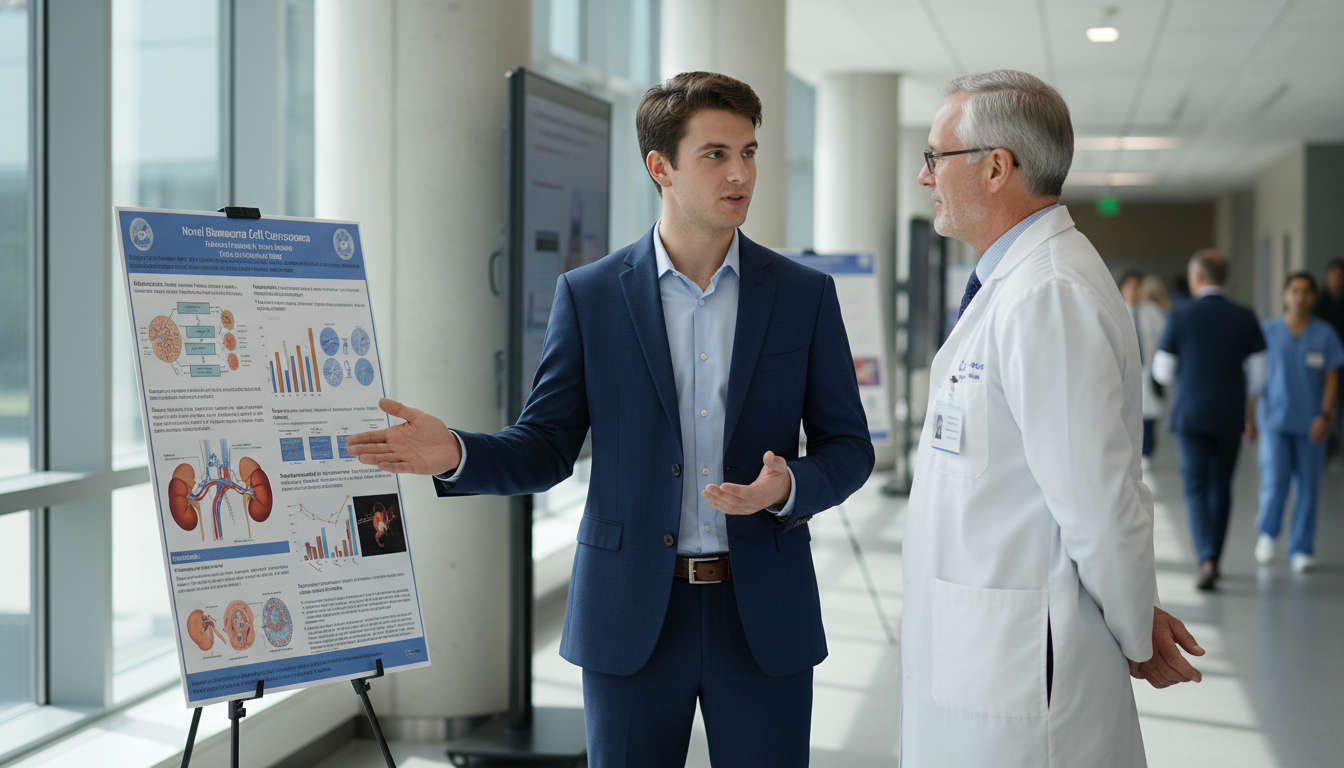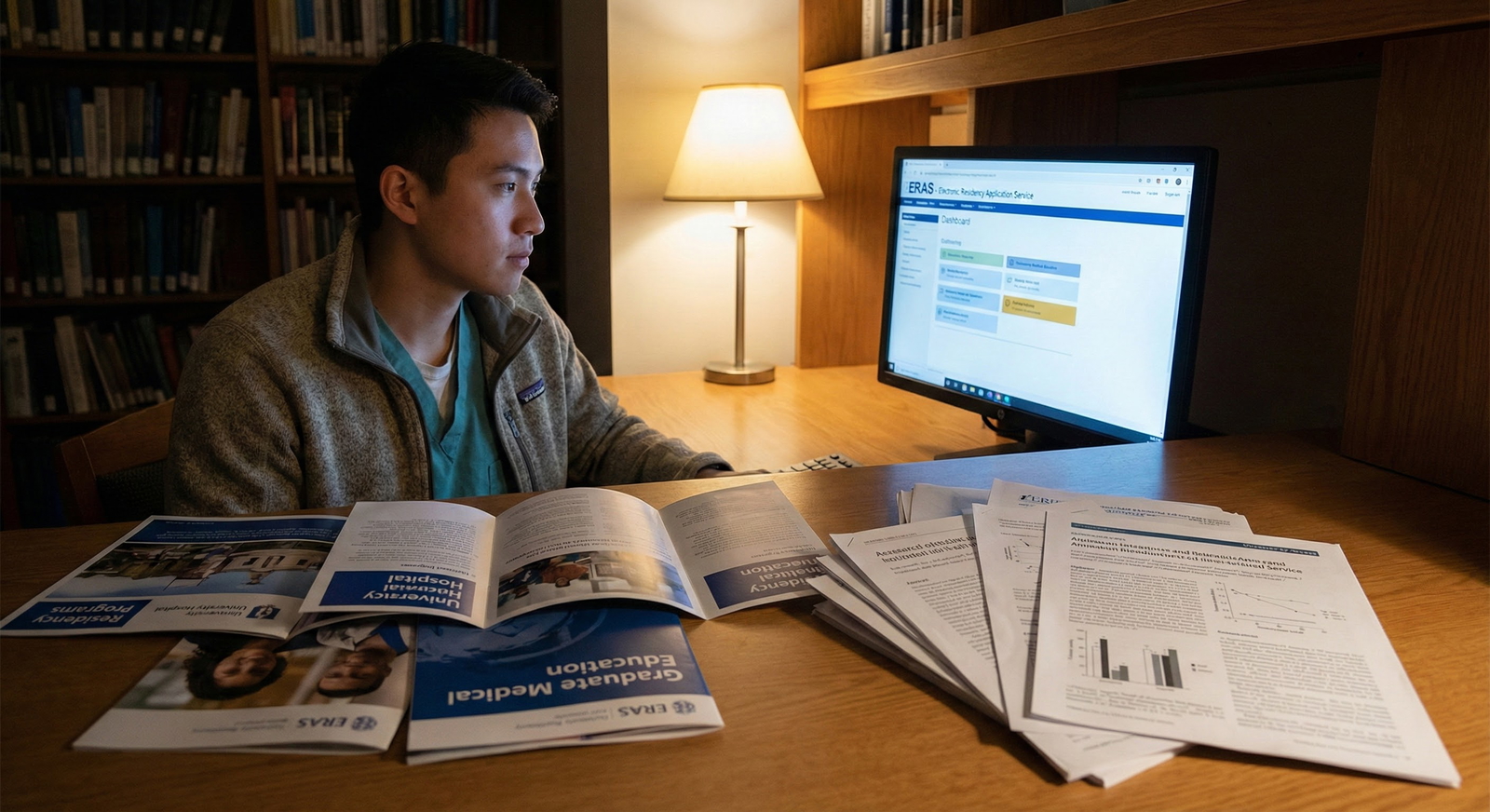
Understanding the Research Landscape for DOs in Addiction Medicine
For a DO graduate pursuing addiction medicine, a strong research profile can significantly strengthen your residency and addiction medicine fellowship applications. While clinical performance, letters, and personal fit remain critical, research tells program directors you can think critically, understand evidence, and contribute to a rapidly evolving field.
As a DO, you may also be more aware of questions like:
- “Do I need research for osteopathic residency match success in addiction medicine–related fields (psych, IM, FM)?”
- “How many publications needed to be competitive?”
- “Can I pivot into addiction medicine fellowship with research even if my base specialty isn’t psychiatry?”
The good news: you do not need a first-author NEJM paper to be valued. You do need a coherent story, demonstrated curiosity, and enough tangible output (projects, posters, QI) to show you understand research fundamentals and care about substance use–related questions.
This article will walk you through:
- The role of research in DO graduate residency and addiction medicine fellowship applications
- How to identify addiction medicine research niches that fit your background
- Practical ways to start or expand projects, even with limited resources
- How to document and present your research profile strategically
- FAQs on publications for match and common DO-specific concerns
Why Research Matters for a DO Graduate in Addiction Medicine
1. The unique value of research in addiction medicine
Addiction medicine is data-driven and policy-sensitive. New medications, harm-reduction approaches, telehealth models, and public health interventions are constantly being studied. Programs want physicians who can:
- Interpret and apply evidence to complex patients
- Understand outcomes and quality metrics
- Contribute to advocacy and policy with data behind them
Having some background in substance abuse training plus research shows you can bridge bedside care with systems-level improvement.
2. DO graduate residency perspective
If you’re still approaching your DO graduate residency (e.g., psychiatry, internal medicine, family medicine, emergency medicine), research can:
- Distinguish you in a large applicant pool, especially for university or academic programs
- Offset a slightly lower board score or a non-traditional path
- Demonstrate commitment to addiction medicine early, even if you’re applying in a broader specialty
For the osteopathic residency match (and ACGME programs that welcome DOs), you don’t need dozens of manuscripts. Instead, programs appreciate:
- Evidence of scholarly curiosity
- Follow-through on at least a few projects
- Alignment of your work with the populations they serve (e.g., opioid use disorder, dual diagnosis, rural populations)
3. Addiction medicine fellowship expectations
For addiction medicine fellowships, expectations are variable:
- Community-based fellowships may be satisfied with any exposure to research or QI
- University-based fellowships (especially those tied to major academic centers) are more likely to value formal research/pubs
What matters most:
- A coherent pattern: clinical experiences + research + advocacy that all point toward addiction medicine
- At least some tangible output: a poster, presentation, QI project, or publication in addiction medicine or related fields (psych, IM, FM, public health, health services research)
You don’t need to be a full-time PhD-type researcher; you do need to show you can engage with evidence and possibly help move the field forward.
Defining Your Research Identity in Addiction Medicine
Before you start collecting projects, clarify your research “story.” This helps you say “yes” to the right opportunities and “no” to distractions.
1. Clarify your thematic focus
Ask yourself:
- What patient populations in addiction medicine most interest me?
- Example: pregnant patients with opioid use disorder, adolescents with polysubstance use, people with co-occurring psych disorders, rural communities, people experiencing homelessness.
- Which settings do I see myself in?
- Inpatient consult services, outpatient MAT clinic, ED, correctional health, community health, VA.
- What kind of questions energize me?
- “How do we improve access?” (health services research)
- “Which behavioral treatments work best?” (clinical trials)
- “How do stigma and policy shape care?” (public health / qualitative research)
From these, you can define a working research identity like:
“I’m a DO graduate interested in ED-based interventions to initiate buprenorphine and transition patients to community treatment.”
or
“I focus on improving access to addiction treatment for rural and underserved populations using telehealth.”
Once you have that, you can prioritize projects aligned with this narrative.
2. Leverage the DO perspective
Your osteopathic training gives you a mindset that fits addiction medicine research:
- Whole-person care: Pain, trauma, social determinants, and family dynamics are central to substance use disorders.
- Functional outcomes: Many addiction projects look beyond abstinence to quality of life, function, and patient-defined outcomes.
- Interdisciplinary work: OMM clinics, primary care, behavioral health integration—these are rich environments for QI and implementation research.
You can explicitly frame your research lens as osteopathic:
- Projects on integrating OMT with medication-assisted treatment (careful, evidence-based, and appropriately scoped)
- Studies of how biopsychosocial-spiritual frameworks influence engagement in treatment
- QI projects that examine care coordination across disciplines

Practical Pathways to Build Your Research Profile
1. Start where you are: assessing resources
Your strategy depends on your current stage:
- MS4 / PGY-1: Focus on learning basic research methods, joining ongoing projects, and getting your name on early outputs (posters, abstracts).
- PGY-2/3+ or early attending aiming for addiction medicine fellowship: You’ll want at least a couple of completed or near-complete projects, ideally one clearly tied to addiction medicine.
Map your environment:
- Do you have an addiction psychiatry or addiction medicine service?
- Is there a hospital QI department or research office?
- Are there faculty already doing substance use–related projects in psych, medicine, ED, OB/Gyn, or public health?
Make a list of:
- Faculty names
- Current or past projects related to addiction or behavioral health
- Any institutional priorities (e.g., opioid stewardship, naloxone distribution, reducing readmissions)
2. Types of projects that fit an early-career DO profile
You don’t need to lead an RCT. The following are attainable, especially for residents:
a. Quality improvement (QI) projects
QI is often the most accessible entry point and looks excellent for both residency and fellowship.
Examples in addiction medicine:
- Implementing standardized AUDIT-C or DAST-10 screening in primary care or ED
- Tracking and improving rates of buprenorphine initiation in hospitalized patients
- Increasing naloxone prescribing at discharge for high-risk patients
- Streamlining referral workflows from inpatient detox to community MAT programs
QI typically yields:
- Institutional poster or presentation
- Regional conference abstract
- Potential for a short publication in a QI-focused journal
b. Retrospective chart reviews
These are common, feasible, and can produce publishable results:
- Outcomes for patients started on medication for opioid use disorder from the ED
- Characteristics and outcomes of patients with alcohol withdrawal in your hospital
- Hospital utilization before and after starting MAT
- Effects of integrated behavioral health in a primary care clinic with high SUD prevalence
You’ll need:
- A mentor with IRB experience
- Basic skills in chart review methodology and possibly simple statistics
- Clear inclusion/exclusion criteria and a limited, focused question
c. Case reports and case series
These are often undervalued but very accessible early outputs:
- Unusual presentations (e.g., severe intoxication with newer synthetic substances)
- Complex dual diagnosis cases with instructive management points
- Innovative integration of OMT with addiction care (if appropriately framed and evidence-based)
Turn your most interesting addiction-related cases into:
- A case report for a journal open to trainee work
- A poster for a regional or national meeting (APA, ASAM, AAAP, ACOI, AAFP, etc.)
d. Educational research
Your substance abuse training itself can be a research topic:
- Evaluating an addiction medicine curriculum for residents or students
- Effectiveness of an OUD simulation or standardized patient activity
- Impact of stigma-reduction workshops on trainee attitudes
These can be relatively quick to execute and are valued by academic programs.
e. Policy and health services projects
Especially relevant if you’re interested in macro-level change:
- Analysis of how a state’s PDMP usage or policy changes affected prescribing patterns
- Descriptive work on barriers to treatment access in your county/region
- Surveys of clinicians’ attitudes about MAT, harm reduction, or naloxone prescribing
These can lead to cross-disciplinary collaborations with public health, law, or social work.
How Many Publications Do You Really Need?
The question “how many publications needed?” is common, but there is no universal number. Think instead in terms of tiers of competitiveness and coherence.
1. Rough benchmarks (not rules)
For a DO graduate targeting addiction-relevant core residencies or addiction medicine fellowship:
Solid, community-focused applicant
- 1–2 total scholarly products (could be QI, posters, or small publications)
- Not necessarily addiction-specific, but ideally at least one behavioral health or SUD-related
Moderately strong academic applicant
- 3–5 total products, with at least 1–2 clearly in addiction medicine or related fields
- Some progression from assistant role to more independent contributions
Highly competitive academic applicant (e.g., R1-based fellowships)
- 5+ products, including some in addiction medicine or mental health
- At least one first- or second-author publication or a major national presentation
Remember: quality and fit trump raw count. A DO applicant with two thoughtful, addiction-focused projects and a clear narrative can be more compelling than someone with many unrelated basic science publications.
2. “Publications for match” versus broader scholarly activity
Residency and fellowship applications (ERAS) categorize things more broadly:
- Peer-reviewed journal articles
- Book chapters
- Abstracts/posters/presentations
- QI and systems-based improvement projects
- Other scholarly works (e.g., online educational modules, podcasts, guideline work)
If you are asking “research for residency” or “publications for match”, understand that:
- Posters and abstracts “count”; they demonstrate engagement and trajectory.
- A mix of outputs is completely appropriate for a DO graduate.
- You can absolutely match into strong programs without a long PubMed record, especially with strong clinical performance and letters.
Focus less on hitting a magic number and more on:
- Showing progress: from learner to contributor to leader
- Building a coherent addiction medicine–relevant portfolio
- Being able to discuss your work intelligently in interviews

Turning Work Into a Strong Application Narrative
A good research profile is only as powerful as how you present and explain it.
1. Strategically documenting your work
Keep a living document (or CV) updated with:
- Full citation details (authors, titles, conferences, dates)
- Your specific role (data collection, analysis, writing, project lead)
- Outcomes (accepted, presented, submitted, in preparation)
For each project, track:
- The central addiction medicine or behavioral question
- The main takeaway you might discuss in an interview
- Any tangible impact (practice change, new protocol, policy shift)
When you complete a poster or talk, ask:
- Can this be expanded into a manuscript?
- Is there a follow-up QI cycle or related study I can propose?
2. Crafting your personal statement and CV
When writing your personal statement for residency or addiction medicine fellowship:
- Explicitly link your substance abuse training, clinical exposure, and research.
- Describe why certain questions matter to you (e.g., personal background, patient stories, population needs).
- Highlight how research shaped your clinical approach: “Because of my project on ED-initiated buprenorphine, I now routinely…”
On your CV, create a coherent structure:
- Group addiction-related items together if possible, or clearly label relevance.
- Avoid cluttering with a long list of marginal involvements; focus on projects where you can describe your real role.
3. Discussing your research in interviews
Expect questions like:
- “Tell me about your most meaningful research experience.”
- “What role did you play specifically?”
- “What did you find, and how might that change practice?”
- “Were there any limitations or unexpected challenges?”
Prepare:
- A 1–2 minute “elevator pitch” for each major project (question → methods → key findings → implications).
- Honest reflections about obstacles (IRB delays, data issues, scope creep) and what you learned.
- Thoughts about how you would like to keep engaging in research during residency or fellowship.
Program directors are not just looking for productivity; they are assessing:
- Intellectual curiosity
- Humility and teachability
- Ability to see both strengths and limitations of your work
- How you might contribute to their ongoing projects or QI efforts
Action Plan: Step-by-Step for a DO Graduate
To translate all of this into action, here is a practical roadmap depending on where you are:
If you are pre-residency (MS4 / transitional year)
- Identify 1–2 potential mentors in addiction medicine, psychiatry, IM, FM, or ED at your institution.
- Ask to join an existing project—QI, chart review, case series.
- Complete at least one poster or small paper before or early in PGY-1.
- Enroll in a basic research methods or QI course (online or via your institution).
- Seek electives that involve both clinical and research exposure in substance use.
If you are in core residency (PGY-1 to PGY-3)
- Choose one primary mentor with addiction medicine focus; meet quarterly.
- Commit to 1–2 major projects that are realistically finishable in your training timeline.
- Aim for:
- 1–2 posters per year at local/regional meetings
- At least one manuscript submission during residency
- Integrate research into required scholarly/QI requirements at your program—align them with addiction topics.
- Use elective time strategically (addiction consults, public health rotations, research blocks).
If you are preparing to apply for addiction medicine fellowship
- Review your portfolio: highlight all addiction or behavioral health–related works.
- Prioritize finishing any nearly-complete manuscripts or analyses.
- Request letters from mentors who can speak to your research AND clinical work in addiction.
- Tailor your personal statement to emphasize:
- Addiction narrative
- Specific research interests
- How you plan to contribute as a fellow
- During interviews, communicate how you want to continue scholarly work—whether that’s QI, clinical research, or education.
Frequently Asked Questions (FAQ)
1. As a DO, do I need research to match into a residency that is relevant to addiction medicine?
You can match into psychiatry, internal medicine, family medicine, or emergency medicine without research, especially in community programs. However, for more academic or university-based programs—or if your ultimate goal is a competitive addiction medicine fellowship—having some research or QI significantly strengthens your profile. It signals you’re comfortable engaging with evidence and can handle scholarly requirements during training.
2. How many publications are needed to be competitive for addiction medicine fellowship?
There’s no fixed number. Many successful applicants have 2–5 scholarly products, which may include:
- Peer-reviewed articles
- Case reports or case series
- Posters and conference presentations
- Educational or QI projects with dissemination
At least one project clearly related to substance use or dual diagnosis helps your application stand out. More important than quantity is the strength of your role and your ability to discuss the work thoughtfully.
3. Does research outside of addiction medicine (e.g., cardiology, OMT) still help my application?
Yes. Any research that demonstrates:
- Methodologic skills (design, data collection, analysis)
- Professionalism and follow-through
- Ability to work on a team and complete projects
is beneficial. Ideally, you’ll complement this with at least one addiction-relevant project or with strong clinical experiences in addiction medicine. You can connect non-addiction projects to your future goals by emphasizing transferable skills and your broader interest in outcomes, systems of care, or patient-centered practice.
4. What if my institution has limited addiction medicine faculty or research resources?
You still have options:
- Seek QI projects in primary care, ED, or inpatient medicine that touch on substance use (screening, brief intervention, discharge planning).
- Connect with mentors outside your institution via professional societies (ASAM, AAAP, state medical societies) or virtual research networks.
- Use remote opportunities such as multi-site chart reviews, survey studies, or educational research.
- Consider collaborating with public health departments or community organizations engaged in opioid or alcohol initiatives.
Even in resource-limited settings, a thoughtful QI project or well-executed case series can anchor a strong research profile.
By defining a clear addiction medicine identity, pursuing realistic and relevant projects, and presenting your work effectively, you can build a compelling research profile as a DO graduate. Whether your path is the osteopathic residency match or a later addiction medicine fellowship, strategic and meaningful scholarship will enhance both your application and your capacity to care for patients with substance use disorders.