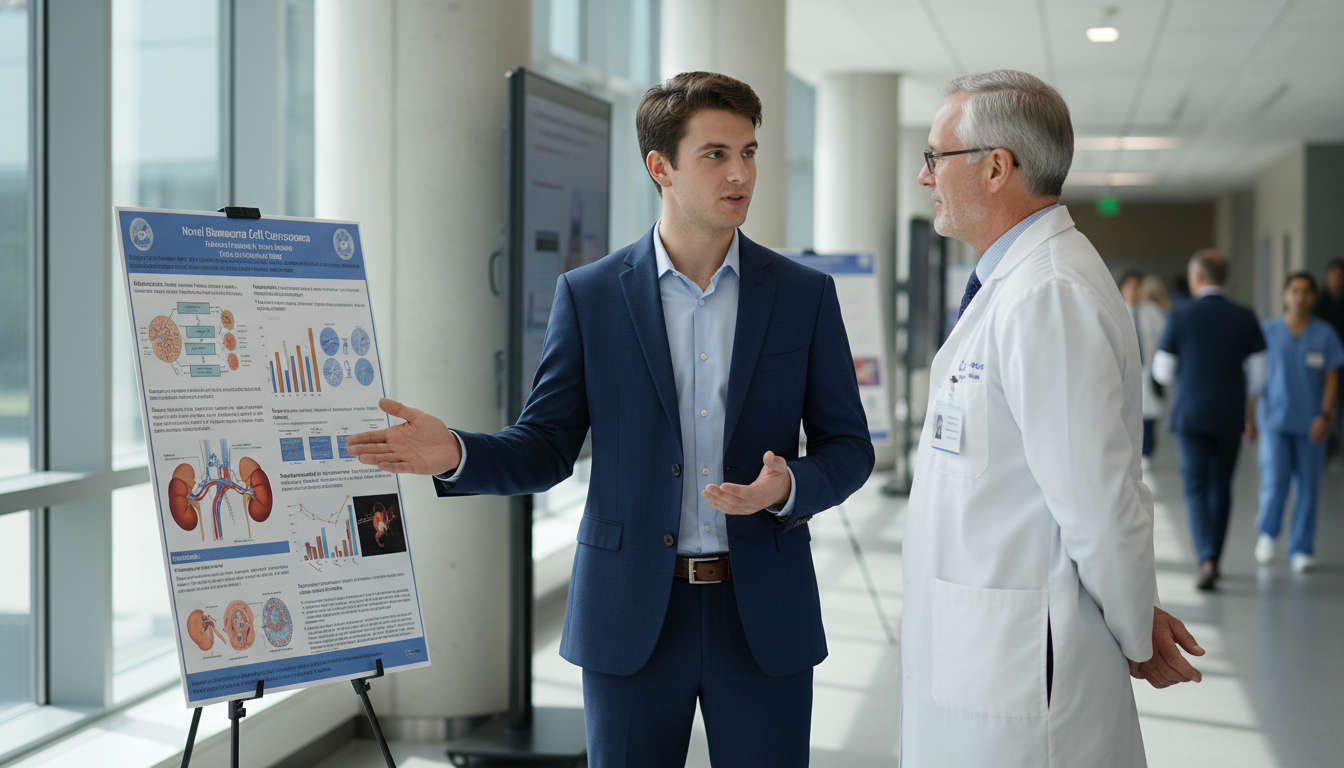
Understanding Why Research Matters for DO Graduates
For DO graduates, research used to be considered “nice to have.” In today’s residency landscape, it’s much closer to “expected,” especially for competitive specialties and academic programs. Even for community-based programs, a thoughtful research profile can be the factor that nudges you from “maybe” to “interview.”
Three trends make research especially important for DO applicants:
Single Accreditation System (ACGME-only)
With the unified accreditation system, DO and MD applicants now compete for the same spots. Program directors reviewing applications side-by-side often look at:- Research experience
- Publications
- Posters and presentations
- Evidence of scholarly curiosity
Competitive Specialties and Academic Programs
Specialties like dermatology, radiology, orthopedic surgery, ENT, neurosurgery, and some internal medicine subspecialty tracks heavily value research. DO graduates without at least a basic research profile are often at a disadvantage.Perception and Signal
Fair or not, some programs still assume DO graduates get fewer research opportunities. When you show a strong, well-structured research profile, you:- Counter stereotypes
- Signal academic readiness
- Demonstrate initiative and persistence
Research is not just about a PubMed ID; it’s about showing you can think critically, work in teams, and see long-term projects through to completion.
Core Components of a Strong Research Profile
Your research profile is more than just “papers.” Think of it as four complementary layers:
- Experience – What kinds of research have you actually done?
- Outputs – What has come out of that work (publications, posters, abstracts, presentations)?
- Roles and Responsibilities – What did you do?
- Trajectory – Does your record show growth and continuity?
1. Types of Research Experiences That Count
As a DO graduate, you may not have had a research-heavy curriculum, but many activities still count as research or scholarly work:
- Clinical research
- Retrospective chart reviews
- Prospective cohort studies
- Clinical trials (often as a sub-investigator or coordinator)
- Quality improvement (QI) and patient safety projects
- Reducing hospital-acquired infections
- Improving adherence to guidelines
- Optimizing order sets or workflows
- Case reports and case series
- Unusual presentations
- Unexpected complications
- Novel treatments or approaches
- Systematic reviews and narrative reviews
- Summarizing evidence in your specialty of interest
- Writing state-of-the-art updates
- Medical education research
- Curriculum interventions
- Assessment tools
- Simulation-based training outcomes
- Public health or outcomes research
- Community health projects
- Health services research
- Osteopathic-specific or OMM research
- Effects of OMT in specific populations
- Integrating OMT into particular clinical pathways
Each of these can meaningfully support your application when described clearly and tied to your specialty interest.
2. Outputs: Publications, Abstracts, Posters, Presentations
Program directors evaluate not only that you did research, but what came of it. Common scholarly outputs include:
- Peer-reviewed publications (original research, reviews, case reports)
- Conference abstracts and posters
- Oral presentations at local, regional, or national meetings
- Book chapters or invited reviews
- Online scholarly content
- Evidence-based blogs on institutional websites
- Educational modules or curriculum materials
Even if you do not have multiple first-author papers, a combination of posters, abstracts, and co-authored manuscripts shows consistent scholarly engagement.
How Many Publications Do You Really Need as a DO Graduate?
This is one of the most common—and anxiety-provoking—questions.
Interpreting “how many publications needed” for your goals
There is no universal magic number, but you should calibrate your expectations based on:
- Specialty competitiveness
- Type of programs (academic vs community)
- Your overall application (USMLE/COMLEX, grades, clinical performance)
Broad guidelines for DO graduates:
Highly competitive specialties (e.g., derm, radiology, ortho, ENT, neurosurgery)
- Aim: 5–10+ scholarly experiences, ideally with:
- 2+ PubMed-indexed papers (any author position)
- Multiple posters/abstracts at specialty-specific meetings
- If you’re late to the game, consider a dedicated research year.
- Aim: 5–10+ scholarly experiences, ideally with:
Moderately competitive specialties (e.g., EM, anesthesiology, some internal medicine or surgery programs)
- Aim: 3–5 scholarly experiences
- At least 1–2 tangible outputs (abstracts, posters, or manuscripts—published or in review)
- A clear narrative linking your research to that specialty
- Aim: 3–5 scholarly experiences
Less competitive or community-focused tracks
- Aim: 1–3 solid experiences
- Even a single well-executed QI project or case report with a poster can help
- Focus on quality, responsibility, and relevance to patient care
- Aim: 1–3 solid experiences
Remember: quality and credibility matter more than raw count. A single substantial project where you played a central role and can speak about in depth often surpasses several “token” line items you barely touched.
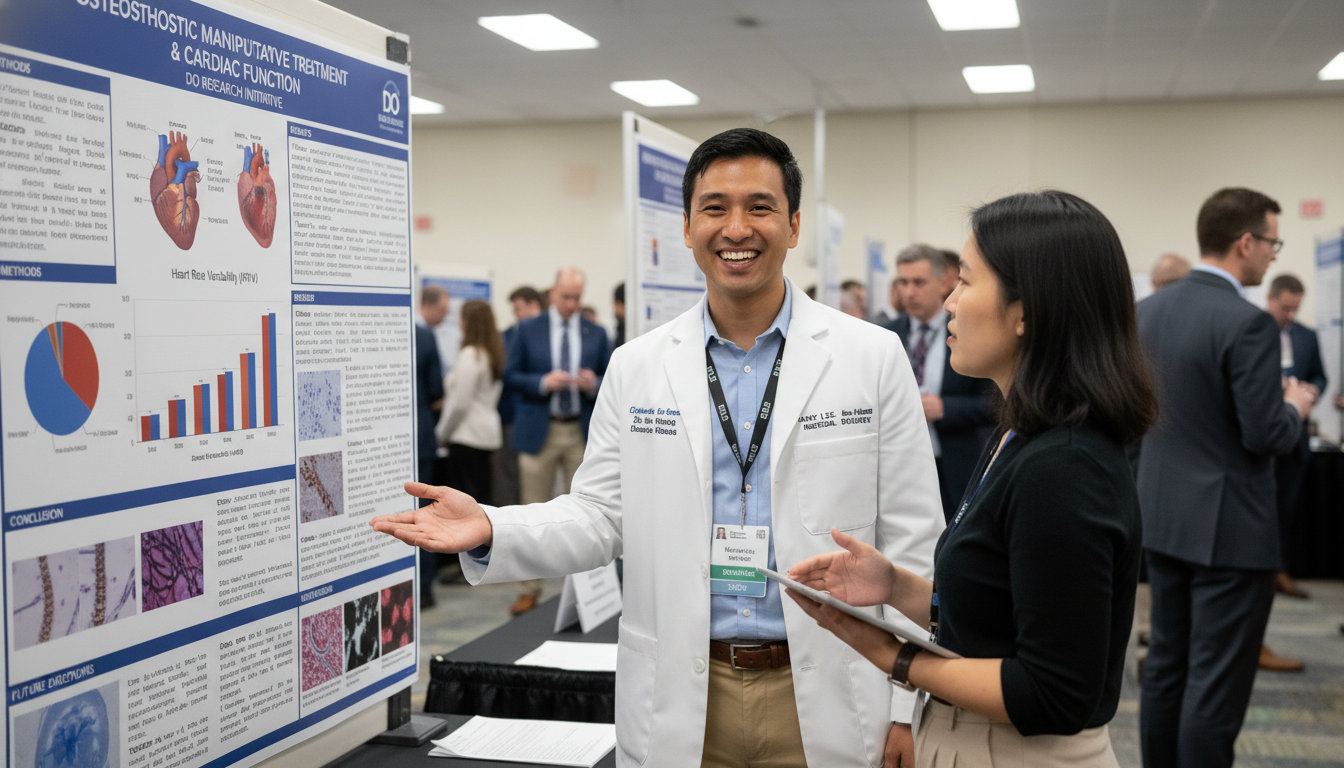
Strategic Pathways to Build a Research Profile as a DO Graduate
Many DO graduates feel they are “behind” compared to MD peers. The key is not to panic, but to move strategically with the time and resources you have.
Step 1: Clarify Your Specialty and Target Programs
Your research strategy should support your residency target, not exist in a vacuum.
- Narrow down your top 1–2 specialty choices as early as possible.
- Identify whether you’re aiming for:
- Large academic medical centers
- Mid-sized academic/community hybrids
- Primarily community-based programs
Then research:
- Do they mention research in their program description?
- Do they highlight resident publications or QI projects on their website?
- Are faculty profiles heavy on PubMed publications?
- Is there a core theme (e.g., health disparities, education, outcomes, OMM integration)?
Use this information to align your research for residency with what your target programs value.
Step 2: Maximize Existing Connections from Your DO School
Even if your school is not research-heavy, it almost certainly has potential research outlets:
Clinical faculty with ongoing projects
- Contact preceptors you liked during rotations.
- Ask directly:
“I’m very interested in [specialty]. I’d love to get involved in any ongoing clinical or quality improvement research you might have. Are there any projects where I could help with data collection, literature review, or writing?”
Department chairs or research coordinators
- Many departments have a designated faculty or staff member who organizes scholarly projects.
- Ask for a short meeting and come prepared with:
- CV
- Statement of interests
- Time availability
Osteopathic manipulative medicine departments
- OMM divisions often have interest in studying clinical outcomes or designing educational interventions.
- These may be particularly receptive to DO graduates and can create unique niche projects.
Step 3: Seek Multi-Site and Remote Research Opportunities
If your home institution offers limited options, broaden your reach:
Email faculty at nearby academic centers in your specialty of interest:
- Highlight:
- You are a DO graduate interested in their specialty
- Your willingness to help with data collection, charts, literature review, or manuscript drafting
- Attach a well-organized, concise CV.
- Highlight:
Join national specialty organizations as a student/trainee member
- Many offer:
- Research mentorship programs
- Collaborative multicenter projects
- Resident and student research committees
- Many offer:
Look for remote-friendly projects
- Systematic reviews and meta-analyses
- Secondary data analyses
- Educational research (survey-based, curriculum projects)
- These can often be done without being physically on site.
Step 4: Choose Project Types That Match Your Timeline
Your time horizon before applying (or reapplying) to residency heavily shapes which projects make sense.
If you have 18–24+ months before applying:
You can aim for:
- Original clinical research (prospective or retrospective)
- Systematic reviews or meta-analyses
- Multi-project portfolios (e.g., one main project plus several smaller ones)
Strategy:
- Join 1–2 larger, more complex projects (potential first- or second-author paper).
- Add 2–3 smaller “quick win” projects (case reports, QI, abstracts).
If you have 9–18 months:
Focus on:
- Retrospective chart reviews
- Case series
- Systematic or high-quality narrative review
- Well-structured QI projects with defined outcomes
You’re aiming to:
- Generate at least 1–2 abstracts or posters
- Submit at least 1 manuscript before ERAS opens
(Even “manuscript in review” is better than nothing.)
If you have <9 months:
Prioritize feasible projects:
- Case reports (especially if you already identified unique patients)
- Small case series from recent rotations
- Abstract/poster submissions to local or regional conferences
- Rapid QI projects with simple pre/post measures
Be realistic:
- Published papers may be unlikely in this window.
- However, “abstract accepted,” “poster presented,” or “manuscript submitted” still strengthen your research for residency message.
Step 5: Be Clear About Your Role and Contributions
As a DO graduate, you may worry that your work will be overshadowed by MD trainees or PhD-level researchers. You counter this by clearly defining your responsibilities:
- Data collection and chart review
- Literature search and reference management
- Drafting introduction and discussion sections
- Designing surveys or tools
- Creating data tables and figures
- Preparing poster or slide content
This clarity helps you:
- Present your research convincingly during interviews
- Avoid looking like a “name added at the end”
- Show leadership and ownership, especially if you coordinated a team

Practical Examples of Research Paths for Different DO Profiles
To make this concrete, here are sample research strategies tailored to different starting points.
Example 1: DO Graduate Targeting Internal Medicine (Academic Program)
Profile:
- Average board scores
- Strong clinical grades
- Minimal prior research
Strategy (12–18 months before ERAS):
Join an outcomes/QI project in internal medicine
- Topic: reducing 30-day readmissions for heart failure.
- Role: chart review, data entry, literature search, early drafting of background.
Case report from internal medicine rotation
- Unusual presentation of autoimmune disease.
- Aim: submit to a case report journal or ACP regional meeting.
Systematic review or narrative review
- Topic example: management of resistant hypertension in older adults.
- Target: mid-tier journal, possibly with your IM residency mentor as co-author.
Expected outputs:
- 1 regional poster presentation
- 1–2 manuscripts submitted (maybe 1 accepted before ERAS)
- Strong, coherent narrative tied to your internal medicine interest
Example 2: DO Graduate Targeting Emergency Medicine (Community or Hybrid Program)
Profile:
- Good clinical evaluations
- DO school with limited research infrastructure
- No publications yet, 9 months to ERAS
Strategy:
ED-based QI project
- Topic: improving time-to-antibiotic administration in sepsis.
- Collect pre/post metrics, collaborate with ED director or QI officer.
Case report or small series from ED
- Examples:
- Rare toxicology presentation
- Unusual trauma pattern
- Submit to EM-specific case report journals or conference poster sessions.
- Examples:
Short communication or letter to the editor
- Reflecting on ED workflow, a new sepsis protocol, or an educational innovation.
Expected outputs:
- 1 local/regional poster
- 1–2 short manuscripts submitted
- Clear demonstration of productivity and initiative in a busy clinical setting
Example 3: DO Graduate Aiming for a Competitive Specialty (Dermatology, Ortho, etc.) with a Gap Year
Profile:
- Strong boards and clinical evaluations
- Recognizes need to boost osteopathic residency match chances through research
Strategy for a full research year:
Join a dedicated research team in your specialty (ideally at an academic center).
- Seek a formal “research fellow” role if possible.
Multiple parallel projects:
- 1–2 prospective or large retrospective clinical studies.
- 2–3 case series or case reports on interesting clinical material.
- At least 1 systematic or scoping review.
Attend and present at specialty conferences
- Submit several abstracts to maximize poster and oral presentation opportunities.
Engage in networking
- Attend departmental meetings, grand rounds, and research seminars.
- Build letter-of-recommendation relationships with research mentors.
Expected outputs:
- 3–8 abstracts/posters
- 2–4 manuscripts submitted, with some hopefully accepted before ERAS
- Powerful letters of recommendation emphasizing your research productivity and fit for the specialty
Presenting Your Research Effectively in ERAS and Interviews
Collecting experiences is only half the work; you must present them strategically.
Building the ERAS Research and Experiences Sections
When listing experiences:
Be precise and honest about your role and time commitment.
Use action verbs and outcome-focused language:
- “Conducted retrospective chart review of 200 patients…”
- “Developed data collection tool and organized database…”
- “Co-authored manuscript submitted to [Journal].”
Make sure to:
- Distinguish between completed and ongoing projects.
- Avoid overinflating your contributions.
- Accurately reflect your authorship position.
Tailoring Your Personal Statement
Use your personal statement to:
- Connect your research to your clinical interests and humanistic motivations.
- Highlight one or two key projects that shaped:
- How you think about patient care
- Your interest in a given subspecialty
- Your appreciation of evidence-based medicine
Avoid sounding like you pursued research only because “I heard I needed publications for match.” Instead, emphasize:
- Curiosity
- Desire to improve patient outcomes
- Fascination with unanswered questions in your field
Preparing to Discuss Research in Interviews
Program directors often ask:
- “Tell me about your research.”
- “What was your role in this project?”
- “What did you learn from this experience?”
Prepare by:
- Selecting 1–2 “anchor projects” to discuss in detail.
- Practicing a brief, structured response:
- Context and question
- Your role
- Main findings or impact
- What you learned and how it influences your future practice
Be ready to explain:
- Why the project was important
- Challenges you faced and how you addressed them
- Any next steps or follow-up research opportunities
Common Pitfalls and How DO Graduates Can Avoid Them
Even with good intentions, it’s easy to make missteps in building a research profile. Key pitfalls:
Taking on too many projects at once
- Better: 2–4 well-managed projects where you see tangible outcomes.
Chasing only “high-impact” publications
- As a DO graduate, your main goals are:
- Demonstrating scholarly engagement
- Showing you can complete projects
- Mid-tier and specialty-specific journals are excellent targets.
- As a DO graduate, your main goals are:
Waiting for perfect timing
- You can often:
- Start a case report today
- Join an ongoing QI project next week
- Submit an abstract within a few months
- Imperfect progress beats endless planning.
- You can often:
Misrepresenting contributions
- Program directors respect honesty.
- If you only assisted with data entry, say so—but highlight what you learned and how you engaged.
Ignoring osteopathic research opportunities
- OMM and osteopathic-focused projects can:
- Differentiate you from MD applicants
- Show pride in your training
- Appeal to programs supportive of the osteopathic perspective
- OMM and osteopathic-focused projects can:
FAQs: Research Profile Building for DO Graduates
1. As a DO graduate, do I have to do a research year to match into residency?
No. A dedicated research year is mainly useful if:
- You are targeting highly competitive specialties or elite academic programs, and
- You currently have little or no research.
For most specialties and many community or hybrid programs, a well-structured part-time research portfolio (case reports, QI projects, a few abstracts or manuscripts) can be sufficient, especially if your clinical performance and board scores are strong.
2. I don’t have any publications yet. Is it too late to start if I’m applying this cycle?
It’s not too late to strengthen your profile, but be strategic:
- Focus on shorter timeline projects: case reports, small case series, QI with simple outcomes.
- Aim to submit abstracts or posters that may be pending presentation by interview season.
- On ERAS, “manuscript submitted” or “abstract accepted” still signals productivity and initiative.
3. How many publications needed to be competitive as a DO in my specialty?
It varies, but general guidance:
- Competitive specialties: aim for multiple scholarly items (5–10+ experiences), with at least a couple of peer-reviewed papers if possible.
- Moderately competitive: 3–5 solid experiences with at least 1–2 tangible outputs (posters, manuscripts).
- Less competitive or community-focused: 1–3 meaningful experiences can still be impactful.
Quality, authorship role, and relevance carry more weight than raw numbers.
4. Will DO-focused or OMM research actually help my osteopathic residency match chances?
Yes—especially if:
- You are applying to programs that value osteopathic principles or have DO leadership.
- You can clearly connect the research to improved patient care or education.
However, balance is important. Combine osteopathic research with more mainstream specialty-specific projects when possible, to demonstrate broad scholarly engagement and appeal to both DO-friendly and mixed programs.
A thoughtful, well-planned research strategy can significantly strengthen your application as a DO graduate. Focus on feasible, high-yield projects, be honest about your contributions, and frame your scholarship as an extension of your commitment to better patient care. Over time, you’ll build a research profile that supports—not overshadows—your identity as a capable, curious, and clinically focused future resident.