
Understanding the Research Landscape for a DO in Otolaryngology (ENT)
Otolaryngology–Head & Neck Surgery (ENT) is one of the most competitive residency specialties in the United States. For a DO graduate, a strategic, evidence-based approach to research is especially important to be a strong applicant in the otolaryngology match. Program directors repeatedly emphasize three academic pillars:
- Board scores and clinical performance
- Letters of recommendation and mentorship
- Research productivity and scholarly engagement
This article focuses on the third pillar—research profile building—specifically tailored to a DO graduate pursuing ENT residency. We will cover the expectations in the otolaryngology match, practical strategies to get involved in and complete projects, how to think about “how many publications needed,” and how to present your work effectively on ERAS.
Why Research Matters More for a DO Applicant in ENT
While both MD and DO applicants benefit from strong research backgrounds, DO graduates often face:
- Fewer home otolaryngology departments or ENT faculty at their medical schools.
- Less built-in exposure to otolaryngology research networks.
- Persistent (though slowly shrinking) bias in highly competitive surgical subspecialties.
Research accomplishes several things for a DO graduate seeking ENT:
- Signals commitment to otolaryngology specifically, not just surgery in general.
- Compensates for weaker aspects of the application (e.g., a lower COMLEX/USMLE score).
- Opens doors to mentorship and letters from academic otolaryngologists.
- Demonstrates academic potential—critical for an increasingly evidence-driven specialty.
The goal is not just “have some publications,” but to build a coherent, believable research profile that tells a story: “I am a DO graduate who understands ENT, is curious, productive, and ready to be a resident scholar.”
Setting Realistic Research Goals: How Much Is Enough?
One of the most common questions is: “How many publications are needed for otolaryngology residency?” There is no magic number, but there are useful benchmarks.
National Trends and Expectations
Based on NRMP and specialty data (which may change slightly year to year):
- Matched otolaryngology applicants often report a double-digit number of “publications, presentations, and abstracts” combined on ERAS.
- This total includes:
- Peer-reviewed journal articles
- Book chapters
- Conference posters
- Oral presentations
- Accepted abstracts
- Sometimes quality improvement (QI) or educational projects
Remember: these numbers aggregate all scholarly output, not just first-author PubMed-indexed articles.
Interpreting “How Many Publications Needed” as a DO
For a DO graduate, an effective target research profile for a competitive ENT application might look like:
- Peer-reviewed publications (any field):
- 1–3 total, with at least 1 related to ENT or surgery preferred.
- ENT-specific scholarly work:
- 2–5 total ENT-related projects, including:
- Abstracts
- Posters
- Presentations
- Case reports
- Quality improvement or education projects
- 2–5 total ENT-related projects, including:
- Total ERAS scholarly entries (all types combined):
- 8–20+ is common for strong applicants.
However, quality and consistency matter more than a raw number. A DO applicant with:
- 2–3 thoughtful ENT publications,
- several presentations,
- and a clear connection to mentors in the field
may be more competitive than someone listing 25 minor or low-effort projects with no clear narrative.
Practical Target by Timeline
If you are a DO graduate (vs. current student), your timeline might involve a research gap year or post-graduate work. A realistic 12–18 month goal:
- 3–5 completed manuscripts (published, accepted, or submitted),
- 5–10 abstracts/posters at local, regional, or national meetings,
- Demonstrated role in at least one substantial project (e.g., prospective study, database analysis, multi-institutional collaboration).
If you cannot reach those numbers, focus on completing and polishing fewer, higher-quality projects rather than starting many and finishing none.

Finding and Creating Research Opportunities as a DO Graduate
Many DO schools lack an in-house otolaryngology department, which can make traditional pathways to ENT research less obvious. That does not mean options don’t exist—but you must be proactive, organized, and persistent.
1. Start With What You Have: Home Institution and Regional Networks
Even if there is no ENT department:
- Look for surgery, neurosurgery, plastic surgery, or anesthesia faculty
These specialties frequently overlap with ENT and may collaborate on airway, head & neck, skull base, facial trauma, or sinus-related work. - Identify faculty with publications using:
- PubMed (search by institution name)
- School research or faculty profiles
- Google Scholar
Send a concise, professional email:
- Introduce yourself as a DO graduate aiming for ENT.
- Attach a 1-page CV highlighting any previous research.
- Express specific interest: “I am especially interested in outcomes research in head and neck oncology” rather than “I want to do any research.”
Offer concrete help: data collection, chart review, data entry, literature review, drafting sections of manuscripts.
2. Leverage External ENT Departments
If your institution lacks ENT, seek collaborations elsewhere.
Strategies to approach outside ENT programs:
- Search nearby academic centers or large community hospitals with ENT residency programs.
- Look up faculty profiles and recent publications.
- Identify mentors whose work interests you (e.g., otology, rhinology, head & neck oncology, laryngology, facial plastics).
Email structure:
- Subject line: “Prospective DO Research Volunteer Interested in Otolaryngology – [Your Name]”
- Brief background: DO graduate, graduation year, any prior research.
- Clear ask:
- “I’m seeking to volunteer on ongoing ENT projects (e.g., chart reviews, database work, helping with manuscripts) as I prepare for the otolaryngology match.”
- Mention availability (especially if you have flexible or full-time research time).
- Attach CV and a short paragraph summarizing previous research skills.
Persistence is key. You may need to contact 10–20 faculty or departments to get 2–3 positive responses.
3. Consider a Structured Research Year or Fellowship
For a DO graduate, especially if applying after graduation, a dedicated ENT research year can be a powerful equalizer.
Benefits:
- Full-time immersion in otolaryngology research.
- Multiple projects leading to publications and presentations.
- Close relationships with ENT faculty who can write strong letters.
- Access to ENT clinics and ORs (in some programs), enhancing your clinical understanding.
Where to find these positions:
- Websites of major academic ENT departments.
- Direct emails to ENT program coordinators asking if they have research fellow positions.
- ENT societies (e.g., AAO-HNS) sometimes list or know about research opportunities.
When comparing options:
- Ask about expectations: How many projects? Typical publication output of prior fellows?
- Clarify funding and hours: Paid vs. unpaid, clinical vs. pure research, call responsibilities.
- Ensure at least one mentor is actively publishing and engaged in guiding trainees.
4. Create Your Own ENT-Adjacent Projects
If direct ENT research is hard to secure at first, you can build a foundation with ENT-adjacent topics:
- Airway management (shared with anesthesia, emergency medicine).
- Head and neck imaging (radiology).
- Maxillofacial trauma (trauma surgery, plastics).
- Sleep apnea (pulmonology, neurology).
- Thyroid and parathyroid disease (endocrinology, endocrine surgery).
Examples of feasible projects:
- Retrospective chart review of patients with facial trauma at a trauma center.
- Case series of challenging airway cases requiring multidisciplinary management.
- Quality improvement project on post-tonsillectomy hemorrhage management protocols (even if led by pediatric surgery or anesthesia).
These projects still show relevant skills and interest in the anatomical and clinical domains of ENT, and you can explicitly link them to your ENT aspirations.
Types of ENT Research and How to Execute Them Efficiently
You do not need to become a biostatistician or basic scientist to build a credible research portfolio. But you should understand the common forms of research for residency and how to move them from idea to completion.
1. Retrospective Chart Reviews
A classic entry point for aspiring surgeons:
- Examples in ENT:
- Outcomes of endoscopic sinus surgery.
- Complications after thyroidectomy.
- Readmission rates after tonsillectomy.
Key steps:
- Define a focused question:
- Poor: “Outcomes after sinus surgery.”
- Better: “Predictors of 30-day readmission after endoscopic sinus surgery in chronic rhinosinusitis patients.”
- Identify collaborators:
- ENT attending (PI), possibly a resident or fellow.
- IRB approval:
- Learn how to submit or assist with IRB applications—this is a valuable skill.
- Data collection:
- Use REDCap or spreadsheets with clearly defined variables.
- Analysis:
- Simple statistics (chi-square, t-test, logistic regression) with help from a statistician or experienced mentor.
- Manuscript preparation:
- Use previously published ENT articles as templates for structure and formatting.
As a DO graduate, emphasize your willingness to handle logistical work (IRB, data collection, chart abstraction)—faculty are often short on time and appreciate capable help.
2. Case Reports and Case Series
These can be faster to complete and are particularly realistic for DO graduates rotating across multiple hospitals:
- Examples in ENT:
- Rare laryngeal tumors.
- Unusual presentations of sinusitis.
- Novel surgical techniques in tympanoplasty.
Execution tips:
- Identify cases during clinical rotations or from departmental conference lists.
- Ask the attending if they would be interested in a case report and if you can take the lead.
- Perform a thorough literature review to demonstrate what is unique about the case.
- Target ENT-specific journals that accept case reports or case report supplements.
Case reports may not be the highest-impact research, but they:
- Are achievable.
- Show follow-through and academic writing ability.
- Often lead to poster presentations at meetings.
3. Systematic Reviews and Meta-Analyses
These can be done remotely and are sometimes ideal during a research year:
- Examples:
- Meta-analysis of outcomes following cochlear implantation in specific populations.
- Systematic review of treatments for pediatric obstructive sleep apnea.
Requirements:
- A mentor or co-author with experience in systematic reviews.
- Training in:
- Database searches (PubMed, Embase, Cochrane, etc.).
- PRISMA guidelines.
- Data extraction and critical appraisal.
Benefits:
- Often yield a publishable first-author manuscript, which is especially valuable for DO applicants.
- Deepen your knowledge in a focused ENT topic, which will help on interviews.
4. Clinical or Educational Quality Improvement (QI) Projects
Not all research has to be in traditional clinical outcomes:
- QI projects related to ENT:
- Improving perioperative antibiotic stewardship in ENT surgery.
- Standardizing post-op instructions for tonsillectomy to reduce ER visits.
- Designing an educational module on epistaxis management for medical students.
QI work:
- Can often be implemented and assessed in shorter timeframes.
- May count as both research and leadership/education on ERAS.
- Shows initiative and systems-thinking—qualities ENT program directors value.
Maximizing the Impact of Your Research for the Otolaryngology Match
Simply doing research is not enough; you need to strategically showcase and leverage it to strengthen your osteopathic residency match prospects in ENT.
1. Building a Coherent ENT-Focused Narrative
When reviewing your CV and ERAS application, ask:
- Does my research tell a consistent story about my interest in otolaryngology?
- Do my projects cluster around ENT or ENT-adjacent topics?
- If some work is non-ENT (e.g., internal medicine), can I clearly explain the skills and insights I gained?
Example narrative:
“Early in medical school I worked on internal medicine outcomes research, which taught me database management and manuscript writing. As I grew more interested in head and neck anatomy, I transitioned into ENT projects, including a retrospective study of thyroidectomy complications and a systematic review of pediatric sleep apnea treatments. These experiences confirmed my interest in ENT and gave me the tools to contribute academically to the field.”
Program directors want to see intention and progression, not random, disconnected projects.
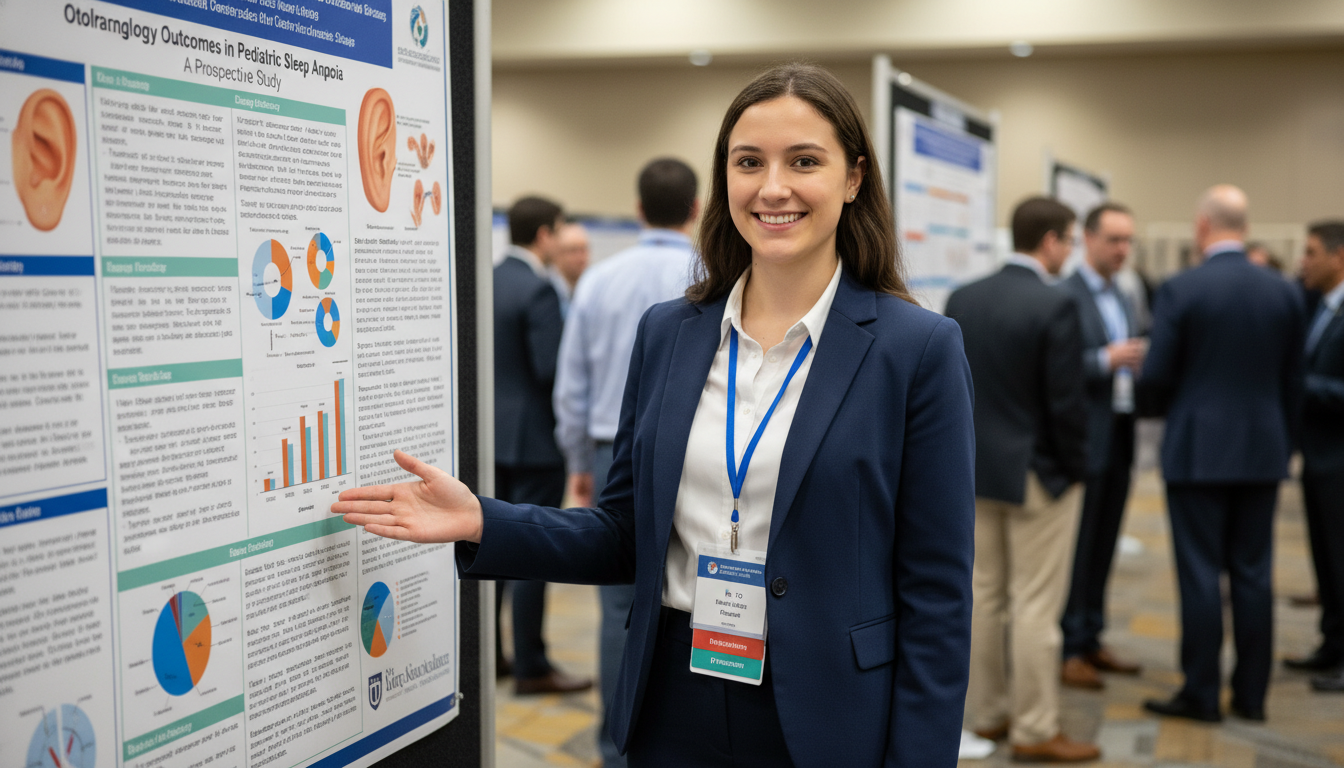
2. Presenting at Meetings and Conferences
For a DO graduate, visibility in the ENT community is invaluable:
- National ENT meetings (AAO-HNS, COSM, subspecialty societies)
- Strong venues for posters and oral presentations.
- Increases networking opportunities with potential letter writers and future colleagues.
- Regional or state meetings
- Often more accessible, higher acceptance rates for abstracts.
- Still count on ERAS and show engagement.
Practical tips:
- Ask mentors which conferences your project is suited for.
- Volunteer to create posters and slides; faculty often appreciate a proactive trainee.
- At the meeting:
- Introduce yourself to program directors and residents.
- Mention you are a DO graduate applying for ENT and are excited to be involved in research.
3. ERAS Entries: Making Each Project Count
On ERAS, you’ll categorize your experiences under “Publications,” “Presentations/Posters,” and “Research Experiences.” To maximize impact:
- Be honest and precise about your role:
- Use action verbs: “Performed data analysis,” “Led manuscript drafting,” “Designed data collection tool.”
- Highlight ENT relevance:
- Even if the journal title isn’t ENT-specific, summarize the ENT connection (e.g., “focused on airway complications after surgery”).
- Specify status accurately:
- Published, in press, accepted, submitted, or in preparation (use “in preparation” sparingly).
Remember that interviewers often pick questions from ERAS entries, so be ready to discuss any project you list in detail.
4. Strategically Using Research for Letters of Recommendation
Strong ENT letters often come from:
- Your primary research mentor (ENT faculty or closely ENT-related).
- Faculty who have seen you:
- Generate ideas,
- Show persistence,
- Handle data and analysis,
- Draft and revise manuscripts.
To maximize letter strength:
- Keep your mentors updated on your progress.
- Ask for feedback and respond professionally to criticism.
- Before requesting a letter, provide:
- Updated CV.
- Personal statement draft.
- A short summary of your contributions to their research.
- Ask:
“Would you feel comfortable writing a strong letter of recommendation supporting my application to otolaryngology residency?”
Letters from academic otolaryngologists who can comment on both your research and clinical potential are especially powerful for a DO graduate applicant.
Time Management, Pitfalls, and Long-Term Development
Balancing Research With Clinical Responsibilities
As a DO graduate, you may be:
- Doing a research year,
- Working in a transitional/preliminary year,
- Or juggling part-time clinical work.
Tips for effective time management:
- Set weekly, concrete goals:
- “Finish data collection for 10 patients.”
- “Draft introduction and methods sections.”
- Use project management tools (Trello, Notion, or simple spreadsheets) to track:
- Project title, team members, current stage, deadlines.
- Schedule regular check-ins with mentors (biweekly or monthly).
- Protect blocks of time for deep work and avoid over-committing to too many new projects.
Common Pitfalls for DO Applicants in ENT Research
Starting too many projects and finishing none
- Result: crowded CV with vague, incomplete entries.
- Fix: Prioritize 2–3 high-yield projects and see them to publication.
Lack of ENT focus
- Result: strong research record, but mostly in unrelated fields, making ENT interest appear late or superficial.
- Fix: As your interest in ENT solidifies, shift your new projects toward ENT topics and clearly articulate that transition.
Weak understanding of your own projects
- Interviewers will quickly notice if you cannot explain:
- The hypothesis,
- Study design,
- Main results,
- Limitations.
- Fix: Before interviews, review each project and prepare a 2–3 sentence summary.
- Interviewers will quickly notice if you cannot explain:
Underestimating the value of smaller wins
- Quality improvement, case reports, and local posters are often underrated.
- These show initiative and completion—crucial traits in residency.
Developing as a Lifelong Clinician-Scientist (If You Want To)
Not every future ENT surgeon must be an academic researcher, but for those who are interested:
- Learn basic statistical concepts and common study designs.
- Consider a certificate or short course in clinical research methods or epidemiology during your research year.
- Seek mentors who model the kind of career you want:
- Pure clinician,
- Clinician-educator,
- Clinician-scientist.
Even if you ultimately practice in a community setting, the ability to interpret and apply research critically is central to modern ENT practice—and your early research profile is the foundation.
FAQs: Research Profile Building for DO Graduates in ENT
1. As a DO graduate, do I need a dedicated research year to match into ENT?
Not always, but a research year can be highly beneficial, especially if:
- You lack prior ENT exposure or research.
- Your board scores or grades are not at the top of the applicant pool.
- You do not have a home ENT program.
A strong research year with multiple ENT projects, presentations, and strong letters can significantly enhance your osteopathic residency match prospects in otolaryngology.
2. How many publications are realistically necessary for a DO applicant in otolaryngology?
There is no strict minimum, but as a general guide:
- Aim for 1–3 peer-reviewed publications, ideally with at least one ENT-related.
- Build several ENT presentations/abstracts (posters or oral).
- Strive for a total scholarly output (all projects, presentations, and publications) that is competitive—often in the 8–20+ range for strong applicants.
Focus on quality, ENT relevance, and completion, not just raw numbers.
3. Does it hurt my application if some of my research is in non-ENT fields?
No—many successful ENT applicants, including DO graduates, begin in other fields. What matters is that you:
- Can clearly explain the skills you gained (study design, statistics, writing).
- Show a progression into ENT or ENT-adjacent topics over time.
- Tie your earlier work into a coherent narrative of your development as a future otolaryngologist.
4. I don’t have a home ENT department. How can I still get ENT research?
You can:
- Reach out to regional academic centers with ENT departments, offering to volunteer on projects.
- Look for ENT-adjacent research with other surgical or medical specialties (e.g., airway, head & neck, facial trauma, sleep apnea).
- Consider a dedicated ENT research year at an academic center.
- Network at local and national ENT conferences, introducing yourself as a motivated DO graduate seeking research collaborations.
Proactive outreach, persistence, and demonstrating reliability are often more important than where you started.
By understanding the expectations of the otolaryngology match, aligning your interests with ENT-focused projects, and systematically building a portfolio of meaningful research, you can create a strong, credible research profile as a DO graduate. With intentional planning, thoughtful mentorship, and steady execution, your scholarly work can become one of the most compelling strengths of your ENT residency application.