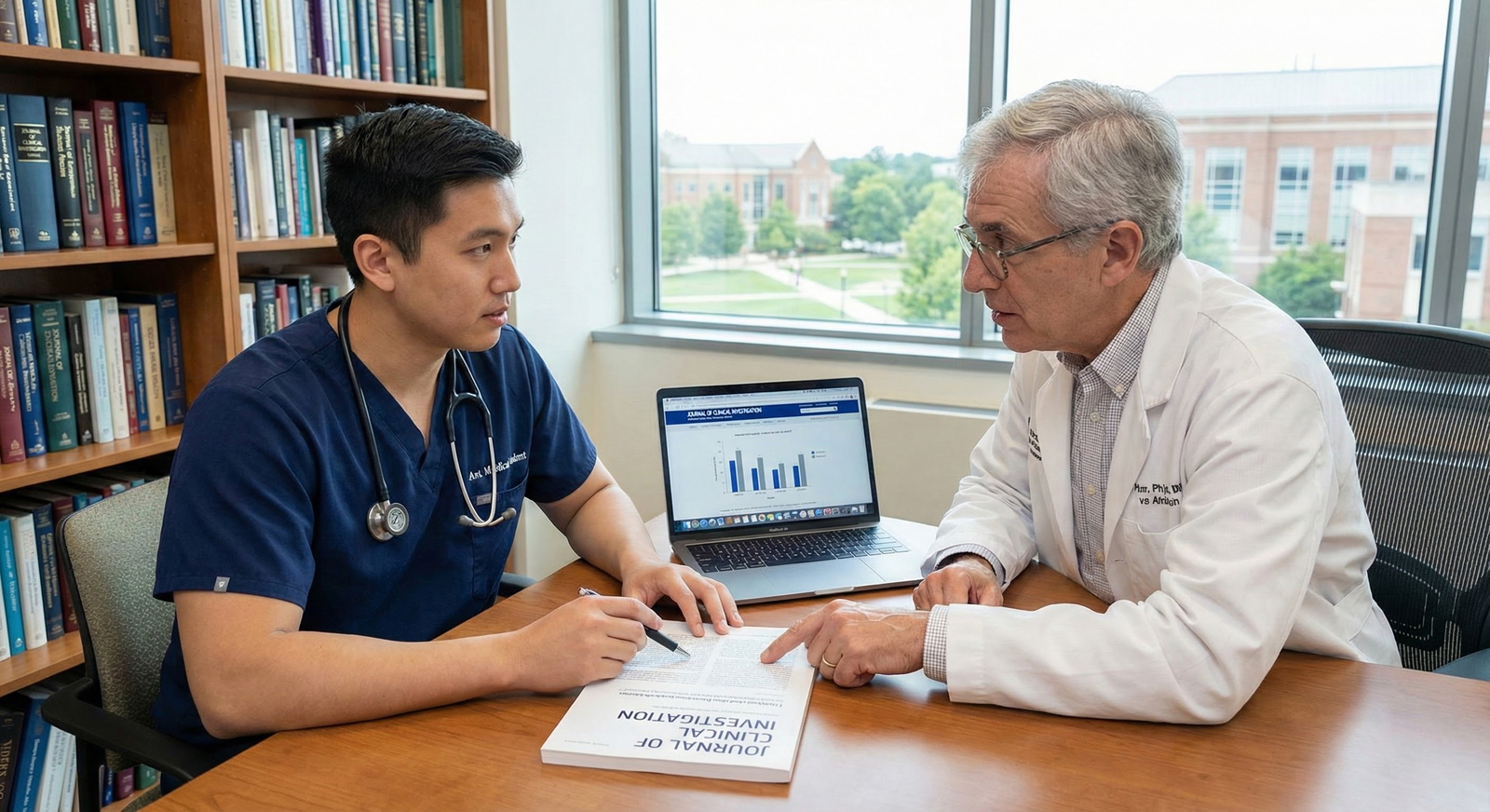
Why Research Matters for a DO Graduate in Family Medicine
Many DO graduates aiming for family medicine residency underestimate how valuable a focused research profile can be. Family medicine is traditionally viewed as a “less research-heavy” specialty, and compared with fields like dermatology or radiology, that’s true. However, the landscape is changing:
- Program directors increasingly value applicants who can engage with and apply evidence-based medicine.
- The osteopathic residency match is now unified with the NRMP; DO applicants are more directly compared with MD applicants.
- A strong research profile can:
- Offset weaker areas (e.g., modest scores, limited school name recognition)
- Help you stand out in competitive regions or academic FM programs
- Support future aspirations in leadership, population health, sports medicine, geriatrics, or academic medicine
You do not need a PhD-level portfolio. But you do need a coherent, intentional research story that communicates:
- You understand the basics of research and evidence-based practice
- You can see a project through to completion
- Your research interests align logically with family medicine
This article will walk you through how to build that research profile step-by-step as a DO graduate targeting the FM match, including realistic goals around how many publications are needed, what kinds of projects count, and how to make the most of limited time or institutional resources.
Understanding the Role of Research in the FM Match for DO Graduates
How Family Medicine Programs View Research
In many community-based family medicine residency programs, research is valued but not the central selection factor. For these programs, your:
- COMLEX/USMLE performance
- Clinical grades and letters
- Fit with primary care and underserved populations
often matter more than advanced research.
In university-based or academic FM programs, research carries more weight. These programs may:
- Expect some prior scholarly activity
- Prefer applicants who show interest in quality improvement (QI), population health, or medical education research
- Look favorably on applicants who want to participate in residency-level scholarly projects
Even for community programs, having any scholarly work—posters, abstracts, QI, case reports—demonstrates:
- Intellectual curiosity
- Professionalism and follow-through
- Familiarity with evidence-based care
DO-Specific Considerations in the Unified Match
Because DO graduates are now in the same main match pool as MDs, program directors may compare your research experiences with those of MD applicants. You do not need to out-compete every MD in research, but you should not have zero scholarly activity if you can avoid it—especially if you’re aiming for:
- Academic family medicine residencies
- Urban, popular, or “name-brand” programs
- Programs with strong OB, sports med, or geriatrics tracks
Moreover, a strong research profile helps reduce any lingering misconceptions about DO graduates by showing:
- You can work in structured academic environments
- You can produce and disseminate scholarly work
- You’re committed to evidence-based osteopathic and allopathic care
How Many Publications Are Needed for Family Medicine?
For DO graduates asking “how many publications needed” for family medicine, the realistic answer is:
- 0–1 publications: Often sufficient for many community FM programs, especially if combined with:
- QI projects
- Posters or presentations
- Case reports
- 1–3 publications or abstracts/posters: More competitive for academic FM programs, especially if:
- At least 1 relates to primary care, population health, or community medicine
- You can discuss your role clearly and meaningfully
- >3 significant scholarly outputs: Strong advantage for research-heavy, university-affiliated programs, or if you’re aiming at future academic or fellowship paths (sports med, geriatrics, palliative care, etc.)
Publications are not all-or-nothing. Program directors will often value:
- Conference posters
- Simple QI projects
- Peer-reviewed letters to the editor
- Educational projects (curriculum design, teaching tool development)
as genuine research for residency applications.

Types of Research and Scholarly Activity That Matter in Family Medicine
You don’t need to work in a basic science lab to build a meaningful research profile. For family medicine, many kinds of scholarly work are relevant, practical, and accessible to DO graduates.
1. Clinical Research (Retrospective or Prospective)
Examples include:
- Reviewing charts to evaluate outcomes (e.g., diabetes control before and after a new clinic protocol)
- Studying adherence to screening guidelines (e.g., colon cancer or cervical cancer screening rates in a clinic population)
- Investigating predictors of ED utilization among primary care patients
These projects are:
- Highly relevant to FM
- Often feasible with existing clinic data and basic statistical support
- Good foundation for posters, abstracts, or even manuscripts
2. Quality Improvement (QI) Projects
Family medicine programs love QI because:
- It’s integral to real-world practice
- It aligns with ACGME requirements
- It often directly improves patient care
Sample QI projects for a DO graduate:
- Increasing influenza or COVID vaccination rates at your clinic
- Reducing missed appointments through reminder systems or transportation support
- Implementing a depression screening tool (PHQ-9) and tracking follow-up actions
- Improving documentation of osteopathic structural exams in primary care
QI may not always lead to a peer-reviewed paper, but you can still:
- Present at local, regional, or national FM conferences
- Include it as a formal “Scholarly Activity” on your ERAS application
- Use it as talking material in interviews (what you changed, measured, and learned)
3. Case Reports and Case Series
Case reports are often the most accessible path to publications for match:
- You see an unusual presentation, rare disease, or interesting diagnostic challenge
- You collaborate with a faculty member or resident to write it up
- You submit to a family medicine, osteopathic, or general medical journal, or present as a poster
Examples fitting FM and osteopathic practice:
- A challenging musculoskeletal complaint managed with an osteopathic approach
- A rare metabolic condition first presenting in primary care
- An atypical presentation of common conditions (e.g., MI presenting as indigestion in an elderly patient)
Case reports demonstrate:
- Observation and critical thinking
- Ability to synthesize literature
- Engagement with publication processes
4. Medical Education and Curriculum Research
Many FM programs have strong interests in:
- Teaching methods for students and residents
- OSCE/clinical skills assessment
- Integrating osteopathic principles into primary care teaching
You might:
- Help create a new teaching module (e.g., chronic pain management with OMT and non-opioid strategies)
- Study learner outcomes (exam performance, confidence surveys) before and after the new curriculum
- Present your work at an education conference
5. Public Health and Community-Based Research
Family medicine naturally intersects with public health. Potential projects:
- Community hypertension screening initiatives and follow-up outcomes
- Investigations into health disparities in a local underserved population
- Evaluation of a community-based nutrition or exercise program
These projects are especially compelling if you want to emphasize:
- Population health
- Rural or underserved medicine
- Longitudinal primary care
6. Systematic Reviews or Narrative Reviews
If your access to patients or data is limited, you can still engage in scholarly work:
- Write a concise narrative review on a focused FM topic (e.g., osteopathic manipulative treatment in low back pain in primary care, or evidence-based obesity management in family medicine)
- Participate in a systematic review or meta-analysis with a mentor’s guidance
These can be higher-yield in terms of publications but require:
- Strong organization and literature search skills
- A supportive mentor or research group
Step-by-Step Strategy to Build a Research Profile as a DO Graduate
Step 1: Clarify Your Goals and Timeline
Your research strategy depends on where you are:
- Preclinical years (OMS1–2, or early graduate): Plenty of time. You can aim for 1–3 projects, including at least one that leads to a submission.
- Clinical rotations (OMS3–4): Time is tighter. Focus on:
- Small, well-defined projects
- Case reports
- Joining an ongoing study or QI project rather than starting from scratch
- After graduation / during a gap year: You can significantly upgrade your research profile with:
- Dedicated work as a research assistant or coordinator
- Multiple projects, including manuscripts and conference presentations
Align your goals with your target programs:
- Community FM with heavy service and OB: Aim for at least 1–2 scholarly activities (case report + QI).
- Academic FM with fellowships and research tracks: Target 2–4 tangible outputs (mix of QI, clinical projects, posters, and at least one manuscript submission).
Step 2: Find Mentors and Research Opportunities
For a DO graduate, particularly from smaller or newer schools, finding mentorship is critical.
Options include:
Your DO School Faculty
- Family medicine or internal medicine departments
- Osteopathic manipulative medicine faculty (OMM/OMT)
- Public health or bioethics faculty
Ask directly:“I’m a DO graduate interested in the family medicine residency match and building my research profile. Do you have any ongoing projects I could help with, or cases we could develop into a report?”
Affiliated Hospitals and Clinics
- FM clinics where you rotated
- Attendings who seemed academically inclined
- Chief residents in FM programs (they often know about QI projects)
Professional Organizations
- AAFP, your state AAFP chapter
- ACOFP (American College of Osteopathic Family Physicians)
- SIGs (Special Interest Groups) within these organizations that focus on research, rural care, or osteopathic primary care
Remote / Collaborative Opportunities
- Reach out via email to FM or primary care researchers whose work interests you
- Ask if they need help with data review, literature reviews, or manuscript preparation
- Be clear about your time availability and skills
When reaching out, keep your message:
- Short
- Specific about your interests (FM, QI, osteopathic care, etc.)
- Clear about your timeline (e.g., “I am applying in the upcoming FM match.”)
Step 3: Choose Projects Wisely (High Yield for Limited Time)
You cannot do everything. Prioritize:
Low-barrier, high-yield projects
- Case reports
- QI projects in clinics you already know
- Assisting with data analysis or figure preparation for an existing study
Projects with a defined endpoint within 3–9 months
- Posters at regional or national FM conferences
- Abstracts for DO or FM society meetings
- Short communications or letters to the editor
Alignment with FM and DO identity
- Integrating osteopathic principles in primary care
- Chronic disease management
- Health disparities in rural or underserved populations
- Behavioral health in FM
Example: A realistic 9-month plan for a DO graduate preparing for the FM match:
- Months 1–2: Identify mentor, assemble a small QI project on hypertension care in a clinic
- Months 3–6: Implement QI changes, collect data, and draft a conference abstract
- Months 6–9: Turn project into a poster and submit to a regional AAFP or ACOFP meeting; simultaneously work with the same mentor on a case report or short review article
By match time, you have:
- 1 QI project (with a conference submission or presentation)
- 1 case report being drafted or submitted
- 1–2 additional abstract submissions or co-authorships
Step 4: Develop Core Research Skills (Enough to Be Functional)
You don’t need to become a statistician, but you should be able to:
- Read and summarize a research paper
- Understand basic study designs (RCT, cohort, cross-sectional, case-control, QI cycles)
- Interpret common statistics (p-values, confidence intervals, sensitivity/specificity, odds ratios) at a basic level
- Use citation managers (e.g., Zotero, Mendeley)
- Perform structured literature searches (PubMed, Google Scholar)
Online resources to consider:
- Free IHI (Institute for Healthcare Improvement) Open School modules on QI
- AAFP and ACOFP resources on FM research and QI
- Coursera or edX courses on basic biostatistics or EBM (evidence-based medicine)
These skills will:
- Make you more helpful to mentors
- Allow you to speak comfortably about your work during interviews
- Set you up for success as a resident engaging in scholarly activity
Step 5: Convert Work into Tangible Outputs
For the residency application and FM match, what counts most are:
- Publications: Peer-reviewed articles, case reports, reviews
- Presentations: Posters or oral presentations at:
- National meetings (AAFP, ACOFP, NAPCRG)
- Regional or institutional research days
- Formal QI projects: Documented with:
- Aim statement
- Methods (Plan-Do-Study-Act cycles)
- Measurable outcomes
Translate each project into at least one of the above. For example:
- Case: “Unusual Presentation of Giant Cell Arteritis in a Family Medicine Clinic”
- Poster at your school research day
- Later submission as a case report to a journal
- QI: “Improving Colorectal Cancer Screening Rates in a Community Clinic”
- Abstract at state AAFP meeting
- Poster presentation
- Short manuscript in a community medicine or QI journal
Each completed step adds to your ERAS “scholarly activities” and gives you stories to share in personal statements and interviews.

Presenting Your Research Effectively in Applications and Interviews
Crafting Your ERAS Entries
When entering research for residency in ERAS, be accurate and specific:
- Clearly define your role (primary author, data collection, data analysis, literature review, etc.)
- Use concise, action-oriented descriptions:
- “Led QI project improving diabetes A1c control; implemented EMR reminders and planned PDSA cycles, resulting in 15% improvement in patients at goal over 6 months.”
- For works in progress, label them as such truthfully:
- “Manuscript in preparation”
- “Abstract submitted; pending review”
Don’t inflate your contributions; program directors and faculty can usually tell when descriptions are exaggerated.
Highlighting Research in Your Personal Statement
For a DO graduate in family medicine, research can support your narrative if you tie it back to:
- Your commitment to comprehensive, evidence-based primary care
- Your interest in population health, underserved medicine, or chronic disease management
- Your osteopathic philosophy of treating the whole person and community
Example integration:
“My work on a quality improvement project addressing hypertension control in our community clinic taught me that small, data-driven changes can meaningfully impact patient outcomes. As a DO, I found that integrating osteopathic principles—such as holistic assessment of barriers to adherence—enhanced the effectiveness of these interventions. In residency, I hope to continue this work in a setting where I can both care for patients and contribute to primary care research.”
Discussing Research in Interviews
Expect to be asked:
- “Tell me about your research.”
- “What did you learn from your QI project?”
- “How would you like to be involved in scholarly activity during residency?”
Prepare:
- A brief, 2–3 minute summary of your main project using simple language
- Specifics on your role and responsibilities
- One or two key limitations of the project and what you’d do differently next time
- How you see yourself engaging in research and QI as a resident (realistically, not just idealistically)
Programs are less interested in your p-values and more interested in whether you:
- Understand why the project mattered
- Can work in teams
- Can see projects to completion
- Value continuous improvement in patient care
Common Pitfalls and How to Avoid Them
Waiting too long to start
- Solution: Begin with small steps (identify mentor, choose a simple project) even in early clinical years.
Overcommitting to too many projects
- Solution: Prioritize 1–3 projects you can reasonably finish before application season.
Choosing projects unrelated to FM without a clear narrative
- Solution: If you have non-FM research (e.g., basic science), frame it in terms of skills gained (critical thinking, teamwork) and connect it to your future work in primary care.
Not converting work into outputs
- Solution: Always ask, “Can this become a poster, abstract, or paper?” Build that step into your project plan.
Misrepresenting or overinflating your contributions
- Solution: Be honest and precise—programs respect integrity more than volume.
FAQs: Research Profile Building for DO Graduate in Family Medicine
1. How much research do I really need for a family medicine residency as a DO graduate?
For most community-based family medicine residency programs, you don’t need extensive research. Having 1–2 meaningful scholarly activities—such as a QI project, a poster presentation, or a case report—is often enough to show engagement with evidence-based practice.
For academic FM programs, aim for 2–4 scholarly experiences, ideally including at least one submission (poster or manuscript) related to primary care, population health, or community medicine. Quality and relevance matter more than sheer numbers.
2. Do I need first-author publications to be competitive in the FM match?
First-author publications are helpful but not required for a strong osteopathic residency match in family medicine. Co-authorships, conference abstracts, posters, and QI projects all count as meaningful scholarly activity.
If you can secure a first-author publication (even a case report), that’s a bonus, especially for academic programs. But don’t stall your progress chasing a perfect paper; it’s better to complete manageable projects and have something real to show on your application.
3. What if my research is not related to family medicine?
Non-FM research (e.g., basic science, surgery, radiology) can still be useful if you:
- Clearly articulate what skills you gained (critical appraisal, data analysis, presenting work)
- Explain why you are now choosing family medicine and how those skills transfer to primary care
- Show, through your clinical experiences and personal statement, a strong and consistent commitment to FM
If time allows, try to add at least one family medicine–related project (case report, QI, or community research) before applying. That helps bridge your prior work to your current goals.
4. I have no publications or research yet and I’m close to application season. What should I do?
Focus on short, high-yield projects that can be started and at least partially completed within a few months:
- Case report from an interesting patient you saw on rotations or in clinic
- Small-scale QI project (e.g., improving vaccination documentation, depression screening rates)
- Assisting with a literature review or educational project with a faculty mentor
Even if the work is “in progress” by the time you apply, you can still list it appropriately. Be honest about the status, but emphasize your role, what you’ve done so far, and your plan for completion. Programs will appreciate your initiative, especially as a DO graduate proactively strengthening your readiness for residency.
By taking a strategic, realistic approach to research profile building, you can present yourself as a DO graduate ready not only to practice family medicine but also to advance it—through QI, community projects, and scholarly work that improves care for the patients and communities you’ll serve.