
Why Research Matters So Much in Neurosurgery for DO Graduates
Neurosurgery is one of the most competitive specialties, and for a DO graduate the bar is often even higher. Program directors want to be confident you can:
- Understand and apply complex literature
- Contribute to academic productivity
- Think critically and solve difficult problems
- Handle the rigor of a research-driven specialty
In neurosurgery, research is not optional—it’s a core part of your application identity, right alongside board scores, clinical rotations, and letters of recommendation.
For a DO graduate, research serves several extra purposes:
Signal parity with MD applicants
Historically, many neurosurgery programs favored MD applicants with strong academic profiles. A strong research portfolio shows you can perform at the same academic level and thrive in a neurosurgery residency.Compensate for structural disadvantages
DO schools sometimes offer fewer home neurosurgery programs, fewer built-in research pathways, and less direct access to neurosurgery faculty. A well-built research portfolio can help offset this by demonstrating initiative and productivity.Open doors to mentorship and advocacy
Research often becomes your bridge to neurosurgery attendings who will later write letters, advocate for you in ranking meetings, and connect you with away rotations.
You’re not just trying to “check a box.” You’re building an academic and professional brand as an aspiring neurosurgeon who is curious, disciplined, and persistent.
Understanding “How Much Is Enough?”: Publications, Productivity, and Expectations
One of the most common questions is: How many publications are needed to be competitive in neurosurgery—especially as a DO graduate?
What neurosurgery programs typically expect
Neurosurgery applicants as a group often have some of the highest research output among all specialties. While exact averages vary year to year, successful applicants frequently list:
- Multiple peer-reviewed publications
- Several abstracts, posters, and presentations
- Participation in at least one ongoing neurosurgical project
This doesn’t mean you must match the absolute top 1% of applicants, but it does mean that a bare minimum of research is unlikely to be enough in such a competitive field.
“How many publications needed” for a DO applicant?
There is no universal cutoff, but as a DO graduate interested in neurosurgery residency, these ranges are realistic and strategic targets:
1–2 publications
- Often considered the low end for neurosurgery, but still much better than none
- May be acceptable if other parts of your application are exceptionally strong (top-tier board scores, incredible letters, strong home neurosurgery program)
3–5+ peer-reviewed publications
- A solid, competitive research profile for many neurosurgery programs
- Especially if at least some are neurosurgery- or brain surgery residency–relevant and you have multiple presentations or abstracts
6–10+ publications, with several neurosurgery-related
- Positions you in a strong academic tier
- Particularly impressive if achieved without a formal research year or at a DO school without a home neurosurgery program
Just as important as the number is the quality and relevance:
- Are some of your projects directly neurosurgery related (tumor, spine, vascular, trauma, functional, pediatric)?
- Are you first or second author on at least a few?
- Are you able to clearly discuss your role and intellectual contributions?
For the osteopathic residency match in neurosurgery, your goal is to show:
“I’m not just checking off ‘research for residency’; I’m already thinking and working like an academic neurosurgeon.”
Step 1: Build a Strategic Research Plan as a DO Graduate
Before chasing every possible project, step back and create a deliberate plan that fits your timeline, resources, and neurosurgery goals.
A. Clarify your timeframe
Your approach will differ depending on your current stage:
Early DO medical student (OMS-1/2/3)
- Ideal time to start building research habits and connections
- Focus on learning methodology and building your first publications
Late clinical years / just graduated DO
- Time-sensitive; you may need to prioritize shorter-term projects (e.g., case reports, retrospective reviews)
- Consider a dedicated research year if your CV or scores are not yet competitive for neurosurgery
Pre-residency gap year / research fellowship
- Opportunity for intensive research productivity
- Often critical for DO applicants who lacked earlier neurosurgery exposure or publications
B. Define what kind of neurosurgeon you want to appear as
You don’t need to know your future subspecialty, but developing research themes helps:
- Brain tumors / neuro-oncology
- Spine surgery
- Cerebrovascular neurosurgery
- Traumatic brain injury
- Functional neurosurgery (epilepsy, DBS)
- Pediatric neurosurgery
Having clusters of projects around a theme makes your story coherent in interviews and personal statements. This ties your research clearly to your neurosurgery residency and eventual brain surgery residency plans.
C. Choose research types that match your constraints
As a DO student or graduate, you may not have access to every research method at your home institution. Prioritize:
Easier to start, faster to complete
- Case reports and case series
- Chart reviews / retrospective cohort studies
- Literature reviews and systematic reviews
- Educational or QI (quality improvement) projects in neurosurgery
Higher impact but often slower
- Prospective clinical trials
- Laboratory/basic science research (e.g., tumor biology, neuroregeneration)
- Multicenter or large database studies
Your early portfolio can rely more on retrospective and review work, then gradually add more sophisticated designs when feasible.

Step 2: Finding and Securing Neurosurgery Research Opportunities as a DO
A major challenge for DO graduates is access: fewer home neurosurgery departments and fewer built-in pipelines. You’ll need to be proactive and systematic.
A. Start with your own institution—even if there’s no neurosurgery department
Even if your DO school doesn’t have a neurosurgery residency:
- Look for neurology, radiology, orthopedics, trauma surgery, oncology, or critical care faculty doing brain- or spine-related work.
- Ask: “Could this be framed in a way relevant to neurosurgery or brain surgery residency interests?”
Examples:
- Neuro-oncology projects linked to neurosurgical tumor management
- Orthopedic spine versus neurosurgical spine outcomes
- Neurocritical care management of TBI (traumatic brain injury)
Ask your dean’s office, student affairs, or research office:
- “Which faculty regularly publish in neuro/brain/spine topics?”
- “Is there an institutional list of ongoing research projects I could join?”
B. Cold-emailing neurosurgery faculty at other institutions
As a DO, you’ll often need to reach beyond your home institution. Cold email can be very effective if done correctly.
How to do it:
Identify faculty:
- Search neurosurgery departments at academic medical centers
- Look for:
- “Director of Resident Research,” “Chair,” or “Program Director”
- Early-career faculty (often more open to help and needing help)
- Faculty who publish prolifically or have DO trainees
Read at least one of their recent papers to mention specifically.
Send a concise, professional email:
- Brief intro (name, DO graduate, interest in neurosurgery)
- One–two line explanation of why you’re reaching out to that specific faculty member
- Concrete ask: help with data collection, chart review, literature review, or ongoing projects
- Attach a one-page CV and, if possible, a brief paragraph describing prior research skills
Be upfront but not apologetic about being a DO:
“As a DO graduate from [School] with a strong interest in neurosurgery, I’m actively building my academic profile and would be grateful for opportunities to contribute meaningfully to ongoing projects…”
Send 15–20 targeted emails rather than 2–3 generic ones. Follow up politely once after 7–10 days.
C. Use formal research programs, fellowships, and networks
Consider:
Dedicated neurosurgery research fellowships
Some large programs offer 1–2-year research positions open to MD and DO graduates. These can be transformative for your neurosurgery residency prospects.AO Spine, CNS/AANS student and resident sections
These organizations often list collaborative projects or networking opportunities.Online neurosurgery research collaboratives
Multi-institution efforts where even remote participation (e.g., data abstraction) can lead to co-authorship.Mentorship networks for DO students
Some neurosurgeons specifically mentor DOs; search through social media (Twitter/X, LinkedIn), DO neurosurgery interest groups, and specialty organizations.
D. Leverage away rotations strategically
For neurosurgery, away rotations are crucial—not just clinically, but academically.
- Before your rotation starts, email:
- The rotation coordinator
- The neurosurgery chief resident or research director
- Express that:
- You’re strongly interested in the program and in academic neurosurgery
- You’d like to contribute to any ongoing research, including small tasks (data entry, literature review, IRB applications)
During the rotation:
- Consistently ask: “Is there a project I can help with in the evenings or on off days?”
- Identify 1–2 residents who are research-productive and ask how you can plug into their ongoing work.
This approach often yields post-rotation remote projects and future letters of recommendation.
Step 3: Choosing High-Yield Project Types and Roles
Not all research output is equal in impact or efficiency. You want a mix of:
- “Quick wins” that generate early publications
- More substantial projects that demonstrate depth and leadership
A. High-yield project types for a DO neurosurgery applicant
Case reports and case series
- Often the fastest route to a first publication
- Ideal during clinical rotations where you encounter rare or instructive neurosurgical cases
- Key is to:
- Identify a unique angle (unusual presentation, management, outcome)
- Review existing literature thoroughly
- Highlight practical learning points for neurosurgeons
Retrospective clinical studies
- Example: Outcomes of patients with subdural hematomas treated by neurosurgery vs. conservative management
- Great for building skills in:
- Data collection
- Basic statistics
- Clinical reasoning
- Often feasible for remote collaboration
Systematic reviews and meta-analyses
- Strong academic currency in neurosurgery
- Can often be completed with remote teams
- Require:
- Understanding of search strategies
- Ability to apply inclusion/exclusion criteria
- Comfort with grading evidence
Database studies
- Using large datasets (e.g., NSQIP, National Inpatient Sample)
- High potential for impactful publications
- You may not run the analysis yourself, but you can:
- Help with protocol design
- Perform chart validation
- Assist with manuscript drafting
Education and QI projects
- Designing resident bootcamps, simulation curricula, or QI pathways in neurosurgery (e.g., reducing shunt infection rates)
- Particularly helpful if your institution lacks heavy clinical research infrastructure
B. Building toward leadership roles and first authorships
Program directors value leadership and intellectual ownership:
Start by joining existing projects in support roles:
- Data collection
- Reference management
- Background writing
As you gain trust and skills, ask mentors:
- “Could I lead the next manuscript as first author?”
- “Are there any projects that need someone to drive them forward?”
Aim for a portfolio where you can clearly say:
- “I was first author on X neurosurgery-related projects.”
- “I was co-author on Y additional papers where I contributed substantially.”
First authorships show you can design, coordinate, and complete an academic project—crucial for a future neurosurgery resident.
Step 4: Turning Work into Publications and Presentations
Doing research is only half the equation. For the osteopathic residency match, you must convert effort into visible academic output.
A. Set realistic but firm timelines with your team
At project kickoff, clarify:
- Expected timeline to submission
- Who is responsible for:
- Drafting each section of the manuscript
- Figures and tables
- Statistical analysis
- Revisions and resubmission
Politely track progress:
- Send gentle check-ins (“Just wanted to touch base on…”)
- Offer to take on more work if the project is stuck
B. Learn basic manuscript structure and writing
Every neurosurgery article will follow roughly:
- Abstract
- Introduction (what’s known / unknown, why this matters)
- Methods (how the study was done)
- Results (what you found)
- Discussion (what it means, how it compares to prior work, limitations, next steps)
To accelerate your growth:
- Read recent neurosurgery papers weekly (Journal of Neurosurgery, Neurosurgery, World Neurosurgery, Spine, etc.)
- Keep a phrase bank of effective academic sentences
- Ask mentors to critique your drafts and implement feedback quickly
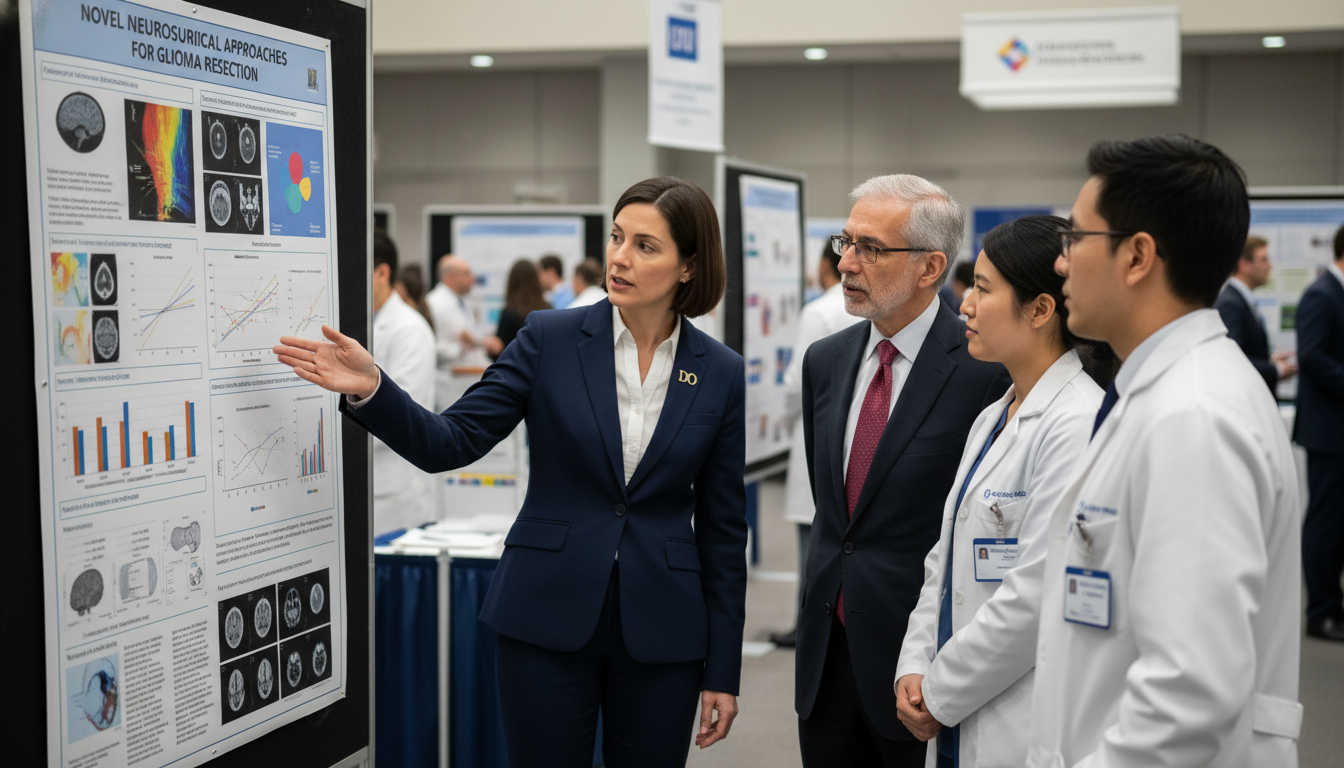
C. Aim for conferences and presentations
Publications are critical, but presentations also matter:
- Local and regional research days
- National neurosurgery meetings (AANS, CNS, NANS, SNS, section meetings)
- Specialty-focused meetings (tumor, spine, pediatrics, vascular)
Benefits:
- Strengthen your CV under “Presentations”
- Provide talking points and stories during interviews
- Offer networking opportunities with neurosurgery attendings and residents
Whenever possible:
- Volunteer to be the presenting author
- Practice explaining your research briefly in lay terms and in technical depth
(Interviewers will often say: “Tell me about this paper you did on [topic].”)
Step 5: Crafting a Coherent Neurosurgery Research Narrative for the Match
Your research portfolio should tell a story, not just list disconnected activities. This is especially important as a DO graduate aiming for neurosurgery, where programs may wonder how well prepared and committed you are.
A. Align your research with your neurosurgery/brain surgery residency goals
When programs ask about your research, they are ultimately asking:
- “Does this person think like a neurosurgeon?”
- “Will they contribute to our department’s academic mission?”
Make clear connections:
- “My retrospective study on TBI outcomes taught me how nuanced neurosurgical decision-making is in the ICU.”
- “Working on a spine surgery registry showed me how small variations in technique can affect postoperative function.”
B. Use your personal statement to integrate research and clinical motivation
Instead of just listing projects, explain:
- Why you pursued your research themes
- What clinical questions drove you
- How research experiences confirmed and deepened your desire for neurosurgery
Example:
“As a DO student at a school without a home neurosurgery program, I sought out brain tumor and spine surgery projects at outside institutions. These experiences not only taught me how to ask and answer clinical questions but also solidified my conviction that I want a career at the intersection of operative neurosurgery and clinical outcomes research.”
C. Be prepared to defend and discuss your work in interviews
For each major project on your CV, know:
- The core research question and hypothesis
- The methods (in plain and technical terms)
- The main results and their implications
- One or two limitations of the study and how you’d address them in future work
If you were not deeply involved in methods or analysis, be honest:
- Explain your specific role
- Show that you made an effort to understand the bigger picture
Programs don’t expect you to be a statistician—they expect you to be honest, teachable, and intellectually engaged.
Step 6: Special Considerations for DO Graduates Targeting Neurosurgery
A. Overcoming osteopathic bias with your research profile
While bias has improved over time, some neurosurgery programs may still be less familiar with DO training pathways. A strong research portfolio helps you:
- Demonstrate that you are competitive on the same playing field as MD peers
- Anchor your application in objective academic achievements
Maximize this effect by:
- Publishing in neurosurgery-specific or high-visibility journals when possible
- Presenting at national neurosurgery meetings
- Collaborating with well-known neurosurgery faculty who can advocate for you
B. Using a research year strategically
A dedicated research year can be high-yield for DO graduates, especially if:
- You have fewer than ~2 neurosurgery-related publications by late MS3 / early MS4
- Your board scores or clinical evaluations are solid but not top-tier
- You lack a home neurosurgery program or strong neurosurgical mentors
During a research year, aim to:
- Join multiple active projects at once (5–8+) so that at least several reach publication
- Gain at least 3–5 substantial new entries (publications, high-level presentations)
- Obtain one or more neurosurgeon letters who can specifically vouch for your research work ethic and intellectual growth
C. Maintaining osteopathic identity while meeting neurosurgery expectations
Embrace your DO background as an asset, not a liability:
- Highlight how osteopathic training in holistic care and musculoskeletal understanding complements neurosurgery (especially spine).
- Show that you can merge an osteopathic philosophy with rigorous, data-driven research.
In interviews, you might say:
“My DO training has helped me think about the patient as a whole system, not just a scan or a lesion. Research allows me to connect that holistic mindset with evidence-based neurosurgical decision-making.”
Putting It All Together: A Sample Roadmap
Here’s an example of a structured research plan for a DO graduate aiming for neurosurgery:
OMS-1 to OMS-2
- Join 1–2 projects (case reports or retrospective studies) with neurology or spine surgery faculty
- Learn basic research methods, IRB processes, and manuscript structure
- Aim for your first abstract or poster
OMS-3
- During neurology/neurosurgery rotations, identify 1–2 unique cases for case reports
- Seek remote collaboration with neurosurgery departments at academic centers
- Target 1–2 publications by end of MS3, ideally neurosurgery-related
Dedicated research year (optional but powerful)
- Move to (or remotely integrate with) an academic neurosurgery department
- Simultaneously join multiple clinical projects (TBI, tumor outcomes, spine registry, vascular series)
- Aim for 3–5+ new manuscripts submitted or accepted, plus several conference presentations
OMS-4 / DO graduate applying
- Present at neurosurgery meetings where possible
- Tailor personal statement to connect research themes with career goals
- Highlight neurosurgery mentors and research in ERAS and during interviews
This kind of trajectory signals to programs that you’re not just interested in neurosurgery—you’re already functioning as a junior academic neurosurgeon in training.
FAQs: Research Profile Building for DO Neurosurgery Applicants
1. I’m a DO with no publications yet. Is neurosurgery still possible?
It’s more challenging, but not impossible. You’ll likely need to:
- Rapidly get involved in high-yield projects (case reports, retrospective studies)
- Strongly consider a dedicated research year in neurosurgery
- Maximize away rotations and neurosurgery mentorship
Your priority is to create at least a small but coherent set of neurosurgery-related publications and presentations before applying.
2. Do I need basic science or bench research to match into neurosurgery?
Not necessarily. Many successful applicants focus on:
- Clinical outcomes
- Retrospective cohort studies
- Systematic reviews
- Database research
Basic science can be a bonus, especially if you aim for an academic career or specific fellowships, but high-quality clinical research is equally valuable and often more accessible for a DO graduate.
3. How important is it that my research is specifically in neurosurgery?
Neurosurgery-related work carries extra weight, especially for such a specialized field. However:
- Research in neurology, orthopedics (spine), radiology (neuroimaging), or critical care can still be very helpful if you can articulate how it connects to neurosurgical decision-making.
- Aim for at least a core cluster of projects that clearly relate to neurosurgery or brain surgery residency interests.
4. What if my role on a paper was mostly data collection? Does it still count?
Yes, it still counts—and is common early in training. On your CV, all legitimate co-authorships matter. In interviews:
- Be transparent about your role
- Show that you understand the study question, methods, and results
- Emphasize how the experience helped you develop skills (organization, attention to detail, comfort with clinical data)
Over time, aim to progress to first-author roles where your intellectual contribution and leadership are clearer.
Building a strong research profile as a DO applicant for neurosurgery residency is demanding, but absolutely achievable with strategic planning, persistence, and smart mentorship. Focus on quality, relevance, and narrative coherence, and you can transform research from a stressful checkbox into one of the strongest pillars of your neurosurgery application.