Understanding the Unique Landscape for a DO Graduate in Plastic Surgery
Plastic surgery is among the most competitive specialties, and the integrated plastics match is particularly challenging for DO graduates. While DO applicants have matched successfully into plastic surgery, the bar—especially in terms of research for residency—is high and continues to rise.
For a DO graduate, a strong research profile is not just “nice to have”; it is one of the clearest ways to demonstrate:
- Academic rigor and intellectual curiosity
- Commitment to plastic surgery specifically
- Ability to contribute to the specialty at an academic level
- Competitiveness alongside MD peers, especially from research-intensive institutions
At many integrated plastic surgery programs, especially academic ones, program directors commonly review:
- Number and quality of publications for match
- Plastic-surgery-specific projects and niche focus
- Involvement in multi-institutional research collaboratives
- Consistency of scholarly output over time
This article breaks down, step-by-step, how a DO graduate can strategically build a research profile that will be taken seriously in the osteopathic residency match (and now unified NRMP match) for plastic surgery. We’ll cover timeline, tactics, what kinds of projects to pursue, and how to practically answer the big anxiety-inducing question: “How many publications needed?” in plastic surgery.
Setting Expectations: What Does a Competitive Plastics Research Profile Look Like?
Before planning, you need to understand the target. While exact numbers vary year to year and by program, integrated plastics applicants—especially matched applicants—often have:
- Double-digit total publications, presentations, and abstracts combined
- Multiple first- or second-author papers
- Several plastic-surgery-focused projects
- Evidence of long-term involvement in at least one research group or mentor’s lab
As a DO graduate, you’re often competing with:
- MDs from highly research-heavy schools
- Applicants who took 1–2 research years
- Candidates with basic science or PhD backgrounds
You do not need to match every number from the most extreme applicants—but you do need to show a clear, strong, and focused research narrative.
How Many Publications Are “Enough”?
Programs don’t have a hard cutoff, but you can think in tiers:
Minimal (high risk for plastics match)
- 0–2 publications, limited or no plastics-specific work
- Some posters or oral presentations
- Competitive only at extremely research-light or unique situation programs; likely not enough for integrated plastics
Moderate (borderline for top programs, viable for some)
- ~3–6 peer-reviewed publications
- At least 2–3 clearly plastic-surgery-related projects
- Mix of case reports, retrospective charts, and possibly reviews
- This can work if other aspects (scores, letters, away rotations) are very strong
Strong (in the range for more competitive programs)
- ~7–12+ total publications/abstracts/presentations
- 4–6+ plastic-surgery-specific outputs
- Several first- or second-author projects
- Sustained involvement with at least one plastic surgeon research mentor
Exceptional (for top-tier academic programs)
12–20+ scholarly products (publications, abstracts, presentations)
- Clear plastic surgery research theme or niche (e.g., hand, craniofacial, microsurgery, outcomes)
- Multi-institutional collaborations or national database studies
- Recognitions such as best poster, podium presentations, grants/fellowships
Key point for DO graduates: your goal is not just raw volume, but plastic-surgery-focused productivity with meaningful authorship positions and continuity with certain mentors or topics.

Stepwise Strategy: Building Your Research Profile as a DO Graduate
You may be:
- Still in medical school (pre-DO graduation)
- A recent DO graduate in a preliminary year or gap year
- In another residency considering a switch to plastic surgery
Whatever your stage, the strategy involves four core pillars:
- Find the right mentors and research “home”
- Select feasible, high-yield projects
- Execute efficiently and publish
- Present and network to maximize visibility
1. Finding Plastic Surgery Research Mentors as a DO
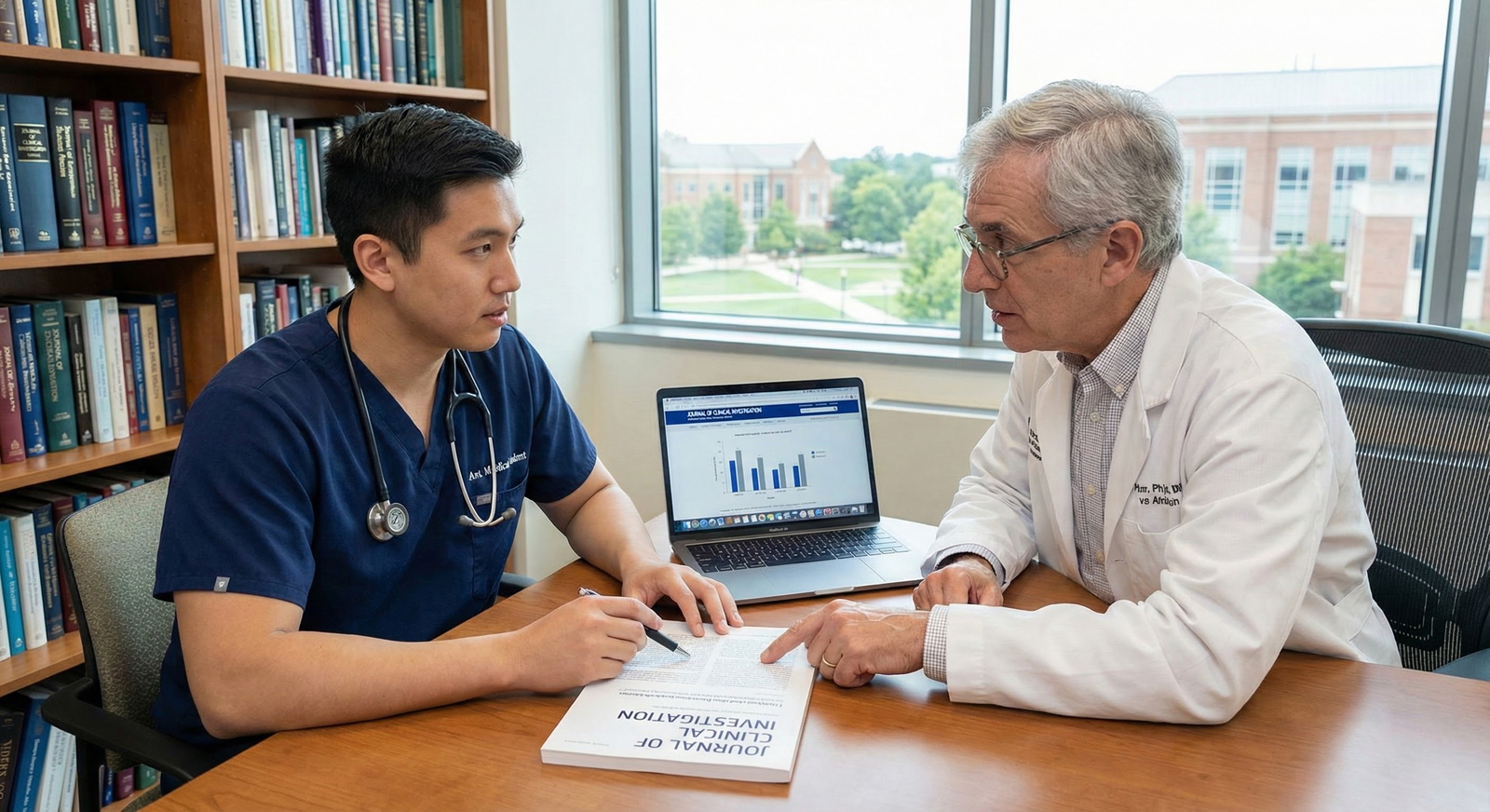
Many DO schools don’t have large plastic surgery departments, so you may need to be proactive and creative.
A. Start Locally (Even if No Plastics Department)
- Identify any surgical faculty with academic interest: general surgery, ENT, orthopedics, hand surgery, burn, wound care. These overlap with plastics.
- Ask directly:
“I’m a DO student/graduated DO doctor strongly interested in plastic surgery. Do you collaborate with any plastic surgeons or have ongoing projects that might intersect with reconstructive or aesthetic surgery topics?” - Work on research that builds your surgical outcomes, anatomy, or wound/trauma research skill set—these are all translatable to plastics.
B. Reach Beyond Your Institution
For integrated plastic surgery, outreach is essential:
- Email plastic surgery faculty at nearby academic centers, especially those known to be DO-friendly or historically open to outside students.
- Contact research-oriented attendings who publish frequently in major plastics journals (PRS, JPRAS, Annals of Plastic Surgery).
- Introduce yourself professionally (concise email, CV attached) and explicitly state:
- You are a DO graduate targeting the integrated plastics match
- You are willing to do chart reviews, data entry, IRB prep, literature reviews, etc.
- You’re committed to seeing projects through to publication
C. Use National Research Collaboratives & Virtual Opportunities
Post-COVID, many research collectives operate remotely:
- Look for multi-institutional plastic surgery outcomes collaborations, student/resident groups, or virtual teams often mentioned on Twitter/X, Instagram, or society websites.
- Join organizations like:
- American Society of Plastic Surgeons (ASPS) – Resident and medical student sections
- American Council of Academic Plastic Surgeons (ACAPS) – Look for mentorship programs
- Attend virtual research meetings/panels and volunteer for subprojects.
Goal: Secure at least 1–2 plastic surgery mentors willing to “vouch” for you and ideally write letters later.
2. Choosing the Right Types of Projects
As a DO graduate, time and access may be more limited. Focus on high-yield, feasible projects that can realistically become publications before or early in your application cycle.
A. Low-Barrier Projects to Get Started
These are good when you have limited time or access:
Case Reports and Case Series
- Single interesting reconstructive case, rare flap complication, or unusual congenital anomaly.
- Faster turnaround but lower impact; still useful to show early productivity.
- Ideal when you can attach yourself to surgeons’ interesting cases.
Narrative or Systematic Reviews
- Topic examples:
- “Outcomes of autologous fat grafting in craniofacial reconstruction in pediatric patients”
- “Trends in microsurgical breast reconstruction in obese patients”
- Good to demonstrate depth in a niche and comfort with literature.
- Topic examples:
Retrospective Chart Reviews
- Workhorses of clinical research; often valued by programs.
- Examples:
- Infection rates after certain flap procedures
- Comparison of wound closure techniques in trauma patients
- Typically require IRB and institutional data access but are very publishable.
B. Higher-Yield, Higher-Impact Projects (If Time Allows)
Prospective Cohort or Quality Improvement (QI) Studies
- Example: Implementation of an enhanced recovery after surgery (ERAS) pathway in breast reconstruction patients.
- These projects show sophistication and initiative.
National Database/Big Data Projects
- NSQIP, NIS, MarketScan, Kid’s Inpatient Database (KID), or others accessible via mentors.
- High impact; more likely to be accepted at major meetings and journals.
- Great for producing multiple related manuscripts.
Basic Science/Translational Projects
- Wound healing, tissue engineering, nerve regeneration, biomaterials for reconstruction.
- Harder to initiate from scratch as a DO grad but very impressive if you plug into an existing lab.
C. Balancing Quantity and Depth
You don’t need every project to be a “blockbuster.” Think portfolio:
- 1–2 higher-impact, more complex projects
- Several mid-level retrospective or database projects
- A few case reports/series + review articles early in your trajectory
You want your CV to tell a coherent story:
“This DO applicant has consistently contributed to plastic surgery research, understands outcomes and patient care issues, and shows academic curiosity in a defined niche.”

Executing Projects Efficiently: Turning Work into Publications
The most common failure mode is starting projects that never get completed. As a DO graduate aiming for plastic surgery, you simply can’t afford that. You must be reliable, fast, and persistent.
1. Clarify Roles and Authorship Expectations Early
When you join a project:
- Ask:
- “What’s the timeline for this project?”
- “What tasks will I own?”
- “If I complete X, Y, and Z, would I be considered for first or second authorship?”
- Be explicit but professional; mentors often appreciate clarity.
For DO graduates, first- or second-author roles are particularly valuable to show you’re not just a peripheral helper.
2. Develop Concrete Skills to Add Value
To become indispensable on research teams, build specific skills:
- Data skills:
- Learn Excel thoroughly (pivot tables, cleaning, basic formulas).
- Gain at least basic familiarity with R, SPSS, or Stata for statistical analysis.
- IRB & regulatory skills:
- Read sample IRBs; offer to draft applications or amendments.
- Literature search & synthesis:
- Use PubMed with advanced queries, citation managers (Zotero, EndNote), and structured note-taking.
The more technically useful you are, the more mentors will keep giving you new opportunities.
3. Work Backwards from the Application Timeline
For the integrated plastics match, you want:
- Several accepted or published papers before ERAS submission
- Manuscripts under review or in revision that can be listed as “submitted” or “provisionally accepted”
Typical lead times:
- Case report: 2–6 months from drafting to potential acceptance
- Retrospective chart review: 6–18 months from IRB to publication
- Database or prospective study: 12–24+ months
If you are 1–2 years from applying, plan with this in mind. A dedicated research year can be highly valuable for a DO graduate to accelerate this timeline.
4. Maintain a Research Tracker
Keep an organized spreadsheet or document with:
- Project title and type (case, review, database, etc.)
- Mentors and co-authors
- Your role and current tasks
- Status (Idea → IRB → Data collection → Analysis → Draft → Submitted → Accepted)
- Target journals and conferences
Update weekly. This prevents projects from dying quietly and allows you to follow up with mentors at appropriate intervals.
Added Challenges and Strategic Advantages for DO Graduates
Being a DO graduate in the plastic surgery residency pipeline has real challenges—but also unique opportunities to differentiate yourself.
Common Challenges
Limited Home Program Access
- Many DO schools lack integrated plastics or even robust plastic surgery departments.
- Fewer built-in research mentors and fewer natural case opportunities.
Perception Bias
- Some programs still have limited exposure to DO trainees.
- You must work harder to show that your training and academic capabilities match or exceed expectations.
Fewer Built-In Research Pathways
- MD institutions often have established research tracks, funding, and infrastructure that DO programs may not.
Strategic Advantages You Can Leverage
Narrative of Resilience and Initiative
- When you produce a strong research portfolio despite limited initial resources, that tells a compelling story.
- You can credibly say: “I built this myself through initiative, networking, and persistence.”
Flexibility to Take a Research Year
- Many DO graduates can more readily step into a dedicated research year post-graduation or after an intern year.
- This can be framed as a deliberate choice to prepare for a highly academic specialty.
Interdisciplinary Background
- DO training’s holistic emphasis and exposure to a variety of patient populations can translate well into patient-reported outcomes, quality-of-life research, and holistic reconstructive care studies.
Maximizing Visibility: Presentations, Networking, and Telling Your Story
Strong research isn’t just about numbers. You need to show it off well and convert it into relationships and interview invitations.
1. Present Early and Often
Submit abstracts to:
- Regional and national plastic surgery meetings (ASPS, ACAPS, subspecialty societies)
- General surgical meetings if plastics meetings are out of reach
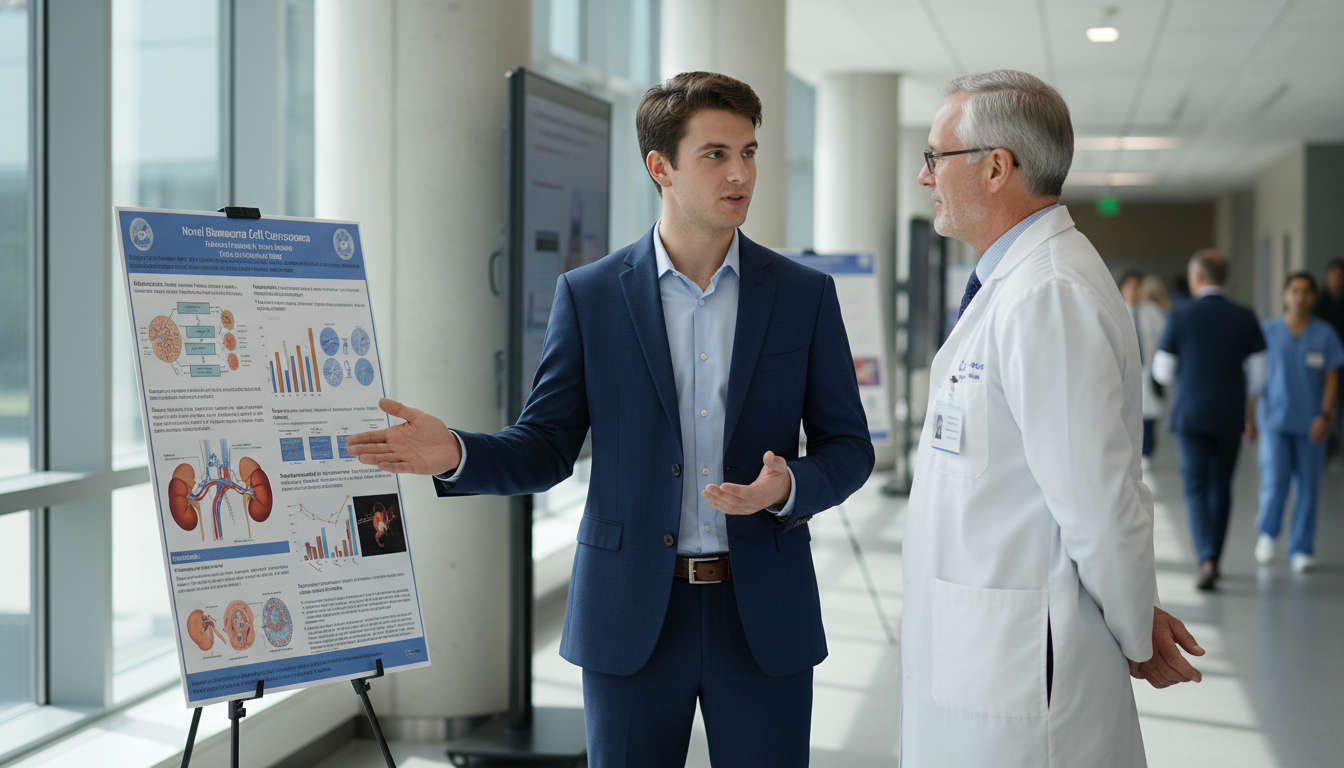
Even if you’re not first author, oral and poster presentations count strongly in the eyes of program directors. They also give you talking points for interviews.
2. Use Social Media and Academic Platforms Strategically
Consider:
- Creating a professional X (Twitter) account focusing on plastic surgery education and research
- Sharing when your papers are accepted (tag co-authors and institutions)
- Following plastic surgeons, programs, and societies—comment on discussions in a thoughtful, non-sycophantic way
Also maintain:
- An updated Google Scholar profile (when you have at least a few publications)
- A professional LinkedIn outlining your research roles and outputs
3. Integrate Research into Your Personal Statement and Interviews
Don’t just list projects; synthesize them.
In your personal statement, you might:
- Describe a core research theme you’ve developed (e.g., “My research has focused on improving functional outcomes in hand and microsurgery in trauma patients.”)
- Tie your research to your motivation to pursue plastic surgery (e.g., seeing how reconstructive options can restore both form and function).
In interviews, be prepared to:
- Explain the hypothesis, methods, and your role in your major projects
- Discuss limitations and what you learned about research design
- Show humility (e.g., what you’d do differently next time) while still projecting competence
Your goal is to convey that you are not just checking a “research box,” but that you think deeply about science and its application to patient care.
Putting It Together: Example Pathways for a DO Graduate
Example 1: DO Student with No Home Plastics Program, 2 Years Pre-Match
Year -2 to -1 (MS2–MS3):
- Join general surgery outcomes projects at your DO institution (1–2 manuscripts, 2 posters).
- Cold email nearby academic plastic surgeons and secure 1 ongoing retrospective chart review + 1 case series.
- Attend 1 national meeting virtually, present a poster.
Year -1 to Application:
- Focus on completing manuscripts for plastics-specific projects (aim for 3–4 plastics-related publications or abstracts).
- Add a narrative review with your mentor on a plastic surgery topic.
- By ERAS submission: total 5–7 publications/abstracts, with 3+ in plastics.
Example 2: DO Graduate Taking a Dedicated Research Year Pre-Application
Research Year (after graduation or between years):
- Join a major academic plastic surgery lab or research group.
- Take ownership of:
- 1 national database project (primary author)
- 1 retrospective outcomes study (co-first or second author)
- 1–2 case reports and a review article
- Attend 1–2 conferences with podium or poster presentations.
By Application:
- ~8–12 total scholarly outputs, including high-yield plastics-specific work.
- Strong letters from academic plastic surgeons describing you as integral to their research team.
FAQs: Research Profile Building for DO Graduates in Plastic Surgery
1. As a DO graduate, can I realistically match into an integrated plastic surgery residency?
Yes, it is realistic—but it is very competitive, and your research profile will be scrutinized closely. A strong record of plastic-surgery-focused research, coupled with high board scores, strong away rotations, and excellent letters of recommendation, can put you in serious contention. Many successful DO applicants have taken a dedicated research year to build the kind of profile that compares well to MD applicants.
2. How many publications do I actually need to be competitive?
There is no official cutoff, but for an integrated plastics match, aim for:
- Floor: At least 3–6 peer-reviewed publications with some plastics-specific content
- More competitive range: 7–12+ total publications/abstracts/presentations, with multiple plastic-surgery projects and some first/second authorships
Remember, quality and relevance to plastic surgery matter as much as raw numbers. Program directors look at your entire trajectory, not just a single metric.
3. What if my early research is not in plastic surgery?
Non-plastic-surgery research still helps. It shows:
- You can work in a team and complete projects
- You understand basic research methods and ethics
- You have academic curiosity
However, by the time you apply, you should transition your focus so that a significant portion of your work is plastic-surgery-related. At least a few plastics-specific papers, case reports, or reviews are strongly recommended to show genuine specialty commitment.
4. Is a dedicated research year necessary for a DO graduate targeting plastics?
Not strictly required, but often highly beneficial. A research year can:
- Provide protected time to generate multiple publications for match
- Allow you to embed in a high-volume academic plastic surgery environment
- Lead to strong, personalized letters from respected mentors
For DO graduates, especially those without a strong home plastics department, a well-planned research year can be a major equalizer in the osteopathic residency match for plastic surgery.
By deliberately building a robust, plastic-surgery-focused research portfolio—grounded in meaningful mentorship, well-chosen projects, and consistent execution—you can transform your application from a DO “long shot” into a credible, competitive candidate in the integrated plastics match.