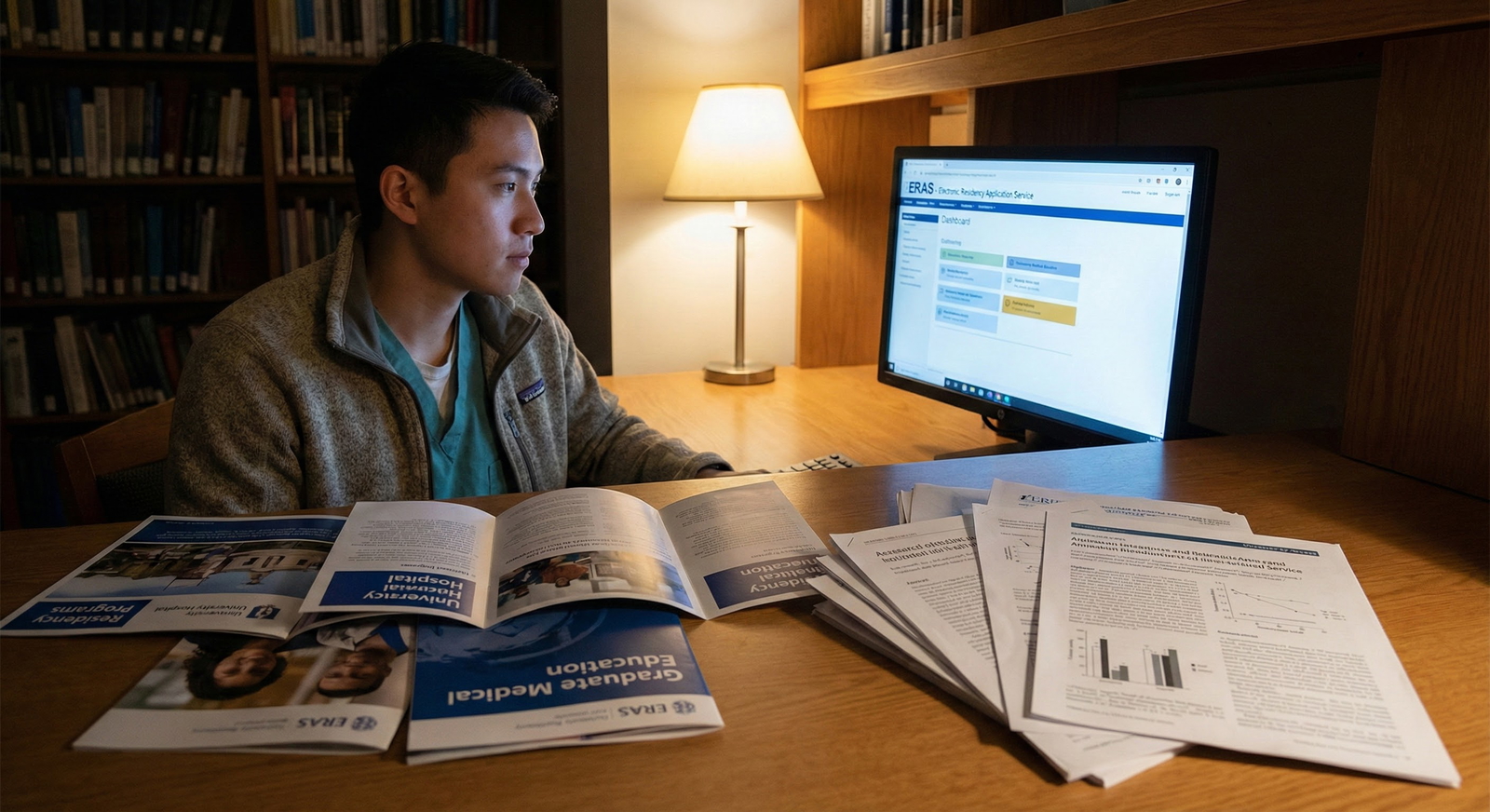
Understanding the Role of Research for a DO Applying to Med-Peds
For a DO graduate targeting a Medicine-Pediatrics (Med-Peds) residency, building a strong research profile is one of the most strategic ways to distinguish yourself in an increasingly competitive match. While Med-Peds programs value clinical performance, professionalism, and strong board scores, they also pay close attention to your academic potential—especially at university-based or research-heavy programs.
Because DO students have historically had variable access to research infrastructure, many osteopathic graduates wonder:
- Where do I even start with research for residency?
- How many publications are needed for a competitive medicine pediatrics match?
- Do Med-Peds programs care about osteopathic vs. allopathic research experiences?
- How do I catch up if I didn’t do much research in the first two years?
This guide is designed specifically for the DO graduate interested in Med-Peds, with a focus on practical, step-by-step strategies to build and present a strong research profile that programs will value.
What Med-Peds Programs Look for in a Research Profile
Before diving into how to build your research profile, you need to understand what Med-Peds program directors actually care about.
1. Evidence of Curiosity and Academic Growth
Med-Peds sits at the intersection of Internal Medicine and Pediatrics. Programs like residents who:
- Ask thoughtful clinical questions
- Can appraise evidence and guidelines
- Are open to quality improvement (QI) and systems-based projects
- Show capacity to grow into educators, leaders, or academic clinicians
Research on your application is a proxy for curiosity, discipline, and follow-through—not just a publication count.
2. Types of Research That “Count”
For a DO graduate residency application in Med-Peds, a broad range of scholarly work is valued:
- Clinical research: Retrospective chart reviews, cohort studies, case series
- Case reports & case series: Especially for unusual presentations or high-yield teaching cases
- Quality improvement (QI) projects: Common in pediatrics and inpatient medicine
- Educational research: Curriculum development, evaluation, or teaching interventions
- Health services research: Outcomes, disparities, systems of care—very relevant to Med-Peds
- Public health and community-based projects: Especially around childhood chronic disease transition to adult care
Program directors know DO students may have fewer institutional research resources than MD counterparts. They often interpret any sustained scholarly work as a positive, especially if it is relevant to medicine, pediatrics, or Med-Peds-style patient populations (e.g., adolescents, young adults with chronic pediatric-onset conditions).
3. The Reality of “How Many Publications Needed”
There is no universal number, but patterns are clear:
- Community and smaller hybrid programs:
- Often satisfied with 1–2 solid scholarly experiences (even without PubMed-indexed publications), especially QI or case reports.
- Academic or research-heavy Med-Peds programs:
- Typically like to see some evidence of productivity:
- 1–3 publications, abstracts, or posters, or
- Ongoing involvement in a meaningful project, even if not yet published.
- Typically like to see some evidence of productivity:
In practice for DO graduates:
- Having 0 research experiences can be a disadvantage at competitive academic programs.
- Having 1–2 meaningful projects (case report + QI project, or QI + clinical research) with a clear narrative is often enough for most programs, especially combined with strong clinical evaluations and letters.
- Having 3+ items (e.g., posters, abstracts, manuscripts) clearly related to internal medicine, pediatrics, or Med-Peds can help you stand out at top-tier academic centers.
Rather than fixating purely on how many publications are needed, focus on building a coherent, believable scholarly story that aligns with your Med-Peds goals.
Getting Started: Laying the Foundation as a DO Graduate
If you are a DO graduate (or nearing graduation), you may not have had robust research infrastructure during med school. You can still build a strong research profile with intentional planning.

Step 1: Clarify Your Med-Peds Research Angle
Med-Peds is broad—but your research does not have to cover everything. Instead, pick 1–3 overlapping interest areas where you could realistically contribute:
Examples:
- Chronic disease across the lifespan (e.g., diabetes, cystic fibrosis, sickle cell disease)
- Transition of care from pediatric to adult services
- Complex care, medically fragile children, or young adults with childhood-onset conditions
- Preventive care and health equity in underserved populations
- Hospital medicine (peds and adult) and QI (reducing readmissions, sepsis bundles, vaccination rates)
- Adolescent medicine, substance use, or mental health in youth
You do not need a perfectly defined niche as a student or graduate. What matters is that you can speak credibly about why these themes draw you to Med-Peds and how your research reflects that interest.
Step 2: Audit Your Current CV
Before launching into new projects, examine what you already have:
- Any previous:
- Case reports
- Posters or oral presentations
- QI projects from rotations
- Community outreach projects with measurable outcomes
- Educational sessions you helped develop or evaluate
Ask:
- Can any of these be turned into a poster or manuscript?
- Are any of them clearly relevant to Med-Peds, internal medicine, or pediatrics?
- Is there incomplete work that could be revived with a faculty mentor?
You may already have more “research for residency” material than you think—just not fully polished or documented.
Step 3: Identify Mentors – Especially Med-Peds Faculty
Your most important move is finding a mentor who:
- Understands the medicine pediatrics match
- Appreciates the DO graduate residency pathway
- Actively supports research, QI, or scholarly work
Ideal mentors might be:
- Med-Peds faculty at an affiliated or nearby academic medical center
- Internal medicine or pediatrics faculty with strong interest in transition care, chronic illness, or hospital medicine
- Program directors or associate PDs for Med-Peds who can advise on both research and overall competitiveness
Tactics to find mentors:
- Email Med-Peds program coordinators or PDs at nearby institutions, introducing yourself as a DO graduate interested in their field and asking if any faculty are open to mentoring short-term research or QI projects.
- Ask on your clinical rotations: “Is there anyone in Med-Peds or peds/adult hospital medicine doing QI or educational projects who might need help?”
- Attend local or virtual Med-Peds grand rounds or conferences and follow up with speakers who align with your interests.
When you approach them:
- Be specific: “I’m a DO graduate applying to Med-Peds next year. I would like to build my research profile and am particularly interested in [area]. I’m looking for a project I can meaningfully contribute to over the next [X] months, and I’m ready to do the legwork.”
Practical Research Pathways for DO Graduates Targeting Med-Peds
Different applicants have different timelines and resources. Below are realistic pathways designed for osteopathic graduates, ranked from fastest to most long-term impact.
1. Case Reports and Case Series (Fastest On-Ramp)
Case reports are often the easiest entry point and very realistic even for DO graduates without prior research.
How to do it:
- Identify an unusual, educational, or high-impact case:
- Rare disease or rare presentation of a common disease
- Diagnostic dilemma
- Management challenge at the intersection of medicine and pediatrics (e.g., congenital disease in adulthood)
- Ask the attending (ideally Med-Peds, IM, or Peds) if they’d support a case report.
- Perform a literature review and outline the case using a journal’s template.
- Aim first for:
- Specialty journals (Med-Peds, internal medicine, pediatrics, hospital medicine)
- DO or osteopathic journals
- Open-access journals with reasonable acceptance rates
Even if not yet accepted for publication by the time you apply, you can list the case report as “submitted” or “in preparation” if it is substantially developed and your mentor agrees.
Impact:
- Demonstrates you can carry a small project to completion
- Perfectly acceptable as part of your “publications for match” portfolio
- Gives you something concrete to discuss on interviews
2. Quality Improvement (QI) Projects (High-Yield for Med-Peds)
QI is central to both internal medicine and pediatrics. It’s often more accessible than full-scale clinical research and very attractive to Med-Peds programs.
Common Med-Peds-relevant QI examples:
- Increasing adolescent vaccination rates in a primary care clinic
- Improving transition handoffs for patients moving from pediatric to adult care
- Reducing 30-day readmissions for pediatric patients with chronic conditions
- Standardizing asthma care or sepsis protocols across pediatric and adult units
Steps:
- Join an existing QI project at your institution or rotation site.
- Help with data collection, chart review, or developing PDSA (Plan-Do-Study-Act) cycles.
- Aim for at least:
- A local poster presentation (hospital QI day, institutional research day), or
- A regional or national meeting (e.g., ACP, PAS, AAP, SGIM, Med-Peds-specific conferences).
QI counts strongly as research for residency and is especially appealing to Med-Peds programs because it shows that you understand systems of care.
3. Retrospective Chart Review or Clinical Research (Moderate to High Effort)
DO graduates sometimes assume they can’t get involved in “real research” because they’re not at a big academic center. However, retrospective studies are often very feasible if you partner with a motivated faculty member.
Ideas:
- Outcomes of young adults with sickle cell disease transitioning to adult inpatient services
- Patterns of hospital readmissions for adolescents with type 1 diabetes
- Risk factors for frequent ED use among children and young adults with chronic disease
- Adult outcomes of congenital heart disease patients in an internal medicine setting
Key steps:
- Find a mentor with IRB-approved or proposed projects.
- Offer to help with:
- Data extraction from EMR
- Data cleaning and preliminary analyses (even descriptive stats are useful)
- Drafting sections of an abstract or manuscript
Aim to produce at least a poster or abstract before the match cycle. Even if the full paper is not yet published, having something accepted at a conference is highly valuable.
4. Educational or Curriculum Projects (Great for Future Academic Med-Peds)
If you like teaching, educational research can align perfectly with Med-Peds, where many physicians become clinician-educators.
Ideas:
- Designing a teaching module on transitioning care from pediatric to adult clinics
- Creating a simulation for adolescent medicine or complex care scenarios
- Evaluating a new pediatric-to-adult handoff curriculum for residents or students
These can lead to:
- Abstracts at education-focused conferences (e.g., COM education symposiums, Med-Peds conferences, institutional education days)
- Manuscripts in medical education journals
Building and Showcasing a Coherent Research Story
Having scattered research lines is less effective than a coherent narrative, especially for the medicine pediatrics match.

1. Connect Your Projects to Med-Peds in Your Narrative
In your personal statement and interviews, frame your research as part of your journey toward Med-Peds:
Example narrative:
- “My interest in Med-Peds grew as I worked on a QI project to improve transition care for adolescents with type 1 diabetes. This experience highlighted how vulnerable patients can be when systems fail at the pediatric–adult interface. It fueled my desire to train in a field that owns that transition and optimizes care across the lifespan.”
Tie every major project to:
- A skill you developed (critical thinking, data analysis, teamwork, teaching)
- A perspective you gained about Med-Peds populations
- A reason you’re committed to Med-Peds training and future career goals
2. Prioritize Quality Over Sheer Quantity
Program directors can detect “box-checking” research. They prefer:
- 1–3 well-understood projects where you can clearly explain:
- Your role
- The question/hypothesis
- The methods in plain language
- The results and implications
…over 7–10 superficial listings where your contribution was minimal.
If asked, you should be able to discuss:
- Why the topic matters to Med-Peds
- What surprised you in the data or the process
- How it changed your clinical thinking
3. Be Honest About Your Role
As a DO graduate, you might feel pressure to inflate your contributions to look more competitive for the osteopathic residency match or allopathic match. Avoid that. Program directors value honesty:
- If you mainly collected data, say so—and highlight what you learned from it.
- If you were second or third author, that’s still meaningful.
- If a project is “in progress,” be clear about its stage (data collection, analysis, manuscript drafting, under review).
Misrepresenting authorship or contributions is a red flag that can seriously damage your application.
4. Use ERAS Strategically
In ERAS:
- List posters, abstracts, and publications clearly under “Publications/Presentations.”
- Use “Accepted,” “Submitted,” or “In Preparation” accurately.
- For each project, add a concise description that highlights relevance to Med-Peds when appropriate.
Also:
- Consider asking a research mentor to mention your work in their letter of recommendation, especially your initiative, reliability, and potential as a future academic Med-Peds physician.
Timelines and Strategy: When You’re Late vs. Early
Your position in relation to the match cycle changes what is realistic.
If You Are 12–18 Months Before Applying
This is ideal for substantial projects.
Focus on:
- Joining or starting a retrospective chart review or clinical study
- Running at least one QI or educational project from planning to data analysis
- Submitting at least one abstract/poster and aiming for one manuscript (case report or study)
Goal:
- Enter application season with:
- 1–2 posters or published abstracts
- 1 submitted or in-press manuscript
- A clear narrative around your Med-Peds focus
If You Are 6–12 Months Before Applying
You have time for shorter or accelerated projects.
Focus on:
- Case reports you can draft and submit within weeks to a few months
- QI projects with short PDSA cycles where you can at least analyze initial data and present locally
- Joining ongoing research where you can quickly contribute and be added to a poster or abstract
Goal:
- Have at least:
- 1–2 tangible scholarly outputs (poster, abstract, submitted case report)
- Evidence of ongoing involvement in a longer-term project
If You Are <6 Months Before Applying
You must be very realistic and focused.
Strategies:
- Lean heavily on case reports and “in-progress” QI or educational projects
- Try to secure:
- A submitted case report (even if not yet accepted)
- A local poster presentation or abstract submission
Also:
- Ask mentors to emphasize your scholarly potential and enthusiasm in letters
- Use your personal statement and interviews to tie your limited but sincere research work into your Med-Peds journey
Even with limited time, it’s far better to have one honest, meaningful effort than to leave your application without any scholarly engagement.
Special Considerations for DO Graduates in the Medicine Pediatrics Match
1. Addressing Osteopathic Bias Through Scholarship
Some academic programs may still have unconscious bias about DO vs. MD training. A solid research profile can:
- Signal that you can thrive in academic environments
- Show that any differences in school resources did not limit your initiative
- Reassure PDs that you are prepared for evidence-based practice and scholarly activity
If you have osteopathic-focused research (e.g., OMT-related), that is fine to include. Just make sure some portion of your research portfolio clearly connects to adult and pediatric medicine or Med-Peds populations.
2. Leveraging Osteopathic Networks
Use DO-specific resources:
- Osteopathic specialty societies (e.g., ACOI, AOA, pediatric and internal medicine DO organizations) may have student sections or calls for abstracts.
- Many osteopathic hospitals and COMs host research or QI days where you can present work.
- DO mentors in internal medicine or pediatrics may collaborate with MD/Med-Peds colleagues on mixed teams—great for you to join.
3. Post-Graduate or Gap Year Options
If you’ve already graduated and your Med-Peds application is weak on research but strong in other areas, you may consider:
- A research year with a Med-Peds or IM/Peds department
- A chief resident year or preliminary year with structured QI involvement, if you have already matched into a different program and are contemplating Med-Peds later
- A clinical research coordinator role at a Med-Peds-heavy academic center, while securing strong letters from faculty
These paths require careful planning but can substantially elevate your application for a future match cycle.
FAQs: Research Profile Building for DO Med-Peds Applicants
1. How many publications are needed to be competitive for a Med-Peds residency as a DO?
There is no fixed number, but for most DO applicants:
- 1–2 meaningful scholarly activities (case report, QI project, poster, or clinical research) are sufficient for many community and mid-tier academic programs.
- 2–4 total items (mix of posters, abstracts, and at least one manuscript submitted or published) strengthen your position at more research-intensive, university-based Med-Peds programs.
Quality, relevance to Med-Peds, and your understanding of the work matter more than raw counts.
2. Does it matter if my research is not specifically labeled “Med-Peds”?
Not strictly. What matters is that you can connect it to Med-Peds populations or principles. For example:
- An adult hospital medicine QI project: Relate it to how you’ll apply similar principles to pediatric inpatients.
- A pediatric asthma project: Discuss how those skills translate to managing asthma across the lifespan.
Purely unrelated research (e.g., basic science in an unrelated field) is still valuable but should be framed as demonstrating your discipline, curiosity, and scientific literacy.
3. I have zero research experience. Is it too late to match into Med-Peds?
Not necessarily. Many successful Med-Peds residents matched with little or no traditional research, especially into community or smaller academic programs. However:
- Even one case report or small QI project can significantly improve your application.
- Focus on what is realistic in your remaining time and show genuine engagement and follow-through.
- Strengthen other parts of your application: strong COMLEX/USMLE scores, excellent clinical evaluations and letters, and a compelling personal statement.
4. How do I talk about my role in research during interviews?
Use a simple framework:
- Context: “Our project focused on improving vaccination rates in adolescents at a community clinic.”
- Your Role: “I helped design the data collection form, extracted chart data, and co-led a PDSA cycle.”
- Skills Learned: “I learned how to work with EMR data and interpret run charts, and I gained insight into system barriers.”
- Relevance to Med-Peds: “This reinforced my interest in Med-Peds because it showed me how vulnerable adolescents are during transition and how system-level changes can improve outcomes.”
Be honest, concise, and reflective about both what you contributed and what you learned.
By approaching research with clear goals, honest self-assessment, and targeted mentorship, a DO graduate can absolutely build a strong, credible research profile that supports a successful medicine pediatrics match. Focus less on perfectly matching some imagined research gold standard and more on demonstrating curiosity, reliability, and a Med-Peds-oriented academic mindset—those are the qualities programs are truly seeking.