Understanding Your Research Profile as a DO Applying to Preliminary Medicine
As a DO graduate targeting a Preliminary Medicine (prelim IM) year, you’re in a unique position. You need a strong application to secure a solid prelim spot, but you’re also thinking ahead to your advanced specialty (e.g., neurology, radiology, anesthesiology, PM&R, dermatology, etc.). Your research profile has to serve both goals.
Before you worry about how many publications needed or what counts as “real” research for residency, it helps to understand where research fits in for:
- Preliminary Medicine programs (often less research-focused, more service-heavy)
- Your future categorical/advanced specialty (which may be highly research-sensitive)
How programs view DO graduates and research
For a DO graduate residency applicant in Preliminary Medicine, research is rarely the single deciding factor. Programs look at:
- COMLEX/USMLE scores
- Clinical performance (MSPE, clerkship evaluations)
- Letters of recommendation (especially IM or specialty-specific)
- Professionalism and teamwork
- Evidence of interest in internal medicine or your intended specialty
- Research and scholarly activity
Because DO schools historically offered fewer research opportunities than some MD institutions, many PDs calibrate expectations accordingly. Still, robust research can:
- Differentiate you from other DO applicants
- Offset marginal test scores (to a limited degree)
- Signal commitment to an academic or subspecialty career
- Help you match later into a competitive categorical or advanced program
Think of your research profile as a narrative of curiosity, follow-through, and specialty interest, not just a list of PubMed IDs.
Clarifying Goals: Prelim IM vs Long-Term Specialty
Your first step in research profile building is to define why you’re doing research.
1. Research to strengthen your Preliminary Medicine application
Most pure Preliminary Medicine positions (non-transition year, non-advanced combined) are:
- Service-heavy
- Focused on clinical productivity and reliability
- Often less research-driven than categorical IM or subspecialties
For these prelim IM spots, research is helpful but not mandatory. It can:
- Demonstrate professionalism and persistence
- Show you can complete long-term projects
- Serve as a tiebreaker between similarly qualified candidates
But lack of research alone will rarely sink a prelim IM application if the rest of your file is solid.
2. Research to support your advanced / categorical specialty
This is where research becomes more strategic. Many DO graduates use a preliminary medicine year as a bridge to:
- Neurology
- Radiology or Interventional Radiology
- Anesthesiology
- Ophthalmology
- Dermatology
- PM&R
- Radiation Oncology
- Transitional Year + advanced specialty
For these fields, programs often care about:
- Specialty-aligned research (e.g., neurology-related research for a neuro applicant)
- Evidence of academic curiosity
- Ability to contribute to scholarly work during residency
Your osteopathic residency match trajectory might depend more on research when you aim for:
- Competitive specialties (derm, rad onc, IR, some anesthesiology programs)
- Academic medical centers
- Fellowship-heavy departments
If that’s you, think of your Preliminary Medicine year as a runway to accelerate your research output.

How Many Publications Do You “Need”? Understanding Expectations and Benchmarks
Applicants obsess over numbers, especially how many publications needed to be competitive. The honest answer: it depends.
1. General benchmarks and reality checks
For a DO graduate targeting Preliminary Medicine with a modest research emphasis:
- 0–1 publications: Often acceptable, especially if other application elements are strong.
- 1–3 publications or abstracts/posters: Very respectable and can positively distinguish you.
- 3+ scholarly products (mix of papers, posters, case reports): Strong for prelim IM and helpful for advanced specialties.
For advanced/categorical specialties (approximate, not hard cutoffs and variable by program):
- Moderately competitive fields (neurology, PM&R, anesthesiology, some radiology):
- 1–4 total scholarly items (case reports, posters, small studies) can be sufficient.
- Highly competitive fields (dermatology, some radiology, IR, radiation oncology):
- Many successful applicants have 5–10+ items, often including at least a few PubMed-indexed articles.
As a DO, you’re not “required” to hit these numbers, but more well-done, specialty-relevant work helps. Program directors care more about:
- Quality and relevance (Was it in your intended specialty? Did you have a real role?)
- Trajectory (Are you steadily productive, or just one random item from early med school?)
- Ownership (Can you discuss the project deeply at interview?)
2. Types of scholarly work that count
If you’re behind on research, you may not have time for a large RCT. Focus on achievable, high-yield scholarly work:
- Case reports and case series
- Retrospective chart reviews
- Quality improvement (QI) projects with measurable outcomes
- Narrative or systematic reviews
- Educational research (e.g., curriculum outcomes)
- Conference abstracts and posters
- Online publications (blog posts for academic sites, specialty society write-ups) – less weight, but still helpful if high quality
For prelim IM programs, case reports, QI projects, and posters can be enough to show research engagement. For advanced specialties, you want at least some PubMed-indexed work if possible.
3. What if you have zero research?
You’re not doomed, particularly for Preliminary Medicine. But you should:
- Start a fast-turnaround project (case report or QI) as early as possible
- Capitalize on osteopathic school experiences (Osteopathic Principles & Practice scholarly work, community projects)
- Highlight any non-traditional research-like experiences (data analysis in another field, public health projects, etc.)
Even one well-done project you can discuss intelligently is more valuable than a long empty section on ERAS.
Practical Pathways to Build a Research Profile as a DO Prelim Applicant
1. Start where you are: inventory and narrative
Before adding new projects, clarify your current research narrative:
- List any prior projects from med school:
- Posters, abstracts, case reports
- Lab or bench research
- QI or educational projects
- Community-based research
- Identify themes:
- Is there a consistent specialty interest (e.g., neuro, rheum)?
- Any recurring methods (chart review, survey-based, QI)?
Then decide: What story do I want my research to tell by match day? For example:
- “Future neurologist with strong interest in cerebrovascular outcomes and medical education.”
- “Aspiring anesthesiologist interested in perioperative medicine and QI.”
- “PM&R-bound DO with focus on musculoskeletal outcomes and rehabilitation research.”
Your prelim IM year can be framed as foundational internal medicine training that supports your subspecialty research interests.
2. Choosing where to do your research
For a DO graduate, access can be the biggest barrier. Consider these avenues:
A. Home institution or hospital system
If you’re still attached to your DO school or its affiliated hospitals:
- Contact the Office of Research or Department of Medicine
- Ask for:
- Ongoing retrospective studies needing data abstraction
- Residents or fellows who want help with projects
- QI initiatives where you can help with data and write-up
Even smaller community hospitals often have:
- Mortality and morbidity (M&M) conferences that can generate case reports
- QI projects (e.g., reducing readmissions, improving vaccination rates)
B. Specialty-aligned departments
If you already know your target advanced specialty, prioritize that department:
- Email faculty with a concise template:
- Who you are (DO grad, applying prelim IM + advanced specialty X)
- Your prior experience (brief)
- Specific interest in their research area
- Willingness to assist with data, lit reviews, editing, etc.
- Offer flexibility: remote collaboration, evenings/weekends
Your message should make it easy for them to say “yes” without a big onboarding burden.
C. Multi-institution or remote collaborations
DO applicants often underestimate the power of remote research:
- Use specialty society forums or listservs to look for opportunities
- Reach out to authors in your field whose recent papers interest you
- Ask politely if they need help with:
- Secondary analyses
- Review articles
- Data cleaning or literature searches
Remote work is particularly useful if:
- You’re between graduation and starting prelim IM
- You’ll be moving states for residency
- Your prelim program has limited research infrastructure

High-Yield Project Types During a Preliminary Medicine Year
Your preliminary medicine year is busy and clinically intense. You need research options that are efficient, feasible, and realistic.
1. Case reports and case series
Case reports are a classic entry point for research for residency:
- Opportunities arise frequently on inpatient medicine services
- DO prelim residents see diverse pathology, especially at academic or large community hospitals
Action steps:
- Whenever you encounter an unusual, rare, or instructive case, ask:
- Has this been reported recently?
- Is there a unique diagnostic or management element?
- Discuss with your attending:
- Express your interest in writing a case report
- Ask if they’d be willing to mentor or co-author
- Draft outline while the details are fresh:
- Presentation
- Workup and diagnosis
- Management
- Discussion and brief literature review
You can often move a case report from idea to submission in 1–3 months with good mentorship and perseverance.
2. Quality improvement (QI) projects
QI is highly valued by internal medicine programs and very doable during a busy prelim year.
Examples tailored to a prelim IM experience:
- Reducing 30-day readmissions for heart failure
- Improving discharge summary completeness
- Increasing influenza or pneumococcal vaccination rates in inpatients
- Reducing unnecessary daily labs or imaging
Benefits:
- Directly improves patient care
- Easy to involve multiple residents/fellows
- Often aligned with hospital-wide initiatives
To maximize scholarly impact:
- Use PDSA (Plan-Do-Study-Act) cycles
- Collect baseline and post-intervention data
- Present internally, then submit as:
- Abstract/poster to ACP, SGIM, or specialty meetings
- Short manuscript to QI-focused or internal medicine journals
3. Retrospective chart reviews
Retrospective works well if you:
- Have access to EMR data
- Can partner with a faculty member already collecting data
Prelim-friendly project examples:
- Outcomes of patients with sepsis stratified by lactate levels
- Predictors of 30-day readmission in COPD patients
- Diagnostic yield of imaging in syncope admissions
The key is to:
- Define a narrow, clear question
- Pre-specify inclusion criteria and outcomes
- Divide work with co-authors (data collection, analysis, writing)
4. Specialty-focused projects during prelim year
Even as a prelim IM resident, you can pursue specialty-specific research:
- A future neurologist can work on stroke, seizure, or neuroimmunology projects that overlap with internal medicine.
- An aspiring anesthesiologist can explore perioperative risk, pain management, or ICU sedation practices.
- A PM&R-bound DO can study functional outcomes in hospitalized elderly, early mobilization, or MSK consults.
When you can, choose projects that:
- Straddle internal medicine and your target specialty
- Build relationships with the specialty attendings at your prelim site
- Could continue into your PGY-2 advanced position (multi-year projects are very attractive to PDs)
Writing, Presenting, and Showcasing Your Work Effectively
1. From data to manuscript: be strategically efficient
Time is your limiting factor. A few practical tactics:
- Use structured templates for case reports, QI, and chart reviews.
- Learn to use citation managers (Zotero, Mendeley) to save time.
- Study 2–3 strong articles in your target journal to mirror structure and tone.
If you’re not first author, aim to have substantial contributions:
- Lead sections of the write-up (Introduction, Discussion)
- Take charge of the literature review
- Generate figures/tables
At interview, PDs will ask, “Tell me about your research.” You must be able to discuss:
- The question you were asking
- The methods and limitations
- What you found and why it matters
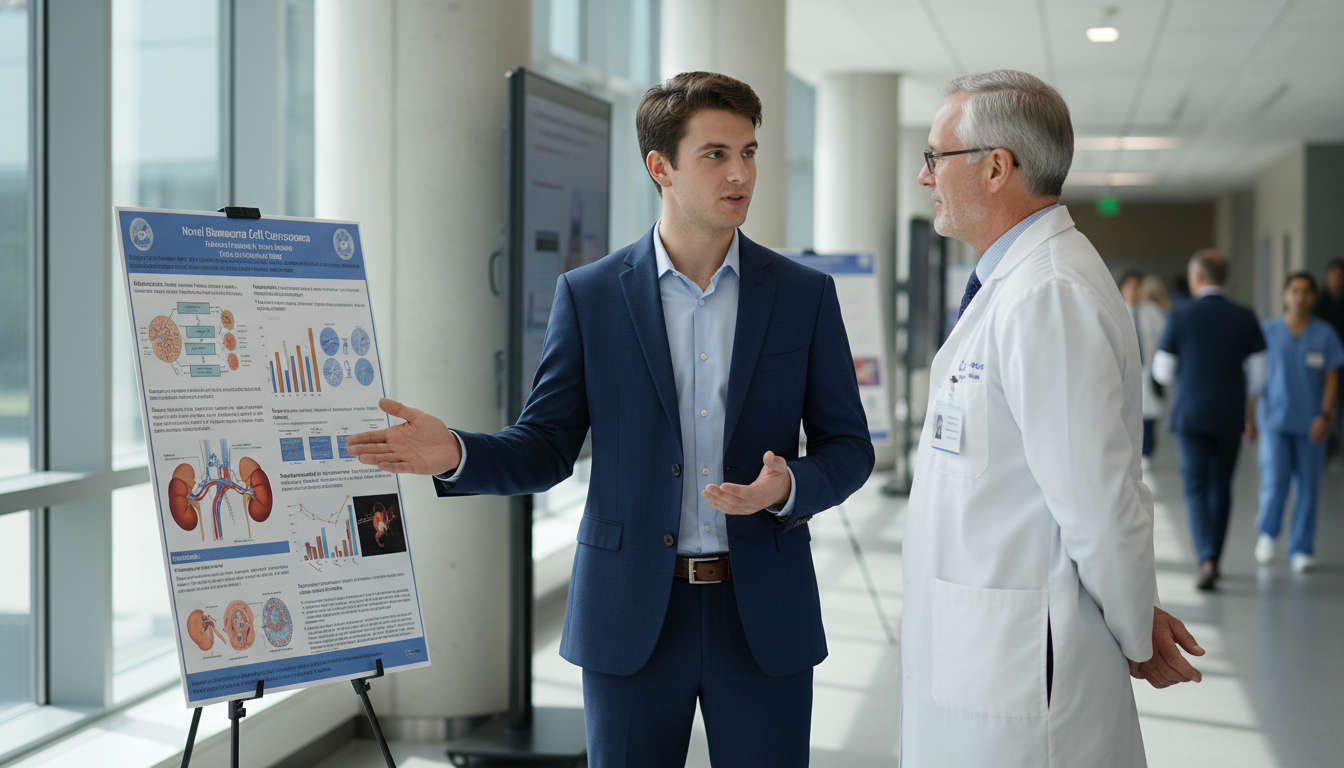
2. Conferences and posters: high impact, relatively low barrier
Even if you don’t convert every project into a full manuscript, you can usually:
- Submit abstracts to:
- ACP, SGIM, CHEST, specialty-specific meetings (AAN for neuro, ASRA for anesthesia, etc.)
- Turn QI projects or interesting cases into posters
Benefits for your osteopathic residency match:
- Demonstrates engagement with the broader academic community
- Gives you something to discuss during interviews
- Strengthens letters of recommendation from faculty proud of your work
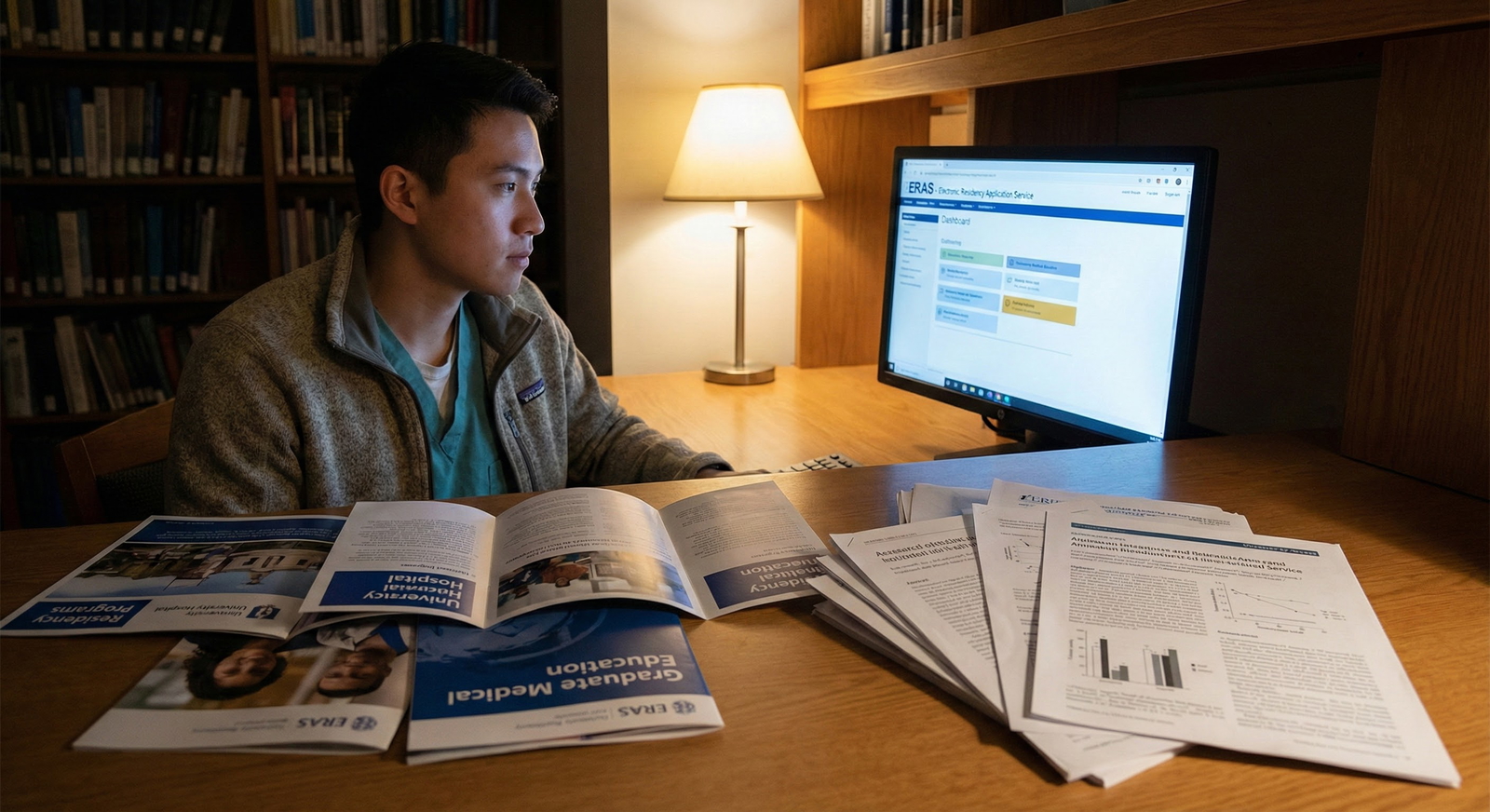
3. Presenting your research on ERAS
To make your research for residency stand out on ERAS:
- Accurately categorize each item: Peer-reviewed journal, conference abstract, poster, etc.
- Avoid exaggeration; PDs can and do verify.
- Clearly list your role: first author, co-author, data collector, etc.
In your personal statement and interviews, connect your research to your future:
- How did this project shape your interest in internal medicine or your specialty?
- What skills (critical appraisal, statistics, teamwork) did you gain?
- How will you bring this mindset to residency and beyond?
Common Pitfalls and How to Avoid Them
1. Chasing quantity over quality
Submitting to predatory journals, inflating your role in projects, or padding your CV with minimal contributions can backfire. Program directors value:
- Honest, clearly described involvement
- A handful of robust, well-understood projects
- Longitudinal engagement over “CV stuffers”
2. Overcommitting during your prelim IM year
Preliminary medicine is intense. Burnout is real. Avoid:
- Starting many projects that you can’t finish
- Neglecting core clinical duties (which are weighted more heavily than research)
- Compromising wellness or sleep for marginal research gains
A better approach:
- 1–2 well-chosen projects that are highly feasible
- Clear timelines and division of labor with your team
- Regular check-ins with mentors to keep progress realistic
3. Ignoring osteopathic-specific opportunities
As a DO graduate, you may have:
- Unique exposure to Osteopathic Principles & Practice (OPP)
- Experience with MSK and manual medicine that MD peers may not have
These can become:
- Case reports on OMT in specific conditions
- Educational research on teaching OMT in residency
- Collaborative projects with PM&R or Neuromusculoskeletal departments
These are especially attractive if your eventual specialty values musculoskeletal expertise, like PM&R, sports medicine, or pain.
FAQs: Research Profile Building for DO Graduates Applying to Preliminary Medicine
1. Do I really need research to match into a Preliminary Medicine year as a DO?
Not strictly. Many Preliminary Medicine programs, especially community-based ones, will rank strong clinical DO applicants with little or no research. However:
- Even one or two small projects (case report, QI, poster) can make you more competitive.
- Research becomes more important for your advanced specialty match, so starting early helps your long-term trajectory.
2. How many publications needed to look competitive as a DO prelim applicant?
There is no fixed number, but realistic benchmarks:
- For prelim IM alone: 0–3 scholarly items (even if small) are generally fine.
- For a DO aiming at a research-sensitive advanced field: at least a few items, with some PubMed-indexed work if possible, will strengthen your file.
Focus more on feasible, well-executed projects you can explain clearly, rather than on hitting a specific number.
3. What kind of research is best if I don’t have much time during my prelim year?
Choose high-yield, time-efficient projects:
- Case reports or small case series from interesting admissions
- QI projects linked to hospital priorities (readmissions, CLABSI, vaccination rates)
- Retrospective chart reviews with existing data and a supportive mentor
Aim for 1–2 projects you can realistically bring to presentation or publication within 6–12 months.
4. I’m a DO with no prior research and about to start a prelim IM year. What should I do first?
Actionable first steps:
- Identify your target long-term specialty (even if tentative).
- At orientation or early in the year, ask program leadership or chief residents:
- Which faculty are active in research or QI?
- Are there existing projects a motivated prelim could join?
- Start small: volunteer for a case report or join a QI project already underway.
- Document your work meticulously and aim for at least a poster presentation by mid- to late-year.
This approach lets you build a credible research narrative without overwhelming your clinical responsibilities.
By setting clear goals, choosing feasible projects, and strategically using your preliminary medicine year to grow academically, you can build a research profile that supports both a strong DO graduate residency match now and a successful transition into your long-term specialty later.