Understanding What a Strong Global Health Research Profile Really Means
Building a research profile for global health is fundamentally different from simply “collecting publications.” For residency applicants—especially those targeting a global health residency track or programs with strong international medicine opportunities—your research portfolio should reflect:
- A coherent story: your interests, values, and long-term goals in global health
- Demonstrated skills: literature review, data analysis, project design, cultural humility, and collaboration
- Evidence of impact: even if small in scale—quality improvement (QI), local health system changes, or contributions to ongoing projects
- Clear trajectory: increasing responsibility, leadership, and sophistication over time
Core components of a global health–oriented research profile
Think of your profile as a combination of:
Formal research experiences
- Global health epidemiology
- Implementation science
- Health systems and policy
- Infectious disease or NCD projects in low-resource settings
- Migrant/immigrant health research in your own country
Scholarly outputs
- Peer-reviewed publications
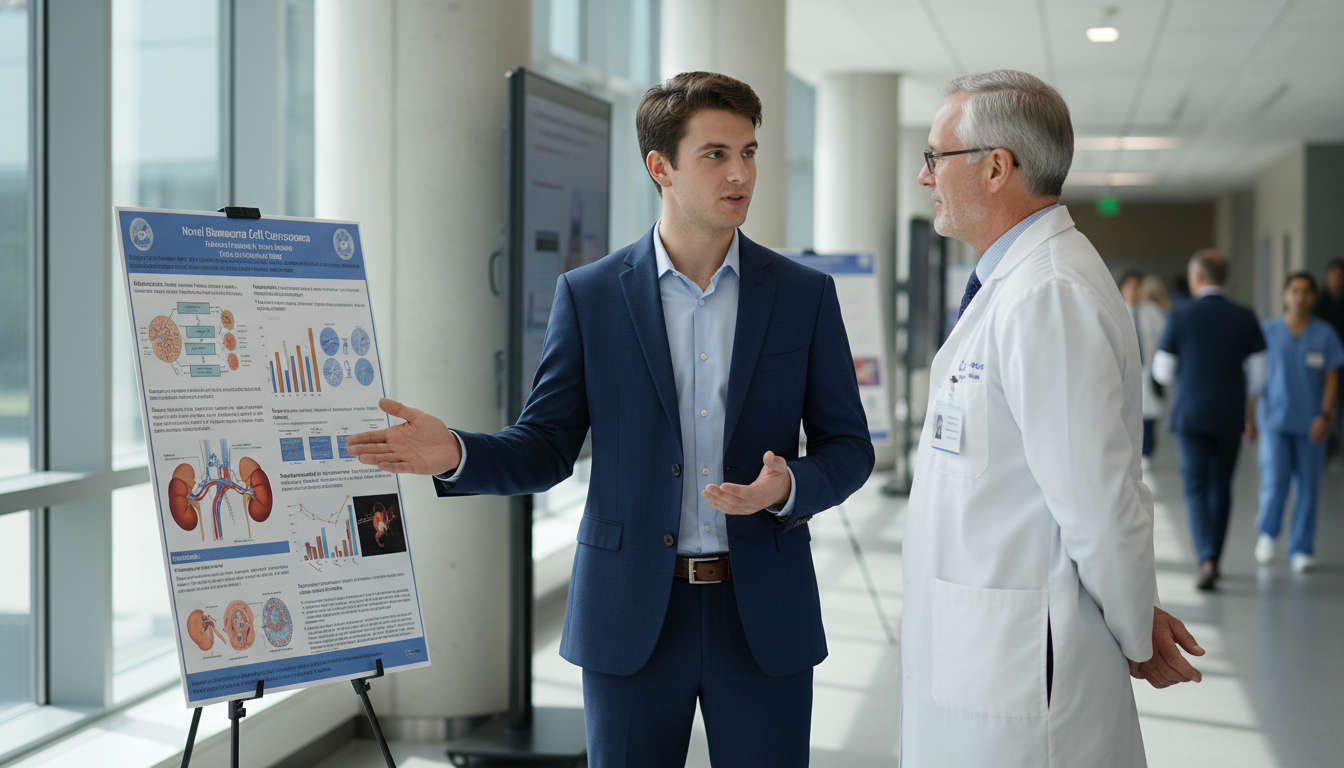
- Abstracts, posters, and oral presentations
- Research-based advocacy (policy briefs, white papers, technical reports)
Supplementary scholarly skills
- Training in research methods and biostatistics
- Experience with IRB/ethical review, especially in cross-cultural settings
- Familiarity with global health frameworks (e.g., social determinants of health, health equity, decolonizing global health)
Evidence of sustained interest
- Longitudinal involvement in one theme (e.g., maternal health, refugee health, TB/HIV, climate change and health)
- Repeated engagement with the same partner site or community
- Progression from contributor → co-lead → project initiator
Programs do not expect you to be an independent investigator at the application stage—but they do look for research readiness: the ability to join and contribute meaningfully to ongoing projects during residency.
How Programs Evaluate Global Health Research Experience
When residency programs review an application with a global health focus, they ask four key questions:
Is your interest in global health authentic and sustained?
Do your research, clinical, volunteer, and educational experiences tell a consistent story?Have you developed transferable research skills?
Regardless of country or topic, can you:- Formulate a research question
- Understand basic study design
- Handle or interpret data
- Write and communicate findings?
Do you understand ethical and equity issues in global health research?
Programs value applicants who:- Avoid “fly-in/fly-out” short-term, extractive research
- Respect local partners’ leadership and priorities
- Recognize power dynamics and strive for bidirectional benefit
Will you thrive in our global health residency track or research pipeline?
Programs with structured global health curricula want residents who:- Will use research resources effectively (mentorship, funding, protected time)
- Can realistically complete scholarly projects during training
- Are likely to continue academic or leadership work in international medicine or global health equity
How many publications matter—and what counts?
Applicants often ask: “How many publications needed to be competitive?” There is no universal number, but some general patterns apply:
- 1–2 peer-reviewed publications (in any area) show you can see a project through to completion
- 3–5 total scholarly products (abstracts, posters, published work, major QI projects) help demonstrate strong commitment, especially for academic or global health–heavy programs
- For most applicants, quality, relevance, and your role matter more than sheer volume
A strong global health profile might include:
- 1 first-author manuscript (e.g., small cohort from a refugee clinic)
- 1–2 co-authored papers from a larger global project
- 2–3 conference presentations or posters in global health, infectious disease, or public health settings
If you have no publications yet, but strong involvement in well-structured projects and a clear plan toward dissemination, you can still be a serious contender—especially if you articulate this well in your personal statement and interviews.

Step-by-Step: Designing a Strategy to Build Your Global Health Research Profile
Step 1: Clarify your thematic focus
Global health is vast. Having some focus creates a coherent profile and makes it easier to find mentors and projects. Example themes:
- Infectious diseases (HIV, TB, malaria, neglected tropical diseases)
- Maternal, neonatal, and child health
- Non-communicable diseases (diabetes, hypertension, mental health) in low-resource settings
- Refugee, migrant, and asylum seeker health
- Health systems strengthening or health policy and financing
- Climate change and health, environmental justice
- Digital health or telemedicine in underserved regions
You do not need a perfectly narrow niche, but you should be able to describe your interests in 1–2 sentences that connect your past work and future goals.
Actionable exercise:
Write a brief focus statement:
“I’m especially interested in [population or condition] in [type of setting] because [reason, tied to experience].”
This will guide your choice of projects, mentors, and programs.
Step 2: Map your current starting point
Ask yourself:
- Do I already have any research experience (even if not global health)?
- Do I have mentors or contacts in public health, epidemiology, or global health?
- What skills do I lack—statistics, STATA/R/SPSS, qualitative analysis, academic writing?
- How many months or years do I have before applying for residency?
Different starting points require different strategies:
If you’re early in medical school:
Focus on skill-building and longer-term projects with potential for publication.
If you’re close to residency application:
Prioritize projects that:
- Are already ongoing
- Have a clear path to presentations or publications for match
- Offer a realistic timeline (e.g., secondary data analyses, systematic reviews, or joining working groups nearing completion)
Step 3: Identify mentors and networks
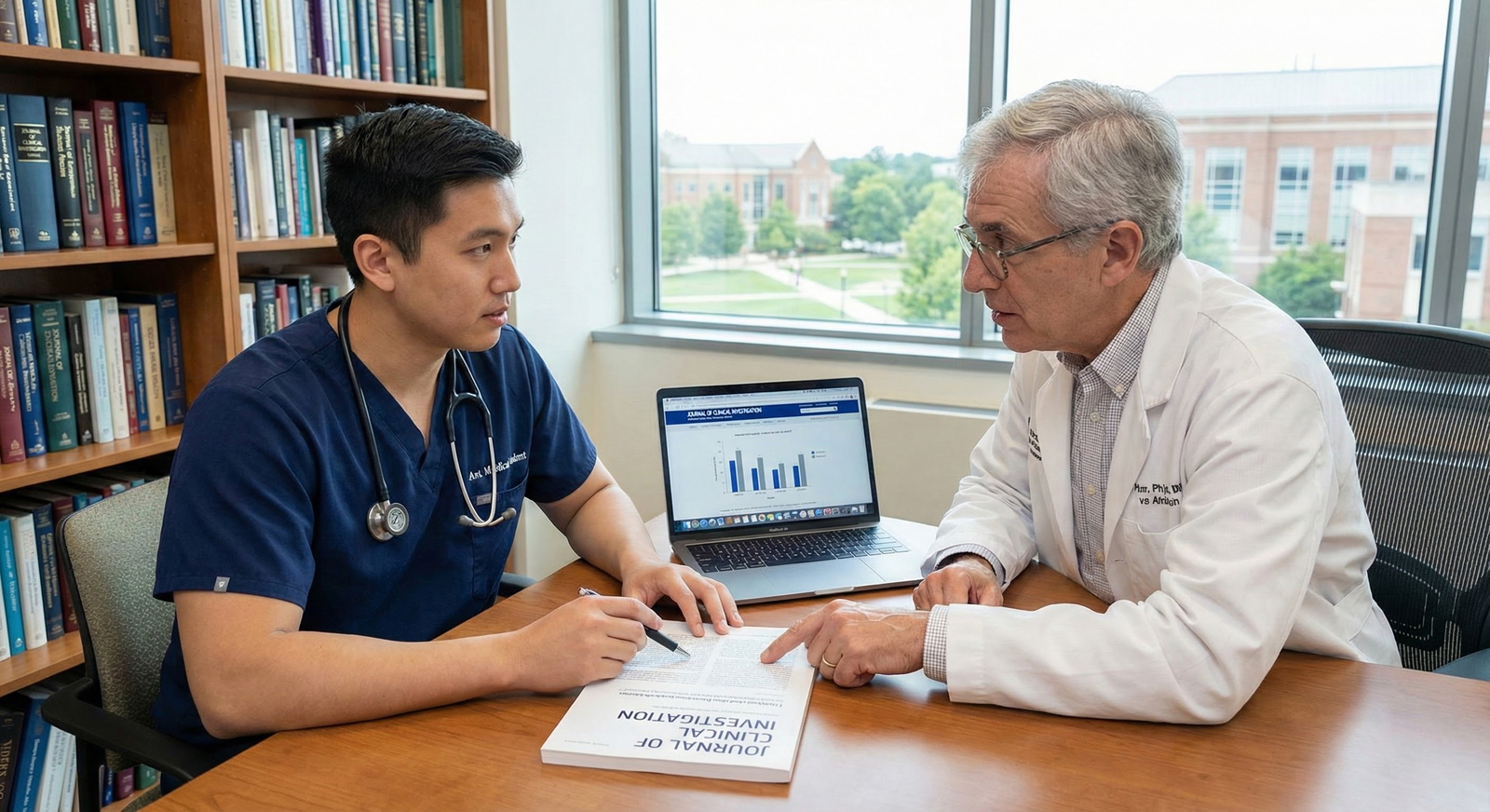
Strong mentorship is the single most important factor in successful global health research.
Where to find mentors:
- Your school’s global health center, international office, or public health department
- Faculty who present global health work at grand rounds or seminars
- Investigators with NIH/Fogarty, Gates Foundation, or other global health grants
- Virtual/global networks (e.g., Consortium of Universities for Global Health, specialty societies with global health sections)
When approaching a potential mentor:
- Read 2–3 of their recent papers
- Send a concise email: who you are, your interests, what you noticed in their work, and what you’re hoping to learn or do
- Be clear about your time availability and timeline toward residency applications
Good mentors:
- Help you scope projects that are feasible before Match
- Provide feedback on abstracts, posters, and manuscripts
- Guide you on ethics, authorship, and collaborations across countries
Types of Global Health Research Projects You Can Pursue
Not all global health research involves traveling abroad. In fact, many strong applicants never leave their home country during medical school yet build convincing global health profiles.
1. Retrospective chart review or registry-based projects
Feasible and relatively fast, especially if:
- A database or EMR system already exists
- You’re working at a refugee clinic, safety-net hospital, or infectious disease center
- A global health team is following a cohort (e.g., people living with HIV, TB patients, antenatal care registry)
Example:
- Chart review of hypertension control among refugees in a primary care clinic
- Outcomes of TB treatment among migrants compared to non-migrants
Advantages:
- Lower logistical barriers
- May not require extensive patient contact
- Often suitable for first-author publications
2. Secondary data analysis
Use existing large datasets:
- Demographic and Health Surveys (DHS)
- WHO databases
- National health surveys in low- and middle-income countries
Example:
- Analysis of determinants of antenatal care utilization in rural vs urban areas in a specific country
- Association between household air pollution and respiratory symptoms in children
Advantages:
- No primary data collection needed
- Strong potential for publication if the question is novel
- Can be done remotely from anywhere in the world
3. Prospective observational or implementation projects
These often require longer timelines, but can be powerful if you join an ongoing project.
Examples:
- Observing the rollout of a new HIV testing strategy in a clinic network
- Implementation of a task-shifting program for community health workers
- Evaluating telemedicine follow-up for patients in remote settings
If time is short, focus on a subcomponent: a side analysis, baseline data, or process evaluation rather than trying to own the entire project.
4. Qualitative research
Qualitative methods (interviews, focus groups) are central to ethical global health research because they elevate local perspectives.
Examples:
- Interviews with community health workers about barriers to delivering care
- Focus groups with pregnant people about antenatal care experiences
- Key informant interviews with clinicians about telehealth implementation
These can lead to:
- Mixed-methods manuscripts
- Powerful conference presentations
- Content that demonstrates cultural humility and attention to context
5. Systematic reviews and scoping reviews
If you lack access to live data, review articles can still strengthen your research profile.
Example projects:
- Systematic review of barriers to HIV pre-exposure prophylaxis (PrEP) uptake in sub-Saharan Africa
- Scoping review of climate change–related heat illness in low-income urban settings
These can be done entirely remotely, and if properly designed and conducted, can lead to first-author publications for match.

Publications, Presentations, and the Match: Making Your Work Visible
How many publications needed to stand out for global health tracks?
There is no rigid cutoff, but some typical scenarios:
Highly competitive global health residency track (large academic center):
- Often see applicants with:
- 1–3 peer-reviewed publications (not necessarily all global health)
- 3–6 total scholarly products (including abstracts, regional/national conferences, narrative pieces)
- Often see applicants with:
Residency programs with optional global health electives but no formal track:
- One or two research products plus clear global health interest can be sufficient
Applicants with non-traditional paths or prior degrees (MPH, PhD):
- Often have more publications—but programs focus on how you’ll integrate these skills in residency, not on raw numbers alone
Ultimately, programs judge:
- Your trajectory: Are your experiences building toward a clear global health career vision?
- Your role: What did you actually do (design, data collection, analysis, writing)?
- Your clarity: Can you explain your projects intelligibly in interviews?
Maximizing the impact of your research for the Match
You can increase the value of your work by ensuring you:
Present at meetings
- Target conferences in:
- Global health (e.g., CUGH, ASTMH)
- Your target specialty (e.g., internal medicine, pediatrics, emergency medicine)
- Regional public health societies
- Even regional/virtual meetings strengthen your profile
- Target conferences in:
Seek at least one first-author role
- A first-author poster, abstract, or manuscript demonstrates initiative and follow-through
- It doesn’t need to be in a top-tier journal; relevance and quality matter more
Diversify your outputs
- Aim for a mix, such as:
- 1 first-author retrospective study
- 1 co-authored global cohort analysis
- 1–2 conference abstracts/posters
- 1 review or narrative article related to global health or equity
- Aim for a mix, such as:
Translate research into advocacy or education
- Develop a teaching session on global health findings for your peers
- Help create patient education materials or locally useful tools based on your findings
- Contribute to policy briefs or technical reports with partners
Programs appreciate applicants who show they can move from data to action, not just collect numbers.
Avoiding Common Pitfalls in Global Health Research Profile Building
Pitfall 1: “Mission trip” research without rigor or ethics
Short-term trips with loosely structured data collection can be problematic if:
- There is no clear IRB/ethical oversight
- Local partners are not true collaborators
- The project primarily benefits your CV, not the community
Programs are increasingly sensitive to decolonizing global health and will look for:
- Respectful, bidirectional partnerships
- Sustainable contributions
- Clear acknowledgment of local leadership
Pitfall 2: Overcommitting without completion
Listing multiple unfinished projects with no outputs can raise concerns. It’s better to have:
- Fewer, completed projects with clear outcomes (abstract, presentation, manuscript)
- A plan and realistic description for ongoing work
In interviews, be ready to explain:
- Your specific role
- Why some projects have not yet been published
- What you learned about research process and time management
Pitfall 3: Disconnected or “random” research topics
You might have research in various areas (basic science, cardiology, orthopedics, etc.). Programs understand this. What matters is how you:
- Draw a narrative linking your experiences:
- For example: “My early basic science work taught me critical thinking and data analysis; as I discovered my passion for health equity, I shifted into global health and refugee health projects that built on these skills.”
- Show a clear commitment to global health in your recent experiences and future plans
Pitfall 4: Ignoring domestic global health
Global health is not exclusively about work outside your home country. Underserved and structurally marginalized communities in your own city provide rich opportunities to:
- Study health disparities
- Understand social determinants of health
- Practice community-engaged research
Residency programs value applicants who recognize continuity between domestic and international medicine and understand that global health is fundamentally about inequity and systems, not geography alone.
Practical Timeline: Building a Global Health Research Profile Over 2–3 Years
Below is a sample structure; adapt based on your starting point.
Year 1 (or early phase)
- Identify global health interests and potential mentors
- Take or audit an introductory research methods or global health course
- Join an ongoing project (even in a supporting role)
- Begin a literature review that could evolve into a review article
Year 2
- Take on more responsibility:
- Data analysis for an ongoing project
- Design a feasible sub-study (retrospective or secondary analysis)
- Aim to submit:
- 1–2 abstracts to local or regional conferences
- 1 systematic review or narrative piece
- Seek feedback on your global health career narrative
Year 3 (application year)
- Prioritize completing and submitting at least one manuscript
- Present at a major conference if possible
- Refine CV to clearly document your role in each project
- Align your personal statement and program selection with your global health research experiences and goals
If your timeline is shorter (e.g., one year before applications), focus on:
- Joining neat-completion projects
- Abstracts and conference submissions
- Secondary data or review projects with realistic publication timelines
Frequently Asked Questions (FAQ)
1. Do I need overseas experience to be taken seriously for a global health residency track?
No. Many strong applicants have never left their home country but have done rigorous research with:
- Refugee/migrant populations
- Underserved rural or urban communities
- Health disparities, structural inequity, or public health policy
Programs care more about your understanding of global health principles, ethics, and health equity than about stamps in your passport.
2. How many publications do I realistically need for a competitive global health–oriented application?
There is no magic number. For most applicants:
- Having 1–2 peer-reviewed publications plus several abstracts/posters is excellent
- If you have no publications but are meaningfully involved in high-quality projects with clear dissemination plans, you can still be competitive—especially if you describe your work and skills clearly
Focus on:
- At least one first-author project if possible
- Clear relevance to global health, inequity, or international medicine
3. What if my research is not strictly “global health” but I want to apply to global health programs?
You can still frame a compelling application. Emphasize:
- Transferable research skills (study design, statistics, critical appraisal)
- Any connection to:
- Health equity
- Access to care
- Vulnerable or underserved populations
- Your more recent or ongoing steps to shift toward global health (courses, electives, community-engaged projects, policy work)
Use your personal statement and interviews to explain your trajectory toward global health.
4. Is it better to have one big project or several smaller ones?
Ideally, a combination:
- One or two substantial projects (especially if you can be first author) that show depth
- A few smaller contributions that demonstrate collaboration and breadth
Programs value evidence that you can complete a project, work in a team, and reflect thoughtfully on your role and the ethical dimensions of global health research.
Building a research profile in global health is a marathon, not a sprint. Focus on coherent interests, strong mentorship, ethical engagement, and clear outputs. If you consistently take on meaningful, feasible projects and move them to completion, you will be well-positioned for residency programs—especially those offering a global health residency track or robust international medicine opportunities.