Why Your Research Profile Matters as an IMG in Internal Medicine
For an international medical graduate, a strong research profile can be the difference between merely applying and truly standing out in the IM match. Program directors in internal medicine increasingly use research output—especially U.S.-based and specialty-relevant work—as a marker of academic potential, persistence, and familiarity with the U.S. healthcare system.
You do not need to be a PhD-level scientist, but you do need to show:
- Clear evidence of scholarly curiosity
- Consistent engagement with research over time
- Contributions that are understandable and verifiable (posters, abstracts, publications)
- Some alignment between your research and internal medicine or its subspecialties
In this IMG residency guide, we’ll walk through how to build, organize, and present a research portfolio that strengthens your internal medicine residency application, even if you are starting with zero experience.
Understanding What “Counts” as Research for the IM Match
Before building a plan, you need to know what residency programs actually value. “Research” is broader than just randomized controlled trials in big journals.
Types of Research That Strengthen an IMG Application
From the perspective of internal medicine residency selection committees, the following are all meaningful forms of research and scholarly activity:
Original Research Projects
- Prospective or retrospective cohort studies
- Chart reviews in hospitals or clinics
- Clinical outcome studies
- Quality improvement (QI) projects with data collection and analysis
Example: A retrospective chart review assessing outcomes in diabetic patients following a new clinic protocol.
Case Reports and Case Series
- Detailed report of rare or instructive cases
- Often easier to complete and publish as an IMG
- Particularly strong if tied to internal medicine or IM subspecialties (cardiology, nephrology, endocrinology, etc.)
Example: A case report on an unusual presentation of sarcoidosis in a young adult with multi-organ involvement.
Systematic Reviews and Meta-Analyses
- High-yield academically, but methodologically demanding
- Can be done remotely and in collaboration with mentors
- Very good way to show knowledge of the literature and research methods
Narrative Reviews / Book Chapters
- Topic-focused overviews (e.g., “Management of Hypertension in CKD”)
- Often invited or mentor-driven; valuable, especially if in reputable journals or books
Quality Improvement (QI) and Patient Safety Projects
- Very relevant to internal medicine (workflow, readmissions, medication safety)
- Frequently presented as posters at institutional or regional meetings
- Increasingly recognized and valued—programs like to see QI because it translates directly to residency practice
Basic Science / Translational Research
- More common for applicants aiming at academic careers or physician–scientist tracks
- Still valuable if you can explain its clinical relevance, especially to internal medicine
Medical Education Research
- Curriculum design, teaching methods, assessment tools
- Excellent fit if you’re interested in clinician-educator paths in IM
What “Counts” as a Publication or Scholarly Output?
When people ask “how many publications needed for the match,” they usually mean peer-reviewed outputs. Common output types:
- Peer-reviewed journal articles
- Original research, case reports, reviews
- Conference abstracts and posters
- Specialty or general medical conferences (e.g., ACP, AHA, ASN)
- Oral presentations
- Grand rounds, academic conferences, institutional research days
- Preprints
- Increasingly common, but value varies by program; better if later accepted
- Non-indexed journals or local bulletins
- Still better than nothing, particularly early in your journey
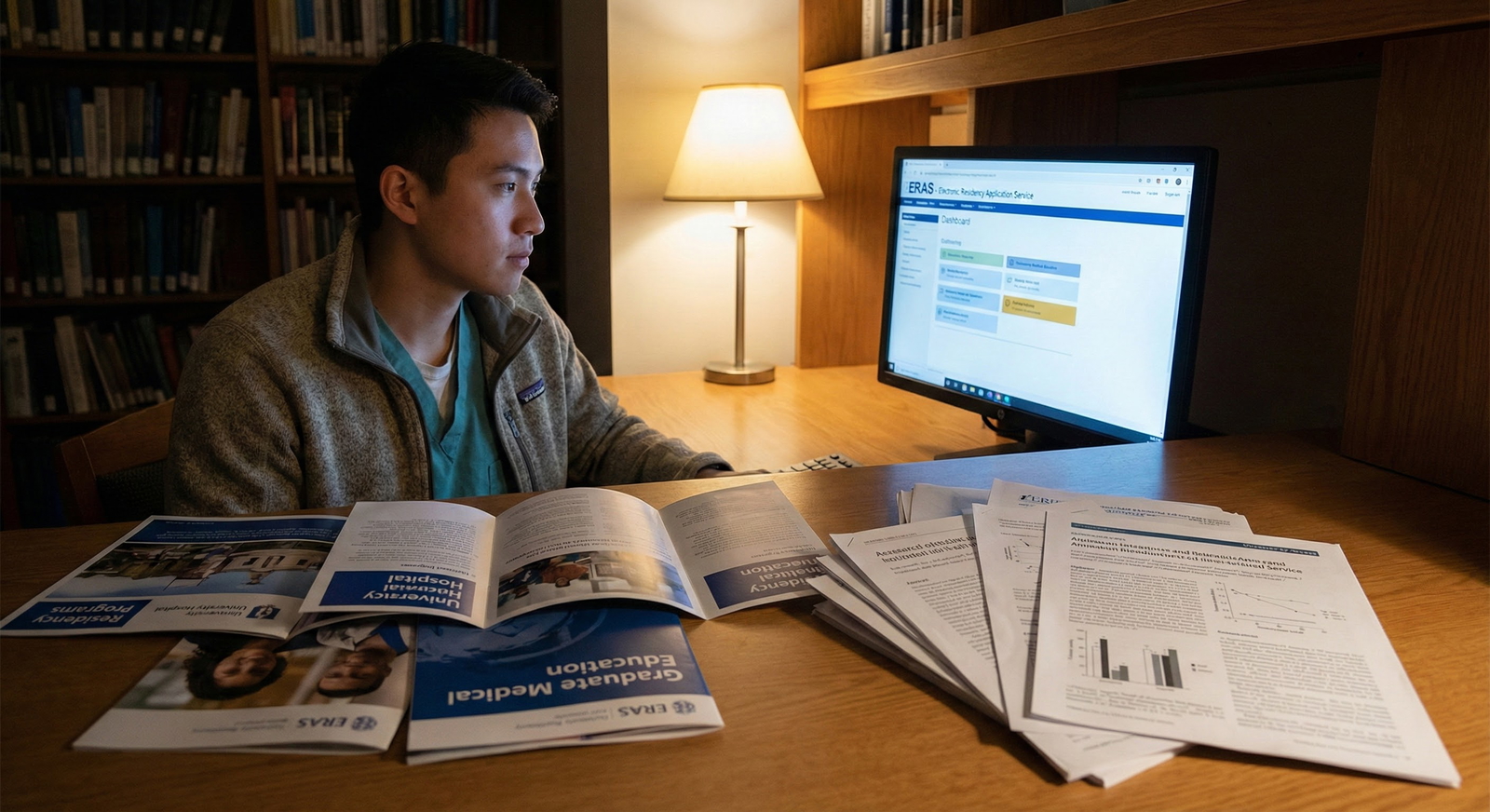
For ERAS, all of these are listed as “publications,” “presentations,” or “posters” and together build the picture of an engaged, scholarly applicant.

Setting Realistic Research Goals as an IMG
Your research strategy should match your timeline, location, and prior experience. A well-structured plan is more important than chasing big-impact publications without direction.
Assess Your Starting Point
Ask yourself:
Where are you now?
- In home country vs. already in the U.S.
- Still in medical school vs. graduate vs. in a research/observer role
What do you already have?
- Any prior projects, abstracts, local presentations, audits, QI projects?
- Any publications in local or regional journals?
What is your time frame to apply?
- 6–9 months? 1–2 years? Longer?
- Are you planning a dedicated research year?
What is your target in internal medicine?
- Categorical IM at academic centers
- Community-based university-affiliated programs
- Strong subspecialty interest (e.g., cardiology, GI, oncology)
This will shape the expected depth vs. breadth of your research efforts.
Rough Benchmarks: How Many Publications Needed?
There is no fixed number, but trends for competitive IM applicants (especially at academic centers) often look like:
Highly competitive academic IM (top university programs):
- Often 5+ publications/abstracts/posters combined
- At least 1–2 first-author items
- A portion of these in internal medicine or relevant subspecialties
- Mix of U.S.-based and international work preferred
Solid university-affiliated or community IM programs:
- 1–3 meaningful outputs (poster, case report, small study, or review)
- Stronger impact if you clearly articulate your role and what you learned
If you have zero research now:
- It is still possible to match, especially in community programs, but:
- A small number of well-done projects (even 1–2 case reports and a QI project) can significantly improve your profile.
- For IMGs, any credible, verifiable scholarly work is an asset.
- It is still possible to match, especially in community programs, but:
Therefore, instead of obsessing over how many publications needed, focus on:
- At least one substantial, clearly defined project
- A few smaller, achievable outputs (case report, QI poster, or review)
- Demonstrated continuity over time
Finding and Securing Research Opportunities as an IMG
This is often the hardest step, especially if you are outside the U.S. or lack connections.
Option 1: Formal Research Positions (U.S.-Based)
These are structured roles, often called:
- Research fellow
- Research assistant / associate
- Postdoctoral scholar (less common directly after MBBS/MD)
Where to look:
- Academic medical centers’ websites (Internal Medicine department, subspecialty divisions)
- Institutional job boards (search: “research assistant,” “clinical research coordinator,” “research fellow internal medicine”)
- LinkedIn, Indeed, Glassdoor using keywords like “clinical research assistant internal medicine”
Pros:
- Continuous immersion in U.S. healthcare
- Regular interaction with faculty (potential strong letters of recommendation)
- Multiple project opportunities over 1–2 years
Cons:
- Highly competitive; many require U.S. work authorization
- Time-consuming; may delay your application cycle
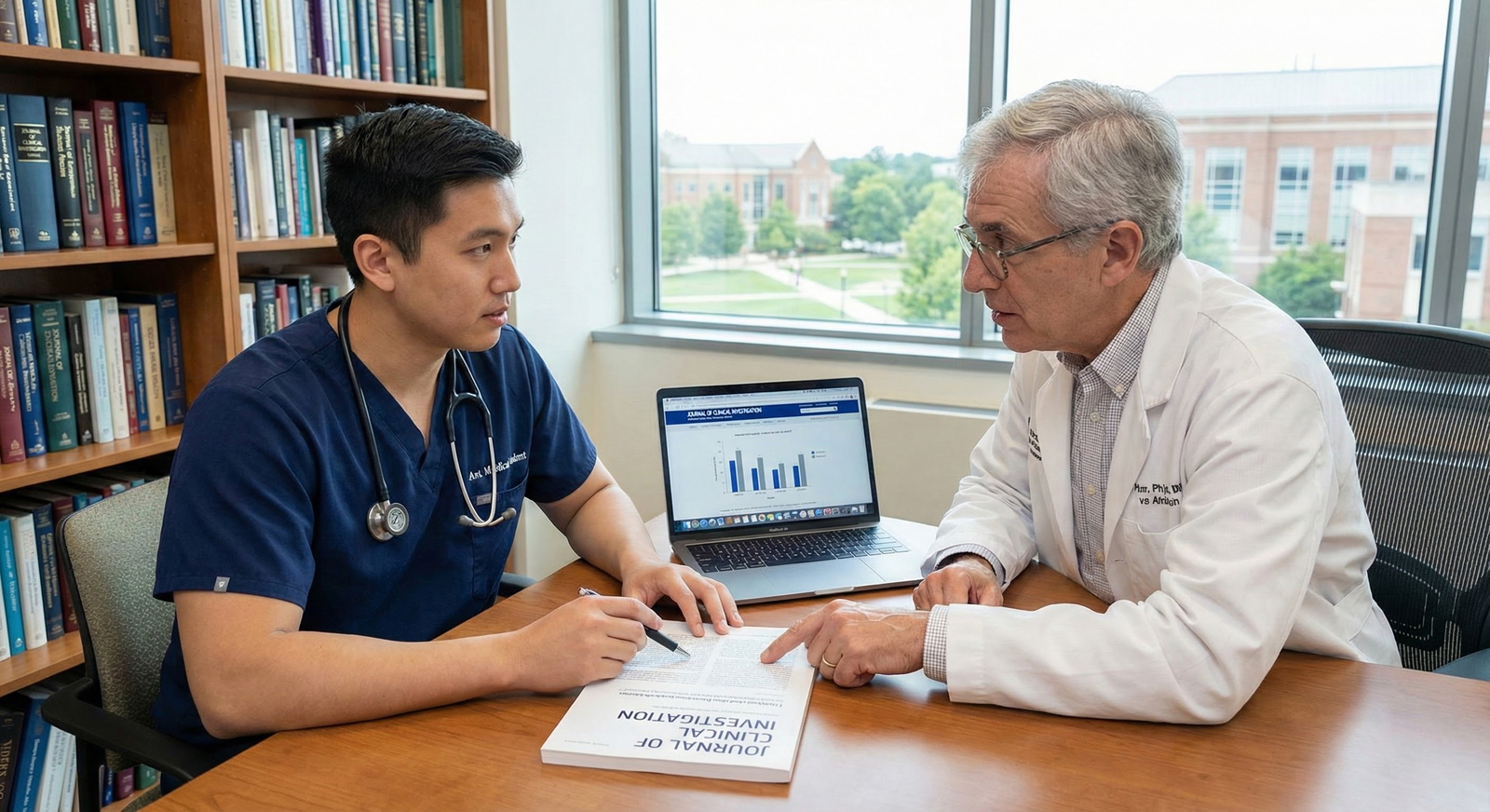
Option 2: Informal or Volunteer Research with Mentors
If a formal position is not possible, structured volunteer work with a faculty mentor is often achievable.
How to find mentors:
- Identify faculty with published work in your area of interest (e.g., cardiology, hospital medicine, nephrology).
- Search:
- PubMed: find authors at institutions of interest
- Departmental websites: faculty profiles listing research interests
- Reach out with a concise, professional email:
- Subject line: “Prospective IMG volunteer for internal medicine research – [Your Name]”
- Introduce your background (1–2 lines)
- Clarify your interest in internal medicine and research
- Propose how you can help (data collection, chart review, literature review, manuscript drafting)
- Attach CV and highlight any previous research or academic excellence
Keys to success:
- Email many (20–50) potential mentors — response rates are low, and persistence is essential
- Be flexible with timing and scope; small projects can lead to bigger ones
- Prove reliability early: meet deadlines, communicate clearly, respond to feedback
Option 3: Remote and International Research Opportunities
If you are not yet in the U.S., focus on:
- Collaborations with faculty at your home institution
- Remote collaboration with U.S.-based researchers on:
- Systematic reviews
- Data analysis from existing databases
- Collaborative case reports
Helpful strategies:
- Use research networking platforms (e.g., ResearchGate, LinkedIn) to connect with investigators
- Attend virtual conferences and follow up with speakers whose work interests you

Step-by-Step: Building Your Research Portfolio from Scratch
If you are starting with minimal or no research, here is a practical sequence tailored for an international medical graduate targeting internal medicine residency.
Step 1: Start with a Case Report or Case Series
Why this first?
- Feasible within months
- Builds your writing skills and gives you your first PubMed- or Scopus-indexed item (depending on where you submit)
- Familiar format for many IM programs
How to do it:
- Identify an interesting case in your clinic/hospital:
- Rare disease
- Unusual presentation of common disease
- Unexpected complication or diagnostic challenge
- Discuss with your attending or supervisor:
- Seek permission to write it up
- Clarify authorship and co-authors
- Review the literature:
- Establish why your case adds something new
- Prepare:
- Structured format: Introduction, Case Presentation, Discussion, Conclusion
- Include images (ECG, imaging, pathology) where appropriate and allowed
Submission targets:
- Specialty-specific case report journals (e.g., BMJ Case Reports, Journal of Medical Case Reports)
- Internal medicine-focused journals with case sections
Step 2: Contribute to a Small Retrospective Study or QI Project
Once you have a mentor, a chart review or QI project is usually the next realistic step.
Example projects:
- Evaluating adherence to heart failure guideline-directed therapy in hospitalized patients
- Assessing 30-day readmission rates in COPD and the impact of discharge education
- Improving vaccination rates in diabetic patients in a clinic
Your role might include:
- Designing data collection tools (Excel sheets, REDCap forms)
- Extracting data from electronic health records (under supervision and with IRB approval)
- Conducting basic statistical analysis (SPSS, R, or even Excel for simple analyses)
- Writing the methods and results sections of abstracts or papers
Outputs:
- Local or regional posters
- Conference presentations (e.g., ACP chapter meetings)
- Manuscripts for submission to internal medicine or hospital medicine journals
Step 3: Take On a Review Article or Systematic Review
As your comfort grows, a review article can showcase depth of knowledge in a specific IM-relevant area.
Narrative Review:
- Work with a mentor to choose a clinically relevant topic:
- Example: “Current Approaches to Hyponatremia Management in Hospitalized Patients”
- Organize:
- Clear outline with sections focusing on epidemiology, pathophysiology, diagnosis, and management
- Benefit:
- Deepens your understanding and helps with interviews and eventual clinical work
Systematic Review:
- More methodologically demanding, but powerful if done correctly
- Requires:
- Predefined protocol, search strategy, inclusion/exclusion criteria
- PRISMA flow diagram
- Some exposure to meta-analytic methods if quantitative
Step 4: Consolidate Your Work into a Coherent Narrative
As you accumulate outputs, think about your story:
- Are your projects loosely connected around a few IM themes (e.g., cardiometabolic disease, hospital medicine, nephrology)?
- Can you explain in an interview how each project:
- Started
- What your role was
- What you learned
- How it influenced your interest in internal medicine
Your research profile building is not just a list; it is a narrative showing growth over time, increasingly complex responsibilities, and deepening engagement with IM topics.
Presenting and Optimizing Your Research Profile for the IM Match
A strong research portfolio loses impact if it is scattered, unclear, or poorly communicated. You should strategically present your work in ERAS and in interviews.
How to List Research in ERAS
Under the “Publications & Presentations” and “Experience” sections, ensure:
Accuracy and Consistency
- Use proper citation style (authors, title, journal, year, volume, page numbers)
- Match exactly what appears in PubMed or journal websites
Honest Authorship
- Do not exaggerate your role or change authorship order
- Misrepresentation is a serious professionalism red flag
Clear Description of Your Contributions
- For each major project (especially in “Experience”), briefly describe:
- Aim of the project
- Your specific tasks (e.g., data extraction, literature search, statistical analysis, drafting results)
- Outcome (submitted, accepted, presented at X conference)
- For each major project (especially in “Experience”), briefly describe:
Group Related Outputs
- If you have multiple posters from the same project, make this clear
- Shows continuity rather than random, unconnected activities
Highlighting Internal Medicine Relevance
Program directors want to see that your research aligns with their specialty:
- Emphasize IM-related keywords in project titles and descriptions:
- Hypertension, diabetes, heart failure, COPD, CKD, sepsis, etc.
- For non-IM projects (e.g., basic science in oncology), explain:
- The clinical relevance
- What transferable skills you gained (data analysis, critical appraisal, research ethics)
Discussing Research During Interviews
You will almost certainly be asked about your research in IM residency interviews. Prepare to:
Explain One or Two Key Projects in Detail
- Background and motivation
- Study design and methods
- Main findings
- Limitations and what you would do differently
Describe Your Role Clearly
- Use active verbs: “I collected…,” “I analyzed…,” “I drafted…”
- Avoid vague statements like “I helped with the project”
Connect Research to Future Goals
- For example:
- “Working on QI in diabetic care made me appreciate population-level interventions. I’d like to be involved in QI and clinical outcomes research as a resident and beyond.”
- For example:
Show Integrity and Humility
- Acknowledge team contributions and mentorship
- Be honest about what you do not fully understand yet (e.g., advanced statistics)
Common Pitfalls and How to Avoid Them
When building a research profile for internal medicine residency as an international medical graduate, watch out for these frequent mistakes.
1. Quantity Over Quality
- Submitting many poorly designed or low-quality papers to predatory journals can harm your credibility.
- Focus on fewer, well-executed projects in reputable or at least transparent journals.
2. Predatory or Non-Credible Journals
Warning signs:
- Very fast acceptance (1–3 days) without clear peer review
- High publication fees with aggressive email solicitation
- Journal not indexed in major databases (PubMed, Scopus) or lacking clear editorial board
If you are unsure, consult:
- Your mentor
- Whitelists (e.g., DOAJ)
- Institutional librarian, if available
3. Ghost Authorship or Gift Authorship
- Being added as an author without real contribution, or adding others who did not contribute, undermines the integrity of your work.
- Programs value professionalism; questionable authorship can backfire.
4. Overstating Your Role
- Claiming you “designed and led” a study when you were primarily collecting data can be exposed during interviews.
- Be transparent; program directors respect honesty and clarity more than inflated claims.
5. Neglecting Continuity
- Doing a single project and then nothing for two years can make it look like a checkbox activity.
- Even small ongoing efforts (continuing a QI project, joining another review) show sustained interest.
Practical Timeline Examples for Different IMG Scenarios
To make this IMG residency guide actionable, here are sample timelines:
Scenario A: 18–24 Months Before Application, No Prior Research
Months 1–3
- Learn basics: online courses in research methods and statistics (Coursera, edX, etc.)
- Identify and start a case report with a local attending.
Months 3–6
- Submit case report to a journal.
- Reach out to potential mentors for participation in a chart review or QI project.
Months 6–12
- Actively work on QI/retrospective study; aim for at least 1 poster at a local or regional conference.
- Begin planning a narrative review in an IM topic with a mentor.
Months 12–18
- Submit QI or retrospective study manuscript.
- Complete and submit the narrative review.
- By application time: 1 case report, 1 QI/poster, 1 review—solid, coherent output.
Scenario B: 6–9 Months Before Application, Some Prior Research Abroad
Months 1–3
- Translate previous research experiences into manuscripts if data is available but unpublished.
- Focus on quick wins: case reports, short reviews in your area of interest.
Months 3–6
- Present any existing projects at local or online conferences.
- Join ongoing minor projects with U.S.-based mentors if possible, even if your role is limited.
By Application:
- Show continuity, update ERAS with “submitted” status where appropriate, and emphasize your evolving involvement.
FAQs: Research Profile Building for IMGs in Internal Medicine
1. Do I need U.S.-based research to match into internal medicine?
It is not mandatory, but it significantly helps, especially for university and academic programs. U.S.-based research:
- Demonstrates familiarity with U.S. healthcare systems
- Provides opportunities for strong U.S. letters of recommendation
- Signals your ability to function in U.S. academic settings
However, well-executed international projects, particularly if published in recognized journals, are still valuable—especially when clearly explained and relevant to internal medicine.
2. What if I have no publications but some research experience?
You should still:
- List the experience in ERAS, describing your role, skills learned, and any tangible outputs (unpublished manuscripts, internal presentations).
- If time allows, work with your mentors to convert at least one project into a poster or manuscript before applications. Even a single abstract or case report can strengthen your profile.
3. How important are publications compared to USMLE scores and clinical experience?
For most internal medicine residency programs:
- USMLE scores and clinical performance (including U.S. clinical experience and letters) remain primary filters.
- Research for residency becomes especially influential when:
- You target academic or university IM programs
- You aim for subspecialty-focused careers
- You want to stand out among many similar-score applicants
A strong research profile cannot fully replace poor scores or weak clinical performance, but it can:
- Compensate for slightly lower scores
- Distinguish you among high-score applicants
- Signal long-term academic potential
4. Is it better to have one first-author paper or several co-authored abstracts?
Both have value, but:
- One first-author, well-designed paper (especially in an IM-relevant area) often carries more weight than multiple minor co-authorships.
- Ideally, you should have:
- At least one first-author output (case report, review, or original study)
- Plus a few co-authored works, showing teamwork and sustained involvement.
In interviews, being able to speak confidently and in detail about your first-author project is often more impressive than listing many shallow involvements.
By approaching research profile building as a structured, honest, and sustained effort, an international medical graduate can significantly boost their competitiveness for internal medicine residency. Focus on achievable projects, strong mentorship, and clear communication of your work, and let your research story highlight the same qualities you’ll bring to residency: curiosity, discipline, and commitment to better patient care.