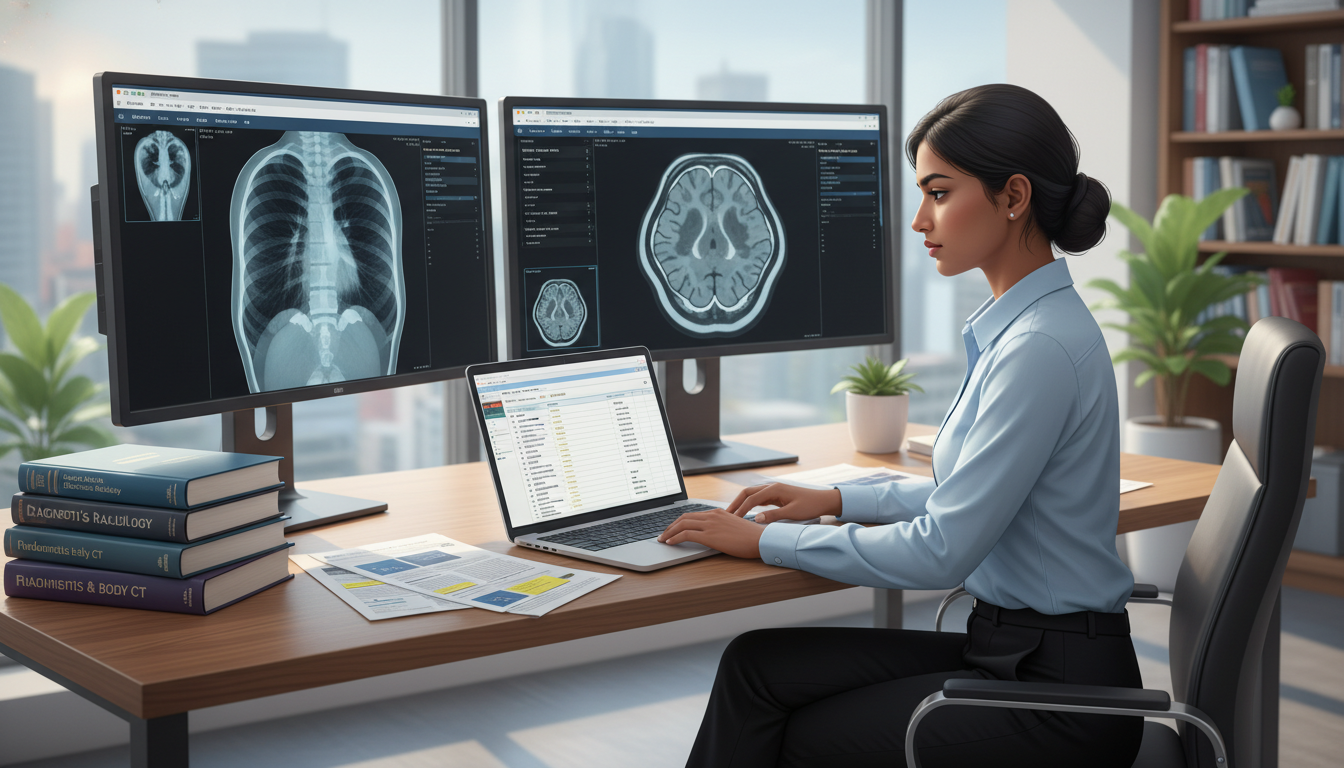
Understanding the Role of Research in the Diagnostic Radiology Match for IMGs
For an international medical graduate (IMG), a strong research profile is often the single most powerful way to compensate for systemic disadvantages in the U.S. diagnostic radiology match. Program directors in radiology value scholarly productivity because it demonstrates:
- Ability to think critically and analytically about images and data
- Familiarity with U.S. academic culture and expectations
- Commitment to the specialty beyond required clinical work
- Potential to contribute to departmental publications and grant activity
In a competitive specialty like radiology, especially for IMGs, research can be the difference between landing interviews and being filtered out by automated systems.
You do not need to be a prolific scientist with dozens of first-author papers. However, you do need a strategic, coherent research profile that shows:
- A clear interest in diagnostic radiology
- Progressive development of skills over time (study design, image analysis, statistics, presentation)
- Evidence of productivity: abstracts, posters, oral presentations, and peer‑reviewed publications
This IMG residency guide will walk you step‑by‑step through building that profile, even if you currently have no research experience, limited access to mentors, or are still outside the U.S.
Defining a Strong Research Profile for an IMG in Radiology
What “counts” as research in a radiology residency application?
When program directors review ERAS applications, they consider a wide range of scholarly activities as “research”:
Peer‑reviewed journal articles
- Original research (clinical, translational, basic science)
- Case reports and case series
- Reviews, systematic reviews, meta‑analyses
- Educational or quality-improvement pieces with data
Conference output
- Scientific abstracts (RSNA, ARRS, ACR, regional radiology societies)
- Poster presentations
- Oral presentations
- Electronic exhibits (E-posters, educational exhibits)
Non‑traditional or supplemental scholarly activities
- Quality improvement projects involving imaging workflows
- Radiology education projects (e.g., curriculum development with outcome measures)
- Book chapters in radiology or imaging-heavy specialties
- Radiology-related blogs, podcasts, educational platforms (especially with metrics: views, downloads)
How many publications are “enough” for a radiology IMG?
Applicants often ask: how many publications are needed to be competitive? There is no universal number, but patterns from matched IMG radiology residents suggest:
- 0 publications: Possible but challenging for IMGs; you must be exceptionally strong elsewhere (scores, U.S. clinical experience, connections).
- 1–3 publications/abstracts: Minimum threshold for many competitive programs; better than none but not a strong research profile yet.
- 4–8 total scholarly products (mix of abstracts, posters, and publications): Common range among matched IMGs in mid-tier to upper-mid-tier radiology programs.
- 9+ items (especially with multiple peer‑reviewed papers, including radiology-focused work): Often seen in IMGs matching into more competitive academic programs.
More important than raw numbers:
- Relevance to radiology – A few imaging-related works can outweigh many non-radiology items.
- Progression and consistency – A pattern of sustained involvement over several months or years.
- Role – Having some first-author or significant contributor roles matters.
Core components of a targeted radiology research profile
Aim for your application to show:
Radiology-specific focus
- At least some projects directly related to diagnostic imaging, radiomics, AI in imaging, image‑guided interventions, or imaging for specific diseases.
Methodologic diversity
- Example mix:
- 1–2 case reports or case series
- 1 clinical retrospective imaging study
- 1 review or educational paper
- 2–4 abstracts/posters at radiology or general medical conferences
- Example mix:
Demonstrated skills
- Literature search and critical appraisal
- Basic statistics / data handling
- Use of radiology software or PACS for data collection
- Preparation of figures and imaging panels
- Scientific writing and editing
Stepwise Strategy: Building Your Radiology Research Portfolio from Scratch
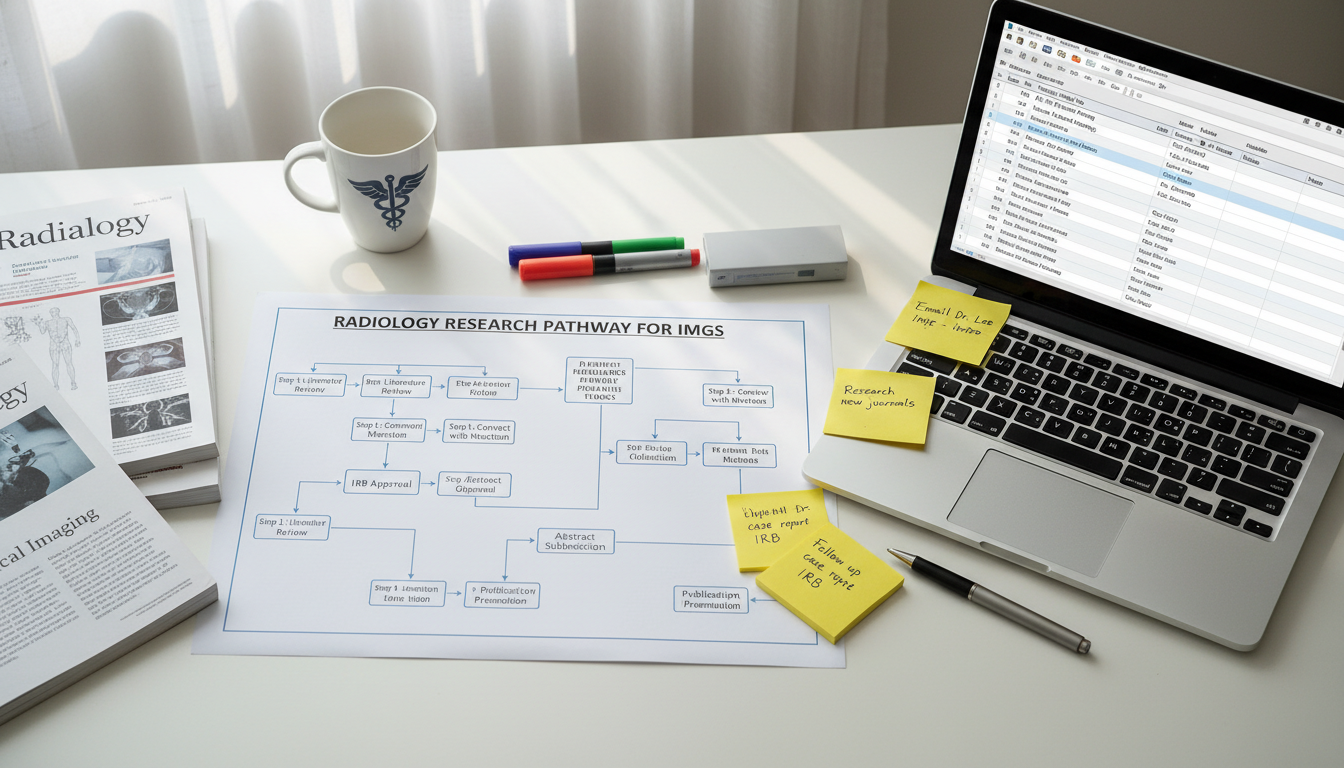
Step 1: Assess your starting point and constraints
Be realistic about your situation:
- Are you inside or outside the U.S.?
- Do you have access to PACS and radiology datasets?
- Can you spend full-time months on a research fellowship, or only part‑time?
- How much time until you plan to apply (6 months, 1 year, 2+ years)?
If you have less than 6 months before applying:
- Focus on case reports, retrospective chart reviews, and getting abstracts accepted.
If you have 1–2 years:
- Try to secure a formal research position (paid or unpaid) in a U.S. or Canadian radiology department.
- Aim for at least one substantial imaging study plus multiple smaller outputs.
Step 2: Choose a research “theme” linked to diagnostic radiology
Program directors like to see coherence. You don’t need every project to be identical, but a broad thematic focus is helpful. Examples:
- Imaging in oncology (e.g., CT/MRI/PET for lung, liver, breast cancers)
- Neuroimaging (stroke, epilepsy, neurodegenerative diseases)
- Thoracic or cardiac imaging
- Musculoskeletal imaging and sports injuries
- Emergency radiology (trauma, acute abdomen, pulmonary embolism)
- AI, radiomics, or quantitative imaging analysis
- Radiation dose optimization and imaging protocols
Actionable approach:
- Look at recent issues of major radiology journals (Radiology, AJR, European Radiology, JACR) and conference programs (RSNA, ARRS). Note 3–4 topics appearing frequently; these are “hot” areas with high relevance.
- Pick one or two that you find interesting and feasible given your resources.
Step 3: Secure mentorship and institutional affiliation
For IMGs, finding a mentor is often the hardest—and the most crucial—step.
How to identify potential mentors
Target:
- Radiology faculty with active publications in your area of interest
- Radiology residents or fellows who are first/co‑authors (they often need help on ongoing projects)
- Physician-scientists in imaging-heavy specialties (oncology, neurology, cardiology) who collaborate with radiology teams
Strategies:
- Search PubMed: “[Institution Name] radiology [topic]” and list frequently appearing authors.
- Review university department websites for faculty bios mentioning “research interests” or “clinical research.”
- Look up RSNA/ARRS abstract books to see who is already presenting in your topic.
How to reach out effectively (email template outline)
Subject: Prospective IMG collaborator interested in [your topic] radiology research
Key elements:
- Brief introduction (medical school, IMG status, USMLE progress, current location)
- Clear interest in diagnostic radiology and their specific research focus
- 1–2 lines summarizing any prior research skills or experience (even if non‑radiology)
- Concrete ask: e.g., “I would be grateful for the opportunity to assist with ongoing projects (data collection, literature review, image annotation), with the aim of learning and contributing meaningfully.”
- Offer flexibility: remote help, part‑time hours, willingness to do time‑consuming tasks initially.
Send many tailored emails (20–50+) rather than waiting on just a few. Low response rates are normal, especially as an IMG.
Step 4: Start with high-yield, relatively achievable projects
For IMGs, maximize probability of completion and output before application season.
1. Case reports and case series
These are ideal entry‑level radiology projects:
- Source: unusual imaging findings, rare diagnoses, or classic diseases with exceptional imaging appearance.
- Steps:
- Identify interesting cases with a radiologist or clinician.
- Confirm institutional policies and obtain IRB exemption/approval if required.
- Collect imaging, clinical history, and follow‑up data.
- Review prior literature on similar cases.
- Write a structured report (introduction, case description, discussion, conclusion).
- Submit to radiology or organ‑system specific journals that accept case reports.
Case reports are:
- Faster to complete than original research
- Good for learning medical writing and imaging figure preparation
- Often acceptable to journals with modest impact factors
2. Retrospective imaging studies
Slightly more complex but with higher impact:
Examples:
- “Diagnostic accuracy of CT vs. MRI in staging [cancer] at a tertiary center”
- “Imaging predictors of hemorrhagic transformation in ischemic stroke patients”
- “Patterns of incidental findings on low-dose chest CT for lung cancer screening”
Workflow:
- Define a clear research question and primary outcome.
- Discuss feasibility: sample size, data availability, duration.
- Get IRB approval.
- Extract data from electronic medical records and PACS:
- Demographics, clinical variables
- Imaging findings (structured reporting is helpful)
- Outcomes (surgery, pathology, clinical follow‑up)
- Perform descriptive and basic inferential statistics (logistic regression, survival analysis if appropriate).
- Draft the manuscript under mentor’s guidance.
These projects:
- Show more sophisticated methodology
- Often yield posters plus a full manuscript
- Are highly valued in the diagnostic radiology match
3. Review articles and educational manuscripts
Particularly useful when:
- You lack access to patient-level imaging data
- You are early in your journey but want to build topic expertise
Types:
- Narrative reviews on a focused imaging topic
- Systematic reviews/meta-analyses (more complex but higher impact potential)
- Pictorial reviews / educational exhibits (e.g., “Imaging spectrum of [disease] on MRI”)
Maximizing Impact: From “Doing Research” to “Building a Profile”
Link every project clearly to diagnostic radiology
Even if the primary data source is clinical (e.g., neurology registry), highlight the imaging angle.
Examples of reframing:
- Instead of “Outcomes of stroke patients at a tertiary center,” emphasize “Prognostic role of CT perfusion imaging in acute stroke.”
- Instead of “Breast cancer survival trends,” highlight “Impact of mammography and MRI screening patterns on stage at diagnosis.”
In your CV and ERAS application, use titles and descriptions that explicitly mention:
- CT, MRI, ultrasound, PET-CT, radiographs, interventional radiology, etc.
- “Imaging,” “diagnostic performance,” “radiologic features,” “radiomics,” or “AI in imaging.”
Track and present your productivity strategically
Create a simple tracking sheet with columns for:
- Project title
- Role (first author, co-author, data collector)
- Type (case report, retrospective study, review, abstract, poster, oral)
- Status (idea, IRB, data collection, analysis, writing, submitted, accepted, published)
- Target journal or conference
- Radiology relevance (1–5 scale)
This will help you:
- Avoid too many incomplete projects
- Prioritize projects closer to submission as ERAS deadlines approach
- Show progression during interviews (“I started with case reports and advanced to more complex retrospective imaging studies and a review article on [topic].”)
Turn one project into multiple outputs (ethically)
Within appropriate academic standards and without salami-slicing:
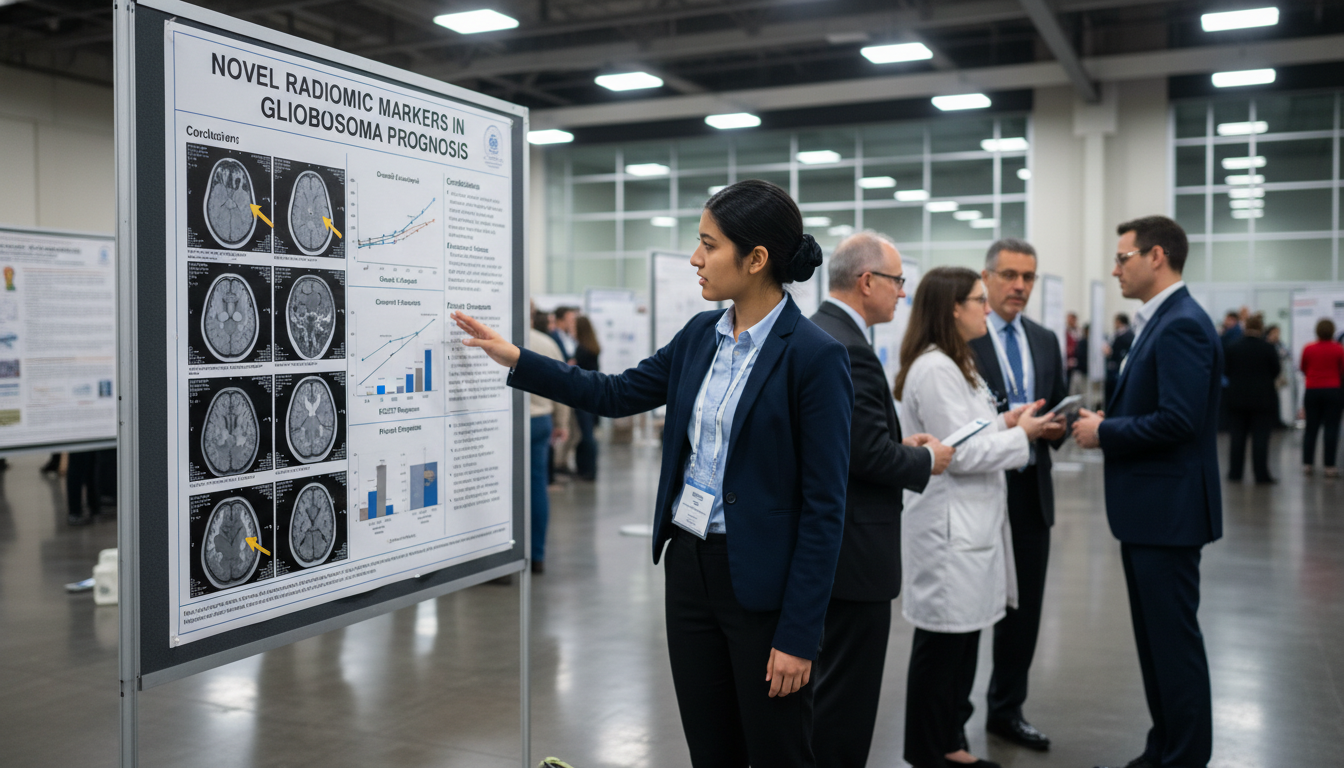
- Submit preliminary findings as an abstract at a radiology conference (e.g., RSNA or ARRS).
- Prepare a poster or oral presentation from that abstract.
- Then develop a full manuscript for submission to a peer‑reviewed journal.
- Consider a pictorial review or educational exhibit focusing on the imaging patterns observed.
This way, one well‑designed study could yield:
- 1 conference abstract
- 1 conference poster/oral presentation
- 1 peer‑reviewed paper
- 1 educational exhibit
That’s four CV entries from a single, coherent body of work.
Prioritize radiology-centered venues for publications and presentations
When possible, aim for:
Radiology-specific journals:
- Radiology, AJR, European Radiology
- Clinical Imaging, Emergency Radiology, Academic Radiology
- Subspecialty journals (Neuroradiology, Skeletal Radiology, Journal of Thoracic Imaging, etc.)
Radiology conferences:
- RSNA (Radiological Society of North America)
- ARRS (American Roentgen Ray Society)
- ACR meetings (American College of Radiology)
- Subspecialty society meetings (e.g., Society of Skeletal Radiology, American Society of Neuroradiology)
Even a few items in these venues strongly signal genuine engagement with the specialty.
Practical Barriers for IMGs—and How to Overcome Them
Barrier 1: Limited access to data and imaging systems
Solutions:
Formal research fellowships in U.S. or Canadian radiology departments:
- Typically 6–24 months.
- Provide access to PACS, EMR, mentors, and existing datasets.
- Some are unpaid/volunteer; some are paid positions.
Remote collaboration:
- You may work on literature review, data cleaning, statistical analysis, or manuscript drafting from abroad while a local team handles PACS-related tasks.
- Platforms like REDCap, shared drives (with institutional rules), and secure communication tools facilitate remote work.
Use of publicly available datasets:
- Some radiology and imaging AI projects can be done using open-source datasets (e.g., chest X-ray, CT colonography datasets) if you have basic programming skills.
Barrier 2: Lack of research training
Solutions:
- Complete online research methodology and statistics courses (Coursera, edX, university certificate programs).
- Attend workshops offered by:
- RSNA (online courses/webinars)
- Your institution’s clinical research office
- Read “Methods” sections of good radiology papers closely to model structure and language.
- Use statistical software with user-friendly GUI (e.g., JASP, SPSS, jamovi) if you are not yet comfortable with R or Python.
Barrier 3: Time constraints with exams and clinical duties
Balance is critical: your research work should not derail your USMLE or language exams, which still represent major filters for IMGs.
Strategies:
Treat research like a part‑time job with fixed weekly hours (e.g., 8–10 hours/week while studying; more during research blocks).
Prioritize projects by time-to-output:
- Short-term: case reports, small retrospective studies, narrative reviews.
- Long-term: prospective studies, AI projects requiring complex pipelines.
Communicate clearly with mentors about deadlines (e.g., ERAS timeline) so they can suggest realistic goals.
Barrier 4: Authorship and recognition concerns
Sometimes IMGs worry about being “used” as data collectors without recognition.
Mitigation steps:
At the start of a project, politely discuss expectations:
- What role might you have? (e.g., co‑author vs acknowledgment)
- What tasks are needed to be considered for authorship? (following ICMJE criteria)
Keep records of your contributions (e.g., data extraction logs, drafts you wrote).
Be reliable, responsive, and proactive—mentors are more likely to advocate for you if you are consistent and professional.
Tailoring Your Research Narrative for the Diagnostic Radiology Match
A strong research portfolio is not just about the list of items; it’s also about how you tell your story in ERAS and interviews.
In your personal statement
Integrate research meaningfully:
Describe how specific projects deepened your understanding of radiology.
- Example: “Working on a retrospective study of CT imaging in pulmonary embolism taught me to appreciate subtle vascular findings and think critically about protocol optimization for diagnostic yield and radiation dose.”
Highlight skills that transfer to residency:
- Systematic approach to complex problems
- Comfort with ambiguity and incomplete data
- Collaboration in multidisciplinary teams
Avoid merely listing projects; focus on what you learned and how it solidified your commitment to diagnostic radiology.
During interviews
Be prepared to discuss:
- At least 1–2 projects in depth (design, methods, limitations, key findings).
- Your specific contribution (not just “I helped with data”).
- Any challenges faced and how you overcame them (IRB hurdles, data quality issues, learning statistics).
- How you plan to continue research in residency (e.g., “I’m interested in further exploring AI models for chest imaging, and I noted your department’s work on…”).
Program directors and faculty may ask:
- “What was the most significant limitation of your study?”
- “If you could redo the project, what would you change?”
Answering thoughtfully shows maturity and genuine scientific thinking.
Aligning your profile with program type
Research-heavy academic programs:
- Value higher total output, first-author publications, and projects in high-impact venues.
- Expect you to articulate clear research interests and possible niche areas.
Community or hybrid programs:
- Still appreciate research, but often focus more on clinical performance and service.
- A moderate number of radiology-relevant projects plus clear clinical commitment works well.
Consider this when targeting programs and writing secondary communications/emails.
FAQs: Research Profile Building for IMGs in Diagnostic Radiology
1. As an IMG, can I match into radiology without any research?
It is possible but significantly harder, especially at academic centers. For IMGs, research for residency applications is often a crucial differentiator. Programs use research output (even modest) as evidence of initiative, academic engagement, and communication skills. If you have time before applying, try to secure at least a few radiology-related abstracts, posters, or publications.
2. How many publications are needed for an IMG to be competitive in radiology?
There is no fixed cutoff, but for IMGs aiming at diagnostic radiology:
- 1–3 items: Better than none but modest; you may still face difficulty at very competitive programs.
- 4–8 items (mix of abstracts, posters, and peer‑reviewed papers, some clearly radiology-related): Common among successful IMG applicants.
- 9+ items, including first-author work and radiology-focused studies: Strong for many academic programs.
Quality, radiology relevance, and your actual role often matter more than the raw number.
3. I have research, but none of it is in radiology. Does it still help?
Yes, non‑radiology research still helps, especially if it demonstrates:
- Methodological rigor (clinical trials, meta-analyses, large datasets)
- Technical skills (statistics, programming, machine learning)
- Productivity over time
To optimize your diagnostic radiology match chances, try to add at least some imaging-related projects (case reports, reviews, or collaborative studies). You can also emphasize any imaging components from your prior work, even if radiology wasn’t the primary focus.
4. Is a formal radiology research fellowship in the U.S. necessary for IMGs?
Not strictly necessary, but highly beneficial if you can obtain one. Advantages:
- Direct access to PACS and institutional datasets
- Close mentorship from radiology faculty
- Strong letters of recommendation from U.S. academic radiologists
- Better understanding of U.S. academic and clinical culture
If a formal fellowship is not possible, substantial remote collaboration with U.S.-based teams, combined with high-quality outputs (publications, presentations), can still significantly strengthen your profile.
By approaching your research profile as a deliberate, multi-year strategy rather than a last-minute checkbox, you can turn research into one of your strongest assets as an international medical graduate pursuing diagnostic radiology. Focus on radiology relevance, consistent productivity, and clear storytelling, and you will markedly improve your position in the diagnostic radiology match.