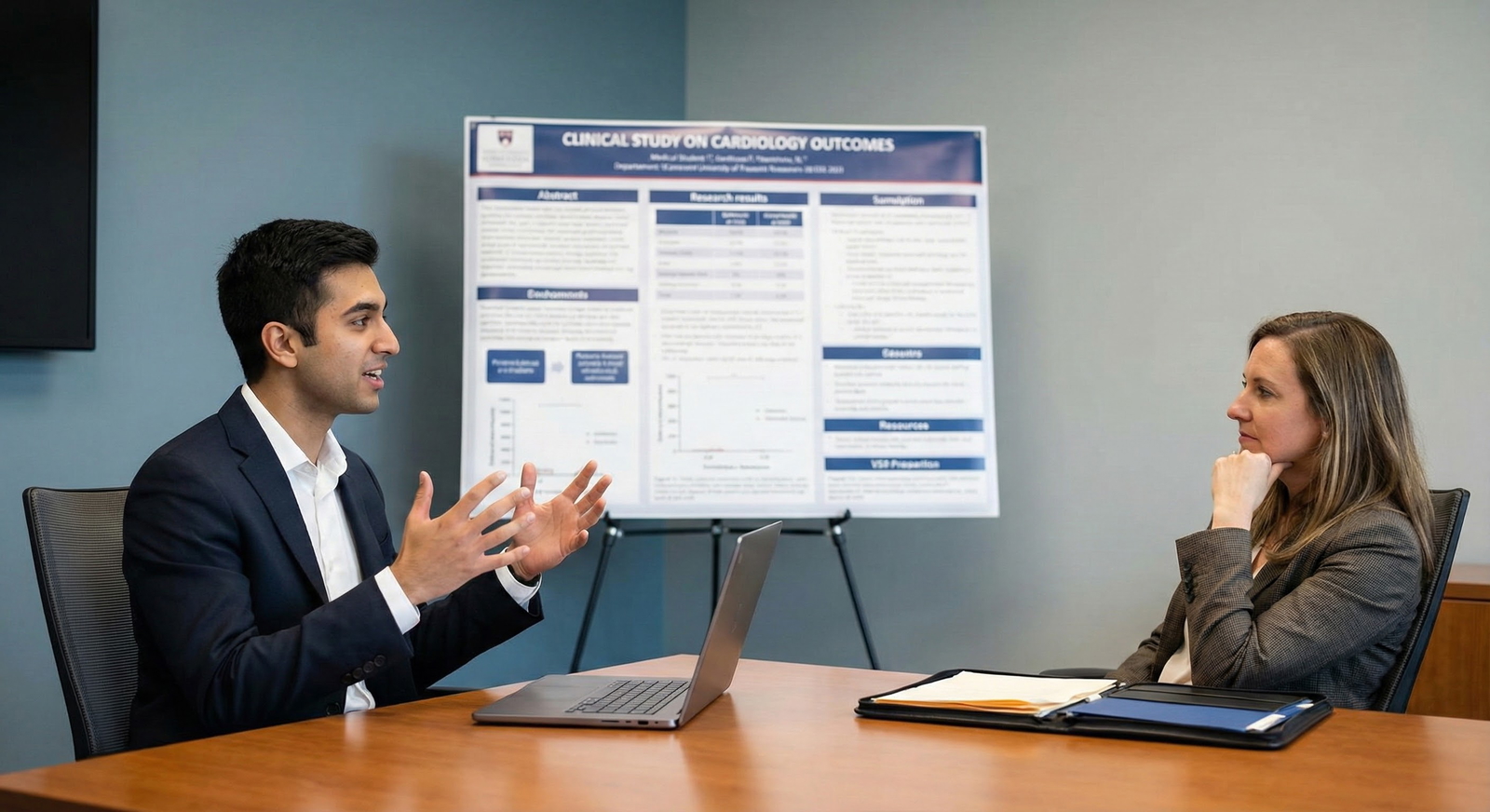
Understanding the Role of Research for IMGs in Med-Peds
Among combined training programs, Medicine-Pediatrics (Med-Peds) values evidence-based practice, critical thinking, and versatility. For an international medical graduate (IMG), a thoughtful research profile can significantly strengthen your medicine pediatrics match application—especially if you’re aiming for academic or university-affiliated programs.
This IMG residency guide focuses specifically on research profile building for Med-Peds applicants with international backgrounds. You do not need a PhD or dozens of randomized controlled trials. You do, however, need a strategic, coherent, and credible record that shows you can think scientifically, work in teams, and contribute to academic medicine.
We will walk through:
- The real role of research in Med-Peds residency selection
- What types of research “count” for IMGs
- How to start from zero and build a research track
- How many publications are truly needed
- How to present your research in ERAS and interviews
- Common pitfalls and how to avoid them
Throughout, the emphasis is on practical steps you can take, even with limited resources and from outside the U.S.
What Med-Peds Programs Look for in an IMG Research Profile
Why research matters in Med-Peds
Med-Peds physicians often work at the interface of:
- Adult internal medicine and pediatrics
- Inpatient and outpatient care
- Clinical practice, quality improvement (QI), and education
Programs therefore value residents who can:
- Ask good questions about patient care
- Interpret literature and guidelines
- Participate in QI and scholarly projects
Research on your CV is evidence that you:
- Understand how evidence is generated
- Can work systematically and meet deadlines
- Are comfortable with data, critical appraisal, and writing
For IMGs, research can also:
- Compensate somewhat for being farther out from graduation (older YOG)
- Offset slightly lower test scores by showcasing academic strength
- Demonstrate serious engagement with U.S. healthcare if projects are U.S.-based
That said, research is rarely the primary selection filter for categorical Med-Peds (unlike some highly research-oriented subspecialty pipelines). Most programs weigh:
- USMLE/COMLEX scores
- Clinical performance and letters of recommendation
- Communication skills and professionalism
- Fit with Med-Peds philosophy and patient population
- THEN research and scholarly activity
What kind of research profile is realistic and valued for IMGs?
Programs do not expect every IMG to have large randomized trials. They do value:
- Consistency: A pattern of scholarly engagement, even if modest
- Relevance: Topics tied to internal medicine, pediatrics, or Med-Peds-relevant areas (e.g., transition-of-care, adolescent medicine, chronic disease across lifespan, global health)
- Productivity: Some tangible outcomes—posters, abstracts, publications, or QI presentations
- Integrity: Authorship that matches your real contribution
A strong Med-Peds-oriented research profile might include:
- 2–5 posters or oral presentations at local/national/state conferences
- 1–3 peer-reviewed publications (even as middle or last author)
- 1–2 QI projects with clear outcome measures
- Participation in ongoing institutional research (e.g., helping run a registry)
And remember: even if your research is not Med-Peds-specific, it can still be valuable if it demonstrates strong methods and teamwork.
Types of Research that “Count” for Med-Peds IMGs
Many IMGs ask: “Does this type of work actually help my application?” Here’s a structured look at major categories.
1. Clinical research (observational & interventional)
Highly valued, especially when tied to internal medicine or pediatrics.
Examples:
- Retrospective chart review of asthma admissions in pediatrics
- Cohort study examining diabetes control in young adults transitioning from pediatric to adult care
- Secondary analysis of existing dataset (e.g., NHANES) on obesity across age groups
Why it’s valuable:
- Directly relevant to patient care
- Often leads to abstracts, posters, and publications
Tips for IMGs:
- Seek projects that are already ongoing so you can plug in and help with defined tasks: data collection, data cleaning, chart review, or literature review.
- Look for Med-Peds-relevant topics: chronic conditions that begin in childhood and persist into adulthood (e.g., cystic fibrosis, congenital heart disease, sickle cell disease, type 1 diabetes).
2. Quality improvement (QI) and patient safety
QI is extremely relevant because residency programs must demonstrate scholarly activity and system improvement. For Med-Peds, QI that bridges age groups or settings is especially attractive.
Examples:
- Reducing 30-day readmissions among adolescents with sickle cell disease transitioning to adult care
- Improving vaccination rates for high-risk adult patients using pediatric clinic workflows
- Standardizing transition-of-care notes between pediatric and internal medicine services
Outputs:
- Posters at institutional QI days
- Manuscripts in QI-focused journals
- Presentations at conferences (e.g., SGIM, PAS, SHM)
Tips:
- If you lack prior research experience, QI can be an accessible entry point.
- Document your Plan-Do-Study-Act (PDSA) cycles, metrics, and outcomes; these are very discussable during interviews.
3. Epidemiology and public health research
Many IMGs come from settings where public health research is more available than pure clinical trials.
Examples:
- Survey of vaccination attitudes among parents in your home country
- Community-based study on malnutrition in under-5 children
- Epidemiologic study of hypertension prevalence in young adults
These are highly relevant for Med-Peds when they deal with:
- Adult and pediatric populations
- Prevention, primary care, and chronic disease management
- Social determinants of health
4. Basic science and translational research
Still valuable—especially in academic Med-Peds programs—but typically less directly tied to day-to-day residency tasks unless it relates to:
- Genetic diseases spanning childhood and adulthood
- Immunology of conditions treated in Med-Peds clinics
- Developmental biology that informs congenital conditions
If this is your main background, you should:
- Be ready to explain the clinical relevance in simple terms
- Show how skills (rigor, statistics, lab methodology) translate to clinical reasoning and evidence-based practice
5. Educational research and curriculum development
Med-Peds strongly values clinician-educators. Educational research can be a powerful differentiator.
Examples:
- Designing a teaching module on transition of care from pediatric to adult services
- Studying the impact of simulation training on pediatric resuscitation skills among residents
- Analyzing effectiveness of a new curriculum for chronic disease management in young adults
These projects:
- Highlight your interest in teaching—crucial for many Med-Peds programs
- Are relatively feasible with smaller sample sizes and institutional support
6. Case reports, case series, and narrative reviews
Often the most accessible starting point for IMGs, especially those asking how many publications needed for competitive applications.
Case-based work is particularly acceptable when:
- The cases are unusual or have clear educational value
- They tie pediatrics and internal medicine perspectives (e.g., rare diseases presenting differently in childhood vs adulthood)
Examples:
- Adult presentation of a traditionally pediatric metabolic disorder
- Case series of adolescents with autoimmune disease transitioning to adult rheumatology
Remember: case reports are lower on the hierarchy of evidence, but they still:
- Show that you can write, collaborate, and publish
- Provide useful conversation points in interviews
- Often require fewer resources

Building Your Research Profile from Scratch as an IMG
Many international medical graduates worry: “I have little or no research. Is it too late?” It is rarely too late—but you must be structured and strategic.
Step 1: Clarify your goals and timeline
Before signing up for any study, be clear on:
- When you will be applying (e.g., next cycle vs in 2–3 years)
- Whether you want a research-heavy academic trajectory or a balanced clinical focus
- What type of Med-Peds programs you’re targeting (community vs university vs research-focused)
For an IMG who will apply in 1–2 years, a realistic goal might be:
- 1–2 case reports
- 1–2 posters (local, regional, or national)
- 1–2 original research or QI projects with at least one submitted manuscript
Step 2: Get into a research-active environment
You won’t build a strong profile in isolation. Take concrete steps to embed yourself where projects are happening:
- U.S. observerships or externships:
- Ask preceptors about ongoing projects.
- Offer to help with data collection or literature reviews.
- Research fellowships or scholarly years:
- Many institutions offer 1-year paid or unpaid research positions, often in medicine or pediatrics departments.
- Your home institution:
- Approach faculty who publish regularly.
- Suggest follow-up analyses on existing datasets or unfinished manuscripts.
A powerful approach is to combine observership + research in the same institution, giving you U.S. clinical exposure, letters of recommendation, and scholarly output.
Step 3: Start with quick-win projects, then build upward
You don’t have unlimited time. Prioritize projects with reasonable timelines and tangible outputs.
A practical sequence:
Case report or brief case series
- Timeline: ~2–4 months from idea to submission with a motivated mentor
- Learn journal submission processes and authorship norms
Poster presentation
- Use preliminary data from a chart review or QI project.
- Timeline: ~4–8 months
Original article or QI manuscript
- Longer, but if you join a project that is mid-way, you can contribute significantly to final analysis and writing.
Balance is essential: avoid committing to large multi-year trials where you’re one of many data collectors without realistic authorship.
Step 4: Choose Med-Peds-relevant themes when possible
You can’t always dictate the topic, but you can nudge your portfolio toward Med-Peds by favoring:
Conditions prevalent in both adults and children:
- Asthma, diabetes, obesity, autoimmune disease
- Congenital heart disease, sickle cell disease, cystic fibrosis
Transition-of-care topics:
- Continuity from pediatric to adult services
- Young adults with childhood-onset chronic illnesses
Preventive care and health disparities:
- Vaccination rates
- Screening for chronic diseases in early adulthood
- Social determinants of health impacting children and parents
When you interview, highlight how your research aligns with Med-Peds priorities, even if the project itself is adult-only or pediatric-only.
Step 5: Secure effective mentorship
For IMGs, mentorship is often the difference between:
- Years of unrewarded data entry
- Versus a focused year with multiple presentations and manuscripts
Look for mentors who:
- Have a track record of publishing in the last 2–3 years
- Involve trainees and students as co-authors
- Are responsive and clear about expectations
When approaching potential mentors:
- Send a concise email with CV and a 1–2 paragraph statement of interest
- Highlight specific skills you can offer (statistics, data management, language skills, previous research exposure)
- State your timeline and goals transparently
Mentorship doesn’t have to be a single person. Ideally, you’ll have:
- One clinical mentor in adult medicine or pediatrics
- One Med-Peds or Med-Peds-oriented mentor, if available
- A methodologic mentor (biostatistician or epidemiologist)
Publications, Productivity, and the “How Many” Question
How many publications needed for a Med-Peds match?
There is no universal cut-off, and programs rarely filter strictly on publication count. That said, data from NRMP Program Director Surveys and anecdotal experience suggest:
- Having some scholarly output is better than none.
- Beyond 5–7 items, the quality and relevance matter more than raw number.
For a competitive Med-Peds applicant:
Minimum solid profile:
- 1–2 publications in peer-reviewed journals (any authorship position)
- 1–2 posters or oral presentations
Stronger academic-leaning profile:
- 3–6 publications (mix of original research, reviews, case reports)
- Several conference presentations, ideally including U.S. venues
However:
- Many matched Med-Peds residents have 0–1 publications but strong clinical performance and letters.
- For IMGs, especially at more academic programs, 2–3 solid outputs can help you stand out, but they rarely compensate for poor exams or weak clinical references.
What counts as “research” on ERAS?
You’ll list separate items for:
- Peer-reviewed journal articles
- Non–peer-reviewed articles
- Abstracts, posters, and presentations
- Book chapters
- QI and patient safety projects
Each entry should specify:
- Your role (e.g., first author, data analyst, co-author)
- Journal or conference name
- Status (Published / Accepted / Submitted / In progress)
Avoid inflating your role. Program directors can often sense exaggeration, and you must be able to discuss any listed project in detail.
Prioritizing quality: Red flags to avoid
- Predatory journals: Those that charge high fees with minimal peer review. Publishing here can sometimes hurt more than help.
- Dubious authorship practices (buying authorship, honorary co-authorship).
- Extremely long author lists for minor contributions with no clear explanation.
Better to have:
- 2–3 legitimate, well-conducted projects
- Than 10 low-quality papers in questionable journals

Presenting Your Research in Applications and Interviews
Doing research is only half the task; communicating it effectively is equally important.
Tailoring your ERAS application
In your Experience and Publications sections:
Use clear, descriptive titles:
- “Quality Improvement Project to Reduce Pediatric Asthma Readmissions in Urban Hospital”
- “Cross-Sectional Study of Hypertension in Young Adults Transitioning from Pediatric Care”
Emphasize Med-Peds relevance:
- Mention if the project involves both adult and pediatric populations.
- Highlight transition-of-care, chronic disease across lifespan, or preventive focus.
In your Personal Statement:
- Connect your research to your motivation for Med-Peds:
- “Working on a project about adolescents with type 1 diabetes transitioning to adult care showed me the unique challenges of caring for patients across the age spectrum…”
- Don’t simply list projects; instead, share 1–2 specific moments that shaped your thinking.
During interviews: how to discuss your research confidently
Expect questions such as:
- “Tell me about one of your research projects.”
- “What was your role in this study?”
- “What did you learn from this experience?”
- “How do you see research fitting into your future as a Med-Peds physician?”
Prepare a 2–3 minute structured summary for your main project:
- Background: Clinical problem and why it matters (especially to Med-Peds).
- Methods: Study design, your responsibilities.
- Results: Main findings (no need for excessive statistical detail).
- Implications: How it could change practice or guide future work.
- Your growth: Skills you developed (critical appraisal, QI methodology, data analysis).
Specific Med-Peds angle:
- If your project is adult-only: emphasize how the same condition appears in pediatrics and where transitions might be problematic.
- If pediatric-only: discuss how you’d want to follow those patients into adulthood and continue optimizing care over time.
Integrating research with future Med-Peds goals
Programs like to see continuity between what you’ve done and what you want to do.
For example:
- “I hope to become a Med-Peds hospitalist with a focus on QI projects to improve care transitions for young adults with chronic childhood-onset diseases.”
- “I’m interested in academic Med-Peds and would like to continue research on health disparities affecting both children and adults in underserved communities.”
If you’re less research-oriented:
- Express interest in participating in resident QI projects and possibly mentoring medical students on small projects, rather than claiming you want a fully research-focused career.
Practical Strategies and Pitfalls for IMGs
Strategies to maximize impact
- Cluster your efforts in a single department or research group for deeper involvement and better letters.
- Use free tools to become more efficient and credible:
- Mendeley/Zotero for reference management
- G*Power for sample size (for more advanced work)
- CONSORT/STROBE/PRISMA guidelines when drafting manuscripts
- Collaborate with other IMGs and students: tackling projects as a small team can increase productivity and resilience.
- Regularly ask for feedback on your CV and research direction from mentors who know Med-Peds culture.
Common pitfalls
- Spreading yourself too thin over many projects with no completed output.
- Over-focusing on basic science when you seek primarily clinical Med-Peds programs (unless clearly framed as foundational to your interests).
- Listing “in progress” projects that are not realistic (programs may ask specifics).
- Poor organization of your IMG residency guide materials: mis-ordered or incomplete citations, inconsistent authorship formats, or missing dates.
FAQs: Research for IMGs in Medicine-Pediatrics Residency
1. I have no research experience at all. Can I still match into Med-Peds as an IMG?
Yes. Many Med-Peds programs prioritize strong clinical performance, USMLE scores, and letters. However, having at least some scholarly activity (e.g., a case report, a QI project, or a poster) can strengthen your application considerably—especially at academic centers. If you’re 1–2 years from applying, you still have time to build a focused, manageable research profile.
2. What types of research are most valuable for Med-Peds specifically?
Projects that span or connect adult and pediatric care are ideal, such as:
- Transition-of-care for chronic diseases (e.g., diabetes, congenital heart disease)
- Conditions common in both adults and children (asthma, obesity, sickle cell disease)
- QI projects improving continuity between pediatric and adult clinics
That said, solid, well-conducted research in either adult internal medicine or pediatrics alone is still highly valuable. The key is how you explain its relevance to Med-Peds during your application and interviews.
3. How many publications do I need to be competitive?
There’s no fixed number. For an IMG, a reasonable target is:
- 1–2 peer-reviewed publications (which can include case reports or case series)
- 1–2 posters or presentations
More is helpful, but quality and your understanding of the work matter far more than quantity. Some successful Med-Peds applicants match with minimal research but very strong clinical credentials; others with more research match at research-leaning programs. Aim for a coherent, honest, and relevant body of work.
4. Does research have to be from the U.S. to count?
No. High-quality research from your home country is still valuable and respected, particularly if it’s:
- Published in reputable journals
- Methodologically sound
- Clearly explained and relevant to internal medicine or pediatrics
However, U.S.-based research can provide extra advantages:
- Demonstrates familiarity with U.S. healthcare systems
- May lead to U.S.-based letters of recommendation
- Shows you can function in a U.S. academic environment
An ideal profile for an IMG might combine home-country research experience with at least one U.S.-based project.
By approaching research with a clear strategy—choosing relevant projects, seeking good mentorship, and prioritizing quality over quantity—you can build a research portfolio that meaningfully supports your Medicine-Pediatrics residency goals as an international medical graduate.