Understanding the Research Landscape in Addiction Medicine for IMGs
For an international medical graduate (IMG) targeting an addiction medicine fellowship in the U.S. or other competitive systems, a strong research profile is a major asset. Addiction medicine is a rapidly expanding field at the intersection of psychiatry, internal medicine, public health, and policy. Programs increasingly favor applicants who can understand evidence, contribute to quality improvement, and participate in scholarly work.
Before building your research profile, you need to understand the ecosystem:
Why Research Matters in Addiction Medicine
Addiction medicine is highly evidence-driven because:
- Treatment paradigms (e.g., buprenorphine, methadone, naltrexone) are continuously evolving.
- Harm reduction, decriminalization, and policy changes rely on data.
- Co-occurring mental health and medical conditions require nuanced, multidisciplinary research.
- Stigma and health inequities demand population-level and implementation science approaches.
For program directors, a research-oriented IMG:
- Signals the ability to think critically and interpret literature.
- Demonstrates genuine commitment to substance use and addiction as a career focus.
- Shows you can handle scholarly expectations during residency and fellowship.
- Increases the program’s academic productivity and grant competitiveness.
How Much Research Is “Enough”?
Applicants frequently ask: “How many publications are needed?” There is no fixed number, but some realistic benchmarks for an IMG residency guide in addiction-related pathways:
Stronger side of average applicant to academic psychiatry or internal medicine with addiction interest:
- 2–4 meaningful addiction-related projects (published, accepted, or in robust progress)
- A mix of case reports, review articles, and at least one original project or quality improvement
Highly competitive applicant for addiction medicine fellowship or research-intensive programs:
- 4–8 total scholarly outputs
- At least 2–3 clearly addiction-focused (substance use, harm reduction, overdose, AUD, OUD, tobacco cessation, etc.)
- Evidence of progression: first-author work, conference presentations, or contributions to larger studies
The more competitive the institution and the more research-centric the program, the more critical your portfolio becomes. But remember: quality, relevance, and your role in the project matter more than raw count.
Types of Research Valued in Addiction Medicine
You do not need to be a basic science expert to stand out. Addiction medicine values a wide spectrum of scholarship:
- Clinical research: Treatment outcomes, relapse predictors, pharmacotherapy comparisons, integrated care models.
- Epidemiology/public health: Prevalence, overdose patterns, health disparities, social determinants of substance use.
- Health services & implementation science: Access to medications for opioid use disorder (MOUD), integration with primary care, telehealth for SUD.
- Quality Improvement (QI): Improving screening rates (AUDIT, DAST), naloxone distribution, adherence to prescribing guidelines.
- Educational research: Training curricula for substance abuse training, stigma reduction interventions for healthcare providers.
- Policy and legal research: Decriminalization effects, harm reduction policies, prescribing regulations.
Even if your home environment limited you to case reports or literature reviews, you can still build a strong platform if it is clearly tied to addiction medicine and your personal growth.
Core Components of a Strong Research Profile for IMGs
1. Foundational Knowledge and Skill Set
Before you generate publications for match applications, ensure you can operate in a research environment:
- Literature searching: Comfortable with PubMed, Google Scholar, Cochrane, and addiction-specific journals (e.g., Addiction, Journal of Addiction Medicine, Drug and Alcohol Dependence).
- Study design basics: Cross-sectional vs. cohort vs. RCT, observational vs. interventional, outcomes, confounding, bias.
- Biostatistics essentials: p-values, confidence intervals, basic regression, effect sizes; not expert-level, but enough to interpret and discuss.
- Ethics and regulations: IRB basics, informed consent, confidentiality, special considerations for substance-using populations.
Actionable step:
Complete free online courses (e.g., Coursera, edX, NIH) in clinical research methods and research ethics. Mention them in your CV if they are structured, certificate-based courses.
2. Addiction-Specific Focus
Programs want to see alignment: if you say you want addiction medicine, your portfolio should reflect it. Helpful directions:
- Clinical focus: AUD, OUD, stimulant use disorder, benzodiazepine misuse, tobacco and vaping, behavioral addictions (e.g., gambling).
- Setting focus: Emergency departments, primary care, methadone clinics, community outreach, correctional health, telehealth.
- Population focus: Adolescents, pregnant patients, people experiencing homelessness, people living with HIV or hepatitis C.
Examples of appropriately aligned project themes:
- “Predictors of retention in buprenorphine treatment among patients in a community clinic.”
- “Patterns of alcohol use and liver disease in a tertiary care center in [your country].”
- “Barriers to naloxone access among people who inject drugs in an urban setting.”
Your projects do not all need to be in addiction medicine, but aim for at least half to clearly support your interest in substance abuse training and practice.
3. Types of Scholarly Output You Can Realistically Achieve
As an IMG, you may face institutional or visa hurdles. Prioritize realistic, high-yield outputs:
Case reports and case series
- Feasible with small sample size.
- Useful to highlight rare presentations, complex co-occurring conditions, or innovative care models (e.g., inpatient initiation of buprenorphine, managing OUD in pregnancy).
- Fast turnaround if well-written and targeted to appropriate journals.
Narrative reviews / systematic reviews / scoping reviews
- Ideal if you lack direct patient access.
- Systematic reviews require more methodological rigor but look strong on CVs.
- Focus topics: harm reduction, medications for SUD, telemedicine in addiction care, SUD in specific populations.
Original clinical or survey-based research
- Feasible with mentorship and institutional support.
- Examples: survey of provider attitudes toward MOUD, chart review of overdose presentations, evaluation of screening protocols.
Quality improvement (QI) projects
- Highly valued and often easier to execute in clinical settings.
- Example: Increasing screening for risky alcohol use in primary care clinic from 30% to 80% using PDSA cycles.
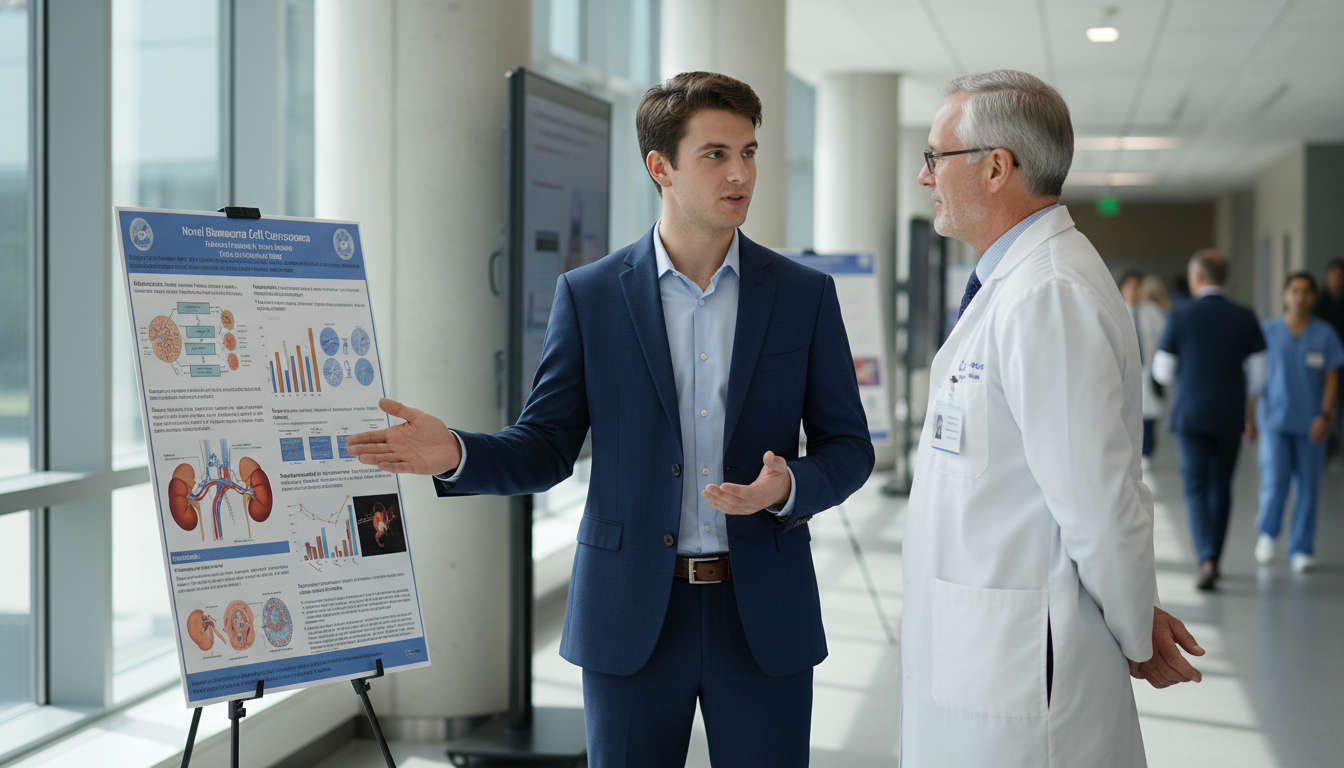
Conference abstracts and posters
- Faster path to dissemination.
- Often count as “scholarly work” and show academic engagement.
Step-by-Step Strategy to Build a Competitive Addiction Medicine Research Profile

Step 1: Clarify Your Career Narrative
Your research strategy should support a coherent story:
- Long-term goal: Addiction medicine fellowship vs. psychiatry with addiction emphasis vs. internal medicine + addiction consult.
- Population interest: Urban underserved, rural communities, adolescents, pregnant persons, people who inject drugs, etc.
- Setting interest: Academic center, community hospital, public health or policy organization.
Write a 4–5 sentence personal statement outline that answers:
- Why addiction medicine?
- What patient population or question motivates you?
- What kind of physician-researcher/clinician you hope to become?
- How research fits into that path?
Use this outline to choose projects that reinforce that narrative.
Step 2: Secure Mentors Strategically
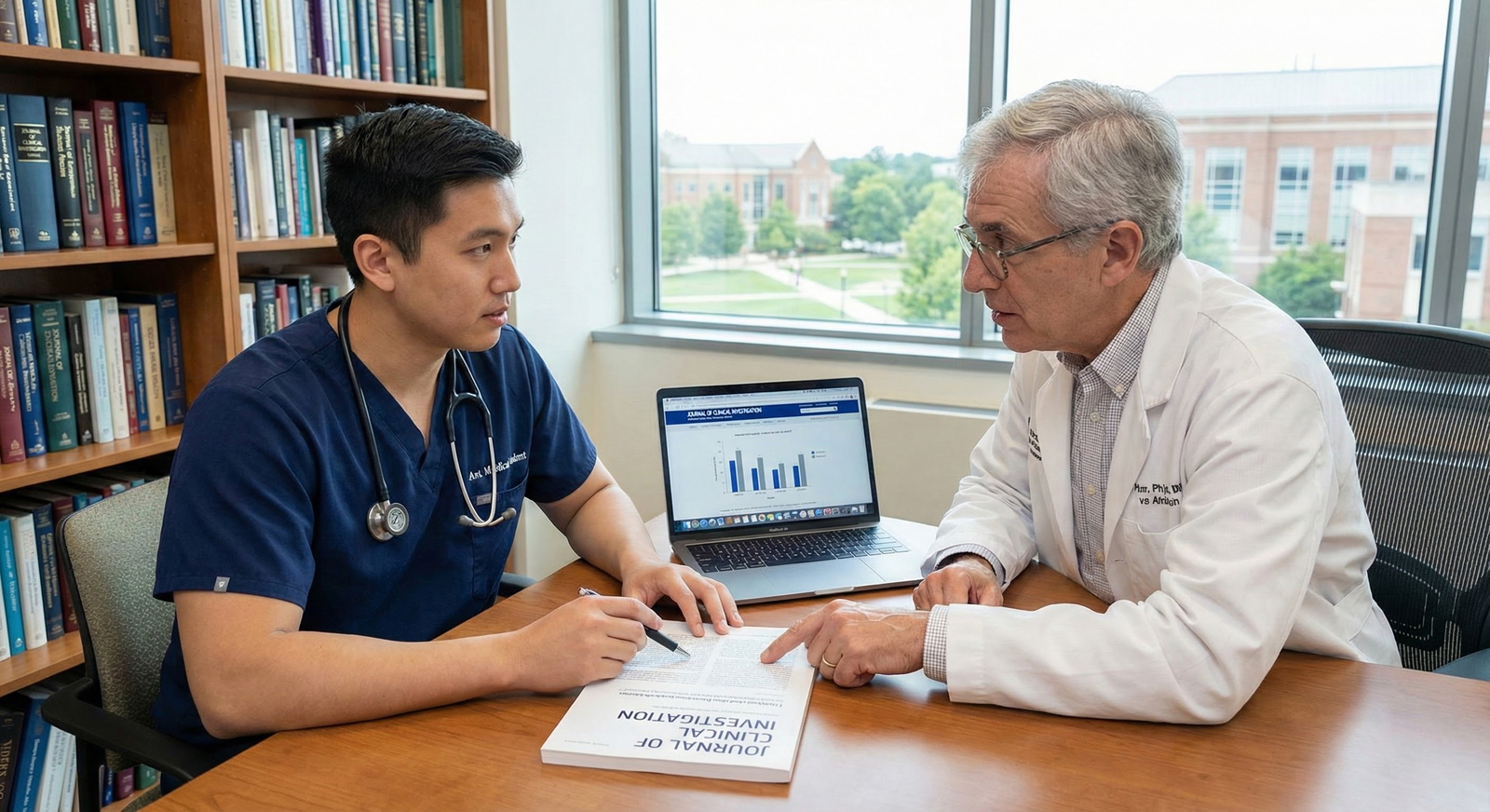
As an IMG, mentorship is critical for navigating systems and gaining credibility.
Target mentors:
- Addiction psychiatrists or internists with addiction boards.
- Faculty at addiction research centers, public health schools, or harm reduction programs.
- Researchers in related fields: HIV care, hepatology, emergency medicine, behavioral health, health services.
How to find them:
- Check addiction medicine fellowship websites for faculty lists and research interests.
- Search PubMed with your city/region and keywords like “opioid use disorder,” “harm reduction,” “substance use.”
- Use LinkedIn and ResearchGate to identify active researchers.
How to approach:
- Write concise emails:
- Two sentences on who you are (IMG, current location, exam status if relevant).
- Two–three sentences on your interest in addiction medicine.
- One sentence on skills you can offer (e.g., literature review, data entry, statistics).
- Clear ask: “I would be grateful for any opportunity to contribute to your ongoing projects, even in a small role, to gain research experience in addiction medicine.”
Follow up once after 10–14 days if no response.
Step 3: Start With Achievable Projects and Scale Up
Prioritize early “wins” that demonstrate productivity:
Case report or case series
- Identify a case with unique addiction-related complexity (e.g., severe OUD with endocarditis, novel substance intoxication).
- Discuss with your mentor about journal fit (case-report journals vs. addiction journals).
- Aim to be first author, especially on early projects.
Narrative or scoping review
- Pick a topic closely aligned to your interest and your mentor’s work.
- Create a structured outline: Background, Methods (for scoping/systematic), Results/Themes, Discussion/Implications.
- Use PRISMA guidelines if doing a systematic review.
Retrospective chart review
- Design a simple, focused question.
- Example: “What proportion of hospitalized patients with alcohol withdrawal receive guideline-concordant benzodiazepine dosing?”
- Seek IRB guidance early; use standardized data forms.
Survey project
- Survey patients, trainees, or clinicians on attitudes, barriers, or knowledge related to SUD care.
- Keep questionnaires short; pilot test for clarity.
As your confidence and experience grow, seek involvement in larger prospective studies or multi-center collaborations.
Step 4: Learn and Use Basic Research Tools
Programs appreciate applicants who can contribute independently. Develop proficiency with:
- Reference managers: Zotero, Mendeley, or EndNote.
- Statistics software: SPSS, R, Stata, or even Excel for simple analyses.
- Data collection tools: REDCap, Qualtrics, Google Forms (if appropriate and approved).
- Writing tools: Templates for abstracts and manuscripts; familiarity with journal guidelines.
Create your own templates for:
- Abstracts (background, methods, results, conclusions).
- Case reports (introduction, case description, discussion, learning points).
- Reviewer responses (if you get revisions from journals).
Step 5: Convert Work Into Visible Outputs
Your work must be visible in the forms program directors recognize:
- Peer-reviewed journal articles (highest impact).
- Conference abstracts and posters at:
- American Society of Addiction Medicine (ASAM)
- American Academy of Addiction Psychiatry (AAAP)
- APA, ACP, or local addiction and public health meetings
- Book chapters, if available through mentors.
- Institutional presentations: resident/fellow research day, hospital grand rounds.
Plan each project with an “output target” from the beginning: Decide whether the goal is a peer-reviewed article, conference poster, or both.
Common Challenges for IMGs and How to Overcome Them

Limited Access to Patients or Institutional Resources
If you are not currently embedded in a U.S. institution or a research-active hospital:
Focus on:
- Systematic or narrative reviews.
- Meta-analyses with collaboration.
- Online survey-based research (e.g., providers in your country).
- Secondary data analyses using publicly available datasets (e.g., NSDUH, CDC data) if you can learn basic stats.
Consider:
- Collaborating remotely with academic mentors in the U.S., Canada, UK, or elsewhere.
- Joining research networks or online journal clubs focused on addiction medicine.
Time Pressures: USMLE, Jobs, and Family
When balancing exams, work, and research:
Organize projects into:
- Short-term (1–3 months): Case reports, letters to the editor, small narrative reviews.
- Medium-term (3–9 months): Full review articles, small chart reviews, QI projects.
- Long-term (9+ months): Larger original studies, multi-center collaborations.
Use a calendar to:
- Block 3–5 hours per week strictly for research.
- Schedule regular check-ins with mentors to avoid stagnation.
Even one strong, completed addiction-related project is better than multiple half-finished efforts.
Authorship and Recognition Concerns
As an IMG, advocate respectfully for appropriate authorship:
- Clarify roles early: “If I conduct the literature review, draft the manuscript, and help with revisions, would I be able to be first author?”
- Be transparent about contribution; follow ICMJE authorship criteria.
- Keep records (emails, drafts) to document your work, but always prioritize professionalism and relationships.
Navigating “How Many Publications Needed” vs. Realistic Expectations
For an international medical graduate pursuing an addiction medicine–oriented path:
- 2–3 well-executed, addiction-relevant papers (even if some are case reports or reviews) can significantly strengthen your profile.
- If you are targeting highly academic psychiatry or internal medicine programs that feed into addiction medicine fellowships, 4–6 total scholarly works, including several first-author items, will be very helpful.
- If you began later in your journey, emphasize:
- The depth of your involvement.
- How each project changed your understanding of addiction medicine.
- Future plans to continue scholarly work in residency and fellowship.
Presenting Your Research Effectively in Your Application
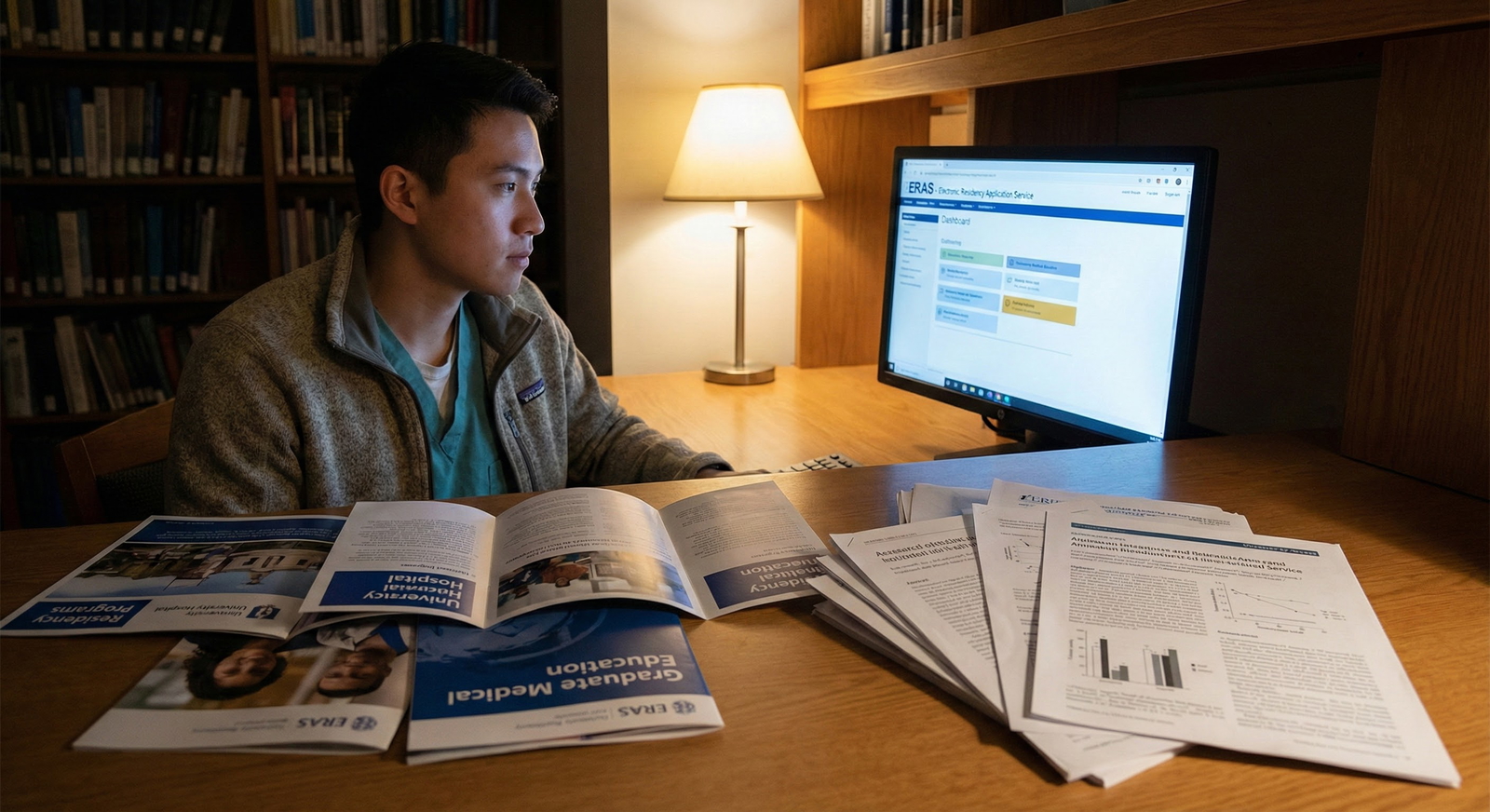
CV and ERAS (or Equivalent) Entries
For each project, highlight:
- Your role (conceptualization, data collection, analysis, manuscript drafting).
- Addiction relevance: add phrases like “focused on opioid use disorder,” “examining alcohol withdrawal management,” or “harm reduction in people who inject drugs.”
- Status: “Published,” “In press,” “Accepted,” or “In preparation” (use “in preparation” sparingly and only if genuinely near submission).
Organize under headings like:
- Peer-Reviewed Publications
- Abstracts and Presentations
- Research Experience
- Quality Improvement Projects
Personal Statement and Interviews
Connect your research to your clinical goals:
- Explain how a particular project changed your understanding of SUD (e.g., discovering high rates of undertreated pain in patients with OUD).
- Reflect on challenges: recruitment difficulties, stigma from staff, regulatory hurdles.
- Emphasize skills transferable to residency/fellowship: critical appraisal, data-driven practice, patient-centered outcomes.
In interviews, be ready for:
- “Tell me about your most meaningful research project.”
- “How did this work shape your interest in addiction medicine?”
- “What would you want to study next if you joined our program?”
Leveraging Research to Transition Into Addiction Medicine Fellowship
For IMGs, addiction medicine fellowship applications typically come after completing residency (psychiatry, internal medicine, family medicine, etc.). Your early research foundation can evolve into:
- Resident-level projects:
- QI around SUD screening.
- Evaluation of an inpatient addiction consult service.
- Fellowship-level or post-residency:
- Grants for pilot studies (e.g., small institutional grants).
- Larger prospective or implementation science projects.
The research skills and publications you build now will:
- Differentiate you among residency applicants.
- Position you for specialty tracks (e.g., research tracks, public psychiatry/addiction tracks).
- Smooth your pathway into an addiction medicine fellowship with a strong scholarly component.
Practical Example: A Three-Year Roadmap for an IMG
Year 1 (Pre-residency, building foundation)
- Complete 1–2 basic research methods/biostatistics courses.
- Identify 1–2 mentors with addiction interests (local or remote).
- Publish:
- 1 case report in addiction medicine or related area.
- 1 narrative review on a focused SUD topic.
Year 2 (Application preparation, intensifying output)
- Start and complete 1 chart review or survey-based project on SUD.
- Present 1 abstract/poster at a national or regional addiction-related conference.
- Submit at least one additional manuscript (original article or systematic review).
Year 3 (Residency application & transition)
- Finalize pending manuscripts; aim for at least 2–4 total publications for match consideration.
- Integrate your research into your personal statement and interview answers.
- Seek residency programs with strong addiction medicine or substance abuse training tracks, highlighting your readiness to contribute to ongoing research.
Even if your timeline is shorter, adapt this structure: foundation → first outputs → more complex projects → clear narrative.
FAQs: Research Profile Building for IMGs in Addiction Medicine
1. Do I need U.S.-based research experience to be competitive in addiction medicine–oriented programs?
Not strictly. U.S.-based experience can help, especially for networking and understanding local systems, but high-quality, addiction-relevant research from your home country is still valuable. Many addiction medicine questions (e.g., stigma, access, harm reduction) are global. Emphasize the transferability of your findings and how they inform your understanding of SUD care in diverse settings.
2. How many publications are needed to match into a residency that supports addiction medicine goals?
There is no fixed number. However, for an IMG residency guide perspective:
- Competitive academic programs: 4–6 scholarly outputs overall, with at least 2–3 clearly connected to addiction or related fields.
- Solid, middle-tier programs: even 2–3 strong, addiction-focused projects (especially with first authorship) can significantly improve your profile.
Focus on impact, depth of involvement, and coherence with your stated interest in addiction medicine rather than just chasing numbers.
3. What counts as “research” versus just “observership or shadowing”?
Observerships and clinical shadowing provide valuable exposure but are not research by themselves. Research implies a systematic process: a question, method, data, analysis, and some form of dissemination (abstract, poster, paper). If during an observership you help collect data, analyze outcomes, or write a case report or abstract, those components can be listed under research/scholarly work—just be specific about your role.
4. I have research in other fields (e.g., cardiology, oncology). Is it still useful for addiction medicine applications?
Yes, absolutely. Any disciplined research experience shows you can think critically and complete scholarly work. In your application and interviews:
- Highlight the transferable methods (e.g., survey design, data analysis, manuscript writing).
- Draw conceptual links where appropriate (e.g., addiction and cardiovascular disease risk, oncology patients with SUD).
- Combine that with some addiction-focused projects or reading to clearly show your shift and commitment to substance use and addiction medicine.
By building a deliberate, coherent research profile—rooted in genuine curiosity about substance use disorders and patient care—you can markedly strengthen your chances as an international medical graduate aspiring to addiction medicine. Your goal is not just “more publications for match” but a track record that proves you are ready to become a thoughtful, evidence-based addiction physician who will push the field forward.