Understanding the Role of Research for IMGs in Anesthesiology
For an international medical graduate (IMG) targeting anesthesiology in the United States, research is often one of the most strategic levers you can control. Program directors consistently rank research exposure, publications, and scholarly activity as meaningful signals of academic engagement and commitment to the specialty—especially when evaluating IMGs whose medical schools they may not know well.
This IMG residency guide focuses on building a strong anesthesiology-specific research profile: what counts as meaningful “research for residency,” how to assess your current profile, and how to strategically improve it without losing sight of clinical readiness and exam performance.
While no single formula guarantees an anesthesia match, a thoughtful research plan can:
- Differentiate you from other IMGs with similar exam scores
- Demonstrate genuine interest in anesthesiology
- Provide strong letters of recommendation from U.S. faculty
- Show evidence of persistence, critical thinking, and teamwork
If you are asking yourself “how many publications needed” for anesthesiology or whether you have time to do publications for match, this article will walk you through realistic expectations and concrete steps.
What Counts as “Research” for Anesthesiology Residency?
Not all research experiences are equal, but a wide spectrum of scholarly work is valuable. For an international medical graduate in anesthesiology, breadth plus some depth is ideal.
1. Types of Research That Matter
Below are common types of research experiences, roughly in order of typical impact on your application.
Original Clinical Research
- Prospective or retrospective clinical studies involving patient data
- Example topics:
- Predictors of post-operative nausea and vomiting in laparoscopic surgery
- Outcomes of regional vs. general anesthesia in hip fracture surgery
- Complications of neuraxial anesthesia in obstetric patients
Impact:
- High value if completed and ideally published in a peer-reviewed journal.
- Strong basis for letters from anesthesiology faculty and for discussing during interviews.
Quality Improvement (QI) and Patient Safety Projects
- Projects improving processes, compliance, or outcomes in the OR, PACU, or ICU
- Example topics:
- Reducing OR turnover times
- Improving pre-op medication reconciliation
- Increasing adherence to enhanced recovery after surgery (ERAS) protocols
Impact:
- Highly relevant in anesthesiology, as the specialty is deeply linked to systems-based practice and patient safety.
- Often easier to complete than full-scale clinical trials and can still lead to posters or publications.
Case Reports and Case Series
- Descriptions of unique or instructive clinical cases
- Example topics:
- Management of a rare airway anomaly
- An unusual reaction to anesthetic agents
- Complex multimodal analgesia in a challenging patient
Impact:
- Relatively easier entry point for IMGs.
- Good for your first publications for match, particularly when you don’t yet have a network.
- Best when tied clearly to anesthesiology or critical care.
Systematic Reviews and Narrative Reviews
- Synthesizing existing research on a focused clinical question
- Example topics:
- Opioid-sparing strategies in perioperative pain management
- Non-invasive hemodynamic monitoring in high-risk surgeries
- Perioperative management of patients on novel anticoagulants
Impact:
- Valuable if you’re thorough and ideally collaborate with experienced faculty.
- Strengthens literature appraisal skills and often leads to a citable publication.
Basic Science or Translational Research
- Lab-based projects: cell models, animal studies, or physiological experiments
- Example topics:
- Mechanisms of volatile anesthetics on neuroprotection
- Experimental models of ischemia-reperfusion injury under anesthesia
Impact:
- Impressive, especially at research-heavy institutions, but often more time-consuming.
- Particularly helpful if you aim for academic anesthesiology or research-focused programs.
Educational Research and Simulation
- Studying curriculum development, teaching methods, or simulation-based training
- Example topics:
- Simulation for teaching crisis resource management
- OSCE-based assessment of airway management skills
Impact:
- Highly relevant to programs that value teaching and simulation centers.
- A strong complement for applicants interested in academic careers.
2. What “Counts” on Your Application
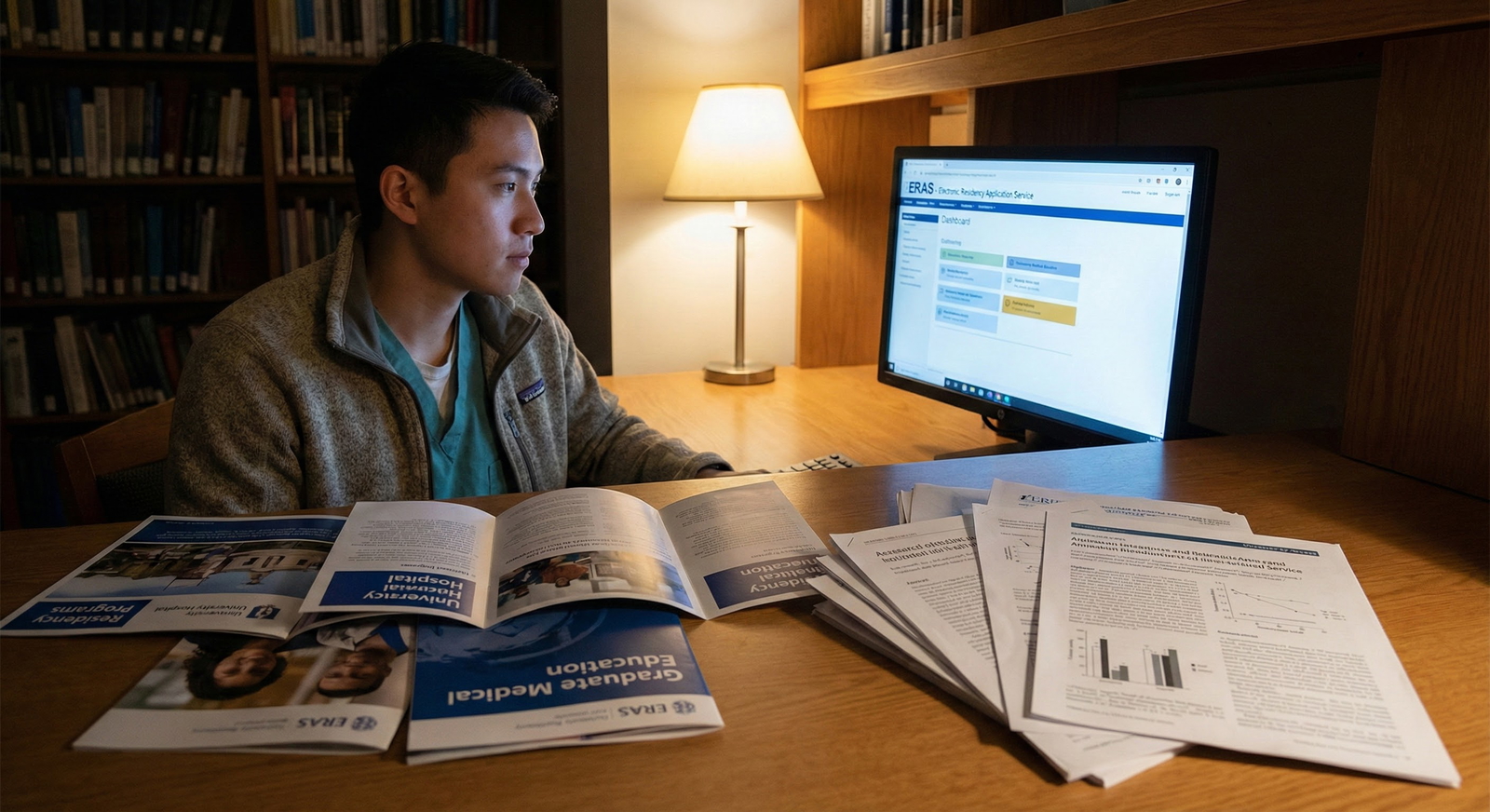
On ERAS, your research profile includes:
- Peer-reviewed journal articles
- Non–peer-reviewed articles and online publications
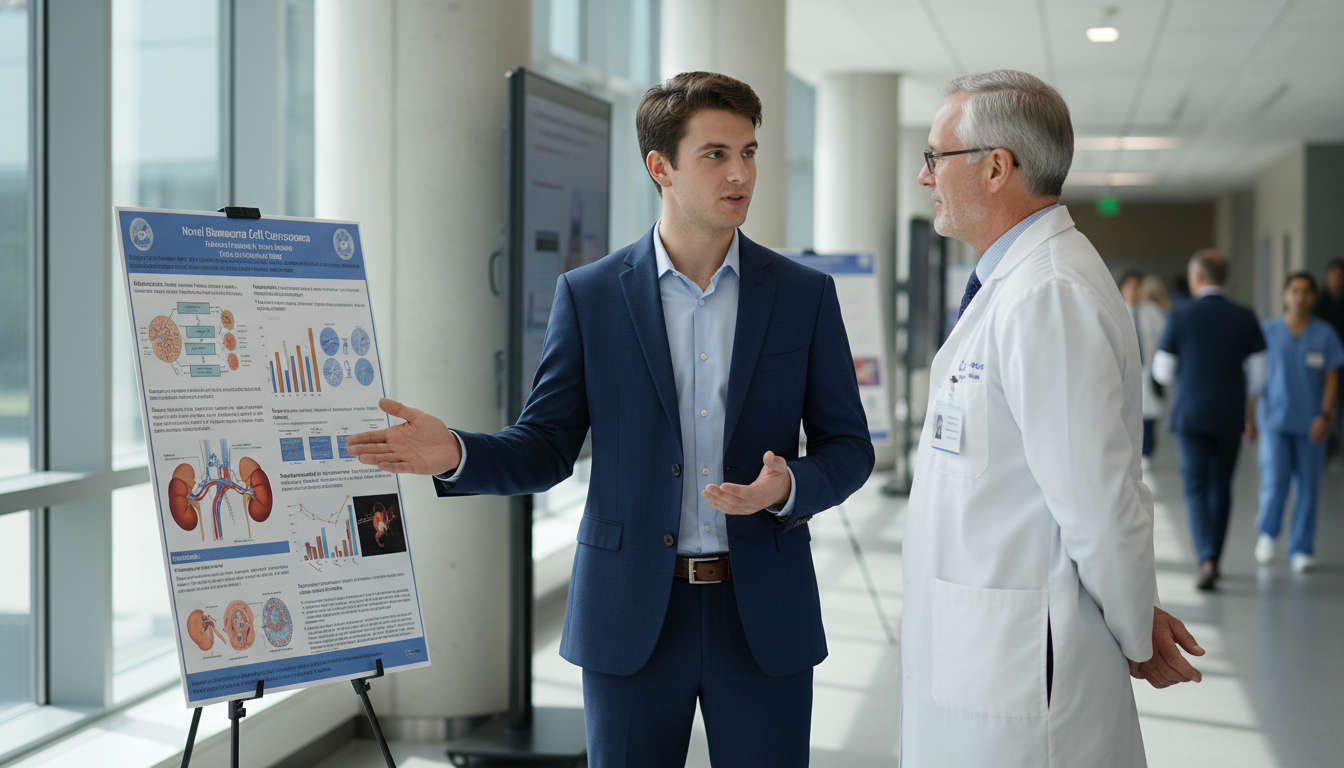
- Abstracts, posters, and oral presentations
- Book chapters
- Ongoing projects (clearly labeled as “in progress”)
For an IMG residency guide, a realistic strategy is to aim for a mix of:
- A few completed (or accepted) papers or case reports
- Several abstracts/posters or smaller projects
- At least one project clearly tied to anesthesiology
Realistic Expectations: How Many Publications Do IMGs Need?
There is no fixed number of publications required for an anesthesia match, but we can reason from trends and program expectations.
1. General Benchmarks (Not Rules)
For many IMGs who successfully match into anesthesiology (especially if not from a top-tier research background), a competitive research profile often looks like:
- 1–3 peer-reviewed publications (not all must be first-author)
- 2–6 abstracts/posters/presentations
- Documented ongoing projects, especially in anesthesiology
Highly research-oriented candidates, or those aiming for top academic programs, may have more:
- 5+ publications
- Multiple first-author works
- Some anesthesiology-specific research at recognized institutions
But this is not mandatory for all programs. Community-based programs often focus more on:
- USMLE/COMLEX performance
- Clinical evaluations
- Letters of recommendation
- Communication skills and professionalism
Research then becomes a strong bonus rather than a non-negotiable requirement.
2. Interpreting “How Many Publications Needed” Wisely
Instead of chasing a specific number, think in terms of signal quality:
- Are any of your works clearly related to anesthesiology, perioperative medicine, or critical care?
- Can you explain your role and contributions confidently and specifically?
- Does your research path show progression (e.g., from case reports to larger projects)?
- Do you have at least one faculty member who knows your work well enough to write a strong letter?
Programs are more impressed by:
- 2–3 meaningful anesthesiology-related works you understand deeply
than - 10 superficial projects you barely remember.
Step-by-Step Plan to Build a Strong Anesthesiology Research Profile as an IMG

Step 1: Assess Your Starting Point
Before planning new projects, map your current profile:
- Number of completed research projects
- Any publications (even in non-anesthesia fields)
- Conference posters or presentations
- Research methods skills (statistics, data analysis, literature search)
- Available time before applying (6 months? 1 year? 2 years?)
- Location (in the U.S. vs abroad) and access to academic centers
If you have no prior research:
- Focus first on case reports, QI projects, or joining an existing clinical study.
- Start building basic skills in literature review and data handling.
If you have non-anesthesiology research:
- Keep it; it still helps.
- Add at least 1–2 projects in anesthesiology or perioperative/critical care topics to show specialty alignment.
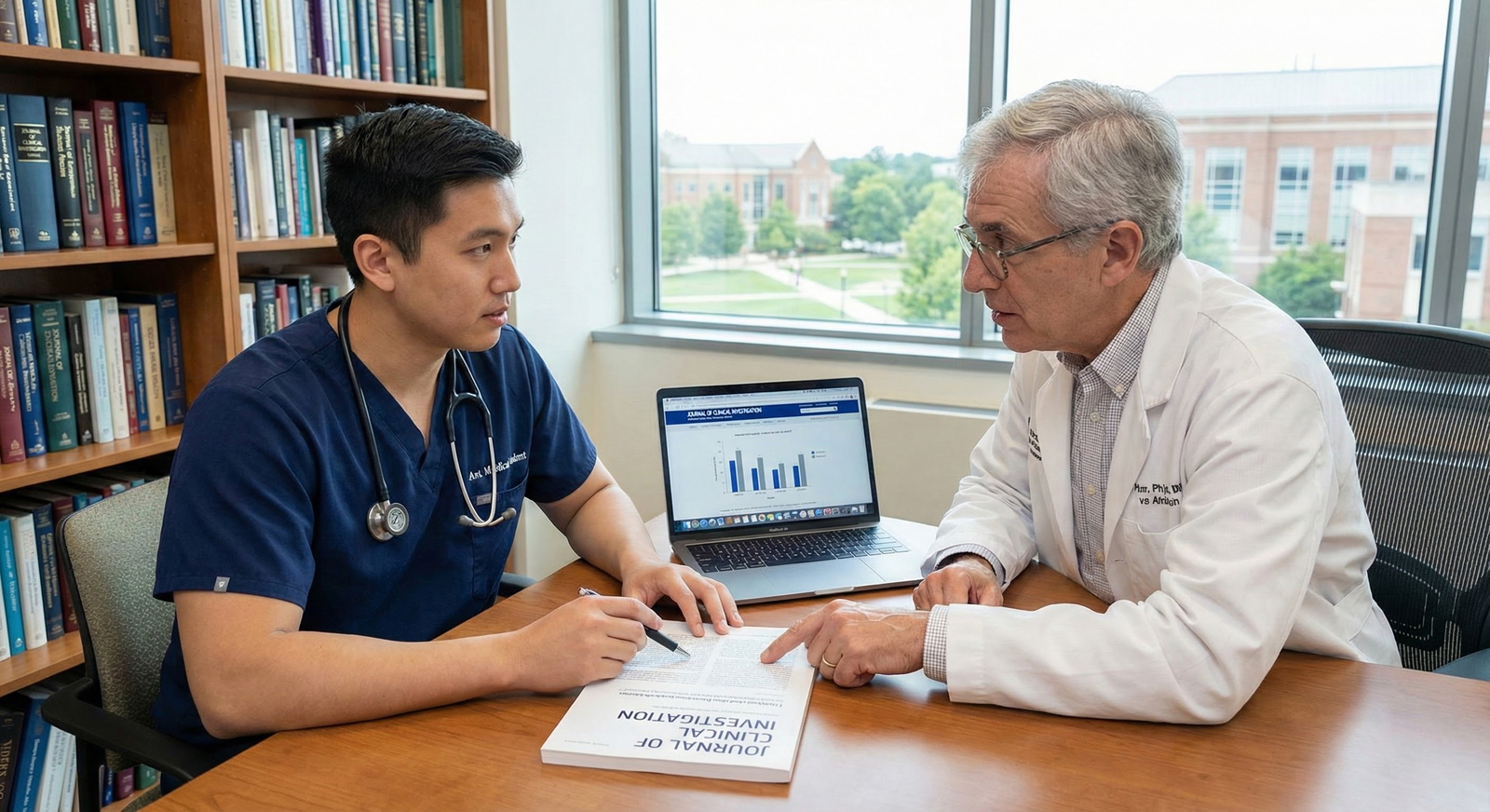
Step 2: Build Relationships and Find Mentors
Research in the U.S. is rarely a solo effort. As an IMG, your network is as important as your CV.
Where to Look for Mentors
- Anesthesiology departments at academic hospitals
- Faculty pages on university websites (look for “clinical research,” “QI,” or “perioperative medicine”)
- Hospital simulation centers
- ICU, pain medicine, or perioperative medicine divisions
- Online academic communities or anesthesiology society interest groups
How to Approach Potential Mentors (Example Template)
Subject: Prospective Research Volunteer – [Your Name], IMG Interested in Anesthesiology
Dear Dr. [Name],
My name is [Your Name], an international medical graduate from [Country/Medical School] currently [brief status: e.g., preparing for USMLE Step 2 and living in ___]. I am strongly interested in anesthesiology and particularly in [their topic, e.g., perioperative outcomes/airway management/pain medicine].
I am eager to gain structured research experience and would be grateful for any opportunity to assist with ongoing projects (data collection, chart review, literature review, or manuscript preparation).
I have [briefly outline any prior research experience or skills; if none, emphasize motivation, reliability, and availability]. I can commit [X] hours per week and am open to both in-person and remote work if appropriate.
Attached is my CV for your reference. I would sincerely appreciate the chance to discuss whether I might contribute to your research team.
Thank you for your time and consideration.
Sincerely,
[Your Name]
[Contact information]
Actionable advice:
- Email multiple faculty members respectfully; don’t rely on a single contact.
- Follow up once after 7–10 days if no response.
- Be honest about your availability and skills.
Step 3: Start with “Quick Wins” While Laying Groundwork for Bigger Projects
As an IMG, you must balance time, visa limitations, and exam preparation. Use a two-track strategy:
Track A: Short-Term, High-Yield Outputs
Examples:
- Case reports (1–3 months from idea to submission if well-mentored)
- Retrospective chart reviews with small datasets
- Conference abstracts or posters using existing data
These build your portfolio quickly and teach basic research processes:
- IRB exposure
- Data collection
- Abstract/manuscript formatting
- Submission process
Track B: Longer-Term, Higher-Impact Projects
Examples:
- Larger retrospective reviews (e.g., 300–1,000 patients)
- Prospective QI initiatives or OR workflow projects
- Systematic reviews or meta-analyses with clear methodology
These may take 6–12+ months but look impressive, especially if:
- Anesthesiology-focused
- Involve recognized institutions
- Lead to peer-reviewed publications
Step 4: Develop Key Skills IMGs Are Often Evaluated On
Beyond the raw output, programs value what your research experience says about you. Focus on building:
1. Statistical and Data Skills
- Learn basics of:
- Study design (cohort, case-control, randomized trials)
- Descriptive statistics, confidence intervals, p-values
- Regression basics (even conceptually)
Tools:
- Free courses (Coursera, edX) on biostatistics
- Software: R, SPSS, Stata, or even Excel for simple analyses
Even if you’re not the primary analyst, being able to:
- Critically read anesthesiology papers
- Understand results sections
- Discuss methodology in interviews
is a major advantage.
2. Scientific Writing
Programs notice if you can:
- Write clear, structured abstracts
- Synthesize literature into cohesive introductions/discussions
- Follow journal guidelines
Practice by:
- Drafting sections for your team (methods, results, discussion)
- Asking mentors for detailed feedback
- Reading recent articles from anesthesiology journals (e.g., Anesthesiology, Anesthesia & Analgesia) and modeling their structure.
3. Professionalism and Reliability
For IMGs, strong letters of recommendation often come from research mentors who can attest to:
- Punctuality and follow-through
- Attention to detail
- Respectful communication
- Ownership of tasks
Treat your research like a job:
- Meet deadlines
- Communicate early if you’re stuck
- Keep your mentor updated briefly and regularly
Step 5: Highlight Anesthesiology-Specific Interest Strategically
Your research portfolio should tell a clear story: “I am committed to anesthesiology and have engaged deeply with its clinical questions.”
Ways to demonstrate this:
Prioritize topics in:
- Airway management
- Perioperative outcomes
- Regional anesthesia and analgesia
- ICU and critical care
- Pain medicine
- Patient safety in the OR
Choose conferences aligned with the specialty:
- American Society of Anesthesiologists (ASA)
- Society of Critical Care Medicine (SCCM)
- Regional anesthesia and pain societies
In your personal statement and interviews:
- Describe how specific research experiences shifted or deepened your interest in anesthesiology
- Reflect on a patient case from your project and what it taught you about perioperative care
Tailored Strategies for Different IMG Situations

Not all IMGs have the same constraints. Adjust your approach according to your circumstances.
1. IMG Currently Abroad With Limited Access to U.S. Institutions
Challenges:
- Time zone differences
- Difficulty accessing patient data from U.S. hospitals
- Visa/travel issues
Strategies:
Focus on:
- Systematic or scoping reviews (many can be done fully remotely)
- Collaborations that allow remote data analysis or manuscript support
- Joining global anesthesia research networks or multicenter surveys
Seek:
- Faculty with international collaboration experience
- Mentors open to remote volunteers (mention this clearly in your emails)
Even if your projects use non-U.S. patient data, they still count as research for residency and show your capacity to work academically.
2. IMG in the U.S. on a Visa (Research Fellowship or Observership)
Challenges:
- Visa restrictions on paid work
- Adjusting to new systems and culture
Strategies:
Look for:
- Unpaid research scholar roles in anesthesiology departments
- Positions formally labeled as “research volunteer” or “research fellow”
Maximize:
- Time in the hospital environment (build relationships)
- Attending departmental conferences, grand rounds, journal clubs
- Opportunities to help with both clinical and simulation-based projects
You can often:
- Co-author case reports on interesting patients you encounter
- Assist residents and fellows with their research obligations
3. IMG With Significant Previous Research in Another Field (e.g., Internal Medicine, Surgery)
You might be thinking whether this still helps your anesthesiology residency application.
Short answer: Yes, if framed well.
Do:
- Keep all valid publications on your CV and ERAS (they show research capacity).
- Translate skills: mention how your experience with outcomes research, clinical trials, or data analysis applies to perioperative patient care.
Also:
- Add at least 1–2 anesthesiology or perioperative-focused projects before applying.
- Highlight in your personal statement how your prior research led you to appreciate the perioperative/critical care continuum and ultimately choose anesthesiology.
Presenting Your Research Effectively in the Application and Interviews
You’ve done the work. Now you must present it well.
On ERAS
- List all publications, abstracts, and presentations accurately.
- Clearly label:
- “Published,” “Epub ahead of print,” “Accepted,” “Submitted,” or “In progress.”
- Do not exaggerate your role—programs may ask detailed questions.
For each major project, be ready to discuss:
- Main research question
- Study design and population
- Key findings
- Your precise contributions
- Limitations of the study and possible future directions
In Your Personal Statement
Integrate your research as part of your journey, not just a list:
- Describe a specific research moment that clarified why anesthesiology is the right fit (e.g., working on a project about postoperative complications and realizing the crucial role anesthesiologists play in perioperative medicine).
- Show reflection:
- What did you learn about teamwork?
- How did it change your understanding of patient safety?
In Interviews
Common research-related questions:
- “Tell me about your most significant research project.”
- “What was the most challenging aspect of that work?”
- “How would you apply what you learned to your residency training?”
- “Are you interested in continuing research during residency?”
Good answers:
- Are concise, specific, and honest.
- Show you understand methodology at a basic level.
- Demonstrate humility and credit your team.
- Align with your stated long-term goals (e.g., academic anesthesiology vs. clinically focused practice with some QI involvement).
FAQs: Research Profile Building for IMG Anesthesiology Applicants
1. Do I need anesthesiology-specific research to match into anesthesiology?
It is not mandatory, but strongly recommended. Non-anesthesia research still helps, especially if it shows solid methods and productivity. However, at least one or two projects clearly related to anesthesiology, perioperative medicine, ICU, or pain medicine strengthen your narrative and signal genuine commitment to the field.
2. How many publications needed for a competitive anesthesiology residency application as an IMG?
There is no official number. For many successful IMGs, a solid profile might include:
- 1–3 peer-reviewed publications (any field, ideally with at least one anesthesia-related)
- 2–6 abstracts/posters/presentations
More is helpful, but quality and relevance matter more than raw quantity. Having projects you can confidently discuss is more important than chasing a specific numerical target.
3. Will case reports alone be enough research for residency applications?
Case reports are a good starting point, especially for those with limited time or access to large datasets. A few well-done anesthesiology case reports can:
- Show initiative
- Lead to early publications
- Provide talking points for interviews
However, if possible, try to also participate in at least one larger project (e.g., retrospective review, QI project, or systematic review) to demonstrate deeper engagement.
4. I’m close to my application cycle. Is it still worth starting a new research project?
Yes, if you choose wisely. Even projects that won’t be fully published by application time can still appear as:
- “Submitted” or “In progress” on ERAS
- Topics for interview discussion
- Opportunities to earn supportive letters from mentors
Focus on:
- Shorter-term projects (case reports, small retrospective studies, review articles)
- Roles where you can contribute meaningfully in a limited time frame
Mentioning ongoing work honestly (without inflating status) still adds value and signals that you plan to be an academically active anesthesiology resident.
By approaching research strategically—matching your time, resources, and interests—you can build a robust, coherent research profile as an international medical graduate in anesthesiology. This will not only help your anesthesia match prospects, but also prepare you to be an informed, evidence-based, and academically engaged anesthesiologist throughout your career.