Understanding the Research Landscape for IMGs in Clinical Informatics
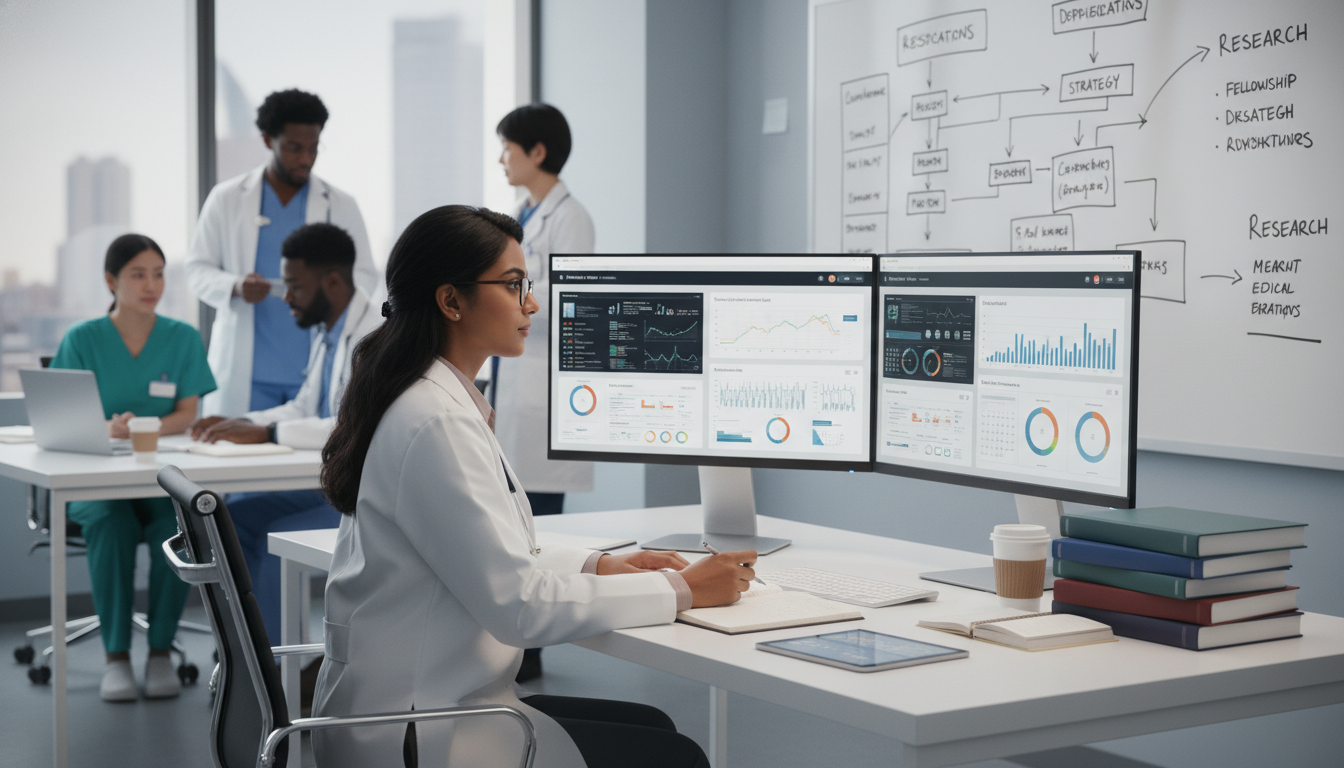
Clinical informatics is uniquely positioned at the intersection of medicine, data science, and health IT. For an international medical graduate (IMG), building a strong research profile in this field can significantly boost competitiveness for both residency and a future clinical informatics fellowship.
Unlike many traditional specialties where bench or clinical trials research dominates, clinical informatics research often focuses on:
- Electronic health records (EHR) optimization
- Clinical decision support (CDS) systems
- Quality improvement (QI) and patient safety
- Data analytics and machine learning in healthcare
- Population health and health equity using data
- Usability, workflow, and human factors in health IT
- Telehealth and digital health interventions
This has three key implications for an IMG residency guide focused on research:
- You don’t always need a lab – You can often work with existing datasets, EHR logs, or quality dashboards.
- Research can be tightly integrated with clinical work – QI projects, chart reviews, and CDS interventions can emerge from your own clinical experiences.
- Technical skills matter – Basic familiarity with data analysis, health IT systems, and implementation science often weighs heavily in clinical informatics fellowship and health IT training applications.
For IMGs, there are extra challenges but also distinct advantages:
Challenges:
- Limited US-based contacts and mentors
- Visa and funding constraints
- Fewer opportunities during observerships vs. formal rotations
Advantages:
- Diverse clinical experience and systems knowledge
- Often high motivation to publish and build a strong CV
- Unique perspectives on implementing health IT in resource-limited settings
The goal of this article is to provide a practical, step-by-step strategy to build a compelling research profile as an IMG with a clinical informatics focus—whether you’re aiming directly for a clinical informatics fellowship after residency, or simply want to strengthen your residency match prospects with a targeted research portfolio.
Defining a Strategic Research Focus in Clinical Informatics
Before you start chasing any project available, step back and define a focused strategy. A scattered list of unrelated abstracts is less impressive than a coherent story that supports your informatics goals.
1. Clarify Your Long-Term Target
Ask yourself:
Do you want to be:
- A full-time clinical informatician in a hospital or health system?
- A clinician–data scientist or health IT leader?
- A researcher in digital health, AI/ML, or health services?
Are you ultimately aiming for:
- A primary care or internal medicine residency plus clinical informatics fellowship?
- A more technical path (e.g., public health, data science, or biomedical informatics degree) combined with clinical work?
Your answer guides the type of research you prioritize:
- For clinical leadership in informatics:
- Emphasize QI, workflow redesign, CDS, safety, and implementation projects.
- For data science/AI emphasis:
- Prioritize datasets, predictive models, and real-world performance evaluations.
- For policy or global health IT focus:
- Work on projects related to telehealth, interoperability, equity, and digital access.
2. Build a Coherent Research Narrative
Residency and fellowship directors will ask not just “What did you do?” but “What is the thread that connects your work?”
Aim for a narrative like:
“As an international medical graduate interested in clinical informatics, my research has focused on how EHR-based tools can reduce diagnostic delays in resource-limited settings. I started with retrospective chart reviews, then helped develop and evaluate a simple decision support alert, and more recently have looked at usability and provider burden related to alerts.”
To build this:
Pick 1–2 core themes, such as:
- EHR usability and clinician burnout
- CDS for chronic disease management
- Informatics for sepsis detection or early warning
- Telemedicine access and quality
- Data quality and interoperability across systems
Then align your opportunities:
- QI projects at your hospital
- Research electives
- Remote collaborations and online research groups
- Small data-analysis projects using public datasets
A handful of well-aligned experiences makes a much stronger research profile than a long, unfocused list of minor contributions.
3. Align Your Profile With Program Priorities
Look at the clinical informatics fellowship programs or residencies you’re targeting:
- Scan program websites for:
- Current projects and faculty interests
- AI/ML, CDS, population health, or UX research emphasis
- Read recent faculty publications:
- PubMed searches with the institution name + “informatics”
- Identify gaps or understudied topics where you might contribute.
Then, frame your research choices—and how you present them in your CV and personal statement—to resonate with those specific program interests.
Practical Ways for IMGs to Get Involved in Clinical Informatics Research
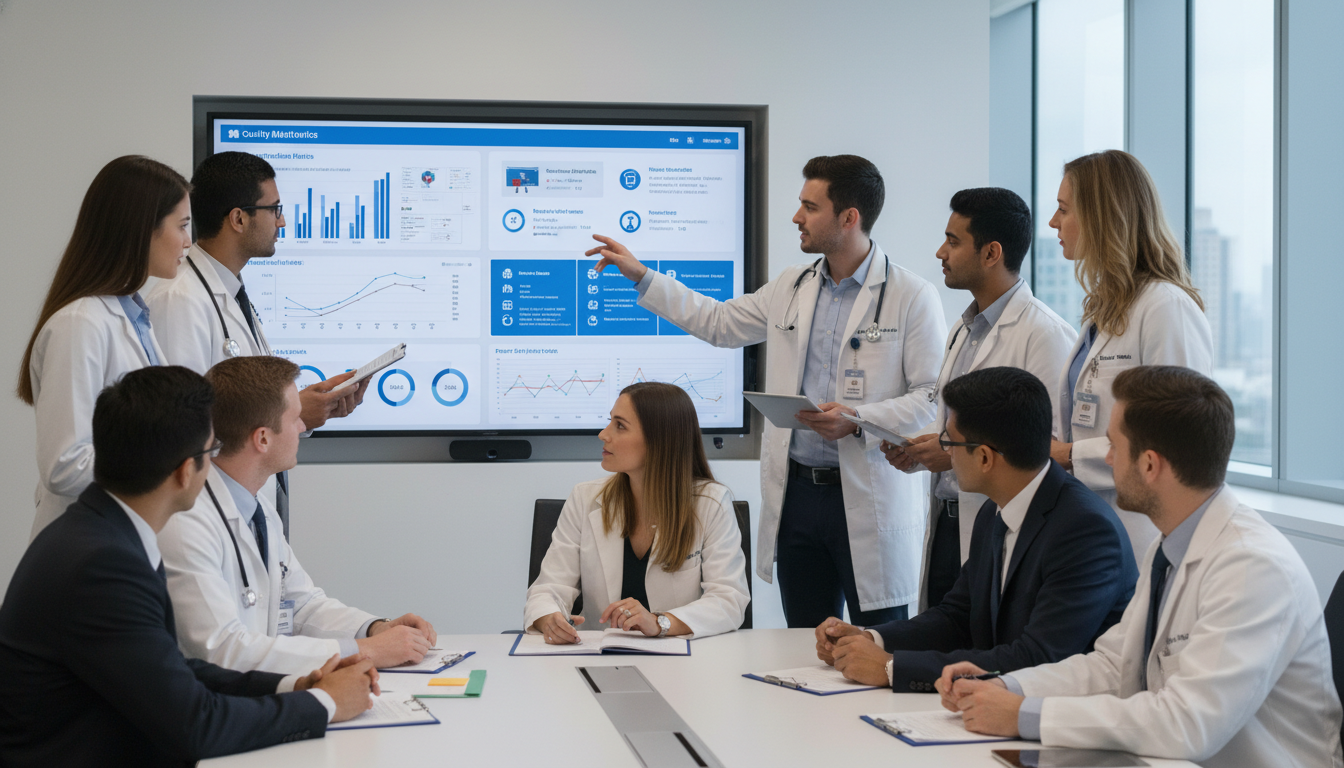
Here is a structured approach to actually get involved, particularly when you don’t have an established US network.
1. Use Your Current Environment Strategically
Whether you are:
- Still in your home country,
- In a research year, or
- Doing observerships in the US,
you can find informatics-related angles in almost any clinical setting.
Potential starting points:
Chart audits and retrospective reviews
- Example topics:
- Accuracy of EHR problem lists vs. actual diagnoses
- Follow-up adherence for test results flagged in the EHR
- Documentation of vaccination status in EHR and disparities by demographic group
- Example topics:
Quality improvement projects (often publishable if well-designed)
- Examples:
- Reducing duplicate lab orders via CDS alerts
- Improving provider compliance with sepsis order sets
- Reducing missed abnormal imaging follow-up through tracking systems
- Examples:
Workflow and usability observations
- Conduct time-motion studies on EHR-related tasks
- Survey clinicians on documentation burden or alert fatigue
These can often be done even in low-resource settings where the “EHR” might be partial or hybrid—this perspective is actually very relevant to global clinical informatics.
2. Proactively Seek Mentors in Clinical Informatics
As an IMG, you may have to work harder to secure mentors, but it’s very possible with a systematic plan.
Where to look for mentors:
Departments of:
- Biomedical Informatics, Clinical Informatics, or Health Information Management
- Quality & Safety or Performance Improvement
- Internal Medicine, Pediatrics, or EM with informatics leads
Professional societies and networks:
- AMIA (American Medical Informatics Association)
- HIMSS (Healthcare Information and Management Systems Society)
- Local or regional health IT networks and meetups
How to approach potential mentors:
Identify faculty whose research aligns with your interests.
Send a concise, professional email (150–200 words):
- Introduce yourself as an IMG and your career goal in clinical informatics.
- Reference something specific you read of theirs (paper, talk, project).
- Offer concrete ways you could help: data abstraction, literature review, programming, survey distribution, etc.
- Attach a brief CV or include a link (e.g., Google Scholar, LinkedIn).
Follow up once after 7–10 days if no response.
Even one supportive mentor can open doors to several projects and collaborations.
3. Tap into Remote and Online Research Collaborations
Many informatics projects can be done remotely, a big advantage if you are outside the US.
Options include:
Multi-institutional surveys:
- Design and run a survey about telehealth use, clinical decision support usage, or EHR satisfaction.
- Collaborate with contacts at different institutions for distribution.
Public datasets and open challenges:
- PhysioNet databases, MIMIC (if you can meet training requirements), public EHR-derived datasets.
- Kaggle health competitions and open ML challenges (not always publishable directly, but great for skill-building).
Systematic reviews and meta-analyses:
- Topics like “Effectiveness of EHR alerts on medication safety in LMICs” or “Telemedicine and chronic disease control during COVID-19.”
- These are doable from anywhere with internet access, and they often lead to publications for match applications.
Open-source health IT projects:
- OpenMRS or openEHR contributions.
- Though more technical, contributions here demonstrate serious commitment to health IT training and practical skills.
4. Turn Observerships and Short-Term Experiences Into Publishable Work
Observerships are often criticized for being passive, but you can extract meaningful research from them if you plan ahead.
Before or early in your observership:
- Ask the supervising physician or informatics lead:
- “Are there any ongoing QI or informatics projects I can participate in?”
- “Is there a need for literature review, data collection, or poster preparation?”
Possible contributions:
- Help with:
- Abstract and poster preparation for local or national informatics conferences.
- Data cleaning for ongoing CDS or EHR usability studies.
- Preparing educational materials for new EHR features, with later evaluation as a QI project.
Even a small but genuine contribution that leads to co-authorship on a poster or a brief report is valuable for an IMG residency guide centered on research building.
From Participation to Publication: Maximizing the Impact of Your Work
A key question IMGs frequently ask is “How many publications are needed?” There is no universal number, but for most residency applications with a strong informatics angle, the goal is:
- A mix of:
- 1–3 first-author or co-first-author works (original articles, reviews, or substantial QI reports)
- Several co-authored posters, abstracts, or short papers
- Evidence of continuous involvement rather than a single burst of activity
1. Understand the Spectrum of Scholarly Output
You don’t need every project to be a full original investigation in a top-tier journal. Think in layers:
High-impact, longer-term goals:
- Original research articles in informatics or general medical journals
- Methodological or implementation science papers
Medium-term, realistic goals for IMGs:
- Systematic reviews or scoping reviews
- Retrospective EHR-based observational studies
- QI or implementation reports
Short-term and opportunistic outputs:
- Conference abstracts and posters (e.g., AMIA, HIMSS, specialty society meetings)
- Case reports with informatics relevance (e.g., telehealth miscommunication, CDS failure leading to an error)
- Educational pieces on EHR usage, documentation tips, or digital tools in a particular specialty
Make sure all of these appear clearly in your CV and ERAS application as “publications for match”, even if some are still in progress or under review (labeled accurately as such).
2. Design Projects With Publication in Mind From Day One
For every project, clarify:
Research question – Specific and answerable with the data or resources you have.
Study design – Retrospective cohort, cross-sectional, pre–post QI, etc.
Endpoints and metrics – For informatics, these might include:
- Alert override rates
- Documentation completeness or accuracy
- Time to order entry or to appropriate treatment
- Number of steps/clicks or task completion time
- Provider satisfaction or burnout scores
Authorship plan – Discuss early and transparently with your team.
This mindset greatly increases the chance that your work becomes something you can list proudly in your residency application.
3. Target Journals and Conferences Strategically
Relevant venues include:
Informatics-focused journals:
- Journal of the American Medical Informatics Association (JAMIA)
- Applied Clinical Informatics
- BMC Medical Informatics and Decision Making
- BMJ Health & Care Informatics
Broader journals open to informatics and QI work:
- BMJ Open
- Journal of General Internal Medicine
- Quality & Safety journals
- Specialty journals (e.g., telemedicine, digital health)
Conferences:
- AMIA Annual Symposium
- HIMSS Global Health Conference
- Specialty-specific meetings (e.g., internal medicine, EM) with IT or QI tracks
Abstracts and posters may seem small, but for an IMG residency guide, they are critical stepping-stones that demonstrate engagement, teamwork, and productivity.
4. Be Honest and Accurate About Your Contributions
In your CV, ERAS, and personal statement:
- Clearly indicate:
- First-author vs. co-author status
- Role (conceptualization, data collection, analysis, writing)
- Avoid:
- Overstating in-press vs. submitted vs. in-preparation work.
Program directors can sense inflated claims; integrity is far more important than sheer numbers.

Building Complementary Skills: Beyond Traditional Research
Clinical informatics is skill-heavy as much as it is publication-heavy. Strengthening your technical and analytic skill set will make your research more credible and attractive.
1. Develop Core Technical Skills
You don’t have to be a full-time programmer, but certain competencies are extremely valuable:
Basic programming / data analysis:
- Python or R for data cleaning, exploratory analysis, and simple models
- SQL basics for querying relational databases
Statistics and research methods:
- Understanding regression, survival analysis, and common bias types
- Recognizing appropriate use of p-values, confidence intervals, and effect sizes
Data visualization and communication:
- Creating clear graphs and dashboards (e.g., using R ggplot, Python matplotlib/plotly, or Tableau).
Free and low-cost resources:
Coursera / edX courses on:
- Clinical data science
- Health informatics
- Biostatistics
AMIA 10×10 courses (many are aimed at newcomers to informatics).
Include these in your CV under “Additional Training” or “Health IT training,” especially if you receive certificates.
2. Learn the Language of Health IT
Strong clinical informaticians know not just how to analyze data but also how health IT systems are built and governed. For IMGs, this knowledge also helps during interviews.
Key concepts to understand:
- EHR architecture and vendor systems (Epic, Cerner, etc.)
- Interoperability standards: HL7, FHIR, SNOMED, LOINC, ICD, CPT
- Clinical decision support frameworks (e.g., rules, order sets, predictive models)
- Usability principles, workflow analysis, and human factors
- Privacy, security, and basic regulatory context (HIPAA, meaningful use, etc.)
Exposure options:
- Online courses in health informatics or digital health
- Webinars by AMIA, HIMSS, or vendor-sponsored learning portals
- Shadowing local IT or informatics teams, even informally
Describing this exposure in your personal statement shows you understand what a clinical informatics fellowship or health IT training pathway really entails.
3. Document and Present Your Skills Coherently
Within your application materials:
- Create a section titled “Clinical Informatics & Health IT Experience” where you group:
- Informatics-related research projects
- EHR or CDS committees or workgroups you joined
- Any health IT training, online courses, or certifications
- In your CV, use specific phrasing:
- “Conducted retrospective EHR-based study on…”
- “Co-designed and evaluated CDS tool for…”
- “Performed SQL-based extraction and analysis of clinical data…”
This makes your profile legible to reviewers scanning quickly for informatics potential.
Showcasing Your Informatics Research in the Residency and Fellowship Application
Once you’ve done the work, you must present it effectively to residency and later fellowship programs.
1. Craft a Clear, Informatics-Driven Personal Statement
Use your personal statement to:
Connect your clinical background as an international medical graduate with:
- Health system challenges you observed
- EHR or documentation issues you faced
- Opportunities for better digital tools in your home country or in the US
Highlight your research trajectory:
- “I began by analyzing EHR data on X…”
- “This led me to participate in a project to implement Y CDS tool…”
- “Most recently, I have focused on understanding Z workflow and provider usability.”
End with a forward-looking goal:
- Pursue residency in [specialty] with the explicit aim of entering a clinical informatics fellowship
- Become a bridge between frontline clinical care and health IT implementation, especially for diverse or underserved populations
2. Anticipate Common Interview Questions
Expect to be asked:
- “Tell me about your research.”
- Prepare a 2–3 minute explanation of your main project in clear, non-jargon language.
- “Where do you see yourself in 5–10 years?”
- Connect residency → informatics fellowship → leadership or implementation role.
- “How did you handle challenges in your project?”
- Discuss IRB delays, data quality issues, or team coordination respectfully.
Practice explaining:
- Your study’s hypothesis, methods, key findings, and implications
- What you did (not just what the team did)
- How this experience prepared you for clinical residency and informatics work
3. Answering: “How Many Publications Are Needed?” Realistically
Programs differ, but for an IMG aiming at informatics-heavy careers:
- Solid competitiveness (combined across all years and settings) might look like:
- 2–5 total publications/abstracts/posters
- At least 1–2 clearly informatics-related
- At least 1 where you are first author or had a leading role
However:
- A powerful, in-depth single project that produced:
- A high-quality publication,
- A national conference presentation, and
- Strong letters of recommendation
may outweigh a CV full of superficial contributions.
Focus on quality, relevance, and narrative coherence, not just raw numbers.
FAQs: Research Profile Building for IMGs in Clinical Informatics
1. As an IMG, can I pursue clinical informatics without a US research year?
Yes. A formal US research year helps, but it is not mandatory. You can build a solid research profile by:
- Doing informatics-related QI or retrospective studies in your home country
- Engaging in remote collaborations, systematic reviews, and public dataset analyses
- Using observerships strategically to join ongoing projects
What matters is the quality and informatics relevance of your work, not the setting alone.
2. How many publications are needed to be competitive for residency with an informatics focus?
There is no strict threshold, but a realistic target for many IMGs is:
- 2–5 total scholarly outputs (articles, abstracts, posters)
- At least 1–2 clearly connected to clinical informatics or health IT
- Evidence that you had a meaningful role (ideally first author on at least one)
Remember that strong letters, a coherent story, and demonstrable skills can compensate for lower numbers.
3. Do I need programming skills (Python, R, SQL) to get into clinical informatics?
You don’t need to be a professional software engineer, but basic data and coding literacy is a real advantage. Even introductory ability to:
- Clean and analyze data in R or Python
- Understand simple SQL queries
- Interpret model performance metrics
will differentiate you and make your clinical informatics fellowship or residency applications more persuasive.
4. What types of research projects are best if my institution doesn’t have a strong informatics department?
Focus on projects that use the tools you do have:
- Retrospective chart reviews using whatever digital or hybrid records exist
- QI projects that measure documentation, test follow-up, or order entry patterns
- Surveys on EHR satisfaction, telehealth usage, or digital access
- Systematic reviews about digital health, EHRs, or CDS in low- and middle-income settings
These are all legitimate, publishable forms of research for residency and create a strong informatics-oriented narrative, even without cutting-edge technology.
By intentionally selecting projects, mentors, and skill-building activities, you can build a compelling, coherent research profile as an international medical graduate ready to contribute meaningfully to clinical informatics in residency, fellowship, and beyond.