
Understanding Why Research Matters for IMGs in OB/GYN
For an international medical graduate, research is one of the most powerful ways to strengthen an OB GYN residency application in the United States (or other competitive systems like Canada and the UK). Programs receive far more applications than they can interview, and many use research productivity as a marker of academic potential, commitment to obstetrics and gynecology, and ability to function in an academic environment.
In an IMG residency guide for OB/GYN, research consistently appears among the top differentiators for interviews and ranking—especially if your USMLE/COMLEX or equivalent scores are average, or if you graduated more than a few years ago.
Key ways research helps an IMG in the obstetrics match:
Demonstrates academic ability and curiosity
OB/GYN is evidence-based. Showing you can understand and generate evidence reassures programs you can keep up with evolving guidelines, from maternal morbidity protocols to minimally invasive surgery techniques.Signals true commitment to OB/GYN
Research experiences, especially topic-focused on women’s health, high-risk obstetrics, gynecologic oncology, or reproductive endocrinology, show that you are not applying “anywhere,” but are deliberately building a career in this specialty.Provides US-based experience and networking
Participating in research for residency, especially at US institutions, gets you:- US mentors who can write strong letters of recommendation
- Familiarity with US hospital systems and IRB processes
- Exposure to program directors, fellows, and residents in OB/GYN
Helps offset application weaknesses
Research cannot fully “erase” low scores or large gaps, but it can:- Show recent, sustained academic productivity
- Demonstrate ongoing engagement with medicine
- Provide a positive narrative: “I used this time to grow academically and contribute to women’s health research.”
Improves your interview story
Research gives you depth. You can discuss:- How you approached a clinical problem
- What your data showed and why it matters for patient care
- How you responded to challenges and failures
If you are an IMG targeting OB/GYN, you should view research not as a luxury, but as a strategic component of your overall profile.
How Many Publications Are Needed for OB/GYN Residency?
There is no single “magic number,” but understanding how programs think about publications for match will help you set realistic goals.
The reality: Quality, relevance, and trajectory matter more than raw count
Programs look at:
Total scholarly output
- Peer-reviewed articles (original research, reviews, case reports)
- Posters and oral presentations
- Book chapters
- Quality improvement and educational projects if well-documented
Relevance to OB/GYN or women’s health
- Publications in obstetrics, gynecology, reproductive medicine, maternal-fetal medicine, minimally invasive surgery, urogynecology, family planning, etc. are especially valuable.
Your actual contribution
- First-author or second-author roles are stronger than being one of 15 authors with marginal involvement.
- Interviewers often ask you to explain your role and what you learned. Superficial involvement is easy to detect.
Timeline and consistency
- A clear trajectory (e.g., sustained research activity over 1–3 years, not just a flurry of work in the 2 months before ERAS) shows genuine academic engagement.
Practical benchmarks for IMGs in OB/GYN
These are not strict rules but realistic targets based on current competitiveness:
Minimal but meaningful profile
- 1–2 OB/GYN-related case reports or short communications
- 1–2 posters or oral presentations at a regional or national meeting
This may be enough if you have strong scores, good US clinical experience, and strong letters.
Competitive academic profile
- 3–5 total publications, at least:
- 1–2 in OB/GYN or women’s health
- 1 as first or second author
- Multiple posters/abstracts or an oral presentation at a recognized conference (e.g., ACOG, SMFM, SGO, AUGS, local/university conferences)
- 3–5 total publications, at least:
Highly academic profile (for research-heavy or university programs)
- 5+ publications with clear OB/GYN relevance
- Ongoing project at time of application
- Involvement in higher-level projects (prospective studies, trials, systematic reviews, or meta-analyses)
- Strong letters from OB/GYN researchers
If you’re asking “how many publications needed” for an OB/GYN residency as an IMG, a reasonable target is 3–5 meaningful scholarly outputs by the time you apply, with at least 2 clearly relevant to obstetrics and gynecology. More is welcome, but not at the cost of quality or authenticity.
Types of Research IMGs Can Do in OB/GYN
Research for residency does not have to mean bench science in a lab. Many IMGs mistakenly think they need access to a basic science lab to build a research profile; in OB/GYN, much of the valuable work is clinical, epidemiological, educational, or quality-improvement based.
Below are realistic research types you can pursue, even with limited resources.
1. Case Reports and Case Series
Why they’re good for IMGs:
- Often the most accessible form of publication
- Require careful observation and literature review rather than large datasets
- Highly relevant in OB/GYN because of rare conditions, unusual presentations, or unique management problems
Common OB/GYN examples:
- Rare ectopic pregnancy locations (e.g., cesarean scar pregnancy)
- Unusual complications during labor and delivery
- Rare gynecologic malignancies or atypical surgical complications
- Unexpected side effects of contraceptive methods
Actionable steps:
- While rotating or working clinically, identify unusual or instructive cases.
- Ask your attending if they are interested in writing a case report and if you can help.
- Perform a structured literature review.
- Draft the introduction, case description, and discussion.
- Target OB/GYN-specific journals that accept case reports (e.g., Case Reports in Obstetrics and Gynecology, or the case report sections of broader journals).
Case reports alone are not enough for a top-tier research profile, but 1–3 well-written case reports can be a solid foundation, especially for an IMG early in the process.
2. Retrospective Clinical Studies
These use existing charts or electronic health record (EHR) data to investigate clinical questions. They’re very common in OB/GYN and accessible to motivated IMGs with a mentor.
Examples in obstetrics:
- Outcomes of patients with preeclampsia managed with different protocols
- Impact of obesity on cesarean delivery complications
- Comparison of induction agents at term
Examples in gynecology:
- Postoperative complications following laparoscopic vs. open hysterectomy
- Factors associated with failed trial of labor after cesarean (TOLAC)
- Patterns of abnormal uterine bleeding and pathology findings
How an IMG can get involved:
- Connect with an OB/GYN faculty member or fellow who has a database or a clinical question.
- Offer to help with:
- Literature reviews
- Data extraction and cleaning
- Basic statistical analysis (if you have skills) or working with a statistician
- Manuscript drafting
Retrospective clinical studies are a strong way to generate publications for match, particularly if you can be first or second author.
3. Systematic Reviews and Meta-Analyses
These can often be done remotely—an important point for IMGs who are not yet in the US.
Advantages:
- Can be initiated without patient contact or local IRB, if purely literature-based (check with mentors for local rules).
- High educational value: you learn how to critically evaluate evidence.
- Good potential for publication if done rigorously.
OB/GYN-relevant topics:
- Comparative effectiveness of induction methods
- Outcomes of vaginal birth after cesarean (VBAC) in specific populations
- Efficacy and side effects of new contraceptive technologies
- Surgical outcomes of minimally invasive vs open gynecologic procedures
Practical pathway:
- Identify a mentor with publication experience.
- Choose a clinically meaningful and narrow question.
- Register a protocol (e.g., PROSPERO) if appropriate.
- Learn basic systematic review methodology (e.g., PRISMA guidelines).
- Work diligently on screening, data extraction, and risk of bias assessment.
Being first author on a systematic review in an OB/GYN topic is highly valuable for an IMG’s research profile.
4. Quality Improvement (QI) and Educational Projects
Many programs value QI and educational scholarship, especially if your project leads to:
- Process changes in labor & delivery or gynecology wards
- Improved patient education materials (e.g., postpartum hemorrhage warning signs, contraception options)
- Better documentation or safety checklists (e.g., for cesarean delivery)
These projects can produce:
- Posters at institutional or national QI conferences
- Short manuscripts in QI-focused journals
- Educational tools you can describe in your personal statement and interviews
5. Basic and Translational Research
Less common for IMGs due to resource and visa limitations, but still powerful:
- Reproductive endocrinology and infertility lab projects
- Gynecologic oncology molecular research
- Placental biology or preterm birth mechanisms
If you have a strong basic science background, this can be a differentiator. However, basic science alone without clinical engagement can feel less connected to OB/GYN practice—ideally combine it with some clinical/epidemiological projects if possible.
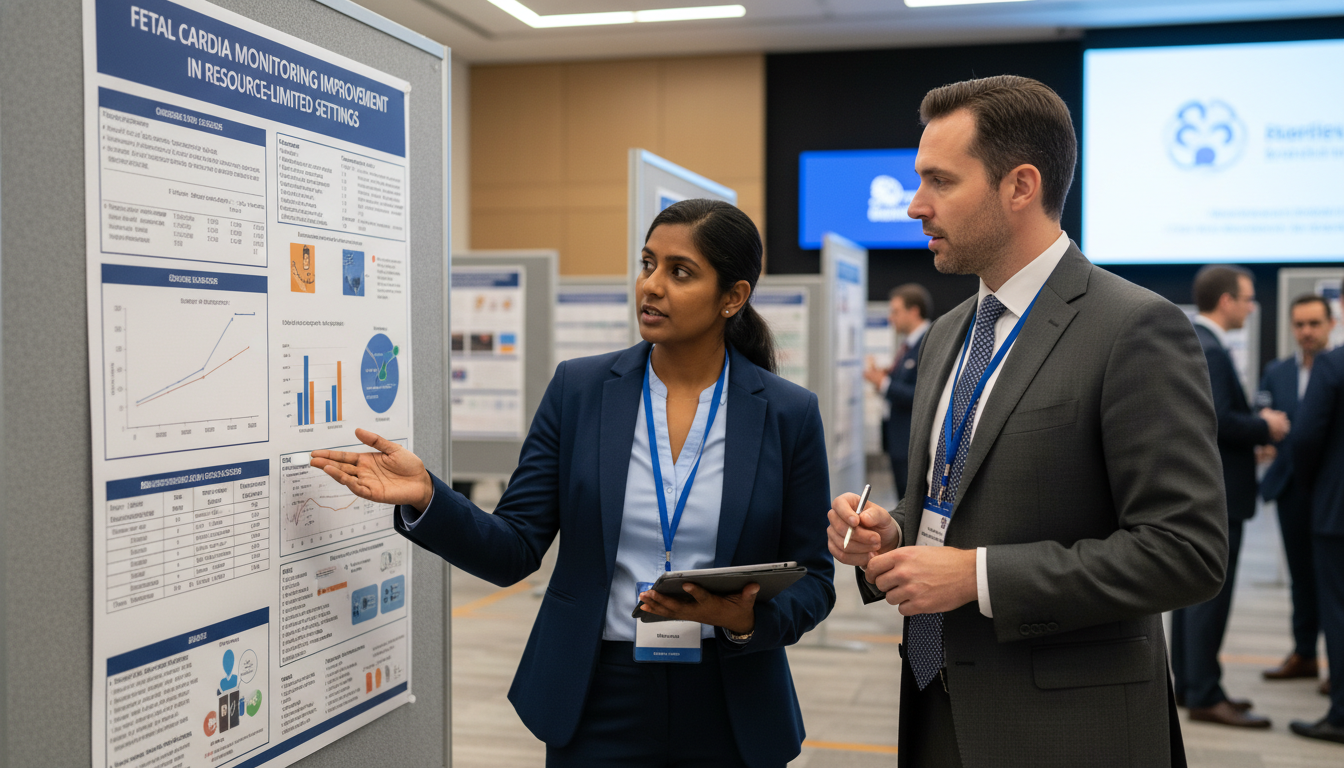
Step-by-Step Roadmap to Build Your OB/GYN Research Profile as an IMG
This section offers a practical, chronological IMG residency guide for building a competitive OB/GYN research portfolio.
Step 1: Clarify Your Timeframe and Constraints
Before you start:
- When do you plan to apply (which match cycle)?
- How many months/years do you have to build your research?
- Are you currently:
- In your home country with clinical duties?
- In the US on a visa (observership, research position, or other)?
- Preparing for licensing exams full-time?
Your strategy should match your reality. For example:
If you have 2+ years before applying:
Aim for a mix of case reports, at least one retrospective study or systematic review, and several posters.If you have 9–12 months:
Focus on case reports, smaller retrospective projects, and abstracts/posters; you might still complete a systematic review if you start early.If you have <6 months:
Focus on being added to ongoing manuscripts or data work, case reports already in progress, and abstracts that can be submitted quickly.
Step 2: Find Mentors and Research Environments
This is the most critical step, especially for IMGs without existing US contacts.
Approaches to find mentors in OB/GYN:
Leverage any existing connection
- Former supervisors who trained or worked in the US or UK
- Alumni from your medical school now in OB/GYN residency or fellowship
- Contacts from observerships or electives
Cold email with purpose and professionalism
Target:- OB/GYN faculty at academic centers
- Researchers with recent OB/GYN publications
- Program directors or MFM/REI/oncology specialists active in research
In your email:
- Use a concise subject (e.g., “IMG interested in OB/GYN research – request for mentorship”)
- Introduce your background and exam status
- Highlight any relevant skills (literature review, statistics, systematic reviews)
- State clearly: you are interested in unpaid volunteer research help, not a job request
- Attach a 1-page CV focused on academics and any prior research
Apply for formal research positions or fellowships
Some US institutions have:- “Research fellow” positions in OB/GYN
- “Visiting scholar” roles
- One-year non-ACGME research tracks
These are competitive but very valuable, especially if they come with:
- Clear guidance on projects
- Access to IRB-approved datasets
- Opportunities for publication and presentations
Step 3: Start with Quick-Win Projects
Once connected with a mentor, prioritize projects that are feasible in your available timeframe and can realistically become publications for match.
“Quick-win” examples:
- Case reports based on recent interesting patients
- Secondary analysis of an existing dataset where the mentor already has IRB approval
- Systematic review where the research question is already defined
Be proactive:
- Volunteer to write first drafts.
- Offer to handle literature searches and reference management (e.g., using Zotero, Mendeley, EndNote).
- Ask explicitly about authorship expectations early on; clarify what is required for first or second authorship.
Step 4: Develop Core Research Skills
Even as an IMG, you’re expected to understand the basics of scientific work. Focus on:
- Clinical question formulation: Be able to move from a vague observation to a precise research question.
- Literature search: Use PubMed, Cochrane, and Google Scholar effectively.
- Critical appraisal: Understand study designs—cohort, case-control, RCT, cross-sectional, etc.—and their strengths/limitations.
- Basic statistics:
- Know common tests: t-test, chi-square, logistic regression, survival analysis basics.
- You don’t need to be a statistician, but you must understand enough to interpret what your study is doing.
Free/low-cost resources:
- Coursera, edX, or FutureLearn courses on clinical research methods
- NIH resources on research ethics and human subjects protection
- YouTube channels from academic institutions on statistics and study design
Step 5: Document and Translate Work into Application Strength
Doing research is only half the battle; you also need to make sure it is visible and clearly explained.
In your CV and ERAS:
- List each publication with correct citation format.
- Clearly distinguish between:
- Published
- Accepted (in press)
- Submitted
- In preparation (only list if your name is on a nearly complete manuscript and your mentor agrees)
- List presentations and posters separately, with conference names and dates.
In your personal statement:
- Describe 1–2 major projects briefly:
- What clinical question they addressed
- What you learned
- How it shaped your perspective on OB/GYN
In interviews:
- Be prepared to:
- Summarize your main projects in simple language
- Discuss what went wrong or what limitations existed
- Explain your exact role clearly and honestly
Programs are less impressed by a long list of superficial contributions than by a few projects you can explain deeply and thoughtfully.

Common Pitfalls for IMGs and How to Avoid Them
Pitfall 1: Chasing Quantity Over Quality
Collecting many minor authorships on unrelated projects (e.g., dermatology, radiology) may dilute your OB/GYN focus.
Solution:
Prioritize fewer, more meaningful OB/GYN-related projects where you can speak confidently about your role and the content.
Pitfall 2: Predatory Journals
Many IMGs fall into the trap of paying substantial fees to low-quality or predatory journals, which can actually harm credibility.
Warning signs:
- Very fast acceptance times (e.g., 48 hours)
- Aggressive email solicitation
- Unknown or suspicious publisher without established indexing
Solution:
- Ask mentors about journal reputations.
- Check whether journals are indexed in PubMed or at least recognized in the field.
- Avoid journals listed on known “predatory journal” lists.
Pitfall 3: Authorship Conflicts
Misunderstandings about who will be first or corresponding author can damage relationships.
Solution:
Clarify authorship roles early and confirm via email. Follow standard authorship guidelines (e.g., ICMJE) and always contribute meaningfully to merit your position.
Pitfall 4: Neglecting Ethics and IRB Requirements
Working with patient data without proper approval can be a serious violation.
Solution:
- Only use de-identified data from IRB-approved projects.
- Do not copy patient records or images for personal use.
- Complete any required institutional training (CITI, HIPAA, etc.) where applicable.
Pitfall 5: Letting Research Overshadow Exam Preparation
Research is important, but a strong research CV cannot compensate for failing scores or incomplete exams.
Solution:
Balance your efforts:
- Protect core studying time for USMLE/COMLEX or equivalent.
- Choose research tasks that can fit around your exam schedule (e.g., nights/weekends for literature review).
Strategic Examples: Tailoring Your Research Plan
Example 1: Recent Graduate IMG with 2 Years Before Applying
Profile:
- Graduated 1 year ago from a non-US school
- Good exam scores but no research experience
- Strong interest in maternal-fetal medicine
Plan:
- Secure a 1-year unpaid or paid research position in a US OB/GYN department.
- Year 1:
- 1–2 case reports on high-risk pregnancy complications
- Assist with a retrospective cohort study on preeclampsia outcomes
- Begin a systematic review on management of severe preeclampsia at term
- Year 2:
- Submit 2–3 manuscripts for publication
- Present at ACOG or SMFM; aim for at least 1 oral presentation
- Develop a small QI project on blood pressure monitoring postpartum
Outcome:
- 3–5 publications (some in press), 3–4 presentations, strong OB/GYN letters, clear alignment with MFM interest.
Example 2: Older Graduate IMG with Clinical Commitments in Home Country
Profile:
- Graduated 8 years ago
- Practicing OB/GYN in home country
- Limited ability to travel, but wants to improve profile for US obstetrics match
Plan:
- Collaborate remotely with a US or local academic mentor.
- Over 1–2 years:
- 2–3 case reports from your own interesting cases
- 1 retrospective review of maternal outcomes in your hospital (if IRB/ethics allows)
- 1 systematic review/meta-analysis on a topic relevant to your patient population (e.g., cesarean rates, postpartum hemorrhage prevention)
- Present at regional or international conferences (virtual if needed).
Outcome:
- Demonstrates ongoing academic engagement, OB/GYN-specific expertise, and ability to manage projects despite clinical load and distance.
FAQs: Research Profile Building for IMGs in OB/GYN
1. I have no research experience. Where do I start?
Start small and practical:
- Learn basic research methods through free online courses.
- Seek out mentors via cold email, alumni networks, or observerships.
- Begin with case reports or literature reviews—these are accessible and teach you the fundamentals.
- Once comfortable, move into retrospective clinical projects or systematic reviews under mentorship.
Consistency and growth are more important than starting with a big project.
2. Does research in non-OB/GYN fields still help my application?
Yes, but with limitations:
- Research in internal medicine, surgery, or public health still shows you understand scientific methods and can complete projects.
- However, for OB/GYN, at least some of your research should be directly related to women’s health or reproductive medicine.
- If your existing research is non-OB/GYN, try to add 1–3 OB/GYN-focused projects before applying.
3. What if my work is not published by the time I apply?
Publications in progress still matter, as long as you are transparent:
- On ERAS, distinguish between “submitted,” “accepted,” and “in preparation.”
- Be prepared to discuss the project’s status and your role.
- Abstracts and conference presentations often have shorter timelines—aim for these if your application deadline is close.
Programs value the process you went through, not just the final publication date.
4. Is a paid research position better than unpaid volunteer work?
Not inherently. What matters more is:
- Quality of mentorship
- Access to meaningful projects
- Chance to be involved as first or second author
- Connection to OB/GYN faculty who can write strong letters
A well-structured unpaid position with clear output may be more beneficial than a paid job with minimal authorship or mentorship.
By approaching research strategically, even a resource-limited international medical graduate can build a compelling academic profile in obstetrics and gynecology. Focus on relevant topics, strong mentorship, honest and meaningful contributions, and a clear trajectory of academic growth. Combined with solid exams and clinical experiences, a well-crafted research portfolio will significantly strengthen your position in the obstetrics match and signal your readiness for a career in OB/GYN.