Why Your Research Profile Matters as an IMG Applying to EM–IM
As an international medical graduate, your research profile can be the factor that moves your Emergency Medicine–Internal Medicine (EM IM combined) application from the “maybe” pile to the interview list. Dual training in emergency medicine internal medicine is highly competitive, and many programs sit within large academic centers that value scholarship.
For an IMG, a strong research portfolio helps you:
- Demonstrate academic rigor and familiarity with North American medical culture
- Compensate for potential perceived disadvantages (older graduation year, non‑US school, visa needs)
- Show commitment to EM–IM specifically, not just “any residency”
- Prove you can ask good clinical questions and contribute to quality improvement and patient safety
- Signal that you will thrive in an environment where research, teaching, and leadership are expected
This IMG residency guide will walk you step-by-step through building a research profile tailored for EM–IM—from where to start if you have nothing, to how many publications needed to be competitive, to practical ways to convert your work into strong application content.
Understanding “Research” for Residency: More Than Just RCTs
Before planning your strategy, it helps to understand what program directors actually mean by “research” in a residency application.
What Counts as Research?
For EM–IM programs, “research” is a broad umbrella that usually includes:
Original Clinical Research
- Prospective or retrospective chart reviews (e.g., predictors of sepsis mortality in ED admissions)
- Observational studies (e.g., diagnostic accuracy of POCUS in undifferentiated dyspnea)
- Interventional studies or trials (less common for students, but possible as a sub-investigator)
Quality Improvement (QI) and Patient Safety Projects
- Reducing door-to-needle time for stroke code patients
- Improving sepsis bundle compliance across ED and inpatient wards
- Standardizing handoff between ED and internal medicine teams
Many EM–IM programs consider solid QI projects as “research-like” scholarship.
Educational Research
- Evaluating a new simulation curriculum for EM interns
- Studying the impact of a new morbidity and mortality (M&M) conference format
- Surveys on burnout among EM–IM residents
Systematic Reviews, Scoping Reviews, and Meta-Analyses
- Particularly accessible for IMGs working remotely with mentors
- Topics like: “Use of high-sensitivity troponin in ED chest pain triage”
- These can be done without being physically present in the US if you have database access and mentorship
Case Reports and Case Series
- Less “high-impact” but easier to complete and excellent as first projects
- EM–IM-friendly topics: rare metabolic emergencies presenting in the ED, unusual multi-system disease with complex inpatient course
Conference Abstracts and Posters
- National meetings (SAEM, ACEP, SHM, SGIM, ATS, etc.)
- Regional or institutional research days
- Even if unpublished in a journal, this counts as scholarly activity
Non-Traditional Scholarship (lower on the evidence hierarchy, but can still help)
- Peer-reviewed online educational content (FOAMed), blog posts, podcasts with references
- Development of clinical pathways and protocols with data-driven rationale
What Programs Actually Look For
EM–IM program directors generally care less about you being a first author in the New England Journal of Medicine and more about whether you can:
- Formulate a clear clinical question
- Understand basic study design and limitations
- Work reliably in a team and complete a project
- Present and communicate findings effectively
- Show a pattern of curiosity and follow-through
From an IMG residency guide perspective, your goal isn’t to become a lifelong researcher overnight. It’s to demonstrate a trajectory: evidence that you are capable of academic work now and will likely keep contributing in residency.

Strategic Planning: Building Your EM–IM-Focused Research Portfolio
Rather than collecting random projects, you should design a focused strategy. Think of your research profile as another way to tell a coherent story about why EM–IM is the right fit for you.
Step 1: Define Your EM–IM Research Identity
Try to align your projects around 1–3 themes that make sense for both emergency medicine and internal medicine. Examples:
Resuscitation & Critical Care Across Settings
- ED sepsis pathways → ICU outcomes
- Shock recognition in ED → inpatient management trajectories
Transitions of Care and Systems-Based Practice
- Handoff quality between ED and IM teams
- Readmission predictors for patients discharged from ED or medicine service
Chronic Disease with Acute Presentations
- Heart failure patients cycling between ED and inpatient wards
- COPD exacerbations: ED management and inpatient outcomes
Diagnostic Uncertainty and High-Value Care
- Imaging utilization in ED chest pain with long-term follow-up
- Over-testing vs. missed diagnoses
You don’t need all your research to be perfectly aligned, but having at least a couple of projects that clearly touch both EM and IM creates a compelling narrative.
Step 2: Clarify Your Timeline
Your strategy depends heavily on when you plan to apply:
2–3 years before application
- Aim for at least one substantial project (original research or large review)
- Multiple abstracts, posters, and maybe 1–2 manuscripts submitted or accepted
- Time for longitudinal QI projects in both ED and wards
12–18 months before application
- Prioritize projects that can realistically be completed or presented before ERAS opens
- Focus on retrospective chart reviews, case reports, systematic reviews
<12 months before application
- Focus on quick-win projects: case reports, case series, small QI with clear outcomes, and conference abstracts
- Use these to show recent activity and engagement, even if publications come later
Step 3: Realistic Goals for IMGs: How Many Publications Needed?
There is no single magic number, but for a competitive EM–IM applicant, a realistic and strong research profile might look like:
Minimum solid baseline
- 1–2 publications (any position in authorship) in peer-reviewed journals
- 2–4 posters or oral presentations (could be institutional, regional, or national)
- 1–2 ongoing projects described in your application and interviews
More competitive profile (especially if other areas are weaker)
- 3–5 publications for match (case reports, reviews, or original research)
- Regular conference activity (multiple abstracts over 2–3 years)
- At least one project clearly linked to EM–IM or transitions of care
Importantly, programs look at quality and consistency more than raw numbers. A single well-designed EM–IM-focused QI project with strong methodology, presented at a national meeting, may be more impressive than five tangential case reports.
Finding and Securing Research Opportunities as an IMG
One of the biggest challenges for an international medical graduate is simply getting into a research environment—especially if you are outside the US. Here’s how to approach it methodically.
1. Start Where You Are
If you’re still in medical school or working clinically:
- Look for faculty in emergency medicine, internal medicine, or critical care who publish regularly
- Ask your dean’s office or research unit for lists of active projects
- Attend any journal clubs or research meetings; introduce yourself to investigators
When reaching out, be specific:
“I am an international medical graduate interested in EM–IM combined training. I’m particularly interested in sepsis care across ED and inpatient settings. I’ve completed basic training in research methods and would be happy to assist with data collection, literature review, or manuscript preparation. Could I meet with you briefly to discuss any ongoing projects where I might contribute?”
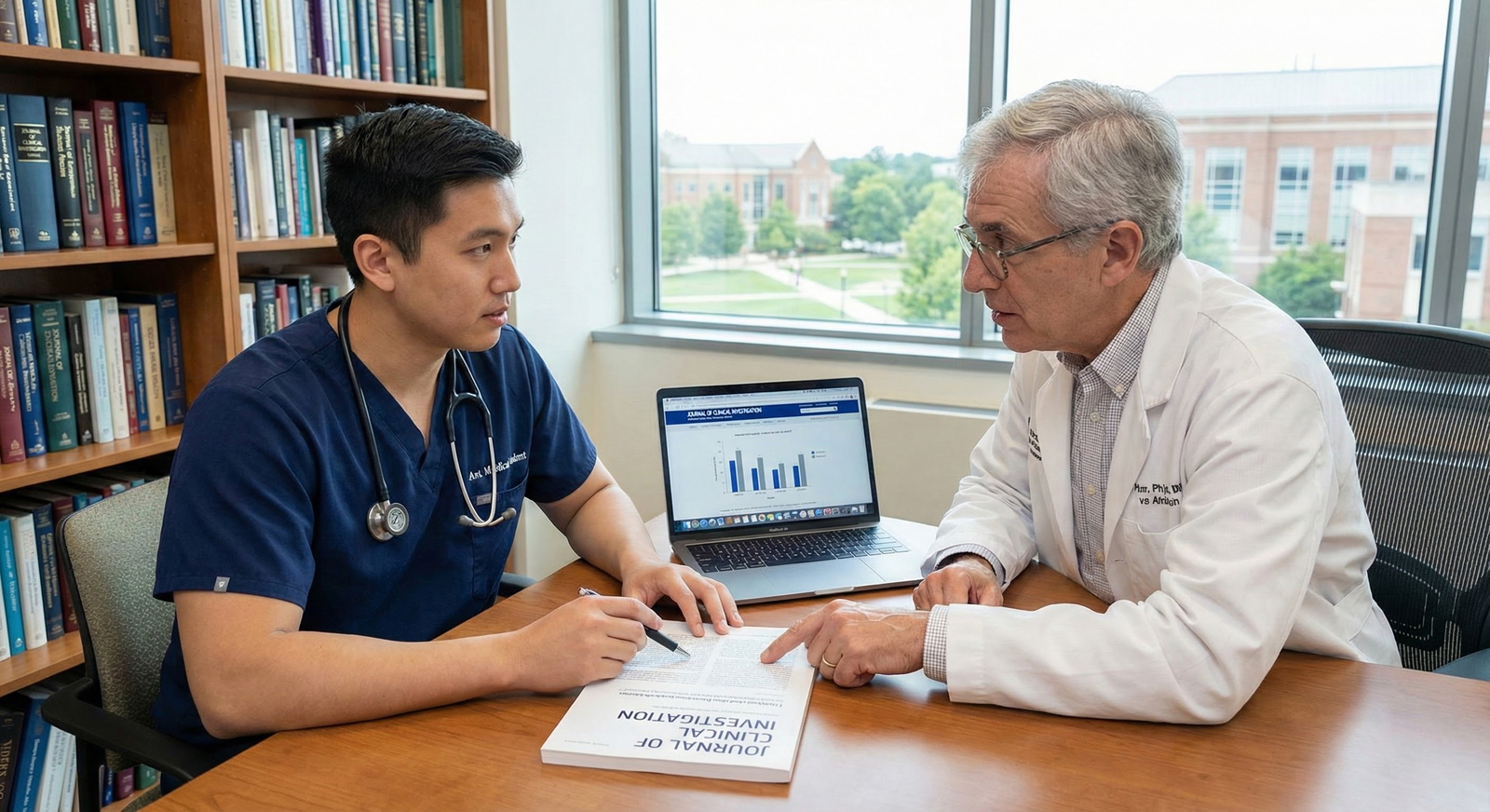
2. Target US-Based or North American Mentors
For EM–IM, US experience can be particularly valuable. Ways to connect:
Electives or Observerships
- During or after medical school, arrange EM, IM, or ICU observerships at academic centers
- Ask whether there are ongoing QI or small projects you can support, even remotely after you leave
Conference Networking (SAEM, ACEP, SHM, SGIM)
- Many abstracts list corresponding authors with their emails
- Follow up with, “I read your abstract on ED–IM transitions of care and am very interested in this area. Would you consider involving an IMG volunteer for literature review or data extraction in future projects?”
Alumni Networks
- Connect with former graduates from your medical school who matched in EM, IM, or EM–IM in the US
- Ask how they found mentors and whether they can introduce you
3. Remote-Friendly Research Options
If you are outside the US (or limited by visa/finances), prioritize research for residency that you can do remotely:
Systematic or Scoping Reviews
- Collaborate via Zoom; use shared documents and citation managers (Zotero, Mendeley, EndNote)
- You can handle protocols, database searches, and screening under guidance
Survey Studies
- Many EM and IM education or burnout studies are survey-based
- You can help with survey design, IRB submissions, and data analysis
Secondary Data Analysis
- Work with publicly available datasets or de-identified institutional data if your mentor provides access
- Analyze trends in ED visits for chronic disease, for example
4. Protecting Yourself from Exploitation
As an IMG desperate for opportunities, you may be vulnerable to doing unpaid, invisible work. To minimize this risk:
- Ask upfront about authorship expectations (“If I complete X and Y, would I be listed as a co-author?”)
- Clarify timelines and deliverables
- Agree on regular check-ins to ensure project progress
- Keep a clear record of your contributions
Programs respect applicants who can speak clearly about their roles in projects.
Executing High-Yield Project Types for EM–IM
Not all projects offer the same return on your effort, especially if you have limited time before application. Focus on those that maximize visibility and demonstrate EM–IM relevance.
1. Retrospective Chart Reviews with EM–IM Relevance
These can often be completed within 6–12 months with good mentorship.
Example topics:
- Outcomes of ED patients with acute heart failure admitted to medicine vs. observation units
- Time-to-antibiotics for suspected sepsis in ED and its relation to in-hospital mortality
- High-risk readmissions: patients discharged from the ED with chest pain who return within 30 days
Actionable steps:
- Join an existing dataset/project if possible rather than starting from zero
- Help refine the research question and define inclusion/exclusion criteria
- Take responsibility for a major component: data extraction, preliminary analysis, or first draft of the manuscript
- Aim for at least a poster presentation and submit to a mid-tier or specialty journal
2. Quality Improvement Across ED and Inpatient Settings
QI projects are highly valued in EM–IM due to their systems focus.
Example EM–IM QI ideas:
- Reducing delays in admission orders for ED patients boarding to internal medicine
- Standardizing anticoagulation reversal in ED and inpatient units for bleeding patients
- Improving follow-up arrangements for high-risk discharges (e.g., heart failure, COPD)
Key elements that matter to program directors:
- Use of a structured QI methodology (PDSA cycles, Root Cause Analysis)
- Clear pre- and post-intervention data
- Multidisciplinary collaboration (nurses, pharmacists, IM and EM teams)
- Measurable impact (improved time metrics, reduced errors, better documentation)
3. Case Reports and Case Series
These are often the starting point for many IMGs building publications for match.
EM–IM-appropriate examples:
- A rare metabolic emergency presenting in the ED that required complex inpatient management
- Unusual autoimmune condition first seen as “undifferentiated shock” in the ED
- Overlap syndrome (e.g., cardiac and pulmonary disease) that tests both EM and IM skills
Actionable advice:
- Try to cluster cases into a small case series when possible—it’s more publishable
- Add a mini-literature review section that shows your ability to synthesize evidence
- Target reputable case-report journals or specialty journals that accept case formats
4. Systematic and Narrative Reviews
These can be high-yield for IMGs, especially if you are comfortable with literature work.
Promising review topics:
- “Management of acute decompensated heart failure from ED presentation to hospital discharge”
- “Approach to undifferentiated hypotension: ED resuscitation and inpatient evaluation”
- “Long-term outcomes after ED-initiated sepsis bundles”
Make sure:
- You follow recognized guidelines (e.g., PRISMA for systematic reviews)
- You discuss both ED and IM implications to reinforce your EM–IM theme
- You involve a mentor experienced with publishing reviews
Presenting, Writing, and Showcasing Your Research for Maximum Impact
Doing research is only half the battle. How you present and package it for residency programs is just as important.
1. Writing Strong Abstracts and Posters
For conference abstracts in EM and IM:
- Highlight the EM–IM angle explicitly in the introduction or conclusion
- Use clear, clinically meaningful outcomes (e.g., mortality, ICU transfer, readmission)
- Keep methodology simple but transparent—program directors like clean, understandable designs
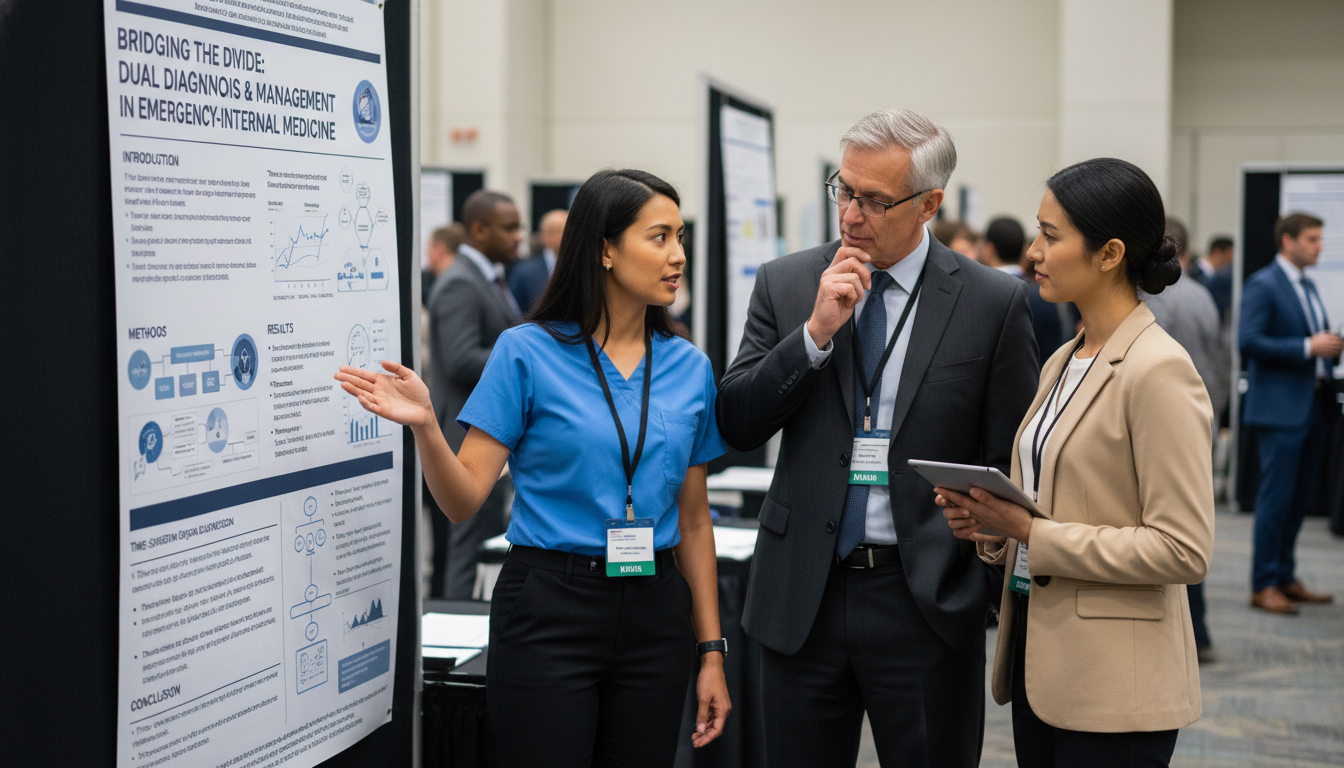
When presenting posters:
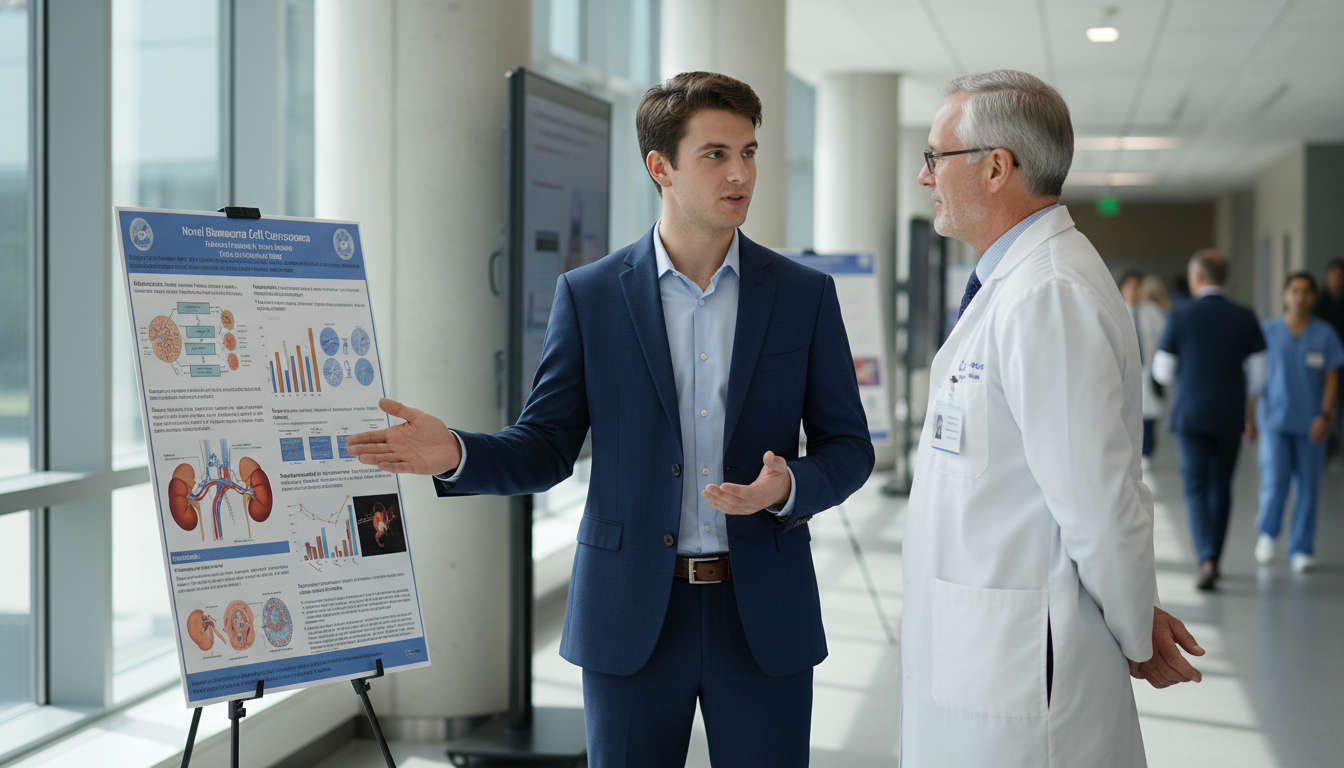
- Practice a 2-minute “elevator pitch” of your project
- Be ready to explain your personal role: “I designed the data collection tool and performed the initial analysis”
- If possible, get a photo of you at your poster (helpful for personal website/CV or later documentation)
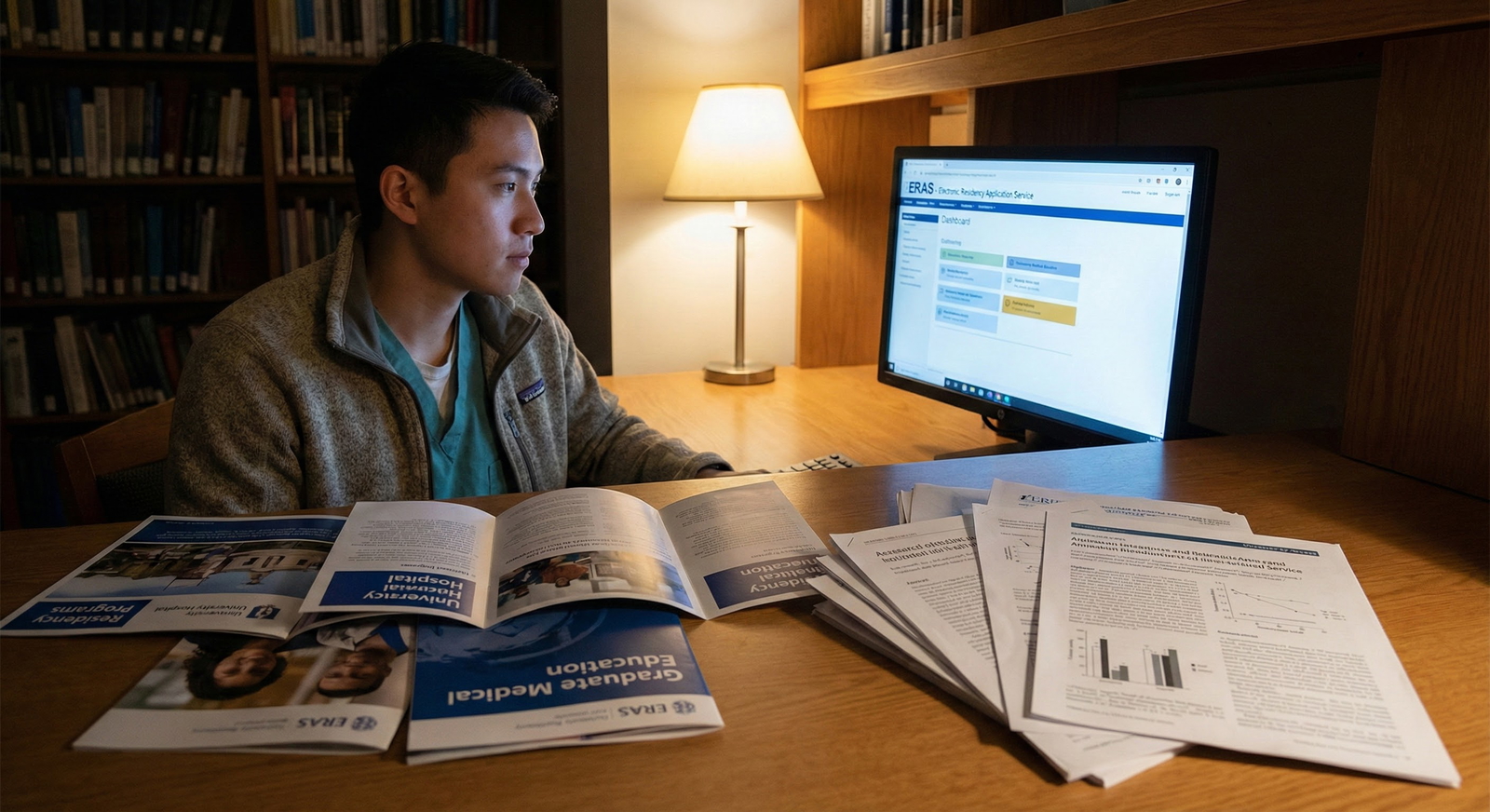
2. Listing Research in ERAS as an IMG
When filling in ERAS:
Accurately reflect the status of each project:
- Published (with PubMed ID if available)
- Accepted
- Submitted
- In progress
Avoid inflating your role—faculty may be contacted or ask detailed questions
For each experience, include a 1–2 line description emphasizing:
- Your role (“designed data extraction tool,” “first author,” etc.)
- The EM–IM relevance (e.g., “evaluated handoff quality between ED and medicine teams”)
3. Integrating Research into Your Personal Statement and Interviews
Don’t let your research sit as a disconnected CV section. Use it to strengthen your EM–IM story:
In your personal statement, briefly describe:
- What clinical question motivated your project
- What you learned about systems of care, diagnostic reasoning, or transitions between ED and inpatient medicine
- How this experience confirmed your interest in combined training
In interviews, be ready to discuss:
- Why you chose your topic
- Study limitations and how you would improve the project
- What new questions your findings raised
Programs are impressed by applicants who can think critically and humbly about their own work.
Common Pitfalls for IMGs and How to Avoid Them
Even motivated candidates fall into predictable traps. Being aware of these can save you time and frustration.
1. Spreading Yourself Too Thin
Problem:
- Joining 6–7 projects, but not having any one project reach publication or presentation before application
Solution:
- Prioritize 2–3 projects where you can realistically carry something to completion
- Be honest with mentors about your bandwidth and application timeline
2. Doing Projects with No EM–IM Link
Problem:
- Strong research, but in areas unrelated to your specialty (e.g., pure dermatology or pediatrics)
- Harder to use it to support your EM–IM narrative
Solution:
- If you already have non-EM/IM research, that’s fine—still valuable
- But for new projects, deliberately select topics that touch emergency medicine internal medicine themes (resuscitation, chronic disease with acute flares, transitions of care, etc.)
3. Underestimating Ethical and Regulatory Requirements
Problem:
- Conducting “informal” research without IRB approval or proper patient consent
- Results cannot be published or presented in reputable venues
Solution:
- Always involve a faculty mentor with institutional affiliation
- Ensure IRB or ethics board review for any project with patient data
- Keep copies of IRB approval letters and protocols
4. Poor Documentation of Your Contributions
Problem:
- You’ve done substantial work, but cannot articulate your exact role
- Interviewers may doubt the authenticity of your involvement
Solution:
- Keep a research log: dates, tasks performed, drafts completed
- Save emails or notes that capture your responsibilities
- Before submitting ERAS, review each project and write a 1–2 sentence summary of your role
FAQs: Research Profile Building for IMGs Targeting EM–IM
1. As an international medical graduate, do I absolutely need research to match EM–IM?
No, it’s not an absolute requirement, but most successful EM–IM applicants at academic centers will have at least some research or scholarly activity. For IMGs, research is often a key differentiator and a way to show academic readiness. If you lack research, you need especially strong US clinical experience, boards, and letters to compensate.
2. How many publications needed to be “safe” for EM–IM programs?
There is no safe number. For many IMGs, 1–2 solid publications plus a few abstracts/posters can be sufficient, especially if other aspects of the application are strong. A more competitive profile might include 3–5 publications for match (even case reports and reviews) and several conference presentations. Focus on quality, relevance to EM–IM, and your clearly defined role.
3. Will non-EM/IM research (e.g., basic science, surgery) still help my EM–IM application?
Yes. Any rigorous research demonstrates discipline, critical thinking, and the ability to complete academic work. However, you should still try to add at least one EM–IM–relevant project if time allows, even if small (case report, QI project, or review). In interviews and your personal statement, explain clearly how your previous research skills transfer to your interests in emergency medicine internal medicine.
4. I’m short on time (less than a year before applying). What should I prioritize?
Focus on high-yield, time-efficient projects: case reports/series, small but well-designed QI projects, retrospective chart reviews with existing datasets, and conference abstracts. Pair with a responsive mentor who understands your timeline. Even if manuscripts are submitted but not yet accepted, they still show current, active engagement and strengthen your narrative as an academically inclined IMG aiming for EM–IM.
Building a compelling research profile as an international medical graduate targeting EM–IM combined programs is absolutely achievable, even from a disadvantaged starting point. By strategically choosing EM–IM–relevant topics, seeking strong mentorship, finishing projects you start, and clearly presenting your role and insights, you can turn research from a checkbox into one of the strongest pillars of your residency application.