Understanding Why Research Matters for IMGs in Family Medicine
Most international medical graduates know that specialties like dermatology or radiology are “research heavy,” but many underestimate how important research has become for the family medicine (FM) match—especially for IMGs.
Why research now matters in Family Medicine
Historically, family medicine programs placed minimal emphasis on research. That has changed for several reasons:
- Shift to evidence-based primary care: FM physicians must interpret guidelines, appraise literature, and apply population-level data to individual patients.
- Growth of academic FM departments: Many FM programs are now part of research-active departments focusing on health services, chronic disease, population health, quality improvement, and medical education.
- More competitive match for IMGs: As more IMGs apply and USMLE/COMLEX scores become pass/fail in areas, research becomes another way to differentiate applicants.
For an international medical graduate, a strong research profile:
- Demonstrates you can work in a US-style academic environment
- Signals maturity in clinical reasoning and evidence-based practice
- Compensates, to some extent, for limited US clinical experience or school name recognition
- Helps reassure programs about your communication skills and professionalism
How much research do FM programs really expect?
Compared with highly competitive specialties, family medicine programs do not require a heavy research portfolio. However:
- Some research is clearly better than none, especially for IMGs
- Academic or university-based FM programs often prefer applicants with evidence of scholarship
- Community programs increasingly value quality improvement (QI) and practice-based research
The key is not to compete with dermatology or radiology applicants, but to build a realistic, relevant, and coherent research profile that fits the mission and flavor of family medicine.
Defining a Realistic Research Goal: How Strong Should Your Profile Be?
Before asking “how many publications needed,” you should clarify what level of research profile fits your situation.
Baseline vs. strong vs. standout profiles
For an IMG aiming at family medicine, think in terms of tiers:
1. Baseline-competitive research profile (minimum target)
Acceptable for many community and some university-affiliated FM programs:
- 1–2 completed research or QI projects (even if not yet published)
- Possibly 0–1 publications or abstracts (poster, case report, or letter)
- Demonstrated understanding of basic research concepts (study design, bias, reading a paper)
2. Strong research profile (target for most IMGs)
Good for a mix of university and community programs, especially if you want academic or teaching careers:
- 2–3 completed projects where you had a meaningful role
- 1–3 publications for match: Mix of case reports, review articles, QI/clinical studies, or conference abstracts
- A clear family medicine–relevant theme (e.g., chronic disease management, health disparities, primary care education, community health)
3. Standout research profile (for academic FM+future fellowship)
Helpful if you’re aiming at research-oriented institutions or fellowships (sports medicine, geriatrics, palliative care, etc.):
- 3–5+ substantial projects
- 3–6+ peer-reviewed pieces (including original research, systematic reviews, or well-regarded conference abstracts)
- Responsibility in design/analysis, maybe even first- or second-author roles
- Evidence of leadership (presentations, mentoring juniors, or leading a QI initiative)
Your realistic target depends on:
- Time until application (1 vs. 3 years)
- Current location (in the US vs. abroad)
- Access to mentors or institutions
- Competing obligations (exams, work, family)
Most IMGs with 12–24 months before applying can aim for the “strong research profile” tier above with deliberate planning.

Choosing the Right Kind of Research for Family Medicine
Research profile building is not only about quantity; it’s about fit and feasibility. For family medicine, some types of projects are more accessible and more relevant than others.
1. Clinical research relevant to primary care
These are projects dealing with common outpatient and community issues. Examples:
- Diabetes or hypertension control in a primary care population
- Adherence to preventive screening (mammograms, colon cancer screening, vaccines)
- Asthma or COPD management outcomes in a clinic
- Multimorbidity and polypharmacy in older adults
Why this helps:
- Directly aligned with family medicine practice
- Shows you understand population health and continuity of care
- Feeds naturally into QI projects and practice redesign
For IMGs, these may be chart-review based or retrospective observational studies, which are relatively feasible with limited resources.
2. Quality Improvement (QI) and patient safety projects
QI aligns perfectly with the mission of family medicine and can be easier to initiate:
- Improving diabetes foot exam completion rates in a clinic
- Reducing no-show rate through reminder calls or text messaging
- Streamlining depression screening with PHQ-9
- Increasing influenza vaccination uptake in high-risk populations
QI projects often follow PDSA (Plan–Do–Study–Act) cycles and focus on process rather than hypothesis testing.
Advantages for IMGs:
- Often lower barriers to approval in clinics/hospitals than full research projects
- Highly valued in residency because QI is a core ACGME competency
- Easier to complete within months rather than years
These projects may lead to local presentations, posters, or even short publications in primary care or QI journals.
3. Case reports and case series
For IMGs asking “how many publications needed” but with limited time, case reports are an effective entry point:
- Report an unusual presentation of a common condition (e.g., MI with atypical symptoms in a young patient)
- Highlight a rare disease detected in primary care
- Describe significant medication side effects or diagnostic pitfalls
Benefits:
- Lower sample size and resource requirement
- Great training in literature review and scientific writing
- Often accepted in FM, general medicine, or case-report journals
While case reports carry less weight than original research, several well-written case reports can still strengthen your IMG residency guide–style profile, especially if tied to family medicine practice.
4. Narrative reviews, mini-reviews, and educational pieces
If you’re outside the US or lack patient access, literature-based projects can still be valuable:
- Narrative review on screening for depression in primary care
- Mini-review of telehealth in rural family medicine
- Educational article on managing common problems (UTIs, low back pain, obesity) in clinic
These are more achievable when you have a strong topic and a supportive mentor, and they demonstrate your ability to synthesize evidence—key for FM.
5. Public health and community-based research
Family medicine sits at the intersection of clinical care and public health. Projects can involve:
- Community surveys on vaccination attitudes
- Assessing barriers to prenatal care in underserved populations
- Evaluating a health education intervention (e.g., diet, smoking cessation) in a clinic or community center
For IMGs, especially those still in their home countries, these projects demonstrate:
- Experience with population health, a huge focus for US FM
- Cultural and community engagement skills
- Potential for leadership in community-based organizations
6. Medical education and curriculum projects
Many FM programs are very education-focused. Projects might include:
- Developing a workshop for medical students on hypertension management
- Evaluating OSCE station performance in primary care skills
- Comparing different teaching methods for EBM or communication skills
These align particularly well if you see yourself in a teaching/academic FM career.
Step-by-Step: Building a Research Profile as an IMG
This section is a practical IMG residency guide to constructing a research portfolio from where you are now to where you need to be by match season.
Step 1: Audit your current profile
List all your existing items:
- Completed or ongoing projects (even if not formal)
- Past research during medical school
- Audits, QI projects, or student research days
- Any posters, presentations, or publications
- Specific skills (statistics, programming, prior training)
Identify gaps:
- No FM-relevant topics?
- Work never led to a product (poster, paper)?
- No clear role you can describe?
This audit shapes your next 12–24 months.
Step 2: Define a coherent narrative
Programs like to see consistency:
- Family medicine–relevant topics (primary care, prevention, chronic disease, community health)
- Themes that match your stated interests in your personal statement (e.g., preventive medicine, health equity, rural health)
Example narrative:
“My research interests center on improving chronic disease management and preventive care in underserved populations, particularly exploring how primary care can better address hypertension and diabetes control in resource-limited settings.”
Then, choose 2–3 projects that “speak to” this theme.
Step 3: Secure mentors and access
For many IMGs, this is the most challenging step, especially if you are outside the US.
If you are already in the US:
- Look for family medicine or internal medicine departments at nearby hospitals/universities
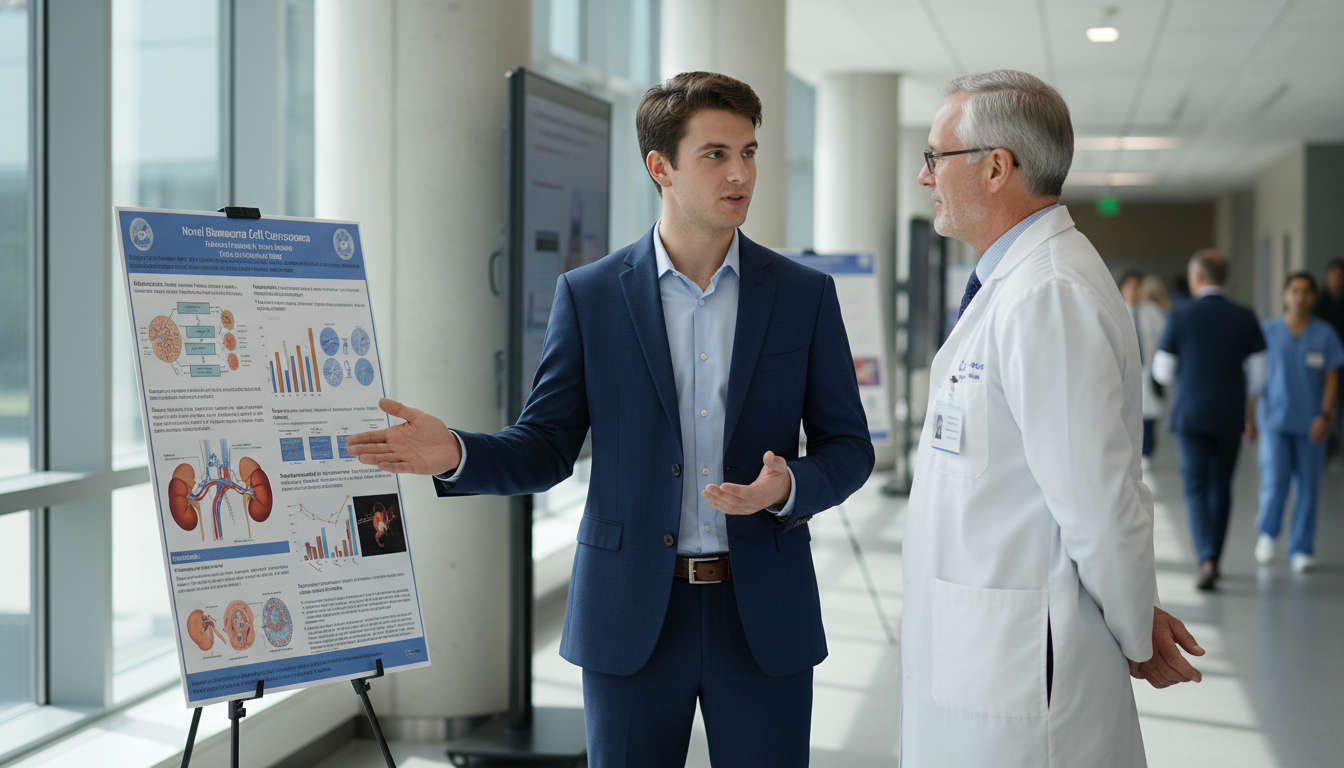
- Attend grand rounds or academic conferences and introduce yourself afterward
- Politely email faculty, including:
- 2–3 line background (where you trained, IMG status)
- Brief statement of interest in family medicine and research
- Any skills or prior experience
- Offer to help with data collection, chart review, manuscript editing
If you are outside the US:
- Utilize online mentorship and collaborations (ResearchGate, LinkedIn, alumni networks, international conferences)
- Contact FM or community medicine faculty at your institution
- Offer to help with existing projects that need extra manpower
- Consider remote roles in systematic reviews or data analysis projects where local patient access is not required
Be persistent but professional. Mentors are busy, but many are open to enthusiastic IMGs who commit to follow-through.
Step 4: Select 2–4 realistic projects
Balance your portfolio:
- One “anchor” project:
- Original research or impactful QI with strong FM relevance
- Longer timeline but higher yield (e.g., retrospective study of diabetes control in a resident clinic)
- One or two faster projects:
- Case reports, small QI cycles, short reviews
- Feasible within 3–6 months
- One “stretch” project (optional):
- Systematic review, multi-center study, or a larger public health project
- Good for standout profile if time allows
Time planning:
- If you have 12–18 months before FM match:
- Months 1–3: Mentors + project selection
- Months 4–9: Data collection, case reports, first abstracts
- Months 10–15: Manuscripts, conference submissions
- Months 16–18: Finalizing outputs, preparing to describe your work in ERAS and interviews
Step 5: Turn every project into a tangible output
In the context of research for residency, effort without output has limited value. For each project, aim to produce at least one of:
- Abstract for a conference (local, regional, or national)
- Poster presentation (even at your institution)
- Oral presentation
- Manuscript for a peer-reviewed or reputable journal
- Published letter to the editor or brief report
Even if a full paper takes longer than your application timeline, an accepted abstract or poster still counts and can be listed in ERAS as “submitted/accepted.”
Step 6: Track and document your contributions
Residency programs want to know not just that your name is on a paper, but what you did. Track:
- Your role (idea, literature review, data collection, analysis, writing)
- Time commitment
- Skills learned (SPSS/R, Excel, REDCap, survey tools, QI methodology)
This will help you confidently answer interview questions like:
- “Tell me about your research experience.”
- “What was your role in this study?”
- “What did you learn from your QI project?”

Publications, Productivity, and Strategy: Making the Numbers Work for You
When IMGs search the internet, they frequently ask “how many publications needed” to be competitive. There is no universal answer, but there are patterns and strategies.
What do the numbers look like in FM?
While exact data vary by year and country:
- Many successful FM applicants, especially US grads, have 0–2 publications
- Competitive IMG applicants to FM often have 1–4 research experiences and 1–3 publications or presentations
The threshold where research usually starts to positively distinguish an IMG applicant is:
- At least 1 publication or peer-reviewed abstract
- Additional case reports, posters, or small QI papers add incremental value
Quality vs. quantity
Four superficial, low-effort publications in non-peer-reviewed venues are not necessarily better than:
- One solid original research article +
- A meaningful QI project with a poster +
- A well-presented case report
Programs value:
- Relevance to family medicine
- Demonstrated understanding of the methods and results
- Evidence you had a significant role
- Consistency with your career goals
Tiered strategy if you are short on time
Assume you are 9–12 months from ERAS opening and currently have no research.
Highest-yield plan:
- One QI project at a clinic/hospital
- Aim: abstract/poster + possible short paper
- One case report or short case series
- Aim: quick publication in a case-focused journal
- One small narrative review on a FM-related topic
- Aim: submit to a primary care or general medicine journal
This can realistically produce 2–3 items on your ERAS if you manage time and have good mentorship.
Using non-traditional and remote research opportunities
For IMGs without direct access to US clinical sites:
- Systematic reviews and meta-analyses (time-intensive but strong academically)
- Narrative reviews on global primary care issues
- Collaborations with classmates who have access to data or patients
- Online databases and publicly available datasets (e.g., national health surveys) usable from abroad
These are particularly useful if your path involves some delay (e.g., exam preparation, visa issues) and you need to demonstrate continued academic engagement.
Presenting Your Research Profile in ERAS and Interviews
How you communicate your research can be as important as the numbers themselves.
Listing research in ERAS
For each entry:
- Be accurate: Distinguish clearly between “submitted,” “accepted,” and “published”
- Include all authors in correct order
- Clarify your specific role in the “Description” section
- Group related work (e.g., several outputs from one project) logically
Avoid inflating your contribution. Program directors can often detect exaggeration.
Framing research in your personal statement
For an IMG applying to family medicine residency:
- Briefly describe how research shaped your understanding of primary care and patient care
- Link your projects to FM values: continuity, prevention, whole-person care, community health
- Show how your experiences prepared you for:
- Practice-based learning
- QI activities
- Teaching and academic involvement as a resident
Example sentence:
“Working on a quality improvement project to increase colorectal cancer screening in a community clinic helped me appreciate how small process changes in primary care can significantly impact population health, reinforcing my commitment to a career in family medicine.”
Discussing research during interviews
You should be prepared to:
- Summarize each major project in 2–3 minutes, including:
- Objective
- Methods (brief)
- Key findings
- Your personal role
- What you learned
- Handle basic methodology questions (e.g., “Why did you choose a retrospective design?” “How did you control for confounders?”)
- Connect your research interests with the program’s strengths:
- If a program is strong in community health, highlight your public health work
- If they emphasize QI, focus on your process improvement projects
The goal is not to impress them with complex statistics, but to show you think critically, communicate clearly, and are genuinely engaged with evidence-based family medicine.
Frequently Asked Questions (FAQ)
1. As an IMG, is research mandatory to match into family medicine?
No, research is not strictly mandatory to match FM, and every year some IMGs match with minimal or no research. However, in a more competitive and holistic review environment, any amount of well-presented research is a strong advantage, especially for academic or university-affiliated programs. It can offset weaker factors (lesser-known medical school, limited US clinical experience) and strengthens your credibility as a future resident.
2. Realistically, how many publications do I need as an IMG applying to family medicine?
There is no fixed number, but for many IMGs a good target is:
- 1–3 publications, abstracts, or significant presentations
- Plus possibly additional work-in-progress that you can describe
Even one meaningful publication (especially if you can explain your role and results well) can noticeably improve your profile. Multiple smaller outputs (case reports + posters) are also helpful, particularly if aligned with family medicine themes.
3. I am still in my home country and have no access to US patients. How can I build a research profile?
You can still create a strong profile by focusing on:
- Projects using local patients or clinics in your country (primary care, community medicine)
- Public health or community-based research relevant to primary care
- Systematic or narrative reviews on family medicine topics
- Remote collaborations, including:
- Online survey-based studies
- Meta-analyses and database research
- Co-authorship opportunities through academic contacts and platforms
Residency programs care more about skills and mindset than geography, as long as you can clearly explain what you did and why it matters to family medicine.
4. I have strong research in a non-FM field (e.g., surgery, basic science). Is that still valuable for a family medicine residency application?
Yes. Any serious research, even outside FM, shows:
- Discipline and persistence
- Ability to work in academic teams
- Skills in analysis, writing, and critical thinking
You should:
- Honestly describe your previous work
- Highlight transferable skills (data analysis, study design, literature review)
- Then bridge to why you are now focused on family medicine (e.g., interest in continuity of care, population health, or a broader scope of practice)
If you have time, adding at least one family medicine–relevant project will help tailor your profile to your current specialty choice.
By deliberately planning your research activities, focusing on realistic and FM-relevant projects, and clearly communicating your contributions, you can build a compelling research profile as an international medical graduate—one that strengthens your candidacy for family medicine residency, supports your success in the FM match, and sets a solid foundation for a lifelong career in evidence-based primary care.