Understanding the Role of Research for IMGs in Preliminary Surgery
For an international medical graduate (IMG), building a strong research profile can significantly improve your chances of matching into a preliminary surgery residency in the United States. While clinical performance, USMLE scores, and letters of recommendation remain crucial, research can be a powerful differentiator—especially when you have non‑US training, visa needs, or gaps in your CV.
A prelim surgery year is often used as:
- A bridge to a categorical general surgery position
- A stepping stone to a different surgical specialty (e.g., neurosurgery, urology, ENT, orthopedics)
- A year to gain US clinical experience, strengthen your CV, and generate additional research
In all of these scenarios, a strategically built research portfolio sends a clear signal: you understand the culture of academic medicine, you are productive, and you can contribute to the scholarly mission of a program.
This IMG residency guide will walk you through:
- Why research matters specifically for prelim surgery
- What kind of research is realistic and impactful for IMGs
- How many publications are truly needed (and what counts)
- Concrete steps to find opportunities, stay productive, and present your work
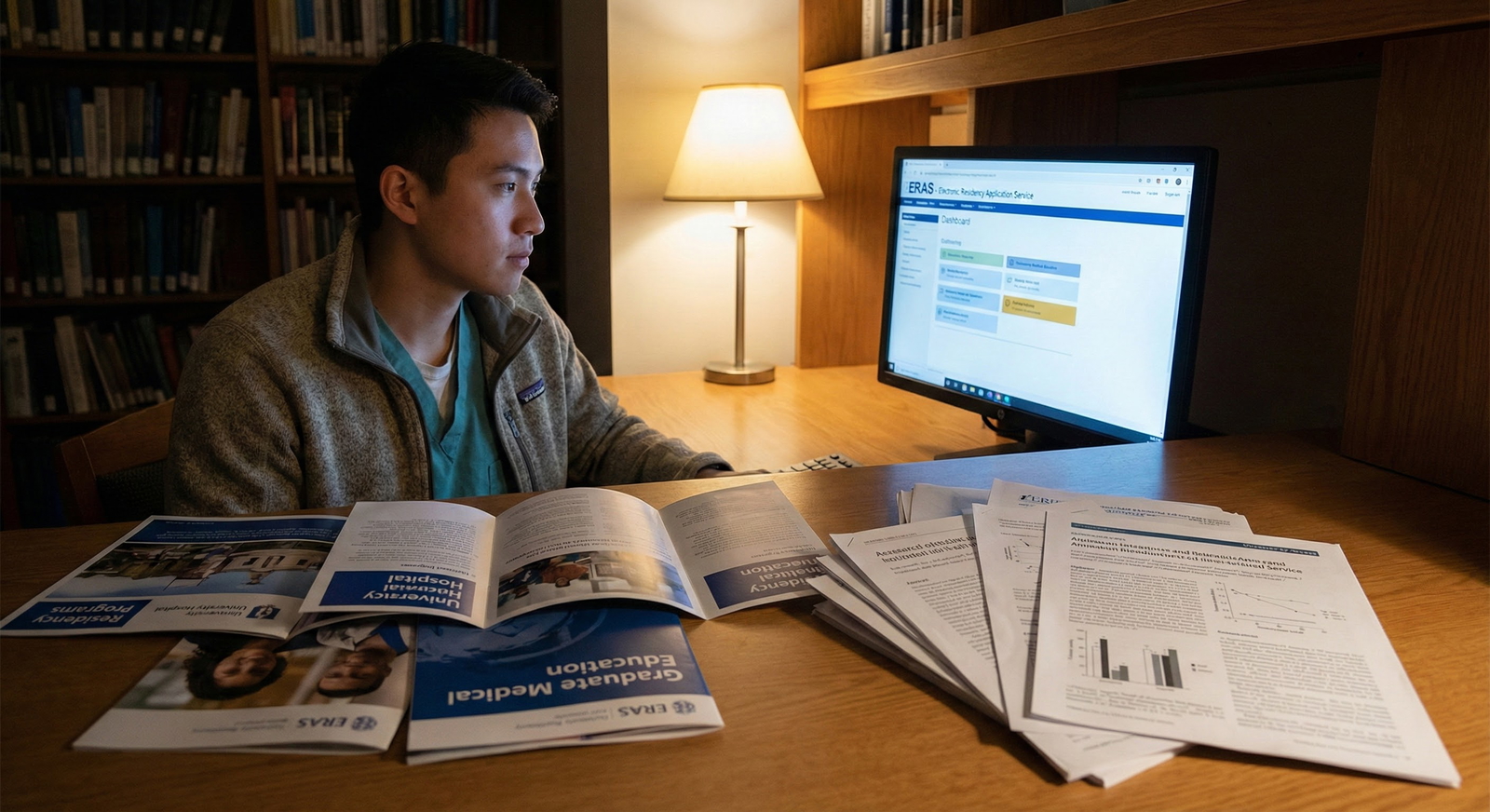
- How to package your research effectively in ERAS
Why Research Matters in a Preliminary Surgery Application
The reality for IMGs
Most IMGs applying to preliminary surgery positions face at least one of these challenges:
- No US medical school on their CV
- Graduation more than 2–3 years ago
- Visa sponsorship needs
- Limited or no US clinical experience
- Lack of home-institution connections to US surgery programs
Programs use research involvement and scholarly output as a proxy for several qualities:
- Commitment to an academic surgical career
- Ability to work in teams and handle complex projects
- Persistence and reliability over time
- Ability to communicate in English in a scientific context
- Familiarity with US academic norms (IRB, ethics, authorship, HIPAA)
In highly competitive environments, when many applicants have similar scores, an organized research portfolio can tip the balance.
Research expectations: Prelim vs categorical surgery
For preliminary surgery:
- Programs may not require a strong research background, especially at community hospitals.
- However, academic centers often use prelim spots as a pipeline for future categorical positions, and there research is more valued.
- Your research can also signal to programs in other surgical specialties that you’re serious about an academic path beyond the prelim year.
Conclusion: Research is not mandatory for every prelim surgery position, but for an IMG it is often a critical strategic tool to stand out, especially at better-resourced academic programs.
Defining a Strong Research Profile as an IMG
Before you start chasing projects, you need a clear target vision of your research for residency.
What “counts” as research for the match?
Programs recognize a broad range of scholarly work. In ERAS, these show up as:
- Peer-reviewed journal articles
- Case reports and case series
- Review articles and book chapters
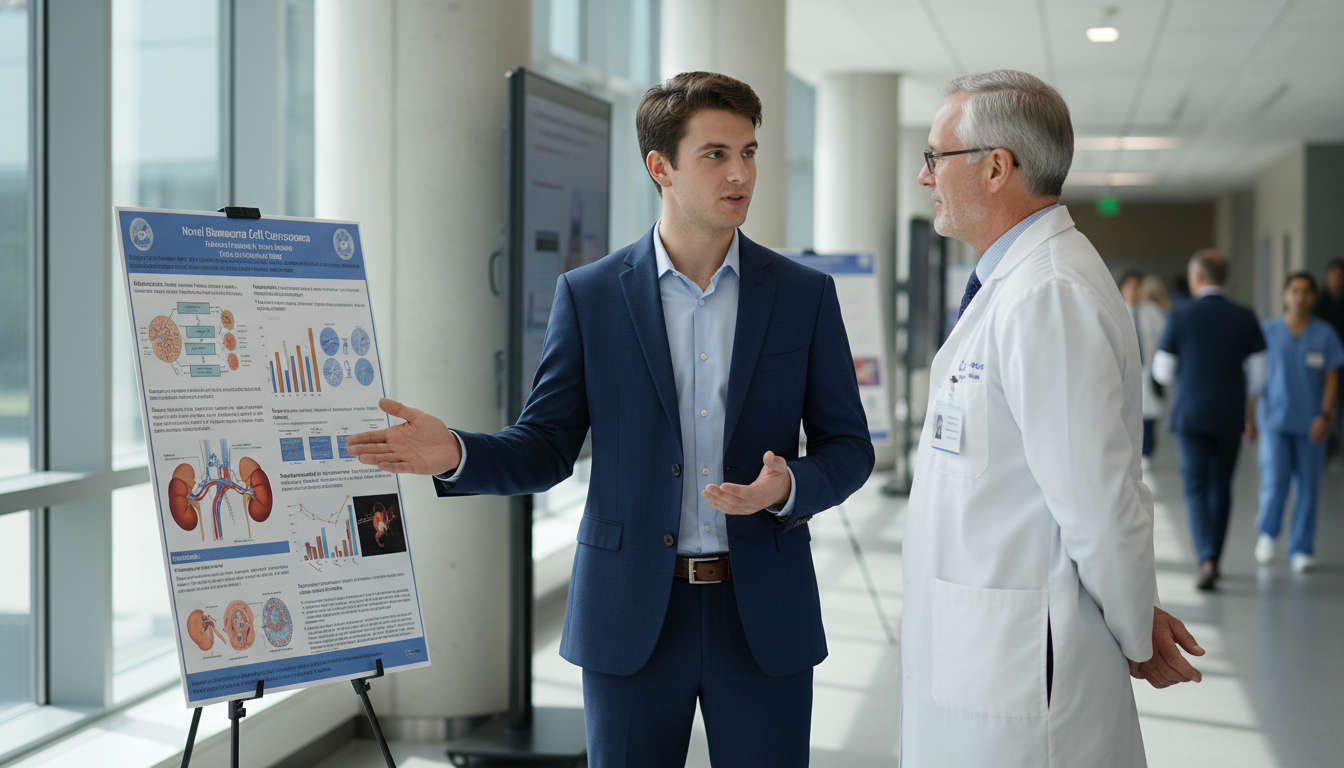
- Conference abstracts, posters, and podium presentations
- Quality improvement (QI) projects
- Database projects / outcomes research
- Basic science or translational research
- Institutional or national registry work (e.g., NSQIP, trauma registries)
All of these count positively if listed accurately and honestly in your application. Programs care more about substance, consistency, and your role than about a single “perfect” paper.
How many publications are needed?
There is no absolute number, but for a typical IMG prelim surgery applicant, a realistic and competitive range is:
- 0–1: Still viable for some community prelim programs, but you’re weaker against research‑heavy peers.
- 2–4: Solid, especially if at least one is surgery‑related and you have some conference output.
- 5+: Begins to stand out for prelim positions, especially if you can articulate your involvement and impact.
Remember, when people ask, “how many publications needed?”, the better question is:
Does my research portfolio show sustained engagement, relevance to surgery, and progression of responsibility?
A candidate with 3 well‑explained, surgery-related projects with defined roles and strong letters is often more impressive than one with 15 marginally relevant middle‑author papers they can’t discuss in detail.

Types of Research That Work Well for IMG Prelim Surgery Applicants
Different settings and constraints call for different strategies. As an IMG, you may not have immediate access to labs or patient cohorts. Focus on feasible, high-yield options.
1. Clinical outcomes and database projects
These are common and practical for surgery-bound IMGs:
- Retrospective chart reviews in general surgery (appendectomies, cholecystectomies, hernia repairs, trauma, colorectal, bariatric, etc.)
- Database analyses using large datasets (NSQIP, NRD, NIS, SEER, transplant registries, trauma registries)
Why they are ideal:
- No need for experimental labs.
- Highly relevant to surgical programs.
- Often easier to produce multiple abstracts and papers from one dataset.
Example:
You join a trauma surgery lab working on NSQIP data. You help with data cleaning, chart review, and drafting a manuscript on predictors of surgical site infection after emergency laparotomy. You then help create a second project looking at readmission rates. Over 12–18 months, this can yield:
- 1–2 conference abstracts
- 1–2 peer-reviewed publications
- A strong letter from the PI describing you as integral to the research team
2. Case reports and case series
For IMGs without established research networks, case reports can be an efficient starting point:
- Present unusual complications of common surgeries
- Rare diseases requiring surgical intervention
- Novel approaches or unexpected outcomes
They are relatively quick to write and often accepted by specialty journals or educational platforms. Case series (3+ patients) can sometimes be turned into short original articles.
Actionable approach:
- During observerships or externships, ask attendings:
“Do you have any interesting cases that might be suitable for a case report or small case series? I would be happy to help with literature search and drafting.”
Be ready to handle:
- Literature search
- Drafting intro, case description, and discussion
- Formatting to the journal’s requirements
3. Literature reviews and narrative reviews
If you are geographically distant from US hospitals or waiting for a visa, this is a practical way to build publications for match:
- Narrative reviews on specific surgical topics (e.g., “Non-operative management of appendicitis: Current evidence and controversies”)
- Systematic reviews or meta-analyses if you have a mentor with experience in methodology
Strengths:
- Can be done remotely
- Builds deep knowledge on a focused surgical topic
- Teaches you formal search strategies and critical appraisal
Ensure that:
- You have a mentor with a track record of publications
- You follow PRISMA guidelines for systematic reviews and meta-analyses
- Authorship roles are clearly defined early
4. Quality improvement (QI) projects
Surgery departments frequently run QI initiatives. These are especially valued in programs focused on patient safety.
Examples:
- Reducing catheter-associated infections in post-op patients
- Implementing a new ERAS (Enhanced Recovery After Surgery) pathway for colorectal surgery
- Standardizing VTE prophylaxis in trauma patients
These may or may not result in journal publications, but they can yield:
- Local or regional poster presentations
- Institutional recognition
- Strong talking points for interviews
5. Basic and translational research
Less common for IMG prelim applicants unless you commit to 1–2 dedicated research years in a US lab. This can be high-yield if:
- The lab has a strong publication record
- You are staying long enough to see projects through to publication
- Your PI is known in surgical education or research fields
This route is more typical for those eventually aiming at highly competitive surgical specialties (neurosurgery, plastics, ortho, ENT) but can also strengthen applications to general surgery.
Finding and Securing Research Opportunities as an IMG
Building a research profile begins with access. As an IMG, you often have to be more proactive and persistent than US grads.
Step 1: Clarify your constraints and goals
Ask yourself:
- Do I need a visa to be employed or funded?
- Can I relocate to the US for 1–2 years as a research fellow?
- Am I looking for remote collaboration only?
- Is my main target categorical general surgery, a subspecialty, or just securing a strong prelim year first?
Your answers will determine whether you target:
- Full-time in-person research fellow positions (often J-1 or H‑1B eligible)
- Volunteer research positions
- Remote, collaborative projects with US or international teams
Step 2: Use structured outreach to surgeons and labs
A professional outreach strategy is crucial. Target:
- Academic general surgery departments
- Divisions of trauma, critical care, colorectal, HPB, surgical oncology, minimally invasive, or vascular surgery
- Surgical outcomes research centers or surgical education labs
Your email should be:
- Short (200–250 words)
- Clear about your status (IMG, graduation year, visa needs)
- Explicit about your goals (prelim surgery, research productivity)
- Accompanied by a concise CV (2–3 pages)
Example structure:
- One-line introduction (who you are, where you trained).
- Your USMLE status and interest in preliminary surgery.
- Prior research or academic experience (even if not surgical).
- What you’re asking for: volunteer research, full-time unpaid/paid position, remote collaboration.
- Your availability and commitment (e.g., 12–18 months full time).
- Attach CV and optionally a sample of prior scholarly work.
Send 40–60 well-targeted emails over several weeks. Low response is normal; persistence matters.
Step 3: Leverage existing networks and platforms
- Professors from your home country with US collaborators in surgery
- Alumni from your medical school now training/working in the US
- Conference connections (even virtual)
- Professional platforms like LinkedIn and ResearchGate (used strategically, not spammy)
Tactics:
- Identify surgeons presenting topics you’re interested in at virtual conferences. Email them afterwards to express genuine interest and ask about potential collaboration.
- Use your home institution’s research office to find international collaborations.
- Ask any US-based physicians you know: “Do you know any surgeons who have research fellows or need help with data projects?”

Maximizing Productivity Once You Have a Research Position
Once you gain access, the next priority is consistent output. Programs care not only that you joined a lab, but that you produced.
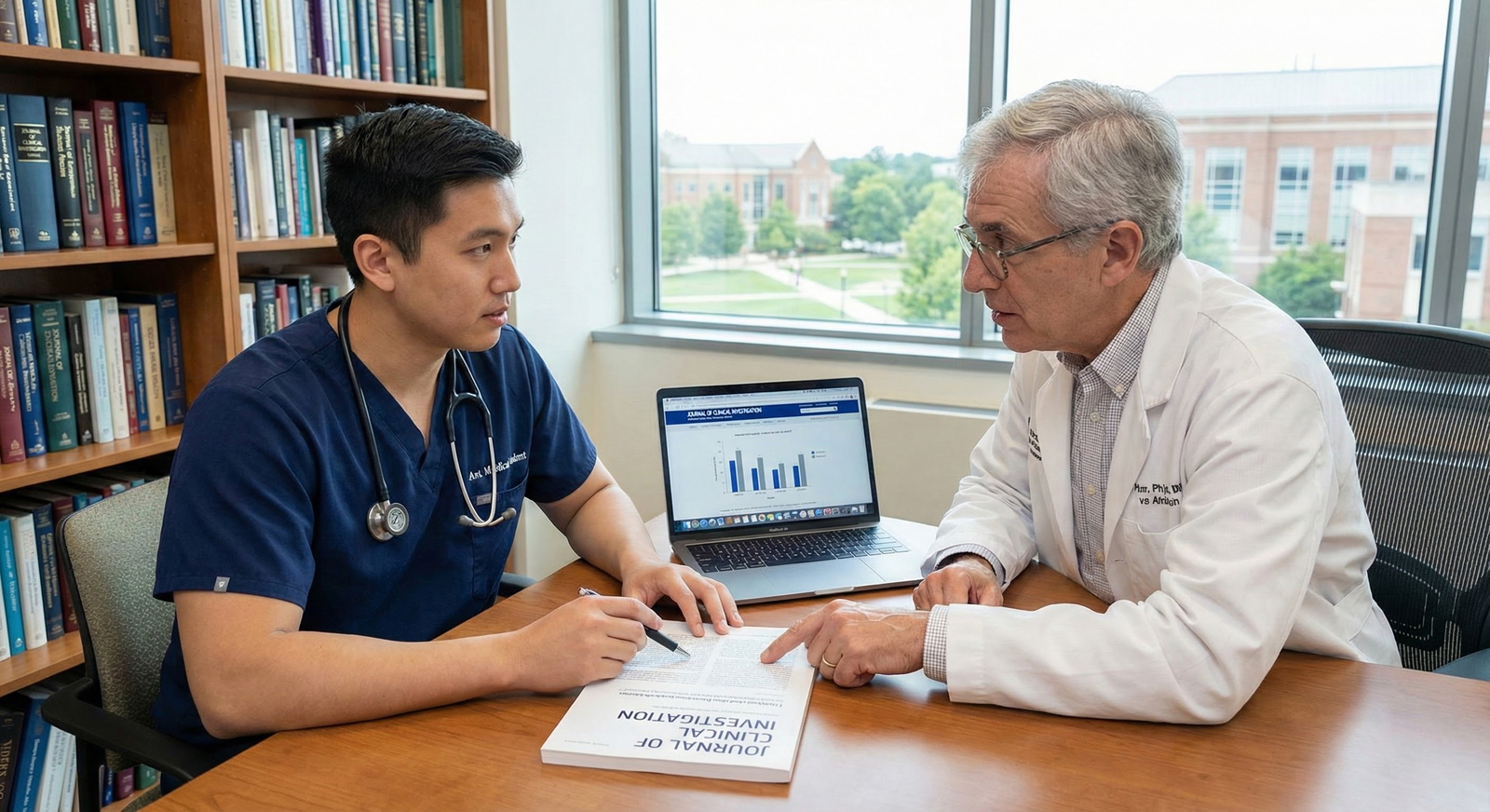
Set clear expectations with your mentor
Within the first month, discuss:
- Typical timeline from project start to abstract or manuscript
- Expected working hours and responsibilities
- Authorship practices (first author vs co-author vs acknowledgement)
- Your target of abstracts and papers over your tenure
Avoid vague arrangements. Ask respectfully:
“Based on your experience with prior fellows, what would be a realistic number of abstracts or manuscripts to aim for over 12 months if I work full time?”
Choose projects that can realistically finish within your timeframe
For a 12–18 month research period, prioritize:
- Retrospective clinical studies with existing IRB approvals
- Sub-analyses of ongoing registry or database projects
- Case reports and case series with clear patient data already available
These are more reliable than:
- New basic science projects starting from scratch
- Complex prospective trials that require long enrollment periods
Learn essential skills early
To be truly productive, invest early in:
- Data management tools: Excel, REDCap, basic R or SPSS
- Reference managers: EndNote, Mendeley, or Zotero
- Academic writing basics: IMRaD structure, journal guidelines, reference formatting
- Presentation design: Clear figures, clean poster layout, polished oral slides
The more independent you become in data handling and drafting, the more valuable you are—and the more likely you’ll be trusted with first-author opportunities.
Document your contributions meticulously
Keep a personal log (e.g., spreadsheet) of:
- Project title and short description
- Your role (data collection, analysis, drafting, editing, presenting)
- Status (idea, data collection, draft, submitted, accepted, presented)
- Co-authors and supervising PI
This helps you:
- Avoid forgetting to list anything in ERAS
- Explain your exact contribution during interviews
- Politely remind PIs about near-finished projects or pending submissions
Presenting and Positioning Your Research in the Match
Research alone won’t secure a prelim surgery position, but how you present it can significantly boost your impact.
Optimizing your ERAS application
Research experiences section
- Emphasize your roles and responsibilities (not just titles).
- Use metrics where possible: “Collected data on 200+ patients,” “Led manuscript drafting,” “Coordinated multi-center collaboration with 3 hospitals.”
Publications and presentations section
- Accurately label published vs. accepted vs. submitted. Don’t inflate.
- Clarify authorship order. First or second authorships carry more weight.
- If a manuscript is under review, you may list it as “submitted” or “in preparation” only if your institution allows and your PI agrees—never fabricate status.
Personal statement
- Briefly describe how research shaped your understanding of surgery and patient care.
- Connect your projects to your future goals: e.g., improving perioperative outcomes, trauma systems, surgical oncology, etc.
Common interview questions about research—and how to answer
You should be ready for:
- “Tell me about your main research project.”
- “What was your role in this publication?”
- “What were the main findings and why do they matter?”
- “What challenges did you face and how did you handle them?”
- “How do you see research fitting into your future surgical career?”
Strong answers:
- Are specific and honest about your role
- Show that you understand the methods and implications
- Highlight teamwork, perseverance, and problem-solving
Weak answers:
- Are vague (“I helped with data”)
- Reveal that you don’t understand your own project
- Expose dishonesty (claiming roles you cannot explain)
Using research strategically for future transitions
Many IMGs use a prelim surgery year as a springboard to:
- A categorical general surgery position
- Another surgical specialty (urology, neurosurgery, plastics, etc.)
- Surgical subspecialty fellowships in their home country or other systems
In your prelim year, continue to:
- Nurture relationships with research mentors
- Convert ongoing projects into final publications
- Present at conferences and network with surgeons from target programs
Programs considering you for a categorical seat often ask your current attendings:
- “Is this resident reliable?”
- “Are they intellectually engaged?”
- “Have they contributed academically while working clinically?”
A consistent research trajectory—before and during your prelim year—makes it easier for mentors to advocate for you.
Frequently Asked Questions (FAQ)
1. As an IMG aiming for prelim surgery, do I really need research?
Not for every prelim surgery spot, especially at smaller community programs. However, for IMGs, research is often a major advantage because it:
- Compensates partially for being trained outside the US
- Demonstrates commitment to an academic path
- Increases competitiveness for academic programs and future categorical positions
If your goal is ultimately to secure a categorical general surgery position (or another competitive surgical specialty), a well-structured research profile is very helpful.
2. How many publications are needed to be competitive?
There is no fixed number. For most IMG applicants to preliminary surgery:
- 2–4 solid, surgery-related outputs (mix of articles and abstracts/presentations) already strengthen your application.
- If you can reach 5+ legitimate scholarly items—with clear, explainable contributions—it can strongly differentiate you.
Focus less on the absolute count and more on: relevance to surgery, your authorship role, and your ability to discuss each project confidently.
3. I have non-surgical research (e.g., internal medicine, basic science). Is it still useful?
Yes. Non-surgical research still shows:
- Familiarity with scientific methods
- Persistence and teamwork
- Ability to complete projects and publish
You should still present it in your ERAS and discuss it during interviews. However, try to add at least some surgery-related or perioperative-focused projects to show alignment with your chosen specialty.
4. I’m not in the US. How can I start building a research profile from abroad?
Several options:
- Seek remote collaboration with US or international surgeons on literature reviews, systematic reviews, or database projects.
- Ask faculty at your home institution if they have ongoing surgical projects where you can help with data, statistics, or writing.
- Use virtual conferences to connect with potential mentors and then follow up via email.
- Consider short-term observerships where you specifically mention interest in helping with case reports or QI projects.
Over time, a combination of home-country surgical research, remote collaborations, and eventual in-person US research or clinical experiences can together form a compelling IMG residency guide-worthy portfolio, even if you start far from the US system.
By approaching research deliberately—choosing feasible projects, working consistently, and presenting your work effectively—you can build a research profile that meaningfully strengthens your application as an international medical graduate pursuing a preliminary surgery residency. This combination of focus, persistence, and strategic planning is exactly what surgical programs look for, not only in prelim residents, but in future categorical and fellowship candidates.