Why Research Matters for IMGs in Vascular Surgery
Vascular surgery is one of the most academically oriented surgical specialties. For an international medical graduate (IMG), a strong research profile can be the difference between getting overlooked and getting interview invitations.
Program directors in vascular surgery—and especially in integrated vascular programs—care deeply about:
- Evidence that you understand U.S. academic culture
- Your ability to think critically and work in teams
- Your potential to contribute to the department’s research output
- Your persistence and reliability over time
Because IMGs often face perceived disadvantages (visa needs, different schools, non‑US clinical experience), a solid research portfolio is one of the most powerful ways to “de‑risk” you as an applicant and stand out.
In this IMG residency guide, we’ll walk through how to build a targeted, realistic, and impressive research profile for vascular surgery, even if you’re starting from zero, not in the U.S., or currently outside formal training.
Understanding the Research Landscape in Vascular Surgery
What Counts as “Research” for Vascular Surgery Applications?
For residency programs, “research” is broader than randomized trials or complex lab work. Your vascular surgery research portfolio can include:
- Clinical research
- Retrospective chart reviews (e.g., outcomes after EVAR vs open repair)
- Prospective cohort studies
- Quality improvement (QI) projects with measurable outcomes
- Translational / basic science
- Aneurysm biology, atherosclerosis, vascular graft development
- Endothelial cell studies, thrombosis, inflammation
- Outcomes and health services research
- Access to vascular care in underserved populations
- Cost‑effectiveness of screening or interventions
- Education research
- Simulation training for endovascular skills
- Novel curricula for vascular surgery trainees
- Case reports and case series
- Rare aneurysm presentations
- Complex limb salvage cases
- Systematic reviews and meta‑analyses
- Comparative outcomes of different graft types
- Best practices in carotid revascularization
Programs do not require everyone to have basic science bench work. They do value any structured scholarly activity with a clear question, method, and product (abstract, poster, publication, or presentation).
What Vascular Surgery Programs Actually Look For
When reviewing your research section, integrated vascular program faculty will focus on:
Consistency over time
A pattern of engagement (multiple projects, or ongoing work) is more impressive than one big paper you can’t explain.Relevance to the field
Vascular‑related work (even if general surgery or cardiology adjacent) is better than completely unrelated subjects, especially if you’re aiming solely for vascular surgery.Level of involvement
- Can you clearly describe your role?
- Did you help with study design, data collection, analysis, manuscript drafting?
Scholarly products
- Peer‑reviewed publications
- PubMed‑indexed articles
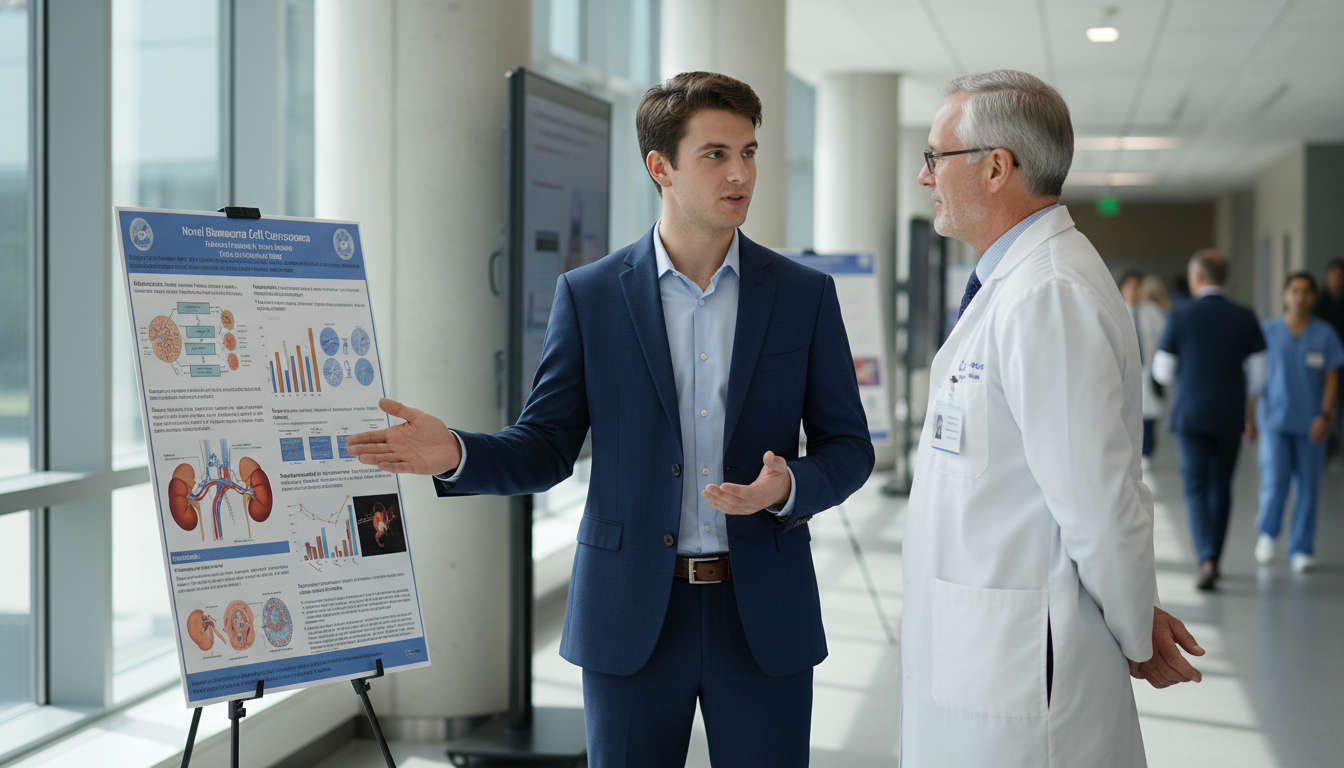
- Abstracts, posters, and oral presentations at recognized meetings (e.g., SVS, regional vascular societies)
Trajectory and growth
- Did your responsibilities advance from data collection to first‑author writing or presenting?
- Do your letters of recommendation confirm your contributions?
How Many Publications Do IMGs Need for Vascular Surgery?
A common worry is: “How many publications needed to be competitive?” There is no universal cut‑off, but realistic patterns exist.
Typical Ranges in Competitive Vascular Applicants
For integrated vascular surgery residency, especially in the U.S.:
- Many matched applicants report:
- 3–10+ total publications (not all vascular‑specific)
- Multiple abstracts and presentations
- Successful IMGs often have:
- At least 2–3 PubMed‑indexed publications (preferably with some vascular or surgical focus)
- Several posters or conference abstracts
You can still match with fewer, but it raises the bar for the rest of your application (US clinical experience, Step scores, strong letters, etc.).
Quality vs. Quantity
Programs increasingly look at substance:
- A single first‑author original vascular outcomes paper can weigh more than five middle‑author, non‑vascular case reports you barely participated in.
- A completed research year in a reputable vascular or surgical department—with strong letters and clear output—can outweigh a scattered list of low‑impact items.
As a practical IMG residency guide benchmark:
- Baseline goal (for any serious integrated vascular program applicant):
- 1–2 completed projects with tangible output (poster/abstract, at least one manuscript submitted)
- Competitive goal (especially for IMGs):
- 3–5 completed projects, including:
- 1–2 vascular‑focused publications
- 2–4 posters/abstracts at national or regional meetings
- Evidence of progression (e.g., a first‑author or co‑first‑author paper)
- 3–5 completed projects, including:
If you are already approaching application season and have very little, focus on completable, realistic projects (retrospective reviews, case series, systematic reviews) rather than starting long, high‑risk endeavors.

Step‑by‑Step Strategy to Build a Strong Research Profile as an IMG
Step 1: Clarify Your Timeline and Constraints
Before jumping into projects, answer:
- When will you apply? (In 1 year? 2–3 years?)
- Are you currently:
- Outside the U.S., in medical school or already graduated?
- In a non‑U.S. residency?
- In the U.S. on an observership or research fellowship?
- Do you need visa sponsorship for research positions?
Your answers determine how aggressive your planning should be and whether you should pursue formal research positions or remote/collaborative work.
Example timelines
- 18–24 months before application
- Best time to start a dedicated research year or multi‑project engagement.
- 12 months before application
- Focus on completing ongoing projects, writing manuscripts, and submitting abstracts.
- 6 months before ERAS opens
- Final push to get manuscripts submitted/accepted, collect conference presentations, and confirm letters.
Step 2: Choose an Overall Research Focus
You don’t need to be narrow from day one, but having a theme helps your story. Useful focal areas:
- Aortic pathology
- AAA, TAAA, endoleaks, complex EVAR
- Peripheral arterial disease / limb salvage
- CLTI outcomes, bypass vs endovascular strategies
- Carotid disease and stroke prevention
- CEA vs CAS, risk stratification
- Dialysis access
- AV fistula patency, access planning, complications
- Health disparities in vascular care
- Access to vascular services across regions or populations
Choose 1–2 areas that:
- Genuinely interest you
- Match the expertise of potential mentors
- Offer clear clinical/academic relevance
When you interview, you’ll be expected to talk coherently about your niche and how you hope to grow it during vascular surgery residency.
Step 3: Find Mentors and Opportunities (In and Out of the U.S.)
Option A: In‑person Research Positions in the U.S.
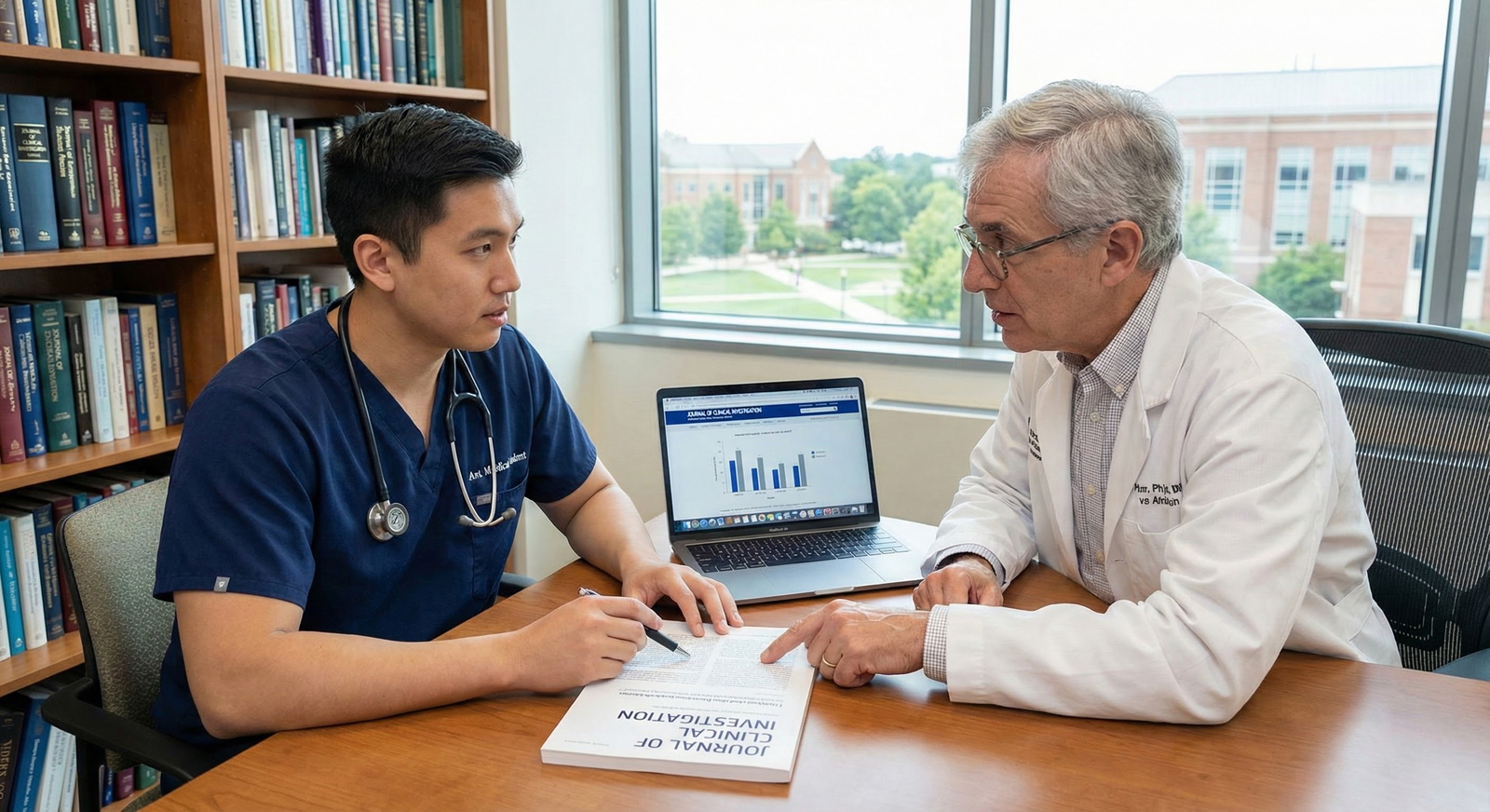
If possible, a formal research position in a U.S. vascular or surgical department is the most powerful route.
Look for:
- Titles such as:
- Research fellow (vascular surgery / endovascular)
- Postdoctoral research associate (surgery)
- Clinical research coordinator in vascular surgery
- Sources:
- Department websites’ “Research” or “Opportunities” pages
- Vascular surgery divisions at academic centers
- Professional societies (e.g., Society for Vascular Surgery job board)
- Cold emails to faculty with ongoing vascular research
Cold email structure for IMGs:
- Brief introduction (IMG from X country, Step status, interest in vascular surgery)
- 1–2 sentences explaining your research interests
- Mention any prior research skills (statistics, programming, literature review, writing)
- Ask if they have ongoing or upcoming projects you can help with (even as a volunteer)
- Attach concise CV (1–2 pages)
Expect to send 20–40 well‑crafted emails to get a few serious responses.
Option B: Remote/Collaborative Research
If you cannot be physically in the U.S.:
- Reach out to:
- Former classmates already in U.S. residencies
- Faculty from your school with U.S. connections
- Researchers publishing on topics you’ve read
Offer:
- Help with:
- Systematic reviews
- Data entry and cleaning
- Literature searches
- Drafting sections of manuscripts
Be upfront about your availability and expected timeline so mentors can assign appropriate tasks.
Option C: Local Vascular or Surgical Departments in Your Country
If there is any vascular, cardiovascular, or general surgery unit doing research:
- Approach faculty and ask to:
- Help design observational studies
- Collect data on existing cases (e.g., all EVARs over 5 years)
- Write case reports or technical notes
- Even if not in the U.S., PubMed‑indexed work is globally valued.
Step 4: Select Project Types Strategically
To balance ambition and feasibility, mix project types:
Quick Wins (1–3 months to a draft)
- Case reports and case series (rare aneurysms, unusual complications)
- Narrative reviews (if you have good mentorship and target journals carefully)
- Simple retrospective chart reviews (single center, small N) with straightforward outcomes
Medium‑Term Projects (6–12 months)
- Larger retrospective studies with multivariable analysis
- Systematic reviews and meta‑analyses
- Prospective observational cohorts
Long‑Term / High‑Impact Projects
- Complex prospective trials
- Basic science projects
- Multi‑center collaborations
As an IMG with a fixed application date, you typically want:
- 1–2 quick‑win projects early to build confidence and early outputs
- 1–3 medium‑term projects that can yield stronger publications or presentations before you apply
Unless you are doing a multi‑year research fellowship, be cautious about focusing only on long‑term projects that may not mature before your ERAS submission.
Building Concrete Research Skills That Program Directors Recognize
Beyond the raw number of publications for match, vascular surgery programs care about your skills and mindset. These are the capabilities worth highlighting in your CV and interviews.
Core Skills You Should Develop
Formulating a Research Question
- Use the PICO framework:
- Patient/Problem, Intervention, Comparison, Outcome
- Example:
- P: Patients with infrarenal AAA
- I: Fenestrated EVAR
- C: Open repair
- O: 30‑day mortality, reintervention, LOS
- Use the PICO framework:
Study Design Basics
- Understand prospective vs retrospective, cohort vs case‑control, randomized vs observational
- Know common biases (selection bias, confounding, information bias) and how to mitigate them
Data Management and Basic Statistics
- Basic skills in:
- Excel or Google Sheets
- At least one statistical package (SPSS, R, Stata)
- Concepts:
- Descriptive stats, t‑tests, chi‑square, logistic regression, survival analysis (Kaplan–Meier)
- Basic skills in:
Scientific Writing
- Practice drafting:
- Introduction (knowledge gap, rationale)
- Methods (reproducible detail)
- Results (tables and figures)
- Discussion (interpretation, limitations)
- Ask mentors for examples of previously accepted manuscripts to model your structure.
- Practice drafting:
Presentation Skills
- Create clear, visual posters and concise slides
- Practice 3–5 minute summaries of each project (for conferences and interviews)
Documenting and Showcasing Your Skills
In your CV and ERAS application, your research for residency should be clearly structured:
- Separate sections:
- Publications (peer‑reviewed; note PubMed‑indexed clearly)
- Manuscripts submitted/in revision (be honest)
- Abstracts and presentations
- Research experiences (positions, dates, supervisors, brief description)
For each project, specify:
- Your role (e.g., study design, data collection, statistical analysis, drafting manuscript)
- Time period
- Mentor(s)
During interviews, be ready to answer:
- “Describe your most important research project.”
- “What was the main finding and why is it clinically relevant?”
- “If you could re‑design that study, what would you change?”
Being able to answer these deeply is more critical than having a long publication list you cannot discuss.
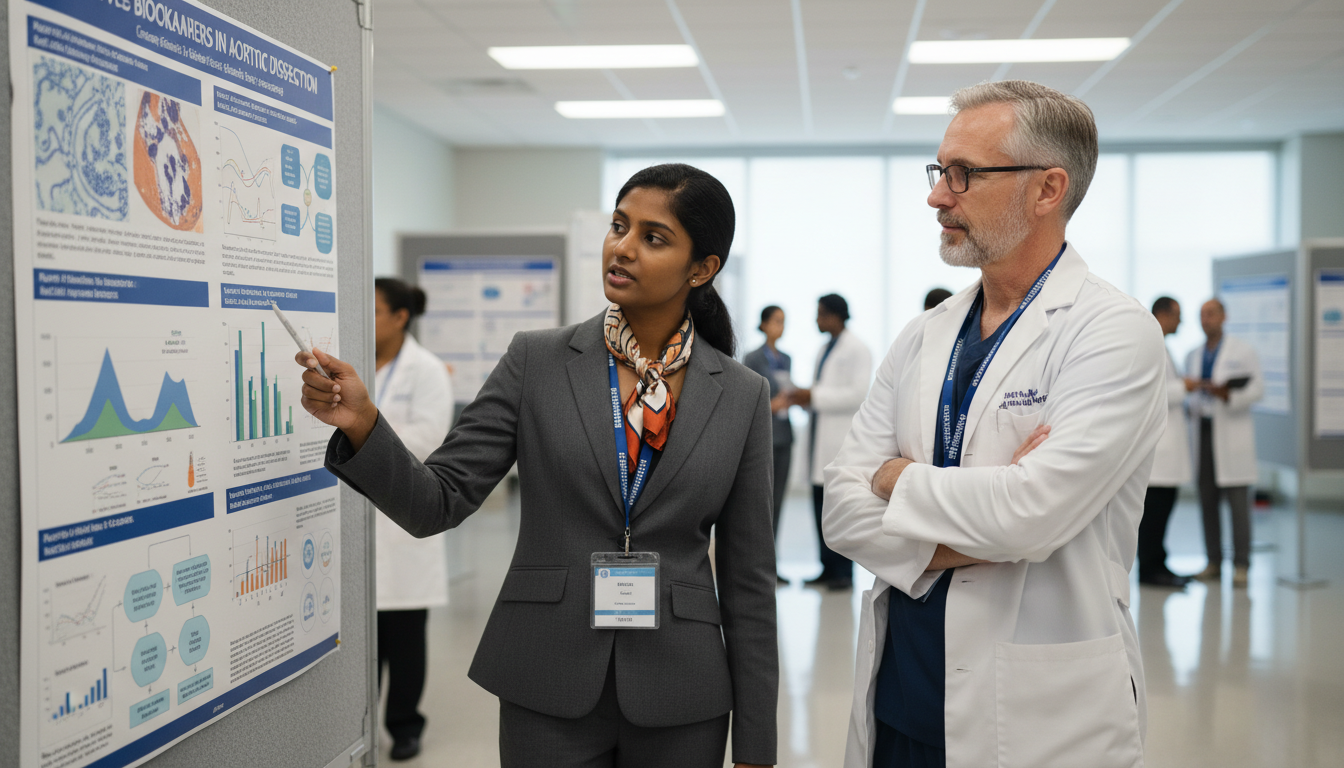
Common Pathways to a Strong Vascular Surgery Research Portfolio for IMGs
Pathway 1: Dedicated Research Year in the U.S.
Ideal for: IMGs with some flexibility after graduation, aiming for integrated vascular programs.
Structure:
- 12–24 months in a vascular/surgery department
- Full‑time commitment: data collection, analysis, manuscript writing, conference travel
- May include limited observership or OR exposure
Expected outputs (for 1–2 years):
- 2–5 PubMed‑indexed publications (not all first‑author)
- 3–8 abstracts/posters
- At least one strong letter emphasizing your:
- Work ethic
- Reliability
- Intellectual contributions
Advantages:
- Deep integration into U.S. academic culture
- High‑impact letters of recommendation
- Strong signal to vascular programs that you’re serious
Challenges:
- Visa and funding
- Gap from clinical practice (you must explain how you maintained clinical knowledge)
Pathway 2: Hybrid Clinical and Research Involvement Locally
Ideal for: IMGs who cannot relocate to the U.S. but have some research infrastructure at home.
Structure:
- You work in a clinical position (internship, residency, or practice)
- Set aside fixed time each week (e.g., 1–2 evenings, some weekends) for data work and writing
- Collaborate with one or two motivated local mentors
Tactics:
- Start with a retrospective project using available caseload:
- Example: 10‑year experience of open vs endovascular repair of popliteal aneurysms in your hospital
- Build a small vascular registry in your department (with IRB/ethics approval) to power multiple projects
Expected outputs (over 2–3 years):
- 1–3 original research articles
- 2–4 case reports or case series
- A small number of poster presentations (possibly at regional or international meetings)
Pathway 3: Remote Systematic Reviews and Collaborative Papers
Ideal for: IMGs with strong reading and writing skills, less clinical access.
Structure:
- Join or initiate systematic reviews with distant mentors
- Use online tools (Covidence/RevMan, shared drives)
- Focus on topics with clear vascular relevance and clinical questions
Examples:
- Meta‑analysis comparing outcomes of carotid endarterectomy vs carotid artery stenting in high‑risk patients
- Systematic review on management of type II endoleaks after EVAR
Expected outputs (12–18 months):
- 1–2 review papers (if managed efficiently)
- Development of literature synthesis and writing skills
Caution: Many journals are saturated with low‑quality reviews; you need solid methodology and a unique angle. Guided mentorship is important.
Practical Tips to Avoid Common IMG Mistakes in Research
- Starting Too Late
- Begin at least 18–24 months before your intended application year when possible.
- Overcommitting to Too Many Projects
- 3–5 well‑executed projects are better than 10 incomplete ones.
- Not Understanding Your Own Work
- Never list projects you can’t explain in detail. During interviews, superficial answers can hurt more than having fewer publications.
- Authorship Issues
- Clarify expectations early. Ask mentors how authorship will be determined.
- Be transparent and document your contributions.
- Neglecting Conferences and Networking
- Present your work at relevant meetings (SVS, regional vascular societies, general surgery meetings).
- Use them to meet future mentors and potential letter writers.
- Weak Alignment With Vascular Surgery
- If your research is heavily non‑vascular (e.g., dermatology), tie it to general skills: outcomes analysis, QI, research methodology.
- If time allows, add at least 1–2 vascular‑related projects before applying to integrated vascular programs.
FAQs: Research Profile Building for IMGs in Vascular Surgery
1. I have zero research experience. Can I still pursue vascular surgery?
Yes, but you’ll need a focused plan. Start with:
- A small retrospective project or case report in any surgical field available to you.
- Parallel efforts to find mentors for vascular‑related projects, even remotely.
If you are 1–2 years away from applying, a dedicated research year in a vascular or general surgery department can rapidly change your profile.
2. How many publications needed to be competitive as an IMG?
There is no fixed requirement, but for integrated vascular programs, IMGs are more competitive when they have:
- At least 2–3 PubMed‑indexed publications, with some surgical or vascular relevance
- Additional abstracts/posters and tangible evidence of continuous engagement
Programs will weigh quality, relevance, and your ability to discuss the work more than just raw numbers.
3. Do I need basic science or lab research to match in vascular surgery?
Not necessarily. Many successful vascular surgery residents have:
- Clinical outcomes research
- Quality improvement projects
- Systematic reviews
- Case series
Basic science is valuable, especially if you aim for a strongly academic career, but well‑executed clinical research with clear implications for vascular practice is equally respected.
4. How should I list ongoing or unpublished research on ERAS?
Be honest and specific:
- Separate:
- Published / accepted
- Submitted / under review
- In preparation (only if a near‑final draft with a clear target journal)
- Include your role and mentor(s)
- Be prepared to explain in interviews why some projects are not yet published and what the realistic next steps are
By understanding how vascular surgery programs evaluate research for residency, and by building a focused, realistic, and transparent research portfolio, you can markedly strengthen your chances as an international medical graduate. Align your projects with vascular themes, secure reliable mentors, and prioritize quality and completion over volume. Over time, your research narrative will become one of your most powerful assets in the integrated vascular program match.