Why Your Research Profile Matters in Interventional Radiology
Interventional radiology (IR) has become one of the most competitive specialties in the Match, with high board scores, strong letters, and heavy emphasis on scholarship. Compared with many other fields, an interventional radiology residency program will often weigh your academic productivity more heavily, because IR:
- Is highly innovation‑driven (devices, techniques, image guidance)
- Relies on outcomes data to justify minimally invasive options
- Attracts applicants interested in technology and translational science
For the IR match, your research profile can be a major differentiator—especially when many applicants have similar USMLE scores and clinical evaluations. It is also one of the few dimensions you can actively build over 1–3 years.
This guide breaks down how to strategically build a research portfolio tailored to interventional radiology—whether you’re just exploring IR or already deep into the application timeline.
We’ll cover:
- What kind of research matters most in IR
- How many publications are typical or competitive
- How to find mentors and projects (even without a home IR program)
- How to balance productivity with quality
- How to present your research effectively on ERAS and during interviews
Understanding What “Counts” as Research in IR
Not all experiences are equal, but more counts than you think. Your interventional radiology residency application can benefit from a range of scholarly work, including:
1. Peer-Reviewed Publications
These carry the most weight, especially if:
- They are in IR, diagnostic radiology, or related procedural/surgical fields
- You have a meaningful authorship position
- They are in reputable journals (impact factor helps but is not required)
Common IR-relevant publication types:
- Original research: clinical outcomes, device trials, quality improvement, workflow efficiency, radiation dose reduction, etc.
- Case series: novel techniques, off-label device uses, emerging indications.
- Case reports: less impactful than original studies, but still useful early in training.
- Review articles: narrative or systematic reviews on IR procedures, indications, or complications.
- Technical papers: procedure technique write-ups, image-guided innovations, or simulation models.
Programs understand that as a student you’re unlikely to be first/last author on major randomized trials. They look more at trajectory, consistency, and relevance than journal prestige alone.
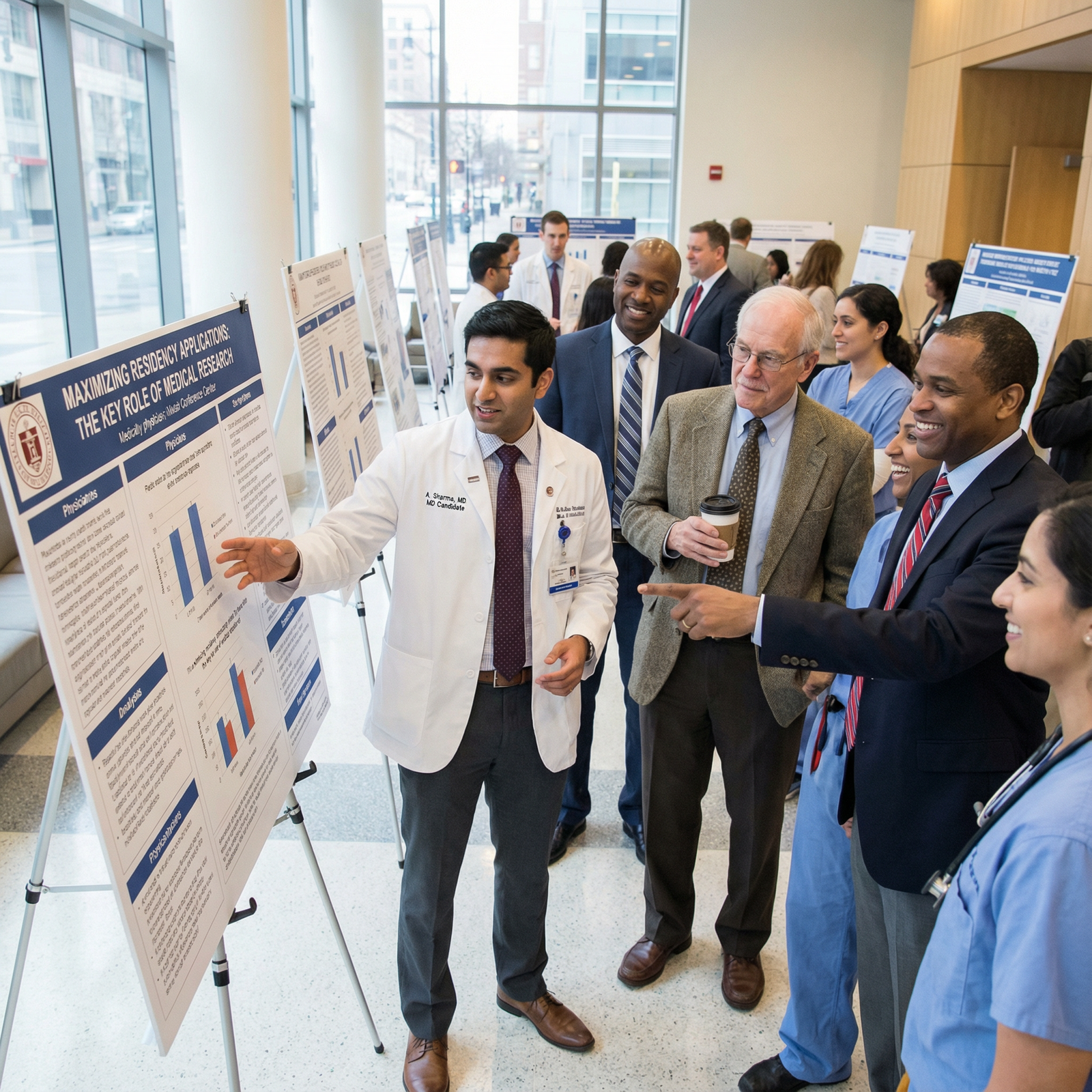
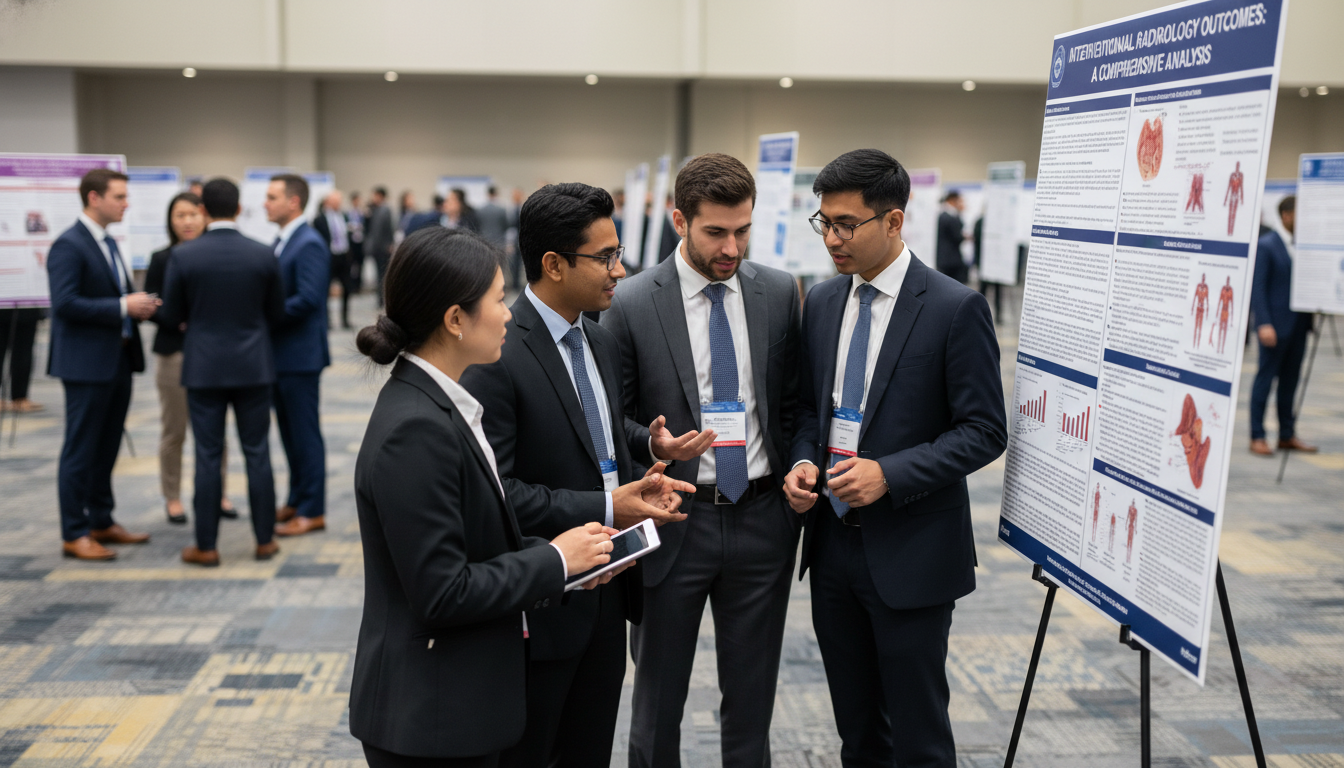
2. Abstracts, Posters, and Oral Presentations
These are particularly important for IR:
- Society of Interventional Radiology (SIR) annual meeting
- SIR Medical Student and Resident (MSR) section activities
- Cardiovascular and Interventional Radiological Society of Europe (CIRSE)
- General radiology or specialty surgical meetings (RSNA, ARRS, SVS, vascular surgery, etc.)
Posters and oral presentations show that:
- Your work was competitively selected
- You are comfortable presenting and defending data
- You can network within the IR community
For the IR match, having IR-related presentations at SIR or radiology meetings is a strong signal of genuine interest and early engagement.
3. Quality Improvement (QI) and Institutional Projects
IR is heavily involved in patient safety, workflow, and efficiency. Useful project types:
- Reducing contrast load or radiation exposure
- Standardizing pre-procedure evaluation (e.g., anticoagulation management)
- Streamlining post-procedural care pathways
- Improving documentation or communication with referring services
Even if not published, a well-structured QI project with measurable outcomes can be valuable. Many institutions have QI tracks or poster days where you can present this work.
4. Non-IR Research: Does It Help?
Yes—with caveats.
Non-IR research still helps your IR application if:
- It shows methodological skills (statistics, study design, data analysis)
- You have consistent involvement over time
- You have tangible outputs (publications, presentations, abstracts)
- You can articulate what you learned and how it applies to IR
Examples:
- Cardiology outcomes research → strong link to IR (PAD, embolization, endovascular work)
- Vascular surgery, neurology (stroke), oncology, hepatology → directly relevant disease processes
- Basic science or bench research → valuable if you can explain the translational angle
Programs know students often start research before discovering IR. What matters is that by application time, you’ve pivoted or added IR-related scholarship to demonstrate genuine specialty commitment.

How Many Publications Are Realistically Needed for IR?
There is no universal quota, but programs do look at:
- Total number of scholarly works
- Relevance to IR/radiology
- Level of involvement (authorship position, responsibilities)
- Trajectory (increasing complexity or responsibility over time)
Interpreting “How Many Publications Needed”
You’ll see wide ranges online because of:
- Differences between integrated IR vs independent IR pathways
- Applicants from research-heavy vs non-research institutions
- Variability in how ERAS counts “publications” (abstracts, posters, etc.)
A practical, experience-based framework for an integrated interventional radiology residency applicant:
Minimum baseline (still viable if strong in other areas):
- 1–2 publications or accepted manuscripts
- Plus several abstracts/posters or meaningful QI projects
- At least some IR- or radiology-related work
Solid/competitive profile:
- 3–6 total publications (any field), with at least 1–2 IR/radiology or closely related
- Multiple posters/oral presentations, ideally including at least one IR or radiology meeting
- Clear arc of increasing responsibility (e.g., moving from middle author to first author)
Highly research-heavy profile:
- 7+ publications, usually from a dedicated research year or strong home department
- First-author IR papers, multi-institutional work, or advanced analytics
- Repeated presentations at SIR, RSNA, or similar conferences
These numbers are guides, not cutoffs. A candidate with slightly fewer total publications but:
- A couple of very strong, IR-focused projects
- Great letters from IR mentors
- High impact in one or two major studies
may be more attractive than someone with higher volume but scattered or unrelated work.
How Programs Interpret Your Research
Programs evaluate the story behind the numbers:
- Did you stick with one or two mentors or jump around?
- Is there a recognizable IR theme by the time you apply?
- Can you discuss your work at a fairly detailed level?
- Did your role evolve from data entry to study design or manuscript drafting?
Your goal isn’t just to hit a publication count. It’s to show commitment, intellectual curiosity, and growth within the sphere of IR and image-guided care.
Finding IR Research Opportunities (With or Without a Home Program)
Where you train shapes your options, but almost every student can build a meaningful research profile with the right strategy.
Step 1: Map Your Local Environment
Ask:
- Do you have an interventional radiology division at your institution?
- Is there a diagnostic radiology department with research activity?
- Are there related departments (cardiology, vascular surgery, oncology, neurology, hepatology) doing endovascular or procedural research?
Concrete actions:
- Check department websites for faculty profiles and their recent publications.
- Look for pages listing “research interests” or “current projects.”
- Identify 3–5 faculty whose clinical or research focus intersects IR.
Step 2: Craft Effective Outreach Emails
When you email potential mentors:
Use a short, focused subject line:
- “Medical student seeking IR research opportunities”
- “Interested in IR outcomes/QI research – MS2 at [Institution]”
In the body (4–6 sentences total):
- Who you are (year, school, any prior experience)
- Your interest in IR and how it developed
- Any relevant skills: basic statistics, coding (R, Python), prior research, QI involvement
- Clear ask: “I would be grateful for the chance to help with ongoing projects and am happy to start with data collection, chart review, or literature review.”
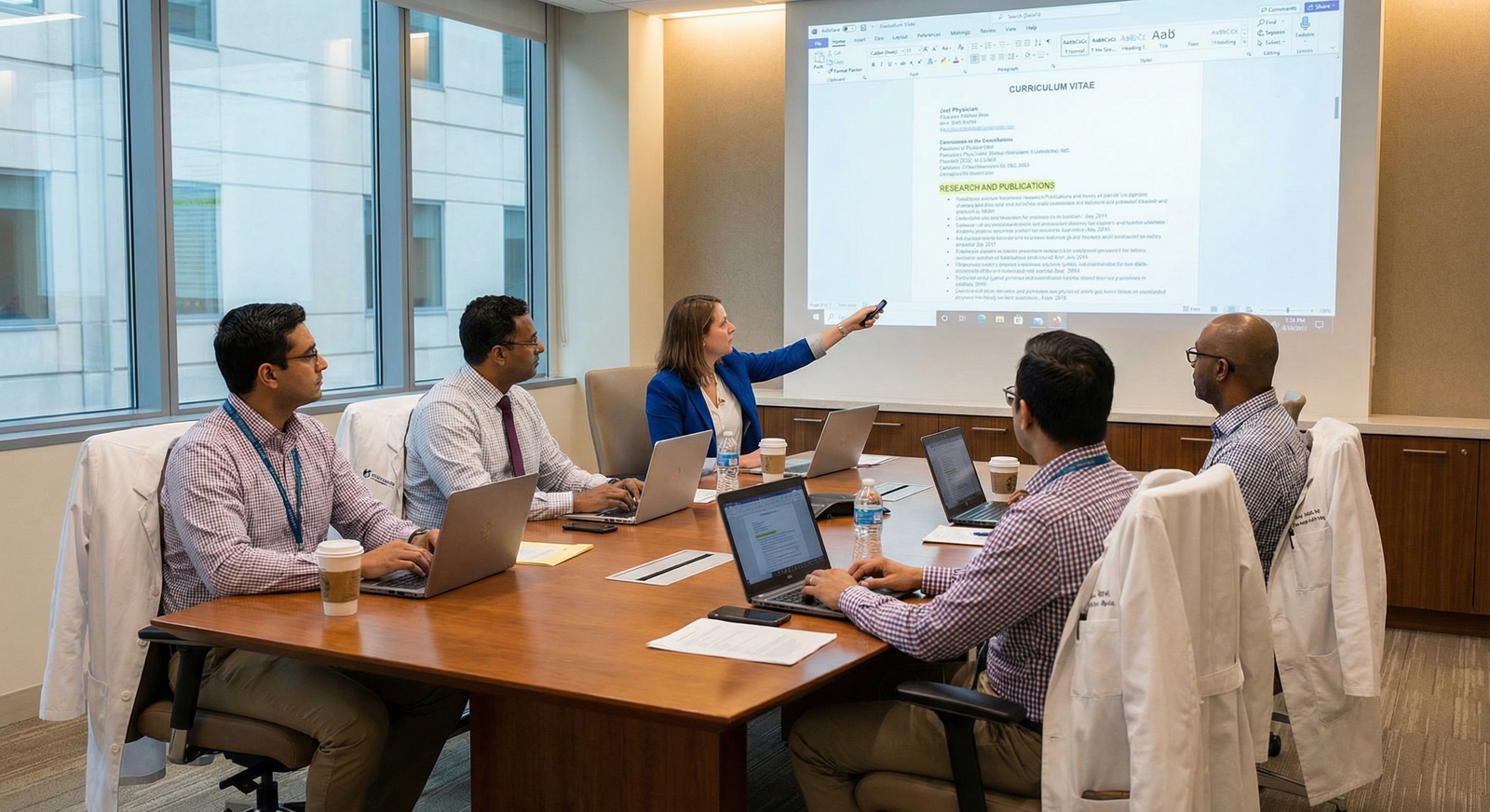
Attach a short one-page CV highlighting:
- Academic record
- Prior research (even if in other fields)
- Technical skills (Excel, REDCap, SPSS, R, Python)
- Any IR exposure (shadowing, IR interest group)
Don’t send mass generic emails; tailor each one to the faculty member’s specific focus.
Step 3: Use SIR and National Networks
If your home institution lacks IR research:
- Join the Society of Interventional Radiology (SIR) as a student member.
- Get involved with the SIR Medical Student Council or local SIR networking events.
- Attend virtual or local IR interest sessions and directly ask about:
- Multi-institutional student-friendly projects
- Remote chart review or survey-based work
- Opportunities to help write review articles or educational content
Many IR attendings are enthusiastic about mentorship and open to remote collaboration if you are reliable and communicative.
Step 4: Be Strategic About Project Type
For residency timelines, favor projects that can realistically yield output within 6–18 months:
- Retrospective chart reviews (common in IR)
- Single-center outcomes studies
- Case series or well-illustrated case reports
- Structured QI projects with clear pre/post comparison
Bench research can be rewarding but is often slower and higher-risk in terms of near-term publications for the IR match.
Maximizing Productivity: From “Helping Out” to Leading Projects
Once you have a mentor and project, the goal is to move from basic support tasks to intellectual ownership as quickly as is reasonable.
Phase 1: Entry-Level Contributions
Common starting roles:
- Data extraction from the EMR (chart review)
- Building spreadsheets, REDCap databases
- Imaging review and classification under supervision
- Literature searches, reference management
Tips for this phase:
- Be meticulous—errors erode trust quickly.
- Meet or beat deadlines; communicate early if something slips.
- After 4–6 weeks, ask: “Are there additional ways I can contribute, like helping with the introduction or methods section?”
Phase 2: Taking on Authors’ Responsibilities
As you prove reliability, seek:
- A defined authorship position (often middle or junior-first author)
- Responsibility for:
- Drafting sections of the manuscript (introduction, discussion)
- Preparing figures/tables
- Formatting references
- Preparing abstract submissions to conferences
A good approach:
“I’d like to grow as a researcher and eventually lead projects. Could I take first stab at drafting the introduction, and then get your feedback?”
Phase 3: Designing or Leading a Project
By late MS2/MS3 or during a research year, aim to:
Co-design a new project with your mentor:
- Develop the research question and hypothesis
- Sketch basic study design and inclusion/exclusion criteria
- Prepare an IRB application (under faculty supervision)
Lead the project workflow:
- Organize research meetings
- Track deadlines and delegation tasks
- Drive manuscript revisions and resubmission if needed
Leading even one well-run project—especially in IR—is incredibly valuable for your interventional radiology residency application. Interviewers often focus on these experiences to gauge initiative and leadership.
Balancing Volume vs. Depth
You don’t need 10 shallow projects; 3–5 substantial, IR-relevant ones can be better. Aim for a portfolio mix:
- 1–2 first-author or major-contributor IR papers or abstracts
- 1–3 additional IR-related posters, QI projects, or case series
- A supporting layer of older or non-IR work that shows continuity and growth
Focus on seeing projects through to completion instead of constantly starting new ones.
Integrating Research into a Strong IR Application Story
Your research is not just a “numbers game.” It should reinforce your narrative: why IR, why you, and how you’ll contribute as a future interventional radiologist.
Aligning Research With IR Themes
Common IR-relevant themes you can build toward:
- Vascular and endovascular care: PAD, DVT/PE, aortic work, dialysis access
- Interventional oncology: TACE, Y-90, ablation, palliative interventions
- Neurointervention: stroke, aneurysm, AVM/endovascular neuro
- Women’s and men’s health: UFE, gonadal vein embolization, prostate artery embolization
- Trauma and emergent IR: embolization, hemorrhage control
- Systems/operations: access to minimally invasive care, cross-discipline collaboration
You do not need to commit to one niche forever, but visible clustering of your projects makes your interest believable and coherent.
Presenting Research on ERAS
When listing your research for the IR match:
Be accurate and conservative with authorship and status:
- Published / accepted / in press
- Submitted (only if under active review)
- In preparation (only if draft exists and mentor will verify)
For each entry, briefly specify:
- Your role (“Designed data collection instruments and performed data analysis…”)
- IR relevance (“IR-guided embolization for GI bleed,” “Outcomes after Y-90,” etc.)
Avoid padding with:
- Dozens of purely “in preparation” projects
- Minimal-involvement experiences presented as major roles
- Questionable submissions to predatory journals
Programs often verify with your letter writers; misrepresentation is risky and unnecessary.
Discussing Research During Interviews
Expect questions like:
- “Tell me about your most meaningful research experience.”
- “What was the most challenging part of that project?”
- “How did you handle unexpected findings or setbacks?”
- “How do you see research fitting into your future as an interventional radiologist?”
Prepare to:
- Explain the clinical context (what problem were you trying to address?)
- Describe your specific role (beyond buzzwords)
- Highlight what you learned, especially about:
- Critical appraisal of evidence
- Collaborating across disciplines
- Understanding outcomes and complications
If you had negative or null results, that’s fine—emphasize the rigor and what the team learned.
Practical Timelines and Strategies by Training Stage
Preclinical (MS1–MS2)
Goals:
- Explore IR and adjacent fields
- Learn basic research skills
- Get on at least one project that could mature by application time
Strategies:
- Join radiology or IR interest group; attend IR cases if possible.
- Start with small, low-barrier tasks (case reports, chart review).
- Learn basic statistics and software tools (Excel, SPSS, or R).
- Aim for your first abstract or poster by end of MS2 or early MS3.
Clinical (MS3–Early MS4)
Goals:
- Consolidate your IR-related research portfolio
- Push existing projects toward submission/publication
- Add IR-focused output if your earlier work was non-IR
Strategies:
- During radiology/IR elective, ask specifically about ongoing IR research.
- Prioritize finishing projects over starting many new ones.
- Target submission of at least one IR-focused abstract to SIR or RSNA.
- Request letters from mentors who can speak to both your clinical and research abilities.
Dedicated Research Year (Optional)
A research year can significantly boost your IR match prospects if:
- You lacked prior research exposure
- You want to target top-tier academic or highly research-oriented IR programs
- You are considering a future academic career
To make it worthwhile:
- Arrange explicit expectations with a primary IR or radiology mentor.
- Avoid scattering effort; focus on 2–4 high-yield projects with clear endpoints.
- Aim for multiple submissions: manuscripts + major conference abstracts.
- Maintain some clinical exposure (IR call shadowing, conferences, tumor board attendance) to stay connected to patient care.
Common Pitfalls and How to Avoid Them
Chasing Quantity Over Substance
- Fix: Prioritize projects where you can play a meaningful role and see them to completion.
Irrelevant Research Without Transition to IR
- Fix: If you started in another field, clearly pivot and add IR-related work before applying.
Poor Communication With Mentors
- Fix: Send regular concise updates; clarify expectations and deadlines early.
Overcommitting
- Fix: Honestly assess your time; it’s better to do 2–3 projects well than 6 poorly.
Ignoring QI Opportunities
- Fix: Ask on your IR or surgery rotations: “Are there any IR-related workflow or safety issues we could turn into a QI project?”
FAQs: Research Profile Building for Interventional Radiology
1. Do I need IR-specific research to match into interventional radiology?
Strictly speaking, no—but it strongly helps. Many applicants enter with non-IR research backgrounds. However, for a competitive interventional radiology residency:
- Having at least some IR or radiology-focused work (papers, posters, QI projects) shows genuine interest.
- If all your research is in unrelated fields by MS4 with no IR transition, programs may question your commitment.
Aim to have at least one or two clearly IR- or image-guided–related projects by application time.
2. Is it better to have one strong IR paper or several smaller projects?
The ideal is a mix, but if you have to choose:
- One strong, first-author IR paper where you clearly led and understand the project deeply can be more impressive than many shallow experiences.
- That said, conference abstracts/posters and smaller projects still add breadth and show consistent engagement.
Most successful IR match applicants end up with a couple of anchor projects plus several smaller contributions.
3. I don’t have a home IR program. How can I still build a strong research profile?
You can still be competitive by:
- Working with diagnostic radiology, vascular surgery, cardiology, or oncology faculty on endovascular/procedural research.
- Joining SIR and engaging with the student/resident sections to find remote collaborators.
- Doing remotely feasible projects like chart reviews, survey studies, systematic reviews, or collaborative case series with IR mentors at other institutions.
- Using away rotations and sub-internships to solidify IR relationships and possibly pick up short, discrete projects (e.g., case reports or QI).
Programs recognize that institutional resources vary; they will evaluate you relative to what was realistically available.
4. How should I think about taking a research year for IR?
A research year can be extremely valuable if:
- You currently have minimal research and are targeting integrated IR.
- You aspire to an academic IR career or top research-focused programs.
- You can secure a committed IR or radiology mentor with concrete project plans.
However, a research year is not mandatory for everyone. If you already have:
- Several solid publications (including IR-related)
- Strong IR mentorship and letters
- Some IR conference presentations
you may not need a full year. Decide based on your current portfolio, your target programs, and the opportunities available to you.
Building a research profile for the IR match is less about hitting a magic number and more about constructing a coherent, believable, and productive trajectory toward becoming an interventional radiologist. Focus on meaningful IR-relevant work, sustained mentorship, and demonstrated growth. If you do that well, your research will become one of the strongest components of your interventional radiology residency application.