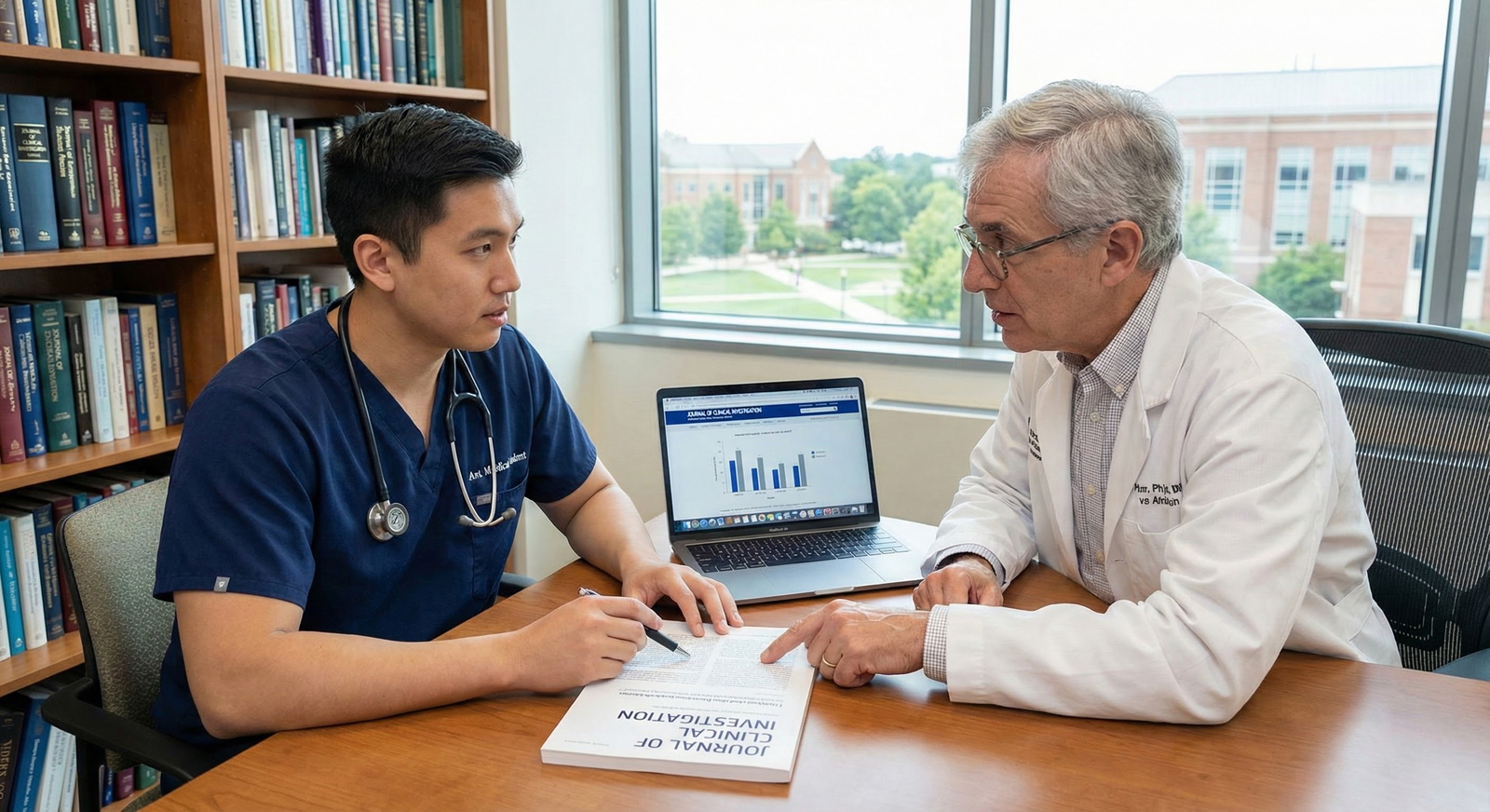
Understanding the Role of Research in Preliminary Surgery Applications
For an MD graduate targeting a preliminary surgery year, research can be both a differentiator and a strategic tool. While a prelim surgery residency is often considered a one-year position (frequently used by candidates aiming for categorical surgery, another specialty, or bolstering their CV), program directors still assess your academic potential—and research is a tangible way to demonstrate it.
Key realities to understand:
Preliminary vs Categorical Expectations
- Categorical general surgery programs often expect a robust research background, sometimes including basic science or outcomes research.
- Preliminary surgery year programs tend to be more flexible, but strong research can push you above other applicants, especially if your exam scores or grades are average.
Why Research Matters for a Prelim Applicant
- Shows you understand evidence-based practice and surgical literature.
- Demonstrates perseverance, professionalism, and the ability to complete projects.
- Signals future value to the department—someone who may generate abstracts, help with quality improvement, or enhance the program’s academic reputation.
- If you’re using a preliminary surgery year as a bridge or “gap year”, research helps for the allopathic medical school match into your ultimate specialty (e.g., radiology, anesthesia, EM, or categorical surgery).
You Don’t Need a PhD-Level Portfolio
- You’re not expected to have dozens of randomized controlled trials.
- But you are expected to make meaningful, completed contributions: case reports, retrospective chart reviews, QI projects, or co-authored manuscripts.
The rest of this article will walk you through a practical roadmap: how to build a research profile as an MD graduate, how many publications are realistic, how to obtain and document research for residency, and how to strategically present it for a preliminary surgery year.
Assessing Your Current Research Profile
Before adding more, you need a clear inventory of what you already have. This is your foundation.
Step 1: Catalog Your Experiences
Create a document or spreadsheet and log:
- Completed projects
- Published journal articles (peer-reviewed or non–peer-reviewed)
- Book chapters
- Abstracts or poster presentations
- Oral presentations at conferences
- Quality improvement (QI) projects completed and reported
- Ongoing or incomplete projects
- Data collection in progress
- Manuscript in draft
- Submitted but under review or “revise and resubmit”
For each item, record:
- Title and topic
- Your specific role (e.g., first author, data collection, statistics, literature review)
- Status (published, accepted, submitted, in preparation)
- Venue (journal name, conference, institution)
- Dates (start and completion or presentation date)
- Mentor/supervisor
This becomes your research CV backbone and will feed directly into ERAS.
Step 2: Identify Gaps Relative to Your Goals
Ask yourself:
- Are my projects surgery-related, or at least clinically relevant?
- Do I have any publications for match?
- How many items count as completed, citable work?
From an MD graduate residency perspective:
Strong position for a prelim surgery year if you have:
- 1–3 peer-reviewed papers (any field, but surgery/clinical preferred)
- 1–2 poster or oral presentations
- Some QI or leadership projects
Moderate position:
- Case reports, institutional posters, maybe one submitted paper
- Less direct surgical focus but clear clinical relevance
Weak/starting point:
- Only research “experience” with no completed output
- No clear documentation of your role or outcomes
Even if you’re starting with almost nothing, you can still develop a compelling profile in 6–12 months with targeted effort.

Strategic Research Planning for a Prelim Surgery Applicant
You have limited time—often months, not years. You need a plan that matches your stage, timeline, and goals.
Know Your Time Horizon
Ask:
- When are you applying for the allopathic medical school match (ERAS cycle)?
- Are you in:
- Final year of medical school?
- A research year or gap year?
- Midway through a prelim surgery residency intending to re-apply?
Your time horizon affects what types of projects are realistic.
- Short time (3–6 months to application)
Focus on:- Case reports/series
- Retrospective chart reviews with simple endpoints
- QI projects with fast implementation and institutional presentations
- Moderate time (6–12 months)
You can consider:- More detailed retrospective cohort studies
- Multi-center collaborations
- Systematic reviews or meta-analyses (if you have a strong mentor)
- Longer time (12+ months)
You may add:- Prospective observational studies
- Complex analytic projects
- Larger database or registry analyses
Align Projects with Your Narrative
You’re not just collecting bullets for a CV. You’re building a coherent narrative:
- Target specialty: Preliminary Surgery (with or without long-term interest in categorical surgery)
- Potential future directions:
- Rematch into categorical general surgery
- Transition to another field (e.g., anesthesia, radiology, EM)
- Academic surgeon vs. clinician-educator track
Plan your research themes accordingly. For example:
If your ultimate goal is general surgery, prioritize:
- Trauma/acute care surgery outcomes
- Surgical oncology
- Bariatric, vascular, or colorectal surgery topics
If you see yourself eventually in another specialty, research can still be:
- Perioperative medicine
- Postoperative pain management
- Surgical imaging, interventional radiology–related decision making
- Critical care and ICU outcomes
Program directors value coherence—your research should at least loosely support your stated interests.
Clarifying “How Many Publications Needed?”
There is no universal threshold, but for a prelim surgery residency applicant from an MD background:
Competitive for many academic prelim surgery programs:
- 2–5 total scholarly products (papers, abstracts, presentations)
- At least 1–2 in surgery or an adjacent clinical field
- Ideally 1–2 peer-reviewed publications (even if not first author)
Reasonable baseline (especially if other metrics are strong):
- 1–2 publications or accepted abstracts
- A handful of posters, QI projects, or local presentations
If you have zero formal outputs now:
- Strive for at least 1–2 completed, accepted works before applications (e.g., case report + poster).
Instead of fixating solely on “how many publications needed,” focus on completing and publishing what you start and demonstrating upward trajectory.
Finding and Maximizing Research Opportunities
You don’t need to be in a famous lab to build an impactful profile. You do need to be proactive, efficient, and reliable.
Where to Find Projects as an MD Graduate
Home Institution Departments
- General surgery, subspecialty surgery (neurosurgery, ortho, vascular, colorectal, trauma).
- Look for faculty who publish regularly—check PubMed for recent output.
- Ask clerkship directors, former attendings, or chief residents who is research-active and approachable.
Quality Improvement and Clinical Operations
- Many hospitals run QI initiatives on:
- Surgical site infections
- OR efficiency and turnover times
- Postoperative pain control protocols
- ERAS (Enhanced Recovery After Surgery) pathways
- These can turn into abstracts, posters, or manuscripts and count as research for residency.
- Many hospitals run QI initiatives on:
Institutional Research Offices
- Some schools/hospitals have:
- Office of Clinical Research
- Surgical research coordinators
- They may know which teams need help with:
- Data extraction
- Chart review
- Literature searches
- Some schools/hospitals have:
National or Multi-Institutional Collaboratives
- Examples in general surgery and trauma often invite medical students and residents to contribute data.
- These can rapidly generate multi-author publications; your role might be limited but still credible and citable.
Remote and Online Collaborations
- Use alumni networks, LinkedIn, or professional societies (ACS, EAST, etc.) to find mentors.
- Some surgeons welcome remote assistance for:
- Database work
- Literature reviews
- Manuscript drafting
Approaching Potential Mentors Effectively
Busy surgeons receive vague, generic emails constantly. Stand out by being targeted and concrete.
Include:
Concise introduction:
- Your name, MD status, intended match year.
- That you’re seeking a preliminary surgery residency and value research experience.
Evidence of initiative:
- Mention one of their recent papers and a specific aspect you found interesting.
- Explain briefly how it aligns with your interests.
Offer specific help:
- Data collection, chart review, manuscript editing, figure prep, reference management.
- Clarify your available time per week and your timeline before ERAS.
Ask for a meeting:
- 15–20 minutes to discuss possible projects and expectations.
Once accepted:
- Show up prepared with:
- A calendar of your availability.
- Draft timelines for how quickly you can complete specific tasks.
- Questions about authorship criteria and deliverables.
Choosing High-Yield Project Types
Given your goal and typical MD graduate time constraints, prioritize:
Case Reports and Case Series
- Pros:
- Fast turnaround; can be completed and submitted in weeks.
- Well-suited for interesting surgical pathology, rare complications, unusual presentations.
- Cons:
- Lower academic prestige, but still valuable, especially when you lack other work.
- Pros:
Retrospective Chart Reviews
- Examples:
- Outcomes after laparoscopic vs open appendectomy.
- Predictors of readmission after emergency general surgery.
- Complication rates in specific patient populations.
- Pros:
- Modest scope, doable in 3–9 months.
- Can yield one or more abstracts and a manuscript.
- Needs:
- IRB approval (often via mentor).
- Clear data definitions and basic stats (mentor or statistician support).
- Examples:
Quality Improvement (QI) Projects
- Example:
- Implementing a bundle to reduce central line infections in surgical ICU.
- Pros:
- Rapid implementation cycles (PDSA).
- Highly appealing to hospitals focused on measurable clinical improvements.
- Aim to produce:
- A local departmental presentation.
- Potential abstract at regional or national meeting.
- Manuscript in a QI-focused journal.
- Example:
Reviews, Systematic Reviews, or Meta-Analyses
- If you have strong writing skills and a supportive mentor:
- Review article on management of blunt abdominal trauma.
- Systematic review of outcomes in damage control surgery.
- Be cautious:
- Time-consuming and require methodological rigor.
- Better suited when you have 6–12 months and a small team.
- If you have strong writing skills and a supportive mentor:

Converting Effort into Publications and Presentations
Research that never leaves the hard drive doesn’t help your residency application. You must prioritize completion and dissemination.
From Data to Abstract to Manuscript
A practical, high-yield workflow:
Outline Early
- Even before data collection ends, draft the:
- Background and rationale
- Research question and primary outcome
- Planned tables/figures
- Even before data collection ends, draft the:
Target a Meeting First
- Identify a regional/national surgical conference with upcoming abstract deadlines:
- American College of Surgeons (ACS)
- Society of American Gastrointestinal and Endoscopic Surgeons (SAGES)
- Local/state surgical society
- Draft a 250–300-word structured abstract and submit.
- Identify a regional/national surgical conference with upcoming abstract deadlines:
Use Presentations as Stepping Stones
- Once accepted:
- Create a scientific poster or slide deck.
- Present at the conference.
- Then:
- Expand the abstract into a full manuscript while the project is fresh.
- Use feedback from conference discussants to refine your paper.
- Once accepted:
This creates multiple CV entries from one project:
- Abstract acceptance
- Poster/oral presentation
- Manuscript submission and (ideally) publication
Authorship and Credit
Clarify authorship at the beginning, especially if you are the main workhorse:
- Discuss:
- Who is first author?
- Who are co-authors and what are their roles?
- Order of authorship.
- As an MD graduate:
- Being first or second author on at least some works is particularly valuable.
- But being a middle author on multi-center projects also counts and shows collaboration.
Be professional if changes occur; research often evolves. Protect your interests by:
- Keeping detailed records of your contributions.
- Meeting regularly with your mentor to ensure progress.
- Following up politely but consistently about manuscript status.
Documenting “In-Progress” Work for ERAS
Program directors know research timelines can be long. It’s acceptable (and expected) to list work in varying stages, as long as you label each accurately:
- Published
- Accepted, in press
- Submitted, under review
- In preparation (only for late-stage manuscripts, not vague ideas)
For a preliminary surgery year application, you can absolutely highlight:
- A submitted case report in a surgical journal.
- An accepted abstract for a meeting taking place after ERAS submission.
- A manuscript in advanced draft with an identified journal target.
Just avoid exaggeration. Misrepresenting status is viewed harshly.
Presenting Your Research Profile to Prelim Surgery Programs
Having research is one thing. Communicating it effectively in your application is another.
Tailoring Your ERAS Application
Experience Section
- Describe research roles with clarity:
- “Primary responsibility for data collection and preliminary analysis on retrospective cohort of 250 patients undergoing laparoscopic cholecystectomy.”
- Emphasize skills relevant to surgery:
- Attention to detail
- Timely completion
- Comfort with clinical data and chart navigation
- Describe research roles with clarity:
Publications List
- Use consistent citation format.
- Include PubMed IDs when available.
- Clearly separate:
- Peer-reviewed articles
- Abstracts
- Posters
- Non–peer-reviewed pieces (e.g., newsletters, blogs, if relevant)
Personal Statement
- Avoid turning it into a mini-CV recap.
- Instead:
- Choose 1–2 key projects.
- Focus on what you learned—about surgical care, teamwork, or your goals.
- Example:
- How working on a trauma outcomes study shaped your understanding of systems-level care.
- How a QI project on postoperative delirium changed how you approach older surgical patients.
Letters of Recommendation
- If possible, secure at least one from a surgery-attending who knows your research work.
- Ask them to address:
- Your initiative and follow-through.
- Your ability to handle criticism and revise drafts.
- How your research insights translated to the clinical setting.
Discussing Research in Interviews
Be prepared for questions such as:
- “Tell me about your most meaningful research project.”
- “What challenges did you encounter and how did you handle them?”
- “How do you see research fitting into your surgical career?”
Use simple, non-jargon language:
Start with the clinical problem:
- “Many of our older patients underwent emergency laparotomy and we noticed high rates of postoperative delirium.”
Explain your role:
- “I helped design the data collection tool, reviewed charts for 150 patients, and worked with a statistician on basic analyses.”
Share the outcome:
- “We found potentially modifiable risk factors and implemented a delirium-prevention bundle. Our early results showed a reduction in incidence, which we presented at our state surgical society.”
Reflect:
- “This experience taught me how small changes in perioperative care can significantly affect outcomes, and it reinforced my interest in improving surgical systems.”
This framing shows you’re not just checking boxes—you’re thinking like a clinician-investigator, even at an early stage.
FAQs: Research Profile Building for MD Graduates Targeting Preliminary Surgery
1. Do I really need research to match into a preliminary surgery year?
Not always, but it helps significantly, especially at academic or competitive programs. Prelim spots can sometimes be used as “overflow” positions, but strong candidates with research stand out and may be prioritized for interviews. If you have weaker grades or board scores, research productivity can partially offset those and signal your motivation and work ethic.
2. How many publications are realistically needed for a strong prelim surgery application?
There is no fixed number, but for an MD graduate residency applicant:
- Aim for 1–2 peer-reviewed publications if possible (even case reports or smaller studies).
- Add 2–3 additional scholarly items such as posters, abstracts, presentations, or QI reports.
- If you’re very short on time, even a single well-executed case report plus a conference poster can make a meaningful difference, especially when framed properly in your application and discussed confidently in interviews.
3. Is research outside of surgery (e.g., internal medicine, neurology) still useful?
Yes. Especially if:
- It shows clear clinical relevance (patient outcomes, diagnostics, therapeutics).
- You demonstrate transferable skills:
- Critical appraisal of evidence
- Data analysis
- Interdisciplinary teamwork
- However, as you approach your application cycle, try to add at least one surgery-adjacent project (trauma, perioperative care, ICU, etc.) to signal genuine interest in the field you’re applying to.
4. What should I prioritize if I’m starting late with only 6 months before ERAS?
Focus tightly on high-yield, fast-moving projects:
- Case reports and small case series with a responsive mentor.
- A retrospective chart review on a narrow question that can realistically reach abstract submission in that timeframe.
- A QI project that can lead to at least a departmental presentation or local conference abstract.
- Simultaneously, structure your CV and ERAS entries carefully, and ask mentors for letters that emphasize your rapid progress and reliability.
Even in a short window, a targeted, well-executed project or two—paired with strong clinical evaluations—can strengthen your position for a preliminary surgery residency and set you up for future categorical opportunities.
By approaching research with a clear strategy—matching your time, goals, and resources—you can build a credible, coherent research profile as an MD graduate, improve your chances in the allopathic medical school match for a preliminary surgery year, and lay the groundwork for a long-term career in surgery or any specialty you ultimately pursue.