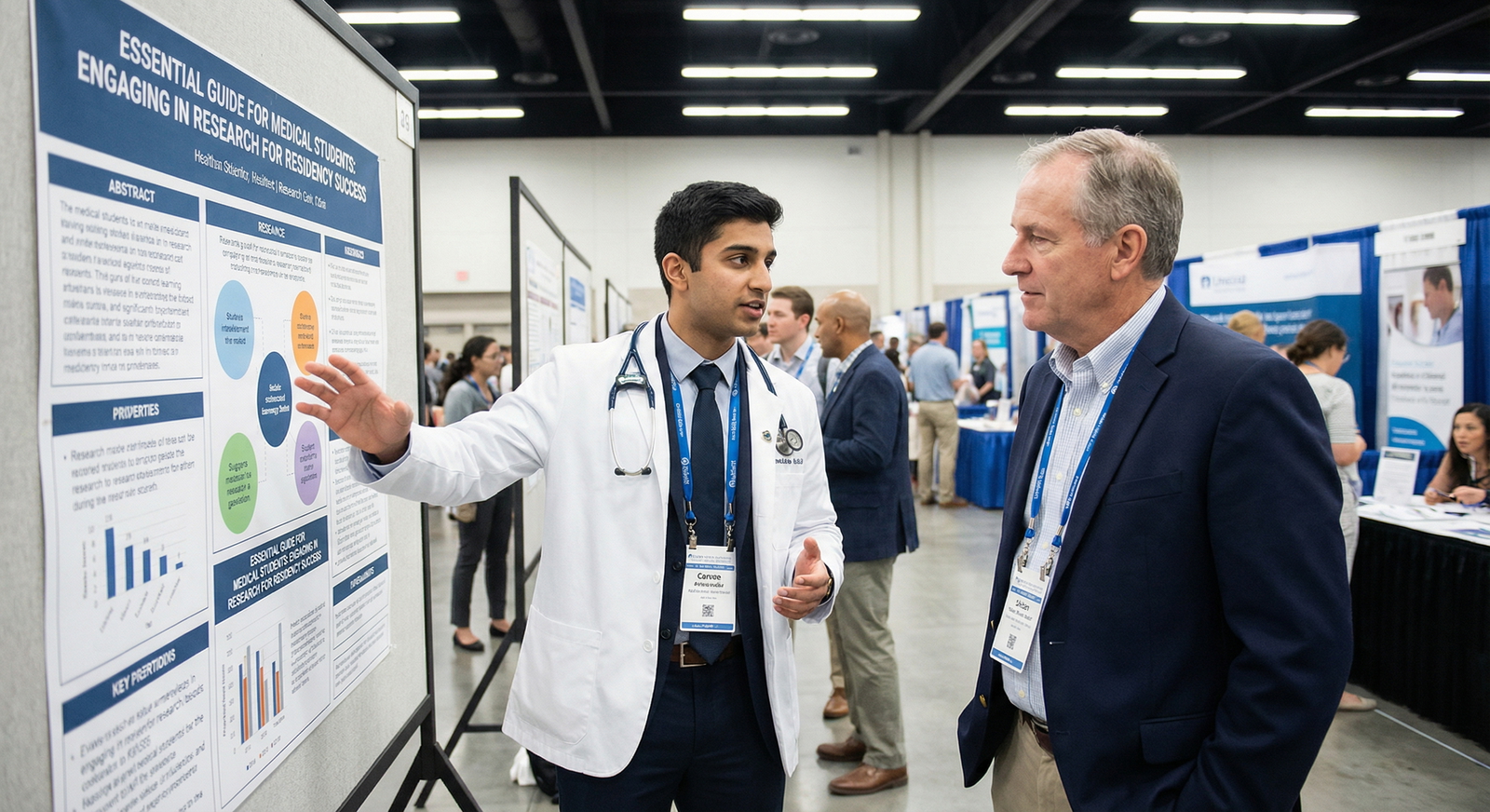
Understanding the Research Landscape for Non-US Citizen IMGs in General Surgery
For a non-US citizen IMG aiming for a general surgery residency, a strong research profile is no longer optional—it is rapidly becoming an informal requirement, especially for university and academic programs. Program directors use research productivity to differentiate among a large pool of highly qualified applicants, and they often view it as a proxy for:
- Academic curiosity
- Persistence and follow-through
- Ability to work in teams and under supervision
- Comfort with evidence-based medicine
As a foreign national medical graduate, you also face additional hurdles: visa sponsorship, lack of US clinical experience, and limited professional networks. A targeted, well-planned research profile can help you stand out and partially compensate for these disadvantages.
This article will walk you step-by-step through:
- What “counts” as research for general surgery residency
- How many and what type of publications for match are realistic and useful
- Strategies to obtain research positions as a non-US citizen IMG
- How to prioritize projects and avoid common pitfalls
- How to present your research profile effectively in ERAS and interviews
Throughout, the focus is specifically on non-US citizen IMGs interested in general surgery residency in the United States.
What Counts as a Strong Research Profile for General Surgery?
Types of Research That Matter
Programs do not require basic science benchwork. In fact, many successful surgery residents have minimal lab experience but substantial clinical or outcomes research. For the surgery residency match, the following research types are most valued:
Clinical Research (most common and practical)
- Retrospective chart reviews
- Prospective cohort studies
- Observational studies (case-control, cross-sectional)
- Perioperative outcomes studies
- Quality improvement projects with rigorous methods
Translational / Basic Science Research
- Animal models of surgical disease
- Biomarker or molecular studies related to cancer, inflammation, or wound healing
- Tissue engineering, surgical devices, or biomaterials
This is particularly valued at highly academic programs but is harder to access and slower to produce publications.
Surgical Education and Simulation Research
- Studies on technical skills training, simulation curricula, assessment tools
- Surveys of residents or students
These projects may be easier to complete within a short time and can still lead to reputable publications.
Quality Improvement (QI) with Scholarly Output
QI alone is useful, but when designed rigorously and written up for presentation or publication, it becomes a strong research asset.
What “Counts” Beyond Full Papers
In the context of how many publications needed and what counts as “scholarly activity,” you can include:
- Peer-reviewed journal articles (original research, reviews, case reports)
- Abstracts and posters at national or international conferences
- Oral presentations (local, regional, national)
- Book chapters or invited reviews
- Systematic reviews and meta-analyses
- Published letters to the editor or commentaries (less impactful but still count)
Program directors look at the pattern of activity: consistent involvement, increasing responsibility, and some tangible outcomes (papers, posters, presentations).
Clinical vs. Basic Science for Non-US Citizen IMGs
For a non-US citizen IMG, clinical and outcomes research are often the most practical and impactful because:
- They align closely with clinical general surgery practice.
- They can be completed faster than many lab projects.
- They show familiarity with US patient care systems when done in US hospitals.
Basic science can be extremely valuable for academic tracks, but it usually requires longer-term commitment (2–3+ years), secure funding, and visa support.
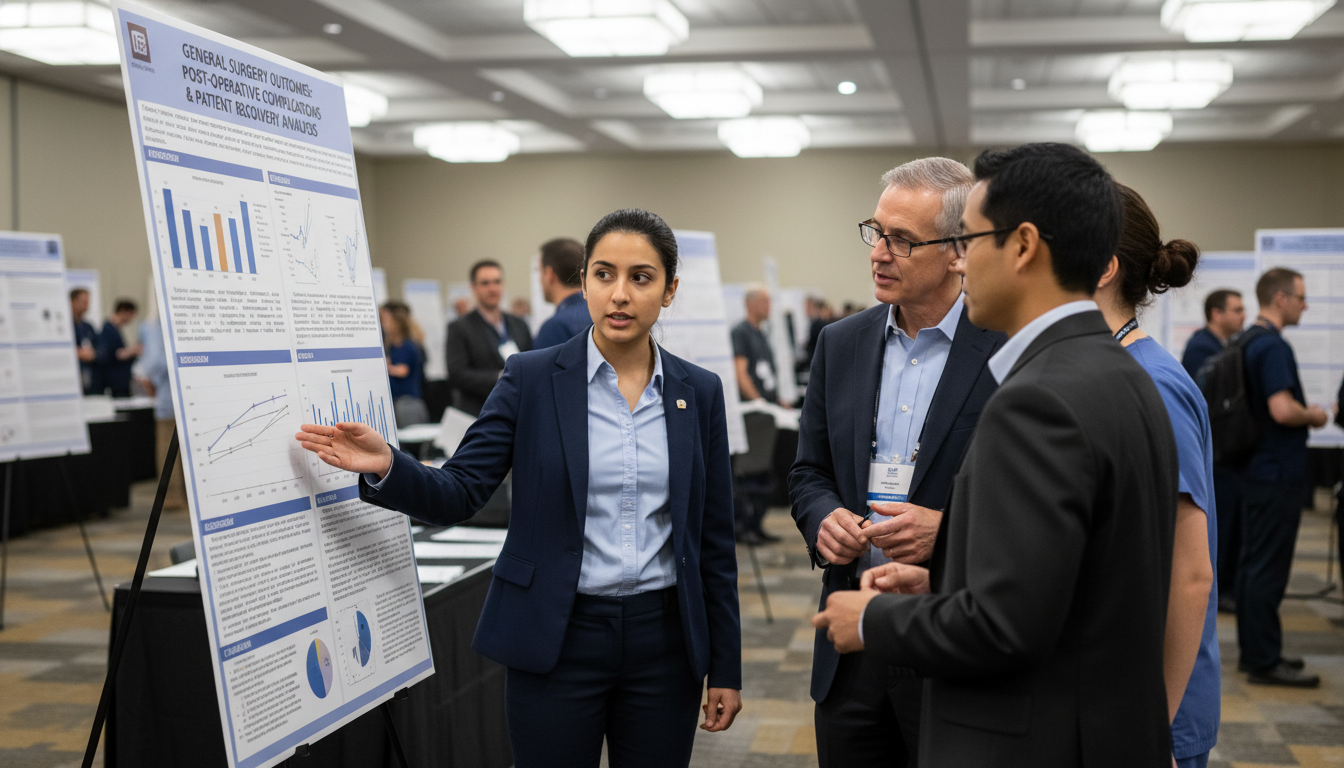
How Many Publications Do You Really Need for General Surgery?
Interpreting “How Many Publications Needed”
There is no universal minimum. The right answer depends on:
- Type of programs you are targeting (community vs. academic vs. top-tier academic)
- Your other metrics (USMLE scores, clinical grades, US experience)
- Whether you are a non-US citizen IMG needing a visa
However, some practical benchmarks can guide you.
Competitive Academic Programs (University, Research-Heavy)
For non-US citizen IMGs at these programs, program directors often expect:
- Total scholarly works (ERAS count): 10–25+
- This combines publications, abstracts, and presentations.
- Peer-reviewed publications: 3–8+
- At least 1–2 as first or co-first author is ideal.
- Topic related to surgery, perioperative care, or related fields is a plus.
- Evidence of longitudinal commitment: 1–3 years of consistent research.
Candidates at very research-heavy or “Ivy” type programs may exceed these numbers, with multiple high-impact publications.
Mid-Tier Academic and Many University-Affiliated Community Programs
Reasonable target:
- Total scholarly works: 5–15
- Peer-reviewed publications: 2–4
- At least one project clearly connected to general surgery.
Community Programs (Less Research-Heavy)
Some community general surgery residencies still value research but focus more on clinical performance and US clinical experience.
- Total scholarly works: 3–8
- Peer-reviewed publications: 1–3
- Strong letters and US clinical performance can compensate for fewer publications.
Quality vs. Quantity
Quantity alone is not enough. Program directors can tell when an applicant has:
- Many minor or low-impact case reports without a coherent theme.
- Multiple “honorary” authorships with unclear role.
- Incomplete or poorly understood projects.
A smaller number of well-conducted, clearly explained projects is more impressive than a long, unfocused list. Aim for:
- At least one solid project where you were deeply involved (question design, data collection, analysis, manuscript drafting).
- Familiarity with key details of every project you list (methods, limitations, main findings).
Finding and Securing Research Opportunities as a Non-US Citizen IMG
Step 1: Clarify Your Constraints
Before searching for research work, understand your:
Visa status and needs
- Many research positions for non-US citizens are unpaid volunteer roles or are funded as research scholar/visiting scientist positions.
- Paid positions may require J-1 research or H-1B visas, which not all institutions will sponsor.
Available time
- Are you taking 1–2 gap years focused only on research?
- Are you doing research part-time during medical school (in your home country)?
Geographic flexibility
- Can you relocate within the US if you obtain a full-time research position?
- Or are you limited to remote collaborations?
Knowing these constraints helps you target realistic opportunities.
Step 2: Target the Right Institutions and Mentors
As a foreign national medical graduate, you should focus on:
US Academic Surgery Departments with a History of Hiring IMGs for Research
- Identify general surgery programs with multiple IMG residents or fellows.
- Review faculty profiles and see if they list “research fellows” or “postdoctoral fellows.”
Surgeons with Heavy Outcomes/Clinical Research Portfolios
- Look for faculty who publish frequently in:
- Journal of the American College of Surgeons (JACS)
- Annals of Surgery
- Surgery
- Journal of Surgical Research
- These faculty often run teams that can integrate motivated IMGs into retrospective or database projects.
- Look for faculty who publish frequently in:
Large Databases and Collaborative Groups
- Institutions involved in NSQIP, ACS databases, trauma registries, transplant registries, etc.
- Multi-center collaborative groups (e.g., EAST, AAS, surgical oncology groups).
Step 3: Build a Targeted Outreach Strategy
Cold emails are often necessary, but they must be highly professional and customized.
Key elements of an effective email:
- Short subject line: “Prospective IMG research fellow interested in general surgery outcomes research”
- 2–3 paragraphs summarizing:
- Your background (non-US citizen IMG, medical school, graduation year).
- Specific interest in general surgery and the faculty member’s topic area.
- Concrete skills: literature review, basic statistics (describe software: SPSS/R/Stata), data extraction, manuscript writing.
- Your availability (full-time in US, remote, start date and duration).
- 1-page CV attached, clearly highlighting:
- Any prior research methods training
- Existing publications
- Presentations or academic honors
Plan to email 20–40 faculty across several institutions, expecting a modest response rate. Follow up politely after 10–14 days if no reply.
Step 4: Alternative Strategies if Full-Time Positions Are Hard to Obtain
If you cannot secure a structured US-based research position, consider:
Remote Collaborations with US-Based Mentors
- Offer to assist with literature reviews, data entry for de-identified data, or manuscript drafting.
- This can work well for systematic reviews and meta-analyses.
Research in Your Home Country with International Relevance
- Focus on surgical topics that are globally relevant (e.g., appendicitis, cholecystitis, colorectal surgery, trauma, hernia).
- Collaborate with statisticians or mentors who publish in English-language, PubMed-indexed journals.
Online Research Training and Courses
- Coursera, edX, NIH, and various universities offer free or low-cost courses in:
- Biostatistics
- Clinical research methods
- Systematic reviews and meta-analyses
- Completing such courses strengthens your CV and improves your effectiveness as a researcher.
- Coursera, edX, NIH, and various universities offer free or low-cost courses in:

Designing and Executing High-Yield Research Projects
Choosing Projects That Maximize Impact
For your surgery residency match, some projects are more impactful than others. High-yield projects often have:
- A clear and clinically meaningful question
- Well-defined endpoints (complications, mortality, length of stay, readmissions)
- Feasible data sources (electronic records, registries)
- Realistic timelines (6–12 months to submission)
Examples:
- Outcomes of laparoscopic vs. open appendectomy in elderly patients.
- Predictors of leak after colorectal anastomosis in a single institution.
- Impact of enhanced recovery protocols on length of stay after colorectal surgery.
- Surgical site infection rates before and after a QI intervention.
For shorter timelines (3–6 months), consider:
- Case series with a focused theme (e.g., rare complications after bariatric surgery)
- Systematic reviews and meta-analyses on specific surgical questions
- Survey-based projects with well-defined populations (residents, surgeons, or patients)
Structuring Your Research Year(s)
If you take 1–2 years dedicated to research in the US, aim for a pipeline of projects with overlapping timelines:
- Month 1–2: Join existing projects as a co-investigator (data extraction, chart review).
- Month 2–4: Take ownership of 1–2 retrospective studies or systematic reviews.
- Month 4–9: Push first projects to manuscript submission; begin new projects as earlier ones near completion.
- Month 9–18: Focus on follow-up projects, responding to reviewers, oral/poster presentations, and diversifying to more complex questions.
This pipeline ensures that by the time you apply for residency, you have:
- Submitted or accepted manuscripts.
- Multiple abstracts submitted to conferences (e.g., ACS Clinical Congress, SAGES, regional surgical meetings).
- Clear evidence of sustained productivity.
Developing Core Skills: What You Must Learn
Regardless of where you work, certain skills dramatically increase your value to research groups:
Literature Review and Critical Appraisal
- Master searching PubMed efficiently using MeSH terms and Boolean operators.
- Learn to quickly identify study design, biases, and key limitations.
Basic Biostatistics
At minimum, understand:- Descriptive statistics (mean, median, SD, IQR)
- Common tests: t-tests, chi-square, Fisher’s exact test, logistic regression
- Concepts of p-values and confidence intervals
Use software like SPSS, R, or Stata; even basic proficiency is highly marketable.
Study Design and Data Management
- Understand inclusion/exclusion criteria, endpoints, and confounding.
- Learn to use REDCap or similar tools if available.
- Practice building clean, well-labeled datasets in Excel or CSV formats.
Scientific Writing
- Read high-quality surgical papers and emulate their structure.
- Practice writing introductions (background → gap → objective), methods, and discussion sections.
- Use reference managers (Zotero, Mendeley, EndNote) to handle citations.
Authorship and Ethics for Foreign National Medical Graduates
As a non-US citizen IMG, you must be especially careful about:
Authorship agreements:
- Discuss early what your role is and whether it warrants authorship.
- Clarify expected order (first, middle, last) whenever possible.
Research integrity:
- Do not fabricate data, manipulate images, or plagiarize text.
- Learn institutional policies on IRB, consent, and data security.
Visa and payment rules:
- If you are on a visa, make sure your work aligns with the terms (volunteer vs. paid).
- Clarify whether you are classified as a research scholar, volunteer, or employee.
Ethical lapses can permanently damage your career and may have immigration consequences.
Showcasing Your Research Effectively in ERAS and Interviews
Presenting Your Research in ERAS
ERAS distinguishes between:
- Peer-reviewed journal articles/abstracts
- Oral/poster presentations
- Book chapters and other scholarly works
For each item:
- Use consistent citation format (e.g., AMA).
- Make sure your name is clearly identifiable; if your name changed, note it.
- Indicate status: “Published,” “In press,” “Accepted,” “Submitted,” or “In preparation.”
- Programs give the most weight to published/in-press work.
- Use “in preparation” sparingly and only when there is a real, near-term plan.
Highlight work that is:
- Related to general surgery topics.
- Conducted at US institutions (for US-based programs).
- Completed under mentors who are well-known in academic surgery.
Integrating Research into Your Personal Statement
Your personal statement should not become a mini-CV of all projects. Instead:
- Describe why you became interested in surgical research (e.g., a clinical question you encountered, a mentor’s influence).
- Highlight 1–2 key projects that changed how you think or solidified your interest in general surgery.
- Emphasize skills gained: critical thinking, resilience, collaboration, communication, and familiarity with US healthcare if applicable.
Link your research to your future goals:
- Academic surgery and potential pursuit of a PhD or master’s degree
- Surgical subspecialties that are research-heavy (e.g., surgical oncology, transplant, trauma)
- Interest in quality improvement and health systems
Discussing Research During Interviews
Program directors and faculty may ask:
- “Tell me about your most important research project.”
- “What was your specific role in this study?”
- “What are the limitations of your work?”
- “How will research fit into your future career as a surgeon?”
Prepare by:
- Selecting 2–3 flagship projects to discuss in detail.
- Practicing a 1–2 minute summary of each:
- Background → question → methods → main findings → implications → your role.
- Being honest about your role; it is better to say “I mainly collected data and drafted the introduction/discussion” than to exaggerate.
Program directors are impressed when applicants can:
- Critically analyze their own work.
- Recognize limitations and not oversell results.
- Show enthusiasm for integrating research into clinical practice.
Common Pitfalls and How to Avoid Them
Chasing Quantity Over Quality
- Ten case reports with minimal involvement are less impressive than two robust, well-executed projects.
Starting Too Late
- Waiting until just before application season to engage in research rarely yields meaningful publications in time.
Poor Communication with Mentors
- Missed deadlines, slow responses, and lack of initiative can damage relationships and limit letters of recommendation.
Not Understanding the Work You List
- If you cannot explain your own project, faculty will suspect superficial involvement.
Unrealistic Expectations About Basic Science
- Long timelines and complex techniques make basic science difficult to translate into quick publications, especially for IMGs needing short, productive research fellowships.
Neglecting Visa and Funding Realities
- Accepting positions without clarifying visa sponsorship or funding can lead to legal and financial problems.
FAQs: Research Profile Building for Non-US Citizen IMGs in General Surgery
1. As a non-US citizen IMG, can strong research compensate for lower USMLE scores?
To some extent, yes. For a non-US citizen IMG, strong research—especially with US mentors and publications in reputable surgical journals—can help offset borderline scores, particularly at academic programs. However, research does not fully replace minimum score thresholds. Many programs have score cutoffs; if you are below them, even an excellent research CV may not be enough. Research is best seen as a multiplier of a solid clinical/academic profile, not a complete substitute for board performance.
2. Do I need US-based research, or is research from my home country sufficient?
US-based research is often viewed more favorably because it shows familiarity with the US clinical environment and offers US-based letters. However, well-designed, English-language, PubMed-indexed work from your home country is still very valuable, especially if:
- It addresses problems relevant to general surgery globally.
- It is rigorous and clearly described.
- You can explain it in detail.
If possible, combine home-country research with at least some US-centered collaboration (even remote) to maximize your profile.
3. What is a realistic research timeline before applying for surgery residency?
For meaningful output:
- Minimal timeline: 6–12 months
- You might achieve a couple of abstracts and at least one submitted manuscript.
- Ideal for strong academic profile: 12–24 months
- Allows multiple projects to mature, presentations at conferences, and several accepted or in-press papers.
If you are close to graduation, consider planning 1–2 dedicated research years before applying for the surgery residency match.
4. How important are first-author publications compared to middle-author ones?
First-author work carries more weight because it usually reflects deeper involvement in design, data analysis, and writing. However, for a non-US citizen IMG:
- A mix of first-author and middle-author publications is ideal.
- Multiple middle-author papers within an active, respected research group still demonstrate credibility, teamwork, and productivity.
- Even if you are not the first author, you should clearly understand and be able to explain each project.
By understanding the expectations of the general surgery residency community and strategically building a coherent and honest research profile, a non-US citizen IMG can significantly strengthen their position in the surgery residency match. Focus on feasible, high-yield projects; cultivate good mentorship; and present your work thoughtfully. Over time, your research record will not only enhance your application but also shape you into a more thoughtful and evidence-driven surgeon.