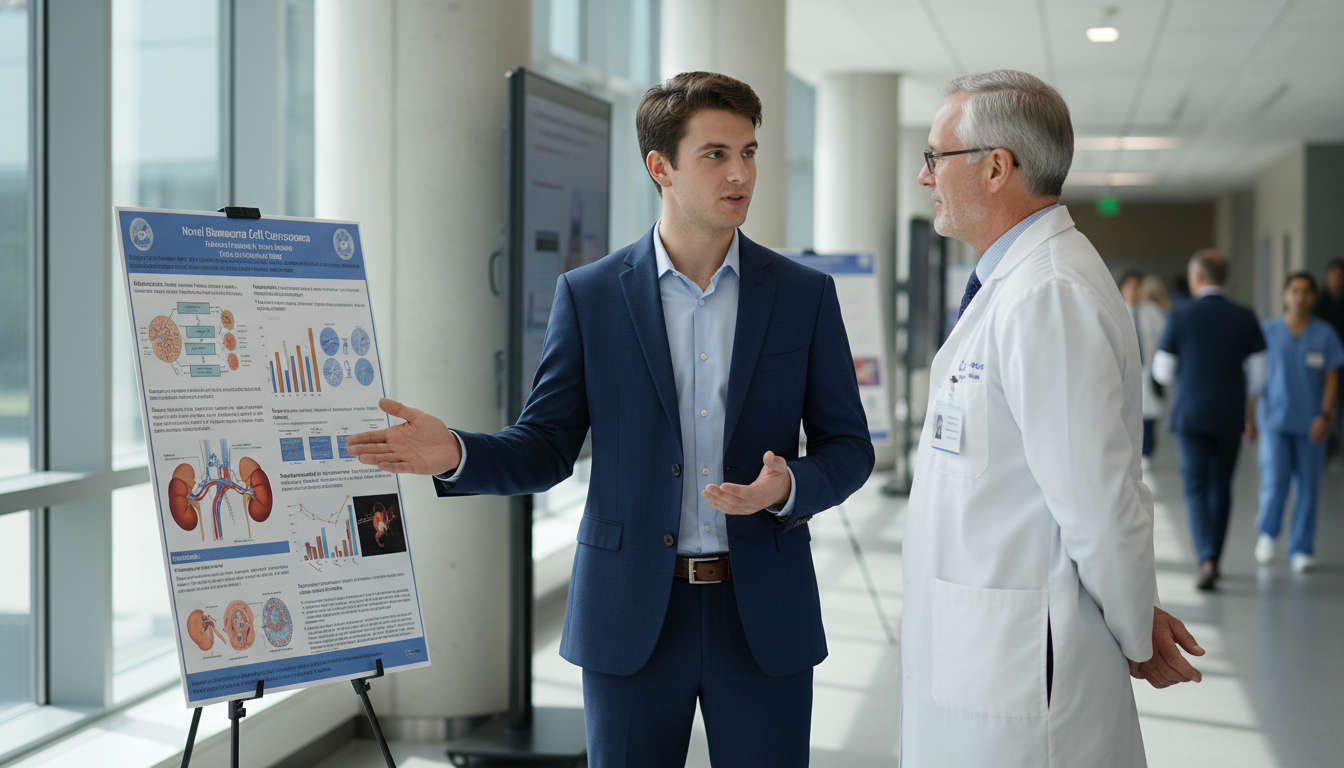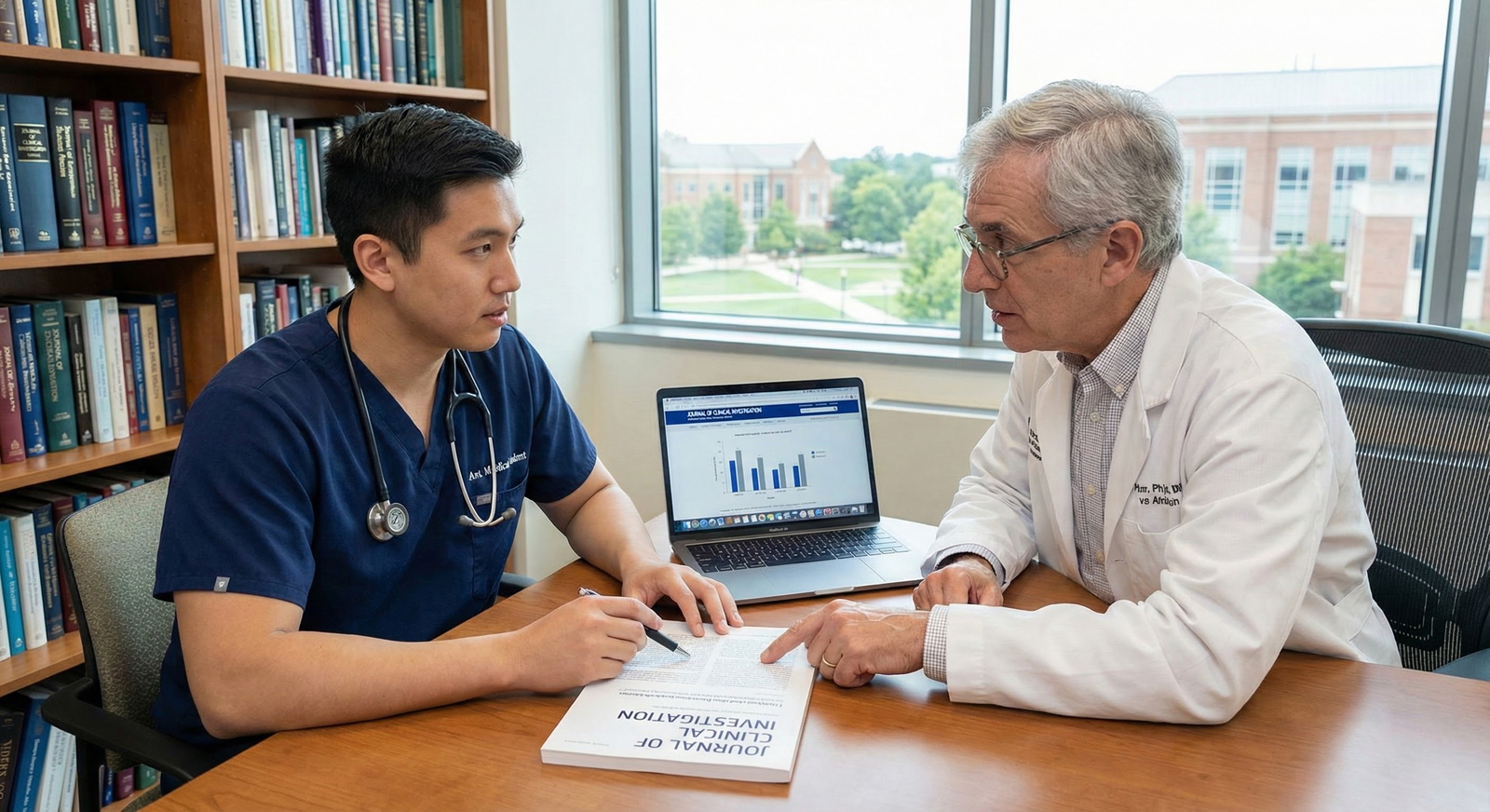
Research has become central to a strong nuclear medicine residency application. As imaging and theranostics rapidly evolve, programs increasingly seek applicants who can interpret evidence, contribute to new knowledge, and function comfortably in an academic environment. Building a focused, credible research profile is one of the most powerful ways to stand out in the nuclear medicine match.
This guide walks you through how to strategically develop your research profile for nuclear medicine residency—from your first project idea to a mature portfolio with publications, presentations, and clearly articulated interests.
Why Research Matters in Nuclear Medicine Residency Applications
Nuclear medicine is at the intersection of imaging, physics, oncology, cardiology, and molecular biology. The field is driven by innovation in:
- PET/MR and advanced PET/CT imaging
- Novel PET tracers (e.g., PSMA, FAPI, amyloid, tau)
- Theranostics using radioligand therapy (e.g., Lu-177, Ac-225)
- Quantitative imaging and radiomics
- AI and machine learning in image interpretation and workflows
Because the specialty is so research-driven, a strong research profile tells program directors several key things:
You understand the academic nature of the field
Nuclear medicine, especially in major academic centers, expects contribution to research and clinical trials. Experience with research for residency suggests you know what you are stepping into.You can think critically and handle complex data
Whether you are involved in tracer development, outcome analysis, or AI-based interpretation tools, research proves you can work with data beyond routine clinical cases.You have potential as a future academic contributor
Programs want residents who can join or initiate projects, help publish clinical series, and potentially continue in fellowship or faculty roles.You bring value to the department on day one
A resident who can help complete ongoing manuscripts, assist with clinical trials, or manage a database is an asset.
In short, research is not just an “extra.” For nuclear medicine residency, a thoughtful research profile can be a major differentiator—especially in competitive academic programs.
Understanding What Counts as “Research” in Nuclear Medicine
Many applicants underestimate how broad “research experience” can be. You don’t need to have developed a new PET tracer to have meaningful research.
Types of Research Relevant to Nuclear Medicine
Clinical Nuclear Medicine and Molecular Imaging Projects
- Retrospective chart reviews (e.g., outcomes after Lu-177 therapy)
- Diagnostic accuracy studies (e.g., comparing SPECT vs PET tracers)
- Workflow or protocol optimization (e.g., low-dose CT protocols for attenuation correction)
- Comparative studies between imaging modalities (e.g., PET vs MRI in oncology staging)
Theranostics and Radiopharmaceutical Therapy
- Response assessment to radioligand therapy
- Toxicity profiles and dosimetry studies
- Patient selection patterns and prognostic factors
- Real-world outcomes vs clinical trial data
Imaging Physics and Quantitative Methods
- SUV standardization and harmonization efforts
- Phantom studies to validate quantification methods
- Dose reduction strategies and image quality assessment
- Motion correction or reconstruction algorithm comparisons
AI, Machine Learning, and Radiomics
- Automated lesion segmentation
- Prognostic models from PET texture features
- Triage tools for urgent nuclear cardiology findings
- Workflow optimization using AI in scheduling or protocol selection
Basic or Translational Research
- Novel radiotracer development (often in radiochemistry labs)
- Animal imaging studies for new compounds
- Receptor biology or molecular targeting studies
- Dosimetry modeling or biodistribution analysis
Educational and Quality Improvement (QI) Projects
- Nuclear medicine teaching curricula or e-learning platforms
- QI projects on reporting accuracy or turnaround time
- Protocol standardization across scanners or sites
- Inter-observer variability studies in structured nuclear reporting
All of these can be framed as legitimate research contributions relevant to nuclear medicine residency.
Levels of Scholarly Output
When building your profile, think in terms of output tiers, from most to least impactful in the eyes of many program directors:
- Peer-reviewed original research articles
- Review articles and systematic reviews
- Case reports and case series (especially on rare tracers or therapies)
- Conference presentations (oral or poster)
- Book chapters or invited educational materials
- Non–peer reviewed articles, blogs, or institutional reports
Ideally, you will have a mix, with at least some peer-reviewed work and recognized conference activity.

How Many Publications Do You Need for Nuclear Medicine Match?
There is no fixed number of publications for match success, but expectations vary by program type and country. Still, you can use some general benchmarks.
Typical Ranges Seen in Successful Applicants
For applicants focusing on nuclear medicine residency in academic settings:
Competitive academic programs (US, Canada, Europe, major academic centers elsewhere):
- 2–5+ peer-reviewed publications total (not necessarily all in nuclear medicine)
- 1–3 in imaging-related fields (radiology, nuclear medicine, oncology, cardiology, medical physics)
- Multiple conference posters or oral presentations
- Evidence of sustained research involvement (not just one small project)
Less research-heavy or community-oriented environments:
- 0–2 publications may be sufficient
- Strong clinical performance and letters may matter more than publication count
- Research experience still helps demonstrate curiosity and initiative, even if output is modest
Interpreting “How Many Publications Needed?”
When applicants ask “how many publications needed,” they often overlook two more important questions:
How meaningful and relevant are the publications?
- A single strong paper in nuclear medicine or molecular imaging with you as first or second author can weigh more than several peripheral co-authorships where your contribution is vague.
Is there a coherent story behind your research path?
- Program directors look for a narrative: perhaps you started with a case report, then a retrospective PET study, then a multi-institutional project.
Publications vs. Depth of Involvement
Programs can tell when an applicant has “CV padding” versus genuine engagement. Depth matters:
- Were you involved in study design, data collection, analysis, and writing?
- Can you clearly discuss methodology, limitations, and how the work fits into the field?
- Have you continued in related projects or just stopped after one?
You do not need double-digit publications to match into nuclear medicine, but you do need your research story to be coherent, credible, and connected to the field.
Strategically Building Your Research Profile: Step-by-Step
Whether you’re early in medical school, in a different specialty applying to a nuclear medicine pathway, or in transition from another field, you can build a strong profile with a deliberate strategy.
Step 1: Clarify Your Nuclear Medicine Interests
You don’t have to know your entire career trajectory, but choosing 1–2 focus areas helps:
- Oncologic PET/CT and theranostics
- Nuclear cardiology and myocardial perfusion imaging
- Neuroimaging (e.g., dementia, epilepsy, movement disorders)
- Pediatric nuclear medicine
- AI and quantitative PET
- Dosimetry and radiopharmaceutical therapy
This doesn’t lock you in; it just helps you create a focused narrative and select projects that reinforce it.
Example:
A student interested in theranostics might build a portfolio around:
- A case report on Lu-177 PSMA therapy
- A retrospective study on patient outcomes after radioligand treatment
- A QI project refining patient selection criteria in the clinic
Step 2: Find the Right Mentors and Environment
Your research trajectory depends heavily on your mentors and department.
Where to look:
- Nuclear Medicine or Radiology Departments
- Faculty with titles like “Director of Nuclear Medicine,” “Chief of Molecular Imaging,” “Theranostics Program Director.”
- Oncology, Cardiology, or Neurology Departments
- Particularly those running imaging-heavy clinical trials.
- Medical Physics or Biomedical Engineering Groups
- Especially if you’re interested in quantitative imaging, dosimetry, or AI.
How to approach potential mentors:
- Read 1–2 of their recent papers and mention them specifically when you email.
- Offer to assist with tasks they actually need: data extraction, chart review, imaging segmentation, database management, literature review.
- Be honest about your time, skills, and level of training.
Red flags in choosing research environments:
- No clear path to authorship or recognition
- Projects that have been “almost done” for years with no timeline
- Mentors who rarely publish or have no ongoing projects
- Poor communication or disorganized structure
Step 3: Start with Achievable Projects
Aim for early wins that build skills and confidence:
Case reports and case series
- Unique tracer uptake patterns
- Rare indications for PET or SPECT imaging
- Illustrative treatment responses in theranostics
- Submit to nuclear medicine journals or imaging case-focused platforms.
Retrospective clinical projects
- Start with small, well-defined questions:
- Example: “Does baseline PET SUVmax predict response to Lu-177 therapy in X patients at our institution?”
- Retrospective chart reviews and imaging reviews are student/resident-friendly and common in nuclear medicine.
- Start with small, well-defined questions:
Review articles and educational papers
- A mini-review on “Theranostics in neuroendocrine tumors”
- “History and evolution of PSMA-targeted imaging”
- “Principles of dosimetry in radionuclide therapy”
These help you master the literature and are relatively achievable with a strong mentor and clear outline.
Step 4: Progress to More Complex Work
Once you have some experience and basic output, you can scale up:
- Multi-center retrospective studies
- Prospective registry creation (e.g., patients receiving a novel tracer)
- Advanced image analysis (texture analysis, radiomics, AI tools)
- Dosimetric modeling collaborating with medical physicists
These projects often require more time and technical skills but can produce higher-impact outputs.

Maximizing the Impact of Your Research for the Match
Doing research is one step; packaging and presenting it effectively for the nuclear medicine match is equally critical.
1. Choose Target Journals and Conferences Wisely
Programs recognize that publishing in top-tier nuclear medicine and radiology journals is difficult for trainees, but they appreciate strategic targeting.
Journals commonly relevant to nuclear medicine applicants:
- Journal of Nuclear Medicine (JNM)
- European Journal of Nuclear Medicine and Molecular Imaging (EJNMMI)
- Clinical Nuclear Medicine
- Nuclear Medicine Communications
- American Journal of Roentgenology (AJR)
- Radiology, European Radiology, Insights into Imaging
- Specialty journals in oncology, cardiology, and neurology when imaging-focused
Conferences to consider:
- Society of Nuclear Medicine and Molecular Imaging (SNMMI) annual meeting
- European Association of Nuclear Medicine (EANM)
- Local/regional nuclear medicine or radiology society meetings
- National radiology meetings (e.g., RSNA) with nuclear medicine sections
- Oncology or cardiology meetings with imaging abstracts
A poster at SNMMI or EANM, even without immediate publication, is valuable evidence of your involvement.
2. Aim for Visible Authorship Roles
Try to build at least:
- 1–2 projects where you are first author
- Several where you are second or significant middle author
Being first author demonstrates initiative, ownership, and ability to drive a project. In interviews, you should be able to walk through these projects in detail.
3. Learn and Demonstrate Core Research Skills
Program directors are impressed when applicants can discuss specifics like:
- Study design choices (e.g., retrospective vs prospective)
- Basic statistics used (e.g., logistic regression, Kaplan–Meier, ROC analysis)
- How bias and confounding were handled
- How imaging was interpreted (e.g., blinded, standardized criteria like PERCIST)
You don’t need to be a biostatistician, but you should show understanding of the methods in your own work.
4. Integrate Research with Clinical and Educational Activities
Your research profile becomes stronger when it aligns with other parts of your application:
- Electives/Sub-internships in nuclear medicine at your home institution or visiting programs
- Teaching—giving short talks, helping with nuclear medicine education for junior students
- Participation in tumor boards where PET imaging and theranostics are discussed
This linkage makes your narrative credible: you are not just collecting publications for match; you are genuinely engaged in the field.
5. Craft a Coherent Narrative in Your Personal Statement and Interviews
Use your research experiences to support a clear story:
- Why nuclear medicine appeals to you (e.g., imaging + therapy, systems thinking, interdisciplinary work).
- How your research shaped your understanding of the specialty (e.g., seeing real patient outcomes with PET-guided therapy).
- What you hope to explore as a resident (e.g., expanding PSMA theranostics, AI-driven image interpretation, novel tracers in neurooncology).
Specificity is powerful. Instead of saying “I conducted research in nuclear medicine,” say:
“I worked on a retrospective study evaluating PSMA PET/CT for biochemical recurrence after prostatectomy, where I helped collect and analyze imaging and clinical follow-up data. This project taught me how nuanced lesion interpretation can be and how it directly changes management decisions discussed at tumor board.”
Common Pitfalls and How to Avoid Them
Even well-intentioned applicants can make missteps in building a research profile. Being aware of these can save time and effort.
Pitfall 1: Chasing Quantity Over Quality
Padding a CV with dozens of minor, tangential works (especially with no clear role) is less impactful than a smaller number of well-understood, relevant projects.
Solution: Prioritize projects where:
- You can discuss your specific contribution confidently.
- The topic is reasonably related to nuclear medicine, imaging, oncology, or related fields.
- There is a realistic plan and timeline for completion.
Pitfall 2: Starting Too Late
Research timelines are long: IRB approval, data collection, analysis, submission, revision. Waiting until the final year before application to start your first project limits how much can be completed.
Solution:
- Start early—even simple projects—in preclinical or early clinical years.
- If you’re later in training, focus on feasible, focused projects that can generate conference abstracts or at least in-progress discussions for interviews.
Pitfall 3: Poor Communication with Mentors
Unclear expectations lead to stalled projects and authorship confusion.
Solution:
- Clarify timelines, roles, and authorship early.
- Provide regular updates; propose next steps instead of waiting passively.
- Ask explicitly: “What would I need to complete to be considered for first authorship?”
Pitfall 4: Not Preparing to Defend Your Work
Programs may ask detailed questions about your methodology, limitations, and clinical relevance. Being unable to answer can undermine your credibility.
Solution:
- Before interviews, re-read your own abstracts and papers.
- Prepare a 2–3 minute “project summary” for each major work, including:
- Background
- Methods
- Key results
- Limitations
- Why it matters for patients or the field
FAQs: Research Profile Building for Nuclear Medicine Residency
1. Do I need nuclear medicine–specific research to match into nuclear medicine?
Not strictly, but it helps. Imaging-related research in radiology, oncology, cardiology, or neurology is still valuable. However, having at least one or two projects clearly tied to nuclear medicine or molecular imaging strengthens your narrative and demonstrates genuine interest in the specialty.
2. How many publications are needed for a competitive nuclear medicine residency?
There is no fixed cutoff. Many successful applicants to academic nuclear medicine programs have 2–5+ publications, with at least some relevant to imaging or nuclear medicine. More important than the number is:
- The relevance of the work
- Your authorship role (first/second author is ideal)
- Your ability to discuss the research thoughtfully during interviews
3. Can quality improvement (QI) or educational projects count as research?
Yes, if they are systematic and well-documented. Nuclear medicine is highly protocol-driven, and QI projects—such as optimizing SPECT/CT protocols, reducing radiation dose, or improving report standardization—are valued. If presented at a conference or written up for publication, they clearly count as scholarly work and can strengthen your profile.
4. What if my research is still in progress when I apply?
Work-in-progress is common and still valuable. You can list:
- “Submitted” or “Under review” manuscripts (clearly labeled as such)
- “In preparation” projects if they have substantial data collected and a clear plan
- Accepted conference abstracts, even if the meeting is upcoming
In interviews, be prepared to explain the project goals, preliminary findings, and realistic timelines for completion. Programs understand the lag between research and publication, especially for students.
Building a strong research profile in nuclear medicine is less about hitting a magic publication number and more about developing a coherent, authentic academic story: why the field excites you, how you’ve engaged in meaningful projects, and what you hope to contribute as a resident and beyond. With thoughtful mentor selection, targeted projects, and careful presentation of your work, you can craft a research portfolio that significantly boosts your nuclear medicine match prospects.