Why a Strong Research Profile Matters in Ophthalmology
Ophthalmology is one of the most competitive specialties in the residency match. Program directors consistently rank research exposure and scholarly productivity as meaningful differentiators among applicants with similarly strong exam scores and clinical performance.
For the ophtho match, a thoughtful research profile can:
- Demonstrate genuine interest in ophthalmology, not just a last‑minute specialty choice
- Show you understand the field’s scientific underpinnings and evolving evidence base
- Highlight valuable skills: critical thinking, data analysis, writing, and persistence
- Provide stronger letters of recommendation from research mentors
- Offer compelling talking points for interviews and personal statements
Many applicants ask variations of the same core question:
“How many publications are needed for ophthalmology residency?” There is no magic number—and programs know that opportunities vary widely by school, visa status, and personal circumstances. What matters much more is:
- The trajectory and coherence of your research experiences
- The quality and role you played (first-author vs minor contributor)
- How well you can explain your work and what you learned from it
- Whether your research aligns with a credible narrative of commitment to ophthalmology
This guide will walk you through building a strategic, realistic, and effective research profile tailored specifically to ophthalmology, whether you are an early M1, late M4, or an international medical graduate.
Understanding the “Research Bar” in Ophthalmology
Before you start collecting projects, you need a clear sense of the landscape: what program directors look for, what’s realistic, and how “research for residency” is judged in this specialty.
What Counts as “Research” for the Ophtho Match?
In your application, various forms of scholarly work can strengthen your profile:
- Peer-reviewed original research
- Clinical studies (chart reviews, cohort studies, prospective trials)
- Basic/translational science (e.g., retinal degeneration models, corneal biomechanics)
- Case reports and case series
- Review articles and book chapters
- Conference abstracts and posters at AAO, ARVO, ASCRS, or regional meetings
- Quality improvement (QI) projects with meaningful methodology
- Database analyses or secondary data studies (e.g., IRIS Registry, NIS)
- Methodology or technology papers (imaging, AI, surgical instruments)
Not all of these carry equal weight, but together they build a picture of your engagement.
How Many Publications Are Actually Typical?
There is enormous variability, especially between:
- Home institutions with strong ophthalmology departments vs. schools without one
- U.S. MD, DO, and international medical graduates (IMGs)
- Applicants who took dedicated research years vs. those who did not
Patterns seen in many successful applicants:
- U.S. MDs without a research year:
- 1–3 ophthalmology-related projects
- Often 0–2 peer-reviewed papers, with some combination of posters and abstracts
- Applicants with a research year (or 2):
- 4–10+ ophthalmology-related projects
- 3–8+ publications (not all first-author, often including case reports and reviews)
- Highly research-focused applicants (e.g., MD-PhD, heavy research years):
- 10+ total publications across fields
- Several first-author ophthalmology papers
For the average strong applicant, you do not need double-digit publications. Think instead in terms of:
- At least one substantial, well-understood project where you had a major role
- Evidence of momentum: a few smaller outputs (posters, case reports) showing follow-through
- Ophthalmology-specific content to demonstrate commitment to the field

Step 1: Strategically Choosing Your Research Area and Mentors
Your time is finite. The goal is not to collect random projects, but to create a coherent, credible research narrative that fits your interests and goals in ophthalmology.
Choosing an Area: Depth vs Breadth
You don’t need to commit to a subspecialty forever, but focusing your efforts helps:
Common ophthalmology research domains:
- Retina & Uveitis: diabetic retinopathy, AMD, retinal vascular disease, imaging (OCT, OCT-A), inflammatory eye disease
- Cornea & External Disease: keratoconus, infections, dry eye, refractive surgery
- Glaucoma: imaging, visual fields, surgical outcomes (MIGS), risk modeling
- Pediatrics & Strabismus: amblyopia, congenital cataracts, strabismus surgery
- Oculoplastics: orbital disease, eyelid tumors, reconstructive techniques
- Neuro-ophthalmology: optic neuropathies, visual pathway disorders, papilledema
- Global ophthalmology & public health: blindness prevention, screening programs, health disparities
Aim for some thematic consistency. For example:
- 1–2 retina projects + a review on OCT imaging + a case report on retinal detachment
- A mix of clinical glaucoma studies + a QI project on IOP measurement documentation
This allows you to say in your personal statement and interviews:
“Over the last two years I’ve focused my research on retinal imaging and diabetic retinopathy outcomes…”
That sophistication is more compelling than five disconnected case reports.
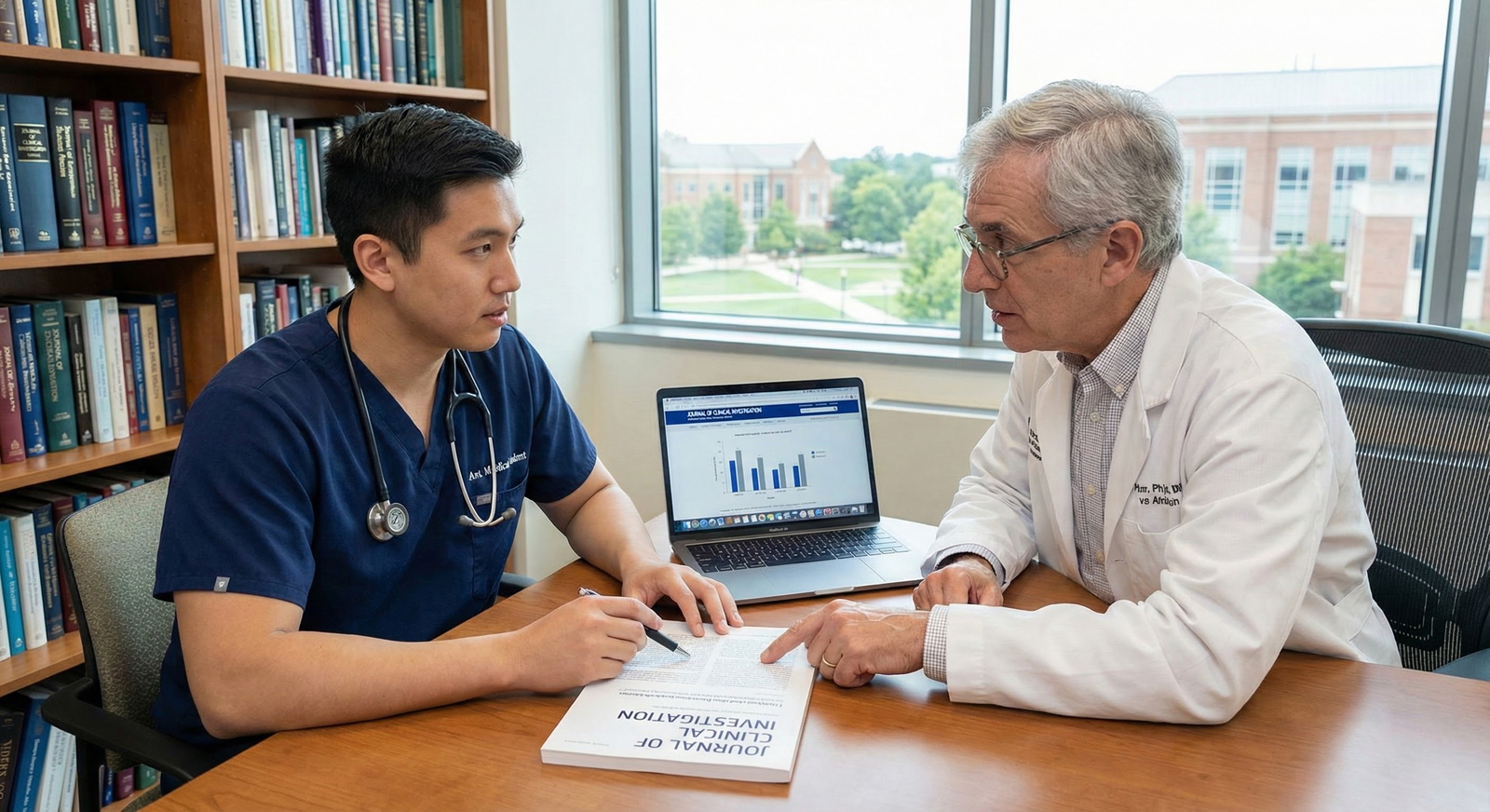
Finding the Right Mentor
The mentor is often more important than the project.
Look for mentors who:
- Are active in ophthalmology research (recent publications, ongoing projects)
- Have a track record of working with medical students or residents
- Communicate clearly and respect timelines
- Are willing to invest in your development (not just assign busy-work)
To approach potential mentors:
Research the department website
- Identify faculty with topics that interest you.
- Read 1–2 of their recent papers so you can reference them intelligently.
Craft a concise outreach email
- Subject: “Medical student interested in retina research opportunities”
- Briefly: who you are, your interest in ophthalmology, any prior research skills, time availability, and a specific ask (e.g., “Could we meet briefly to discuss potential projects?”).
Be honest about skills and time
- If you’re new, say you’re eager to learn and are willing to start small.
- Don’t promise 20 hours/week if you can only give 5.
Managing Power Dynamics and Expectations
At the first meeting, clarify:
- Your expected time commitment
- Project scope and tentative timeline
- Your role (data collection, analysis, writing)
- Authorship expectations, especially if multiple learners are involved
- Opportunities for presentations and publications
You’re allowed to ask:
“If I work diligently on this project, do you see a path to my being first-author or co‑first author?”
You won’t always get that guarantee, but it signals you’re serious and career‑oriented.
Step 2: Selecting the Right Projects at Each Stage of Training
Your research strategy should evolve depending on where you are in medical school or training.
Early Preclinical Years (M1–M2 or Equivalent)
Your goals:
- Learn the basics of the research process
- Build foundational skills (literature review, data collection, basic statistics)
- Start linking your name to ophthalmology
High-yield project types:
Case reports
- Often the fastest path to a first publication.
- Collaborate with a resident or fellow who has an interesting case but limited time.
Retrospective chart reviews
- Feasible for an M1/M2 with mentorship.
- Examples:
- Visual outcomes after cataract surgery in patients with diabetic macular edema
- Outcomes of pediatric strabismus surgery at your institution
- Risk factors for corneal graft failure
Review articles
- Narrative reviews or scoping reviews in an area of mentor expertise.
- Excellent for learning a subspecialty’s literature and terminology.
Actionable advice:
- Aim for 1 serious project + 1–2 lighter projects (e.g., a case report and a small chart review).
- Prioritize involvement where you can be first- or second-author rather than 7th on a massive database paper.
Clinical Years (M3–M4)
Now you’re juggling clerkships and applications, so efficiency and impact matter.
Your goals:
- Turn your early efforts into tangible outputs (submissions, posters, publications)
- Align your research with your evolving subspecialty interests
- Generate strong letters of recommendation from research mentors
Project types to prioritize:
- Projects already in progress that can realistically be submitted before ERAS opens
- Analyses that fit into your schedule (e.g., database work you can do nights/weekends)
- Shorter‑turnaround scholarly work:
- Case reports from interesting ophtho consults
- Brief communications or letters to editor
- Additional analyses from an existing dataset
If you’re late to research (starting near M3/M4), choose small-scope, fast-moving projects:
- A case report with thorough literature review
- A short retrospective study with a limited patient number
- A single-center outcomes study with pre-extracted data
Research Year(s) and Dedicated Time
If you take a full research year, your expectations and responsibilities increase. Residency programs will look for:
- Multiple tangible products: several abstracts, posters, and manuscripts
- At least 1–2 first-author peer-reviewed ophthalmology publications
- Clear evidence of advanced skills (e.g., statistics, advanced imaging analysis, basic science methods)
Plan your research year deliberately:
- Start with one or two primary projects that have high publication potential.
- Add a few smaller side projects (case reports, secondary analyses) to diversify outputs.
- Work out a schedule with your mentor:
- Months 1–3: design, IRB, data gathering
- Months 4–6: analysis, draft manuscript, submit abstracts
- Months 7–12: paper submission, revisions, new smaller projects

Step 3: Executing Projects Efficiently and Turning Work into Publications
Many students start projects that never finish. Execution is what turns “research experience” into publications for match.
Designing Feasible Projects
When planning a new project, ask:
- Is the scope realistic given time until ERAS submission?
- Is the question clear, specific, and answerable with available data?
- Are inclusion/exclusion criteria practical?
- Is there a clear primary outcome?
Example: Instead of
“Visual outcomes after cataract surgery at our institution over 10 years”
Refine to:
“Comparison of postoperative visual acuity at 3 months between cataract surgeries with and without intraoperative complications at a single tertiary center over 5 years.”
Smaller and sharper often leads to completion and publication.
Building Practical Skills
Some core skills are especially valued in ophthalmology research:
Basic statistics and data handling
- Learn to use Excel, R, SPSS, or Stata for basic analyses.
- Know how to perform and interpret t-tests, chi-square, logistic regression, and Kaplan–Meier curves.
Imaging analysis
- Familiarity with OCT/OCT-A, fundus photography, visual fields.
- Even simple grading or segmentation tasks can make you valuable to a lab.
Academic writing
- Understand the IMRAD structure (Introduction, Methods, Results, Discussion).
- Learn discipline-specific phrasing used in major journals (Ophthalmology, AJO, IOVS, Retina, Cornea, J Glaucoma).
Resources:
- Free online courses in biostatistics and research methods
- Journal clubs and mentor feedback on manuscript drafts
- Style guidelines from target journals
Converting Work into Manuscripts and Abstracts
Think “output from day one”:
- When you start data collection, simultaneously create shell tables and figures.
- While gathering patient data, build a running bibliography in a reference manager (Zotero, EndNote, Mendeley).
- After preliminary analyses, target conference deadlines (ARVO, AAO, subspecialty meetings).
Timeline strategy example:
- Months 0–2: IRB approval and data collection
- Months 2–3: Preliminary analysis; submit abstract to ARVO
- Months 3–4: Complete analysis and draft manuscript
- Months 4–5: Manuscript revision with mentor; submission to a peer-reviewed journal
Even if publication comes after ERAS submission, you can list work as “Submitted” or “In Press” (accurately and honestly).
Authorship and Ethical Considerations
To maintain integrity and avoid conflicts:
- Confirm authorship order early and revisit if roles change.
- Keep detailed logs of your contributions (data collected, sections written).
- Ensure patient confidentiality and compliance with IRB/HIPAA.
- Never fabricate or manipulate data; ophthalmology is a tight-knit field—reputational damage follows you.
Being known as reliable and ethical is more valuable than one extra publication.
Step 4: Presenting and Positioning Your Research for the Ophtho Match
Your research profile doesn’t end with PubMed. You must frame and communicate it effectively for residency programs.
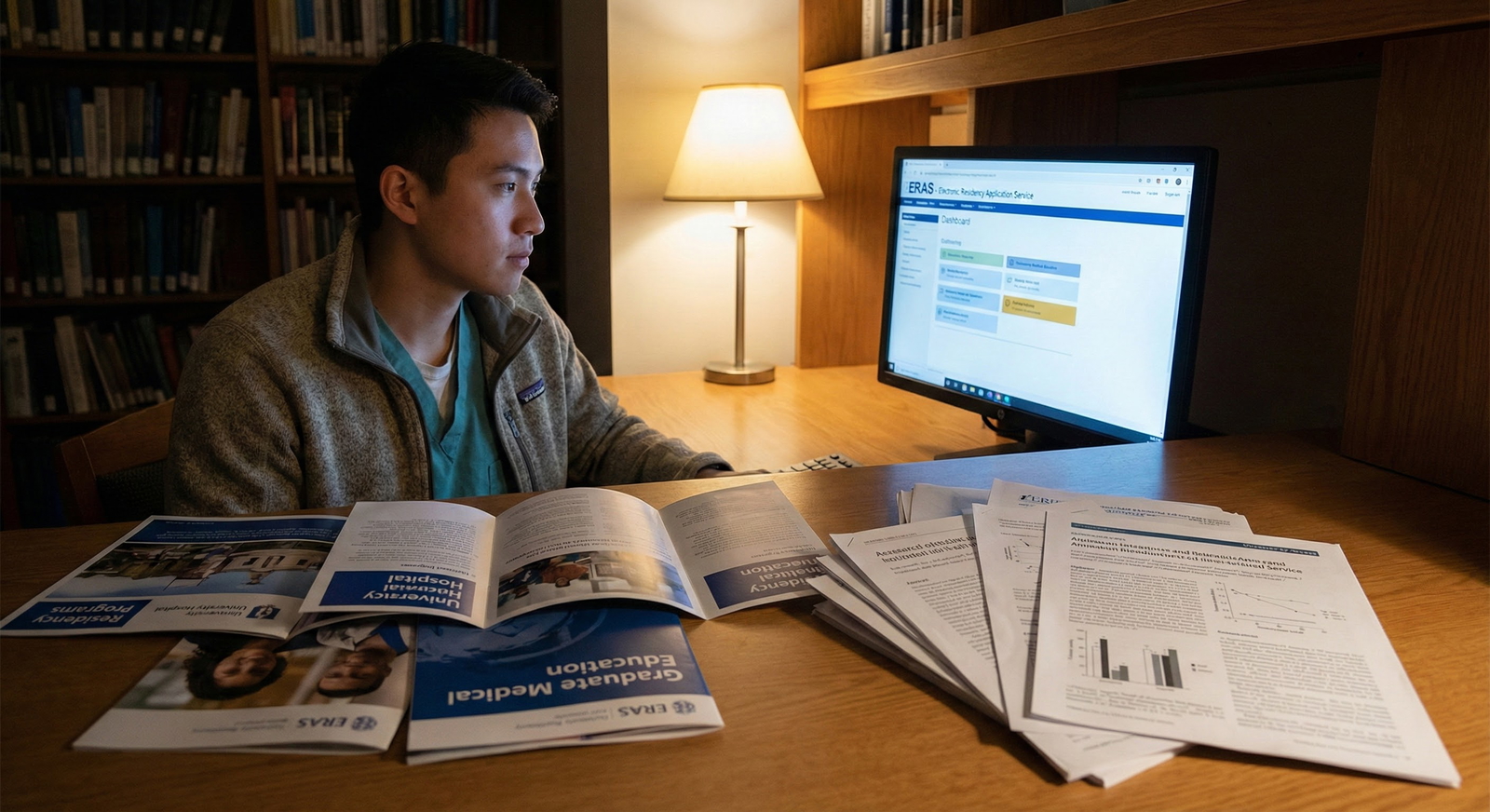
How to List Research on ERAS
For each entry:
Use clear, descriptive titles that highlight ophthalmology relevance.
- Instead of “Retrospective study of outcomes,” use
“Visual outcomes and risk factors for corneal graft failure in high-risk keratoplasty: A single-center retrospective study.”
- Instead of “Retrospective study of outcomes,” use
Describe your specific role:
- “Designed data collection tool, collected 70% of chart data, performed initial statistical analysis, drafted results section.”
Separate entries by type:
- Peer-reviewed articles
- Abstracts/posters
- Oral presentations
- Book chapters/reviews
Aim for an organized, readable structure rather than a cluttered list.
Answering “Tell Me About Your Research” in Interviews
Program directors want to assess:
- Whether you truly understand the science behind your projects
- Your ability to communicate clearly and logically
- How you respond to probing questions or limitations in your work
Prepare 1–2 “anchor projects” you can discuss in depth:
A 2–3 sentence summary:
- “We examined whether X is associated with Y in population Z, using method A and outcome B.”
Your personal contribution:
- “I developed the inclusion criteria, performed the manual chart review, and created the multivariable regression model.”
Main results and their meaning:
- “We found that higher baseline C was independently associated with worse D, suggesting clinicians might want to screen earlier for E.”
Limitations and next steps:
- “It’s a single-center retrospective study with potential selection bias, so a multi-center prospective study would better address this question.”
If you cannot comfortably explain a project’s methodology and implications, do not list it as a centerpiece of your application.
Crafting a Coherent Narrative Across Application Components
Your research should support a unified story of your interest in ophthalmology:
Personal statement:
- Briefly mention how research shaped your understanding of the field or a subspecialty.
- Example: “Working on a retinal imaging project for patients with diabetic retinopathy made me appreciate the power of early detection to prevent blindness.”
Letters of recommendation:
- Ask mentors who know your work well and can speak to your intellectual curiosity, perseverance, and teamwork.
CV and interview responses:
- Emphasize progression (from basic observer to independent contributor).
Avoid overstating your role; program directors can tell when applicants exaggerate, and faculty talk.
Step 5: Tailoring Your Research Strategy to Your Background
Different applicant types should emphasize different strengths in their research profiles.
U.S. MD Students at Schools with Strong Ophthalmology Departments
Leverage institutional resources:
- Join departmental journal clubs and research meetings early.
- Volunteer for ongoing prospective studies that need manpower.
- Aim for 1–2 solid first-author ophthalmology publications if time allows.
Focus on:
- Depth in one subspecialty or methodology (e.g., glaucoma imaging)
- Visibility within your own department (present at grand rounds, local research days)
Students at Schools Without Home Ophthalmology Programs
You can still build a competitive profile:
- Look for remote collaborations with nearby institutions or online initiatives.
- Consider a dedicated research block or year at an academic eye center.
- Work on review papers and database studies that can be done offsite.
Demonstrate:
- Resourcefulness in finding mentors
- Clear evidence that lack of home department did not deter you
- Strong letters from external ophthalmology faculty who supervised your work
DO Students and IMGs
For DO applicants and international medical graduates, research can be especially powerful in demonstrating:
- Familiarity with U.S. academic culture and expectations
- Commitment to ophthalmology beyond minimal requirements
- Ability to contribute academically at the same level as U.S. MD peers
High-yield moves:
- Seek U.S.-based ophthalmology research if possible (even short-term observerships that lead to a case report).
- Document your contributions meticulously for ERAS.
- If you have a research year, emphasize quantifiable outputs and strong U.S.-based recommenders.
Quality and credibility often matter more than sheer quantity—particularly for programs suspicious of “inflated” publication counts without clear roles.
Frequently Asked Questions (FAQ)
1. How many publications are needed for ophthalmology residency?
There is no fixed number, and many successful applicants match with relatively few publications. For a strong, typical candidate:
- 1–2 well-executed, ophthalmology-focused projects (ideally with at least one first-author paper or abstract)
- A total of 2–5 scholarly outputs (including posters, case reports, and reviews) is common
Applicants who take research years or are heavily research‑oriented may have significantly more. What matters most is how meaningful, coherent, and well-understood your work is—not chasing an arbitrary publication count.
2. I’m starting late. Is it worth doing research if I only have 6–12 months before applying?
Yes. Even in a short timeframe, you can:
- Complete a case report or small retrospective study
- Present a poster at a regional or national meeting
- Submit a brief manuscript or letter to the editor
Programs recognize constraints. If your late-stage research is well-chosen, completed, and clearly linked to your interest in ophthalmology, it can still strengthen your application and give you strong talking points for interviews.
3. Does non-ophthalmology research help for the ophtho match?
Yes—with caveats. Non-ophthalmology research shows:
- General scientific literacy and perseverance
- Ability to bring a project to completion
However, for a competitive ophthalmology residency application, you should aim for at least some ophthalmology-specific research to show genuine specialty interest. An excellent combination is:
- Strong foundational research in another field (e.g., neurology, oncology, public health)
- Plus 1–3 ophthalmology-related projects to connect your skills to your chosen specialty
4. What if my research projects never got published—do they still count?
Yes, completed research experiences still matter, especially if:
- You can clearly explain the question, methods, results, and limitations
- You presented the work as a poster or oral presentation
- You learned skills (e.g., statistics, imaging analysis) that translate to future work
On ERAS, be honest about the status: “Completed study; manuscript in preparation” is acceptable if true. Focus on the substance and learning from each project rather than only the publication endpoint.
By approaching research for residency strategically—choosing focused projects, engaging strong mentors, and prioritizing completion and understanding—you can build a research profile in ophthalmology that not only strengthens your ophtho match chances, but also prepares you for a career as a thoughtful, evidence-based clinician.