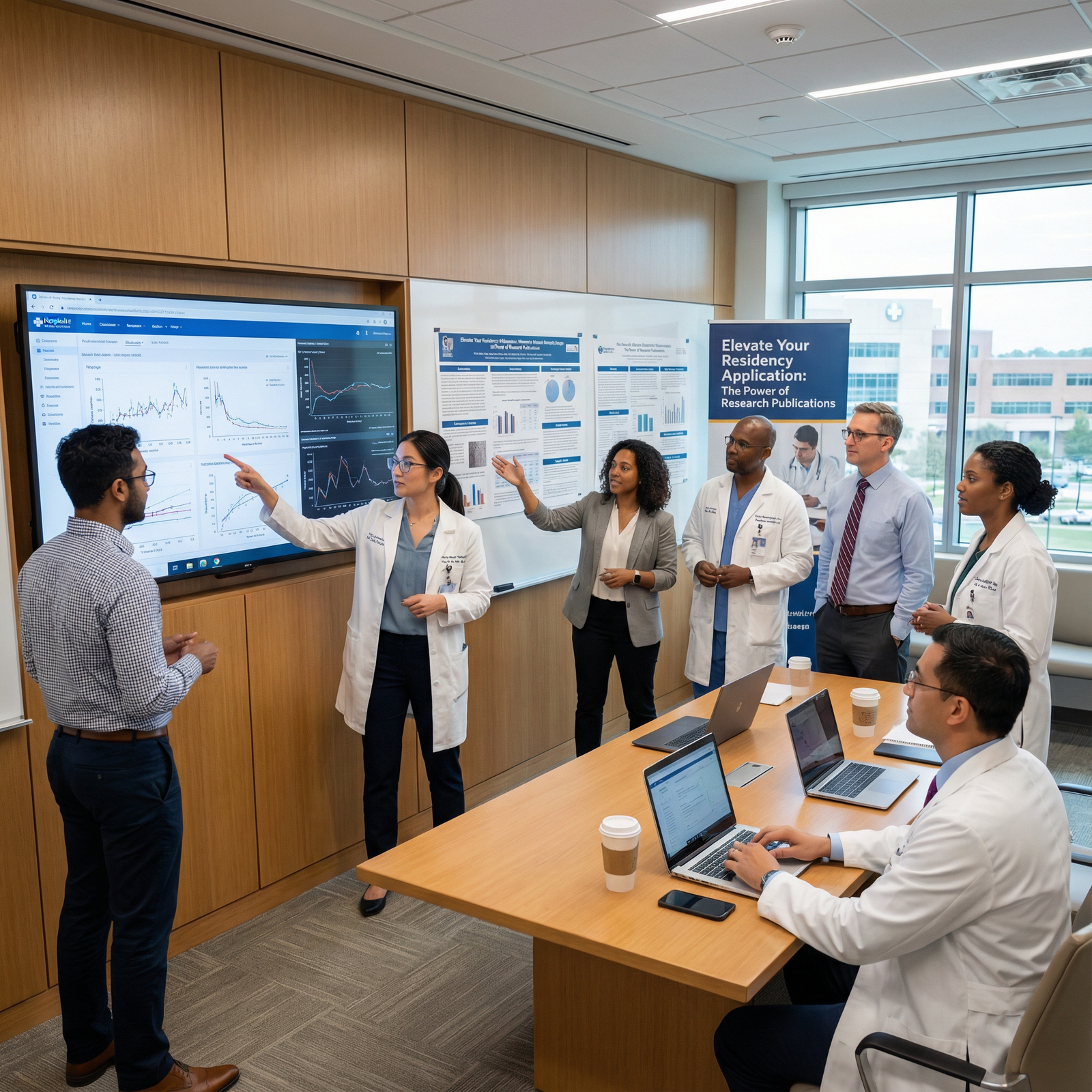
Research Experience: A Game Changer in Your Residency Application?
Residency Applications are increasingly competitive across nearly every specialty. Strong grades and solid board scores are no longer enough to guarantee interviews at top programs. Programs now look for evidence that applicants can think critically, contribute to Medical Research, and grow into future leaders in medicine.
Research experience has become one of the most powerful ways to distinguish yourself. Done thoughtfully, it can strengthen your application, clarify your career goals, and expand your professional network in ways that last well beyond Match Day.
This enhanced guide explains why research matters in Physician Training, how to strategically build and showcase your research portfolio, and how to leverage it for Career Development and Networking in Medicine.
Why Research Experience Matters in Residency Applications
1. Differentiation in a Competitive Match Environment
In many specialties, particularly competitive ones (dermatology, orthopedic surgery, radiology, ENT, plastic surgery, academic internal medicine, etc.), most applicants have high scores and strong clinical evaluations. Programs need additional data points to separate excellent from outstanding candidates.
Substantive research experience helps you:
- Stand out on paper: A CV with presentations, abstracts, and publications signals sustained engagement and productivity.
- Show trajectory: A pattern of increasing responsibility (from data collection to first-author publication) demonstrates growth.
- Highlight niche interests: A focused research area can underscore your commitment to a subspecialty (e.g., stroke neurology, pediatric endocrinology, health disparities, medical education).
Program directors often interpret meaningful research as a marker of:
- Intellectual curiosity
- Persistence and follow-through
- Ability to contribute to the program’s scholarly output
Even for community-based or clinically focused residencies, having research experience can reassure programs that you can interpret literature, adapt to new evidence, and engage in quality improvement.
2. Skill Development Directly Relevant to Clinical Practice
Research is not just about pipettes or p-values. It builds core competencies that programs value in every physician.
Key skills you develop:
Critical Thinking
- Framing clinical problems as answerable questions
- Evaluating bias, confounders, and limitations
- Integrating complex data into clear conclusions
Problem-Solving Under Uncertainty
- Dealing with missing data or recruitment challenges
- Adapting study protocols when real-world issues arise
- Balancing competing priorities and timelines
Analytical and Statistical Literacy
- Understanding study design (RCTs, cohort, case-control, QI projects)
- Interpreting confidence intervals, p-values, effect sizes
- Recognizing when results are clinically meaningful versus merely statistically significant
Written and Oral Communication
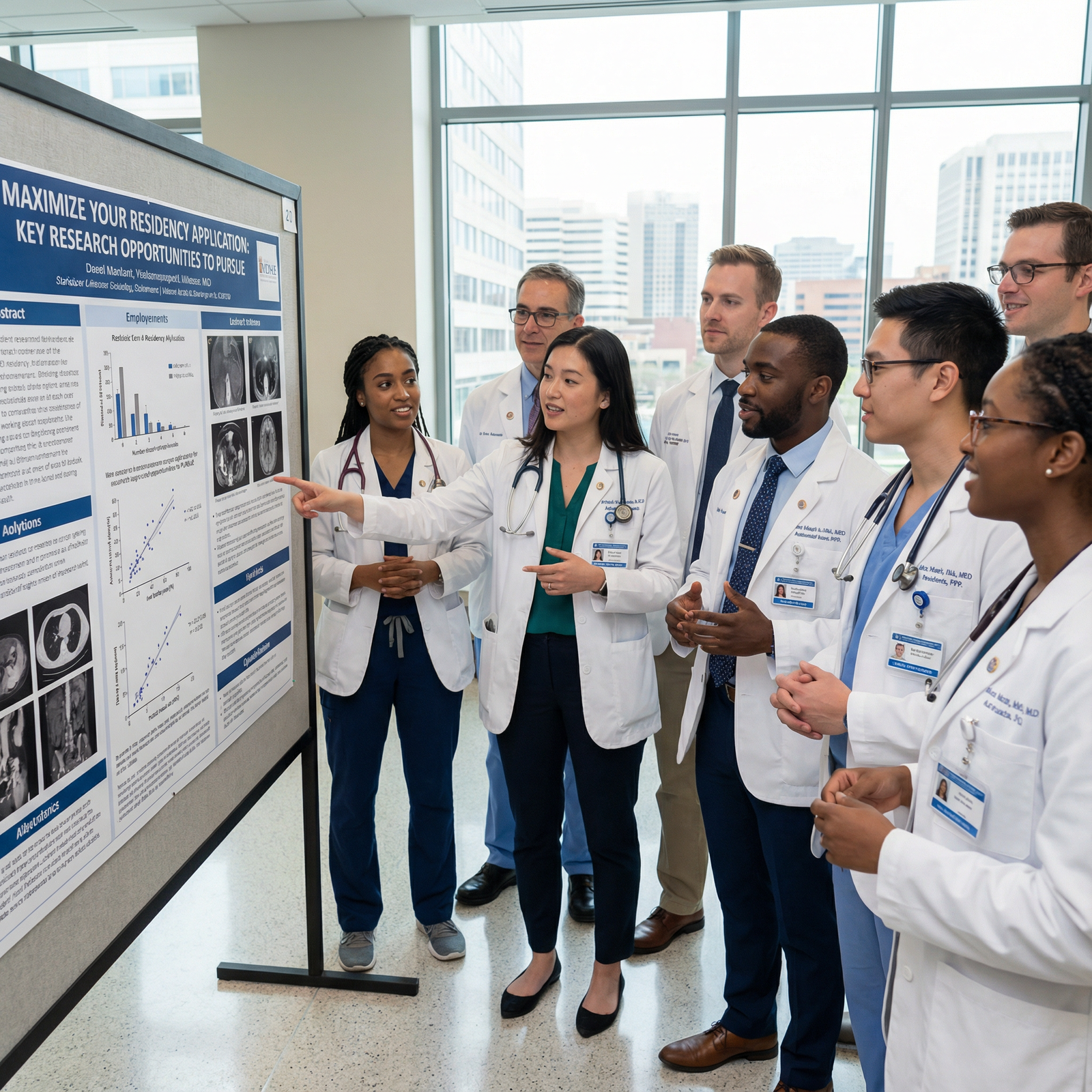
- Writing abstracts, posters, and manuscripts
- Presenting to journal clubs, conferences, or department meetings
- Explaining complex concepts to non-experts (including patients)
These skills map directly onto ACGME core competencies and make you a more thoughtful, evidence-based clinician.
3. Networking in Medicine and Mentorship Opportunities
Research is one of the most effective avenues for Networking in Medicine, especially if you are targeting academic or competitive programs.
Through research, you can:
- Work closely with faculty who will know your work ethic and can write detailed, personalized letters of recommendation.
- Collaborate with residents and fellows, gaining insight into program culture, expectations, and potential future mentors.
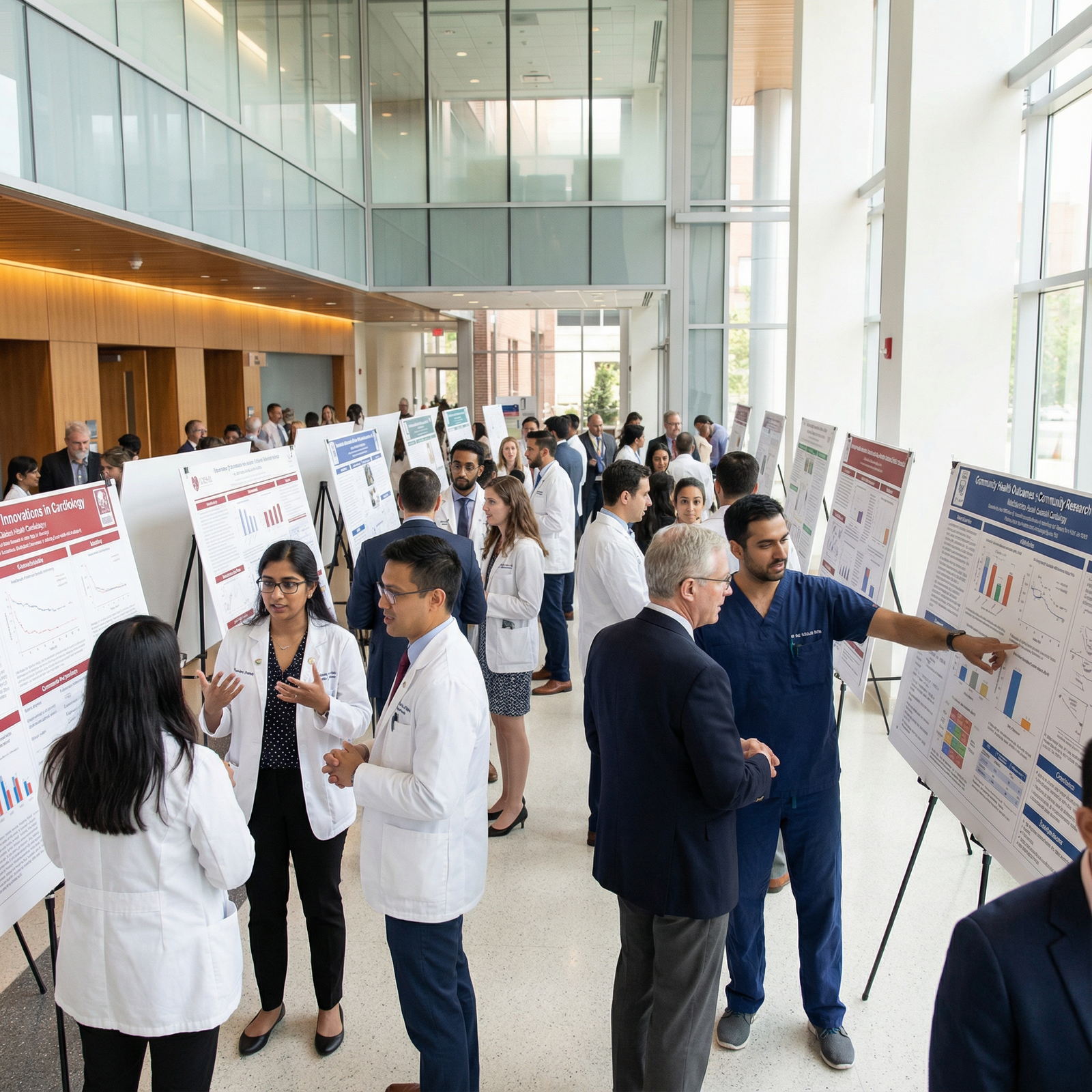
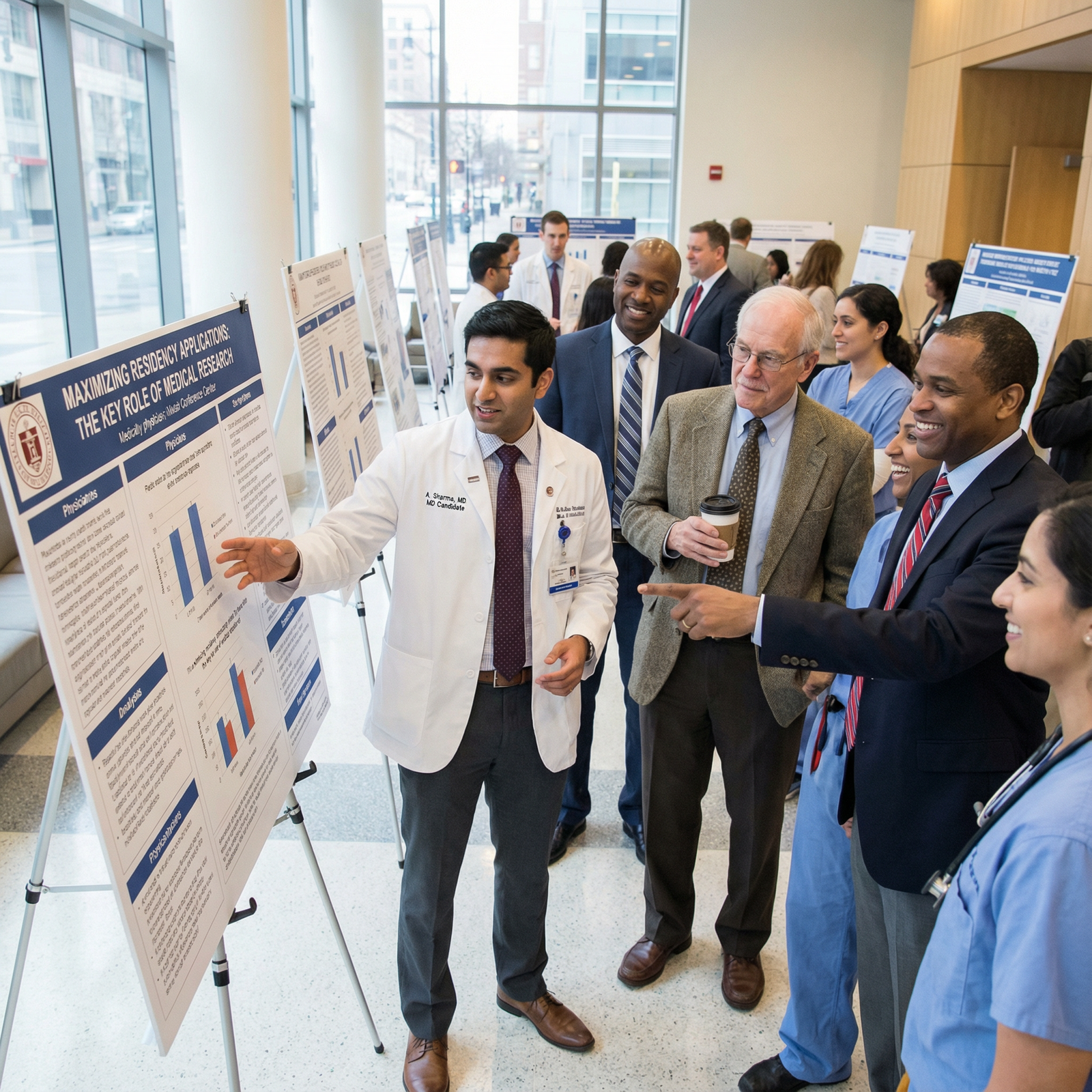
- Present at regional or national meetings, where:
- You meet leaders in your specialty
- You can express interest in specific residency programs
- You may be remembered when your application appears months later
Strong research mentors may also:
- Advocate for you directly to program directors
- Connect you with additional projects or collaborators
- Guide you in shaping your long-term academic and Career Development plan
4. Demonstrating Commitment to Medicine and Lifelong Learning
Residency programs want physicians who will continue learning and improving throughout their careers. Engaging in Medical Research sends a clear message that you:
- Seek to understand why things work, not just what to do
- Care about advancing patient care and health systems
- Are prepared to participate in quality improvement, guideline development, or future clinical trials
For applicants interested in academic careers, physician-scientist tracks, or fellowship training, consistent research involvement demonstrates long-term commitment to scholarship and can open doors to research-intensive training pathways.
5. Publication and Presentation Potential: Building Your Scholarly Identity
Having your name on:
- Peer-reviewed manuscripts
- Conference abstracts
- Posters or oral presentations
- Book chapters or review articles
…adds objective credibility to your CV.
Programs see published work as proof that you:
- Can complete the full research cycle (idea → data → manuscript)
- Can work within a team and meet deadlines
- Have potential to contribute to the program’s scholarly requirements (resident research projects, QI initiatives, or departmental publications)
Even if your work is not yet published by the time you apply, submitted or in-preparation manuscripts and accepted abstracts still demonstrate productivity and momentum.
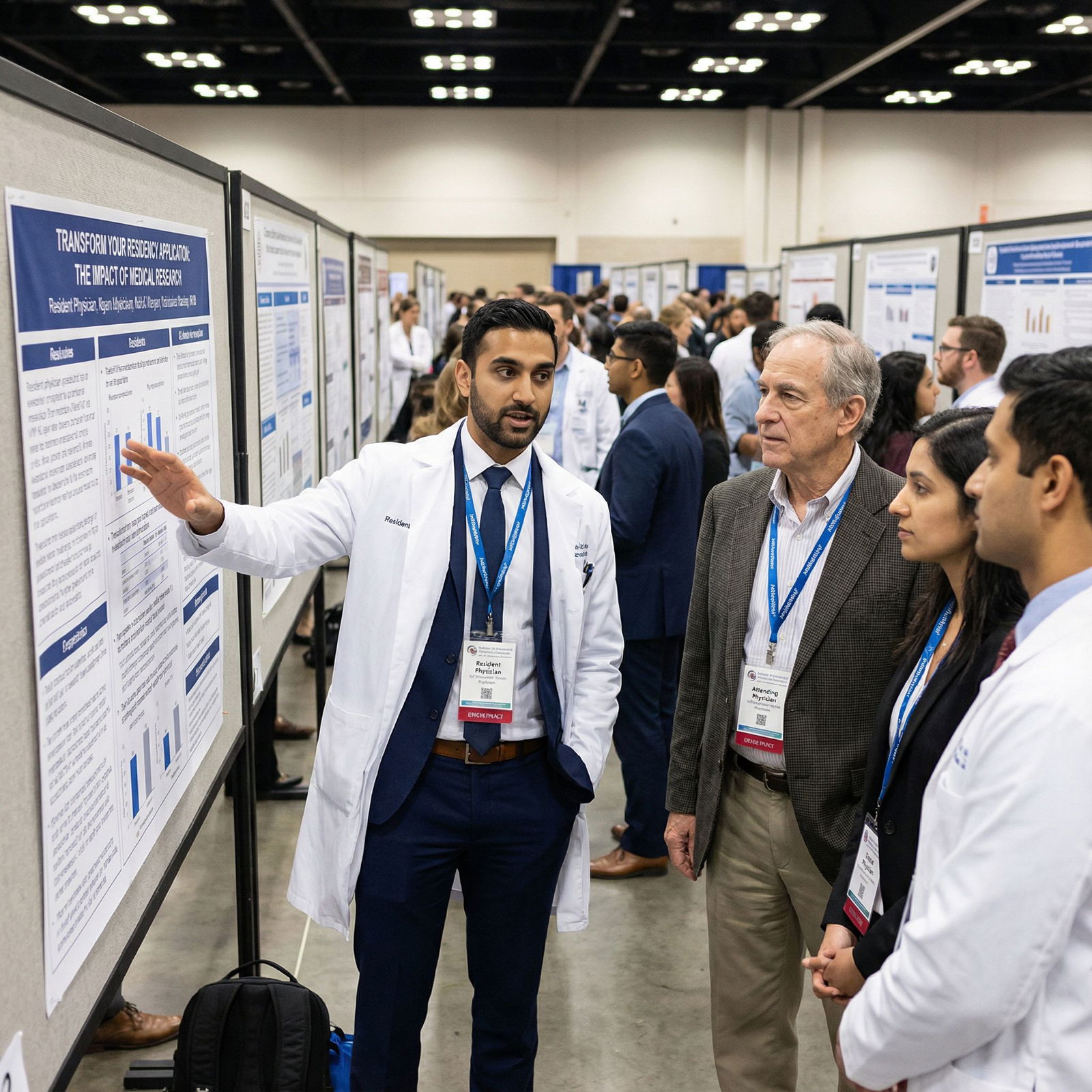
Types of Research That Strengthen Your Residency Application
Not all research needs to be bench science. Choose opportunities that fit your interests, timeline, and resources.
1. Clinical Research
- Prospective or retrospective chart reviews
- Cohort or case-control studies
- Observational studies related to patient outcomes
Clinical research is highly relevant for most specialties and helps you:
- Learn study design and biostatistics
- Understand real-world patient populations
- Identify gaps in current care or guidelines
2. Basic Science and Translational Research
- Laboratory-based experiments (cell culture, animal models, molecular biology)
- Translational work connecting lab findings to clinical questions
Particularly valued in:
- Oncology
- Neurology and neurosurgery
- Certain subspecialties (e.g., rheumatology, immunology)
Shows depth of scientific thinking and is advantageous for physician-scientist or research-track programs.
3. Health Services, Outcomes, and Public Health Research
- Health disparities research
- Quality improvement (QI) projects
- Health policy or systems-based studies
These projects are especially impactful if you’re interested in:
- Internal medicine, family medicine, pediatrics, psychiatry, emergency medicine
- Leadership roles in health systems or public health
- Improving access, equity, or cost-effectiveness of care
4. Educational and Curriculum Research
- Studies on teaching methods, assessment tools, or learner outcomes
- Development and evaluation of new curricula or simulations
Valuable if you’re considering:
- A career in medical education
- Chief residency or future academic roles
5. Case Reports and Case Series
Often the most accessible starting point:
- Write up unusual, complex, or instructive clinical cases
- Present at institutional or regional conferences
While not as impactful as large studies, they:
- Build your writing and literature review skills
- Demonstrate initiative
- Can still lead to conference presentations and publications
How to Strategically Incorporate Research into Your Medical Training
1. Start Early and Plan Around Your Curriculum
Ideally, begin exploring research opportunities in your first or second year of medical school:
- Meet with your school’s research office or Student Affairs early.
- Attend departmental research days and ask which faculty enjoy working with students.
- Consider structured programs: summer research fellowships, scholarly tracks, or dual-degree options (e.g., MD–MS, MD–MPH).
If starting later, you can still be successful:
- Fourth-year research electives
- Dedicated research blocks between M3 and M4
- Post-graduate research years (for highly competitive specialties or those targeting top academic programs)
Be realistic about your time and bandwidth. It’s better to do one project well than be superficially involved in several.
2. Select Research That Aligns With Your Career Goals
Think about how each project fits into your broader Career Development:
- Interested in pediatrics? Seek pediatric clinical trials, developmental outcomes research, or adolescent health studies.
- Targeting orthopedic surgery? Look for musculoskeletal imaging, sports medicine, or outcomes research in joint replacement.
- Considering psychiatry? Projects in addiction, neuroimaging, or community mental health may be relevant.
Alignment helps you:
- Talk convincingly in interviews about your specialty choice
- Show a coherent narrative in your personal statement and CV
- Build a foundation for future fellowship or subspecialty research
3. Engage Deeply, Not Superficially
Programs can tell when research is “checkbox” versus meaningful.
Aim to:
- Take ownership of specific parts of the project (e.g., data collection, IRB submission, literature review, statistical analysis, or manuscript drafting).
- Meet regularly with your mentor and ask for clear roles and expectations.
- Seek authorship when your contributions meet accepted authorship standards.
Signs you’re genuinely engaged:
- You can confidently explain the study’s rationale, methods, and limitations.
- You contribute ideas to study design or interpretation, not just clerical tasks.
- You remain involved through submission, revision, or presentation.
4. Build Strong Relationships With Faculty Mentors
Your research mentors can be pivotal in your residency journey.
Strategies to cultivate mentorship:
- Show reliability: meet deadlines and communicate proactively.
- Ask for feedback on your performance and long-term goals.
- Be honest about your interests, constraints, and specialty plans.
Mentors may:
- Introduce you to other investigators
- Help you choose away rotations or elective experiences
- Provide targeted advice for Residency Applications in your specialty
Don’t hesitate to ask mentors if they would feel comfortable writing you a strong letter of recommendation. This invites honest feedback and ensures you have supportive advocates.
5. Communicate and Highlight Your Research Effectively in Your Application
Research only helps you if reviewers can quickly understand its relevance and your role.
On your CV and ERAS application, clearly outline:
- Project title and topic
- Study type (e.g., retrospective cohort, QI initiative, RCT)
- Your role (e.g., “Led data collection and cleaning; co-wrote manuscript results section”)
- Status (completed, in-progress, submitted, accepted, published)
In your personal statement:
- Incorporate 1–2 concise stories that illustrate:
- A challenge you faced in research and how you handled it
- How research clarified your specialty interests
- How it shaped your approach to evidence-based patient care
On interview day:
- Be prepared to explain your work in lay terms, then in technical terms if asked.
- Anticipate questions:
- What was your hypothesis?
- How did you handle a major obstacle or unexpected result?
- What would be your next step if you continued the project?
Being articulate and reflective about your research often leaves a strong impression.
6. Continue Engagement After the Project Ends
Programs appreciate applicants who follow through.
Even after the primary data collection or rotation ends, you can:
- Help with abstract submission and conference presentations
- Work on manuscript drafting or revisions
- Attend relevant conferences or grand rounds where your work is discussed
Staying engaged:
- Increases the likelihood of publications before Match
- Keeps your mentor relationship active
- Provides additional talking points for interviews and ranking decisions
Real-World Application: How Research Transforms Residency Trajectories
Case 1: From Medical Student to Pediatric Research Leader
Dr. Linda Johnson dedicated two structured years to research on childhood obesity during medical school, focusing on:
- Longitudinal outcomes of school-based nutrition interventions
- Barriers to healthy eating in low-resource communities
Key outcomes of her research journey:
- First-author publication in a leading pediatric journal
- Oral presentation at a national pediatrics conference
- Collaboration with community organizations and school districts
During residency interviews:
- Her research helped her articulate a clear vision: combining clinical pediatrics with community-based obesity prevention and health policy.
- Program directors saw her as someone who could contribute to scholarly work, quality improvement, and advocacy.
She matched at a top-tier pediatrics residency with a strong community health track and is now a respected leader in pediatric obesity research and policy.
Case 2: Clinical Research as a Bridge to Cardiology Fellowship
Dr. Michael Rivera pursued cardiology-focused clinical research:
- Participated in a prospective heart failure management study
- Helped coordinate patient follow-up and data collection
- Co-authored multiple abstracts and a manuscript on readmission reduction strategies
Outcomes for his Career Development:
- Invitation to collaborate on a multicenter clinical trial
- Strong letters from cardiology faculty who knew his work intimately
- A clear, consistent theme of interest in cardiovascular outcomes and health systems
During internal medicine residency interviews, Dr. Rivera presented himself as a future cardiologist committed to both clinical care and outcome improvement. His research portfolio helped him match not only into a strong internal medicine residency but later into a competitive cardiology fellowship.
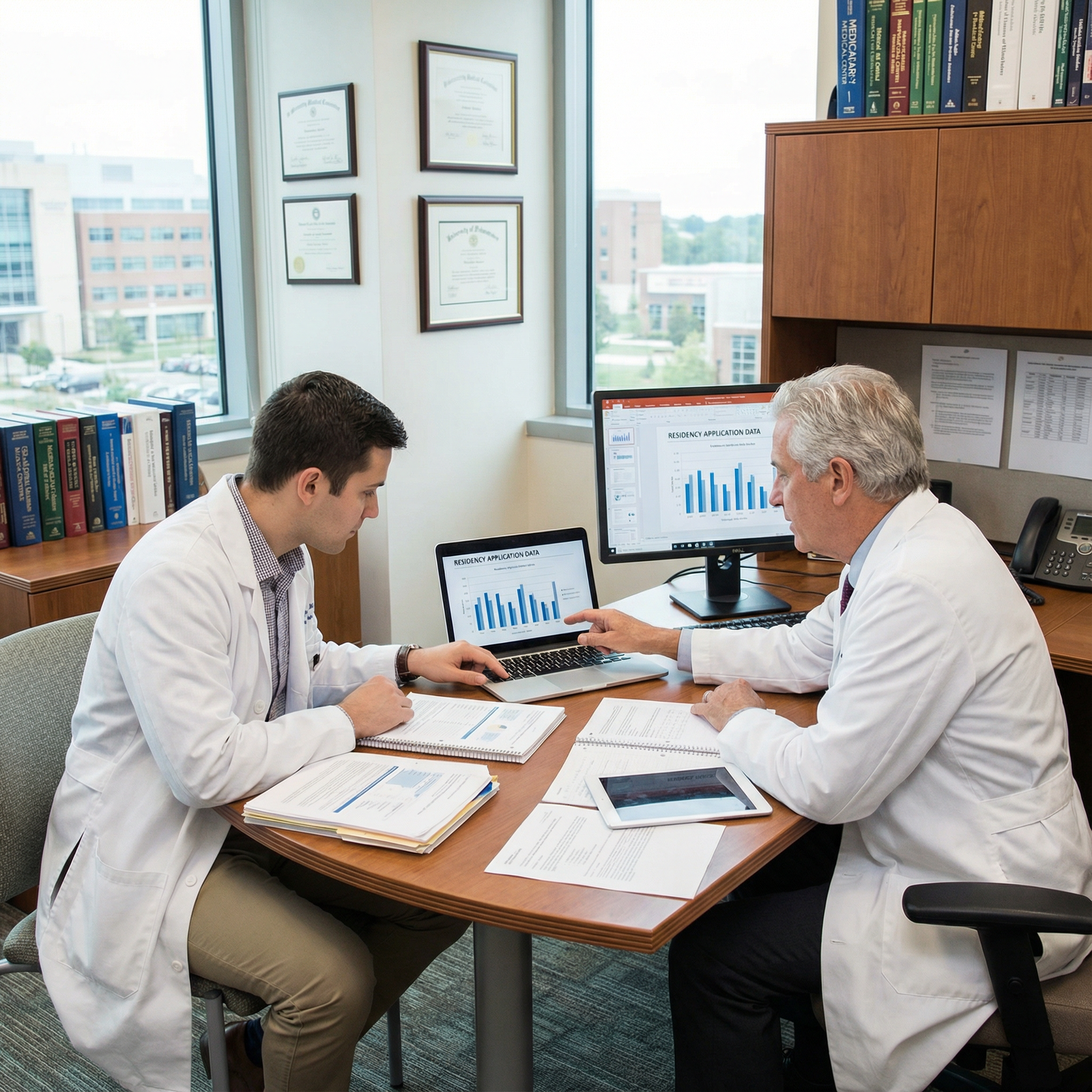
Practical Tips: Making Research Work for Your Residency Goals
- Be intentional, not random: Choose projects that help tell a cohesive story about your interests and future direction.
- Focus on completion: An accepted abstract or submitted manuscript often counts more than several unfinished projects.
- Quality over quantity: A small number of meaningful, well-understood projects is better than a long list you can’t discuss confidently.
- Adapt to your school’s resources: If your school has limited lab research, emphasize clinical research, QI, or collaboration with other institutions.
- Use research to explore specialties: If you’re undecided, research can expose you to faculty and patient populations that clarify your path.
Frequently Asked Questions: Research and Residency Applications
1. How important is research experience for residency applications, really?
The importance varies by specialty and program type:
- Highly competitive and academic specialties (e.g., dermatology, plastic surgery, neurosurgery, radiation oncology) often place substantial weight on research productivity and publications.
- Moderately competitive or community-focused specialties may view research as a strong plus but not mandatory. Clinical performance, letters, and fit may weigh more heavily.
- Primary care–oriented programs often value quality improvement, community health, and outcomes research as part of a broader interest in systems-based practice.
Even where it’s not strictly required, some research experience can strengthen your application, demonstrate intellectual curiosity, and help you speak more confidently about evidence-based practice.
2. I have minimal or no research experience. Is it too late to start?
No. While starting early helps, it’s rarely “too late”:
If you’re early M3 or M4, you can:
- Join an ongoing project with well-defined tasks.
- Work on a short, focused retrospective study or case series.
- Undertake a 4–8 week research elective.
If you are very close to applying:
- Seek out case reports or small projects that can lead to abstracts.
- Engage in QI projects during core clerkships and ask if they can be written up.
Even short-term involvement can:
- Provide talking points for interviews
- Show initiative and interest in scholarship
- Lay groundwork for more robust research during residency
3. What if my research isn’t in the specialty I’m ultimately applying to?
Cross-specialty research can still be valuable:
- Many skills are transferable: study design, data analysis, writing, and presentation.
- You can explain in your personal statement or interviews how:
- The research taught you to think critically and work in teams
- The experience ultimately helped you clarify that another specialty was a better fit
If possible, try to:
- Do at least one small project or case report closer to your chosen specialty in M3 or M4.
- Seek a mentor in your target field who can contextualize your previous research in your application.
4. Do I need first-author publications to be competitive?
Not necessarily:
- First-author work is ideal and shows leadership in a project.
- However, co-authorships, abstracts, posters, and oral presentations still carry real value.
Programs usually look at:
- The totality of your scholarly engagement
- Your ability to discuss your work intelligently
- How your research fits with your narrative and goals
For ultra-competitive specialties and top academic centers, first-author or multiple publications may help, but it is one piece of a holistic review.
5. How can I find research opportunities if my school has limited resources?
Consider these strategies:
- Ask clerkship directors, department chairs, or residency program leadership if they know of ongoing projects that need help.
- Reach out to nearby academic centers or teaching hospitals even if they are not your primary institution.
- Look for:
- National student research programs or summer fellowships
- Remote opportunities involving database analysis, systematic reviews, or survey-based studies
- Collaborate with:
- Public health departments
- Nonprofit organizations
- Quality improvement teams within hospitals
Be persistent and professional in your outreach—many faculty welcome motivated students willing to contribute.
Research experience, when approached thoughtfully, can indeed be a game changer in your residency application. It elevates your profile, deepens your clinical reasoning, expands your network, and supports your long-term Career Development in medicine. By starting early, choosing projects aligned with your goals, engaging deeply, and clearly communicating your contributions, you position yourself not only to match well—but to thrive in your future role as a physician and scholar.