Understanding the Role of Research in EM-IM for the DO Graduate
For a DO graduate targeting a combined Emergency Medicine–Internal Medicine (EM IM) residency, a strong research profile is not strictly mandatory at every program—but it is increasingly influential. EM-IM combined programs attract applicants who are intellectually curious, comfortable with complexity, and interested in academic or leadership careers. A thoughtful research portfolio is one of the best ways to demonstrate those qualities.
As a DO graduate, you may also be navigating persistent misconceptions about osteopathic training among some academic programs. A focused, well-presented research record can help you stand out as a serious candidate, particularly at university-based or research-heavy EM-IM programs.
This article will walk you through:
- How EM-IM programs view research for residency applicants
- What types of projects are most realistic and impactful for a busy DO graduate
- How many publications or abstracts are typically competitive—and how “how many publications needed” is the wrong first question
- Concrete steps to build and present your research profile for the osteopathic residency match and NRMP match
- Practical strategies and examples tailored specifically to the EM-IM combined pathway
Throughout, the emphasis is on strategy and execution, not just list-building.
How EM-IM Programs Evaluate Research Experience
Where research fits in the EM-IM application
Combined Emergency Medicine–Internal Medicine residencies tend to be:
- University-affiliated or academic center–based
- Focused on complex patients, systems-based practice, and quality improvement
- Often home to or affiliated with clinical research groups in sepsis, resuscitation, ultrasound, toxicology, quality/safety, or health services
For these programs, research accomplishes several things on your application:
Signals academic mindset
Shows you’re comfortable with scholarly inquiry, literature review, and critical thinking.Demonstrates follow-through
Completing an abstract, poster, or publication proves you can take a project from idea to dissemination.Supports long-term fit
Many EM-IM graduates hold academic positions, leadership roles, or subspecialty fellowships (e.g., critical care, toxicology, ultrasound, administration). Research experience suggests you might thrive in that environment.Differentiates DO graduates among strong applicants
When comparing similarly strong DO and MD candidates, a DO who can point to a clear research trajectory often compares very favorably, especially if the research aligns with EM-IM themes.
Is research “required” for a DO graduate in EM-IM?
In practice:
- Not all EM-IM programs require publications to interview a DO graduate, especially community-affiliated or newer programs.
- Most academic EM-IM programs strongly prefer some research, quality improvement (QI), or scholarly activity.
- A DO graduate with zero research or scholarly activity may still match EM-only or IM-only, but will be less competitive at top combined EM-IM programs.
Think of research as a lever: it won’t compensate for very weak board scores or poor clinical performance, but it can elevate a solid application into “must interview” territory.
How Many Publications Do You Really Need?
The question “how many publications needed for EM-IM?” comes up constantly. The honest answer: it depends on the competitiveness of the programs you’re targeting and the depth of your other strengths. But we can sketch realistic benchmarks for a DO graduate.
Typical ranges for successful applicants
For DO graduates applying to EM-IM combined programs, a competitive but realistic research profile might look like:
Strong profile (research-focused DO)
- 1–3 peer-reviewed publications (any author position)
- 2–4 abstracts/posters/presentations at regional or national meetings
- Involvement in 1–2 ongoing projects with clear roles (e.g., data collection, analysis, drafting)
Solid profile (most well-prepared DO applicants)
- 0–1 peer-reviewed publications
- 2–3 posters or oral presentations (school, regional, or national)
- 1 ongoing research or QI project, clearly described and progressing
Minimal but acceptable profile (for less research-heavy programs)
- 0 publications
- 1–2 posters or institutional presentations
- 1 meaningful QI project or scholarly initiative (e.g., curriculum, protocol development, education project)
Notice the common thread: you don’t need 10+ publications to be competitive. In Emergency Medicine-Internal Medicine combined training, quality, relevance, and continuity matter more than raw count.
Prioritizing quality over quantity
Instead of chasing numbers, focus on:
- First-author or early-author work on at least one project, if possible
- Clinical relevance to EM, IM, or EM-IM combined care
- Evidence of progression over time (e.g., from data collection to analysis to writing)
- Projects you can discuss in depth in interviews
If you must choose between:
- Being 10th author on a large but distant project, or
- Being 1st or 2nd author on a small but focused EM-related QI or chart review study
—choose the second option, especially as a DO graduate building credibility.
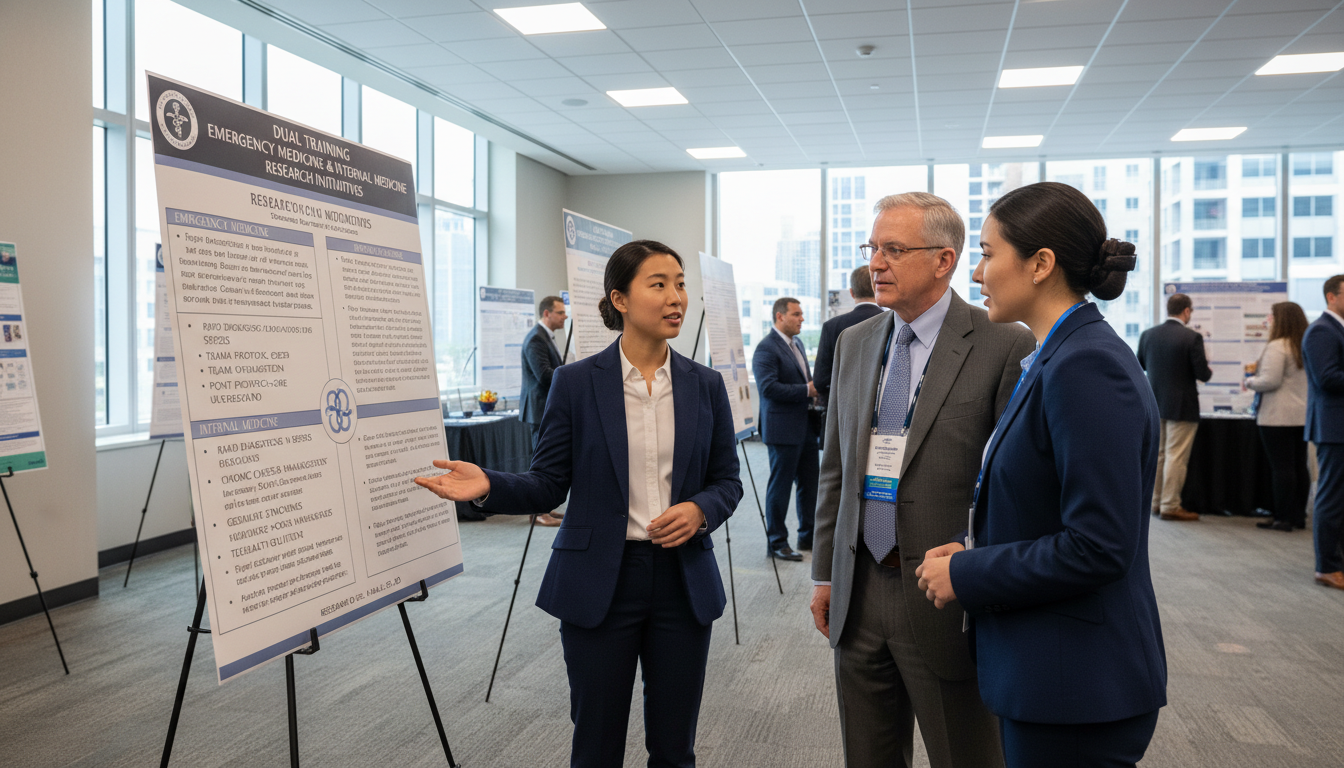
Choosing the Right Projects for an EM-IM-Oriented Research Portfolio
You do not have unlimited time as a DO graduate preparing for the osteopathic residency match. You need efficient projects that match your goals, skills, and schedule.
High-yield project types for EM-IM candidates
Clinical Retrospective Chart Reviews
- Feasible for one student or small team
- Good for ED or inpatient topics (sepsis, heart failure, COPD, DKA, chest pain, etc.)
- Can often be completed and submitted as an abstract within months
Example:
- Question: “Among ED patients admitted with sepsis, do door-to-antibiotic times differ between ED boarding and non-boarding periods, and how does that impact outcomes?”
- Strong EM-IM relevance: access, systems of care, and medical complexity.
Quality Improvement (QI) & Patient Safety Initiatives
- Common in both ED and inpatient settings
- Highly valued for EM-IM because they bridge systems-level thinking and bedside care
- Often easier IRB pathways (sometimes exempt or expedited)
Example projects:
- Implementing a standardized ED-to-ward handoff tool to reduce medication reconciliation errors
- Reducing time to first troponin or lactate in high-risk ED patients
- Improving sepsis bundle compliance on the medical floor
Clinical Education & Curriculum Projects
- Particularly useful if you’re interested in academic EM-IM or teaching
- Can lead to MedEd publications, workshops, or conference presentations
Example:
- Developing and evaluating a simulation curriculum for managing undifferentiated shock across ED and ICU settings.
Case Reports and Case Series
- Lower barrier to entry, especially while on EM or IM rotations
- Useful for learning academic writing and literature review
- More impactful if tied to broader clinical questions, not just rare diseases
EM-IM example topics:
- Unusual toxicologic presentations spanning ED to ICU
- Diagnostic challenges in chest pain, sepsis, or autoimmune conditions
Prospective Studies (Selective Use)
- More rigorous but time- and resource-intensive
- Often require strong mentorship and established infrastructure
- If you have a year off or dedicated research time, these can be powerful, but they are rarely necessary for most DO graduates.
Aligning your projects with EM-IM themes
To make your research portfolio look cohesive for emergency medicine internal medicine programs, prioritize topics that naturally sit at the intersection:
- Resuscitation and critical care (ED to ICU transition)
- Complex chronic disease with acute decompensation (e.g., heart failure, COPD)
- Sepsis, shock, or undifferentiated acute presentations
- Healthcare systems, throughput, boarding, and transitions of care
- Diagnostic reasoning in high-acuity settings
- Toxicology, ultrasound, and procedural safety
On your CV and in your personal statement, explicitly connect these topics to your interest in EM-IM combined training.
Step-by-Step Strategy to Build Your Research Profile as a DO Graduate
Step 1: Take inventory of what you already have
Before starting anything new, catalog all existing scholarly activities:
- Research projects (even if incomplete)
- Case reports, posters, abstracts, or quality initiatives
- Teaching projects, curricula, or simulation cases
- Non-medical research with transferable methods (statistics, study design)
Ask yourself:
- Which of these can realistically be turned into submittable output (poster, abstract, manuscript) before application season?
- Where can I contribute a focused push to get to the finish line?
Sometimes polishing and submitting what you already started is more efficient than launching a brand-new project.
Step 2: Find mentors who understand EM-IM and DO applicants
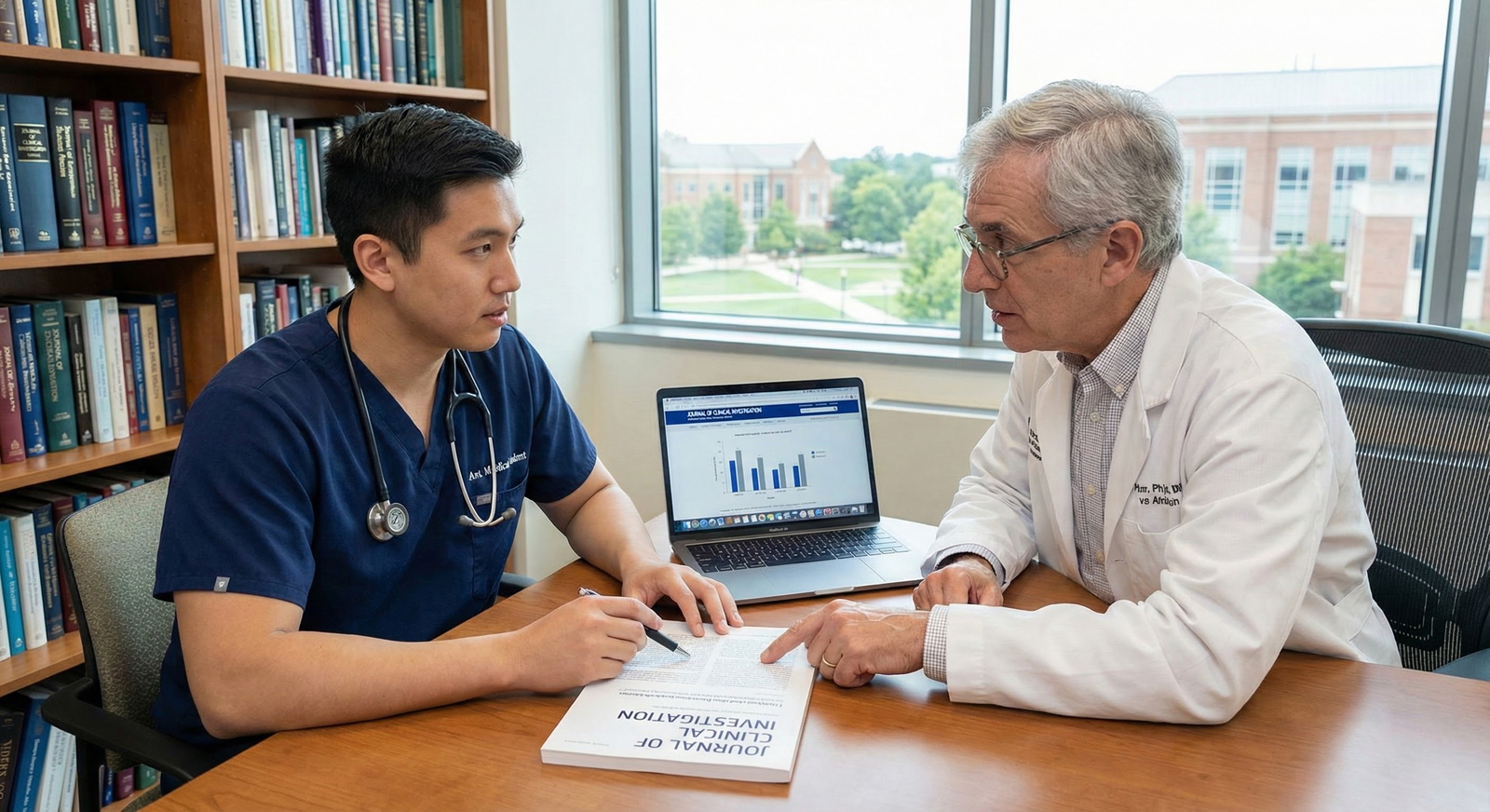
As a DO graduate, proactive mentorship is critical. Look for:
- EM-IM faculty (ideal) or dual-boarded attendings (EM/CCM, IM/CCM, etc.)
- EM or IM research directors at your institution
- DO faculty involved in graduate medical education or the osteopathic residency match
- Alumni from your school who matched into EM-IM or academic EM/IM programs
When reaching out, be professional and specific:
- Briefly describe your background as a DO graduate
- Explain your interest in EM-IM combined training
- Highlight any prior research or QI experience
- Ask if you can help with ongoing projects in their area of interest
Step 3: Choose 1–3 realistic projects and define clear roles
You don’t need five simultaneous projects. For most applicants, 1–3 well-defined projects are ideal. For each, clarify:
- Primary question/hypothesis
- Your responsibilities (data collection, chart review, statistics, writing)
- Timeline: what can be completed before ERAS submission vs. what will remain “in progress”
- Target output: local presentation, regional/national abstract, manuscript submission
Create a simple timeline:
- Months 1–2: IRB, data extraction tools, literature review
- Months 3–5: Data collection and preliminary analysis
- Months 6–7: Abstract writing and conference submission
- Months 7–9: Manuscript drafting and submission (if time allows)
You may not control every step, but showing organization and initiative will also impress mentors.
Step 4: Learn just enough methods and statistics to add value
You don’t need to become a biostatistician, but you do need basic fluency:
- Understanding common EM-IM clinical study designs: retrospective cohorts, case-control, pre-post QI, simple prospective cohorts
- Familiarity with basic stats: t-tests, chi-square, logistic regression, survival curves
- Comfort with statistical software or tools (SPSS, R, Stata, or even Excel for basic analyses)
Short online courses (Coursera, edX), institution workshops, or tutorials from your research office can quickly raise your skill level. When you can handle basic stats or data cleaning, you are far more valuable to busy faculty.
Step 5: Convert every project into visible output
For match purposes, visibility matters as much as the complexity of the methods. Every project should aim for at least one of:
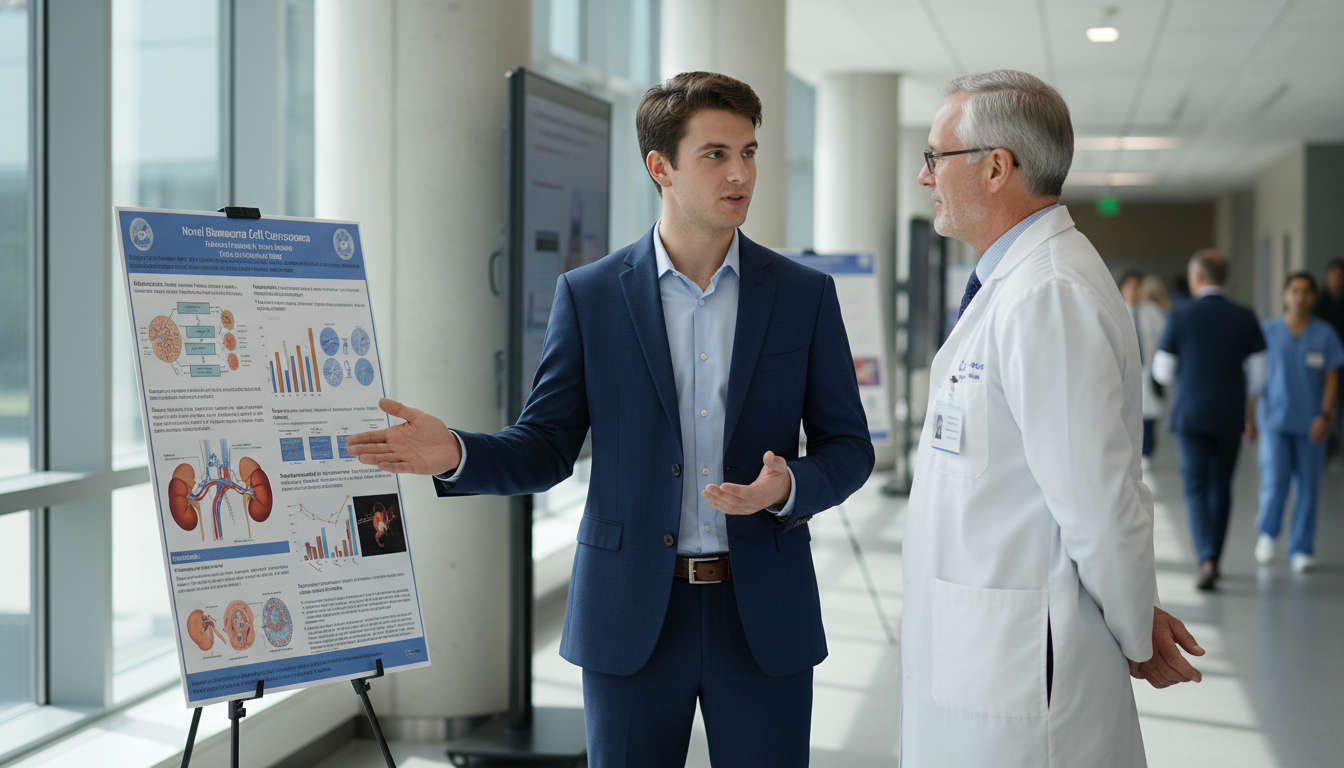
- Local hospital or departmental poster day
- Regional EM or IM conference
- National meetings (SAEM, ACEP, SCCM, SHM, SGIM, ACOEP, ACOI, etc.)
- Peer-reviewed journal publication (even if in a smaller specialty or DO-focused journal)
In your ERAS application, list each project under:
- Peer-reviewed journal articles
- Oral presentations
- Posters
- Quality improvement / systems projects
- Other scholarly work
Use consistent titles, and ensure they match your mentors’ CVs when possible.
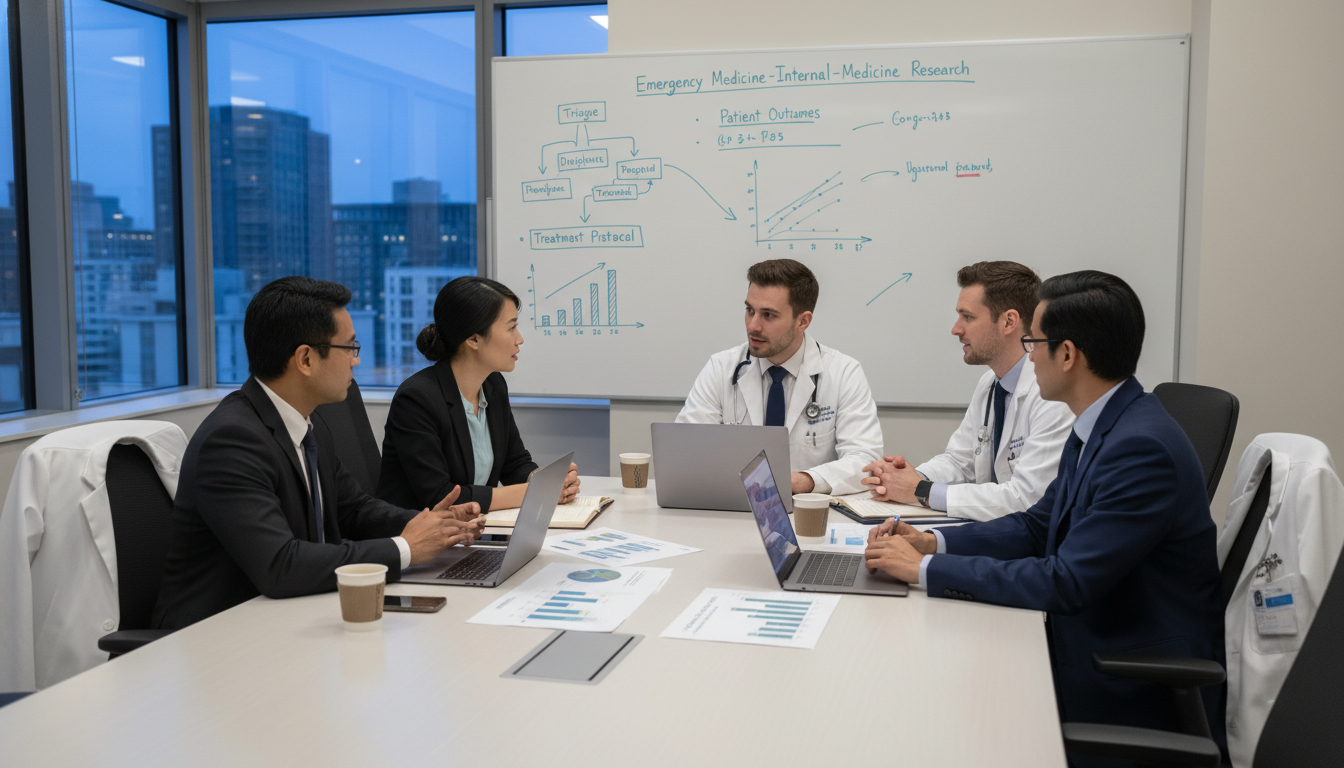
Presenting Your Research Profile Effectively in the Application and Interviews
Tailoring your CV and ERAS entries for EM-IM
As you list experiences:
Highlight EM-IM relevance in the description
For each project, add a concise 1–2 line description tying it to emergency medicine internal medicine themes:“Retrospective cohort study of ED sepsis patients to evaluate impact of ED boarding on time to antibiotics and ICU outcomes, illustrating my interest in systems-based acute care across ED and inpatient settings.”
Clarify your role
Explicitly note if you:- Designed data collection forms
- Performed chart review
- Conducted statistical analysis
- Wrote sections of the abstract/manuscript
Include “in progress” work appropriately
It is acceptable to list ongoing projects if they are legitimate and you have clearly defined responsibilities. Be honest about status:- “Data collection in progress; abstract planned for submission to SAEM 2026.”
- “Manuscript drafting stage; target journal: Journal of Emergency Medicine.”
Integrating research into your personal statement
For a DO graduate targeting EM-IM combined training, your personal statement should:
- Briefly describe your clinical inspiration for EM-IM
- Connect it to academic or systems-level questions that emerged from your experiences
- Highlight 1–2 research or QI projects that exemplify those questions
Example integration:
“Caring for patients with recurrent heart failure admissions in both urgent care and inpatient settings led me to question how our ED processes impacted long-term outcomes. This question shaped my QI project focused on standardizing ED diuretic protocols and discharge planning. Working through that project with both EM and IM mentors confirmed for me that my ideal career would sit at the intersection of acute resuscitation and longitudinal management—exactly what EM-IM combined training offers.”
Discussing your projects in interviews
EM-IM interviewers often use your research as a starting point for deeper questions about:
- Critical thinking and problem-solving
- Understanding of study design limitations
- Appreciation for systems of care and team-based work
Prepare to:
- Summarize each key project in 2–3 sentences
- Explain why the question matters clinically
- Acknowledge limitations (single center, retrospective, small sample, etc.)
- Describe what you learned about EM, IM, or their intersection from the project
Remember: they are not testing whether you can recite p-values; they’re evaluating how you think, communicate, and collaborate.
Leveraging Research for Long-Term Career Development in EM-IM
How your application research can shape your residency path
The research you do as a DO graduate doesn’t just help you match; it can seed your career trajectory:
- If you liked systems improvement → consider EM-IM with a focus on quality, safety, or administration.
- If you were drawn to resuscitation or shock topics → EM-IM with critical care or ultrasound fellowship in mind.
- If you enjoyed education projects → EM-IM with a future in academic leadership or clerkship/residency directing.
Mention this forward-thinking perspective in interviews:
“I see my current projects as a foundation. During EM-IM training, I hope to expand on this work by studying cross-departmental protocols for managing septic shock and ultimately contribute to institutional and regional guidelines.”
Being realistic and kind to yourself as a DO graduate
You may see peers with extensive research portfolios, sometimes from prior PhDs or research years. That does not invalidate your path.
Focus on:
- Honesty: Never overstate your role or the status of a project.
- Consistency: Show a logical progression of interests and responsibilities.
- Reflection: Be ready to articulate how research experiences shaped your clinical thinking.
EM-IM programs understand variability in opportunity. What matters most is how you used the opportunities available to you—and how that predicts your future contributions during residency.
FAQs: Research Profile Building for DO Graduates in EM-IM
1. As a DO graduate, do I need research to match into an Emergency Medicine-Internal Medicine combined program?
You can match some EM-IM programs without research, but your options will be narrower, particularly at academic centers. Research or QI experience is strongly preferred at many EM-IM programs because it signals an academic mindset, systems awareness, and readiness for a career that often includes teaching or leadership. Even one or two well-executed projects—especially if they produce an abstract or poster—can meaningfully boost your application.
2. How many publications are typically needed to be competitive?
There is no strict number, and different programs weigh research differently. For most DO graduates:
- 1–3 publications (any author position) plus a few presentations is very strong.
- 0–1 publication and 2–3 posters or QI projects is solid for many programs.
- Even 1–2 scholarly products can move you from “no research” to “has clear academic interest.”
Programs look at the substance and relevance of your work more than the raw count. Aim to be able to discuss at least one project in depth.
3. I started a project but it won’t be published before ERAS. Is it still worth listing?
Yes. Ongoing projects are valuable, especially if they’re well-structured and you have a clear role. List them with accurate status (e.g., “data collection in progress,” “manuscript under review”) and be prepared to explain what you’ve contributed. For the osteopathic residency match and NRMP, active scholarly engagement matters, not just completed publications.
4. I don’t have access to a big research infrastructure. What realistic options do I have?
Many impactful projects for EM-IM don’t require large grants or sophisticated labs. Consider:
- Retrospective chart reviews (e.g., ED sepsis patients, readmissions, chest pain work-ups)
- QI projects (e.g., sepsis bundle compliance, ED boarding, handoff quality)
- Case reports or small series tied to broader clinical questions
- Education projects (e.g., simulation cases; EM-IM handoff curriculum)
Partner with motivated faculty in EM or IM, use your institution’s QI and research offices if available, and keep the scope tight enough to complete in months, not years.
By focusing on meaningful, well-chosen projects and presenting them thoughtfully, you can build a compelling research profile as a DO graduate applying to Emergency Medicine–Internal Medicine combined programs. The goal is not to look like a career researcher, but to demonstrate curiosity, rigor, and the ability to translate clinical questions into structured inquiry—exactly the mindset EM-IM programs seek.