Understanding Why Research Matters for Non-US Citizen IMGs in Anesthesiology
For a non-US citizen IMG aiming for anesthesiology residency in the United States, a strong research profile is no longer optional—it is often a key differentiator. As anesthesiology has become increasingly competitive, program directors are using research and scholarly productivity to gauge:
- Your familiarity with evidence-based medicine in anesthesia
- Your ability to work in academic environments
- Your commitment to the specialty
- Your communication, teamwork, and perseverance
For foreign national medical graduates, research also helps address challenges such as:
- Limited or unfamiliar clinical evaluations from outside the US
- Visa-related concerns (programs want evidence that you are worth the sponsorship effort)
- Implicit bias about training backgrounds
A well-planned research portfolio can signal that you are already functioning at the level of a US academic trainee, especially if you show continuity, impact, and clear anesthesiology-related interest.
How Programs Actually View Research
In anesthesiology, programs typically look for:
Evidence of genuine engagement
Longitudinal work on one or a few projects is better than scattered one-off abstracts.Anesthesia or perioperative focus
Not mandatory, but anesthesia, pain medicine, critical care, or perioperative outcomes research aligns best.Production of tangible outputs
- Peer-reviewed publications
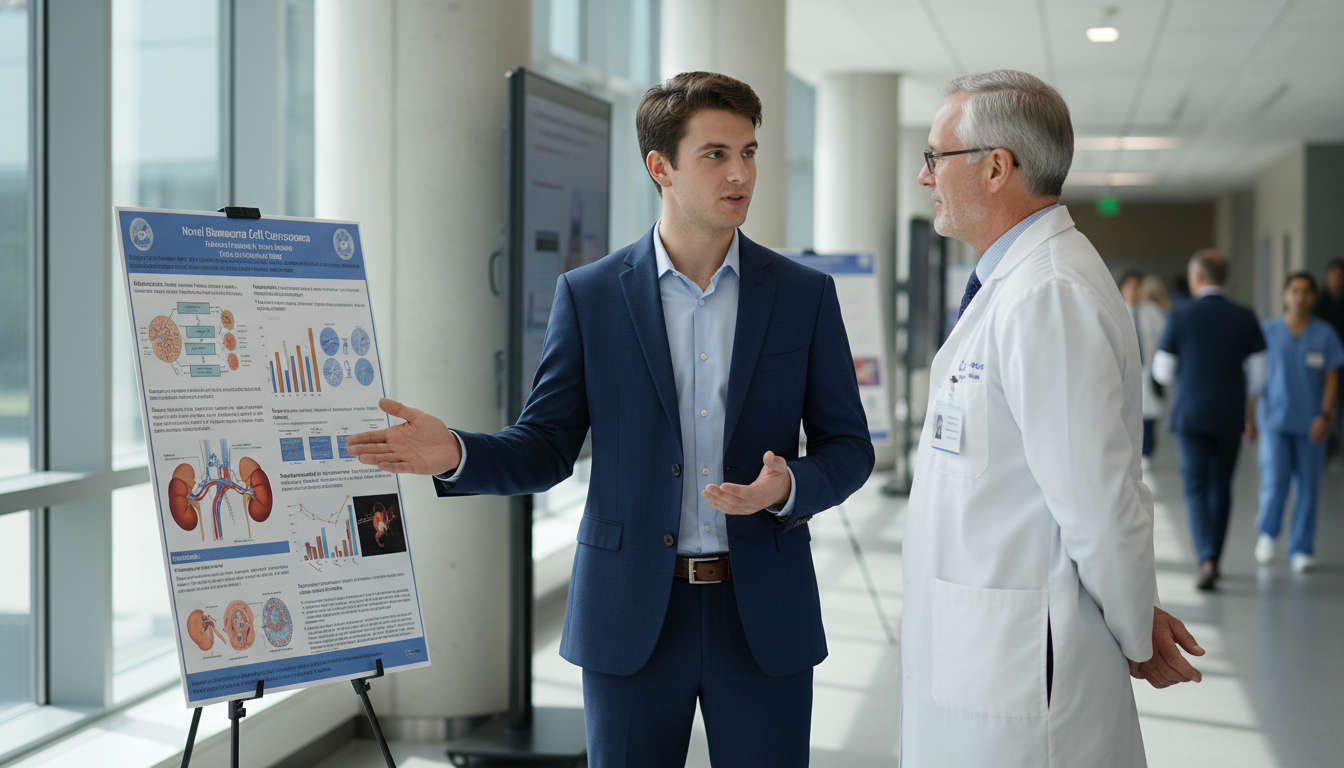
- Posters or oral presentations at conferences
- Book chapters, review articles, quality improvement (QI) reports
Role and responsibility
First-author or second-author roles show leadership and initiative. Being “et al.” on many papers is helpful but not as powerful.
How Many Publications Do You Really Need for the Anesthesia Match?
Many non-US citizen IMGs wonder how many publications are needed to be competitive in the anesthesia match. There is no fixed number, but you can think about it in tiers.
Baseline Competitiveness
For a foreign national medical graduate applying to anesthesiology:
- Minimum to aim for:
- 1–2 peer-reviewed publications (any specialty) or
- 2–4 posters/abstracts at recognized conferences
- Plus some combination of:
- QI or audit projects
- Case reports, short communications, or letters
This level shows that you understand the basics of research, can complete projects, and know how to navigate authorship.
Strongly Competitive Profile
For a more robust research profile:
- Publications for match (ideal targets, not strict rules):
- 2–4 peer-reviewed publications, at least one directly related to anesthesiology, critical care, perioperative medicine, or pain
- Several abstracts or posters at major meetings (ASA, IARS, SOAP, ASRA, SCCM, ESICM, etc.)
- Clear pattern of increasing responsibility:
- At least one first- or second-author paper
- Evidence that you initiated or led a project
Highly Competitive / Academic Track Profile
If you are aiming for very academic programs or considering a future in clinician-scientist roles:
- 4+ peer-reviewed papers, some in solid journals
- Multiple first-author works (original research or reviews)
- Participation in larger collaborative or multicenter studies
- A clear anesthesiology-specific research theme
Quality vs Quantity
Programs increasingly emphasize:
- Quality: solid journals, clear role, strong methodology
- Fit: perioperative, pain, critical care, outcomes, airway, regional anesthesia, patient safety
A foreign national IMG with:
- 2 high-quality anesthesia-related publications (one first-author)
- 2–3 conference abstracts/posters
- Plus some QI and research experience
may be more competitive than someone with 12 low-impact, unrelated papers they barely worked on.
Types of Research That Count for Anesthesiology Applicants
You do not need access to a high-end lab to build a credible research profile. You do need clarity and consistency. Think of research for residency applications in 3 major categories.
1. Clinical Research in Anesthesiology and Perioperative Medicine
This is often the most accessible and most valued for anesthesiology residency.
Examples:
Retrospective chart reviews
- Comparing outcomes with different anesthetic techniques for a specific surgery
- Evaluating postoperative pain control methods
- Assessing complications of regional anesthesia blocks
Prospective observational studies
- Monitoring hemodynamic responses with different induction agents
- Studying postoperative nausea and vomiting (PONV) risk factors
Perioperative outcomes research
- Length of stay, ICU admissions, readmissions
- Perioperative risk in cardiac vs noncardiac surgery
Strengths: directly relevant to anesthesia practice, feasible with existing data, and provides clear clinical impact.
2. Quality Improvement (QI) and Patient Safety Projects
Even though some QI may not be “research” in the strict sense, many programs consider it scholarly work and value it highly.
Example QI projects:
- Implementing a preoperative checklist to prevent missed allergies
- Reducing OR start-time delays through process changes
- Improving postoperative pain assessment documentation
- Standardizing nerve block consent and documentation
You can turn QI projects into:
- Hospital or departmental presentations
- Posters at QI or anesthesia conferences
- Short manuscripts in QI-focused or specialty journals
3. Basic Science and Translational Research
This can be more challenging to access as a non-US citizen IMG, but it can be high-impact.
Example topics:
- Mechanisms of anesthetic neurotoxicity or neuroprotection
- Opioid receptor biology and new analgesic pathways
- Organ protection in ischemia-reperfusion injury under anesthesia
- Inflammation and immune modulation in surgery
These projects require:
- A well-established lab
- Long timelines
- Clear understanding of your role and expected output (papers, abstracts)
If basic science is all you can access, that’s still valuable—as long as you ensure you will get presentable outcomes within your application timeline.

Step-by-Step Strategy to Build a Research Profile as a Non-US Citizen IMG
Step 1: Clarify Your Timeframe and Visa Context
As a foreign national medical graduate, your research strategy must align with:
- USMLE exam completion dates
- Planned application year for the anesthesia match
- Visa status and options (J-1, H-1B, research J-1, etc.)
Ask yourself:
- How many months or years before I apply?
- Am I able to relocate to the US for a dedicated research position?
- Can I work remotely on projects with US or international mentors?
If you have 12–24 months before applying, you can aim for more substantial original research and multiple submissions. If you have 6–12 months, prioritize projects that can realistically yield posters, abstracts, or at least submitted manuscripts by application time.
Step 2: Choose an Anesthesiology-Focused Theme
Program directors value coherence. Rather than scattered projects in unrelated areas, build a focused narrative such as:
- Perioperative outcomes in high-risk surgeries
- Regional anesthesia and pain management
- Airway management and ventilation strategies
- Critical care outcomes in postoperative patients
- Patient safety and QI in the OR
You do not need every project to fit the theme, but having a core focus helps your personal statement, interviews, and letters tell a consistent story.
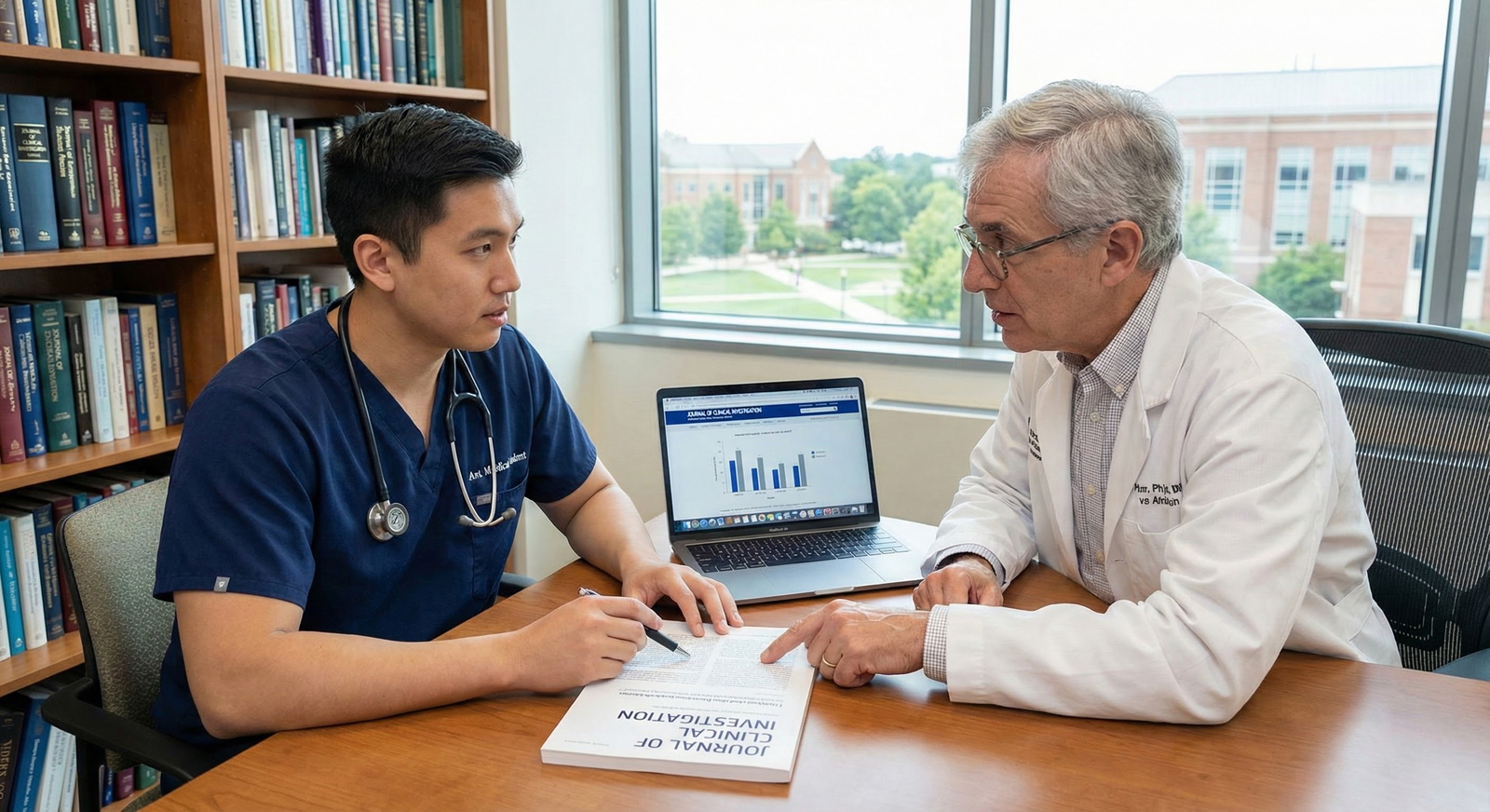
Step 3: Find Mentors and Opportunities
As a non-US citizen IMG, you may need to be more proactive than US graduates.
Where to Look for Mentors
US academic anesthesiology departments
- Search department websites: look for faculty profiles with “research” or “publications” that match your interests.
- Email politely with a focused message (attach CV, mention specific papers of theirs).
Your home country or regional academic centers
- Anesthesia, surgery, ICU, or perioperative medicine departments may be doing publishable work even if not heavily advertised.
- Offer to help with data extraction, analysis, or manuscript preparation.
Virtual or remote research collaborations
- Multi-center projects, survey studies, systematic reviews, and meta-analyses are often done with geographically dispersed teams.
- Find collaborators via:
- ResearchGate
- Specialty societies and young investigator groups
Formal research fellowships or observer-researcher roles in the US
- Some anesthesiology departments offer 1–2 year non-ACGME research positions accessible to foreign nationals (often on J-1 research visas).
- These can be powerful for building US-based research credentials.
Step 4: Start With “Faster-Win” Projects
Because your anesthesia match application has a fixed deadline, combine long-term projects with shorter ones that can be completed faster.
Faster-win ideas:
- Case reports and case series of interesting anesthetic management challenges
- Narrative or scoping reviews on anesthesia topics
- Survey-based studies of practice patterns (e.g., regional anesthesia use)
- Retrospective chart reviews with limited variables
- QI projects with simple outcome measures
These are often more feasible to complete and submit within months, while larger cohort studies or randomized trials may take years.
Step 5: Learn Basic Research Skills Quickly
To function well in a research team and improve your chances of authorship, invest in fundamental skills:
Literature searching & reference management
- Learn PubMed/MEDLINE strategies
- Use tools like Zotero, Mendeley, or EndNote
Study design and biostatistics
- Understand basics: bias, confounding, power, p-values, confidence intervals
- Take free or low-cost online courses (Coursera, edX, university extensions)
Data management
- Excel or Google Sheets for basic data
- REDCap if used by your institution
- Clear data dictionaries and consistent coding
Scientific writing
- Read high-quality anesthesia journals (Anesthesiology, Anesthesia & Analgesia, BJA, Regional Anesthesia & Pain Medicine).
- Analyze structure of original research and case reports.
- Draft sections early and iterate with your mentor.
Being technically useful—able to manage references, clean data, run basic stats, or draft sections—makes you valuable and increases likely authorship.
Step 6: Protect Your Role and Authorship
As a non-US citizen IMG, you may be more vulnerable to being sidelined or given vague promises of authorship. From the start:
- Clarify your contributions and expected authorship order with your mentor.
- Get tasks and roles documented by email.
- Take ownership of deliverables (e.g., “I will write the Introduction and Methods by [date]”).
- Follow up respectfully but consistently.
Programs like ICMJE define authorship criteria; familiarize yourself with these to ensure ethical and legitimate credit.
Maximizing the Impact of Your Research for the Anesthesia Match
Publishing is not the end; you must present your research effectively in your residency application and interviews.
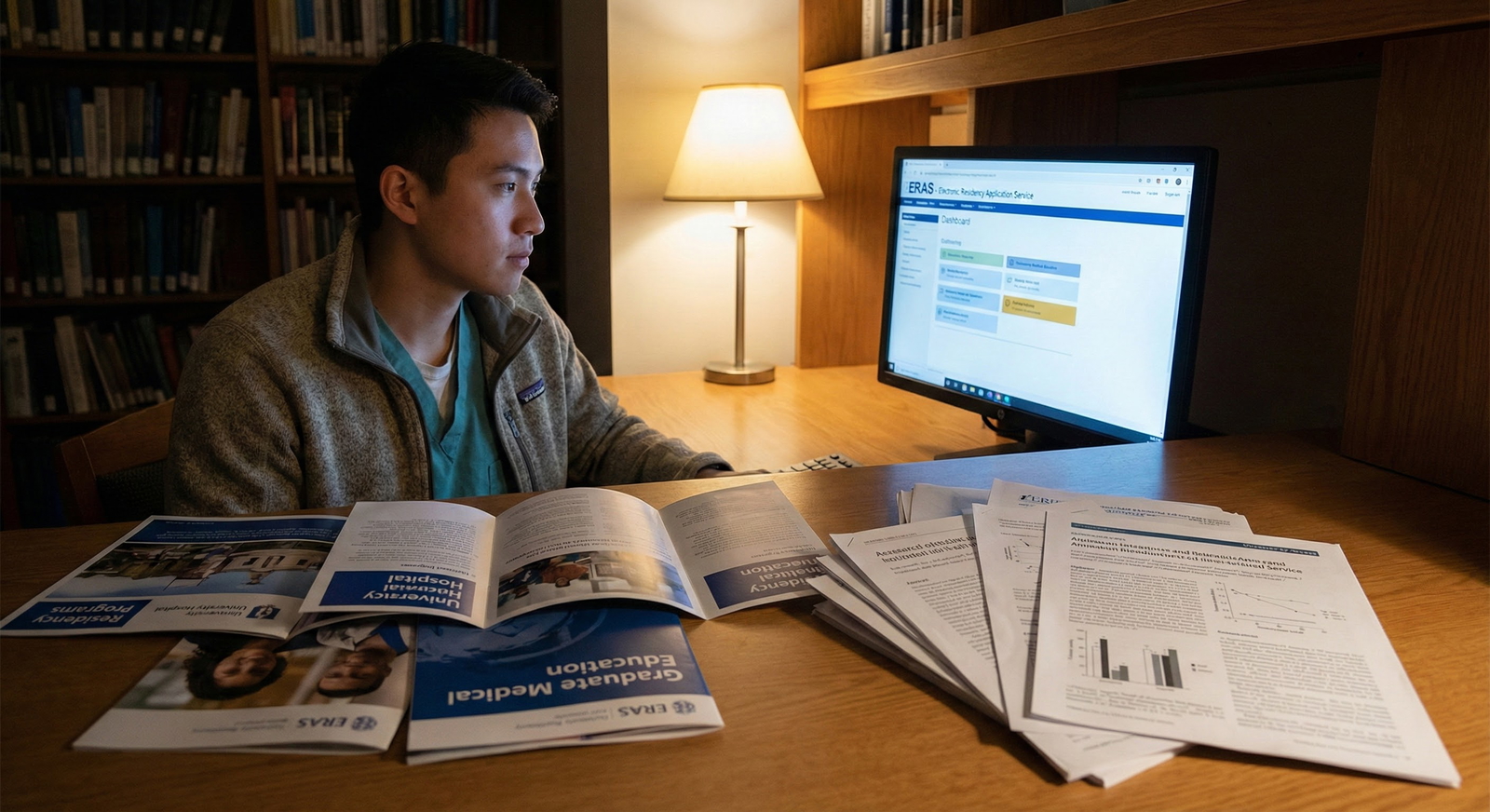
Presenting Your Research on ERAS
On your ERAS application:
List all scholarly activities:
- Peer-reviewed publications
- Abstracts, posters, and oral presentations
- Book chapters, review articles
- QI projects and audits (clearly labeled as such)
Provide complete citation details:
- Authors (as listed)
- Full title
- Journal or conference name
- Status: Published, In Press, Accepted, Submitted
Do not inflate your role. If you are middle author, say so; if you are first author, highlight it.
For non-US citizen IMGs, US-based or international collaborations and recognizable journals/conferences especially strengthen credibility.
Crafting a Research Narrative in Your Personal Statement
Your personal statement is where your research becomes a cohesive story:
Identify a core theme: e.g., “Improving perioperative outcomes in high-risk patients.”
Briefly describe 1–2 key projects, focusing on:
- Why the question mattered
- What you did
- What you learned about anesthesiology and about yourself
Connect this to your future:
- Interest in academic anesthesiology or QI leadership
- Desire to bring rigorous, evidence-based practice into the OR and ICU
Avoid turning your statement into a methods section; emphasize motivation, growth, and impact.
Leveraging Letters of Recommendation
When you work in research for residency with an anesthesiology faculty member, aim to earn a strong letter of recommendation:
- Work closely and consistently over months.
- Show reliability, curiosity, and initiative.
- Ask for feedback and implement it.
When requesting a letter, politely ask the mentor if they can write you a strong letter highlighting:
- Your role in design, data collection, analysis, or writing
- Your work ethic and growth
- Your communication skills and collaboration
Letters from US anesthesiology faculty that highlight your research and clinical potential are highly valuable for a non-US citizen IMG.
Presenting and Discussing Your Work in Interviews
In anesthesiology residency interviews, you will almost certainly be asked about your research:
Be ready with a 1–2 minute explanation of each major project:
- Background: “We wanted to know whether…”
- Methods: “We conducted a retrospective review of…”
- Findings: “We found that…”
- Implication: “This matters for anesthesiology because…”
If you had limitations or negative results, be honest and analytical.
Highlight transferable skills:
- Critical thinking
- Understanding of perioperative pathways
- Teamwork across departments
Program directors are not testing your statistical genius; they are assessing your understanding, authenticity, and ability to translate research into better anesthetic care.
Common Pitfalls for Non-US Citizen IMGs and How to Avoid Them
1. Chasing Quantity Over Relevance
Publishing multiple low-quality, unrelated papers just to increase counts can backfire. It creates a scattered profile and may raise questions about depth.
Solution:
Prioritize fewer, better, and more anesthesia-focused projects with clear roles.
2. Overcommitting to Too Many Projects
As an IMG trying to “say yes to everything,” you might end up involved in many incomplete studies that never produce output.
Solution:
- Limit yourself to a few key projects where you have a defined role and realistic timeline.
- Before agreeing, ask: “What stage is this project at? What is the expected timeline to submission?”
3. Neglecting Ethical and Authorship Principles
Unclear authorship arrangements or involvement in questionable practices (e.g., data fabrication by others) can destroy your career.
Solution:
- Work only with mentors who value integrity and transparency.
- Ask questions about IRB/ethics approval and data handling.
- Keep your own records of work done and communications.
4. Ignoring Anesthesiology-Specific Opportunities
Some foreign national medical graduates spend substantial time in unrelated fields (e.g., dermatology, ophthalmology) because those mentors were easier to find.
Solution:
- If you must start outside anesthesia, do so—but actively and gradually pivot toward anesthesiology, perioperative, or ICU topics.
- Even in non-anesthesia settings, you can design perioperative or analgesia-related subprojects.
5. Waiting Too Late to Start
Many IMGs try to add research only a few months before applying, which limits what can realistically be completed.
Solution:
Start 12–24 months before your planned anesthesia match cycle, even while still in medical school or internship if possible.
Putting It All Together: A Sample 18-Month Plan
To make this concrete, here’s an example strategy for a non-US citizen IMG with 18 months before applying to anesthesiology residency:
Months 1–3
- Decide on a theme: perioperative outcomes and patient safety.
- Contact 10–20 potential anesthesia mentors (US and local) with a focused email.
- Join 1–2 active projects (ideally retrospective chart review + QI).
- Start a small case report or series from your clinical experience.
Months 4–6
- Complete data collection for one project.
- Draft your first case report and submit to a journal.
- Begin a systematic or narrative review with your mentor.
- Take an online course in biostatistics and research methods.
Months 7–9
- Submit abstract(s) from your first project to an anesthesia or critical care conference.
- Revise and resubmit manuscripts as needed.
- Start a second project more deeply related to your theme (e.g., factors predicting ICU stay after major surgery).
Months 10–12
- Aim to have at least:
- 1 paper accepted or in revision
- 1–2 conference abstracts accepted
- Develop a PowerPoint/poster and practice presenting.
- Ask your research mentor if they could later write a strong letter of recommendation.
Months 13–18 (Application year)
- Finalize and submit additional manuscripts (even “submitted” looks better than “idea”).
- Attend conference(s) if visa and funding allow; if not, present virtually.
- Carefully list all experiences on ERAS and integrate them into your personal statement.
- Prepare clear, concise explanations of your projects for interviews.
By application time, this candidate could reasonably have:
- 1–3 peer-reviewed publications (mix of case reports, retrospective clinical studies, or reviews)
- 2–4 abstracts/posters
- Solid letters from an anesthesiology research mentor
- A coherent narrative focused on perioperative outcomes and safety
This profile would stand out among non-US citizen IMGs in the anesthesiology match.
FAQs: Research Profile Building for Non-US Citizen IMG in Anesthesiology
1. I have no publications yet. Can I still match into anesthesiology as a non-US citizen IMG?
Yes, it is possible, especially for community or less research-intensive programs, but it becomes more challenging as competition increases. If you have time before applying, prioritize at least 1–2 tangible outputs (case reports, small retrospective studies, abstracts). Even submitted or in-press works help demonstrate momentum.
2. Does my research have to be in anesthesiology to count?
Not strictly, but anesthesia-related or perioperative work is far more valuable for anesthesiology residency. If your existing research is in another field, that is still useful; however, try to add at least one project directly linked to anesthesia, critical care, or perioperative medicine before applying.
3. How many publications are needed to get interviews as a foreign national medical graduate?
There is no fixed threshold, but for a non-US citizen IMG, having 2–4 total scholarly outputs (publications + conference abstracts), with at least 1–2 in areas related to anesthesiology, significantly strengthens your application. More important than raw numbers is the quality, your role (ideally first or second author on at least one), and a clear research theme.
4. I cannot move to the US yet. Can I still build a competitive research profile from abroad?
Yes. Many IMGs successfully collaborate remotely on systematic reviews, meta-analyses, survey studies, and retrospective projects if they have access to data and willing mentors. Use email, online meetings, and shared documents to stay engaged. Combine local anesthesiology or ICU projects in your own institution with virtual collaborations, and seek at least one US-based co-mentor if possible to gain familiarity with the US academic environment.
By planning early, focusing on anesthesiology-related themes, and strategically selecting projects that yield tangible outputs, a non-US citizen IMG can build a research portfolio that not only enhances chances in the anesthesia match but also lays the foundation for a long-term academic and clinical career in anesthesiology.