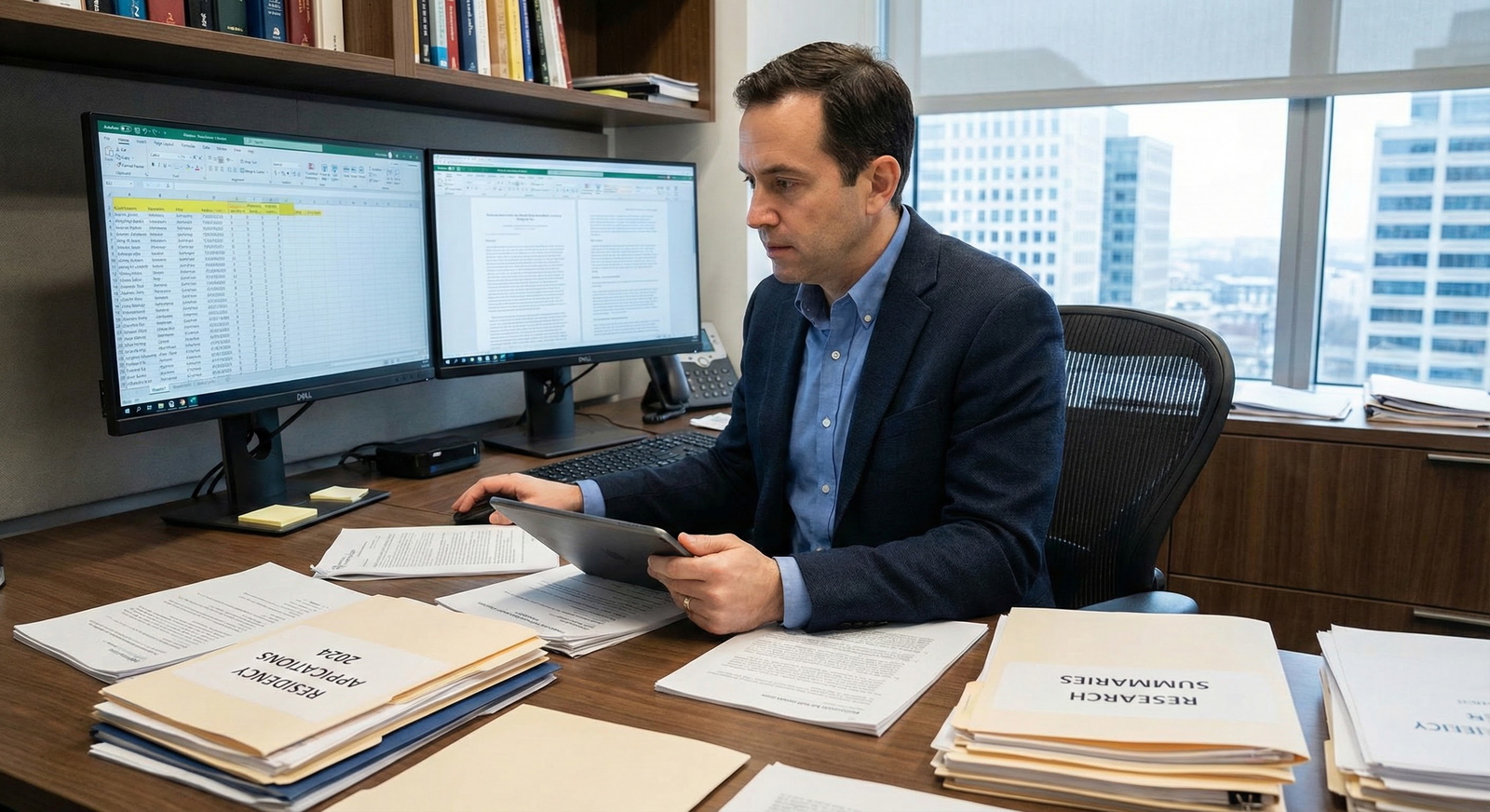
Why Research Matters So Much in ENT for a Non‑US Citizen IMG
Otolaryngology–Head & Neck Surgery (ENT) is one of the most competitive specialties in the US. For a non-US citizen IMG or foreign national medical graduate, research is not just a bonus—it can be a major differentiator and, in some cases, a gatekeeper.
Program directors in ENT often use research productivity to:
- Judge your genuine commitment to otolaryngology
- Assess your ability to complete projects and work in teams
- Predict your academic potential and future scholarly output
- Compare you to US graduates who often have structured research time
Because non-US citizen IMGs may face additional barriers (visa limitations, fewer US clinical connections, no home ENT department in the US), a strong research portfolio can:
- Compensate—partially—for weaker parts of the application (e.g., older graduation year, mid-range scores)
- Provide powerful letters of recommendation from US ENT faculty
- Build a network of mentors and advocates who can sponsor observerships, sub-internships, and interviews
- Demonstrate that you understand the US research environment (IRB, HIPAA, authorship ethics)
In ENT specifically, the specialty culture values academically oriented residents. Even many “community” ENT programs want applicants who can handle QI projects, present at local meetings, or help faculty with publications. For a non-US citizen IMG, the research profile is often the core of the application narrative: “I may not have trained here, but I can contribute at a high academic level.”
Understanding What a Strong ENT Research Profile Looks Like
Before you ask “how many publications needed,” you need to understand the components of a strong research profile in the context of the otolaryngology match.
Core Components of a Competitive ENT Research Portfolio
Peer‑Reviewed Publications (First or Co‑Author)
- Clinical research in ENT (e.g., head and neck oncology, otology, rhinology, laryngology, pediatrics ENT)
- Systematic reviews or meta-analyses related to otolaryngology
- Case reports in reputable journals (not predatory)
- Methodology may include retrospective chart reviews, prospective cohorts, or basic/translational science
Abstracts, Posters, and Oral Presentations
- ENT society meetings (e.g., AAO-HNSF, ARS, ALA, AHNS, ASPO)
- Regional or institutional conferences (US or international)
- University research days, departmental grand rounds
Research Involvement Depth
- Participation across multiple stages: literature review, IRB submission, data collection, analysis, drafting manuscripts, revising after peer review
- Evidence of progressive responsibility: from data assistant → primary analyst → first author
Letters of Recommendation from Research Mentors
- Detailed letters from ENT faculty who supervised your work
- Mentors who can state specific contributions (e.g., “designed data extraction form,” “led patient recruitment,” “ran multivariate analysis”)
- Ideally at least one letter from a US-based ENT faculty member
Evidence of Longitudinal Commitment
- Sustained engagement with ENT research over 1–3+ years, not just a “3-month observership”
- Clear theme or focus (e.g., chronic otitis media, sinus surgery outcomes, dysphagia, thyroid cancer)
How Many Publications Are “Enough” for ENT?
There is no universal cutoff, but trends from successful applicants show:
- For US MD seniors in ENT, having 5–10+ publications/abstracts/presentations combined is common.
- For a non-US citizen IMG, especially one applying without a US MD/PhD, you should aim higher if possible, particularly in quality ENT work.
A practical benchmark for a strong non-US citizen IMG ENT applicant:
- 3–5+ ENT-related peer-reviewed publications, with:
- At least 1–2 as first author
- Preference for publications in recognized journals (not purely local or predatory)
- Additional 3–6 abstracts/posters/presentations, ideally at ENT-specific or at least specialty-relevant meetings
- Ongoing works-in-progress clearly listed (under a “Manuscripts in Preparation/Under Review” section)
If you are still early in the process, do not be discouraged. These numbers are targets, not strict requirements. A smaller number of high-quality, well-mentored, ENT-focused projects often beats a long list of low-quality, non-ENT papers in obscure journals.
Strategic Types of ENT Research for the Non-US Citizen IMG
Not all research is equally valued in the otolaryngology match. Your goal is to maximize impact and feasibility given your constraints (visa, location, time, funding).

1. Clinical ENT Research (Most Directly Relevant)
Best option when available. Clinical research in otolaryngology strongly signals commitment and gives you ENT-specific language and understanding.
Examples:
- Retrospective review of outcomes after endoscopic sinus surgery in patients with nasal polyps
- Comparison of hearing outcomes after different tympanoplasty techniques
- Predictors of complications after thyroidectomy in a tertiary care setting
- Voice outcomes after injection laryngoplasty
Why it’s valuable:
- Directly relevant to ENT practice
- Teaches you ENT pathology, procedures, and outcomes
- Easier to discuss meaningfully during interviews
How to access:
- Join a US ENT research team (remote or in-person)
- Work with ENT faculty at your home institution
- Partner with other surgical departments where ENT overlap exists (neurosurgery for skull base, plastics for head & neck reconstruction)
2. Systematic Reviews & Meta-Analyses
If you lack direct patient access or IRB-covered projects, these can be high-yield and feasible from abroad, as long as you have a good mentor.
Examples:
- Systematic review of management strategies for recurrent cholesteatoma
- Meta-analysis of cochlear implant outcomes in pediatric populations
- Review of salvage treatment options for recurrent laryngeal cancer
Strengths:
- Can be done remotely with online databases
- Often lead to first-author publications for motivated students
- Build literature familiarity and analytic skills
Requirements:
- Strong mentorship (especially for protocol design, PRISMA guidelines, and statistical pooling)
- Access to full-text journal articles (via institution/COVID-era access, or contacting authors)
3. Quality Improvement (QI) and Outcomes Research
Some programs highly value QI work because it overlaps directly with patient safety and hospital performance.
Examples:
- Reducing time to antibiotic administration for post-tonsillectomy hemorrhage patients in the ED
- Standardizing perioperative steroid use in sinus surgery
- Implementing a checklist for tracheostomy care to reduce complication rates
Benefits:
- Often easier to initiate within a hospital
- Can produce posters, internal presentations, sometimes publications
- Demonstrates practical, systems-based practice skills
4. Basic and Translational Science in Otolaryngology
This can be powerful, especially for academic ENT programs, but it:
- Requires longer timelines
- Needs lab infrastructure and funding
- May be less directly understandable to community-based interviewers
Examples:
- Cancer biology research in head and neck squamous cell carcinoma
- Biomaterials for tympanic membrane regeneration
- Immunology of chronic rhinosinusitis with nasal polyps
If you pursue this path, ensure:
- You can get at least 1–2 first- or co-author publications before application
- You remain connected to clinical ENT via shadowing, reading, or clinical co-authors
5. Non-ENT Research: When It Helps and When It Doesn’t
Non-ENT research can still be valuable, particularly if:
- It shows methodological rigor (randomized trials, solid statistics)
- You played a substantial role (not just “data entry”)
- It is in surgery, oncology, neurology, or other fields overlapping ENT
However, for the otolaryngology match:
- 10 cardiology or internal medicine case reports will not impress as much as 2–3 strong ENT papers.
- If your research is mainly non-ENT, you must explicitly link skills and concepts to ENT in your personal statement and interviews.
Step-by-Step Roadmap to Building Your ENT Research Profile
Step 1: Clarify Your Timeline and Objectives
Ask yourself:
- When do you plan to apply for the otolaryngology match?
- Do you need time for exams (USMLE/OMSB/MCCQE), clinical experiences, and visa processes?
- How much time per week can you consistently commit to research?
If you’re 2–3 years before applying, you have time for longer, more ambitious projects that can produce several publications. If you’re within 12–18 months of application, you need faster, more achievable projects like retrospective studies, case series, and reviews.
Step 2: Secure ENT-Focused Mentors (Ideally in the US)
Your research mentor choice may matter more than the specific topic.
Where to find mentors:
- US academic ENT departments:
- Search department websites for faculty with active publication records in areas that interest you.
- Look for those who publish frequently with students or residents as co-authors.
- Conferences and webinars:
- Ask informed questions and follow up via email.
- Published ENT papers:
- Email first or corresponding authors: introduce yourself succinctly, attach a brief CV, and express interest in helping with ongoing or new projects.
- Your home institution:
- If you have ENT faculty, start there. They may have international collaborations or contacts in the US.
What to offer in your initial email:
- Clear statement that you are a non-US citizen IMG interested in ENT
- Brief summary of research skills (statistics software, systematic review methods, language skills, etc.)
- Upfront clarity about your availability (e.g., 10–15 hours/week, time zone)
- Willingness to start with smaller tasks (literature searches, data cleaning) to prove reliability
Step 3: Start Small, Deliver Perfectly, Then Scale
When you first join a team, prioritize reliability over volume.
Tasks you might start with:
- Screening titles and abstracts for a review
- Extracting data into structured spreadsheets
- Cleaning datasets and checking for missing values
- Drafting methods or background sections under supervision
Once you deliver high-quality work on time, mentors are far more likely to:
- Offer you first-author projects
- Introduce you to other ENT faculty
- Invite you to conferences or observerships
- Write strong recommendation letters
Step 4: Plan a Balanced Project Portfolio
For a 1–2 year focused research period, a non-US citizen IMG might aim for:
- 1–2 systematic reviews/meta-analyses where you are first or shared-first author
- 1–2 retrospective clinical studies (co-author or first author if feasible)
- 1+ case report or small case series in an ENT journal
- 2–4 posters or oral presentations at ENT specialty or institutional meetings
This combination gives you:
- First-author leadership
- ENT-specific clinical understanding
- Multiple citable items
- Talking points for interviews
Step 5: Learn Basic Statistics and Research Methods
Program directors often ask about:
- Study design choices (why retrospective vs prospective, why that control group)
- Statistical tests used (t-test vs chi-square vs logistic regression)
- Interpretation of p-values, confidence intervals, effect sizes
For a serious applicant, you should be comfortable with:
- Common ENT study designs (cohort, case-control, cross-sectional, randomized trial)
- Bias and confounding concepts
- Basic use of at least one analysis tool: SPSS, R, Stata, or even advanced Excel
- Interpreting Kaplan–Meier curves, odds ratios, hazard ratios
Practical tips:
- Complete a free online course in clinical research methods or biostatistics
- Ask your mentor if you can attend departmental journal clubs or research meetings (even via Zoom)
- Volunteer to help with data analysis while supervised, so you gain real experience
Turning Your ENT Research into a Powerful Application Narrative
Research for residency is not only about what you’ve done on paper; it’s also about how you present it to programs.

Writing Your CV and ERAS Application
Categorize Clearly
- Separate peer-reviewed publications, abstracts/posters, and oral presentations
- Mark ENT-related items clearly (e.g., include “(Otolaryngology)” in titles or descriptions when relevant)
Use Consistent Citation Format
- Follow PubMed or journal style
- List full author names in the order they appear; bold your own name
Be Honest About Status
- “Published,” “In Press,” “Accepted,” “Under Review,” “In Preparation” should be used accurately
- Do not inflate status—programs may check
Highlight Leading Roles
- In the description, briefly mention if you:
- Designed the study
- Collected the majority of data
- Performed primary statistical analysis
- Wrote the first draft of the manuscript
- In the description, briefly mention if you:
Personal Statement: Weaving Research into Your Story
For a non-US citizen IMG, your personal statement should connect:
- Why ENT (personal experiences, clinical exposure, skills that fit the specialty)
- How research deepened that interest (one or two impactful projects, what you learned, how it changed your thinking)
- What you bring to a residency program (critical thinking, persistence, teamwork)
Avoid simply listing all your projects. Instead:
- Choose 1–2 anchor projects that illustrate your development—e.g.,
- The systematic review that taught you to appraise conflicting evidence in head & neck oncology
- The sinus surgery outcomes study that made you appreciate perioperative decision-making
Discussing Research in Interviews
You will likely be asked:
- “Tell me about your most significant research project.”
- “What was your personal contribution?”
- “What challenges did you encounter, and how did you overcome them?”
- “How would you design a follow-up study?”
To prepare:
- Choose 2–3 projects you can explain in detail: background, hypothesis, methods, results, limitations, and clinical implications.
- Be prepared to defend choices (e.g., why retrospective, why that sample size).
- Translate methods into clinical language when speaking to more clinically oriented interviewers.
- Emphasize transferable skills: working with a diverse team, managing large datasets, responding constructively to peer review.
Common Pitfalls and How to Avoid Them
1. Quantity Over Quality
Ten low-impact, poorly mentored case reports in unrelated fields may impress less than 3–4 strong ENT-focused projects. Programs look closely at:
- Journal reputation
- Study design quality
- Author order
- ENT relevance
2. Predatory Journals
Be cautious with journals that:
- Promise publication in days
- Charge high fees with minimal peer review
- Are not indexed in PubMed or recognized databases
Publishing in such outlets can hurt your credibility. Ask your mentor or senior colleagues if you are unsure about a journal.
3. Ghost Authorship and Ethical Issues
As a foreign national medical graduate eager for publications for match, you may encounter offers like:
- “Pay to be added as an author”
- “We will list you if you just give your name and affiliation”
Avoid these entirely. Authorship should always reflect real contributions (substantial work in conception, data, or manuscript). Program directors and faculty value integrity—and word spreads quickly in small fields like ENT.
4. Overcommitting and Underdelivering
Non-US citizen IMGs sometimes feel they must accept every opportunity. If you overcommit and miss deadlines repeatedly:
- Mentors may stop involving you
- Letters of recommendation become weaker
- Your reputation may spread informally among faculty
Instead, be realistic:
- Start with fewer projects
- Prioritize finishing and publishing
- Learn to say, “I can help with X, but I won’t be able to lead Y until we submit the current manuscript”
5. Failing to Link Research to US Clinical Context
Even strong research done entirely outside the US can feel distant if not contextualized. During interviews and in your application:
- Show awareness of US guidelines (e.g., AAO-HNSF guidelines)
- Mention how your findings might apply or differ in high-resource vs low-resource settings
- Demonstrate that you understand the US healthcare system’s structure enough to implement your ideas in residency
Final Thoughts: A Realistic but Ambitious Path for Non-US Citizen IMGs
For a non-US citizen IMG aiming for ENT residency in the US, building a competitive research profile is challenging but achievable with:
- Early planning (2–3 years if possible)
- Deliberate targeting of ENT-focused mentors and projects
- A balanced portfolio of clinical research, reviews, and presentations
- Honesty, persistence, and professionalism
While there is no exact answer to “how many publications needed,” focus on:
- Depth of involvement
- Relevance to otolaryngology
- Quality of journals and conferences
- Clarity in how your research prepares you to be a thoughtful, evidence-based ENT resident
Used well, your research record can transform you from an “unknown” non-US citizen IMG into a recognizable, trusted academic colleague-in-training for program directors and faculty across the country.
FAQ: Research Profile Building for Non‑US Citizen IMGs in ENT
1. As a non‑US citizen IMG, do I absolutely need US‑based ENT research to match?
Not absolutely, but it helps significantly. Strong ENT research from your home country, supervised by reputable mentors and published in recognized journals, is valuable. However, at least some US connection—whether through a co-author, joint project, or a US mentor—can strengthen your otolaryngology match profile and may help you obtain US-based letters and observerships.
2. Is it better to have one high‑impact first‑author ENT paper or several smaller projects?
Ideally, both. If you must choose, one strong, first-author ENT publication in a solid journal, plus a couple of additional smaller projects (case reports, posters) can be very compelling. Programs value substantial intellectual involvement more than a long list of superficial co-authorships.
3. Can I do meaningful ENT research remotely from outside the US?
Yes. Many non-US citizen IMGs successfully join US ENT research teams remotely, particularly for systematic reviews, meta-analyses, data cleaning, and retrospective chart reviews (when institutional access is granted). You must be organized, communicative, and able to work across time zones. Clear agreements about roles and authorship at the beginning are essential.
4. My previous research is all in another specialty (e.g., internal medicine). Should I still list it?
Yes, but be strategic. Include all legitimate, peer-reviewed work—it shows that you can complete scholarly projects. In your personal statement and interviews, emphasize how the skills you learned (e.g., study design, data analysis, critical appraisal) directly apply to ENT. However, to be competitive in otolaryngology, you should still aim to build a core set of ENT-specific projects before applying.