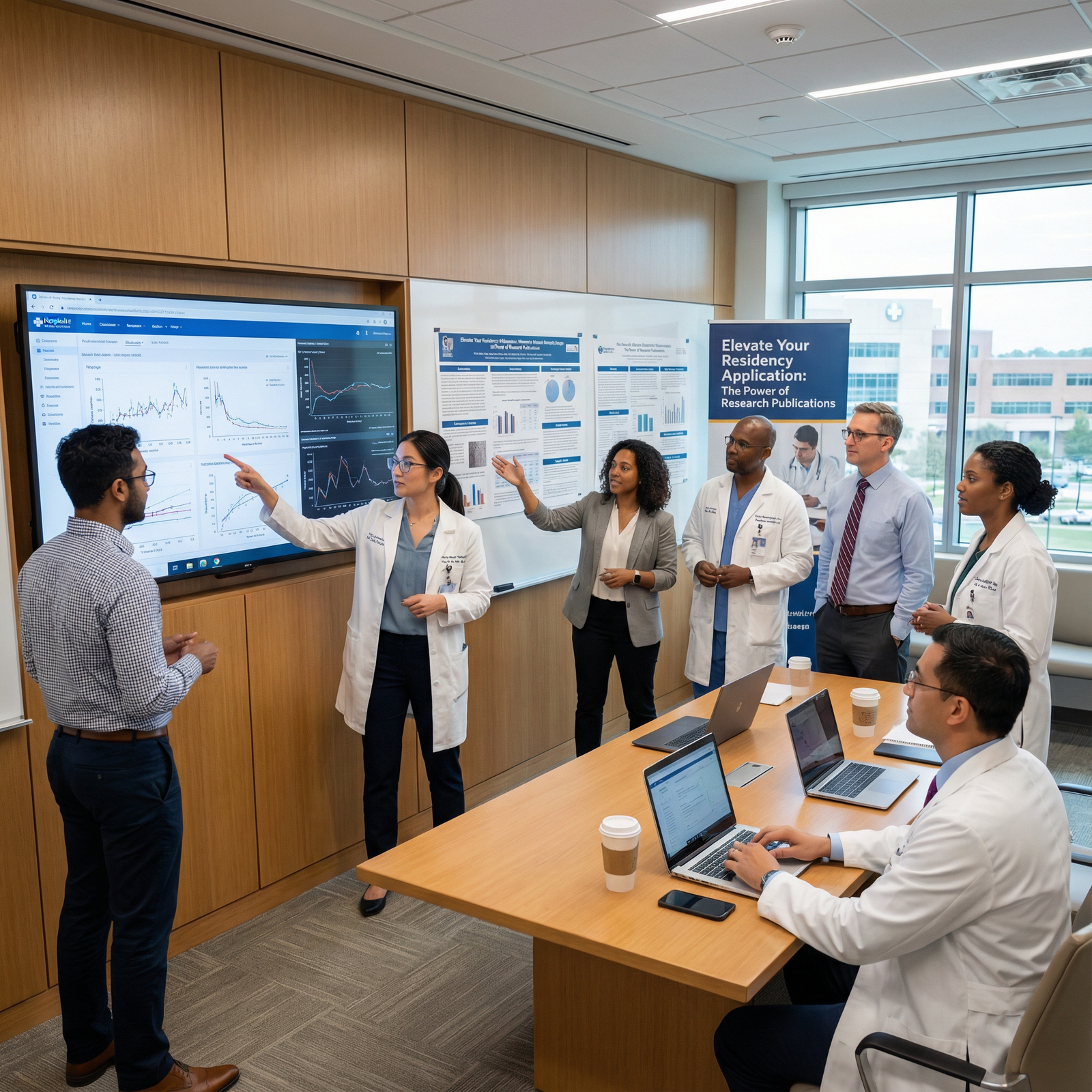
Understanding the Role of Research in Your Residency Application
For Caribbean IMGs, a strong research profile can be the difference between a generic application and one that genuinely stands out. While clinical performance and exam scores remain critical, research experience is increasingly important—especially for competitive specialties and programs in the United States and Canada.
Many applicants from Caribbean medical schools (including those aiming for SGU residency match outcomes and similar pathways) worry that they are “behind” on research. The good news: you can build a solid research portfolio even if your school has limited infrastructure, as long as you approach it strategically.
This article will walk you through:
- Why research matters for Caribbean IMGs
- What “counts” as research for residency
- How to realistically build research experience during and after medical school
- How many publications are actually needed, and how to interpret that statistic
- Practical, step-by-step strategies and timelines tailored to Caribbean IMGs
The focus here is research profile building, not just getting random lines on your CV. Program directors are increasingly savvy; they value meaningful involvement and evidence of academic curiosity more than inflated numbers.
Why Research Matters So Much for Caribbean IMGs
1. Leveling the Playing Field
Fairly or not, Caribbean medical school residency applicants often face extra scrutiny compared with U.S. MD or Canadian grads. Program directors may worry about:
- Variability in training quality across Caribbean schools
- Limited access to academic infrastructure
- Less rigorous selection criteria at the time of admission
A robust research profile helps counter these biases by signaling:
- Academic ability and curiosity
- Comfort with evidence-based medicine
- Effective communication and writing skills
- Persistence, organization, and time management
When program directors see a Caribbean IMG with well-structured research experience, it reassures them you can function in an academic, teaching-oriented environment.
2. Differentiation in Competitive Specialties
If you are targeting competitive fields—dermatology, radiology, anesthesiology, ophthalmology, neurology, some internal medicine subspecialties—research becomes even more critical. These specialties often have:
- A culture of academic productivity
- Programs based in large teaching hospitals
- Faculty who value applicants with a proven scholarly track record
Even for “less competitive” specialties like family medicine or general internal medicine, research can:
- Help secure interviews at stronger, academic programs
- Offset a weaker Step score or a gap in training
- Demonstrate engagement with primary care, population health, or quality improvement
3. Fitting Into Program Priorities
Residency programs increasingly track:
- Their own scholarly output
- Resident publications and presentations
- ACGME or Royal College requirements for scholarly activity
When choosing between similar candidates, program directors may prioritize applicants who are more likely to contribute to the program’s academic profile. As a Caribbean IMG, signaling that you can—and will—participate in research or quality improvement makes you more attractive.
What “Counts” as Research for Residency Programs?
Many Caribbean IMGs think only randomized controlled trials or first-author PubMed articles matter. In reality, program directors appreciate a range of scholarly activities, as long as they are:
- Ethical
- Documented
- Clearly described
- Relevant to medicine or healthcare
Below is a spectrum of activities that can legitimately strengthen your research profile.
1. Peer-Reviewed Publications
These carry the most traditional academic weight.
Examples that matter:
- Original research articles (clinical, basic science, epidemiology)
- Case reports and case series
- Review articles or systematic reviews
- Meta-analyses
- Educational research (curriculum, simulation, assessment)
Authorship order is important but not everything. Being second or third author on a solid paper is still valuable, especially if you can clearly describe your contribution.
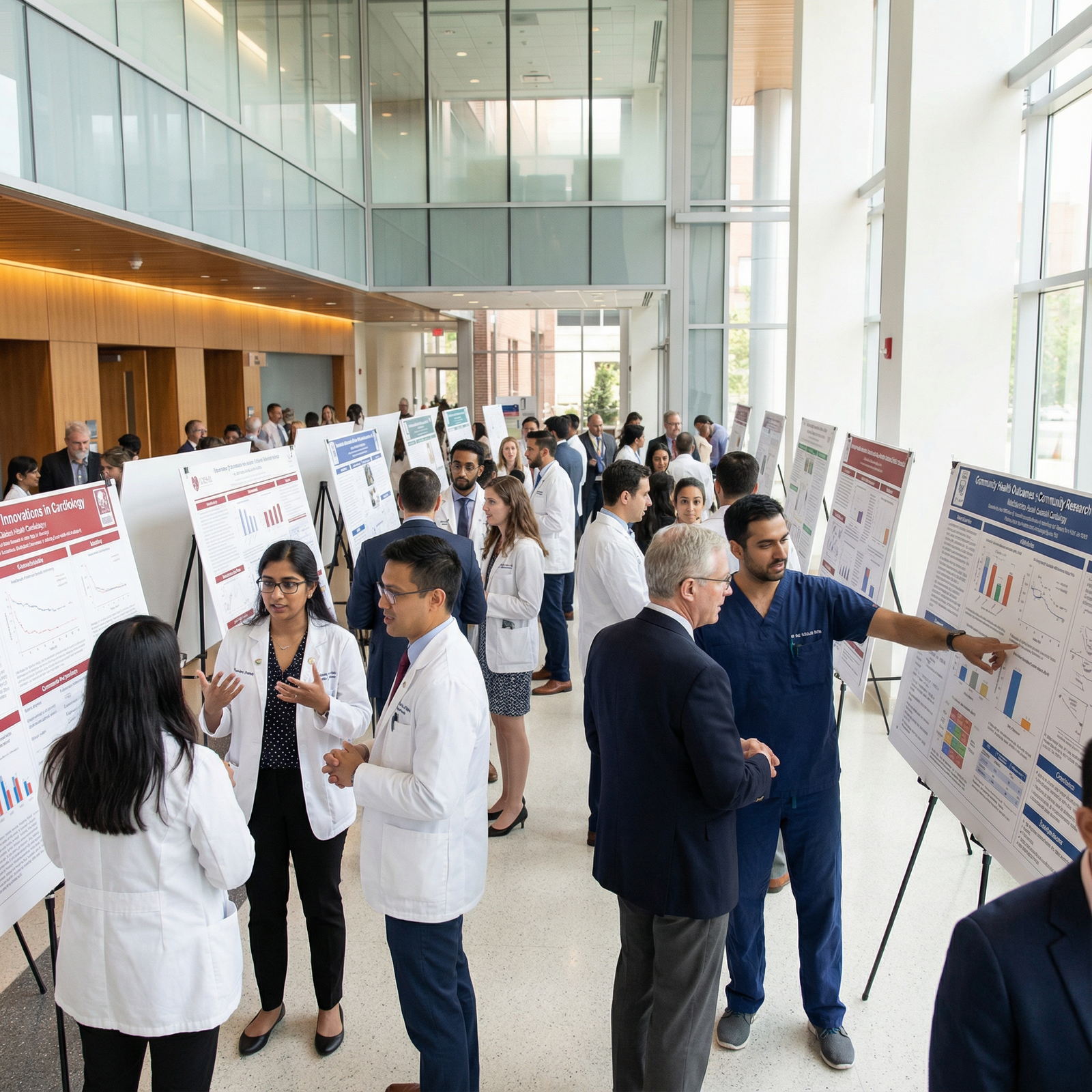
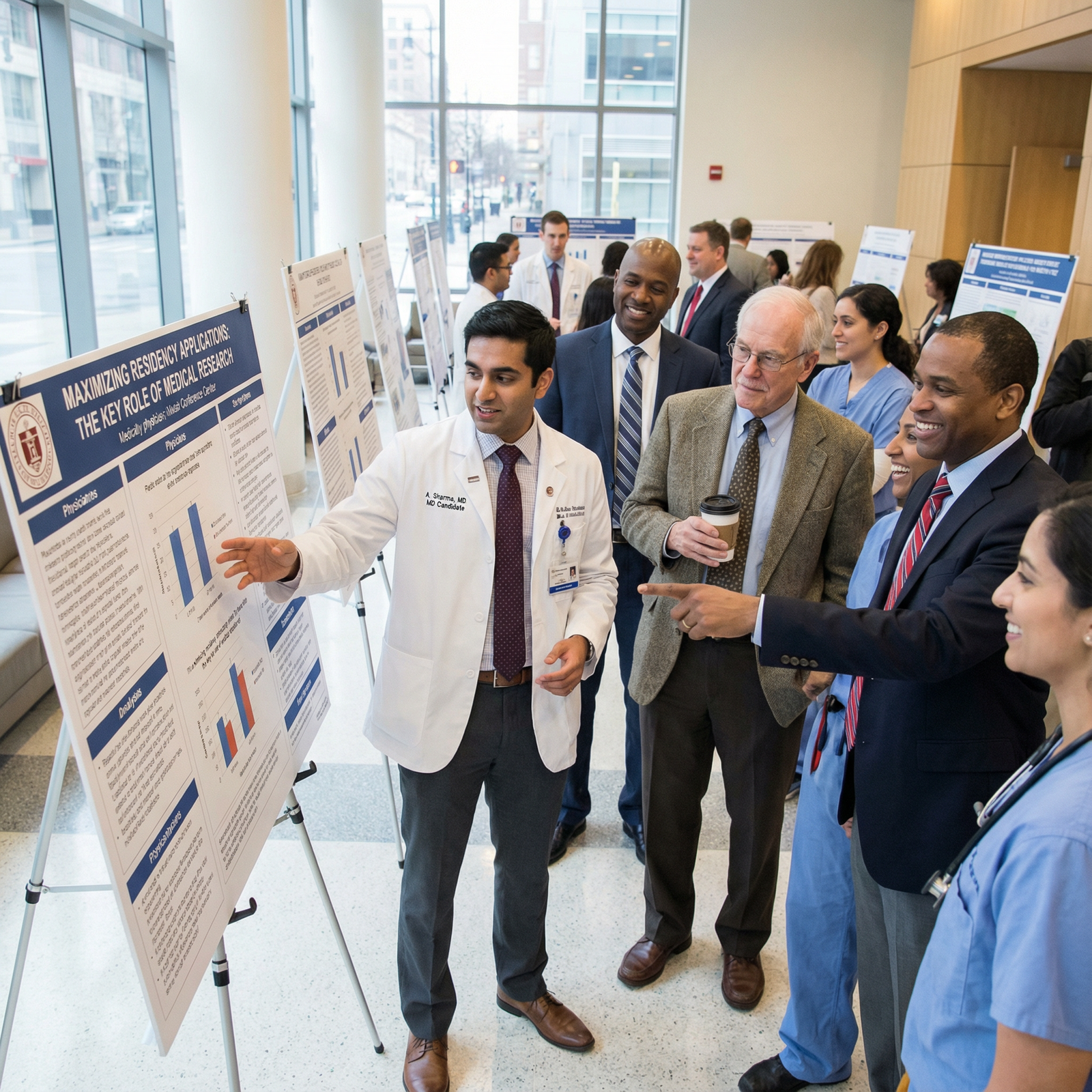
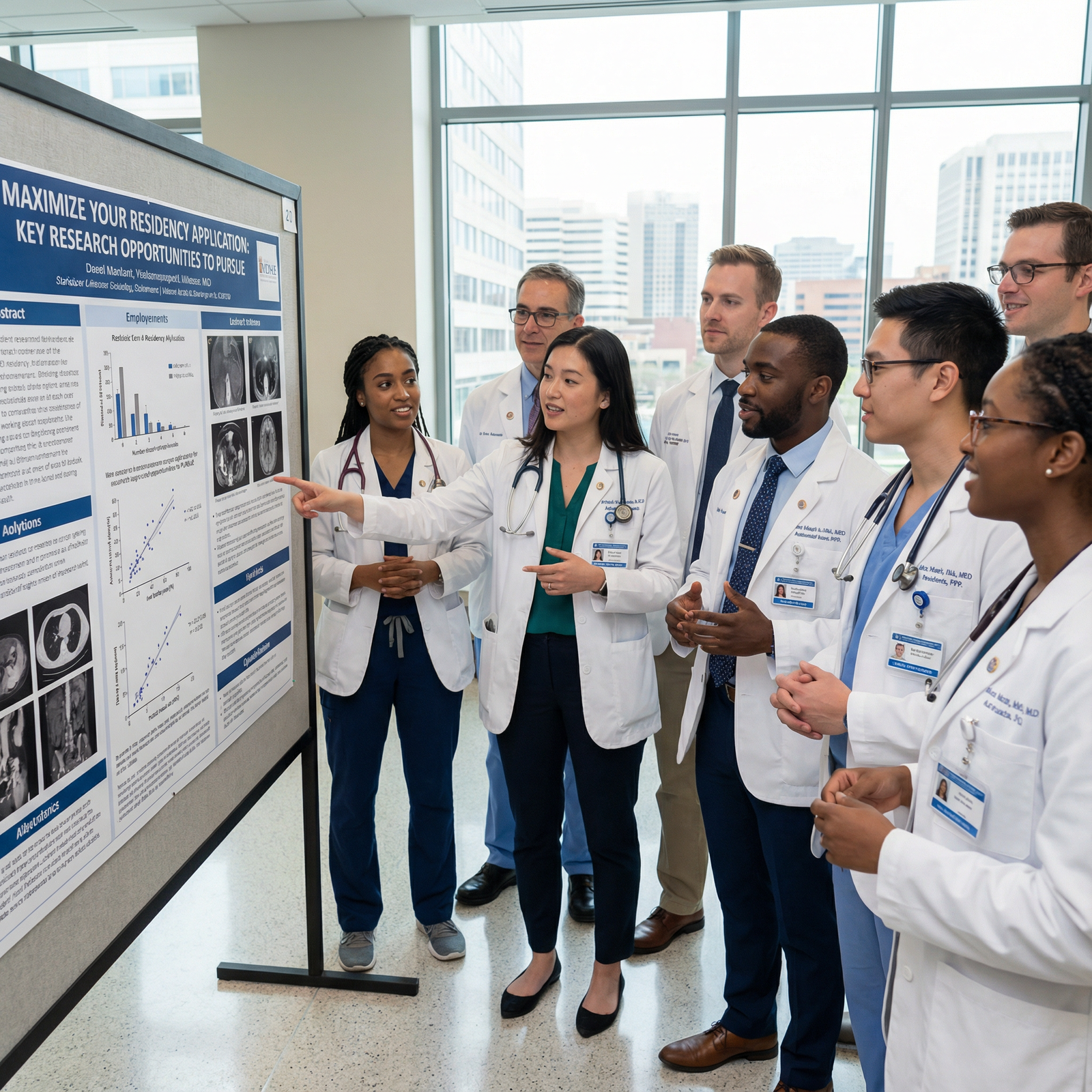
2. Abstracts, Posters, and Oral Presentations
These are critical stepping stones and are absolutely valued on applications:
- Conference abstracts (local, regional, national, or international)
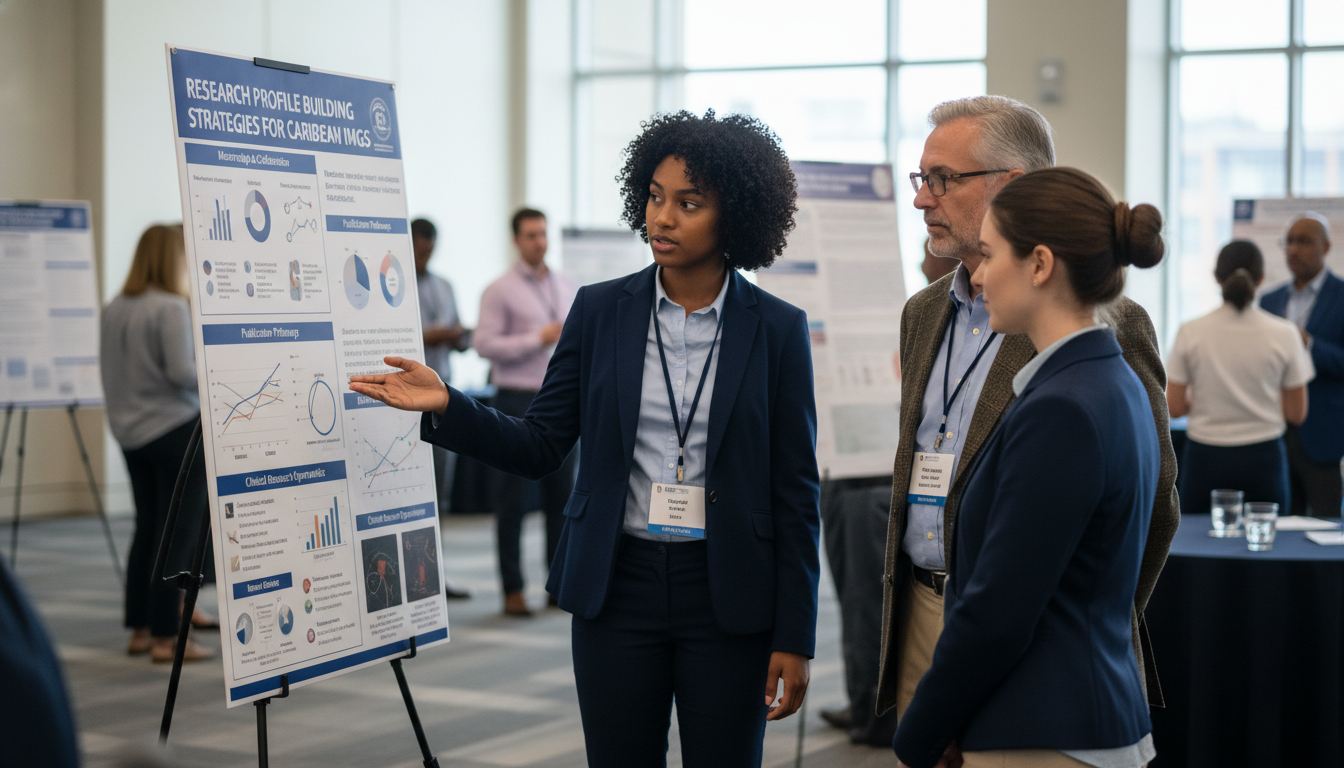
- Poster presentations (institutional research days, specialty society meetings)
- Oral presentations (grand rounds, resident research days)
For many Caribbean medical school residency applicants, posters and abstracts are more realistically achievable than multiple full publications, especially during pre-clinical years or early clinical rotations.
3. Quality Improvement (QI) and Audit Projects
Residency programs love QI projects because they align directly with patient care and system improvement.
Examples:
- Reducing unnecessary lab tests in a clinic
- Improving vaccination rates or health maintenance checks
- Implementing a new handoff protocol and measuring outcomes
If you design the project systematically (baseline data, intervention, follow-up data, analysis), it is both:
- Excellent research/QI experience
- Often publishable or presentable as a poster
4. Non-Peer-Reviewed but Legitimate Scholarly Work
While not as strong as peer-reviewed work, these still strengthen your narrative:
- Book chapters
- Educational modules or curriculum design
- Clinically focused blog posts for reputable platforms
- Medical education videos with data on viewer engagement or learning outcomes
These can help, especially when paired with more formal research activities.
5. What Doesn’t Really Count
Avoid activities that are:
- Unverifiable (no documentation, no mentor)
- Ethically problematic (data fabricated, patient privacy violated)
- Overstated (claiming “published” when it’s only under review)
Be honest, precise, and conservative when describing your work. Programs appreciate integrity more than inflated claims.

How Many Publications Are Actually Needed?
Understanding the “how many publications needed” question requires nuance. Numbers you see in NRMP or CaRMS reports are averages, not minimums.
1. Interpreting Match Data as a Caribbean IMG
When you look at data like:
- “Matched applicants in X specialty have an average of 5–10 publications/abstracts/presentations”
Remember:
- This usually counts all scholarly items, not just PubMed-indexed original articles.
- U.S. MD averages are often higher than IMG averages.
- Competitive specialties naturally have higher numbers.
For a Caribbean IMG, the baseline to be considered “academically active” might look like:
- 1–2 peer-reviewed publications or
- 1 publication + 2–4 posters/abstracts/QI projects
But context matters more than raw numbers:
- A focused portfolio in your target specialty is stronger than scattered, unrelated minor contributions.
- A well-written personal statement and strong letters explaining your real role carry huge weight.
2. Specialty-Specific Considerations
Very roughly:
- Highly competitive specialties (e.g., derm, rad onc, plastics):
IMGs in these fields often have substantial research—sometimes a research year with multiple publications and numerous posters. - Moderately competitive (e.g., radiology, anesthesia, EM, neurology):
Aim for a few solid projects, ideally including at least one full publication and multiple abstracts. - Broad primary care (IM, FM, peds, psych):
Thoughtful research or QI in primary care, population health, or clinical practice can set you apart, even with lower volume.
3. Quality and Coherence Over Quantity
Program directors often care about:
- Your long-term interest in a field (evidenced by repeated, related projects)
- Evidence that you can see a project from idea to dissemination
- The credibility of your mentors and settings
A coherent research story—e.g., multiple projects in diabetes management, or stroke care, or medical education—can impress more than a higher number of isolated, unrelated outputs.
Step-by-Step Strategy to Build a Research Profile as a Caribbean IMG
This section will focus on practical, actionable strategies specifically tailored to Caribbean IMGs, whether you are early in medical school, in clinical rotations, or already graduated and preparing for the match.
1. Start Early: Pre-Clinical and Early Clinical Years
If you are still on your island campus or early in your training:
a. Identify Research-Friendly Faculty
Look for faculty with:
- Prior publications
- Conference presentations
- Leadership of journal clubs or academic committees
Check:
- School website faculty pages
- PubMed (search faculty names)
- Notice boards for ongoing studies or calls for volunteers
Approach them with a concise email:
- Introduce yourself (year, interest in specialty)
- Express specific interest in their work
- Ask if they have any ongoing or planned projects where you could help with data collection, chart review, or literature review
b. Start with Manageable Projects
Realistic early projects for Caribbean IMGs:
- Case reports in areas you see during early clinical exposure
- Retrospective chart reviews (if your school/hospital supports access)
- Literature reviews or narrative reviews under supervision
These do not require sophisticated experimental setup and can be completed within months rather than years.
c. Build Skills While You Build Experience
Invest in:
- Online courses (free or low-cost) in biostatistics, research methods, and critical appraisal
- Workshops from your school or online platforms (Coursera, edX, etc.)
- Learning to use reference managers (Zotero, Mendeley, EndNote)
This improves your efficiency and credibility as a research collaborator.
2. Clinical Years: Turning Rotations into Research Opportunities
During core and elective rotations, especially in U.S. or Canadian teaching hospitals, you are surrounded by potential research mentors.
a. Identify Research-Conducive Rotations
Prioritize:
- Academic hospitals affiliated with universities
- Rotations where residents and fellows are clearly involved in research
- Services that regularly present at M&M, journal clubs, or research conferences
Ask residents:
- “Do any attendings on this service supervise student research?”
- “Is there a resident research day or ongoing projects I could join?”
b. Propose Case Reports and QI Projects
Case reports often arise from:
- Rare presentations or diseases
- Unexpected complications
- Unusual responses to treatment
When you encounter an interesting case:
- Ask the resident/attending if they believe it’s publishable.
- Offer to draft a case report and literature review.
- Follow the journal’s author guidelines from the beginning (word count, structure, figure limits).
For QI:
- Pay attention to workflow issues, documentation errors, or preventable delays.
- Ask: “Has anyone ever studied this? Would this be a good QI project?”
- With supervision, design a simple plan: baseline audit → intervention → re-audit.
c. Protect Time and Follow Through
Caribbean IMGs often struggle with continuity: you move between sites, countries, and schedules. To avoid losing momentum:
- Keep all project documents in organized, cloud-based folders (e.g., Google Drive, OneDrive).
- Schedule recurring check-ins (even by Zoom or email) with your mentor.
- Set realistic micro-deadlines: draft intro by X date, methods by Y date, etc.
Even if your rotation ends, you can still complete writing and submission remotely.
Advanced Strategies: Research Years, Remote Work, and Strengthening Your Application
Some Caribbean IMGs decide to dedicate extra time—such as a research year—to significantly boost their profile, especially when aiming for competitive programs.
1. Considering a Dedicated Research Year
A research year can be particularly helpful if:
- You are targeting competitive specialties
- You have lower exam scores and want to strengthen other parts of your profile
- Your current portfolio is thin (no publications, minimal exposure)
How to Structure a Research Year:
- Affiliation: Aim for a formal position at a university-affiliated hospital; titles like “Research Fellow” or “Research Assistant” with a faculty mentor look strong.
- Output goals: Set a target, e.g., 1–2 primary projects where you are heavily involved + multiple abstracts/posters.
- Skill development: Learn statistics software (R, SPSS, Stata), data management, and possibly basic coding if relevant.
Before committing, clarify visa issues, funding (stipend vs. unpaid), and expectations of authorship.
2. Remote and Collaborative Research Options
Not all Caribbean medical school residency applicants can relocate for a research year. You can still build a portfolio remotely:
- Join multicenter collaborations: Some groups coordinate projects where medical students contribute data extraction or chart review from different sites.
- Seek mentors through professional organizations: Specialty societies sometimes have student/IMG sections or mentorship schemes.
- Use email and video calls effectively: Clearly propose how you can add value (e.g., literature review, data entry, drafting sections of manuscripts).
Always maintain professionalism—prompt responses, meeting deadlines, and transparent communication about your capacity.
3. Maximizing the Impact of Your Research for the Match
Your research should not live only on your CV. Leverage it throughout your application:
a. Personal Statement
- Highlight a key project that shaped your interest in the specialty.
- Reflect on what you learned about patient care, systems, or evidence-based practice.
b. Letters of Recommendation
- Ask research mentors who know you well to comment on:
- Your reliability and work ethic
- Intellectual curiosity
- Ability to work within a team and handle feedback
- For SGU residency match and other Caribbean IMG pathways, letters from U.S./Canadian academic physicians with respected affiliations are especially valuable.
c. Interviews
Be prepared to discuss:
- Your exact role in each project (design, data collection, analysis, writing).
- Limitations of your study and what you would do differently next time.
- How your research experience will influence you as a resident physician.
Practice answering questions like:
- “Tell me about a research project you worked on.”
- “What was the most challenging aspect of your research?”
- “How do you see research fitting into your future career?”
Common Pitfalls and How to Avoid Them
Caribbean IMGs face specific obstacles; anticipating them can save you time and frustration.
1. Chasing Quantity Over Integrity
Listing dozens of “submitted” or “in preparation” manuscripts without clear documentation or mentor support can raise red flags. Programs are increasingly cautious about unverifiable research claims.
Solution:
Only list:
- Published or accepted works as such
- Clearly label works as “submitted” or “in preparation” and be ready to show drafts if asked
- Maintain an organized file of emails, drafts, and submissions for verification
2. Poor Time Management During USMLE/Board Prep
Overcommitting to research during intense exam prep can harm both your scores and your research output.
Solution:
- During heavy exam study periods, restrict research to low-cognitive-load tasks (simple data entry, minor edits).
- Communicate with mentors about your exam timeline; most will understand temporary slowdowns if you are honest.
3. Weak or Absent Mentorship
Working alone without proper supervision can result in low-quality work that is hard to publish and does not impress evaluators.
Solution:
- Prioritize projects with committed mentors who have prior publications.
- Seek multiple mentors: a clinical mentor in your specialty + a methodologist/statistician if possible.
- Use your Caribbean school’s alumni network; many graduates who matched into residency are happy to guide current students, particularly on research for residency.
4. Ethical and Regulatory Missteps
As an IMG, you must be particularly careful with:
- IRB/ethics approval requirements
- Patient privacy and data handling
- Authorship disputes
Solution:
- Learn the basics of research ethics and your institution’s IRB processes.
- Always clarify expectations for authorship at project start.
- Never manipulate or fabricate data to try to “get results.” The risk to your career is enormous.
Putting It All Together: A Practical Timeline Example
Here is a sample roadmap for a Caribbean IMG starting in early medical school and aiming for a strong residency match:
Basic Sciences (Years 1–2):
- Take online courses in research methods and statistics.
- Join at least one faculty-led project (case report, chart review, or review article).
- Aim to submit one poster or abstract by end of second year.
Clinical Rotations (Years 3–4):
- On every rotation, identify at least one potential mentor.
- Aim for 1–2 case reports and at least one QI or clinical project.
- Present at your school’s research day or a regional specialty conference.
Pre-Application Period (6–12 months before applying):
- Consolidate all projects; push at least one full manuscript to submission.
- Request strong, specific letters from research mentors.
- Update your CV with verified, clearly labeled research activities.
Application and Interview Season:
- Integrate your research narrative into your personal statement.
- Practice discussing your projects as if you were teaching an intelligent but non-expert colleague.
By following a structured approach, you can develop a research profile that not only helps you compete for a Caribbean medical school residency spot in the U.S. or Canada but also prepares you for a lifelong career in evidence-based medicine.
FAQs: Research Profile Building for Caribbean IMGs
1. As a Caribbean IMG, do I need a research year to match into residency?
Not always. Many Caribbean IMGs match without a dedicated research year, especially into primary care specialties. A research year is most useful if you are targeting competitive specialties or if you currently have minimal research experience and want to significantly strengthen your application. You should weigh the opportunity cost (time, finances, visa issues) against the expected benefit in your target field.
2. Is research done in the Caribbean taken less seriously than research done in the U.S. or Canada?
Research quality and mentorship matter more than geography. Well-designed projects from Caribbean institutions, especially those resulting in peer-reviewed publications or presentations at recognized conferences, are valued. However, U.S. or Canadian experience can give you additional credibility because it demonstrates you can function in the same system where you’re seeking residency.
3. What if I don’t have any publications by the time I apply—am I at a serious disadvantage?
Not necessarily, but you will be less competitive, especially in academic or competitive programs. If you lack publications, try to ensure at least some combination of posters, abstracts, or QI projects is complete and documented. Emphasize clinical excellence, strong letters of recommendation, and a compelling personal story while you continue to work on turning existing projects into publishable work.
4. How should I list “in progress” research on my CV and ERAS/other applications?
Be transparent and specific. For each project, indicate its actual status: “data collection ongoing,” “manuscript in preparation,” or “submitted to [journal name].” Do not call something “published” unless it is accepted or already in print/online. Be prepared to discuss any “in progress” item in detail during interviews, including your precise role and current timeline.
By approaching research strategically, consistently, and ethically, Caribbean IMGs can build research profiles that not only enhance their chances in the residency match—but also lay the foundation for careers as thoughtful, evidence-driven physicians.