Research in clinical informatics sits at the intersection of medicine, data science, and systems redesign. For residency applicants and early trainees interested in a clinical informatics fellowship, building a strong research profile is one of the most powerful ways to demonstrate commitment, skills, and potential. This guide lays out a structured, practical roadmap to help you build that profile, even if you are starting with limited experience.
Understanding Research in Clinical Informatics
Clinical informatics research is fundamentally about improving how information is captured, organized, interpreted, and used to deliver better care. Compared with traditional bench or clinical trials work, projects here often focus on:
- Electronic health records (EHRs) and clinical workflows
- Clinical decision support (CDS) tools
- Data quality, interoperability, and health information exchange
- Predictive analytics and machine learning in clinical care
- Patient portals, telehealth, and digital health tools
- Documentation burden and clinician user experience (UX)
- Population health dashboards and quality improvement (QI) metrics
Why Research Matters for Clinical Informatics Fellowship
Clinical informatics fellowship programs look for:
Demonstrated interest and insight
- Your research shows you understand real-world informatics problems (e.g., alert fatigue, usability issues, data quality).
- It signals you can think beyond the individual patient to systems-level solutions.
Methodologic skills
- Ability to design a study, handle data, apply statistics or basic analytics, and translate findings into practice.
- Comfort working with EHR data, registries, or operational datasets.
Scholarly productivity
- Publications, abstracts, posters, and presentations show you can bring a project from idea → execution → dissemination.
Collaboration and leadership
- Informatics is highly interdisciplinary. Successful projects often involve IT, clinicians, data scientists, and administrators.
“How Many Publications Needed” for Clinical Informatics?
There is no magic number, and programs evaluate your profile in context (school resources, prior training, career stage). That said:
Highly competitive informatics fellowships (especially those associated with major academic centers):
- Often see applicants with 2–5+ publications, including some informatics-relevant work.
- Mix of first-author and co-author is common.
Solid, realistic target for many applicants:
- Aim for 1–3 peer-reviewed publications plus several abstracts/posters or conference presentations.
- Make at least one project clearly, explicitly informatics-focused.
Quality over quantity
- A single well-executed EHR-based study or CDS intervention with strong methods and impact can outweigh multiple shallow projects.
The key is not just “how many publications needed,” but whether your work forms a coherent story of your interest in clinical informatics, your skills, and your trajectory.
Core Components of a Strong Clinical Informatics Research Profile
A compelling research profile for a future clinical informatics fellow typically includes several of the following components.
1. Clear Thematic Focus (or Emerging Focus)
You do not need a perfectly defined niche, but your activities should point in a few consistent directions. Examples:
- EHR usability and documentation burden
- Clinical decision support for high-risk medications
- Data quality and missingness in real-world EHR data
- Predictive models for readmissions in specific populations
- Telehealth implementation in safety-net settings
- Equity and bias in informatics tools
On your CV and personal statement, these threads should be easy to recognize and connect to your career goals.
2. Progressive Involvement and Responsibility
Programs like to see trajectory:
- Early in training:
- Data abstraction, literature reviews, helping with a QI project
- Middle stages:
- Helping design the analysis plan, leading part of a project, writing sections of a manuscript
- Later:
- First-author projects, presenting at conferences, possibly mentoring juniors or leading a workstream
If you are late in the process, you can still build a trajectory within 12–18 months by starting quickly and choosing projects that can realistically finish.
3. Diverse but Coherent Outputs
Aim for a mix of:
- Peer-reviewed publications (even if in lower-impact or specialty journals)
- Abstracts and posters at regional, national, or international meetings
- Oral presentations at informatics, digital health, or quality meetings
- Nontraditional outputs (with caution):
- Technical reports, white papers, open-source code, or internal hospital reports.
- These should complement, not replace, traditional publications.
Strategically, publications for match carry the most weight, but conference activities help visibility and networking in the informatics community.
4. Evidence of Technical and Analytic Skills
You do not need to be a full-fledged data scientist, but informatics fellows should show comfort with:
- Working with structured clinical data and basic data wrangling
- Using at least one analytic environment (R, Python, Stata, SAS, or SQL)
- Understanding data models (e.g., OMOP, FHIR concepts, or institutional data warehouse schemas) at a basic level
- Interpreting model performance metrics if you’re involved in predictive modeling projects
These skills can be gained through:
- Online courses
- Short “health IT training” workshops
- Collaborating closely with statisticians or informatics faculty

Step-by-Step Roadmap to Building an Informatics Research Profile
Step 1: Clarify Your Informatics Interests and Career Narrative
Before diving into projects, spend a bit of time defining your “why”:
- Are you drawn to improving usability and workflow?
- Are you passionate about data-driven quality improvement or population health?
- Are you interested in machine learning and predictive models applied to clinical problems?
- Do you care about health equity and ensuring algorithms don’t perpetuate bias?
Write down a few bullet points summarizing your interests. These will:
- Guide which mentors you approach
- Help you pick projects you can sustain over time
- Make your personal statement, interviews, and CV feel cohesive
Step 2: Find the Right Mentors and Environments
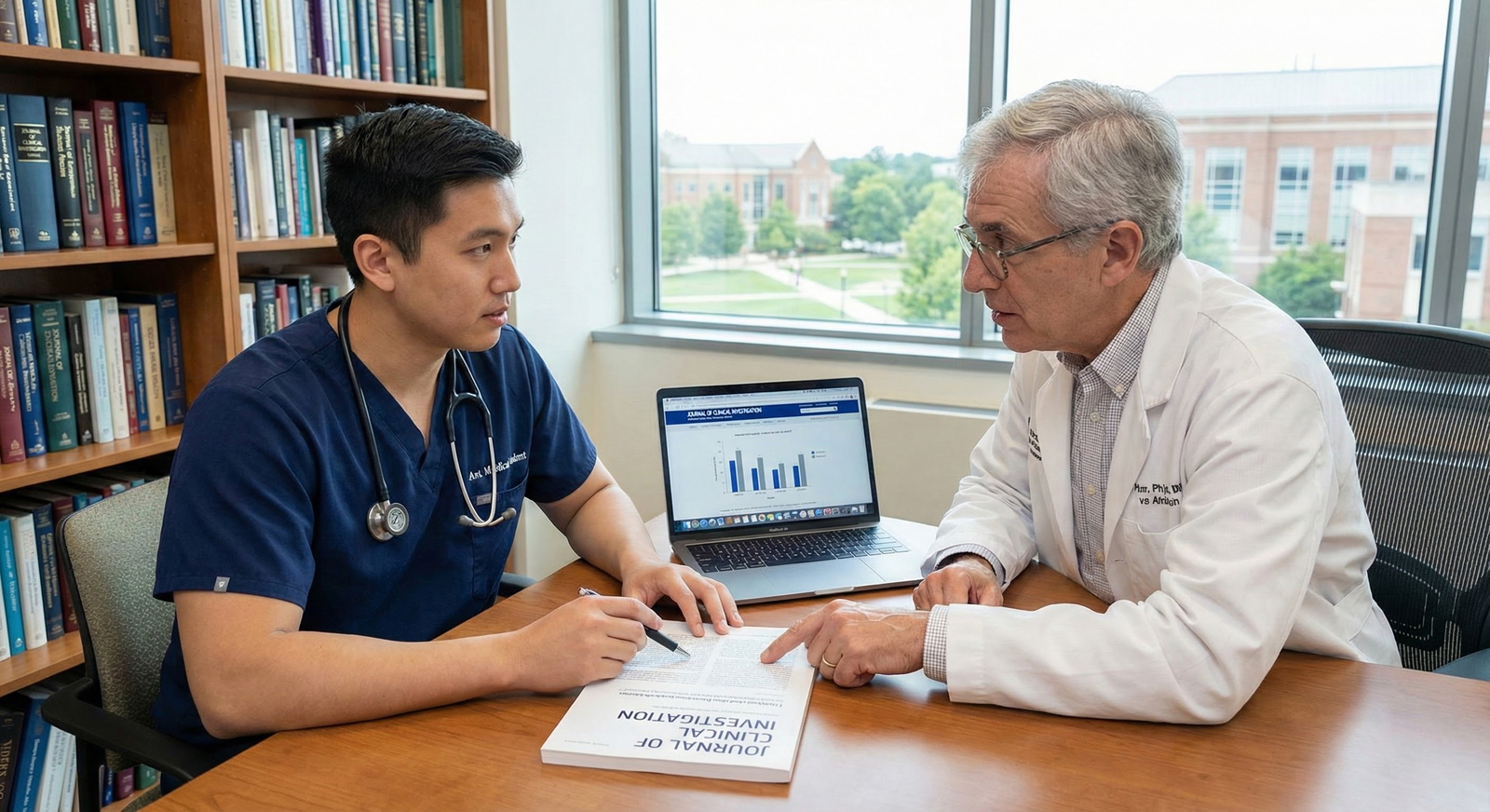
You need mentors who understand both research and clinical informatics. Start by:
Scanning your institution
- Identify faculty with titles like:
- Chief Medical Information Officer (CMIO)
- Clinical Informatics Director
- Director of Health IT or Data Science
- Quality & Safety analytics lead
- Search your institution’s website or PubMed for “clinical informatics” + your institution name.
- Identify faculty with titles like:
Approaching potential mentors strategically
- Send a concise email:
- 2–3 sentences on your background
- 2–3 sentences on your interests in clinical informatics
- Ask for a brief meeting to discuss potential projects and how to prepare for a clinical informatics fellowship.
- Send a concise email:
Assessing fit
- Do they have ongoing projects you can realistically join?
- Is there a track record of trainees getting on publications?
- Do they seem willing to invest time in your development?
If your home institution has limited informatics presence, consider:
- Remote collaborations with informatics researchers (Cold emails can work if targeted and thoughtful.)
- Virtual research roles with health systems or academic centers.
- Involvement in multi-institutional registries or quality collaboratives that leverage EHR data.
Step 3: Choose the Right Types of Projects
While any research can help, certain projects are particularly aligned with clinical informatics fellowship and health IT training.
High-Value Informatics Project Types
EHR-based retrospective studies
- Example: Evaluating the impact of a new sepsis alert on time to antibiotics and patient outcomes.
- Skills gained: Data extraction, variable definition, dealing with missingness, basic statistics.
Clinical decision support (CDS) design and evaluation
- Example: Designing a best-practice advisory for high-risk medication dosing; evaluating its effect on prescribing errors.
- Skills gained: Workflow analysis, user-centered design, pre-post evaluation, implementation science.
Workflow and usability studies
- Example: Time-motion or mixed-methods study of documentation burden in residents before and after an EHR change.
- Skills gained: Qualitative methods, survey design, human factors.
Quality improvement projects with strong data components
- Example: Building and evaluating a dashboard to track adherence to anticoagulation guidelines across clinics.
- Skills gained: Data visualization, iterative process improvement, informatics-driven QI.
AI and predictive model implementation (if you have access to such projects)
- Example: Participating in validating a readmission risk model for your hospital’s internal deployment.
- Skills gained: Model evaluation, fairness metrics, clinical integration.
Practical Tips When Selecting Projects
- Prefer projects that use readily available data with a clear decision-maker sponsor (e.g., quality office, department chair). That increases the chance the work actually gets done and used.
- For timed goals (such as the upcoming residency match or fellowship application cycle), prioritize projects that:
- Have fewer regulatory hurdles
- Don’t require long-term prospective follow-up
- Have a manageable dataset
Ask mentors explicitly:
“Given my timeline for applying to clinical informatics fellowship, which projects are most realistic to complete and submit for publication in the next 12–18 months?”
Step 4: Build and Demonstrate Technical Skills
You can strategically pair each project with specific skill gains.
Foundational Skills to Target
Data querying and wrangling:
- Introductory SQL for pulling data from a clinical data warehouse
- Basic R or Python for cleaning, merging, and summarizing data
Statistics and study design:
- Regression modeling, propensity scores, interrupted time series, or difference-in-differences (as relevant)
- Understanding confounding, bias, and limitations of observational EHR data
Health IT concepts:
- Basics of clinical data standards (ICD, CPT, LOINC, RxNorm, SNOMED)
- Terminology around HL7, FHIR, and interoperability
- Understanding EHR architecture at a conceptual level
User-centered design & implementation (if your project is about tools, alerts, or interfaces):
- Basics of usability testing
- Workflow mapping and stakeholder analysis
You do not need formal degrees in computer science or biostatistics, but you should be able to articulate:
- The analytic approaches used in your project
- Their assumptions and limitations
- How the technical work translated into clinical or organizational impact
Take advantage of:
- Free online platforms (Coursera, edX, etc.) for introductory data science and informatics courses
- Short institutional workshops on EHR data extraction or clinical data warehouse use
- “Side learning” during your project: ask your analyst or statistician to walk you through the code and decisions
Step 5: Strategize for Publications and Presentations
Producing publications for match requires planning from day one.
Planning for Manuscripts
When starting a project, ask:
- What is the likely primary manuscript?
- Are there possible secondary analyses?
- What is the target journal tier and audience (informatics, quality, specialty-specific)?
Clarify authorship early, including:
- Who is first author?
- Who will lead writing and revisions?
- What is the realistic timeline for submission?
As a trainee aiming for clinical informatics fellowship, you should actively push to be:
- First author on at least one informatics-related project, or
- Lead analyst/writer with substantial contribution clearly documented
Conference Abstracts and Networking
Parallel to manuscripts:
- Identify 1–2 key conferences (e.g., AMIA, HIMSS, specialty informatics-related meetings).
- Work with your mentor to submit abstracts early.
- Present posters or short talks; these are excellent ways to meet potential fellowship directors and future collaborators.
When possible, introduce yourself to faculty from programs you’re considering and briefly mention your ongoing projects and interests. This can make your later application more memorable.
Dealing with Incomplete Projects
Not all projects finish before you apply. For those:
- Document your role, methods used, and current status in your CV (“manuscript in preparation,” “data collection ongoing”) honestly.
- Be ready to discuss what you’ve learned from each step so far.
- If you pivoted or the project stalled, explain briefly and highlight what you gained (e.g., experience with IRB, data governance, working with IT).
Programs often value the process and your reflections as much as the final product.

Integrating Research Into Your Residency and Application Strategy
Balancing Clinical Duties and Informatics Research
Time is the greatest constraint during residency. To keep your research productive:
- Negotiate protected time if available (e.g., research elective blocks, informatics rotations).
- Use small, regular time blocks (1–2 hours, several times per week) for writing and analysis.
- Batch tasks:
- Reserve lighter clinical days for literature review or coding
- Reserve off-days for deep work like drafting manuscripts
Communicate openly with your mentors about your schedule and expected bandwidth.
Crafting a Cohesive Application Narrative
Your research should be woven into your personal statement, CV, and interviews.
Emphasize:
- How each project aligns with your vision for a career in clinical informatics
- What concrete skills you gained (e.g., EHR data extraction, CDS design, workflow mapping)
- How your research experiences prepared you to contribute quickly in a clinical informatics fellowship
Example narrative arc:
“Across my residency, I have focused on how EHR design affects medication safety. My first project evaluated an existing high-risk medication alert and identified issues with alert fatigue. Building on this, I partnered with our pharmacy informatics team to redesign the alert with better clinical logic and a more intuitive interface. Evaluating this intervention through an interrupted time series analysis not only improved our prescribing metrics but also cemented my commitment to pursuing clinical informatics fellowship to work at the intersection of data, design, and patient safety.”
Addressing Limited Prior Research Experience
If you’re starting late or have minimal background:
Leverage existing QI work
- Many residents have done QI projects that can be reframed and strengthened with informatics and analytic components.
Start a focused, feasible informatics project now
- Even one strong, well-designed project can substantially change your profile.
Get involved in ongoing projects as a co-author
- Offer to help with data cleaning, figure creation, or writing the methods section.
- This can quickly add to your publications for match.
Show serious self-education in informatics
- Certificates, online courses, or micro-credentials in data science, health IT, or clinical informatics show initiative and preparation.
Programs understand structural differences in opportunities; what matters is how effectively you used what was available and how clearly you are now pointing toward an informatics career.
Common Pitfalls and How to Avoid Them
Overcommitting to too many projects
- Result: Many incomplete projects, few finished publications.
- Fix: Prioritize 1–3 high-yield projects and see them through.
Pursuing research unrelated to informatics without a plan to pivot
- General clinical research is valuable, but your application should highlight an informatics angle where possible.
- Fix: Start adding at least one informatics-focused project as soon as you solidify your fellowship plans.
Ignoring methodologic rigor because “it’s just QI”
- Weak design and analysis undermine credibility.
- Fix: Treat each project as potential scholarship; involve a statistician or methodologist early.
Failing to document your contributions clearly
- Programs need to understand what you actually did.
- Fix: Keep a running log of your roles and contributions; translate them into clear CV bullet points.
Neglecting dissemination
- Internal reports are good; manuscripts and conferences are better.
- Fix: Set a dissemination plan from the beginning: where will you submit, and when?
FAQs: Research Profile Building for Clinical Informatics Fellowship
1. I’m a resident with limited research experience. How do I start building a clinical informatics research profile now?
Begin by identifying one or two mentors with informatics or health IT roles (CMIO, informatics faculty, quality analytics lead). Ask to join an existing project that uses EHR data, CDS, or dashboards. Pair that with a short course in basic data analysis or health IT training. Focus on one well-defined project you can help move to publication within your remaining time, then aim for at least one conference abstract or presentation.
2. How many publications do I realistically need for a competitive clinical informatics fellowship?
There is no fixed number, but many successful applicants have 1–3 peer-reviewed publications and multiple abstracts or posters. At least one project should be clearly informatics-focused. Programs value depth and relevance over volume. A single strong first-author paper on an EHR-based or CDS project can be very compelling, especially if you can articulate your role and learning.
3. Does non-traditional work (like building tools, dashboards, or code) count as research?
Yes—if you evaluate and disseminate it. Simply building a dashboard is not enough; you need to systematically assess how it affected workflow, quality metrics, or outcomes, then present or publish the results. Clearly describe your role (design, implementation, analysis). Supplementing this with traditional outputs (manuscripts, abstracts) will make such work more impactful in your application.
4. What if my research is mostly general clinical or QI work, not specifically clinical informatics?
You can still present a coherent informatics story. Highlight aspects of your projects that involve EHR data, clinical workflows, or digital tools. Emphasize any experience with data extraction, CDS, dashboards, telehealth, or documentation processes. Then, add at least one explicitly informatics-centered project—even a smaller, well-designed study—to show a targeted shift in your trajectory toward clinical informatics.
By approaching your research profile strategically—choosing the right projects, building concrete skills, and aligning your work with a clear narrative about your goals—you can position yourself as a strong candidate for clinical informatics fellowship and a future leader at the intersection of medicine and technology.