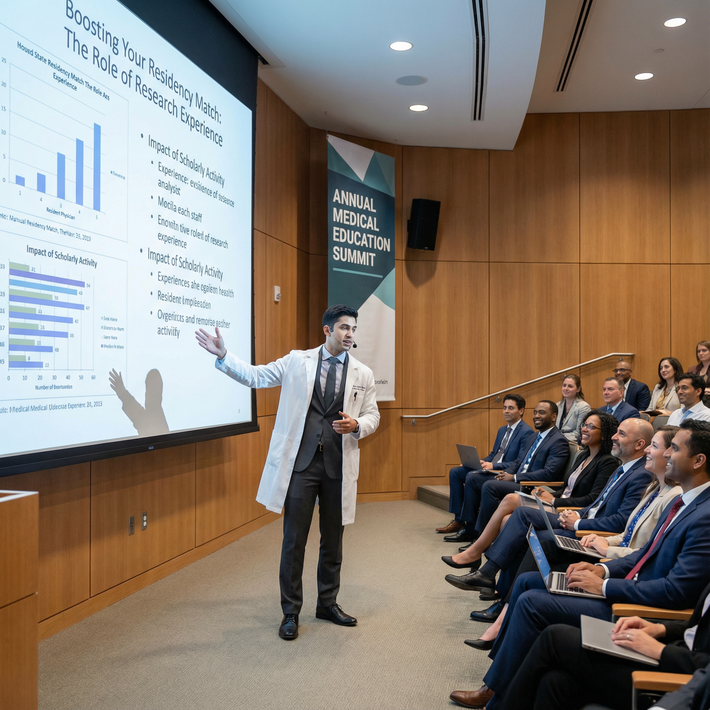
Why a Strong Research Profile Matters in Dermatology
Dermatology is one of the most competitive specialties in the Match. Year after year, data from NRMP Program Director Surveys show that dermatology program directors weigh research experience and scholarly productivity more heavily than many other fields. In such a competitive landscape, a thoughtful strategy for research for residency can be the difference between a derm match and going unmatched.
Why research is so important in dermatology residency applications:
- High applicant volume, limited positions: Programs need objective ways to differentiate between many academically strong candidates. Research and publications for match are visible markers of initiative, curiosity, and perseverance.
- Rapidly evolving field: Dermatology incorporates advances from immunology, oncology, genetics, imaging, and cosmetic science. A research-active applicant signals readiness to engage with new evidence and therapies.
- Culture of academic dermatology: Many dermatology faculty are actively involved in clinical trials, translational research, or epidemiologic work. Programs look for residents who can contribute to this mission.
- Signal of long-term potential: A well-developed research profile suggests potential for future fellowships (e.g., dermatopathology, Mohs, pediatric dermatology) and academic careers.
However, “more” is not automatically “better.” Programs want to see quality, consistency, relevance, and ownership—not just a long CV filled with superficial entries. The goal of this guide is to show you how to build a focused, credible, and sustainable research trajectory in dermatology.
Understanding the Landscape: What Counts as Dermatology Research?
Before diving into strategy, it helps to understand the spectrum of what “counts” as research in dermatology residency applications. Program directors generally look at both the type of work and your role in each project.
Common Types of Dermatology Research
Clinical Research
- Chart reviews (e.g., epidemiology of hidradenitis suppurativa in a specific population)
- Prospective cohort studies (e.g., outcomes after starting a biologic)
- Clinical trials (e.g., evaluating a new topical agent or systemic therapy)
- Outcomes research (e.g., quality-of-life studies in chronic dermatoses)
Translational / Basic Science
- Bench research on skin barrier, immunology, or oncogenesis
- Work in labs focused on melanoma, lymphoma, inflammatory skin disease
- Animal models of skin disease or wound healing
Epidemiology and Public Health
- Database studies using large national datasets
- Studies on disparities in access to dermatologic care
- Occupational or environmental dermatology topics
Dermatopathology and Imaging
- Projects on histopathologic correlations
- Digital pathology AI/ML projects
- Dermoscopy or imaging-based diagnostic tools
Education and Quality Improvement (QI)
- Curriculum development for medical students or residents
- QI projects in dermatology clinics (e.g., improving biopsy tracking or isotretinoin monitoring)
- Simulation or OSCE-based derm training studies
Case Reports and Case Series
- Rare or novel diseases or presentations
- Unexpected drug reactions or associations
- Unique management approaches or diagnostic challenges
Narrative Reviews, Systematic Reviews, and Meta-Analyses
- Summarizing the state of evidence on a specific dermatology topic
- Identifying research gaps to guide future studies
Levels of Scholarly Output
Dermatology programs recognize a spectrum of scholarly activity. Typically, a strong research profile includes a mix of outputs rather than relying on just one category.
Common forms of scholarship:
- Peer-reviewed journal articles
- Original research (highest impact)
- Systematic reviews/meta-analyses
- Narrative reviews
- Case reports and case series
- Conference abstracts and posters
- National (AAD, SID, specialty societies) are especially valued
- Regional and institutional conferences also matter
- Oral presentations
- Invited talks, plenary presentations, or moderated sessions
- Book chapters and invited reviews
- Often co-authored with faculty mentors
- Non–peer-reviewed outputs
- Educational website content
- Patient-facing educational material
- Blog posts or videos for reputable professional organizations
All of these can support your dermatology residency application, but peer-reviewed, dermatology-focused work where you had meaningful responsibility carries the most weight.

How Many Publications Do You Really Need for a Derm Match?
Many applicants fixate on a single question: “How many publications needed to match dermatology?” While there is no universal cutoff, it’s useful to understand how programs interpret this metric and how to think about research for residency strategically.
The Data Perspective
Recent NRMP data show that matched dermatology applicants often report double-digit numbers of “abstracts, presentations, and publications combined.” However, this number is frequently misunderstood:
- It bundles all outputs together (abstracts, posters, oral talks, peer-reviewed publications).
- It may include non-dermatology work, including pre-med or early medical school research.
- It does not distinguish between first-author and middle-author work, or between high-impact journals and minor contributions.
Program directors know these limitations. They are less interested in raw totals and more in the story those entries tell.
Quality vs. Quantity
Most faculty would rather see:
- 3–5 strong, dermatology-focused projects with clear roles
- e.g., 1–2 first-author manuscripts, a few posters, perhaps a case report
than:
- 20+ scattered, marginal contributions where your role was unclear or extremely minor.
When thinking about how many publications are needed, consider this hierarchy of value:
- Peer-reviewed, derm-focused, first author (especially original research or substantive review)
- Peer-reviewed, derm-focused, co-author
- National derm conference presentations/posters
- Non-derm but clinically or scientifically rigorous work
- Local/institutional posters and non–peer-reviewed pieces
Practical Ranges and Goals
These are NOT hard cutoffs, but ballpark goals to guide planning:
- Exceptional research profile
- 5–10+ peer-reviewed publications (not necessarily all derm)
- 3–6+ derm-focused projects
- Several national-level presentations
- Very strong, realistic target for many applicants
- 2–5 peer-reviewed publications
- At least 1–3 derm-focused
- Several abstracts/posters (local, regional, or national)
- Building or late-start profile
- 0–2 peer-reviewed publications
- Several case reports or smaller projects in progress
- Demonstrated initiative to join projects, even if not yet published
Programs will evaluate your output in context:
- Time available (e.g., MD/PhD vs. traditional MD vs. DO vs. IMG)
- When you discovered interest in dermatology
- Available mentorship and institutional resources
- Strength of other parts of your application
Your goal is not a magic number; it is to demonstrate sustained interest, growing responsibility, and clear impact.
Strategic Steps to Building a Dermatology Research Profile
Step 1: Clarify Your Goals and Timeline
You’ll approach research differently depending on your training stage and time to application:
- M1–M2 (Preclinical years)
- Explore fields, join general research to build skills.
- Start with accessible projects (case reports, retrospective reviews).
- M3 (Core clinical year)
- If you discover derm now, you’re not too late.
- Establish contact with dermatology faculty ASAP.
- M4 / Research year / Gap year
- Focus on productivity and completion.
- Prioritize derm-focused work, ideally with publications before ERAS submission.
Ask yourself:
- When will I submit ERAS?
- How many months can I dedicate to research?
- Am I planning a formal research year?
Your timeline will shape what projects are realistic.
Step 2: Find the Right Mentors and Research Environment
Strong mentorship is the single most important factor in a successful derm research experience.
How to identify potential mentors:
- Use your institution’s dermatology department website:
- Look for faculty with known interest in resident education.
- Scan recent publications to find areas that interest you.
- Attend dermatology grand rounds or conferences:
- Introduce yourself to speakers or residents.
- Ask residents and senior students:
- “Who are good people to work with for derm research?”
What to look for in a mentor:
- Active in research (recent publications or ongoing projects)
- Responsive and supportive with trainees
- Clear track record of getting students on publications or conference presentations
- Willing to help you match into dermatology (e.g., letters, advocacy)
If your home institution has limited derm research, consider:
- Virtual or multi-institutional projects
- Summer or dedicated research fellowships at other institutions
- Online collaboration networks (e.g., student groups, academic Twitter/X, professional society initiatives)
Step 3: Start with Feasible, High-Yield Projects
Given limited time before the Match, prioritize projects that are doable and publishable within 6–18 months.
Good entry points:
Case Reports and Case Series
- Identify interesting cases during clinical rotations or shadowing.
- Ask your mentor early: “Is this publishable? What journal level is realistic?”
- Learn standard structure: introduction, case description, discussion, images.
Retrospective Chart Reviews
- Scope: single disease, procedure, or medication in a well-defined cohort.
- Feasible for students if data is extractable from EHR.
- Good for posters and potential manuscripts.
Literature Reviews or Mini-Reviews
- Topics:
- New biologics in psoriasis or atopic dermatitis
- Emerging therapies in hidradenitis suppurativa
- Pigmentary disorders in skin of color
- Helpful both for learning and for producing publishable work.
- Topics:
Dermatology Education or QI Projects
- Example:
- Designing an OSCE for skin lesion identification
- Improving adherence to isotretinoin monitoring protocols
- More feasible at institutions with structured QI programs.
- Example:
As you progress, you can join:
- Prospective studies
- Clinical trials
- Database studies
- Collaborative multi-institution projects
Step 4: Be Clear About Your Role and Contributions
Programs notice when an applicant’s CV lists 25 publications but they cannot describe their actual role in each. You should be able to confidently explain:
- The research question and why it matters
- Your specific contributions:
- Study design input
- Data collection and cleaning
- Statistical analysis (with supervision)
- Drafting sections of the manuscript
- What you learned from the project
Aim for at least a few projects where you are either:
- First author, or
- A substantive co-author (not just doing paperwork or minor edits)
When in doubt, ask your mentor early:
- “What would be expected of me on this project?”
- “Is first authorship a possibility if I take primary responsibility?”
Step 5: Develop Core Research Skills
To be efficient and valuable on projects, deliberately build competencies in:
- Literature searching
- Use PubMed, Embase, Google Scholar effectively.
- Keep an organized reference manager (e.g., Zotero, EndNote).
- Critical appraisal
- Basics of study design (cohort, case-control, RCT, cross-sectional).
- Understanding bias, confounding, and limitations.
- Data management
- Clean data entry and use of spreadsheets or basic statistical software (R, Stata, SPSS).
- Scientific writing
- Clear, concise, structured writing.
- Familiarity with common derm journal formats.
- Presentation skills
- Creating clear, visually appealing posters and slides.
- Explaining complex ideas to diverse audiences.
These skills make you more attractive to mentors and increase the chance that projects reach publication.
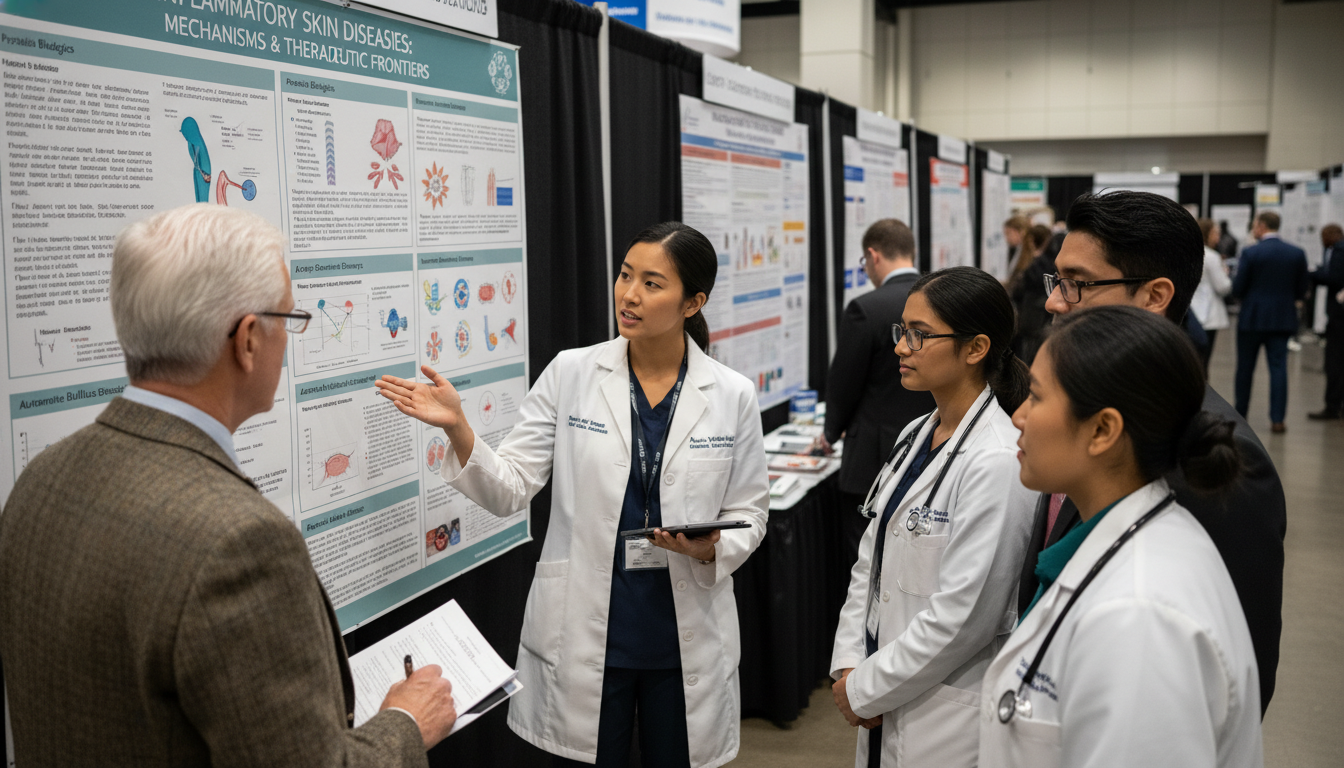
Packaging Your Research Profile for Dermatology Residency Applications
Doing the research is only part of the work; you also need to present it effectively in your derm residency application.
ERAS Entries: Be Precise and Honest
When listing publications for match on ERAS:
- Clearly indicate:
- Publication status: published, accepted, in press, submitted, or in preparation.
- Your position in authorship (first, second, middle, last).
- Journal or conference name.
- Avoid misrepresentation:
- Do not label “in preparation” as “submitted,” and do not count non-accepted works as publications.
- Be ready to discuss any project listed:
- If you do not understand a method or result, review the paper and discuss with your mentor before interviews.
Personal Statement: Integrate, Don’t Overwhelm
Use your personal statement to:
- Describe how research sparked or deepened your interest in dermatology.
- Highlight one or two key projects:
- Why the question mattered to you
- What you contributed
- What you learned about patient care, the specialty, or yourself
- Show your trajectory:
- Early exposure → growing skills → more responsibility → future goals
Avoid:
- Listing every project again in prose form.
- Overemphasizing bench work if you now want a more clinically focused path (or vice versa) without explaining the transition.
Letters of Recommendation: Leverage Research Mentors
Strong letters from research mentors can be decisive, especially if:
- They are dermatology faculty known in the field.
- They can describe:
- Your work ethic and reliability
- Your intellectual curiosity and independence
- Specific instances of problem-solving or going beyond expectations
- Your potential as a future colleague in dermatology
Make it easy for them:
- Share your CV, personal statement draft, and a summary of your projects.
- Remind them of key accomplishments and specific anecdotes.
- Ask early and confirm submission well before deadlines.
Interviews: Talk Confidently About Your Work
During interviews, program directors and faculty may ask:
- “Tell me about your most meaningful research project.”
- “What was your role in this study?”
- “How has research shaped your approach to clinical dermatology?”
- “What would you like to study as a resident?”
Prepare by:
- Practicing 1–2 minute summaries of your main projects.
- Being honest about limitations of your work and what you would do differently.
- Framing failures (e.g., a rejected manuscript) as learning experiences.
They are not testing you on statistical minutiae; they want to see authentic engagement and understanding.
Advanced Considerations: Gap Years, Nontraditional Paths, and Red Flags
Taking a Dedicated Research Year
A research year (or gap year) can be highly beneficial if:
- You discovered dermatology later and need time to build a portfolio.
- You have a particular interest in academic or subspecialty dermatology.
- You want to substantially strengthen an otherwise borderline application.
Make the year count:
- Join an active derm research group with a strong publication track record.
- Set concrete goals (e.g., “Submit at least two manuscripts,” “Present at a national meeting”).
- Maintain clinical exposure (shadowing, clinic days) so you don’t appear solely research-focused.
Be prepared to explain:
- Why you chose the gap year.
- How it changed your skills and goals.
- Why now is the right time to enter residency.
Applicants from Nontraditional Backgrounds (DO, IMG, Career-Changers)
For DO and IMG applicants in particular, research can be a powerful way to:
- Demonstrate competitiveness alongside US MD applicants.
- Build relationships with US dermatology faculty.
- Show commitment to practicing dermatology in the U.S. system.
Key strategies:
- Prioritize derm-focused research in the U.S. with faculty who can speak to your performance.
- Be realistic about timeframes; some IMGs benefit from multiple years of research.
- Use research to offset weaker metrics (e.g., older scores) but recognize it cannot fully substitute for inadequate clinical performance.
Avoiding Common Pitfalls and Red Flags
Be cautious about:
- Predatory journals and conferences
- Low-quality, pay-to-publish outlets can dilute your CV impact.
- Ask mentors about target journals; look for indexing and impact factors.
- Overclaiming authorship or roles
- Dishonesty can be exposed quickly if interviewers probe specifics.
- Disorganized project management
- Starting many projects and finishing none can lead to a CV full of “in preparation” with little impact.
- Burnout
- Trying to juggle intense research, top board scores, and extracurriculars without boundaries can harm your wellbeing.
Your research profile should be impressive and sustainable, not built on exhaustion or misrepresentation.
FAQs: Research Profile Building in Dermatology
1. I’m late to dermatology (M3/M4). Is it too late to build a meaningful research profile?
No. While starting earlier helps, many successful applicants discover dermatology in M3 or early M4. Focus on:
- Quickly connecting with derm faculty and residents.
- Joining 1–3 feasible projects (case reports, retrospective reviews, reviews).
- Showing trajectory and commitment rather than just volume.
- Considering a research year if you need more time to build a competitive portfolio.
Programs look at what you did with the time you had, not just when you started.
2. Does all my research need to be in dermatology?
Not necessarily, but derm-focused work is more directly persuasive for a dermatology residency. Non-derm research can still:
- Demonstrate your ability to complete projects and publish.
- Showcase transferable skills (methods, analysis, writing).
- Support an interest in related fields (e.g., oncology, immunology, rheumatology).
Ideally, by the time you apply:
- You have some dermatology-specific work (even if small).
- Your overall research arc makes sense in your narrative.
3. Are case reports enough to help me match into dermatology?
Case reports and case series are a good starting point, especially if you are early or have limited resources. They can:
- Show initiative and familiarity with derm literature.
- Lead to posters and presentations at meetings.
- Build relationships with mentors.
However, relying exclusively on case reports may not be as persuasive as having at least one or two more substantive projects (e.g., retrospective study, review article, or prospective project). Aim for a mix, with case reports as one component.
4. How should I balance step scores, clinical grades, and research for residency?
Think of your application as a three-legged stool:
- Exams and grades: Show you can handle the cognitive load.
- Clinical performance and letters: Show you are a safe, compassionate, team-oriented clinician.
- Research and scholarly work: Show you can think critically, stay current, and contribute to the field.
If one leg is weaker (e.g., average scores), you can partly compensate by strengthening the others (robust research portfolio, stellar letters, and clinical evaluations). But research cannot fully replace major deficiencies in core metrics. Aim for balance, with research as a differentiator rather than a patch for fundamental issues.
A strong dermatology research profile is less about chasing a target number of publications and more about crafting a coherent story of curiosity, growth, and contribution. If you approach research with intention—choosing mentors wisely, starting feasible projects, developing real skills, and presenting your work honestly—you can build a compelling case for why you belong in dermatology, regardless of when you started.