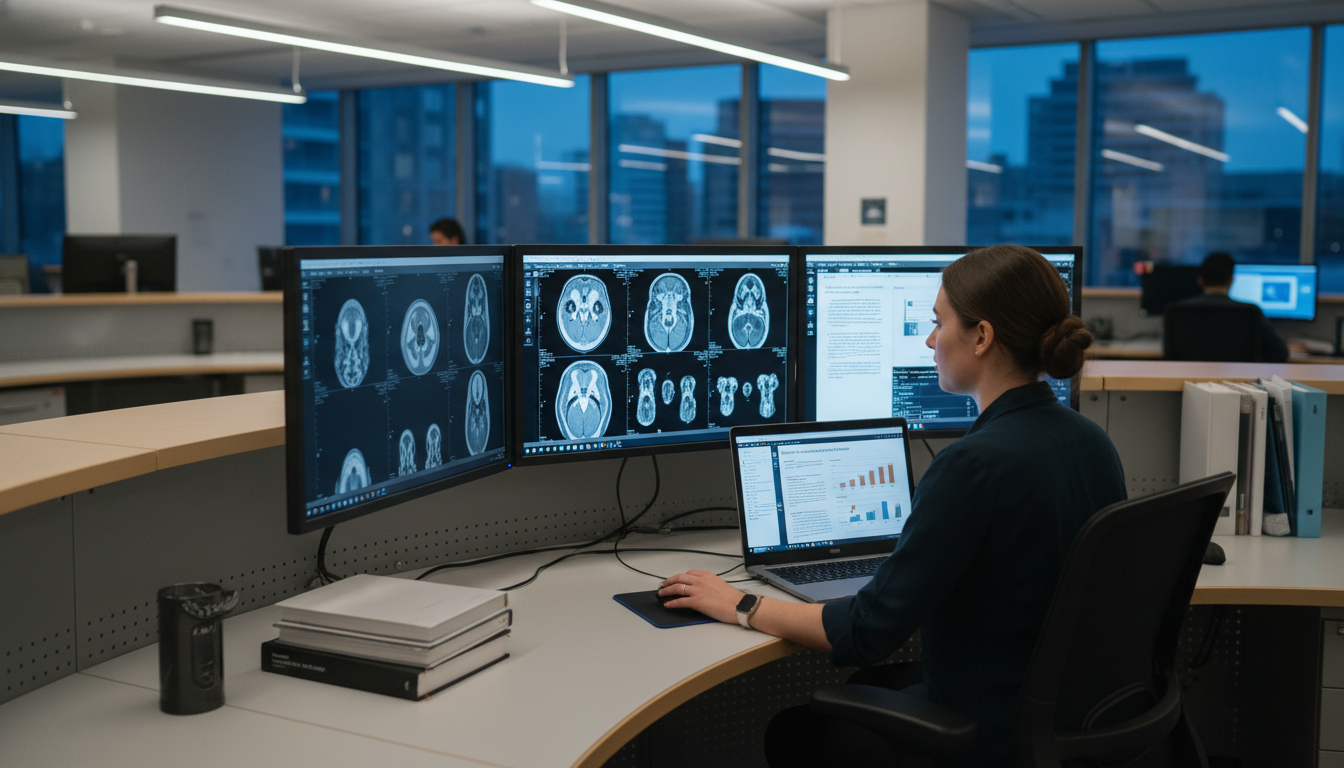
Why Your Research Profile Matters in Diagnostic Radiology
Diagnostic radiology is among the most research-driven and technology‑intensive specialties. Program directors know that residents must be comfortable interpreting ever-evolving imaging techniques, understanding evidence behind protocols, and sometimes leading innovation themselves. A strong research profile signals that you:
- Can ask meaningful questions and think critically
- Understand study design, statistics, and scientific writing
- Will contribute to the department’s academic output
- Can handle the rigor and self-direction residency demands
For the diagnostic radiology match, research is not just a bonus—it is often a significant differentiator, especially at university and academic programs. Even many community programs value applicants who can help with quality improvement projects, clinical audits, or educational scholarship.
However, “research profile building” doesn’t mean everyone must have an R01 grant or first-authored NEJM paper. The key is to:
- Understand what counts as meaningful research for residency applications
- Strategically plan your activities over time
- Present your work clearly and honestly on ERAS and during interviews
This guide walks you step-by-step through building a targeted, realistic, and credible research profile for radiology residency.
Understanding What Counts as Research in Radiology Residency Applications
Before diving in, it helps to know what program directors actually consider “research” and how they interpret common metrics like publications for match and how many publications needed for a competitive radiology residency application.
Types of Scholarly Work That Matter
In ERAS and in program director eyes, the following all count as research/scholarship:
- Peer-reviewed original research
- Retrospective imaging studies
- Prospective trials (less common at med student level)
- Basic science or translational imaging research
- Case reports and case series
- Interesting or rare imaging findings
- Unusual presentations that highlight imaging features
- Review articles and book chapters
- Narrative or systematic reviews related to imaging
- Educational review chapters (e.g., radiology teaching resources)
- Quality improvement (QI) projects
- Dose reduction initiatives
- Workflow improvement in imaging departments
- Structured reporting implementation
- Educational research
- Evaluating teaching interventions in imaging education
- Curriculum development with data collection
- Conference abstracts, posters, and presentations
- RSNA, ARRS, SIR, subspecialty meetings
- Local institutional research days
- Non-traditional scholarship
- High-quality educational websites or apps (if structured, rigorous, and ideally peer-reviewed or institutional-backed)
- Radiology teaching podcasts or YouTube channels with educational outcomes or formal recognition
Even if your work is “in progress,” you can still list:
- Abstracts submitted or accepted
- Manuscripts under review (honestly labeled)
- Projects with data collected but not yet written up (listed under “Research Experience” rather than “Publications”)
Does Research Need to Be Radiology-Focused?
Radiology-focused or imaging-related research is ideal, but not mandatory. Program directors primarily care about:
- Your role and level of responsibility
- Rigor and continuity of involvement
- Evidence that you can complete projects
Still, imaging-related or radiology-adjacent projects do give you specific talking points for radiology interviews and demonstrate commitment to the field. Examples:
- Oncology project where imaging criteria (e.g., RECIST) are used for tumor response
- Stroke outcomes work involving CT or MRI protocols
- AI projects analyzing medical images
If you are early in training and can choose between unrelated basic science and radiology-adjacent clinical work, the latter is usually more strategic for a diagnostic radiology match.
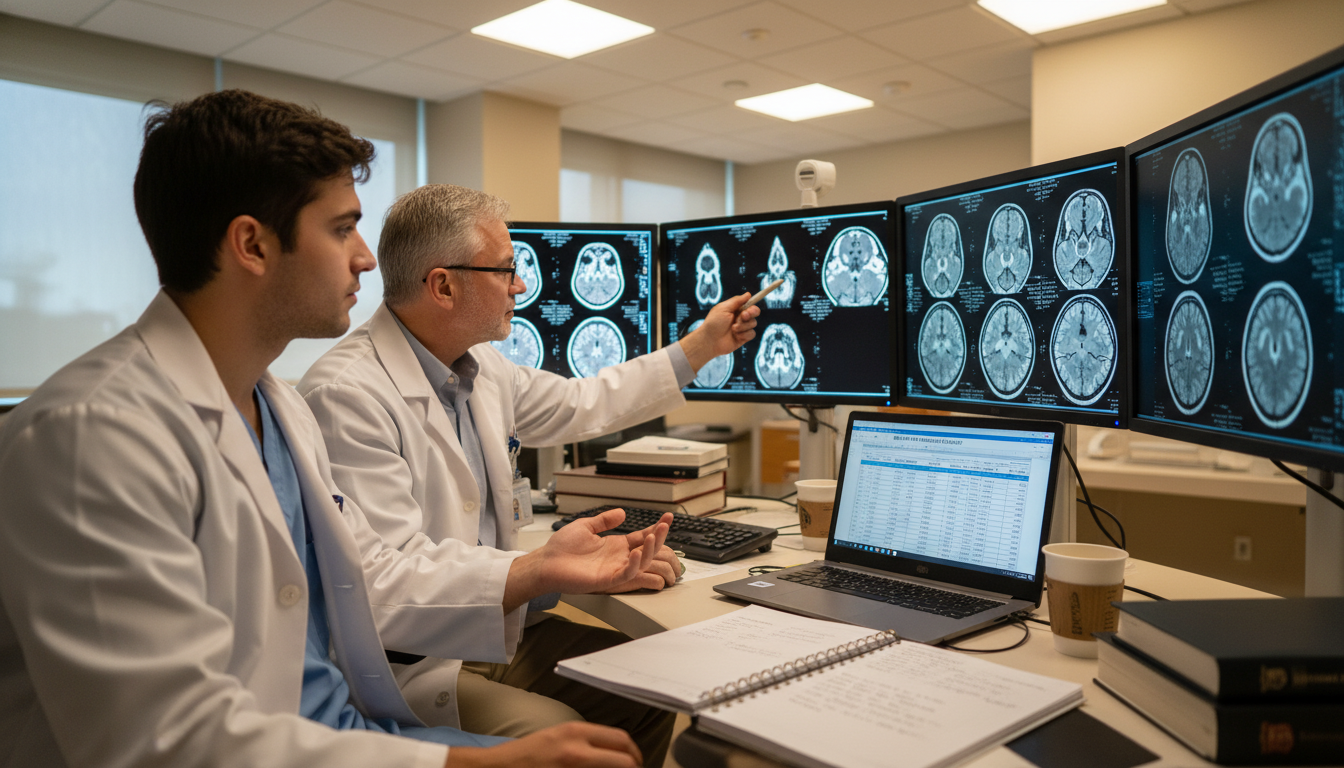
How Many Publications Do You Really Need for Diagnostic Radiology?
There is no single magic number for how many publications needed for a successful radiology match. Programs and applicants vary widely. That said, you can think in tiers:
Tier 1: Minimal but Solid Research Exposure
- 0–1 publications, possibly in non-radiology fields
- 1–2 posters or abstracts
- A few months of part-time involvement in a project
This level may be sufficient for:
- Many community-based programs
- Some hybrid academic–community programs
- Applicants with strong USMLE scores, strong letters, and solid clinical performance
Risk: You may seem less compelling at major academic radiology departments unless other aspects of your application are exceptional.
Tier 2: Competitive Academic Applicant
- 2–4 publications, at least one with a clear radiology/imaging connection
- Several abstracts or posters (institutional or national)
- 1 or more substantial, longitudinal research experiences (≥6–12 months)
This is a realistic, strong target for many applicants aiming at:
- University-based programs
- Mid-to-upper tier academic radiology residencies
Tier 3: Strongly Academic / Research-Heavy Profile
- 5+ publications, multiple first-author or second-author roles
- National conference presentations (e.g., RSNA, subspecialty meetings)
- Significant, multi-year involvement in a research group
- Possibly MPH, MS, or other research-focused training
This level is often seen in:
- MD/PhD or dual-degree candidates
- Those targeting highly research-intensive or physician-scientist tracks
- Applicants with strong interest in an academic career or fellowship at top institutions
Quality Over Quantity
Program directors in radiology increasingly differentiate between:
- A long list of minor, low-quality, or “guest-author” publications
- A shorter but cohesive body of meaningful, completed work where you can clearly explain your contributions
They will often probe in interviews:
- “What was your role?”
- “How did you handle obstacles in the project?”
- “What did you learn, and how would that shape your work as a radiologist?”
If you can’t confidently answer these questions, the publication count is less persuasive.
Step-by-Step Strategy to Build a Radiology-Focused Research Profile
Step 1: Clarify Your Timeline and End Goals
Your research strategy should fit your situation:
- Preclinical student (M1–M2 or early years):
Ideal time to learn basics of research, join a lab, and build continuity. - Clinical student (M3–M4) or final years:
Focus on completing and publishing existing projects, plus shorter-term case reports/QI. - International medical graduate (IMG):
Research can be a major differentiator; consider dedicated research time or observerships with research components. - Non-traditional or late decider on radiology:
Prioritize projects that can realistically be completed before ERAS submission.
Define your broad goal:
“By the time I apply for radiology residency, I want X completed publications + Y abstracts/posters + at least one project I can discuss in depth during interviews.”
Be realistic and backward-plan from your application cycle.
Step 2: Find the Right Mentors and Research Environment
In radiology, your mentor is as important as the project itself.
Where to look:
- Radiology department website: look for faculty with:
- Active publication records
- Topics aligned with your interests (e.g., neuroradiology, MSK, AI, IR)
- Medical school research offices or dean’s office
- Radiology interest groups and student-run organizations
- Conference proceedings: find your institution’s faculty presenting at RSNA, ARRS, subspecialty meetings
How to reach out effectively:
Send a concise email that:
- Introduces you briefly (year, school, radiology interest)
- References 1–2 specific papers of theirs you have skimmed
- Clearly states your goal (e.g., “I’m hoping to work on a retrospective study or case series that I can help drive toward publication within the next 12–18 months.”)
- Emphasizes your commitment (time availability, willingness to learn stats, etc.)
Offer to start with:
- Literature reviews
- Data extraction
- Building REDCap databases
- Drafting case reports or abstracts
Red flags to watch for:
- Mentors with numerous “ongoing” projects but few completed publications
- Poor track record of including students as authors
- Vague expectations, no regular meeting schedule
Choose mentors who:
- Have a publication track record
- Are responsive and willing to teach
- Have clear roles for students in their research workflow
Step 3: Select Projects Strategically
For the diagnostic radiology match, some projects are more feasible than others within the medical student timeframe.
High-yield, realistic project types:
Retrospective imaging studies
- Example: “CT pulmonary angiography utilization and yield before and after a decision-support tool.”
- Pros: Feasible within 6–12 months, uses existing data.
- You can help with: chart review, image review (under supervision), data entry, literature review, manuscript drafting.
Case reports and small case series
- Example: “Unusual MRI findings in X rare disease.”
- Pros: Shorter timeline (weeks–months), good for learning radiology writing.
- Cons: Lower impact than original research, but still valuable, especially with imaging focus.
Quality improvement projects
- Example: “Implementation of structured reporting for appendicitis CT and its impact on report completeness.”
- Pros: Very relevant to clinical practice, often welcomed by departments.
- You can help with: baseline audits, surveys, data collection, pre/post-intervention analysis.
Educational projects
- Example: “Developing and evaluating an online radiology teaching module for medical students.”
- Pros: Good for those interested in education; can be turned into conference abstracts and manuscripts.
- Consider including: pre- and post-tests, feedback surveys, objective outcomes.
AI and informatics projects (if resources exist)
- Example: “Performance of a deep-learning algorithm in detecting intracranial hemorrhage compared with radiologist readers.”
- Pros: Very “hot” in radiology; can stand out.
- Cons: Often more complex; may require programming/statistical background and well-equipped lab.
Choose a mix:
- 1–2 longer, more substantial projects
- 2–4 shorter, quicker wins (case reports, abstracts)
Step 4: Learn the Basics of Methods, Statistics, and Imaging-Specific Nuances
You don’t need to be a statistician, but a baseline understanding of:
- Study designs (retrospective vs prospective, cohort vs case-control)
- Common statistical tests (t-tests, chi-square, logistic regression)
- Diagnostic test metrics (sensitivity, specificity, ROC curves)
is especially important in imaging research.
Radiology-specific concepts to learn:
- Inter-reader and intra-reader agreement (e.g., kappa statistics)
- Reference standards (e.g., imaging vs histopathology vs clinical follow-up)
- Structured reporting and lexicons (e.g., BI-RADS, LI-RADS, PI-RADS)
- Radiation dose metrics and safety principles
Actionable tip:
Complete at least one short online course in:
- Basic biostatistics
- Research methodology
- Radiology outcomes research or clinical epidemiology
This will significantly help your ability to ask good questions, analyze data, and talk intelligently about your work during interviews.
Step 5: Deliver: From “In Progress” to “Published”
Applicants often underestimate how long the final stages (writing, revising, submission, revision, and acceptance) can take. To maximize your visible output before ERAS:
Plan for early abstracts
- Many conferences have deadlines 6–12 months before the event.
- Even an early-stage analysis can often be turned into an abstract and poster.
Set clear micro-deadlines with your mentor
- Date to finish literature review
- Date to complete data collection
- Date to finish first manuscript draft
- Schedule recurring check-ins
Volunteer for the “unpopular” tasks
- Reference formatting
- Figure creation and labeling (critical for radiology!)
- Responding to reviewer comments under supervision
Target appropriate journals
- Not every paper needs to go to the highest-impact journal.
- Ask your mentor for a realistic tier and have a backup plan if rejected.
Being the driving force behind pushing a project to completion is one of the strongest signals you can send in your application.
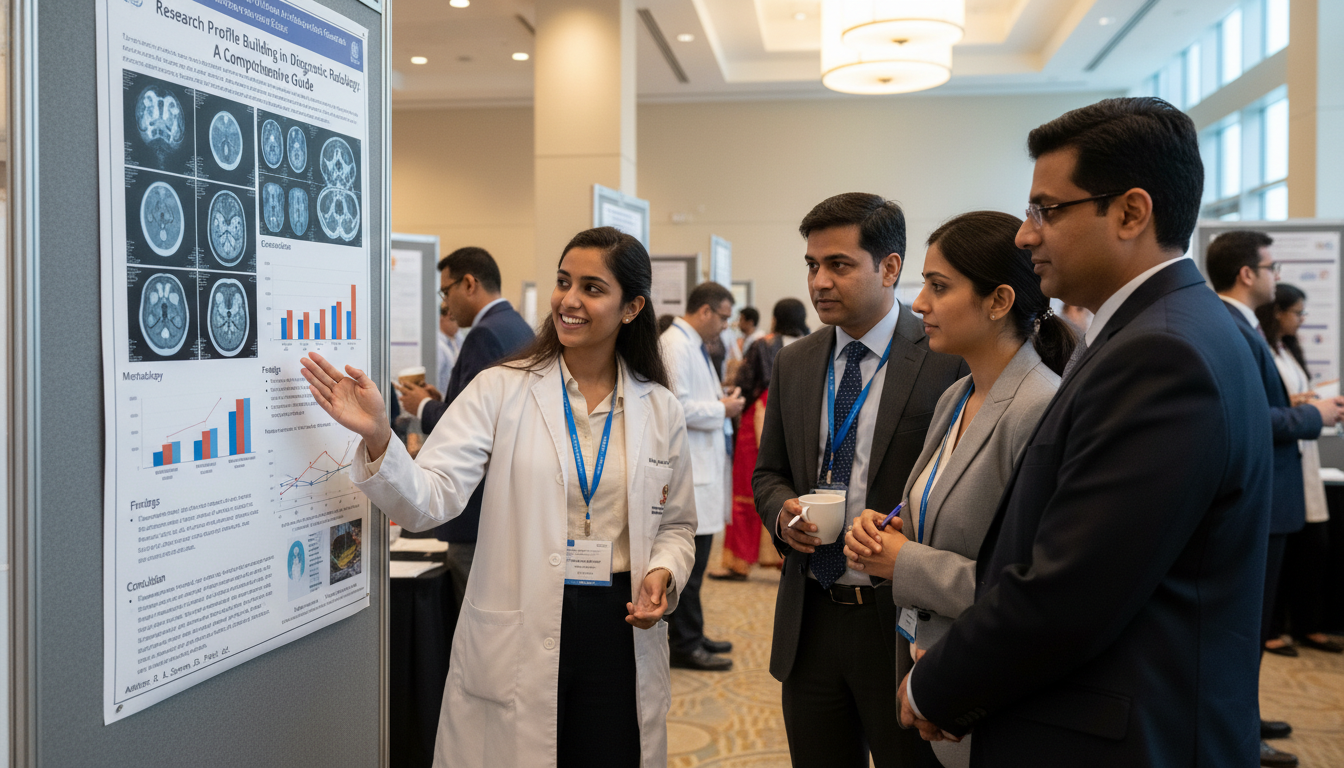
Showcasing Your Research for the Diagnostic Radiology Match
Having research is step one. Presenting it clearly and strategically for residency programs is step two.
Documenting Research in ERAS
ERAS separates:
- Publications and Presentations
- Research Experiences
Use these sections to:
- Publications: Include only works that are published, accepted, in-press, or legitimately “submitted” with a complete manuscript.
- Research Experiences: Include projects where you contributed meaningfully, even if not yet published, clarifying status (data collection complete, manuscript in draft, etc.).
For each entry:
- Clearly specify your role (conceptualization, data collection, statistics, writing).
- Avoid exaggerating titles—if you were a co-investigator or research assistant, say so.
- For multi-author papers, avoid implying first-authorship if you are not first author.
Talking About Research During Interviews
In many radiology interviews, you’ll be asked about your research. Prepare:
A “flagship project” story (2–3 minutes)
- The question you were asking
- Study design and key methods (briefly)
- Main findings
- Challenges and how you overcame them
- Implications for radiology practice or patient care
1–2 shorter vignettes
- Memorable case report or QI project
- Interesting collaboration or learning experience
Reflection on your research path
- How research shaped your interest in diagnostic radiology
- What kind of scholarship you hope to pursue as a resident
Program directors are not expecting you to be a fully formed investigator, but they do appreciate:
- Intellectual curiosity
- Ownership of your contributions
- Honesty about limitations and failures
Matching Research to Program Type
When applying, consider how your research profile aligns with program characteristics:
Research-heavy academic programs
- Highlight your most substantial projects, leadership roles in research, and future academic goals.
- Emphasize your interest in subspecialty or advanced imaging research.
Balanced academic–community programs
- Emphasize practical, clinically relevant projects (QI, workflow, education).
- Show you can translate research into improved patient care and efficient imaging practice.
Predominantly clinical/community programs
- Show that your research experience helped you develop discipline, critical appraisal skills, and an evidence-based mindset.
- Don’t give the impression you’re uninterested in clinical work.
Common Pitfalls and How to Avoid Them
Pitfall 1: Chasing Quantity Without Substance
Signing onto every project in sight without meaningful involvement can:
- Spread you too thin
- Lead to unfinished projects
- Make it difficult to talk about your role during interviews
Solution:
Prioritize depth of involvement and completion. It is better to have 2–3 projects where you were integral than 10 where you can’t explain what you did.
Pitfall 2: Overstating or Misrepresenting Contributions
Program directors and interviewers can often tell when applicants:
- Claim “co-first-author” without clear justification
- List “submitted” manuscripts that never had a complete draft
- Inflate responsibilities (e.g., claiming “study design” when only involved in data entry)
Solution:
Be meticulously honest. You can still frame your contributions positively while being accurate.
Pitfall 3: Ignoring Non-Imaging Research
If you already have solid non-radiology research (e.g., cardiology, oncology, public health), don’t dismiss it. You can:
- Highlight transferable skills (study design, data analysis, collaboration).
- Connect disease processes or outcomes back to imaging when possible.
Pitfall 4: Waiting Too Long to Write
Data without a manuscript is common in student research. Delays often happen when:
- No one takes ownership of the writing
- Students assume “someone else” (usually the mentor) will draft the paper
Solution:
Proactively volunteer to draft sections. Even if your draft is rough, it gives your mentor something to edit and moves the project forward.
Pitfall 5: Neglecting Peer Networking
Conferences and departmental research meetings are ideal places to:
- Find future mentors and collaborators
- Learn which projects are thriving
- Understand where the field is heading (AI, theranostics, advanced MRI, etc.)
Even a single poster at a major conference can open doors if you network strategically.
FAQs: Research for Radiology Residency Applicants
1. Is research mandatory to match into diagnostic radiology?
Research is not strictly mandatory, but it is highly advantageous, especially for:
- University-based and research-oriented programs
- Applicants with otherwise borderline metrics (e.g., test scores)
- IMGs aiming to stand out
Many community programs have matched applicants with minimal research, but as the field grows more competitive, a meaningful research experience is increasingly expected.
2. How many publications do I need for a competitive diagnostic radiology match?
There is no universal threshold, but as a rough guide:
- Competitive academic applicant: 2–4 well-structured publications, ideally with at least one imaging-related.
- More research-heavy or academic-career-minded candidate: 5+ publications and clear leadership in at least one project.
- For many community programs: 0–1 publication may still be acceptable, especially with strong clinical performance and letters.
Remember: Programs value quality, depth, and honesty over sheer number.
3. Does it hurt me if my research is not in radiology?
No. Non-radiology research still demonstrates:
- Critical thinking
- Ability to complete projects
- Familiarity with scientific methods
However, radiology- or imaging-focused work:
- Gives you more tailored interview talking points
- Demonstrates commitment to the specialty
If possible, aim for at least one radiology-adjacent project, especially in your later years.
4. I’m late to deciding on radiology. What can I do quickly to build my research profile?
Even with limited time, you can:
- Work on case reports or small case series with radiology faculty
- Join a QI project that already has initial data
- Help finalize and write up an ongoing retrospective study
- Submit abstracts or posters to local or regional meetings
Focus on projects with realistic timelines and strong mentorship, and be prepared to discuss them thoughtfully during interviews.
By approaching research deliberately—choosing projects wisely, finding supportive mentors, and driving work to completion—you can build a credible, compelling research profile that strengthens your radiology residency application and sets the foundation for a career grounded in evidence-based imaging and innovation.