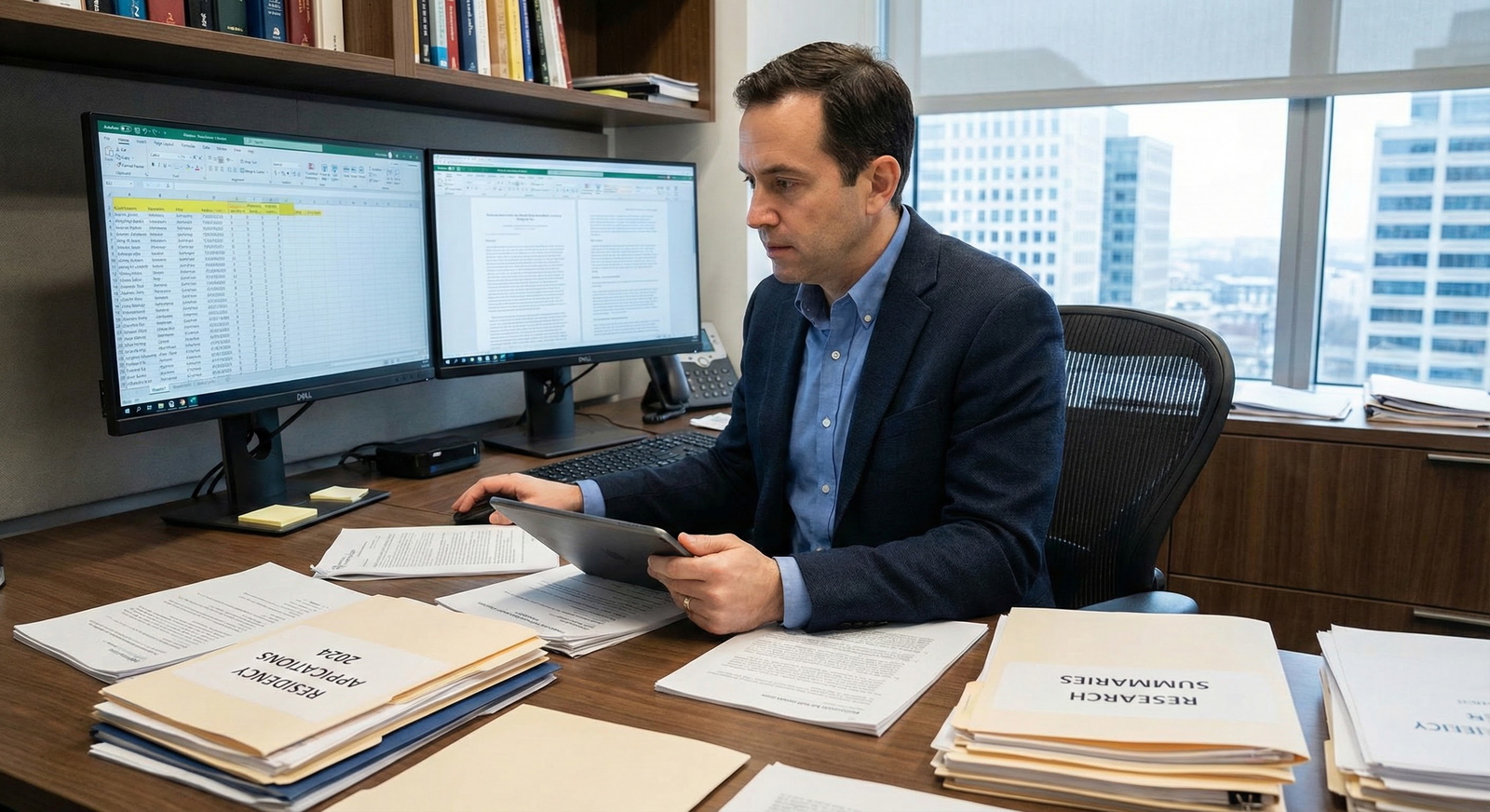
Understanding the Role of Research for a DO Graduate in Anesthesiology
For a DO graduate pursuing an anesthesiology residency, research can be a powerful differentiator. While osteopathic applicants have become increasingly competitive in the anesthesia match, some programs—especially university and academic centers—still place additional emphasis on scholarly activity.
Research does not have to define your entire application to be effective. Strong rotation performance, letters of recommendation, and board scores remain critical. However, a strategic research profile can:
- Strengthen applications to academic anesthesiology residency programs
- Signal intellectual curiosity, discipline, and evidence-based thinking
- Offset some weaknesses (e.g., modest scores) when used wisely
- Help you stand out as a DO graduate in a pool that’s often MD-heavy
This article will walk you through how to build a research profile tailored specifically for a DO graduate targeting anesthesiology, with a focus on:
- Where and how to get involved in research (even with limited prior experience)
- What types of projects are realistic and high-yield
- How many publications you actually need for the anesthesia match
- How to present your work effectively on ERAS and during interviews
Throughout, we’ll keep in mind your unique challenges as a DO applicant navigating the osteopathic residency match landscape and applying broadly, including to ACGME anesthesiology programs.
Setting Realistic Goals: What Does a Competitive Research Profile Look Like?
Before diving into logistics, it’s helpful to set appropriate expectations.
How much research do anesthesiology programs expect?
Anesthesiology is moderately research-oriented compared with ultra-research-heavy fields like dermatology or neurosurgery. Many community or hybrid programs focus more on:
- Clinical performance
- Letters from anesthesiologists
- Board scores and COMLEX/USMLE
However, academic anesthesia departments—especially those at large university hospitals—often see research as a plus or a soft requirement.
Typical expectations:
- Community programs: Research is a bonus, not a requirement
- Mid-tier academic programs: Expect some exposure to scholarship
- Top academic centers: Prefer applicants with tangible research output (posters, abstracts, or publications)
How many publications are needed for anesthesiology residency?
Applicants often ask, “how many publications are needed” to be competitive. There’s no magic number, but for DO graduates aiming broadly:
- 0 publications: Still matchable, especially to community-focused or smaller programs, if the rest of your application is strong. But you should at least aim for some scholarly activity such as a QA project or case report.
- 1–3 publications/abstracts/posters: A realistic and solid goal for most DO graduates, particularly if at least one item is anesthesia-related.
- 4+ scholarly items: Helpful for competitive academic anesthesiology residency programs and those who might consider fellowships in critical care, cardiac, or pain medicine later.
Remember: ERAS counts posters, abstracts, and presentations as “scholarly activity.” These are often far more attainable than full peer‑reviewed manuscripts, especially with limited time.
Quality vs quantity: what matters more?
For DO graduates, especially when approaching the osteopathic residency match and the ACGME anesthesia match:
- Relevance to anesthesiology or perioperative care is more impactful than many unrelated projects
- Demonstrating a clear role (e.g., data collection, analysis, first author, or presenter) strengthens your narrative
- Sustained involvement with one mentor can matter more than scattered, superficial contributions
- A publication in any reputable journal (even non-indexed or specialty newsletters) is usually better than nothing, as long as it’s honest and ethically produced
Your goal: build a focused, coherent research story rather than just checking a box.

Finding and Securing Research Opportunities as a DO Graduate
DO graduates sometimes face additional barriers to research access—particularly if they trained at a community‑based or osteopathic-focused school without a large academic medical center. The good news: with persistence and strategy, you can still build a solid research portfolio.
Step 1: Identify your environment and starting point
Ask yourself:
- Are you still affiliated with a medical school or doing a transitional/prelim year at an institution with residents and fellows?
- Does your hospital have an IRB (Institutional Review Board) or research office?
- Are there anesthesiology, critical care, or pain management faculty already doing projects?
If you’re no longer directly connected to an academic center, you’ll need to leverage:
- Alumni contacts
- Former preceptors or rotation sites
- Remote collaborations (multi-center projects, online research networks)
Step 2: Use clinical rotations to initiate research
Your clinical rotations—especially anesthesia electives or sub‑internships—are your most direct route to finding projects:
- Before the rotation: Email the clerkship director and ask if any faculty are recruiting students or DO graduates for research or QA projects.
- Early in the rotation: After demonstrating reliability, ask your attending, “Do you or your colleagues have ongoing projects I might help with? I’m particularly interested in research for residency in anesthesiology.”
- During cases: When you encounter an interesting case (e.g., complex airway, rare reaction to anesthetic), ask if it might be suitable for a case report or educational presentation.
Concrete example:
You care for a patient with a severe, unexpected reaction to a regional block. After the case, you say, “Dr. Smith, that was a fascinating and challenging case. Do you think this might be appropriate for a case report? I’d be happy to do the writing and literature review if you’d consider mentoring me.”
Step 3: Cold outreach to anesthesiology faculty
If you’re not currently in an anesthesia rotation, you can still reach out:
- Go to the website of nearby academic or large community hospitals.
- Look for Department of Anesthesiology faculty pages.
- Identify those with listed research interests (e.g., “perioperative outcomes,” “regional anesthesia,” “pain medicine”).
- Send a focused, professional email.
Sample email template:
Subject: DO Graduate Seeking Anesthesiology Research Experience
Dear Dr. [Last Name],
My name is [Your Name], and I am a DO graduate applying to anesthesiology residency this upcoming cycle. I am particularly interested in [brief interest: e.g., perioperative outcomes and patient safety].
I am reaching out to ask whether you might have any ongoing projects—clinical, quality improvement, case reports, or chart reviews—where an extra pair of hands could be helpful. I can assist with literature review, data collection, and drafting abstracts or manuscripts.
I have [brief research background, if any, or “limited formal research experience but strong interest and availability to learn quickly”]. I can commit [realistic time per week], and I’m flexible regarding the type of project.
I would be very grateful for the chance to contribute under your guidance, even in a small role.
Thank you for your time and consideration.
Sincerely,
[Name, DO]
[Phone] | [Email]
Send several of these—politely and strategically. Most will not respond; a single positive reply can significantly change your research trajectory.
Step 4: Leverage DO-friendly institutions and networks
As a DO graduate, consider:
- Osteopathic anesthesiology departments or DO-heavy programs that already value and understand DO training
- National organizations such as:
- American Society of Anesthesiologists (ASA)
- American Osteopathic College of Anesthesiologists (AOCA)
- Emailing DO anesthesiologists whose names appear in publications or on program websites; they may be especially receptive to supporting a DO applicant.
High-Yield Project Types for DO Applicants in Anesthesiology
Not all research is equally feasible or equally valuable for residency applications. As a DO graduate with limited time before the anesthesia match, you want projects that are:
- Achievable within months, not years
- Clearly relevant to anesthesiology or perioperative medicine
- Likely to produce something you can list on ERAS (even if “submitted” or “in progress”)
1. Case Reports and Case Series
Why they’re ideal:
- Fastest path to a publication or poster
- Highly feasible in environments with limited infrastructure
- Let DO graduates capitalize on interesting patients seen during rotations
Example cases:
- A rare drug reaction to a commonly used anesthetic
- Unusual airway anatomy requiring creative management
- Perioperative management of a complex cardiac patient undergoing noncardiac surgery
Action steps:
- Identify a faculty mentor who managed the case.
- Confirm the case is sufficiently unique (quick PubMed/Google Scholar search).
- Write a structured draft (introduction, case description, discussion, conclusion).
- Submit to:
- Anesthesia case-report journals
- Broader journals accepting case reports
- Institutional or regional conferences for poster presentation
Even a poster presentation from a case report is valuable as “publications for match,” since ERAS includes presentations and abstracts in scholarly activity.
2. Quality Improvement (QI) and Patient Safety Projects
QI is highly relevant to anesthesiology and often more accessible than large clinical trials.
Common anesthesiology QI themes:
- Reducing postoperative nausea and vomiting
- Improving preoperative medication reconciliation
- Enhancing adherence to ERAS (Enhanced Recovery After Surgery) protocols
- Reducing opioid use or optimizing multimodal analgesia
For the anesthesia match, programs often view these projects favorably because they show:
- Systems-based thinking
- Real-world impact on patient care
- Team collaboration skills
Action steps:
- Ask your department’s QA/QI committee if you can join an ongoing project.
- Offer to help collect data, create educational materials, or prepare a poster.
- Present findings at a hospital QI day, regional ASA meeting, or institutional research day.
Even if a QI project never becomes a formal publication, it still adds weight to your profile as a DO applicant dedicated to practice improvement.
3. Retrospective Chart Reviews
These are more complex but still feasible with a good mentor and IRB guidance.
Possible questions in anesthesiology:
- Are certain preoperative risk factors associated with prolonged PACU stays?
- Does implementation of a specific block technique reduce opioid usage?
- What are the outcomes of ASA class III–IV patients undergoing particular procedures?
As a DO graduate, your role might include:
- Data extraction from electronic records
- Literature review and drafting of introduction/discussion
- Formatting tables and figures
Even if the paper is not fully published by the time you apply, you can usually list it on ERAS as “submitted” or “in preparation,” as long as you clearly indicate its status.
4. Educational Projects and Curriculum Development
If your interest leans toward teaching, you can pursue:
- Developing simulation scenarios for anesthesiology trainees
- Creating a teaching module on airway management for medical students
- Recording short educational videos or tutorials with a faculty mentor
These projects support your research profile when they lead to:
- Presentations at education conferences
- Peer-reviewed educational articles or online modules
- Teaching awards or institutional recognition

Maximizing Impact: From Project to Match-Ready Research Profile
Doing the research is only part of the story. To make your efforts matter for the anesthesiology residency match, you need to convert projects into visible, certifiable achievements.
Turning projects into presentations and publications
For each project, ask:
- Can this be a poster at a local, regional, or national meeting?
- Is there a realistic journal that might accept it as a brief report, case report, or full manuscript?
- Could this form the basis of a resident/student research competition submission?
High-yield venues for anesthesiology-related work:
- ASA annual meeting (American Society of Anesthesiologists)
- AOCA meetings (especially helpful for DO-focused networking)
- Institutional research days and QI fairs
- Subspecialty societies (e.g., regional anesthesia, critical care, pain)
For a DO graduate, even a single national poster significantly elevates your anesthesia match profile compared to peers with no scholarly output.
How to list research on ERAS effectively
When completing ERAS:
- Separate peer-reviewed publications, abstracts/posters, and oral presentations
- Clearly state your role (first author, second author, presenter)
- For works in progress:
- Use status labels like “Submitted,” “Provisionally accepted,” or “In preparation,” but only if accurate
- Do not list speculative projects that may never materialize
Example ERAS entry for a case report:
Smith J, [Your Name], Patel R. Unexpected hypotension following low-dose spinal anesthesia in an elderly patient with severe aortic stenosis. Poster presented at: ASA Annual Meeting; 2024; San Diego, CA.
Example for a QI project:
[Your Name], Lee A, Torres M. Implementation of a standardized multimodal analgesia protocol in total knee arthroplasty: a quality improvement initiative. Oral presentation at [Hospital Name] Quality Improvement Day, 2023.
Discussing your research in interviews
Expect questions like:
- “Tell me about your research.”
- “What was your specific role in the project?”
- “What did you learn from this experience that will help you as an anesthesiology resident?”
Prepare concise answers:
- Context: One sentence on what you studied and why it mattered.
- Your role: Specific tasks you performed (data collection, analysis, drafting, presenting).
- Impact: Any results, lessons, or changes in practice.
- Reflection: How it shaped your interest in anesthesiology or future goals (e.g., ICU, pain, academics).
Strong responses help programs see you as a thoughtful, honest, and engaged future colleague—especially important when some PDs may have less familiarity with DO graduates.
Strategic Planning: Building Your Research Profile Timeline as a DO Graduate
Time is your most limited resource. A strategic timeline helps you assemble a coherent research portfolio before the anesthesiology residency match deadlines.
If you are 12–18 months from applying
Ideal for: M3s or early graduates planning a later match
Focus on:
- Securing a longer-term project like a retrospective review or multi-center QI effort
- Pairing with a mentor early and meeting regularly
- Targeting at least 1–2 potential publications and 1–2 conference presentations
- Asking explicitly if you can be first or second author on at least one project
Plan:
- Months 1–3: Identify mentor, develop project idea, prepare IRB/QI proposal
- Months 4–9: Data collection and analysis
- Months 10–14: Draft manuscript and abstracts; submit to meetings/journals
- Months 15–18: Prepare for residency applications with final products (posters, accepted papers)
If you are 6–12 months from applying
Typical for many DO graduates finishing core rotations or early PGY-1
Focus on:
- Case reports (fastest from idea to submission)
- QI projects that are already underway, where you can help with data or implementation
- National or local poster submissions with shorter lead times
Plan:
- Months 1–2: Join 1–2 active projects and identify 1 plausible case report
- Months 3–6: Aim to submit at least one abstract or case report for presentation/publication
- Months 7–9: Prepare final CV/ERAS entries; update statuses as acceptance decisions arrive
If you are <6 months from submitting ERAS
You still have options, but need to focus sharply on quick wins:
- Identify an interesting case and write it up immediately
- Join a QI project where data are already collected and analysis/writing is needed
- Aim for at least one scholarly output you can list as “in progress” or “submitted”
Even if the project is not fully accepted before you apply, programs will see that you have initiated scholarly work. As a DO graduate, that effort can still positively influence perceptions, especially in programs that value academic curiosity.
Frequently Asked Questions (FAQ)
1. Do I need research to match into anesthesiology as a DO graduate?
Research is not an absolute requirement for anesthesiology, and many DO applicants match successfully without extensive research. However:
- For academic or university-based programs, scholarly activity is often expected
- Even for community programs, having at least one research or QI project can set you apart
- As a DO graduate, research can help mitigate concerns about lack of exposure to academic environments
Aim for some meaningful scholarly activity, even if it’s a single case report or QI project.
2. How many publications do I need to be competitive for the anesthesia match?
There is no fixed number of how many publications are needed, but general guidance:
- 1–3 scholarly items (case reports, posters, QI projects, or manuscripts) is a realistic and solid goal for most DO applicants
- Focus on quality, relevance to anesthesiology, and clarity of your role over volume
- A well-executed, anesthesia-related project is more influential than several minor, unrelated publications
3. I have research experience, but not in anesthesiology. Will it still help?
Yes. Non-anesthesia research still demonstrates:
- Discipline, critical thinking, and familiarity with the scientific method
- Ability to work in teams and complete long-term projects
In your ERAS application and interviews:
- Highlight transferable skills (data analysis, literature review, writing, presentations)
- Show how those skills translate into your interest in anesthesia and perioperative medicine
Still, if time permits, try to add at least one anesthesiology‑relevant project before applying.
4. I have no prior research. Where should I start right now?
For a DO graduate starting from scratch:
- Identify anesthesiology mentors through rotations, faculty lists, or alumni contacts.
- Ask explicitly for involvement in case reports and ongoing QI projects—they’re the fastest path to output.
- Offer to handle time-consuming tasks: literature searches, data collection, drafting sections of a manuscript.
- Target at least one project that could realistically become a poster or publication within your application cycle.
With consistent effort over 6–12 months, you can build a credible research profile—even from zero—while preparing a strong anesthesiology residency application as a DO graduate.
By approaching research strategically—choosing high-yield projects, aligning with strong mentors, and converting work into tangible outputs—you can create a focused, competitive research profile that supports your goals in the anesthesiology residency match as a DO graduate.