Understanding the Research Landscape for DOs in Dermatology
Dermatology is one of the most competitive specialties in the residency match, and this is especially true for DO graduates. Program directors in dermatology care deeply about your academic metrics, clinical performance, and—importantly—your research profile. A strong research track record can change how your application is perceived, open doors at more competitive programs, and help neutralize concerns about institutional bias toward MD applicants.
In this context, “research profile building” means more than just getting your name on a paper. It’s the deliberate process of:
- Choosing research experiences that align with dermatology
- Producing tangible outputs (posters, presentations, publications)
- Telling a coherent academic story in your application and interviews
- Leveraging research connections for away rotations and letters of recommendation
For a DO graduate aiming for dermatology residency, you are not just competing for a derm match—you are also working against historical trends that have favored MD applicants. Well-planned research can be your biggest differentiator.
Why Research Matters Even More for DO Graduates
Several realities make research particularly important for a DO graduate residency applicant in dermatology:
- Competitive applicant pool: Dermatology attracts many applicants with high board scores, honors, and strong home-institution departments.
- Variable access to home derm departments: Many osteopathic schools lack large, research-heavy dermatology departments, which can limit built-in research opportunities.
- Historical preference: Some academic programs still show a preference for MDs, especially where they are used to working with their own med students. Research helps you demonstrate that you can thrive in academic environments.
A robust dermatology-oriented research record signals:
- Commitment to dermatology as a career
- Comfort with academic rigor and critical appraisal of evidence
- Ability to see projects through from idea to completion
- Potential to contribute to the program’s academic mission
If you’re a DO graduate who already completed medical school and are now preparing to apply—or reapply—to the osteopathic residency match or NRMP match in dermatology, intentional research-building over 12–24 months can significantly strengthen your profile.
Setting Realistic Research Goals: Quality, Quantity, and Timing
One of the most common questions applicants ask is, “How many publications needed for a competitive derm match?” The honest answer: there is no fixed cutoff. However, there are patterns and ranges that are helpful to understand.
How Many Publications Are Typical in Dermatology?
Across specialties, dermatology applicants tend to have among the highest average numbers of abstracts, presentations, and publications. For a DO applying to dermatology:
Highly competitive academic programs
- Often see applicants with 10+ total scholarly items (including abstracts, posters, oral presentations, book chapters, and manuscripts).
- Many successful applicants will have 2–5+ first- or co-first-author papers in dermatology or closely related fields.
Mid-tier university-affiliated and strong community programs
- Commonly interview applicants with 4–8 scholarly products, with at least some clearly dermatology-focused.
- Even 1–2 solid, first-author derm-related publications can stand out.
Programs with historically higher DO representation
- May place relatively more weight on clinical performance and letters, but a strong research profile still helps, especially if you want to match at a derm program with good fellowship placement or academic ties.
Remember that ERAS lumps abstracts, posters, and publications into one “scholarly output” count. So, you don’t necessarily need dozens of PubMed-indexed manuscripts—posters, case reports, and quality improvement (QI) projects count as well.
Research Quantity vs. Quality
Program directors look at both:
- Quantity: Breadth of productivity; shows work ethic and follow-through.
- Quality: Depth, relevance to dermatology, and your role in the project.
For a DO graduate residency applicant in dermatology, a well-balanced goal might be:
- Over 12–18 months:
- 1–3 first-author dermatology case reports or series
- 1–2 review articles or book chapters (even if not first author)
- 2–4 posters or oral presentations at regional/national conferences
- 1+ involvement in a larger clinical or translational research project (even if middle author on eventual publication)
This is not a strict requirement, but a reachable, competitive profile if you are methodical and intentional.
Timing: When to Start and How Long to Commit
If you are already a DO graduate:
- Ideal: 1–2 gap years dedicated partly (or heavily) to dermatology research.
- Minimum: 6–9 months of structured research before ERAS opens; longer is better, especially for generating publications before rank lists are made.
Key timelines:
- Manuscripts can take 6–18 months from idea to publication.
- Case reports can move faster—sometimes 3–9 months.
- Posters and presentations often have submission deadlines 4–8 months before the meeting.
Plan backwards from your application cycle:
- If you plan to submit ERAS in September 2026, aim to start derm-focused research by early to mid-2025, especially if you are seeking multiple tangible outputs.

Strategic Ways DO Graduates Can Access Dermatology Research
Many DOs worry: “My school doesn’t have a big derm department. How can I even get involved?” There are more pathways than you might think.
1. Formal Research Fellowships in Dermatology
Some dermatology departments, especially at academic centers, offer 1–2 year research fellowships that are open to DOs and often specifically welcome applicants from diverse backgrounds.
Features typically include:
- Full-time research with a dermatology PI
- Participation in multiple ongoing projects
- Opportunities for case reports, chart reviews, and clinical trials
- Access to academic conferences and mentoring
- Sometimes modest stipends or salaries
How to find them:
- Department websites: Search “[Institution] dermatology research fellowship” or “gap year dermatology research fellow.”
- Social media: Many derm departments and PIs advertise positions on X (Twitter), Instagram, or LinkedIn.
- Listservs and specialty societies: American Academy of Dermatology (AAD) and other derm societies sometimes list research positions.
As a DO graduate, a well-chosen derm research fellowship can be a powerful signal of seriousness, especially if you lack a home derm department or previous research experience.
2. Remote or Collaborative Research with Academic Mentors
If relocating is not possible, consider remote collaborations, which became more common during the pandemic:
- Reach out to academic dermatologists who publish frequently in your area of interest (e.g., psoriasis, skin cancer, cosmetic derm).
- Offer concrete help: chart review, data extraction, literature review, figure preparation, or basic statistical support.
- Start with smaller projects:
- Case reports from community clinics (if you have access to de-identified data)
- Retrospective chart reviews where you help with data abstraction
- Literature reviews or guideline summaries
Tips when cold-emailing potential mentors:
- Use a concise, professional email (3–4 short paragraphs).
- Include:
- Who you are (DO graduate, year, school)
- Your interest in dermatology and research
- Relevant skills (statistics, coding, prior publications, languages)
- A 1-page CV highlighting research or academic achievements
- A specific ask: “I would be grateful for the chance to assist with any ongoing dermatology projects, including chart review, literature review, or manuscript drafting.”
Follow up once after 1–2 weeks if no response. Busy PIs sometimes miss emails.
3. Leveraging Non-Derm Departments to Build Foundational Skills
Dermatology-focused work is ideal, but if not immediately available:
- Join research in internal medicine, rheumatology, oncology, infectious disease, or pathology—all overlapping with derm topics like autoimmune disease, skin cancers, or infections.
- Contribute to skin-related or imaging-heavy projects, even if they’re not formally labeled “dermatology.”
- Highlight the relevance in your application: e.g., “Skin manifestations of autoimmune conditions in patients on biologic therapy.”
The goal is to grow transferrable research skills:
- Project planning and IRB navigation
- Data management and analysis
- Collaboration and communication
- Manuscript and abstract writing
You can then pivot into dermatology-specific projects once connections form.
4. Community and Private Practice Dermatology Opportunities
Do not underestimate community or private practice dermatologists, many of whom:
- Are interested in case reports and clinical pearls
- May collaborate on retrospective chart reviews
- Attend conferences where they present posters or cases
Approach them professionally:
- Ask if they would be open to co-authoring a case or series.
- Offer to draft the literature review and initial manuscript.
- Be mindful of HIPAA and patient consent; work under their supervision and follow all regulatory requirements.
These experiences can yield:
- Case reports centered on unique presentations of common diagnoses
- Practice-based QI projects
- Practical letters of recommendation from clinicians who have seen your work ethic closely
Building a Strong, Coherent Research Portfolio
Collecting random research experiences is less effective than building a coherent, strategic narrative that supports your identity as a future dermatologist.
Choosing Themes and Niches
Early in your research journey, consider focusing on 1–3 broad dermatology themes, such as:
- Inflammatory dermatoses (psoriasis, eczema, autoimmune bullous diseases)
- Skin cancers (melanoma, non-melanoma skin cancer, pigmented lesions)
- Pediatric dermatology
- Cosmetic dermatology and lasers
- Dermatologic surgery and Mohs
- Hair and nail disorders
- Infectious or tropical derm (e.g., fungal infections, leprosy in global health)
This doesn’t mean you can’t explore other areas, but having a recognizable thread across several projects:
- Helps programs remember you (“the DO applicant with strong psoriasis research”)
- Allows you to develop deeper expertise, improving your interview conversations
- Can lead to stronger recommendation letters from mentors who see you as invested in a niche
Types of Projects and Their Relative Impact
You should aim for a mix of lower-barrier and higher-impact projects:
Case Reports and Case Series
- Faster turnaround; often ideal first projects.
- Good way to learn the basics of writing and submission.
- Boosts your derm match profile if in well-respected journals, but less weight than original research.
Retrospective Chart Reviews
- Intermediate complexity.
- Can be single-center or multi-center.
- Good opportunity to use statistics and contribute to knowledge gaps.
- More impactful than isolated case reports.
Prospective Clinical Studies or Trials
- Highest complexity and longest timelines.
- Harder as a short-term trainee, but even partial involvement is impressive.
- Great if your name appears on a high-impact publication—even as a middle author.
Review Articles and Book Chapters
- Excellent for building topic expertise and teaching skills.
- Often invite-only, but you can propose review topics to mentors.
- Highly useful for interview discussions.
Quality Improvement (QI) and Educational Projects
- Often easier to implement, especially in community settings.
- Can lead to posters and local or regional presentations.
- Demonstrate systems thinking and commitment to patient care.
An effective dermatology research portfolio might include multiple smaller, faster-turnaround projects (case reports, QI) combined with one or two more substantial studies (retrospective or prospective).
Demonstrating Increasing Responsibility
Program directors value progression:
- Start: assisting with data collection and literature reviews
- Grow: drafting sections of manuscripts, creating figures, presenting at meetings
- Mature: designing research questions, contributing to IRB protocols, serving as first author
On your CV and ERAS:
- Clarify your role in each project—particularly if you:
- Initiated the project idea
- Led data collection
- Wrote major chunks of the manuscript
- Presented findings at conferences
As a DO graduate, being able to say “I conceived and led this project” is especially compelling.
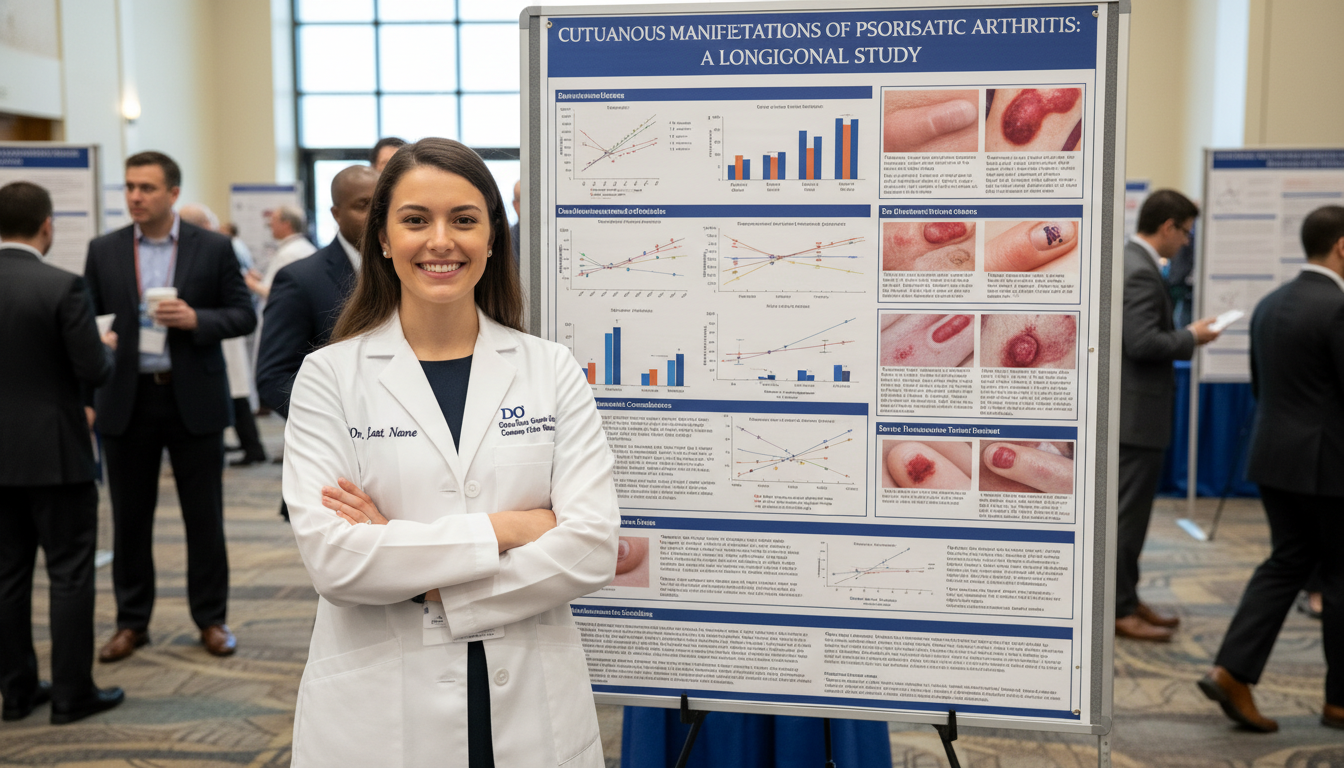
Turning Research into Match-Leveraging Power: Presentations, Networking, and Application Strategy
Research for residency is not just about publications; it’s about visibility, networking, and signaling.
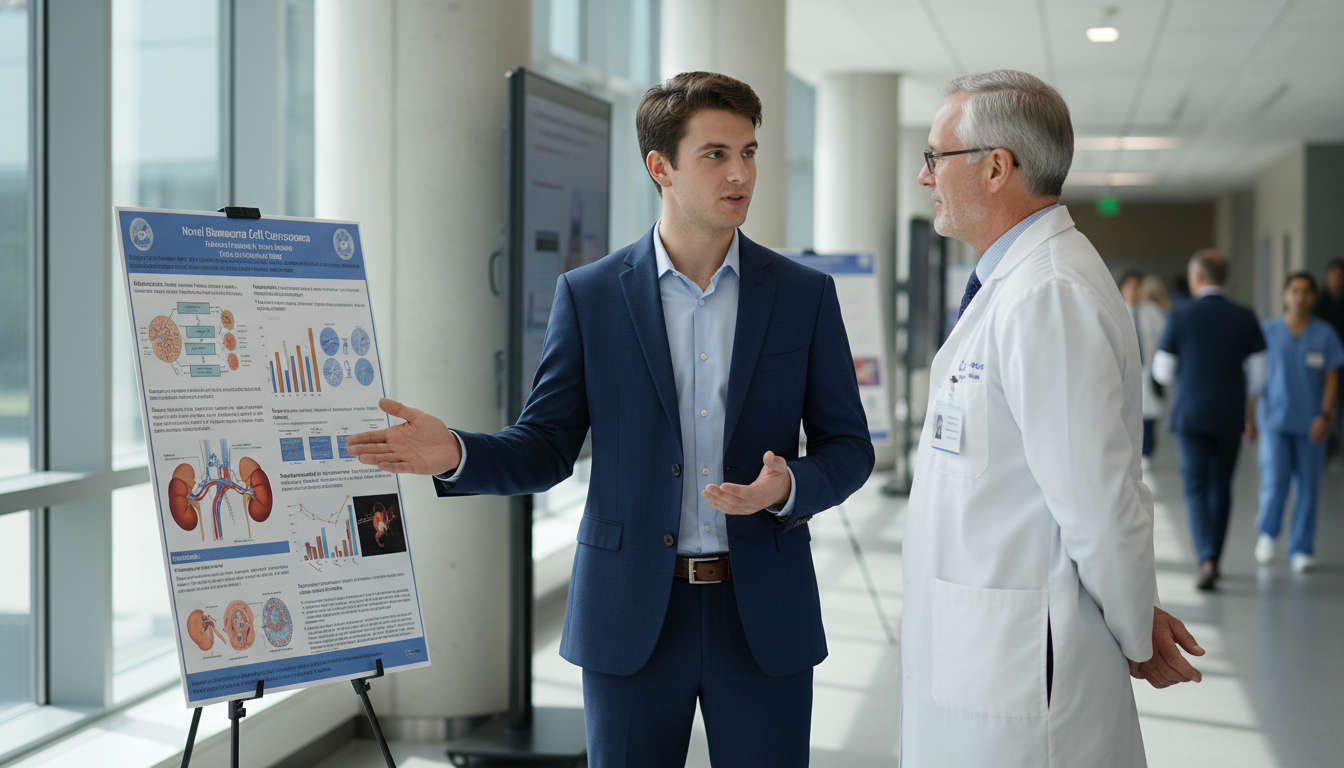
Presenting at Dermatology and Specialty Conferences
Aim to submit your work to:
- National meetings
- American Academy of Dermatology (AAD)
- Society for Investigative Dermatology (SID)
- American Society for Dermatologic Surgery (ASDS)
- Regional/state dermatology societies
- Often more accessible and less competitive
- Institutional research days
- Easy opportunity to present your work locally
Benefits:
- Your name and your DO status become visible to program faculty and residents.
- You can introduce yourself in person to dermatologists from programs you plan to apply to.
- Presenting offers talking points for your interviews and personal statements.
When you present:
- Practice a clear 2–3 minute summary of your project and its significance.
- Dress professionally and be prepared to explain your specific role.
- Collect emails or business cards from interested faculty or residents; follow up after the meeting.
Using Research to Build Relationships and Letters
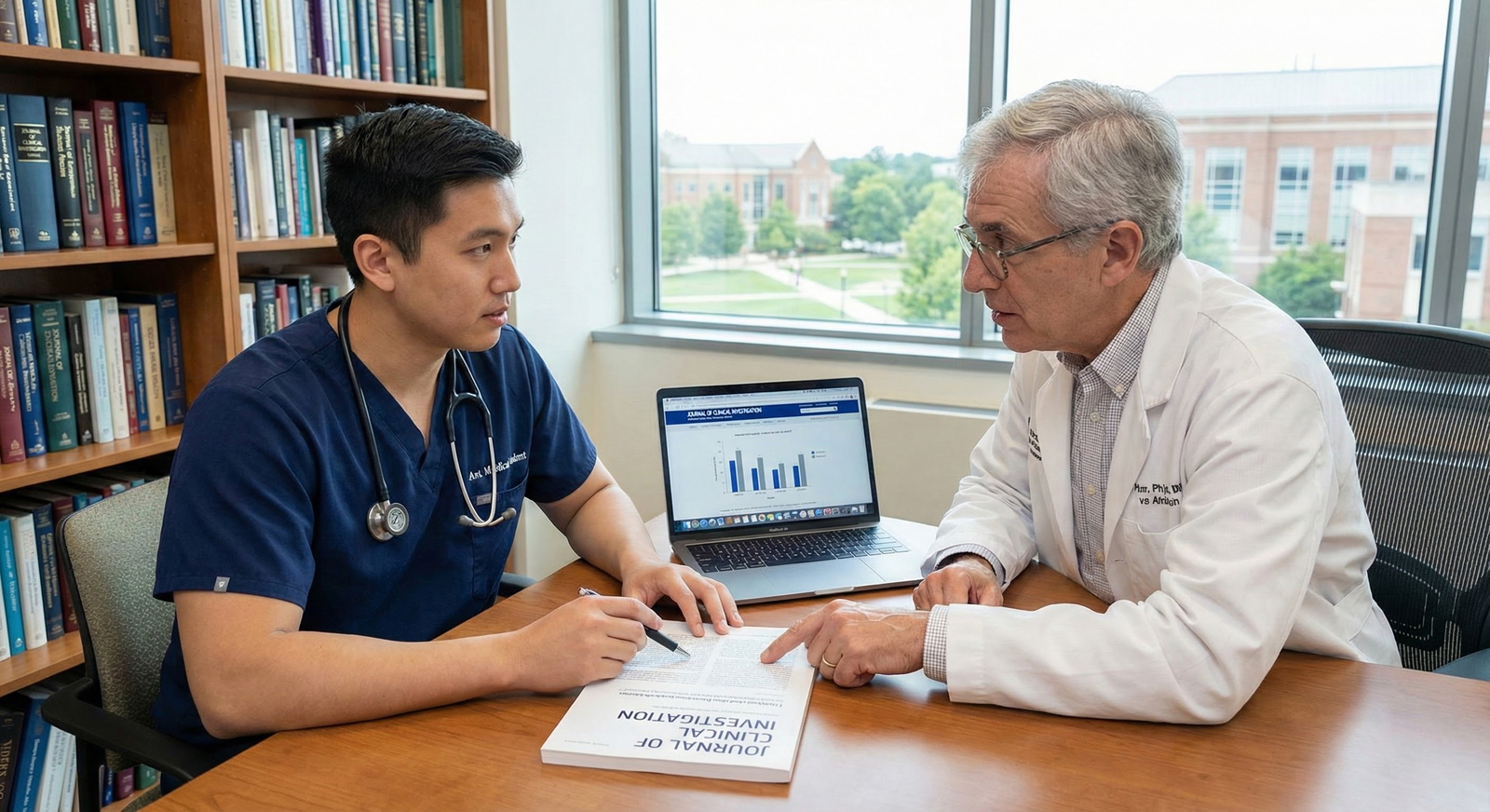
Strong letters of recommendation from research mentors can be decisive in a dermatology application, especially for DO graduates.
To earn impactful letters:
- Show up consistently and on time.
- Meet deadlines and communicate proactively.
- Take ownership of tasks; volunteer for extra responsibility.
- Demonstrate curiosity: ask questions, read background papers, propose ideas.
A powerful letter might mention:
- Your initiative in starting or rescuing stalled projects
- Your reliability and resilience when facing data or IRB setbacks
- Your ability to collaborate with residents, faculty, and staff
- Your growing knowledge and passion for dermatology
These letters can offset concerns some programs have about DO applicants’ research exposure or academic preparation.
Telling Your Research Story in ERAS and Interviews
When you complete the ERAS application and later during interviews:
- Group experiences by theme:
For example, group your research activities under headings like “Dermatology Clinical Research,” “Inflammatory Skin Disease Projects,” or “Skin Oncology-Related Work.” - Highlight impact:
- “Led data collection for a 120-patient retrospective study of biologic therapy in psoriasis.”
- “First author on two case reports of rare cutaneous lymphoma presentations.”
- Be ready for common interview questions:
- “Which of your projects are you most proud of, and why?”
- “Tell me about a challenge you faced in research and how you handled it.”
- “What did you learn from your research that will make you a better dermatologist?”
Your goal is to communicate that research is not just a box you checked, but part of how you think and practice medicine.
Strategy for Osteopathic Residency Match and NRMP
As a DO graduate interested in derm, you may be navigating:
- Traditional NRMP dermatology programs
- Osteopathic-friendly or previously AOA-approved dermatology residencies
- Transitional or preliminary years as stepping stones
Research helps in all of these settings:
- For MD-heavy academic programs: A strong research portfolio proves you can succeed in academic environments.
- For osteopathic-friendly derm programs: Research differentiates you from other DO applicants and supports you if your board scores are average.
- If you’re reapplying: New research outputs between cycles demonstrate growth, resilience, and continued commitment.
Consider tailoring your program list with realistic tiers:
- Stretch academic programs that value strong research and may take DOs.
- Solid mid-tier programs where derm match is realistic with a strong research and clinical profile.
- Osteopathic-friendly and community programs where your research can push you into the top tier of DO applicants.
FAQs: Research Profile Building for DOs Applying to Dermatology
1. As a DO graduate, is it possible to match dermatology without research?
It is increasingly uncommon, especially for competitive or academic programs. Some community or osteopathic-friendly programs may accept applicants with minimal research if they have outstanding clinical performance and letters. However, most successful DO applicants to dermatology have at least some scholarly work—case reports, posters, or QI projects. For a realistic derm match, you should assume that research is necessary, not optional.
2. How many publications are needed to be competitive for dermatology residency as a DO?
There is no magic number, but a realistic and competitive target might be:
- 4–8 total scholarly outputs (posters, abstracts, publications, book chapters)
- Including 2–4 clearly dermatology-focused items
- With at least 1–2 first-author pieces, such as case reports or reviews
More is not always better; being able to explain your role and what you learned matters more than raw numbers.
3. Does non-dermatology research help, or should everything be derm-focused?
Non-derm research can absolutely help—particularly if it demonstrates core skills in study design, data analysis, and writing. Projects in internal medicine, oncology, rheumatology, or infectious disease are especially valuable if you can connect them to skin disease or systemic conditions with cutaneous manifestations. Over time, you should try to pivot toward dermatology-specific projects, but do not wait for a perfect derm opportunity to start learning research.
4. What if I’m starting with zero research experience as a DO graduate—how do I begin?
Begin by:
- Learning basic research literacy: online tutorials, free biostatistics modules, reading clinical dermatology papers weekly.
- Seeking mentors: email dermatology and medicine faculty, explaining your interest and offering help with any phase of ongoing projects.
- Starting small: case reports, chart reviews, or helping clean datasets.
- Being consistent: show reliability and progress; once mentors see your effort and competence, larger opportunities will follow.
Within 12–18 months of sustained effort, many motivated DO graduates can move from zero experience to a meaningful, multi-project research portfolio that significantly improves their odds in the dermatology residency match.
By approaching research profile building strategically—focusing on relevance, quality, consistent productivity, and relationship-building—you can transform your application from “borderline due to degree bias” into “clearly competitive” for dermatology. As a DO graduate, your path may require more intentional effort, but with the right research experiences and mentorship, a successful derm match is genuinely attainable.