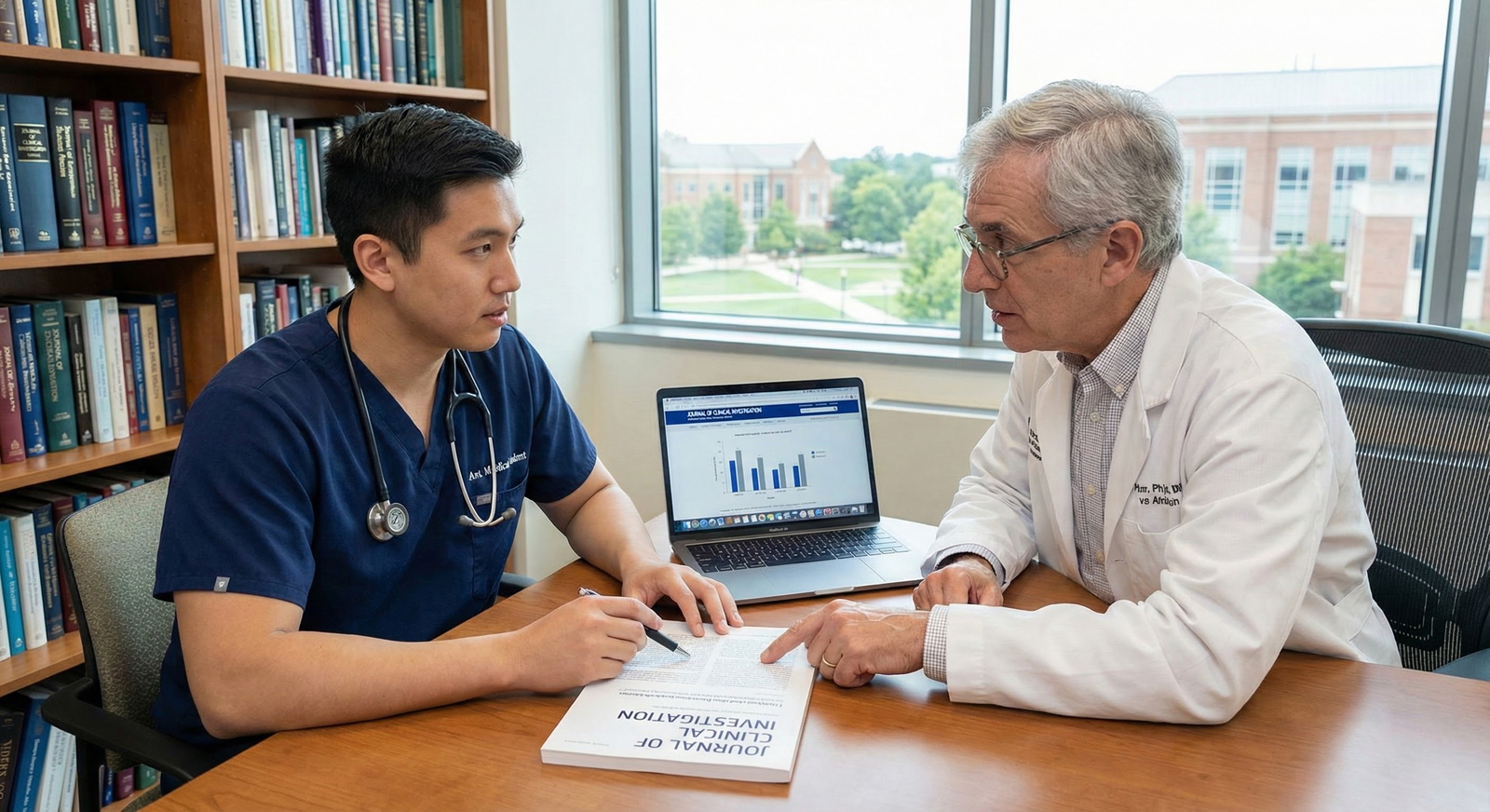
Understanding the Role of Research for a DO Graduate Applying to Preliminary Surgery
For a DO graduate targeting a preliminary surgery year, a strong research profile is not “optional polish”—it can be a decisive advantage, especially if you ultimately hope to transition into a categorical general surgery position or another competitive surgical specialty.
Unlike categorical general surgery applicants, many DO graduate residency paths are less research-heavy. However, in the current integrated ACGME landscape, program directors increasingly expect evidence of academic curiosity and productivity, even for prelim surgery residency positions. Strategic research can:
- Differentiate you from other DO applicants
- Signal that you’re serious about academic surgery or a surgical subspecialty
- Compensate (to a degree) for weaker areas (e.g., COMLEX/USMLE scores, limited home program exposure)
- Build relationships with faculty who can advocate for you
This article is designed specifically for the DO graduate who is:
- Aiming at preliminary surgery as a bridge to a categorical surgical position or another specialty
- Wondering how much research is really needed
- Unsure where to start and how to structure a realistic, high-yield research plan
We’ll walk through how to assess your current profile, prioritize high-yield projects, understand expectations for osteopathic residency match competitiveness, and build a sustainable research strategy that fits a busy schedule.
How Important Is Research for a DO Applying to Preliminary Surgery?
Where Research Fits in the Big Picture
Program directors generally rank the following as top factors for surgery applicants:
- Board scores (COMLEX/USMLE)
- Clinical performance and letters of recommendation
- Performance in surgery rotations / sub-internships
- Professionalism and work ethic
- Research output and academic involvement
For preliminary surgery, some programs weigh research less heavily than for categorical spots, especially at smaller community hospitals. However:
- Academic programs using prelim surgery as a “trial year” often look for evidence of academic potential.
- If you’re a DO graduate without a strong “home” academic surgery department, research becomes a valuable way to show you can play at the same level as MD peers.
- If your long-term goal is a competitive surgical subspecialty (ENT, plastics, ortho, neurosurgery, urology), you’re competing in a research-driven ecosystem, even if you start with a prelim year.
DO Graduate vs MD Applicant: Does Research Matter More?
Because DO students historically had fewer built-in research opportunities, some program directors still assume DO applicants may have less research exposure. That bias is softening, but it hasn’t vanished.
Research helps you:
- Counter stereotypes about osteopathic training by showing academic productivity
- Demonstrate that you understand and can navigate research for residency in an ACGME system
- Build publications for match that align you with the metrics many programs use to gauge “competitiveness”
If you are a DO graduate targeting a prelim surgery residency at an academic center, you should expect that successful applicants often have some form of research or scholarly work—even if not extensive or first-author original science.
How Many Publications Do I Need as a DO Applying to a Preliminary Surgery Year?
Interpreting “How Many Publications Needed” Realistically
You’ll see a wide range of numbers online. Some categorical surgery or subspecialty applicants report 10–30+ “experiences” on ERAS, but that count often includes:
- Posters
- Presentations
- Quality improvement (QI) projects
- Book chapters
- Case reports
- Submitted or in-progress manuscripts
For a DO graduate residency applicant focused on preliminary surgery, especially if you’re not targeting the single most competitive academic programs, an effective target is:
- 1–3 solid scholarly products in total is usually enough to show engagement
- 4–8 total activities (including QI, posters, small projects) can help if you’re aiming at more academic prelim spots or eyeing a later transition to categorical general surgery or a subspecialty
Think in categories, not just total count:
- At least one item related to surgery or perioperative care
- At least one item where you played a substantial role (first author or clearly primary contributor)
- Some output that moved far enough along to be presented or published, not just “in progress” forever
Different Levels of Research Productivity and What They Signal
Basic but Adequate Profile (Low–Moderate Research Programs)
- 1 poster or oral presentation (e.g., surgical case or QI)
- 1 case report or small retrospective review
- 1 small QI project with documented outcomes
This profile can be enough for many community-based prelim programs and some academic prelims.
Strong DO Applicant Profile (Moderate–High Research Programs)
- 2–3 posters/presentations (regional/national meetings ideal)
- 1–2 manuscripts (case reports, review articles, or retrospective studies), at least one accepted or published
- Ongoing participation in a lab or clinical research team
This becomes competitive for more research-oriented prelim surgery year positions and smoother transition to categorical spots.
Academic Surgery Track Profile (Research-Heavy Programs)
- 4+ peer-reviewed publications (even if some are case reports or reviews)
- National-level presentations
- Ongoing research productivity during medical school or gap year(s)
This level is more typical of categorical general surgery or subspecialty-bound applicants at top-tier programs, but a strong prelim applicant with this profile is very attractive.
Remember: for a prelim surgery residency, quality, focus, and clear contribution often matter more than raw numbers. A thoughtful, well-executed project explained intelligently in interviews will beat a long list of shallow check-box projects.
Choosing High-Yield Research for a Future Surgeon: What Should a DO Focus On?

Prioritizing Types of Research
Not all research is equal in time required or yield. You have to be strategic, especially as a DO graduate who may not have a built-in research infrastructure.
From highest yield (for time) to lowest, roughly:
Retrospective Clinical Studies in Surgery
- Use existing patient data (charts, registries, operative logs)
- Often feasible at community or academic hospitals
- Examples:
- Outcomes of laparoscopic appendectomy in older adults
- Readmission rates after cholecystectomy based on discharge criteria
- Pros: Higher-impact potential, often publishable
- Cons: Requires IRB approval and data access; can be time-intensive
Quality Improvement (QI) Projects with Clear Metrics
- Directly relevant for surgical services and prelim positions
- Examples:
- Reducing pre-op antibiotic timing errors
- Improving VTE prophylaxis compliance on surgical wards
- Pros: Highly valued, practical; can yield posters and eventual papers
- Cons: Need buy-in from the team; must track data carefully
Case Reports and Case Series
- Ideal for DOs with limited time or infrastructure
- Examples:
- Rare abdominal pathology found during appendectomy
- Complication of central line placement and lessons learned
- Pros: Straightforward, great way to enter academic writing
- Cons: Lower impact, but still meaningful when early in your career
Review Articles / Narrative Reviews
- Summarizing current literature on a focused surgical topic
- Pros: Builds deep knowledge, can be done remotely, useful for interviews
- Cons: Harder to publish without a senior co-author or clear niche
Basic Science / Bench Research
- Lab-based work (e.g., wound healing, biomaterials, immunology)
- Pros: High impact at academic centers, good for long-term academic careers
- Cons: Time-heavy, often requires a research year; less realistic if you’re applying soon or already graduated
For a DO graduate aiming at a preliminary surgery year, your most realistic and impactful options are usually:
- Retrospective clinical projects
- QI projects
- Case reports / short case series
- Focused reviews with surgical mentors
Aligning Research with Preliminary Surgery Goals
Because a prelim surgery year is often used as a launching pad, tailor your research toward:
- Core general surgery topics
- Perioperative management, surgical complications, outcomes
- Subspecialties you might target later
- Vascular, trauma, critical care, colorectal, etc.
- Systems-level improvements relevant to surgical training
- Handoffs, time to OR, post-op monitoring, ERAS protocols
This level of alignment helps interviewers see a coherent narrative: you didn’t just do random research—you have a maturing identity as a future surgeon.
Example: High-Yield Research Plan for a DO Graduate within 12–18 Months
If you’re 12–18 months from applying to the osteopathic residency match for a prelim surgery slot, a realistic plan might look like:
Month 1–3:
- Join a surgical QI project (e.g., standardizing pre-op checklists).
- Identify a unique surgical case for a case report.
Month 4–6:
- Submit QI project abstract to a state/regional meeting.
- Write and submit case report to a peer-reviewed journal (even if smaller).
Month 7–12:
- Collaborate on a retrospective chart review (e.g., 3 years of appendectomies).
- Aim to submit abstract to a national or major regional meeting.
Month 12–18:
- Finalize at least one manuscript for submission (case report or retrospective study).
- Continue QI project, expanding outcomes, and consider converting it into a full manuscript.
If successfully executed, this yields:
- 1 QI project with presentation
- 1–2 case reports (submitted/published)
- 1 retrospective research project (abstract and maybe a manuscript)
This is a strong research profile for a DO graduate residency applicant in preliminary surgery, even at an academic institution.
Finding Mentors, Projects, and Opportunities as a DO Graduate

Step 1: Identify the Right Mentors
You don’t need a world-famous surgeon as your first research mentor; you need someone:
- Willing to invest time in your growth
- With ongoing projects or openness to starting one
- Who understands the needs of a DO applicant in the current osteopathic residency match environment
Sources of mentors:
- Your clinical rotations – Ask attendings or senior residents:
- “Are there any ongoing or upcoming projects where I could help with data collection or writing?”
- Your medical school department of surgery – Even as a DO grad, many schools are supportive of recent graduates who want to remain involved.
- Affiliated hospitals where you rotate or work – Community attendings often have interesting cases and QI ideas but lack help.
- Professional organizations – AOA, ACS, specialty societies often have mentorship programs or student/resident research collaboratives.
Step 2: Be “Low-Maintenance, High-Output”
Mentors are far more likely to involve you if you:
- Communicate clearly and reliably (respond to email within 24–48 hours)
- Take ownership of discrete tasks (e.g., “I will extract data from 50 charts by next Friday”)
- Learn basic skills independently (e.g., how to format references, use Excel, or simple stats software)
- Don’t require constant hand-holding
Example email template to a potential mentor:
Dear Dr. [Name],
My name is [Your Name], a DO graduate planning to apply for a preliminary surgery residency. I’m very interested in [specific area, e.g., acute care surgery or perioperative outcomes] and hoping to build my research experience.
I saw that you’ve worked on [mention a paper, project, or clinical interest]. If you have any ongoing projects or ideas where an extra pair of hands could be useful—data collection, chart review, literature review, or manuscript drafting—I’d be very grateful for the chance to contribute.
I’m comfortable working independently, can commit [X hours/week], and I’m aiming to develop work that can eventually be presented or published.
Would you have 10–15 minutes to discuss whether there’s a way I could help your team?
Sincerely,
[Your Name], DO
Step 3: Use “Entry-Level” Roles Strategically
For a first project, don’t demand first authorship. Instead:
- Offer to help with data collection, chart review, or literature review.
- Overdeliver on your first set of tasks.
- As trust grows, ask to be more involved in analysis and writing.
Once you demonstrate reliability, mentors are more likely to:
- Invite you on additional projects
- Let you take lead/first author roles on new case reports or QI projects
- Provide strong letters of recommendation, highlighting your scholarly work ethic
Step 4: Leverage Remote and Multi-Institutional Opportunities
If your local environment is research-poor:
- Look for collaborative registries or research networks that include DO schools and community hospitals.
- Join virtual research groups (many academic centers have remote-friendly teams if you can contribute writing and analysis).
- Reach out to DO or MD alumni from your school who are now in academic surgery.
Even remote roles can produce legitimate publications for match as long as your work is concrete and you’re integrated into the team.
Presenting, Publishing, and Showcasing Your Research in Applications
From Project to Product: Posters, Presentations, Papers
To maximize the impact of your work on your prelim surgery residency application, aim for multiple “outputs” per project:
Internal Presentation
- Present at hospital M&M, journal club, or department meeting.
- Shows initiative and practice in discussing data.
Local/Regional Meeting Poster
- State surgical societies, hospital research days, or DO-specific conferences.
- Often more accessible and less competitive than national meetings.
National Presentation (If Possible)
- ACS, AAS, specialty meetings (e.g., trauma, vascular).
- Even a poster at a mid-level national meeting significantly boosts your CV.
Manuscript Submission
- Case reports → journals like Cureus or specialty case journals
- Retrospective/QI studies → surgical or quality-improvement-focused journals
Your ERAS application allows you to list research for residency in categories like:
- Peer-reviewed journal articles/abstracts
- Oral presentations
- Poster presentations
- Non-peer-reviewed publications
- QI and leadership roles
Make sure every entry is:
- Accurately categorized (don’t inflate your role or publication status)
- Clearly described (1–2 lines describing content and your contribution)
- Updated with final status (e.g., “accepted,” “published,” “in press”) when possible
Framing Your Research in Personal Statement and Interviews
As a DO graduate applying for a preliminary surgery year, how you talk about your research can matter as much as the number of publications:
- Emphasize lessons learned: critical thinking, teamwork, handling setbacks.
- Connect research themes to your surgical interests:
- “My project on readmissions after appendectomy taught me how postoperative communication and discharge planning can directly change outcomes.”
- Show trajectory:
- From early small projects → increasing responsibility → now ready for academic surgical environment.
In interviews, be ready to:
- Explain your exact role in each project.
- Walk through the methods and limitations of your main study at a high level.
- Discuss how you’d like to continue research during your prelim surgery residency—many programs appreciate applicants who plan to contribute academically even in a one-year role.
Common Pitfalls and How to Avoid Them as a DO Applicant
Pitfall 1: Waiting for the “Perfect” Project
A common mistake is turning down small or “less impressive” projects while hunting for a big trial or prestigious lab. For a DO graduate targeting a prelim surgery residency, time is limited. Avoid:
- Declining case reports because they’re “not high impact”
- Waiting months for a lab to respond while ignoring QI or chart-review options
Solution: Start with doable projects now; let your productivity and reliability open doors to bigger projects later.
Pitfall 2: Overcommitting to Too Many Projects
Another trap is saying “yes” to every opportunity, then failing to follow through. This can damage your reputation quickly.
Solution:
- Realistically estimate how many hours/week you can commit.
- Start with one or two projects; expand only once you prove you can manage current responsibilities.
Pitfall 3: Not Tracking Your Work
If you don’t keep records, you’ll struggle to fill out ERAS or answer questions about your research.
Solution:
- Maintain a simple research log (spreadsheet or document) listing:
- Project title and brief description
- Your role and responsibilities
- Dates of involvement
- Outputs (posters, meetings, manuscripts, journal name, status)
Pitfall 4: Ignoring Non-Traditional or DO-Specific Forums
Many DO applicants overlook valuable venues like:
- DO-focused journals
- AOA conferences
- State osteopathic surgical societies
These can be particularly welcoming for DO graduate residency applicants and still count as legitimate publications for match and presentations on your CV.
FAQs: Research Profile Building for DO Graduates in Preliminary Surgery
1. As a DO graduate, can strong research make up for lower board scores when applying to a prelim surgery residency?
Research helps, but it rarely fully compensates for significantly low scores. For prelim surgery positions (especially at academic centers), strong research can tip the scales if your scores are borderline but not catastrophic, and can make you stand out among similarly scoring applicants. However, programs typically use score cutoffs first, then use research and other factors to rank among those who pass that threshold.
2. I don’t have any research yet and I’m one year from applying. Is it too late to build a meaningful research profile?
It’s not too late, especially for prelim surgery. With 9–12 months, you can realistically complete:
- 1–2 case reports
- 1 QI project (possibly with a poster or abstract)
- Possibly start a retrospective study with at least an abstract by application time
This can yield 2–4 legitimate scholarly products—often enough to demonstrate engagement and potential as a DO applicant.
3. Do prelim surgery residency programs really care about research, or is it mostly for categorical spots?
Community-based prelim programs may care less than academic categorical programs, but many academic institutions still value research for prelim positions, especially if they routinely transition prelims into categorical roles. Research signals that you’ll engage with the academic environment, contribute to department output, and potentially become a strong candidate for an internal categorical spot.
4. How should I prioritize my time between clinical rotations, studying, and research for residency applications?
For DO graduate residency applicants, clinical performance and board scores remain foundational. If you’re significantly struggling academically, prioritize stabilizing your scores and clinical evaluations first. Once those are solid, dedicate a consistent but bounded amount of time to research (e.g., 4–8 hours per week), focusing on high-yield projects like QI, case reports, and retrospective studies. Sustainable consistency beats short, frantic bursts.
By intentionally selecting feasible projects, finding supportive mentors, and converting your work into concrete outputs, you can build a compelling research profile as a DO graduate applying to a preliminary surgery year. Done well, that profile won’t just help you match—it will set the foundation for a long-term, academically engaged surgical career.